
石化化工

Search documents
PVC价格大涨!化工板块暴力拉升,化工ETF(516020)摸高3.83%,近5日吸金超3.5亿元!
Xin Lang Cai Jing· 2026-01-06 11:22
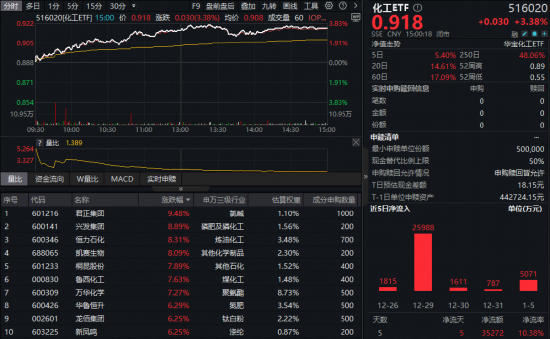
Group 1 - The chemical sector continues to show strong performance, with the Chemical ETF (516020) experiencing a maximum intraday increase of 3.83% and closing up 3.38% [1][8] - Key stocks in the sector include Junzheng Group, which surged by 9.48%, and other notable performers such as Xingfa Group and Hengli Petrochemical, both rising over 8% [1][8] - The basic chemical sector attracted significant capital inflow, with a net inflow of 12.4 billion yuan on the day, ranking second among 30 CITIC primary industries [11][12] Group 2 - The Chemical ETF (516020) has seen a total net subscription of 352 million yuan over the past five trading days, indicating strong investor interest [3][9] - PVC futures contracts rose over 3% in a single day, with a cumulative increase of over 15% since mid-December [10] - Analysts predict that by 2026, the petrochemical industry will undergo a supply-side clearing, leading to a recovery in demand for specific segments like PX and PTA [10] Group 3 - The valuation of the chemical sector remains reasonable, with the Chemical ETF's underlying index price-to-book ratio at 2.65, positioned at the 52.45 percentile over the past decade [10] - The chemical industry is currently at a cyclical bottom, with potential for recovery driven by demand stimulation policies and ongoing export growth [12] - The Chemical ETF (516020) provides an efficient way to invest in the sector, with nearly 50% of its holdings in large-cap leading stocks, allowing investors to capitalize on strong market trends [12]


“数”览新答卷·绿色发展主战场带动作用凸显 长江母亲河焕发生机活力
Yang Shi Wang· 2026-01-06 02:18
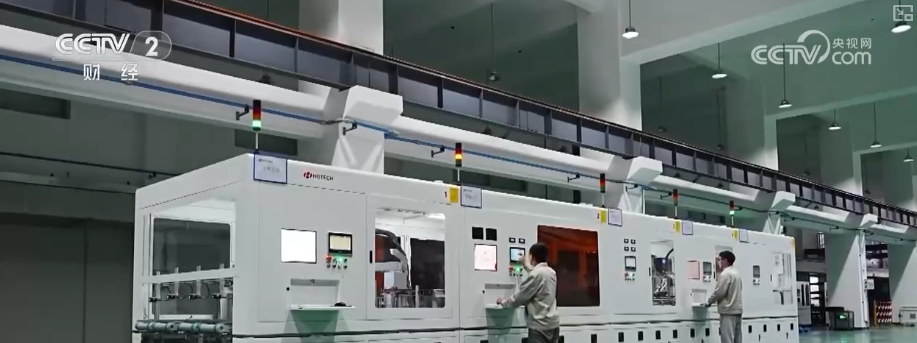
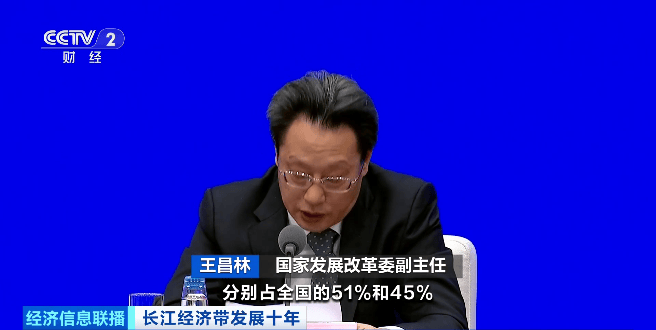
十年来,长江经济带地区生产总值翻了一番多,占全国比重从42.2%提升到47.3%,居民人均可支配收入从2.3万元提高到4.4万元,增长了 91%。 央视网消息:长江经济带覆盖沿江11省市,横跨东中西三大板块,集聚的人口和创造的地区生产总值都占到了全国四成以上,是我国经济重心 所在、活力所在。国务院新闻办公室1月5日举行发布会,介绍长江经济带发展十年工作进展和成效。十年来,随着共抓大保护、不搞大开发的 理念落地生根,长江经济带走出了一条生态优先、绿色发展的新路子,长江母亲河重新焕发出了生机活力。 十年来,我国深入推进长江沿线工业、城镇污水垃圾等重点领域污染治理,彻底清理整治1361座非法码头,基本消除沿江地级及以上城市黑臭 水体,长江经济带优良水质比例从67%提升到96.5%,干流水质由部分Ⅴ类提升到全线Ⅱ类,长江十年禁渔坚定不移推进。 王昌林介绍,累计培育国家级先进制造业集群41家、战略性新兴产业集群30家,分别占全国的51%和45%。以汽车产业为例,随着电动化、智 能化技术加快变革,沿江地区汽车产业链、供应链不断焕新升级。2025年,上海、江苏、浙江、安徽、重庆新能源汽车产量均超过百万辆,一 条贯通全流域、 ...
能耗、碳排放占全国1/3,GDP贡献近半 长江经济带绿色转型实现新突破
Zhong Guo Dian Li Bao· 2026-01-06 00:55
Core Insights - The Yangtze River Economic Belt has become a crucial area for ecological priority and green development, contributing nearly half of China's GDP while accounting for about one-third of the country's energy consumption and carbon emissions [1] Group 1: Green Transformation and Industrial Upgrading - Traditional industries such as steel, petrochemicals, and building materials in the Yangtze River Economic Belt have actively pursued green transformation, establishing 24 national carbon peak pilot cities and parks, along with 14 zero-carbon parks [1] - Approximately 10,000 old operating vessels have been scrapped and updated as part of the push for clean energy and new energy ship development [1] - The region has cultivated 41 national-level advanced manufacturing clusters and 30 strategic emerging industry clusters, representing 51% and 45% of the national totals, respectively [1] Group 2: Innovation and New Economic Drivers - The Yangtze River Economic Belt is accelerating the cultivation of new economic drivers, with 3 technology innovation centers and 8 national laboratories established in the region, achieving breakthroughs in key technologies in fields like artificial intelligence and quantum information [2] - The region is recognized as one of the most resource-rich and innovative areas in China, with ongoing efforts to enhance economic scale while focusing on green, high-end, and intelligent development [2] - Future initiatives will aim to further accelerate green transformation and develop low-carbon industries tailored to local conditions [2]
长江经济带国家级先进制造业集群数量占比全国超5成
Sou Hu Cai Jing· 2026-01-05 14:39
(央视财经《经济信息联播》)十年来,我国积极推动长江沿江产业绿色低碳转型,塑造产业发展新优 势,实现在发展中保护,在保护中发展。 国家发展改革委副主任 王昌林:累计培育国家级先进制造业集群41家、战略性新兴产业集群30家,分 别占全国的51%和45%。以汽车产业为例,随着电动化、智能化技术加快变革,沿江地区汽车产业链、 供应链不断焕新升级,2025年上海、江苏、浙江、安徽、重庆新能源汽车产量均超过百万辆,一条贯通 全流域、覆盖全链条的新能源汽车产业链正在加速形成。 同时,我国积极推动钢铁、石化化工等传统产业绿色转型,在长江经济带布局建设了24个国家碳达峰试 点城市和园区、14个零碳园区。加大新能源清洁能源船舶研发和推广,长江经济带以占全国约三分之一 的能源消耗和碳排放,贡献了近一半的GDP,生态优先绿色发展主战场的引领带动作用日益凸显。 转载请注明央视财经 编辑:令文芳 ...
《党建》杂志丨甘肃省委书记胡昌升:学深悟透党的二十届四中全会精神 齐心协力谱写中国式现代化甘肃篇章
Xin Lang Cai Jing· 2026-01-05 11:29
Core Viewpoint - The article emphasizes the significance of the 20th Central Committee's Fourth Plenary Session in shaping China's modernization, particularly in Gansu, and outlines the strategic direction for the 15th Five-Year Plan, which aims to unify thoughts and actions towards national development goals [1][2][3]. Group 1: Major Significance - The session summarizes achievements during the 14th Five-Year Plan and outlines strategic plans for the next five years, which will significantly impact national development [2]. - It serves as a political declaration and action plan for achieving a modern socialist country and the second centenary goal, ensuring that modernization follows the direction set by the leadership [2]. - The session's decisions address fundamental issues related to economic and social development, reflecting the party's strategic vision and confidence [3]. Group 2: Guiding Principles - The session emphasizes that economic development should remain the central focus, highlighting the need for high-quality growth amidst changing external environments [4][5]. - High-quality development is prioritized as a key goal for the 15th Five-Year Plan, indicating a commitment to sustainable and effective economic progress [5]. - Reform and innovation are identified as essential drivers for development, with a call for significant reforms to overcome obstacles and enhance growth potential [5][10]. Group 3: Strategic Tasks - The article outlines the importance of building a modern industrial system tailored to Gansu's characteristics, focusing on new industrialization and the transformation of traditional industries [8]. - It stresses the need for technological innovation and education as foundational elements for modernization, advocating for integrated development of education, technology, and talent [9]. - The article highlights the necessity of deepening reforms and expanding openness to enhance development vitality and attract high-value enterprises [10]. Group 4: Enhancing People's Welfare - The article underscores the importance of improving public welfare and ensuring that modernization benefits all citizens, with a focus on poverty alleviation and employment [11]. - It advocates for the enhancement of public services and the implementation of projects that directly improve the quality of life for the populace [11]. - The need for proactive safety measures and conflict resolution is emphasized to ensure a stable environment conducive to high-quality development [11]. Group 5: Ecological Development - The article highlights the commitment to green development as a core aspect of modernization, advocating for ecological restoration and sustainable practices [12]. - It outlines specific initiatives for water source protection, desertification control, and pollution prevention to enhance environmental quality [12]. - The promotion of a low-carbon economy and the establishment of a new energy system are identified as critical steps towards achieving ecological sustainability [12].
长江经济带如何绿色发展?国家发改委副主任王昌林点名武汉光谷
Chang Jiang Ri Bao· 2026-01-05 08:22
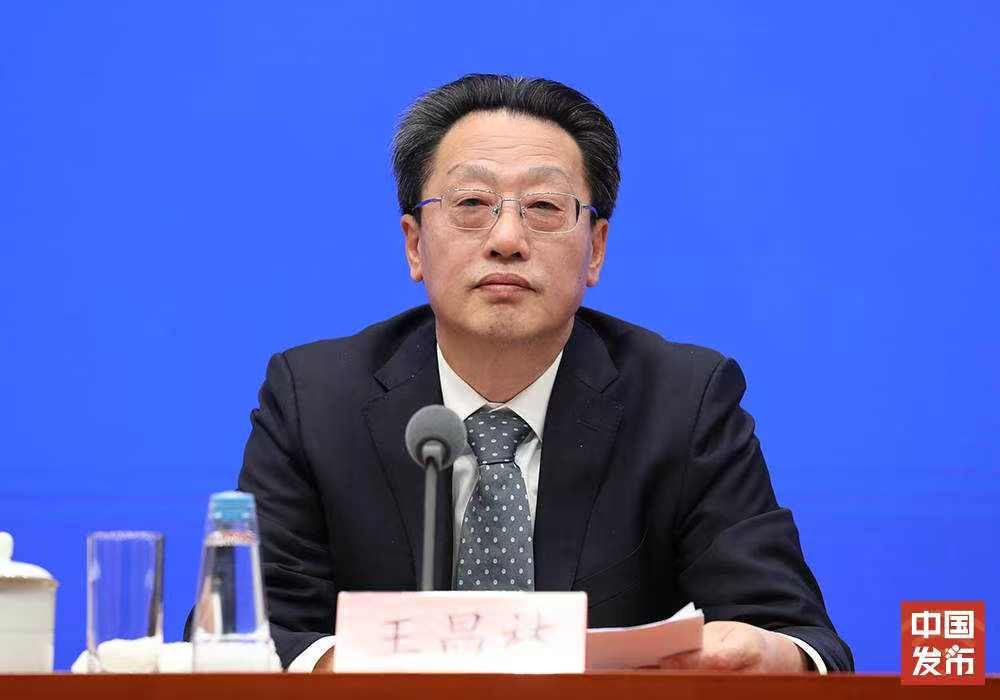
1月5日,国务院2026年第一场新闻发布会聚焦长江经济带发展,国家发展改革委副主任王昌林在回答"推动沿江产业绿色 低碳发展"时,专门提及武汉光谷等科创产业高地的高速发展。 产业升级塑造新优势,已累计培育国家级先进制造业集群41家、战略性新兴产业集群30家,分别占全国的51%和45%。他 以汽车产业为例,随着电动化、智能化技术加快变革,沿江地区汽车产业链供应链不断焕新升级,2025年上海、江苏、浙江、 安徽、重庆新能源汽车产量均超过百万辆,一条贯通全流域、覆盖全链条的新能源汽车产业链正在加速形成。 绿色转型实现新突破:积极推动钢铁、石化化工、建材等传统产业绿色转型,在长江经济带布局建设了24个国家碳达峰试 点城市和园区、14个零碳园区。加大新能源清洁能源船舶研发和推广,累计支持约1万艘老旧营运船舶报废更新。积极推动浙 江丽水、江西抚州等14个试点地区加快探索生态产品价值实现机制。 王昌林说:长江经济带以占全国约三分之一的能源消耗和碳排放,贡献了近一半的GDP,生态优先绿色发展主战场的引领 带动作用日益凸显。下一步,将加快推动沿江传统产业绿色转型,因地制宜培育壮大绿色低碳产业,更好实现在发展中保护、 在保护中发展 ...
三峡水运新通道项目有最新进展!
Zheng Quan Ri Bao Wang· 2026-01-05 07:36
Core Insights - The development of the Yangtze River Economic Belt has shown significant progress over the past decade, with improvements in waterway infrastructure, cargo throughput, and environmental quality [1][2][3][4] Group 1: Infrastructure and Economic Growth - The length of high-grade waterways in the Yangtze River has increased from 8,000 kilometers to 11,000 kilometers, and cargo throughput at major ports has grown by 71% to reach 4.2 billion tons, maintaining the world's leading position in inland river transport [1] - The GDP of the Yangtze River Economic Belt has more than doubled, increasing its share of the national economy from 42.2% to 47.3% [1] - By 2025, it is expected that cargo throughput at major ports will reach 4.2 billion tons, with the number of large ports increasing to 18 and the average tonnage of cargo ships exceeding 2,300 tons, representing growth of 71%, 50%, and 67% respectively since 2015 [1] Group 2: Environmental Protection and Sustainable Development - The proportion of good water quality in the Yangtze River Economic Belt has improved from 67% to 96.5%, indicating significant advancements in environmental protection [1] - The "Three-Year Action Plan for Further Strengthening the Protection of the Yangtze River" outlines key tasks in water pollution control and ecological restoration from 2025 to 2027, with noticeable progress already made [2] - The region is focusing on green and low-carbon transformation of industries, with the establishment of 24 national carbon peak pilot cities and parks, and 14 zero-carbon parks [4] Group 3: Innovation and Industrial Upgrading - The Yangtze River Economic Belt has become a hub for innovation, with the establishment of three technology innovation centers and eight national laboratories, leading to breakthroughs in key technologies in various fields [3] - The region has nurtured 41 national-level advanced manufacturing clusters and 30 strategic emerging industry clusters, accounting for 51% and 45% of the national totals respectively [3] - The automotive industry is undergoing significant transformation, with projections indicating that by 2025, the production of new energy vehicles in several provinces will exceed one million units, forming a comprehensive supply chain across the entire river basin [3]
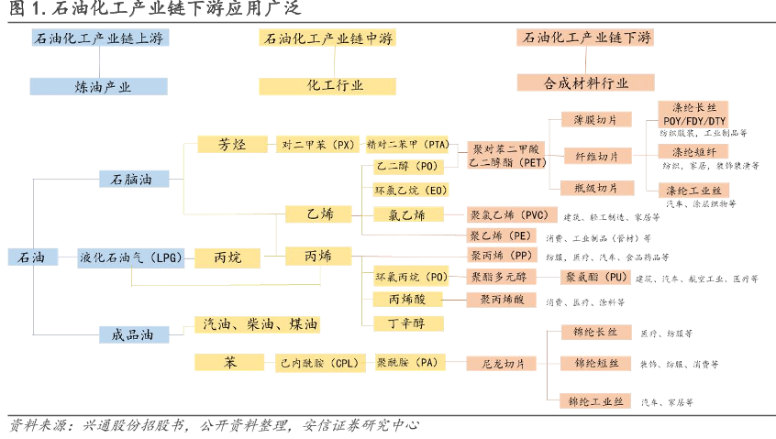
重新认识一下,藏在生活里的石化行业
Xin Lang Cai Jing· 2026-01-05 03:46
Core Viewpoint - The petrochemical industry is transitioning from a traditional, low-quality production model to a high-quality, innovative, and green development approach, driven by policy guidance and market demand [2][15]. Group 1: Policy Guidance - The industry is moving away from "involution" and towards high-quality development, as indicated by national policies during the 14th Five-Year Plan, which emphasize supply-side structural reforms and balance between supply and demand [3][15]. - Capital expenditure in the basic chemical sector decreased by 9.07% year-on-year in the first three quarters of 2025, with 24 out of 33 sub-industries experiencing a decline [3][15]. - The number of ongoing projects in the basic chemical sector fell by 14.18% year-on-year, indicating a shift in the industry towards improved supply-demand dynamics [3][15]. Group 2: Green Transformation - The industry is redefining its image from "high pollution" to a green and sustainable sector, exemplified by the first domestic carbon footprint accounting for bio-based benzene, which has gained international recognition [7][18]. - A rigorous approach to green development has led to the establishment of a standardized carbon footprint accounting system, enhancing the credibility of green certifications for bio-based chemical products [7][18]. Group 3: Innovation Drive - The petrochemical sector is becoming a key player in technological innovation, focusing on high-end materials and fine chemicals, which are expected to lead global growth despite some slowdown in traditional product segments [8][19]. - The industry is addressing demand gaps in key supply chains, supporting enterprises in core technology breakthroughs, and fostering the development of innovative products [11][20]. - Notable advancements include breaking the import monopoly of core materials for photovoltaic adhesive films and accelerating the domestic production of materials needed for 5G communications [11][20]. Group 4: Future Outlook - The petrochemical industry is evolving into a provider of high-end new materials, a practitioner of green low-carbon initiatives, and a pioneer in technological innovation, moving away from traditional expansion models towards quality enhancement [12][20]. - Investors can capitalize on the industry's upward trend through the Petrochemical ETF (159731) and related funds, which track the petrochemical industry index, highlighting key sectors such as refining and trade, chemical products, and agricultural chemicals [21].
碳捕集规模化应用还有多远?
Zhong Guo Hua Gong Bao· 2026-01-04 02:57
Core Viewpoint - Carbon capture technology has achieved small-scale pilot applications in certain chemical scenarios, but faces multiple bottlenecks for large-scale commercialization, necessitating innovation in materials and processes, energy efficiency, and industry collaboration [1] Group 1: Value of Carbon Capture Technology - Carbon capture technology holds significant value in the green transformation of the petrochemical industry, with methods like electrocatalytic carbon resource conversion enabling efficient conversion of carbon monoxide into ethylene and other basic chemicals [2] - Development of nano-level zeolite molecular sieve adsorbents can purify methane from low-concentration gas to 99.99%, providing a feasible solution for domestic electronic-grade methane [2] - Coal-based solid waste and carbon dioxide co-disposal methods can achieve large-scale disposal and high-value utilization of coal-based solid waste while simultaneously mineralizing and sequestering carbon dioxide, which is crucial for achieving carbon neutrality goals [2] Group 2: Constraints on Industrialization - The industrialization of carbon capture technology is constrained by high energy consumption, costs, challenges in equipment scaling, strong coupling, low flexibility, and difficulties in long-term safe and stable operation [3] - Economic feasibility is a primary barrier, with low product selectivity and high separation costs in electrocatalytic ethylene production affecting overall operational economics [3] - Insufficient industry chain collaboration hampers development speed, with technologies like carbon dioxide to methanol facing challenges due to insufficient domestic supply for large-scale applications [3] Group 3: Future Prospects for Large-Scale Application - Experts propose systematic solutions to address economic feasibility and industry collaboration issues, predicting that systematic innovation in carbon capture technology will create multiple emerging sectors [4] - Innovations in materials and processes, such as high-performance organic silicon membrane materials designed through molecular simulation and machine learning, are expected to break foreign technology monopolies [4] - New intelligent adsorption materials inspired by biological mechanisms show potential for reducing energy consumption in traditional adsorption regeneration processes, although practical engineering applications face challenges [4] - Industry collaboration is emphasized, with calls for proactive layouts in carbon resource conversion, aiming for efficient resource utilization and emission reduction [4] Group 4: Integration of Technologies - The integration of intelligent materials and other technologies is expected to drive carbon capture technology from "unit innovation" to "system transformation," facilitating large-scale industrialization [5]
山东:12个重点行业划定稳增长路线图
Xin Hua Wang· 2026-01-03 02:49
Core Viewpoint - The "2026 Policy List" aims to stabilize and enhance the industrial economy in Shandong Province, focusing on 12 key industries that are crucial for economic growth and structural optimization [1][2]. Group 1: Key Industries and Economic Impact - The 12 targeted industries, including steel, non-ferrous metals, chemicals, automotive, and textiles, collectively generate approximately 7.8 trillion yuan, accounting for about 67% of the province's industrial output and 75% of manufacturing output [1]. - Maintaining stability in these key industries is essential for the overall industrial economy of Shandong [1]. Group 2: Growth Targets and Structural Optimization - Specific quantitative growth targets have been set for various sectors by 2026, such as a 4% increase in steel industry value-added, production of 1.2 million new energy vehicles, and over 850 billion yuan in revenue for the electronic information manufacturing sector [2]. - The policy emphasizes both growth and structural improvement, with a focus on enhancing technological capabilities and optimizing product structures [2]. Group 3: Support for Aerospace Industry - The policy includes measures to support the aerospace industry, such as subsidies for commercial rocket and satellite companies, with a maximum subsidy of 3 million yuan per project [3]. - These initiatives aim to reduce launch costs and foster innovation within the aerospace sector, contributing to the industry's overall growth [3]. Group 4: Green Building Initiatives - The policy promotes green building practices through government procurement, aiming to establish a long-term mechanism for supporting green building materials [4]. - New urban construction projects funded by government or state-owned investments are required to use green materials, with a target of at least 40% application in star-rated green building projects [4]. Group 5: Support for Private Enterprises - The policy outlines a comprehensive mechanism to address the needs of enterprises, ensuring a streamlined process for resolving issues and enhancing resource allocation [5]. - Continuous optimization of the "Ru Hui Tong" policy implementation platform is planned to facilitate quicker access to benefits for enterprises [5].