
矿产

Search documents
601618,拟回购注销2亿股至4亿股
中国基金报· 2025-12-17 15:16
Core Viewpoint - China Metallurgical Group Corporation (China MCC) plans to initiate a share repurchase program of up to 2.5 billion yuan to stabilize market sentiment following a significant drop in stock price due to a major asset sale announcement [2][6]. Group 1: Share Repurchase Plan - The company announced a plan to repurchase A-shares worth no less than 1 billion yuan and no more than 2 billion yuan, with H-shares repurchase capped at 500 million yuan [2][10]. - The repurchase price for A-shares will not exceed 4.90 yuan per share, with a total repurchase quantity estimated between 200 million to 400 million shares, representing approximately 0.98% to 1.97% of the company's total share capital [10][11]. - The funding for the repurchase will come from the company's own funds, with the total repurchase amount accounting for only 0.25% of total assets, 1.31% of net assets attributable to shareholders, and 3.81% of cash funds [12]. Group 2: Background of Asset Sale - The repurchase plan follows a major asset sale announcement on December 8, where China MCC intends to sell multiple assets for 60.676 billion yuan to its controlling shareholder, China Minmetals, and related parties [6]. - The assets being sold include 100% equity of MCC Real Estate and various other significant assets, with the aim of focusing on core business areas such as metallurgical engineering and non-ferrous metal mining [6][7]. - The evaluation of the assets showed a stark contrast, with MCC Real Estate experiencing a 45.18% impairment, while mining-related assets like Huaye Duda saw a substantial appreciation of 789.57% [6]. Group 3: Market Reaction - Following the asset sale announcement, China MCC's stock price plummeted, with A-shares hitting the daily limit down and Hong Kong shares dropping by 21% [8]. - Investors expressed concerns that the divestiture of high-value mining resources could fundamentally alter the company's business structure, shifting its identity from a resource-based enterprise to a primarily engineering contracting firm, potentially impacting long-term profitability [7].


白银价格首破60美元创历史新高
Sou Hu Cai Jing· 2025-12-14 00:41
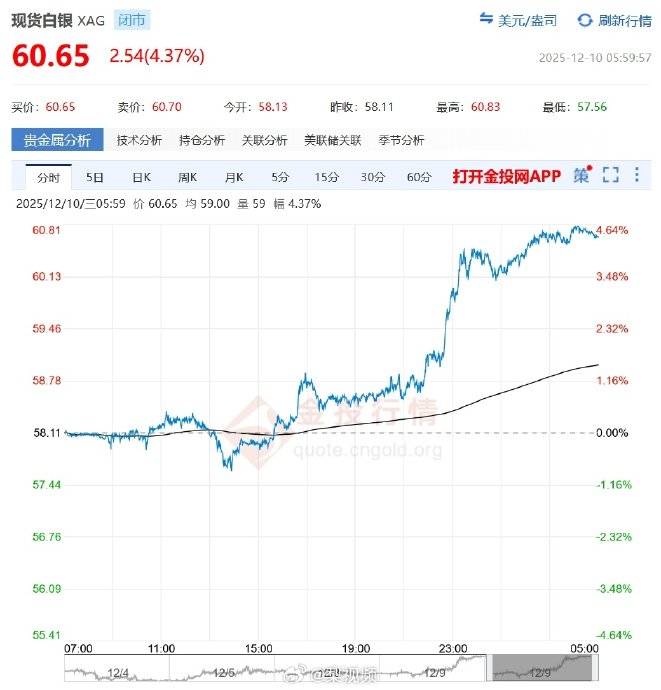
Core Drivers - Silver prices surpassed $60 per ounce for the first time in December 2025, with an annual increase of over 110%, driven by a surge in industrial demand, inventory squeeze, and a shift in financial policy [1] - Market expectations indicate an 87.4% probability of a 25 basis point rate cut by the Federal Reserve in December, which lowers the opportunity cost of holding silver and attracts investment into precious metals as a safe haven [3] - The global photovoltaic installation capacity is expected to exceed 655 GW in 2025, with silver consumption in this sector accounting for 55% of total silver demand, doubling from 2022 levels [4] - The demand for silver in electric vehicles is significantly higher, with each vehicle using 25-50 grams of silver, and AI server chips consuming 30% more silver than traditional devices [5] - A global silver supply shortage has persisted for five consecutive years, with a projected shortfall of 2,700 tons in 2025 due to production cuts from major silver-producing countries and slow growth in recycled silver [5] Inventory Squeeze and Capital Dynamics - Global silver inventories are critically low, with London deliverable stocks at a ten-year low of 233 tons and Shanghai Futures Exchange stocks nearing a critical threshold of 519 tons, leading to urgent silver transport [6] - A "vortex squeeze" effect is observed as inventory shortages rotate between New York, London, and Shanghai, causing Shanghai silver premiums to rise by 3%-4% [6] - The silver market is relatively small, with a market size only one-tenth that of gold, allowing speculative trading to significantly amplify price volatility [6] Market Dynamics and Policy Catalysts - The gold-silver ratio has decreased from over 100:1 to 70:1, indicating a 45% potential for correction, with strong demand for silver as a catch-up asset [7] - The U.S. has classified silver as a "critical mineral," intensifying stockpiling behavior among traders and exacerbating supply constraints [7] Industry Impact - Mining companies like Shengda Resources have seen stock prices increase by 150%, benefiting from higher margins due to rising silver prices [13] - Silver price increases have pressured photovoltaic companies, which see silver costs constituting 15% of component costs, leading some to pause procurement and explore copper paste alternatives [13] - Silver bar manufacturers are experiencing a doubling in sales, while jewelry processing factories have reduced semi-finished product orders by 50% [13] Investment Recommendations - Investors are advised to prioritize bank investment in silver bars (with premiums ≤5%) or silver ETFs (e.g., AGQ), while avoiding silver jewelry with high labor costs and leveraged trading [12]
世界银行发布毛里塔尼亚增长与就业国别报告
Shang Wu Bu Wang Zhan· 2025-12-13 01:46
Core Insights - The World Bank's report on Mauritania highlights the need for economic diversification beyond the mining sector to achieve sustainable and inclusive growth, as the current model is insufficient to meet the country's 2050 income aspirations [1] Economic Challenges and Policy Recommendations - Mauritania faces four long-term economic challenges: low labor demand, weak productivity growth, limited investment outside the mining sector, and high volatility in growth and income [2][3][4] - The labor participation rate is low, especially among youth and women, with 30% of the population living in poverty and only 42% of the labor force engaged in economic activities [2] - Recommendations include enhancing skills training, improving basic education, modernizing labor market regulations, and increasing female labor participation [2] - Productivity growth has been stagnant, with only a 26% increase over the past 22 years, primarily in the mining sector, necessitating reforms to stimulate enterprise innovation and competition [2] - Investment in sectors outside mining is limited, with 52.6% of foreign investment directed towards mining, indicating a need for improved business conditions and a more flexible labor market [3] - Economic growth is highly dependent on the mining sector, making it vulnerable to commodity price fluctuations and climate impacts, which necessitates better fiscal management and climate resilience strategies [4] Strategic Priorities for Reform - The report suggests prioritizing reforms based on feasibility, potential leverage, and impact on growth and employment, focusing on education, regulatory modernization, and private sector support [4] - Emphasis is placed on investing in human capital, particularly in STEM education, to facilitate economic diversification and reduce reliance on commodities [4]
丹尼尔·耶金谈油价走势:既供应过剩,也风险过剩
2 1 Shi Ji Jing Ji Bao Dao· 2025-12-11 07:20
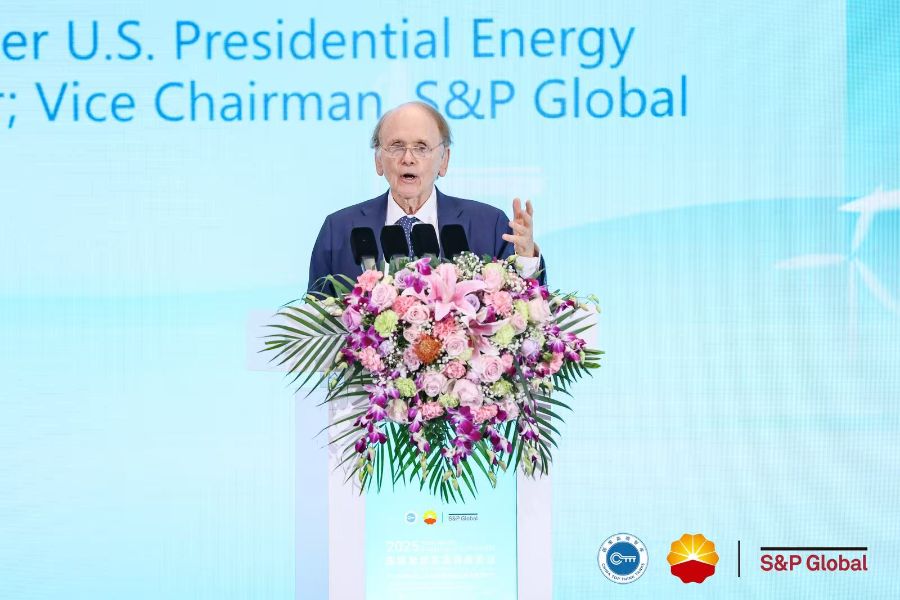
"这是一个既供应过剩、也风险过剩的市场。" 标普全球副董事长、著名能源专家丹尼尔.耶金(Daniel Yergin) 12月11日,在2025国际能源发展峰会期间,标普全球副董事长、著名能源专家丹尼尔.耶金(Daniel Yergin)向媒体指出,全球能源 体系正从"供应过剩"迈向"风险过剩",地缘政治因素正成为影响能源价格的核心变量。 在需求侧,他指出,中国石油需求正在进入关键的"平台期",这一变化标志着全球石油市场的重大转折点。他说,在过去约20 年间,中国贡献了全球石油需求增量的一半,但目前中国石油需求已趋于平稳。 耶金称,国际能源署发布报告指出,为维持当前石油天然气产量,全球需在2050年前每年投入约5400亿美元用于勘探开发。当 前,一些公司正在从过度快速向可再生能源转型的战略中回撤,重新对油气勘探表现出兴趣,同时继续探索多元化技术路线。 此外,耶金还特别强调矿产资源的重要性快速上升,包括铜在内的关键矿产将在全球电气化进程中发挥核心作用。"铜在未来电 气化体系中将发挥关键作用。未来能源体系必须同时考虑传统能源、可再生能源以及关键矿产。" 当被问到中国在绿色能源领域的地位时,耶金表示,中国在太阳能、电 ...
澳洲垄断梦碎?新疆惊现超级大矿,中国反手掌握主动权!
Sou Hu Cai Jing· 2025-12-11 06:43
Core Points - The signing of the "Critical Minerals Cooperation Framework" between the US and Australia aims to stimulate over $100 billion in investment and collaboration [1][3] - The agreement focuses on creating a supply chain for critical minerals that is independent of China, with a commitment of $3 billion for development within six months [5][9] - Australia is facing challenges in refining capacity and cost competitiveness, as it relies heavily on China for rare earth processing, which accounts for over 90% of global capacity [9][20] Group 1: Agreement and Investment - The US and Australia plan to jointly invest $3 billion to develop critical minerals in Australia, with an estimated resource value of $53 billion [5][9] - The US Export-Import Bank has issued a $2.2 billion financing commitment to support supply chain security projects [5] Group 2: Geopolitical Context - The cooperation is seen as a strategic move to counter China's dominance in the critical minerals market, with Australia positioned as a key partner for the US [3][20] - Australia has committed to deepening defense cooperation with the US, including a $3.8 billion purchase of US military equipment [7] Group 3: Challenges for Australia - Australia faces significant cost disadvantages in refining lithium and other minerals, with costs being ten times higher than in China [9][20] - Environmental regulations in Australia have hindered the development of mineral processing facilities, complicating efforts to modify existing laws [11] Group 4: China's Position - China has made significant discoveries in mineral resources, including a giant zircon mine in Xinjiang, which could reshape global supply dynamics [14][16] - China's complete industrial chain from mining to refining gives it a competitive edge in the critical minerals market [16] Group 5: Market Dynamics - The market for critical minerals in Australia has seen a dramatic increase, with market value rising 895% from AUD 8.67 billion in 2014 to AUD 86.21 billion in 2024 [17] - Australian companies are caught between US pressure to reduce reliance on China and the necessity of maintaining access to the Chinese market [20][22]
官宣:央企中国矿产,成立新公司
Xin Jing Bao· 2025-12-10 12:47
Group 1 - The establishment of China Mineral Resources Group International Iron Ore Trading Co., Ltd. marks a new step in the professional and platform-based development of China Mineral Resources Group, supporting the construction and development of Xiong'an New Area [1] - The new company aims to utilize both domestic and international markets and resources to promote fair and just trade of mineral resources, enhancing the resilience of the industrial and supply chains [1] - The focus of the new company will be on iron ore business, emphasizing open collaboration, win-win cooperation, and market-oriented, rule-of-law operations [1] Group 2 - China Mineral Resources Group Co., Ltd. is a state-owned enterprise approved by the State Council, with a registered capital of 20 billion yuan, and is directly managed by the central government [2] - The group is primarily engaged in mineral resource exploration, processing, import and export, freight forwarding, warehousing services, and supply chain management, among other comprehensive services [2] - The group has several subsidiaries and a research institute, including Zhoushan Development, Zhongkuang Guolian, Zhongkuang Data, and Jinshi Industry [2]
数十家央企首批试点可信数据空间
Chang Jiang Shang Bao· 2025-12-10 06:54
Core Viewpoint - The establishment of a trusted data space in the central state-owned enterprise sector is aimed at accelerating the market-oriented and value-oriented process of data elements, leveraging the role of state-owned enterprises in the national data market reform [1][2]. Group 1: Pilot Program and Key Participants - The State-owned Assets Supervision and Administration Commission announced a pilot program for the construction of trusted data space systems, involving major central enterprises such as China Telecom, China Mobile, China Unicom, and others [1]. - The core task of the pilot program is to promote interconnectivity and ecological co-construction of trusted data spaces across industries and enterprises within the central state-owned enterprise sector [1][2]. Group 2: Infrastructure and Operational Model - The trusted data space will be built on a model of "co-construction, co-creation, sharing, and common use," utilizing dedicated public cloud computing and data transmission networks provided by the three major telecom operators [1][2]. - A unified set of rules for data circulation and a secure environment for trusted data usage will be established, facilitating efficient data sharing, trading, and utilization [2]. Group 3: Innovation and Collaboration - The trusted data space will explore innovative data operation models and revenue distribution mechanisms, promoting collaboration among central enterprises and their upstream and downstream partners [3]. - The initiative aims to incubate new technologies, products, models, and business formats through demand-driven approaches and scenario validation, thereby empowering industrial upgrades and high-quality development [3].



西藏珠峰:塔吉克斯坦共和国政府于2025年上半年调整精矿产品的出口相关税收
Zheng Quan Ri Bao Wang· 2025-12-09 13:49
证券日报网讯12月9日,西藏珠峰(600338)在互动平台回答投资者提问时表示,塔吉克斯坦共和国政 府于2025年上半年调整精矿产品的出口相关税收,对于公司生产冶炼产品涉及相关税收政策没有变化。 ...

至源控股:在原有业务以外,将更注重硫铁、镍、钛、钒、磷和铝资源的勘探、开采、加工及贸易
Zhi Tong Cai Jing· 2025-12-09 10:59
Core Viewpoint - The company will change its name from 荣晖国际集团有限公司 to 至源控股有限公司 and will expand its business focus to include exploration, mining, processing, and trading of various resources such as sulfur iron, nickel, titanium, vanadium, phosphorus, and aluminum, while also considering expansion into gold, silver, copper, and lithium sectors [1] Business Expansion - The company aims to diversify its business beyond its current operations, which include commodity trading (iron ore, nickel ore, and precious metals), ore processing, and financial licensing [1] - The board believes that broadening the business focus will benefit future growth and development, aligning with the best interests of the company and its shareholders [1]
中信建投证券:资源板块投资应围绕三大主线
Xin Hua Cai Jing· 2025-12-08 03:38
Core Viewpoint - The report from CITIC Securities highlights the increasing investment value of strategic mineral resources due to heightened global macroeconomic and geopolitical uncertainties, particularly in the fourth quarter [1] Group 1: Investment Opportunities - Copper is expected to benefit from tight supply at the mining level and increased demand driven by the green economy [1] - Aluminum faces constraints due to domestic capacity limits but will benefit from lightweighting and green electricity demand [1] - Gold possesses unique attributes for hedging against risks and inflation [1] Group 2: Investment Strategies - Investment in the resource sector should focus on three main lines: first, supply rigidity, emphasizing varieties significantly constrained by resource limitations and capacity policies [1] - Second, green demand, capturing structural growth driven by energy transition in sectors like new energy vehicles and photovoltaic wind power [1] - Third, financial attributes, utilizing changes in liquidity expectations to allocate to safe-haven assets [1]
