
重卡

Search documents
十大券商:4000点后如何应对?结构性机会仍存,盘整震荡中布局再平衡
Zheng Quan Shi Bao Wang· 2025-11-02 23:09
Group 1 - The current index level is not as critical as the underlying quality of the market, with structural opportunities still present despite short-term fears in the technology sector [1] - The overall growth is entering a recovery phase, with improvements in net profit margins across various sectors, particularly in emerging technologies and cyclical industries [2] - The market is expected to experience a period of consolidation, with a potential shift in investment styles as the year-end approaches [4] Group 2 - The focus is shifting towards internal structural optimization following the completion of the third-quarter reports, with an emphasis on sectors like AI and export-related industries [6] - The technology sector remains a key investment theme, although short-term volatility may increase due to adjustments in fund allocations [8] - The outlook for the market remains optimistic in the medium to long term, supported by stable policies and a recovering economic environment [9]

“银十”重卡销量同比涨4成 实现七连涨
Zhi Tong Cai Jing· 2025-11-02 22:49
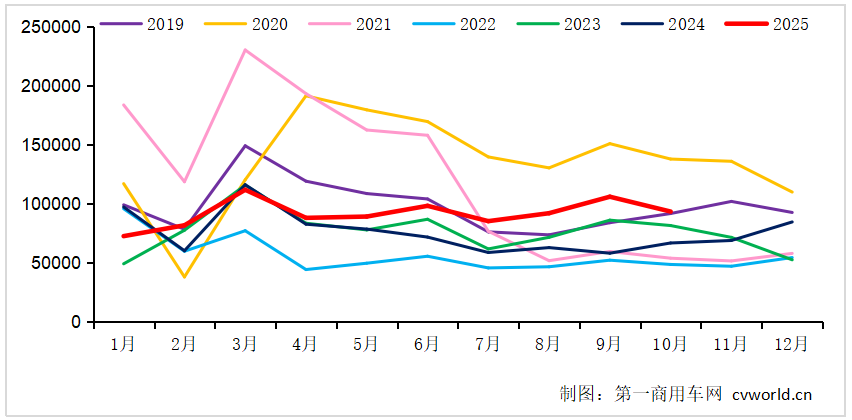
Core Viewpoint - The heavy truck market in China has shown significant growth in October 2025, driven by the old truck replacement policy, with sales reaching approximately 93,000 units, marking a 40% year-on-year increase despite a 12% month-on-month decline from September [1][4]. Sales Performance - In October 2025, the heavy truck market sold around 93,000 units, the second-highest level in the past eight years, only lower than October 2020's 137,500 units [4]. - Cumulative sales from January to October 2025 exceeded 916,000 units, representing a year-on-year growth of about 22%, with expectations to surpass 1 million units by the end of November [4]. Market Trends - The heavy truck market has experienced seven consecutive months of growth from April to October 2025, with an average growth rate of 39% during this period [1]. - The terminal sales of heavy trucks have been strong, with significant year-on-year increases observed from April to October, particularly in September with a 92% increase [4]. Export Growth - Heavy truck exports have also shown steady growth, with October 2025 expected to see a nearly 10% year-on-year increase in export wholesale volume, leading to an annual export total exceeding 300,000 units [5]. Policy Impact - The growth in the heavy truck market is largely attributed to the "old-for-new" policy for operational trucks, which has been a significant driver since April 2025 [8]. - Despite some local governments suspending subsidies due to fiscal constraints, the reactivation of subsidies in certain areas and the impending deadline for the policy are expected to sustain high growth rates in November [8]. Segment Performance - In October 2025, the terminal sales of natural gas heavy trucks are projected to have doubled year-on-year, while electric heavy trucks are expected to see a 140% increase [9][10]. - The penetration rate of electric heavy trucks reached nearly 28% in October, driven by the old-for-new policy and upcoming tax incentives for electric vehicles [10]. - Diesel heavy trucks also contributed to growth, with an expected year-on-year increase of nearly 20% in terminal sales for October [11].

【十大券商一周策略】4000点后如何应对?结构性机会仍存,盘整震荡中布局再平衡
Zheng Quan Shi Bao Wang· 2025-11-02 15:37
Group 1 - The current market index is at a similar level to 2015, but with significantly better quality and lower valuation, indicating that there is no need to overly focus on the index points themselves [1] - Structural opportunities still exist in various sectors such as new energy, chemicals, consumer electronics, resources, and machinery, despite short-term investor caution primarily in the technology sector [1] - The focus for the remainder of the year should be on structural adjustments, with recommendations to invest in traditional manufacturing upgrades, Chinese companies going abroad, and edge AI [1] Group 2 - The overall growth is entering a recovery cycle, with improvements in net profit margins across various sectors due to accelerated overseas expansion and the implementation of anti-involution measures [2] - The performance of large and mid-cap stocks, which are closely related to the overall economy, shows greater earnings elasticity, indicating a positive trend in China's asset growth [2] - Certain sectors, including emerging technology and cyclical industries, are in a recovery and expansion phase, while others face excess supply pressures [2] Group 3 - The A-share market is expected to experience a period of horizontal adjustment due to the exhaustion of previous upward momentum and the upcoming policy vacuum [4] - The electronic industry and innovation sectors have seen record high allocations in fund reports, suggesting potential structural adjustments in the market [4] - Key investment areas include coal, oil and gas, new energy, non-bank financials, public utilities, media, food and beverage, and transportation [4] Group 4 - The market trend remains positive, supported by macro policies and resilient fundamentals from third-quarter earnings reports [5] - Technology companies with real technological barriers and those aligned with national strategies are expected to be key investment themes [5] - The construction of projects is anticipated to enhance the industrial chain, benefiting companies through increased orders and performance releases [5] Group 5 - The focus is shifting from macro risks to internal structural optimization following the completion of the third-quarter reports and the resolution of U.S.-China trade discussions [6] - The AI sector remains a mid-term industry focus, with potential for rotation within growth sectors [6] - Attention is drawn to industries such as non-ferrous metals, AI applications, power storage, and emerging themes like controlled nuclear fusion and commercial aerospace [6] Group 6 - The market is expected to experience short-term fluctuations and adjustments, with a long-term optimistic outlook due to stable internal and external policies [7] - The new profit growth cycle has begun, with a focus on low-base sectors that may release greater elasticity next year [7] - The technology sector's high allocation in institutional portfolios indicates a need to monitor performance and potential shifts in investment strategies [7] Group 7 - The market is undergoing a rebalancing phase, with a high concentration of active equity fund holdings in the TMT sector, indicating a shift in investor sentiment [8] - There is a growing skepticism towards capital expenditure expansion in overseas markets, while domestic industries are expected to benefit from improved operational conditions [8] - Attention is recommended for upstream resources and sectors benefiting from domestic price stabilization and economic recovery [8] Group 8 - The technology growth sector is experiencing a slowdown in short-term over-allocation, leading to increased volatility [9] - The TMT sector's allocation by funds has reached historical highs, indicating a strong focus on technology growth as a primary market driver [10] - The potential for further increases in fund allocations to the TMT sector suggests ongoing interest and investment opportunities in technology [10] Group 9 - The expectation of a shift from strategic decoupling to a phase of cooperation between the U.S. and China is likely to enhance risk appetite for RMB assets [11] - The market is not expected to experience a straightforward upward trajectory, but the overall bullish sentiment remains intact despite potential high-level fluctuations [11] - The focus on low-position cyclical sectors and overseas opportunities is anticipated to be a key investment strategy moving forward [11]
Q3财报汽零温和增长,看好明年汽车板块预期修复:汽车行业周报(20251027-20251102)-20251102
Huachuang Securities· 2025-11-02 12:51
Investment Rating - The report maintains a positive investment recommendation for the automotive sector, anticipating a recovery in 2025 [1][2]. Core Insights - The automotive industry experienced moderate growth in Q3, with weak performance from car manufacturers and overall mild growth in automotive parts. The report highlights potential catalysts for recovery in 2025, including better-than-expected retail sales post-Spring Festival, improved export performance, and favorable policies [1][5]. Data Tracking - In late October, the discount rate for vehicles increased by 9.6%, with a slight month-on-month rise of 0.1 percentage points. The average discount amount was 21,782 yuan, showing a month-on-month increase of 398 yuan [3][4]. - The report tracks various automotive raw material prices, noting significant changes in lithium carbonate, aluminum, copper, palladium, and rhodium prices [6][28]. Market Performance - The automotive sector saw a weekly increase of 0.69%, ranking 15th out of 29 sectors. The report details the performance of various indices, with the automotive parts sector rising by 1.13% and commercial vehicles by 4.41% [8][31]. Industry News - Key developments include the call for a phased exit of vehicle purchase tax reductions, the cessation of vehicle replacement subsidies in Shenzhen, and the launch of new models by various manufacturers [29][30].




9.3万辆!10月重卡销量大涨4成,燃气车和电动重卡表现如何?| 光耀评车
第一商用车网· 2025-11-02 12:45
Core Viewpoint - The heavy truck market in China has shown significant growth in October 2025, driven by policies encouraging the replacement of old vehicles, despite a slight month-on-month decline in sales compared to September 2025 [2][5][8]. Group 1: Sales Performance - In October 2025, approximately 93,000 heavy trucks were sold, marking a 40% year-on-year increase from 66,400 units in the same month last year, although it represents a 12% decrease from September 2025 [2][5]. - Cumulatively, from January to October 2025, the heavy truck market has sold over 916,000 units, reflecting a 22% year-on-year growth, with expectations to surpass 1 million units by November [5]. - The average growth rate from April to October 2025 has been 39%, with consistent year-on-year increases observed each month [2][5]. Group 2: Market Drivers - The growth in the heavy truck market is largely attributed to the "old-for-new" vehicle replacement policy, which has been a significant driver since April 2025 [8]. - Despite some local governments suspending subsidies due to fiscal constraints, the release of the last batch of subsidy funds in late September has reignited some support for the market [8]. Group 3: Segment Performance - The natural gas heavy truck segment has seen a remarkable increase, with terminal sales expected to grow by approximately 120% year-on-year in October 2025, following a 149% increase in September [10][12]. - The electric heavy truck segment is also performing well, with an anticipated terminal sales volume of around 20,000 units in October 2025, representing over a 140% year-on-year increase [12]. - Diesel heavy trucks are projected to see a nearly 20% increase in terminal sales in October 2025, contributing significantly to overall market growth [14].

中国重汽 | 2025Q3:业绩符合预期 政策驱动需求增长【民生汽车 崔琰团队】
汽车琰究· 2025-11-02 08:45
Event Overview - The company released its Q3 2025 report, showing revenue of 40.49 billion yuan for the first three quarters of 2025, a year-on-year increase of 20.55%. The net profit attributable to shareholders was 1.05 billion yuan, up 12.45% year-on-year. The Q3 2025 revenue was 14.33 billion yuan, reflecting a year-on-year increase of 55.98% and a quarter-on-quarter increase of 8.11% [2]. Analysis and Judgment - Q3 2025 performance met expectations, with revenue growth driven by core customers such as Chery and Geely, whose sales increased by 16.7% and 52.0% year-on-year, respectively [2]. - The net profit attributable to shareholders for Q3 2025 was 378 million yuan, a year-on-year increase of 15.2% and a quarter-on-quarter increase of 46.4%. The gross profit margin was 20.5%, down 1.0 percentage points year-on-year but up 1.3 percentage points quarter-on-quarter [2]. - The expense ratios for sales, management, R&D, and financial costs were 0.64%, 0.46%, 1.76%, and -0.51%, respectively, showing a year-on-year decline due to improved scale efficiency [2]. Export and Market Dynamics - Heavy truck exports saw both year-on-year and quarter-on-quarter increases in Q3 2025, with a total export volume of 85,900 units, up 22.91% year-on-year and 5.40% quarter-on-quarter. The group's heavy truck export volume was 41,000 units, reflecting a year-on-year increase of 55.10% [3][4]. - The group maintained a market share of 47.77%, an increase of 9.91 percentage points year-on-year, indicating strong competitive positioning in the industry [4]. Policy Impact and Domestic Demand - A new policy announced on March 18, 2025, by the Ministry of Transport and other agencies aims to promote the replacement of old heavy trucks, which is expected to boost domestic demand. The policy includes subsidies for trucks meeting the National IV emission standards and is anticipated to benefit companies like China National Heavy Duty Truck Corporation [5]. Investment Recommendations - The industry demand is recovering, and the company is expected to benefit from sustained high export conditions. Revenue projections for 2025-2027 are 56.16 billion, 64.02 billion, and 71.71 billion yuan, with net profits of 1.62 billion, 1.87 billion, and 2.17 billion yuan, respectively [6].


行业回暖加速业绩上行 中国重汽三季度营收净利创五年同期最好水平
Jing Ji Guan Cha Wang· 2025-10-31 13:30
Core Viewpoint - China National Heavy Duty Truck Group (China National Heavy Truck) reported strong financial performance in Q3 2025, with significant year-on-year growth in revenue and profit, driven by strategic positioning in the industry and advancements in new energy and intelligent upgrades [1][2]. Financial Performance - For the first three quarters of 2025, the company achieved revenue of 40.49 billion yuan, a year-on-year increase of 20.6%, and a net profit attributable to shareholders of 1.05 billion yuan, up 12.5% [1]. - In Q3 alone, revenue, net profit, and non-recurring net profit grew by 56.0%, 21.0%, and 30.9% year-on-year, respectively, with sequential growth of 8.1%, 6.5%, and 7.1% compared to Q2 [1]. Industry Context - The heavy truck industry in China saw a total sales volume of 822,800 units in the first three quarters of 2025, reflecting a year-on-year growth of 20.49%, indicating a recovery in the market [2]. - The "old-for-new" policy and industry upgrades provided dual support for the heavy truck sector, which traditionally experiences a seasonal downturn in Q3 [1][2]. Product Development and Market Position - China National Heavy Truck launched the new generation Huanghe H7 high-end heavy truck in Q3, receiving strong market recognition [2]. - The company reported a robust order backlog and maintained a leading market share in the heavy truck sector [2]. New Energy Initiatives - The company is focusing on new energy heavy trucks, leveraging its strong R&D capabilities to overcome technical challenges and expand its product lineup, including the Howo TS7 range-extended heavy truck [2]. - The trend towards electrification in mid-to-short distance transportation is expected to grow as policy incentives and technological advancements continue [2]. Export Performance - The export business remains a stronghold for China National Heavy Truck, with a cumulative export volume of 111,000 heavy trucks in the first three quarters of 2025, including a record monthly export of 15,000 units in September [3]. - The company has successfully expanded its export markets to regions such as Africa, Southeast Asia, Central Asia, and the Middle East [3]. Market Outlook - Analysts express optimism regarding the growth potential of the heavy truck industry, anticipating continued strong sales driven by the "old-for-new" policy and seasonal demand peaks [3]. - The industry's growth is expected to be supported by the recovery of domestic heavy truck market conditions and ongoing export growth [3].
美银证券:升潍柴动力目标价至21.5港元 第三季净利润胜预期
Zhi Tong Cai Jing· 2025-10-31 08:21
Core Viewpoint - Bank of America Securities has raised its earnings per share forecasts for Weichai Power (000338) for 2025 to 2027 by 1%, 2%, and 2% respectively, and has increased the target price for Hong Kong shares from HKD 20.4 to HKD 21.5, and for A-shares from CNY 20.4 to CNY 20.5, while maintaining a "Buy" rating [1] Financial Performance - Weichai Power reported third-quarter revenue of CNY 57.4 billion, representing a year-on-year growth of 11%, which is also 11% higher than the bank's expectations [1] - The gross margin for the quarter was 21.4%, showing a decline of 0.7 percentage points year-on-year and quarter-on-quarter, which is 0.4 percentage points lower than the bank's forecast, attributed to an increase in the revenue share from low-margin heavy truck business [1] - Net profit increased by 30% year-on-year to CNY 3.2 billion, exceeding the bank's expectations [1]

美银证券:升潍柴动力(02338)目标价至21.5港元 第三季净利润胜预期
智通财经网· 2025-10-31 08:17
Group 1 - The core viewpoint of the report is that Bank of America has raised its earnings per share forecasts for Weichai Power for the years 2025 to 2027 by 1%, 2%, and 2% respectively, and has increased the target price for Hong Kong shares from HKD 20.4 to HKD 21.5, while the target price for A-shares has been raised from CNY 20.4 to CNY 20.5, maintaining a "Buy" rating [1] - Weichai Power's third-quarter revenue reached CNY 57.4 billion, representing an 11% year-on-year growth, which is also 11% higher than the bank's expectations [1] - The gross profit margin for Weichai Power was 21.4%, showing a decline of 0.7 percentage points year-on-year and quarter-on-quarter, which is 0.4 percentage points lower than the bank's expectations, attributed to the increased revenue share from low-margin heavy truck business [1] - The net profit for Weichai Power increased by 30% year-on-year to CNY 3.2 billion, exceeding the bank's expectations [1]
中国重汽今年第三季度营收、净利创近五年同期最高水平
Zheng Quan Ri Bao Wang· 2025-10-31 02:42
Group 1 - The core viewpoint of the news is that China National Heavy Duty Truck Group Co., Ltd. (China National Heavy Duty Truck) reported strong financial performance for the first three quarters of 2025, with significant year-on-year growth in revenue and net profit [1] - For the first three quarters, the company achieved operating revenue of 40.49 billion yuan, a year-on-year increase of 20.55%, and a net profit attributable to shareholders of 1.05 billion yuan, up 12.45% [1] - In Q3 alone, the company saw a remarkable performance with operating revenue, net profit, and net profit excluding non-recurring items increasing by 55.98%, 20.99%, and 30.89% respectively compared to the same period last year, marking the highest levels in five years [1] Group 2 - The company has improved internal management efficiency, resulting in a decrease in management expense ratio by 0.17 percentage points [1] - The heavy truck industry has shown resilience during the traditional off-season, supported by policies encouraging vehicle upgrades and industry transformation [1] - According to the China Association of Automobile Manufacturers, heavy truck sales in China reached 822,800 units in the first three quarters of 2025, reflecting a year-on-year growth of 20.49% [1] Group 3 - In the field of new energy, the company is leveraging its strong R&D capabilities to overcome technical challenges and expand its product offerings, including the launch of the HOWO TS7 extended-range heavy truck [2] - The company's export business remains a stronghold, with products covering key regions such as Africa, Southeast Asia, Central Asia, and the Middle East, maintaining a leading market share [2] - Analysts predict continued growth in the heavy truck industry, driven by the effects of vehicle replacement policies and the traditional sales peak in September and October, with annual sales forecasted to reach 1.07 million units [2]