
农产品加工

Search documents
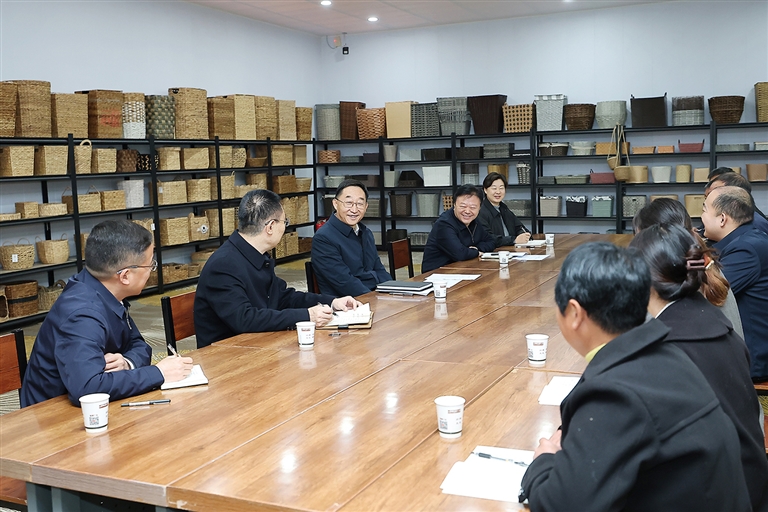
刘宁到开封兰考县杞县龙亭区宣讲全会精神并调研时强调深入学习贯彻党的二十届四中全会精神 加快发展县域主导产业推进乡村全面振兴
He Nan Ri Bao· 2025-11-10 02:07
Group 1 - The provincial secretary Liu Ning conducted research on agricultural production, rural revitalization, and industrial development in Kaifeng City, focusing on the integration of poverty alleviation and rural revitalization [2][3] - Liu Ning emphasized the importance of modernizing agriculture and rural areas as part of China's overall modernization strategy, urging the cultivation of rural characteristic industries and improving mechanisms to connect farmers with employment opportunities [3][4] - The meeting highlighted the need for high-quality development and the promotion of county governance, with a focus on enhancing local industries and advancing the integration of culture and tourism [4][5] Group 2 - Liu Ning praised the "garlic-corn" intercropping model in Qi County and stressed the importance of extending the agricultural industry chain to increase farmers' income [5] - The research included visits to companies like Chery Automobile in Longting District, where the focus was on promoting technological and industrial innovation in line with trends in electrification and automation in the automotive sector [5] - Liu Ning encouraged enterprises to invest more in Henan, emphasizing the need for high-value product development and the establishment of a complete industrial ecosystem [5]

万联晨会-20251110
Wanlian Securities· 2025-11-10 00:44
Core Viewpoints - The A-share market experienced a decline last Friday, with the Shanghai Composite Index falling by 0.25% to 3997.56 points, the Shenzhen Component Index down by 0.36%, and the ChiNext Index decreasing by 0.51% [2][8] - The total trading volume in the A-share market reached 2.02 trillion RMB, with over 3000 stocks declining. The basic chemical, comprehensive, and oil and petrochemical sectors led the gains, while the computer and electronics sectors lagged [2][8] - In the Hong Kong market, the Hang Seng Index dropped by 0.92%, and the Hang Seng Technology Index fell by 1.80%. The US stock market showed mixed results, with the Dow Jones up by 0.16%, the S&P 500 up by 0.13%, and the Nasdaq down by 0.21% [2][8] Industry Overview - The agricultural, forestry, animal husbandry, and fishery sector reported a total revenue of 952.415 billion RMB in the first three quarters of 2025, marking a year-on-year increase of 5.59%, ranking 10th among the Shenwan primary industries. The net profit attributable to shareholders reached 36.747 billion RMB, up by 11.81%, ranking 11th [10] - The return on equity (ROE) for the sector was 6.62%, an increase of 0.45 percentage points year-on-year, while the gross profit margin and net profit margin were 11.13% and 3.96%, respectively, reflecting increases of 0.41 and 0.33 percentage points [10] - The planting industry achieved a revenue of 70.967 billion RMB, a year-on-year increase of 4.74%, with a net profit of 1.395 billion RMB, up by 4.06%. The sector's profit growth has turned positive, indicating improving performance [11] - The feed industry reported a revenue of 215.297 billion RMB, a year-on-year increase of 12.04%, with a net profit of 6.058 billion RMB, up by 22.24%. Most companies in this sector saw revenue growth, and the net profit margin improved due to reduced industry costs [11] - The agricultural product processing sector generated a revenue of 259.411 billion RMB, a slight decline of 0.31%, but the net profit surged by 52.36% to 5.188 billion RMB, indicating a strong profit performance despite a slight revenue drop [12] - The breeding industry recorded a revenue of 366.406 billion RMB, a year-on-year increase of 6.97%, with a net profit of 23.296 billion RMB, up by 4.52%. However, the growth rate of revenue and net profit showed a decline compared to the second quarter [13] Investment Recommendations - The agricultural, forestry, animal husbandry, and fishery sector's performance in the first three quarters of 2025 showed steady revenue and profit growth, despite a slowdown compared to the first half of the year. The feed, agricultural product processing, and animal health sectors exhibited significant profit growth, while the breeding industry's revenue growth has slowed [10][13] - The pet food industry currently has a low concentration, with domestic companies gradually emerging, indicating substantial growth potential. It is recommended to focus on stable operations of leading pig breeding companies and high-quality domestic pet food brands [13]
小玉米大收益激发振兴活力
Xin Lang Cai Jing· 2025-11-09 23:16
Core Insights - The article highlights the innovative "fresh-lock" technology used in the processing of sweet corn, ensuring the preservation of taste and nutrition while maintaining product safety and health standards [1] - The collaboration between the company and local farmers through planting agreements enhances agricultural productivity and supports local economic growth [2] Group 1: Company Operations - The processing facility employs 11 standardized procedures, including manual selection, mechanical peeling, bubble cleaning, and temperature-controlled blanching, to ensure the natural quality of the sweet corn [1] - The company has implemented a rapid 3-hour fresh-lock technology to retain the sweetness and nutritional value of the corn harvested [1] - The processing capacity of the facility is 100,000 ears of corn per day, with a total expected production of 3 million ears over a 30-day processing period [1] Group 2: Economic Impact - The project contributes an additional 250,000 yuan to the village collective economy annually and engages over 200 local villagers in various stages of production, from planting to processing [2] - Each participating villager is expected to earn over 3,000 yuan, demonstrating a significant impact on local income levels [2] - The initiative exemplifies a win-win framework for enterprises, collectives, and farmers, promoting rural revitalization and economic sustainability [2]
进博会解锁“从农场到餐桌”的健康密码
Qi Huo Ri Bao Wang· 2025-11-09 16:36
Core Insights - The eighth China International Import Expo (CIIE) took place from November 5 to 10, showcasing over 2,000 enterprises, marking the largest scale in its history [1] - The theme of this year's expo was "From Global Farms to Chinese Tables," highlighting the journey of food across borders [1] - The event coincided with China's "Weight Management Year," reflecting a shift towards healthier and lighter food options among Chinese consumers [1] Company Highlights - Yihai Kerry Arawana Holdings, a long-time participant, showcased its "Golden Dragon Fish Fengyi Hall" functional products, emphasizing health and safety in food [1][2] - The company introduced plant sterol protein milk and glycerol diester oil, targeting health-conscious consumers and aligning with national health initiatives [2] - Louis Dreyfus Company presented its "Soyadoc" specialty feed protein brand, focusing on enhancing animal nutrition and health through innovative products [3] - Cargill displayed a range of innovative products, including new frying oils and functional ingredients, to meet the diverse health needs of Chinese consumers [4]
棕榈油:短期或随下周MPOB报告利空出尽,关注11月减产兑现情况,豆油:多配为主,未有独立上行驱动
Guo Tai Jun An Qi Huo· 2025-11-09 09:31
Report Industry Investment Rating No relevant content provided. Core Viewpoints of the Report - Short - term may show a state of "bad news exhausted" after the release of next week's MPOB report. The downward drive of the supply side in the production - reduction season requires additional high - yield to stimulate. The upward opening of the palm oil price space can only expect a smooth production reduction in the fourth quarter, waiting for new story imagination space injected by floods in the producing areas and lower - than - expected production in the first quarter. - With the callback pressure of palm oil, soybean oil is the main choice for multi - allocation, but it has no independent upward drive. Attention should be paid to whether the Sino - US trade result can be finally reached and the sustainability of soybean oil exports. [2][4][5] Summary by Related Catalogs Last Week's Viewpoints and Logic - **Palm Oil**: The market worried that Malaysia's production in the fourth quarter would still be large, and there was a lack of effective demand stories for B50 and US soybean oil. However, India's buying interest improved, and there were signs of stabilization in the second half of the week in the producing areas. The palm oil 01 contract fell 1.59% last week, may stabilize in the short - term, and there is still a possibility of a second dip by the end of the year. Attention should be paid to the support at the 8400 - 8600 level. [1] - **Soybean Oil**: The production situation in Brazil is good. In a large - supply environment, soybean oil is difficult to have an independent driving force and mainly fluctuates weakly following the oil and fat sector. However, the strong export demand of soybean oil and the inevitable inventory - reduction process make soybean oil still maintain a relatively strong operation among oil and fat varieties. The soybean oil 01 contract rose 0.39% last week. [1] This Week's Viewpoints and Logic - **Palm Oil**: Malaysia's production and rainfall conditions this year are generally good, which may make the fourth - quarter production above the level of the same period last year. After the inventory in October accumulated to nearly 2.5 million tons, the year - end inventory will slowly decline to around 2.3 million tons, a historically high level, and continue to decline to about 2 million tons by next March. The market has not fully priced in the high - level production in November and December (1.75 million and 1.65 million tons respectively). In Indonesia, affected by the possible tax cut in December, the export pressure in November is large, and the price difference between Indonesia and Malaysia has been declining, giving room for the consumer areas to replenish stocks. Overall, it is very likely that the inventory in Indonesia and Malaysia will recover to more than 5.5 million tons by the end of the year, even approaching 6 million tons. The Indian CPO's recent import profit has risen rapidly, which may play a certain price - bottoming role, but there is no additional positive news. The EPA announced new small - refinery exemptions, which is a negative surprise for the biodiesel demand in 2026. Without a substantial improvement in US soybean oil, international oil and fat prices are suppressed and lose the biggest driving force for reversal. [2] - **Soybean Oil**: The cost - effectiveness of US soybean oil in the biodiesel sector has declined rapidly recently, and there is a large inventory - accumulation pressure by the end of the year. Before the specific blending policy for next year is implemented, it is too early for US soybean oil to rebound. The EPA's new small - refinery exemptions are a negative surprise for the biodiesel demand in 2026. The final release of RVO is likely to be postponed to January next year or later. Before the policy is implemented, the inevitable inventory - accumulation trend of US soybean oil will make it unable to officially reflect the tight - fundamental expectation. The price of US soybean oil will mainly fluctuate following crude oil, diesel crack spreads, and US soybean prices and is still in a downward channel. In November, sufficient rainfall in the central - western part of Brazil and Paraná State is conducive to sowing acceleration. The new - season soybean prospects in the three South American countries are still positive, and a high - yield pattern is taking shape. The large - supply pattern of global soybeans in 2025/2026 restricts the upward driving force of the international soybean system. The boost effect of China's promised purchase of US soybeans on US soybean exports is limited. In the domestic market, there is almost no gap in soybean arrivals until January. The export demand may keep domestic soybean oil in a monthly inventory - reduction process until March next year. Therefore, among oil and fat varieties, especially when palm oil still has callback pressure, soybean oil is the main choice for multi - allocation, but it has no independent upward driving force. Attention should be paid to whether the Sino - US trade result can be finally reached and the sustainability of soybean oil exports. [4] Basic Market Data of the Futures Market | Futures Variety | Opening Price | Highest Price | Lowest Price | Closing Price | Change Rate | | --- | --- | --- | --- | --- | --- | | Palm Oil Main Continuous Contract | 8,732 yuan/ton | 8,756 yuan/ton | 8,562 yuan/ton | 8,660 yuan/ton | - 1.59% | | Soybean Oil Main Continuous Contract | 8,108 yuan/ton | 8,230 yuan/ton | 8,062 yuan/ton | 8,184 yuan/ton | 0.39% | | Rapeseed Oil Main Continuous Contract | 9,396 yuan/ton | 9,610 yuan/ton | 9,299 yuan/ton | 9,533 yuan/ton | 0.78% | | Malaysian Palm Oil Main Continuous Contract | 4,204 ringgit/ton | 4,219 ringgit/ton | 4,080 ringgit/ton | 4,110 ringgit/ton | - 2.26% | | CBOT Soybean Oil Main Continuous Contract | 48.78 cents/pound | 50.33 cents/pound | 48.27 cents/pound | 49.63 cents/pound | 2.08% | | Futures Variety | Trading Volume | Trading Volume Change | Open Interest | Open Interest Change | | --- | --- | --- | --- | --- | | Palm Oil Main Continuous Contract | 2,782,635 lots | 162,078 | 416,049 lots | 23,054 | | Soybean Oil Main Continuous Contract | 2,620,557 lots | - 168,991 | 471,543 lots | - 21,478 | | Rapeseed Oil Main Continuous Contract | 2,641,662 lots | - 18,678 | 210,490 lots | - 10,248 | | Spread Variety | This Week's Closing Price | Last Week's Closing Price | Change Rate | | --- | --- | --- | --- | | Rapeseed - Soybean 01 Spread | 1,349 yuan/ton | 1,294 yuan/ton | 4.25% | | Soybean - Palm 01 Spread | - 476 yuan/ton | - 636 yuan/ton | 25.16% | | Palm Oil 1 - 5 Spread | - 70 yuan/ton | - 50 yuan/ton | - 40.00% | | Soybean Oil 1 - 5 Spread | 224 yuan/ton | 170 yuan/ton | 31.76% | | Rapeseed Oil 1 - 5 Spread | 405 yuan/ton | 281 yuan/ton | 44.13% | | Warehouse Receipt Variety | This Week | Last Week | Change Value | | --- | --- | --- | --- | | Palm Oil | 650 lots | 0 | 650 | | Huanghai (not clear what it is) | 26,014 lots | 27,644 lots | - 1,630 | | Rapeseed Oil | 5,024 lots | 7,540 lots | - 2,516 | [7]
小果干带来大合作(进博会故事)
Ren Min Ri Bao· 2025-11-08 23:34
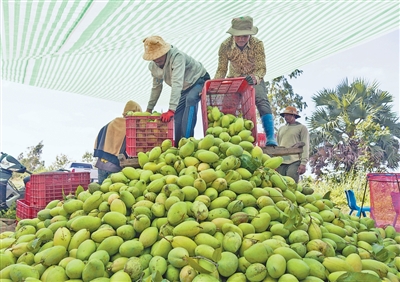
Group 1 - The core product of Cambodia at the China International Import Expo (CIIE) is the "High Lomi" mango, which has gained popularity in the Chinese market, leading to increased investment from Chinese companies in Cambodia's processing industry [2][3] - The demand for Cambodian mangoes, particularly the "High Lomi" variety, has significantly increased since the approval for export to China, with orders growing year by year [3][4] - The CIIE has facilitated a transformation in the Cambodian mango industry, allowing local farmers to connect with Chinese markets and enhancing their economic prospects [4][6] Group 2 - The establishment of mango processing plants by Chinese companies in Cambodia has improved the quality and marketability of Cambodian mango products, benefiting local farmers and creating job opportunities [6][7] - The introduction of e-commerce platforms has expanded the reach of Cambodian agricultural products, with sales of mango products increasing significantly since the implementation of the China-Cambodia Free Trade Agreement [7][8] - The overall agricultural export value of Cambodia has seen a growth of 7.5% year-on-year, with China being a key market, highlighting the importance of trade agreements and platforms like the CIIE in boosting exports [8]
柬埔寨芒果进入中国市场 吸引中企赴柬投资设厂 小果干带来大合作(进博会故事)
Ren Min Ri Bao· 2025-11-08 22:12
Core Insights - The Cambodian mango, particularly the "Koh Lanh" variety, has gained significant traction in the Chinese market, with increasing orders and investments from Chinese companies in Cambodia's processing industry [1][2][3] Group 1: Market Demand and Growth - The "Koh Lanh" mango is a key product for Cambodia, known for its size, thick flesh, and sweetness, making it ideal for high-quality dried mango production [2] - The demand for Cambodian mangoes in China has been rising, with the number of orders increasing year by year since the mangoes were approved for export to China [2][6] - The export volume of Cambodian dried mangoes is projected to grow by 19.3% year-on-year in the first half of 2025, driven by the strong demand from the Chinese market [6] Group 2: Investment and Economic Impact - Chinese investments in mango processing facilities in Cambodia have improved local processing capabilities and provided economic benefits to local farmers [4][5] - The establishment of modern processing lines has created job opportunities for local families, allowing them to earn dual incomes from farming and factory work [4] - The Cambodian government has reported that the total export value of major agricultural products exceeded $2.4 billion from January to July 2025, with China being a crucial market [6] Group 3: Trade Facilitation and Future Prospects - The signing of the upgraded China-ASEAN Free Trade Area 3.0 agreement is expected to enhance trade facilitation and increase the accessibility of Cambodian agricultural products to Chinese consumers [7] - The participation in trade exhibitions like the China International Import Expo (CIIE) has provided a unique platform for Cambodian products, enhancing their visibility and market reach [6][7] - The introduction of fresh durians from Cambodia to China marks a significant expansion of Cambodian fruit exports, indicating potential for further diversification of agricultural exports [7]
卢旺达出台《非洲大陆自由贸易区国家实施战略》
Shang Wu Bu Wang Zhan· 2025-11-08 17:00
Core Insights - The Rwandan Ministry of Trade and Industry has introduced the "AfCFTA National Implementation Strategy," focusing on agricultural processing and green manufacturing to enhance integration with regional markets [1] - The government has also launched a "Green Supplement Strategy" aimed at systematically promoting low-carbon green value chain development [1] Agricultural Processing and Green Manufacturing - Rwanda will prioritize industries with comparative advantages that meet green standards, including the processing of tea, coffee, avocados, and honey, as well as textile, leather products, and digital trade services for export [1] - The establishment of a one-stop trade facilitation center and an AfCFTA National Implementation Committee has been initiated to support the strategy's implementation [1] Economic Opportunities and Challenges - Current intra-African trade rates are only 15%-17%, indicating significant market opportunities, but challenges such as inadequate infrastructure and non-tariff barriers need to be addressed [1] - Farmers are calling for increased support for environmentally friendly planting technologies to meet the growing international demand for organic products [1]
汕尾海鲜将端上新疆餐桌!深汕协作调研团赴喀什调研
Nan Fang Nong Cun Bao· 2025-11-08 06:34
Core Points - The collaboration between Shenzhen and Shantou aims to enhance agricultural cooperation and resource sharing between Shantou and Kashgar, Xinjiang [2][12][33] Group 1: Research and Collaboration - A research team from Shenzhen and Shantou visited Kashgar to explore industrial cooperation and resource alignment [2][3] - The team conducted site visits and discussions with local enterprises, including Yunmengze Group and Xinjiang Zhongnong Haidao Biotechnology Co., Ltd [4][6] Group 2: Agricultural Development - Yunmengze Group has established an advanced indoor aquaculture facility utilizing pure glacial water for high-value seafood farming [7][8] - Shantou Guotai Food Co., Ltd has reached a preliminary cooperation intention with Yunmengze Group to introduce Shantou seafood to the Kashgar market [11][12] Group 3: Market Expansion - The research team organized a seminar to discuss agricultural industry alignment, highlighting the complementary agricultural resources and industry structures between Shantou and Kashgar [13][15] - Companies expressed intentions to leverage Kashgar's logistics advantages to expand Shantou's specialty agricultural products into international markets [21][24] Group 4: Future Cooperation - Shantou Zhongli Agricultural Technology Co., Ltd is pursuing multiple collaborations, including establishing a logistics network with JD Smart Logistics Port to sell Shantou products to Middle Eastern countries [24][25] - The research activity established a communication bridge between Shantou and Kashgar, facilitating the formation of several cooperation intentions [31][32]

金健米业:公司不存在逾期担保情形
Zheng Quan Ri Bao· 2025-11-07 13:40
Core Points - Jin Jian Rice Industry announced that as of the announcement date, the company has not provided guarantees for its controlling shareholders, actual controllers, or their related parties [2] - The company also stated that there are no overdue guarantee situations [2]

