
环保

Search documents
如何测算促进合法缴纳社保对A股的潜在影响?
Shenwan Hongyuan Securities· 2025-08-11 14:35
Core Insights - Promoting legal social insurance contributions by enterprises is a crucial aspect of the "anti-involution" policy, aimed at establishing a unified national market and returning factor prices to reasonable levels, which will help raise labor factor prices [2][5] - The short-term policies are accelerating, with new judicial interpretations coming into effect on September 1, 2025, which will invalidate any agreements that exempt employers from social insurance contributions [2][5] Quantitative Analysis - The report conducted quantitative assessments on the potential impact of promoting legal social insurance contributions on A-shares, presenting four scenarios: - **Scenario 1**: If all listed companies' average contribution base exceeds the minimum provincial base for 2024, 485 companies would need to make a back payment of 10.8 billion yuan, representing 0.02% of 2024 revenue and 0.21% of profit [10][11][13] - **Scenario 2**: If the average contribution base exceeds the average provincial base, 1,493 companies would need to back pay 25.7 billion yuan, accounting for 0.04% of revenue and 0.49% of profit [10][11][13] - **Scenario 3**: If the average contribution base exceeds the actual national average for 2023, 3,002 companies would need to back pay 88.1 billion yuan, which is 0.12% of revenue and 1.68% of profit [10][14] - **Scenario 4**: If the average contribution base exceeds the average wage of regulated enterprises in 2023, 3,671 companies would need to back pay 165.7 billion yuan, representing 0.23% of revenue and 3.16% of profit [10][14] Industry Impact - Industries with a high potential for back payments, where the measurement error is controllable, include environmental protection, textile and apparel, agriculture, forestry, animal husbandry, fishery, and social services [16][17]
九州一轨收盘上涨8.01%,滚动市盈率171.53倍,总市值20.26亿元
Jin Rong Jie· 2025-08-11 12:19
Group 1 - The core viewpoint of the article highlights the performance and valuation of Jiuzhou Yigui, which closed at 13.48 yuan, up 8.01%, with a rolling PE ratio of 171.53, marking a new low in 386 days, and a total market value of 2.026 billion yuan [1][2] - Jiuzhou Yigui ranks 107th in the environmental industry based on PE ratio, with the industry average at 61.07 and the median at 33.63 [1][2] - As of the first quarter of 2025, only two institutions hold shares in Jiuzhou Yigui, with a total of 144,000 shares valued at 0.02 million yuan [1] Group 2 - Jiuzhou Yigui specializes in research and development of vibration and noise reduction technology for rail transit, including product manufacturing, engineering design, market promotion, testing consulting, and operational management services [1] - The company's main products include various vibration reduction systems and monitoring equipment, such as steel spring floating track bed systems and intelligent inspection vehicles [1] - The latest financial report for the first quarter of 2025 shows Jiuzhou Yigui achieved revenue of 26.0584 million yuan, a year-on-year decrease of 44.47%, with a net profit of -6.024851 million yuan, reflecting a year-on-year increase of 9.86%, and a gross profit margin of 15.59% [1]

中国低碳指数报5709.54点,前十大权重包含比亚迪股份等
Jin Rong Jie· 2025-08-11 11:06
Core Points - The China Low Carbon Index is currently at 5709.54 points, reflecting a low opening and fluctuations in the Shanghai Composite Index [1] - The index has increased by 2.89% over the past month, 7.53% over the past three months, and 1.14% year-to-date [2] Index Composition - The China Low Carbon Index consists of 40 representative companies in the low-carbon economy sector, selected from domestic and international listings [2] - The top ten weighted companies in the index are: - Sungrow Power Supply (5.83%) - LONGi Green Energy (5.17%) - CATL (5.07%) - TBEA (4.83%) - China National Nuclear Power (4.56%) - China Everbright Environment (4.52%) - Yangtze Power (4.38%) - Three Gorges Energy (4.34%) - BYD Company (4.01%) - Conch Venture (3.90%) [2] Market Distribution - The market distribution of the China Low Carbon Index shows that the Shanghai Stock Exchange accounts for 43.40%, the Shenzhen Stock Exchange for 34.47%, the Hong Kong Stock Exchange for 21.52%, the Singapore Stock Exchange for 0.33%, and the Nasdaq Global Select Market for 0.28% [2] Industry Breakdown - The industry composition of the index is as follows: - Power Equipment: 55.99% - Utilities: 28.90% - Environmental Protection: 8.42% - Passenger Vehicles and Parts: 4.01% - Machinery Manufacturing: 2.06% [2] Index Adjustment - The index samples are adjusted biannually, with adjustments occurring on the next trading day after the second Friday of June and December [3] - Weight factors are generally fixed until the next scheduled adjustment, with special circumstances allowing for temporary adjustments [3]

年内险资三次举牌环保,运营类环保企业受到青睐 | 投研报告
Zhong Guo Neng Yuan Wang· 2025-08-11 03:30
测股息率为3.9%,军信股份(预测股息6%)、永兴股份(预测股息4.25%)、瀚蓝环境(预 测股息3.61%)、伟明环保(预测股息3%)值得关注。 信达证券近日发布环保周报:今年年内保险机构举牌上市公司已达21次,主要集中在银 行、能源、公用环保领域,其中环保领域三次举牌,分别为中国水务、江南水务、绿色动力 环保。环保运营类资产进入成熟发展期,盈利能力稳步提升,自由现金流已有明显改善,分 红水平不断提高,逐渐受到险资青睐。 行情回顾:截至8月8日收盘,本周环保板块上涨2.58%,表现优于大盘;上证综指上涨 2.11%到3635.13;涨跌幅前三的行业分别是国防军工(5.9%)、有色金属(5.8%)、机械设 备(5.4%),涨跌幅后三的行业分别是医药生物(-0.8%)、计算机(-0.4%)、商贸零售 (-0.4%)。环保行业中水治理板块上涨3.11%,水务板块上涨0.72%;大气治理板块上涨 2.87%;固废中环卫板块上涨3.75%,垃圾焚烧板块上涨0.65%,资源化板块上涨2.82%,固 废其他板块上涨6.35%;环保设备板块上涨10.03%,检测/监测/仪表板块上涨2.80%;环境修 复板块上涨1.19%。 ...
北方稀土上周获融资资金买入超58亿元丨资金流向周报
2 1 Shi Ji Jing Ji Bao Dao· 2025-08-11 03:00
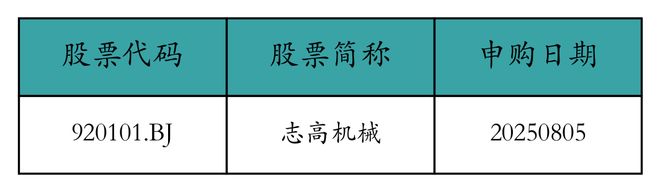
Market Overview - The Shanghai Composite Index increased by 2.11% to close at 3635.13 points, with a weekly high of 3645.37 points [1] - The Shenzhen Component Index rose by 1.25% to 11128.67 points, reaching a peak of 11229.59 points [1] - The ChiNext Index saw a 0.49% increase, closing at 2333.96 points, with a maximum of 2372.68 points [1] - Global markets also experienced gains, with the Nasdaq Composite up by 3.87%, the Dow Jones Industrial Average rising by 1.35%, and the S&P 500 increasing by 2.43% [1] - In the Asia-Pacific region, the Hang Seng Index rose by 1.43% and the Nikkei 225 increased by 2.5% [1] New Stock Issuance - One new stock was issued last week: Zhigao Machinery (920101.BJ) on August 5, 2025 [2] Margin Trading - The total margin trading balance in the Shanghai and Shenzhen markets reached 20031.09 billion yuan, with a financing balance of 19889.53 billion yuan and a securities lending balance of 141.56 billion yuan [3] - The margin trading balance increased by 294.86 billion yuan compared to the previous week [3] - The top three stocks by financing purchase amount were Northern Rare Earth (58.53 billion yuan), Zhongji Xuchuang (49.9 billion yuan), and Dongfang Fortune (48.27 billion yuan) [3][4] Fund Issuance - A total of 21 new funds were issued last week, including various index funds and mixed funds [5] - Notable funds include Ping An Ru Yi Short-term Bond Fund and Penghua CSI Bank Index Fund [5][6] Company Buybacks - There were 23 buyback announcements last week, with the highest amounts executed by Junxin Environmental Protection (50.99 million yuan), Mianbao (12.13 million yuan), and Runze Technology (10.47 million yuan) [7] - The sectors with the highest buyback amounts were Environmental Protection, Pharmaceutical Biology, and Electronics [7][8]





第32周:浙江电力现货市场转正,绿色氢基燃料产业化试点值得关注
Huafu Securities· 2025-08-09 13:40
Group 1 - The report highlights the establishment of the electricity spot market in Zhejiang, making it the seventh province in China to officially operate such a market, following Shanxi, Guangdong, Shandong, Gansu, Inner Mongolia, and Hubei [3][19][25] - The report indicates that the electricity spot market construction is accelerating nationwide, with a goal to achieve full coverage by the end of 2025, and continuous settlement operations are being implemented [3][19][20] - The report notes that the environmental protection sector, gas sector, electricity sector, and water sector saw respective increases of 3.66%, 3.61%, 1.05%, and 0.82% from August 4 to August 8, with the CSI 300 index rising by 1.23% during the same period [2][12] Group 2 - The report discusses the broad application of hydrogen-based energy and its significant advantages in energy saving and carbon reduction, particularly in the context of decarbonization demands from the shipping and aviation industries [4][31] - It mentions that the National Energy Administration has announced nine pilot projects for green liquid fuel technology, with eight focusing on green methanol and green ammonia, indicating a growing trend in clean fuel development [4][26] - The report emphasizes that while the number of planned green hydrogen fuel projects has been increasing, challenges such as production costs and the maturity of downstream industries are hindering project development [4][31][32] Group 3 - The report recommends specific companies within various sectors, including Jiangsu Guoxin in the thermal power sector, and suggests cautious recommendations for Sheneng Co. and Zhejiang Energy Power [4] - In the nuclear power sector, it cautiously recommends China National Nuclear Power and China General Nuclear Power, while in the green energy sector, it suggests focusing on Three Gorges Energy and Jiangsu New Energy [4] - The report also highlights investment opportunities in the environmental protection sector, recommending Yongxing Co. and Xuedilong, while suggesting attention to Huaguang Huaneng and China Tianying [4]
薛涛:环保行业不是“内卷”,而是出清和优胜劣汰
经济观察报· 2025-08-09 11:11
Core Viewpoint - The current situation in the environmental protection industry should be defined as market clearing or survival of the fittest, rather than "involution" [1][5]. Group 1: Market Dynamics - The environmental protection industry is not experiencing traditional overproduction issues, as it primarily operates in a customized field where most products are tailored to specific projects [3][4]. - The decline in market demand is attributed to the peak of environmental governance intensity having passed, particularly affecting municipal infrastructure and industrial pollution control sectors [3][6]. - The industry is entering a natural clearing phase due to reduced demand and financial pressures on local governments, leading to a situation where supply exceeds demand [6][10]. Group 2: Policy Implications - The recent "anti-involution" measures proposed by the government are expected to extend to other industries, prompting environmental companies to prepare accordingly [2][4]. - The environmental protection sector is not included in the ten key industries mentioned by the Ministry of Industry and Information Technology, but the implications of these policies will still affect it [2][4]. Group 3: Industry Structure - The environmental protection industry lacks a high concentration of leading firms, and regional market segmentation persists, preventing the formation of a monopolistic market structure [4][9]. - The industry is characterized by a reliance on external funding, as it is a public service sector that cannot achieve self-financing [6][10]. Group 4: Future Trends - Despite challenges, new companies continue to enter the environmental sector, including major state-owned enterprises that leverage their advantages to secure contracts [10][11]. - The presence of large state-owned construction companies in the environmental sector may disrupt existing operational norms, as they focus on the construction aspect of projects while outsourcing technical services [11].

薛涛:环保行业不是“内卷”,而是出清和优胜劣汰
Jing Ji Guan Cha Wang· 2025-08-09 10:24
Core Viewpoint - The central government is promoting measures to combat "involution" in various industries, including the environmental sector, which is expected to undergo a market clearing process rather than traditional overcapacity issues [2][3][4] Industry Overview - The environmental industry is characterized by customized solutions, which means it does not face the same overproduction issues as other manufacturing sectors [3][4] - The current challenges in the environmental sector stem from a decline in market demand, particularly in municipal infrastructure, rather than excessive production capacity [4][7] Market Dynamics - The environmental sector's "involution" is more accurately described as market clearing, driven by changes in environmental governance intensity and a decrease in market scale [4][5] - The industry is experiencing a natural selection process due to reduced demand and financial pressures on local governments, leading to a decline in environmental investments [8][9] Competitive Landscape - The environmental industry lacks a high concentration of leading firms, with regional market fragmentation still prevalent, preventing the formation of monopolistic structures [6][12] - New entrants, including large state-owned enterprises, are entering the environmental sector, leveraging their construction expertise and financial capabilities [13][14] Future Outlook - The potential for a Chinese equivalent of global leaders like Veolia is limited, as domestic firms face challenges in achieving the same level of operational and technical integration across various environmental services [10][11] - The future of the environmental industry will likely favor companies with core competitive advantages rather than those relying solely on scale expansion [14]

中泰金工行业量价资金流周观点-20250809
ZHONGTAI SECURITIES· 2025-08-09 08:11
Quantitative Models and Construction Methods 1. Model Name: Wantushi AI Model - **Model Construction Idea**: The Wantushi AI model evaluates indices based on their potential upward probability and selects ETFs with favorable characteristics for investment[6] - **Model Construction Process**: 1. The model assigns a score to indices based on their upward probability. Indices with scores above 0.8 are selected[6] 2. For each selected index, the corresponding ETFs are identified[6] 3. Among these ETFs, those with a 30-day average daily trading volume exceeding 30 million RMB are retained[6] 4. Finally, the ETF with the lowest IOPV premium rate for each index is chosen[6] - **Model Evaluation**: The model systematically filters ETFs based on liquidity and valuation metrics, ensuring a focus on high-quality investment options[6] --- Backtesting Results of Models 1. Wantushi AI Model - **Index Code: 932000 (CSI)** - Upward Probability: 93.52% - Selected ETF: 159552 (CSI 2000 Enhanced ETF)[7] - **Index Code: 399006 (SZ)** - Upward Probability: 93.37% - Selected ETF: 159977 (Tianhong ChiNext ETF)[7] - **Index Code: 399673 (SZ)** - Upward Probability: 92.49% - Selected ETF: 159682 (ChiNext 50 ETF)[7] - **Index Code: 399850 (SZ)** - Upward Probability: 90.15% - Selected ETF: 159350 (Shenzhen 50 ETF by Fuguo)[7] - **Index Code: 000852 (SH)** - Upward Probability: 85.86% - Selected ETF: 159680 (1000 Enhanced ETF)[7] - **Index Code: 399303 (SZ)** - Upward Probability: 85.82% - Selected ETF: 159628 (Guozheng 2000 ETF)[7] - **Index Code: 399293 (SZ)** - Upward Probability: 85.03% - Selected ETF: 159814 (ChiNext Large Cap ETF)[7] - **Index Code: 399330 (SZ)** - Upward Probability: 84.81% - Selected ETF: 159901 (Shenzhen 100 ETF)[7] - **Index Code: 399296 (SZ)** - Upward Probability: 84.46% - Selected ETF: 159967 (ChiNext Growth ETF)[7] - **Index Code: 000905 (SH)** - Upward Probability: 83.23% - Selected ETF: 510580 (CSI 500 ETF by E Fund)[7] - **Index Code: 000906 (SH)** - Upward Probability: 81.05% - Selected ETF: 515800 (800 ETF)[7]
永兴股份: 永兴股份股东会网络投票实施细则
Zheng Quan Zhi Xing· 2025-08-08 16:23
General Provisions - The implementation rules for the online voting system of Guangzhou HuanTou Yongxing Group Co., Ltd. are established to standardize the voting mechanism of the shareholders' meeting and protect investors' rights [2] - The online voting system utilizes network and communication technology to provide services for shareholders to exercise their voting rights [2][3] - The company may sign a service agreement with the Shanghai Stock Exchange Information Network Co., Ltd. to provide related services for the online voting [2] Preparation for Online Voting - The company must prepare a notice for the shareholders' meeting that includes relevant information about online voting [3] - In case of changes to the proposals listed in the notice, the convenor must issue timely announcements to disclose the updated information [3][4] - The company is required to provide electronic data of all registered shareholders two trading days before the start of online voting [5] Voting Process - The online voting through the exchange trading system occurs during the trading hours on the day of the shareholders' meeting [6] - The internet voting system opens for voting from 9:15 AM on the day of the meeting until 3:00 PM on the same day [6] - Shareholders can participate in online voting through any of their shareholder accounts, and the votes will be counted based on the first voting result if multiple votes are cast [7][8] Vote Counting and Results - After the online voting ends, the information company will provide the voting data to the company for result compilation [8] - The company must disclose the voting results in accordance with relevant regulations, especially for significant matters affecting minority investors [8][9] - The implementation rules will take effect upon approval by the shareholders' meeting [9]