中药

Search documents
新光药业:股东和丰投资拟减持不超过3%股份
Xin Lang Cai Jing· 2025-11-06 11:51
Core Viewpoint - Shengkang Pharmaceutical announced that its shareholder, Shengzhou Hefeng Investment Co., Ltd., which holds 15.74% of the shares, plans to reduce its holdings by up to 4.8 million shares, representing 3% of the total share capital, within a specified period from November 28, 2025, to February 27, 2026 [1] Summary by Category - **Shareholder Reduction Plan** - The shareholder intends to reduce its stake through two methods: a maximum of 1.6 million shares (1% of total share capital) via centralized bidding and up to 3.2 million shares (2% of total share capital) through block trading [1] - **Timeline and Conditions** - The reduction will take place within three months starting from November 28, 2025, and ending on February 27, 2026 [1] - **Source of Shares** - The shares to be reduced are sourced from pre-IPO holdings and capital reserve fund transfers [1]

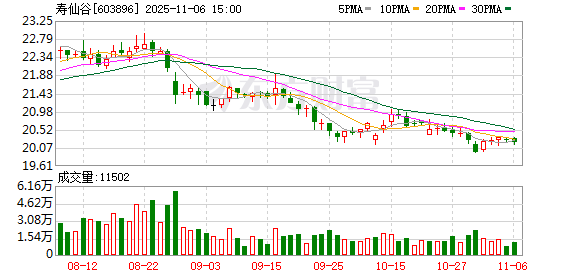
寿仙谷:除近期推出的铁皮石斛文旦汁、铁皮石斛寿仙粥外,计划推出灵芝咖啡、中药茶饮等储备产品
Mei Ri Jing Ji Xin Wen· 2025-11-06 11:44
Core Viewpoint - The company has established a joint venture with former Wahaha sales general manager Shen Jiangang to expand into the fast-moving consumer goods market, leveraging its research capabilities and professional marketing team [1]. Group 1: Business Development - The joint venture, named Hangzhou Shouxian Valley Food Co., Ltd., is controlled by the company and aims to develop new products such as Ganoderma coffee and traditional Chinese herbal teas to attract younger consumers [1]. - Recent product launches include Iron Skin Dendrobium pomelo juice and Iron Skin Dendrobium congee, indicating a focus on diversifying product offerings [1]. Group 2: Strategic Initiatives - The company is committed to expanding its upstream and downstream industry presence and is actively seeking suitable acquisition targets [1]. - There is a suggestion from investors for the company to establish a beverage division with a professional team and distribution system to enhance its commitment to the beverage market [3].


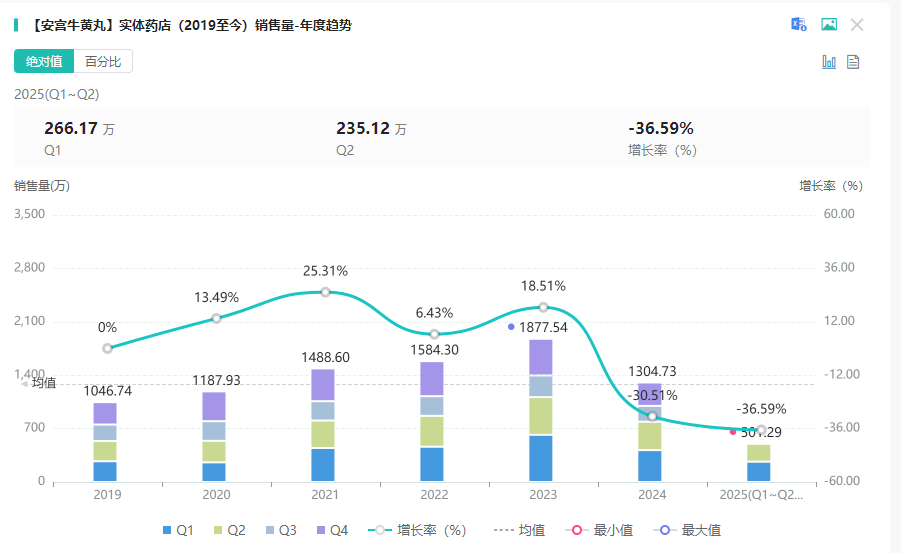
片仔癀、安宫牛黄丸量价齐跌,高价中药消费逻辑生变
Sou Hu Cai Jing· 2025-11-06 10:17
Core Insights - The high-priced traditional Chinese medicine (TCM) products, such as An Gong Niu Huang Wan and Pian Zai Huang, are experiencing a decline in both sales and prices, prompting investors to reconsider the consumption logic of these products [2][3][4]. Group 1: Sales and Price Trends - An Gong Niu Huang Wan and Pian Zai Huang have seen a significant drop in sales and prices, with Pian Zai Huang's revenue decreasing by 11.93% and net profit down by 20.74% in the first three quarters of the year [4]. - The retail price of Pian Zai Huang has fallen below the official guidance price of 760.00 yuan per piece, with online platforms offering prices as low as 588.60 yuan [4][5]. - An Gong Niu Huang Wan is also facing price declines, with sales figures indicating a broader trend affecting high-priced TCM products [5]. Group 2: Market Dynamics - The decline in high-priced TCM sales is attributed to a fundamental change in consumer behavior, shifting from luxury and gift-giving to a focus on genuine patient needs [5][10]. - Tightening medical insurance policies have also impacted sales, as certain high-priced products are not fully covered, affecting consumer purchasing decisions [5][10]. - Despite the decline in high-priced TCM, there is a growing demand for anti-aging and health supplement products, which are becoming key drivers of growth in the health market [9][10]. Group 3: Growth in Alternative Products - Products like Gui Ling Ji and Ba Zi Bu Shen capsules are witnessing steady price and sales increases, indicating a shift in consumer preference towards health and wellness products [1][10]. - The market for health supplements, particularly those targeting the aging population, is expanding, with significant growth reported in products like Ejiao, which saw a 16.48% increase in sales in 2024 [11][14]. - The aging population in China is projected to reach 310.31 million by the end of 2024, representing 22.0% of the total population, further driving demand for health-related products [10].

东阿阿胶,突遭剔除!
Shen Zhen Shang Bao· 2025-11-06 10:08
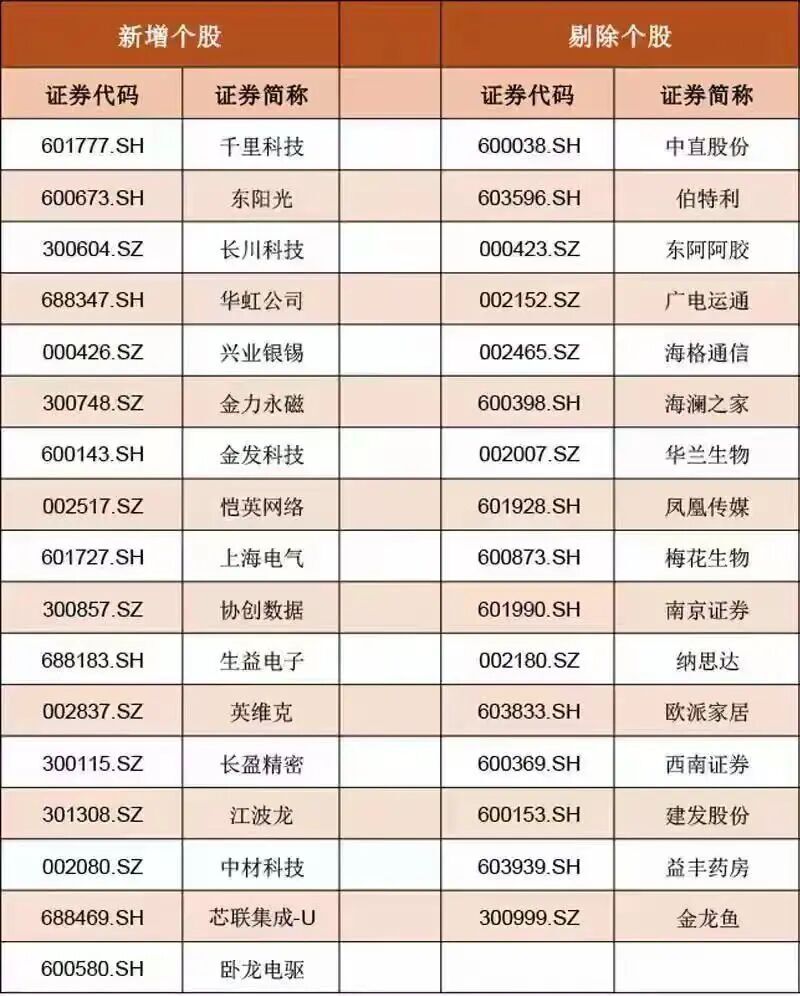
Core Viewpoint - MSCI announced the results of its November index review, which includes the addition of 17 new stocks to the MSCI China A-share Index and the removal of 16 stocks, effective after the market close on November 24 [1] Group 1: MSCI Index Changes - 17 new stocks were added to the MSCI China A-share Index, while 16 stocks were removed [1] - Dong-E E-Jiao, known for its generous dividend policy, is among the stocks being removed from the index [1][4] Group 2: Dong-E E-Jiao Financial Performance - In the first three quarters, Dong-E E-Jiao reported revenue of 4.766 billion CNY, a year-on-year increase of 10.10%, and a net profit of 1.274 billion CNY, up 10.58% [3] - For Q3 alone, the company achieved revenue of 1.716 billion CNY and a net profit of 456 million CNY, with year-on-year growth rates of 8.50% and 10.29%, respectively [3] Group 3: Dividend Policy - Since its listing in 1996, Dong-E E-Jiao has maintained a strong dividend tradition, with a total of 28 dividends amounting to 10.104 billion CNY, averaging a payout ratio of nearly 70% [4] - In 2023, the company has maintained a dividend payout ratio close to 100%, with a recent proposal to distribute 12.69 CNY per 10 shares, totaling approximately 817 million CNY, which is 99.94% of its net profit for the first half of the year [4] - Despite the generous dividend, the company's stock price has declined over 5% since the dividend announcement, with a year-to-date drop exceeding 20% [4] Group 4: Stock Performance Metrics - As of November 6, the latest closing price for Dong-E E-Jiao was 47.63 CNY per share, with a year-to-date decline of over 20% [4] - The stock's market capitalization is approximately 30.673 billion CNY, with a price-to-earnings ratio of 18.27 and a dividend yield of 5% [5]

老登们的社交货币全崩了
虎嗅APP· 2025-11-06 09:34
Group 1: Core Views - The market is experiencing a significant divergence, particularly in the traditional high-end consumption sector represented by liquor, which has been stagnant for a long time [4][5]. - Despite the challenges, some investors are optimistic about traditional liquor stocks, as evidenced by the surge in the liquor sector following negative news about Wuliangye [5][6]. - The generational divide in investment preferences is becoming more pronounced, with younger investors favoring emerging industries and high valuations, while older investors remain committed to traditional sectors [5][7]. Group 2: Liquor Industry - The liquor industry has reported its worst third-quarter performance, with 18 listed companies generating a total revenue of 317.66 billion yuan, a year-on-year decline of 5.84%, and a net profit of 122.69 billion yuan, down 6.88% [9][11]. - The third quarter saw a dramatic revenue drop of 18.42% and a net profit decline of 22.03%, reversing the growth trend seen in 2024 [9][11]. - Even leading companies like Kweichow Moutai are facing challenges, with third-quarter revenue growth slowing to 0.56% and net profit growth to 0.48%, marking their lowest growth rates in recent years [11][13]. Group 3: Tea Industry - The high-end tea sector has seen positive developments, with Baima Tea successfully listing on the Hong Kong Stock Exchange after multiple failed attempts, achieving an 86.7% increase on its first trading day [18][19]. - Despite the initial success, Baima Tea's performance is showing signs of slowing growth, with a projected revenue growth of only 1.0% for 2024 and a decline in revenue and net profit in the first half of the year [20][19]. - The business model of Baima Tea relies heavily on high-end gift markets, which may not be sustainable in the long term [20][22]. Group 4: Traditional Medicine - The traditional medicine sector, represented by Pianzaihuang, is struggling, with a reported revenue of 7.44 billion yuan for the first three quarters, down 11.93%, and a net profit of 2.13 billion yuan, down 20.74% [24][25]. - The market price of Pianzaihuang has significantly dropped, with some platforms reporting prices below 600 yuan, a decline of over 60% from its peak [27][28]. - The changing market dynamics suggest that the value of high-end gifts and social currencies like liquor and traditional medicine may continue to decline as consumer preferences shift [29][30].


康恩贝:持股5%以上股东及其一致行动人合计减持比例达1%
Xin Lang Cai Jing· 2025-11-06 09:16
Core Viewpoint - The announcement reveals that Hu Jiqiang and Kang En Bei Group have reduced their shareholding in the company, indicating a strategic decision to decrease their stake without significantly impacting company governance or operations [1] Group 1: Shareholding Reduction - From September 4 to November 6, 2025, Hu Jiqiang and Kang En Bei Group collectively reduced their shares by 23.76 million shares, accounting for 0.941% of the company's total share capital [1] - The combined shareholding percentage of both parties decreased from 13.944% to 12.992%, with the change in equity reaching a 1% threshold [1] - Prior to this announcement, Kang En Bei Group had planned to reduce its holdings by up to 25.24 million shares between September 8 and December 7, 2025, and as of the announcement date, this plan had not been fully executed [1] Group 2: Impact on Company - The share reduction is stated to have no significant impact on the company's governance and operations [1] - There will be no change in the controlling shareholder or actual controller as a result of this share reduction [1]

中药板块11月6日跌0.05%,特一药业领跌,主力资金净流出4.2亿元
Zheng Xing Xing Ye Ri Bao· 2025-11-06 08:51
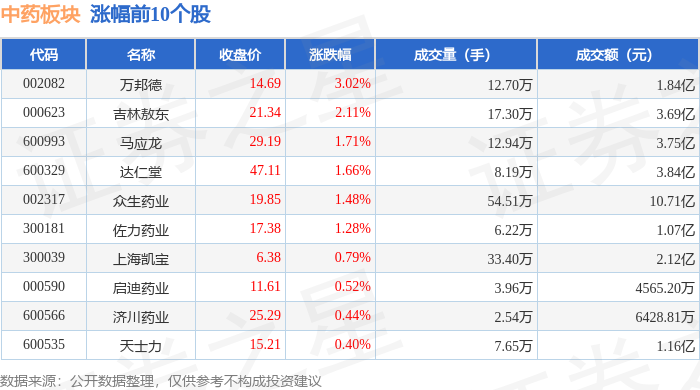
Core Insights - The Chinese traditional medicine sector experienced a slight decline of 0.05% on November 6, with Te Yi Pharmaceutical leading the drop [1] - The Shanghai Composite Index closed at 4007.76, up 0.97%, while the Shenzhen Component Index closed at 13452.42, up 1.73% [1] Market Performance - Notable gainers in the traditional medicine sector included: - Wanbangde (002082) with a closing price of 14.69, up 3.02% on a trading volume of 127,000 shares and a turnover of 184 million yuan - Jilin Aohai (000623) at 21.34, up 2.11% with 173,000 shares traded - Ma Yinglong (600993) at 29.19, up 1.71% with a turnover of 375 million yuan [1] - Conversely, Te Yi Pharmaceutical (002728) saw a significant decline of 5.74%, closing at 11.16 with a trading volume of 836,600 shares and a turnover of 94.26 million yuan [2] Capital Flow - The traditional medicine sector experienced a net outflow of 420 million yuan from institutional investors, while retail investors saw a net inflow of 220 million yuan [2] - Key stocks with notable capital flows included: - Zhongsheng Pharmaceutical (002317) with a net inflow of 53.81 million yuan from institutional investors [3] - Shijishi (300039) with a net inflow of 20.58 million yuan from institutional investors [3] - Other stocks like Ma Yinglong (600993) and Daren Tang (600329) also experienced mixed capital flows, indicating varied investor sentiment [3]


佛慈制药:公司2025年前三季度实现营业收入6.24亿元
Zheng Quan Ri Bao· 2025-11-06 07:07
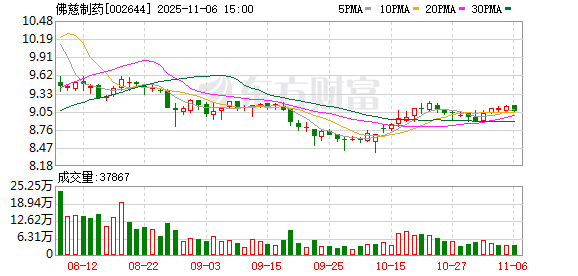
Core Viewpoint - 佛慈制药 reported significant financial performance improvements for the first three quarters of 2025, highlighting strong revenue growth and cash flow generation [2]. Financial Performance - The company achieved an operating revenue of 624 million yuan for the first three quarters of 2025 [2]. - The net profit attributable to shareholders reached 38.08 million yuan [2]. - The net cash flow generated from operating activities was 93.51 million yuan, reflecting a year-on-year increase of 677.92% [2].

东海证券晨会纪要-20251106
Donghai Securities· 2025-11-06 07:02
Group 1: Northern Huachuang (002371) - The company achieved a revenue of 27.301 billion yuan in the first three quarters of 2025, representing a year-on-year increase of 32.97%, and a net profit attributable to shareholders of 5.130 billion yuan, up 14.83% year-on-year [5][6] - In Q3 2025, the company reported a revenue of 11.160 billion yuan, a year-on-year increase of 38.31% and a quarter-on-quarter increase of 40.63%, with a net profit of 1.922 billion yuan, reflecting a year-on-year growth of 14.60% [5][6] - The company focuses on the semiconductor equipment sector, with over 80% of its revenue coming from this area, benefiting from the acceleration of domestic substitution in the semiconductor industry and the expansion of downstream wafer fabs [6][7] - Inventory increased significantly to 30.199 billion yuan, up 30.01% year-on-year, indicating proactive stocking to meet strong market demand and to build a localized, secure supply chain [7] - R&D expenses reached 3.285 billion yuan, a 48.40% increase year-on-year, with a R&D expense ratio of 12.03%, reflecting the company's commitment to innovation and product competitiveness [8] - The company is expected to benefit from the expansion of downstream wafer fab capacities and the domestic substitution trend, with projected revenues of 39.283 billion yuan, 49.665 billion yuan, and 61.156 billion yuan for 2025, 2026, and 2027 respectively [9] Group 2: Zhongsheng Pharmaceutical (002317) - The company reported a revenue of 1.889 billion yuan in the first three quarters of 2025, a slight decrease of 1.01% year-on-year, but a net profit of 251 million yuan, up 68.40% year-on-year [11][12] - In Q3 2025, the company achieved a revenue of 589 million yuan, a year-on-year increase of 8.35%, with a net profit of 63 million yuan, reflecting a year-on-year growth of 2.10% [11] - The R&D pipeline is progressing well, with key products like Anglavi tablets and RAY1225 showing promising clinical advancements, indicating strong potential for market expansion [12] - The company is expected to achieve revenues of 2.841 billion yuan, 3.336 billion yuan, and 3.917 billion yuan for 2025, 2026, and 2027 respectively, with corresponding net profits of 307 million yuan, 366 million yuan, and 481 million yuan [13]

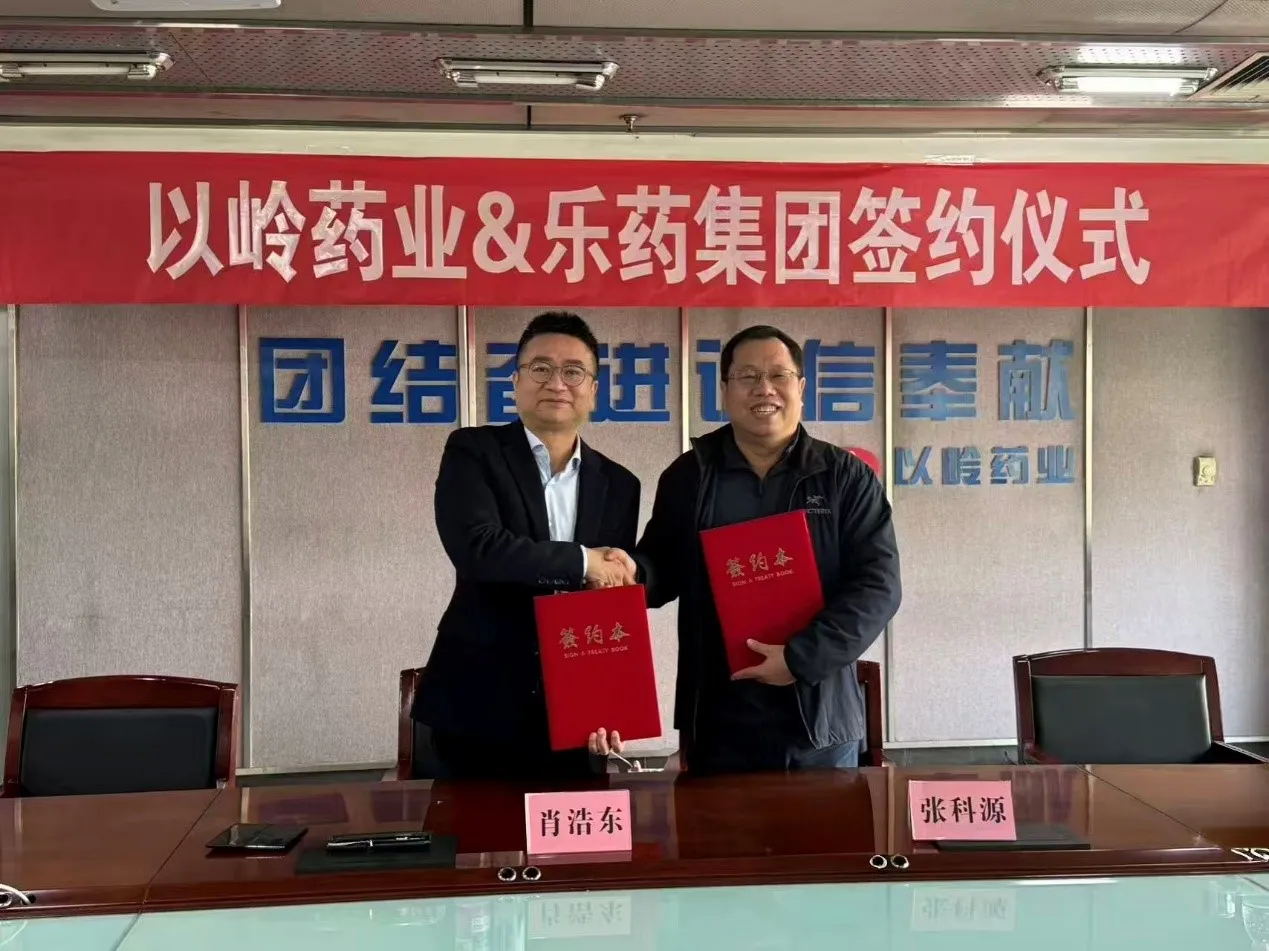
以岭药业与乐药集团达成合作 共拓医药健康产业新篇章
Cai Jing Wang· 2025-11-06 04:00
Core Insights - Yiling Pharmaceutical and Leyao Group have signed a cooperation agreement to establish a long-term, stable, and comprehensive partnership aimed at promoting high-quality development in China's pharmaceutical and health industry [1][6]. Group 1: Company Profiles - Yiling Pharmaceutical is a leading enterprise in the Chinese traditional medicine sector, focusing on technological innovation and has developed over ten patented new drugs targeting major diseases such as cardiovascular diseases, respiratory infections, tumors, and diabetes [3]. - Leyao Group, with a registered capital of $256 million, operates as a new type of "pharmaceutical + internet" enterprise, focusing on pharmaceutical distribution and optimizing supply chain efficiency through e-commerce and logistics technology [3]. Group 2: Digital Transformation - Yiling Pharmaceutical is actively embracing digitalization, having established deep partnerships with several well-known e-commerce platforms to expand its "internet + health" service model [4]. - A significant collaboration with JD Health was initiated to launch a digital marketing project aimed at promoting core products like the Ba Zi Bu Shen capsule, providing comprehensive health management solutions for aging populations [4][5]. Group 3: Strategic Cooperation - The cooperation between Yiling Pharmaceutical and Leyao Group will leverage their respective strengths in branding, research, production, technology, marketing, and distribution to enhance core competitiveness and better serve patients and consumers [6]. - A regular high-level meeting mechanism and joint working groups will be established to ensure efficient progress and execution of strategic cooperation projects, focusing on key issues such as channel management and market coverage [7]. Group 4: Industry Impact - This strategic partnership is seen as a significant step for both companies and is expected to set a new benchmark for industry collaboration, injecting new momentum into the development of China's pharmaceutical and health industry [9].