
采矿业

Search documents
国家统计局最新发布!
券商中国· 2025-05-27 01:43
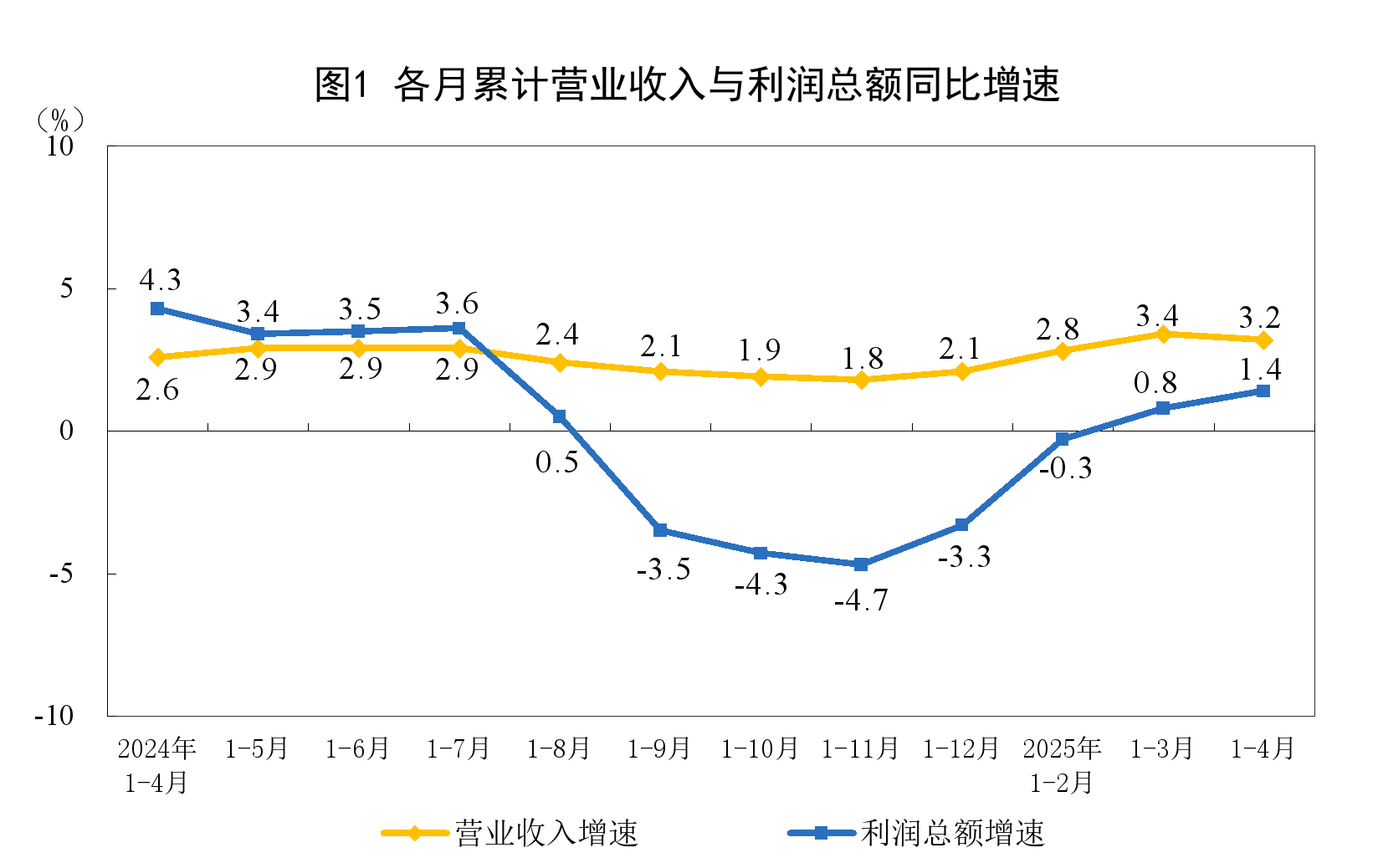
Core Viewpoint - The overall profit of industrial enterprises above designated size in China showed a slight increase in the first four months of the year, indicating a mixed performance across different sectors and ownership types [1][7]. Group 1: Profit Performance - From January to April, the total profit of industrial enterprises above designated size reached 21,170.2 billion yuan, a year-on-year increase of 1.4% [1]. - State-owned enterprises reported a profit of 7,022.8 billion yuan, down 4.4% year-on-year, while joint-stock enterprises saw a profit of 15,596.4 billion yuan, up 1.1% [1]. - Foreign and Hong Kong, Macao, and Taiwan-invested enterprises achieved a profit of 5,429.2 billion yuan, an increase of 2.5%, and private enterprises reported a profit of 5,706.8 billion yuan, up 4.3% [1]. Group 2: Sector Performance - The mining industry experienced a significant profit decline of 26.8%, while the manufacturing sector saw an 8.6% profit increase [2]. - Notable profit growth was observed in the agricultural and sideline food processing industry at 45.6%, and non-ferrous metal smelting and rolling industry at 24.5% [2]. - The power, heat, gas, and water production and supply industry reported a profit increase of 4.4% [2]. Group 3: Revenue and Costs - The total operating revenue for industrial enterprises above designated size was 434,400 billion yuan, reflecting a year-on-year growth of 3.2%, with operating costs rising by 3.4% to 371,600 billion yuan [3]. - The operating profit margin was recorded at 4.87%, a decrease of 0.09 percentage points year-on-year [3]. Group 4: Financial Health - As of the end of April, total assets of industrial enterprises above designated size reached 181,350 billion yuan, a year-on-year increase of 5.3%, while total liabilities grew by 5.7% to 104,620 billion yuan [4]. - The equity of these enterprises totaled 76,720 billion yuan, up 4.7%, with an asset-liability ratio of 57.7%, an increase of 0.2 percentage points year-on-year [4]. Group 5: Accounts and Inventory - Accounts receivable amounted to 25,860 billion yuan, reflecting a year-on-year increase of 9.7%, while finished goods inventory was 6,610 billion yuan, up 3.9% [5]. - The average collection period for accounts receivable increased to 70.3 days, up by 4.0 days year-on-year [6].


2025年1—4月份全国规模以上工业企业利润增长1.4%
Guo Jia Tong Ji Ju· 2025-05-27 01:31
1—4月份,全国规模以上工业企业实现利润总额21170.2亿元,同比增长1.4%(按可比口径计算,详见附注二)。 1—4月份,规模以上工业企业中,国有控股企业实现利润总额7022.8亿元,同比下降4.4%;股份制企业实现利润总额15596.4亿元,增长1.1%;外商及港澳 台投资企业实现利润总额5429.2亿元,增长2.5%;私营企业实现利润总额5706.8亿元,增长4.3%。 1—4月份,采矿业实现利润总额2875.0亿元,同比下降26.8%;制造业实现利润总额15549.3亿元,增长8.6%;电力、热力、燃气及水生产和供应业实现利润 总额2745.8亿元,增长4.4%。 1—4月份,主要行业利润情况如下:农副食品加工业利润同比增长45.6%,有色金属冶炼和压延加工业增长24.5%,电气机械和器材制造业增长15.4%,专用 设备制造业增长13.2%,通用设备制造业增长11.7%,计算机、通信和其他电子设备制造业增长11.6%,电力、热力生产和供应业增长5.6%,纺织业增长 3.7%,非金属矿物制品业下降1.6%,化学原料和化学制品制造业下降4.4%,汽车制造业下降5.1%,石油和天然气开采业下降6.9%,煤 ...
智利财长:我们在矿业项目方面拥有强大的项目储备。全球对铜的需求旺盛。
news flash· 2025-05-23 15:18
Core Insights - Chile's Finance Minister emphasizes the country's strong project pipeline in the mining sector, particularly in copper, driven by robust global demand for the metal [1] Group 1: Mining Sector - The Chilean government has a significant reserve of mining projects, indicating a proactive approach to capitalizing on the growing demand for copper [1] - Global demand for copper is described as strong, suggesting favorable market conditions for mining companies operating in this sector [1]
前4月我省经济运行总体平稳
Liao Ning Ri Bao· 2025-05-23 01:29
Economic Overview - The overall economic operation of the province remained stable in the first four months of the year, with a year-on-year industrial added value growth of 3.0% [2] - High-tech manufacturing saw a significant increase, with added value growing by 10.9% [2] Industrial Performance - Among the 40 major industrial categories, 30 experienced year-on-year growth, resulting in a growth rate of 75.0% [2] - Specific product outputs showed remarkable increases: transformer output grew by 100%, mining equipment by 25%, industrial robots by 19.1%, and synthetic ammonia by 17.2% [2] Fixed Asset Investment - Fixed asset investment increased by 5.2% year-on-year, with infrastructure investment rising by 11.9% and manufacturing investment by 10.8% [3] - Real estate development investment, however, saw a significant decline of 25.1% [3] - Investment in the primary industry surged by 31.1%, while the secondary and tertiary industries saw growths of 2.9% and 5.9%, respectively [3] Market Sales - Social retail sales totaled 3313.8 billion yuan, marking a year-on-year increase of 6.8% [3] - Sales of essential goods, such as grain and food, rose by 20.2%, while smart phones and energy-efficient home appliances saw increases of 66.4% and 50.6%, respectively [3] Export and Import Trends - The province's total import and export value reached 2409.3 billion yuan, a decrease of 3.2% year-on-year [4] - Exports amounted to 1251.3 billion yuan, reflecting a growth of 7.7%, while imports fell by 12.8% to 1158.0 billion yuan [4] - Notably, high-tech product exports, particularly in computer integrated manufacturing technology, grew by 21.6% [4]

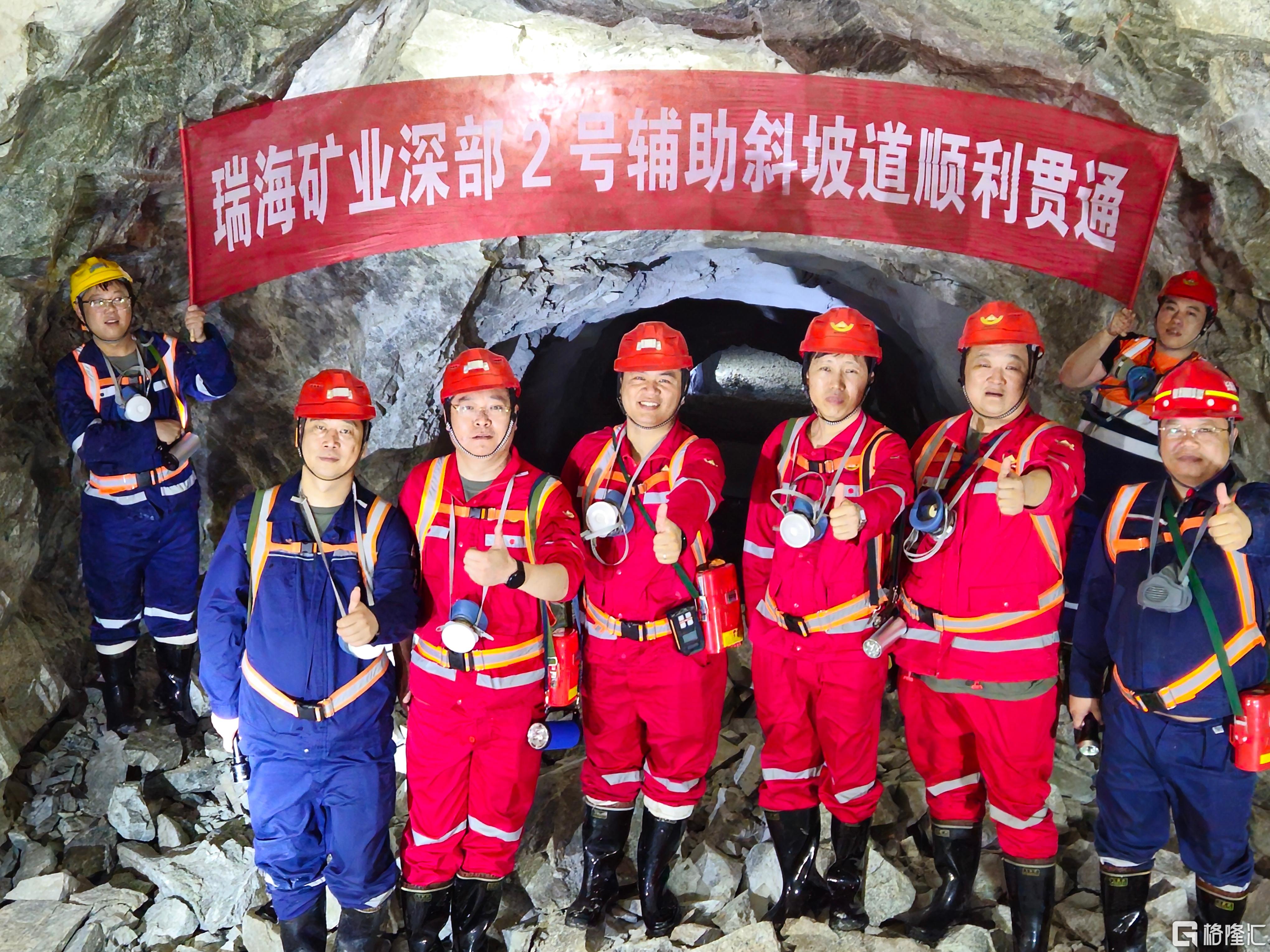
瑞海矿业:一重点贯通工程顺利完成项目建设取得关键性突破
Ge Long Hui· 2025-05-22 04:00
Core Viewpoint - The successful completion of the No. 2 auxiliary slope road marks a significant milestone in the construction of the Ruihai Mining project, enhancing the overall project progress and addressing critical issues related to ventilation and transportation underground [1][4]. Group 1: Project Milestones - The No. 2 auxiliary slope road, with a length of 1285 meters, plays a crucial role in deep ventilation, transportation, and emergency exits, serving as a vital artery for underground operations [3]. - The construction team achieved an average progress rate of 150 meters per month, completing the project in 8.5 months, which is 1.5 months ahead of the original schedule [3]. Group 2: Strategic Importance - The completion of the No. 2 auxiliary slope road significantly improves the ventilation system, enhances the working environment, and adds safety exits at the -1300m and -1480m levels, thereby increasing the safety of underground workers [4]. - The transportation system for waste rock has been optimized, leading to over a 40% increase in transportation efficiency, which provides a solid foundation for future production and mining activities [4]. - The successful connection of the No. 2 auxiliary slope road to the -1480m first mining section paves the way for accelerating the project development process and signifies the full connectivity of the underground engineering from shallow to deep sections [4].
2025年4月经济数据解读:增长动能放缓
Dong Zheng Qi Huo· 2025-05-22 02:12
Report Industry Investment Rating - The rating for the stock index is "oscillating" [5] Core Viewpoints of the Report - In April 2025, China's economic data was generally lackluster, with a sharp contrast between high export growth and weak domestic demand. The "fatigue period" of domestic policy efforts may be emerging, and the growth rate in policy - supported areas is also declining. New - quality productivity sectors maintain growth resilience, corresponding to a relatively high risk appetite for the BeiZheng 50 Index and small - cap indexes in the stock market. However, the macro - picture of the pro - cyclical sector's failure to gain momentum, low inflation, and weak consumer confidence restricts the stock index. The corporate profit growth rate in 2025 may only be around 3%. The stock market's rise in the first five months of this year relied more on valuation expansion, but the current high valuation level makes it difficult to support continued expansion. In the long - term, the stock index still has room, but in the short - to - medium term, there is a need to be vigilant about the pressure of valuation correction [2][31] Summary According to Relevant Catalogs 1. Economic Data Interpretation in April 2025 - **Overall Economic Situation**: As the first month after the escalation of the tariff war, China's economic indicators weakened year - on - year. Except for industrial growth, all were below market expectations, indicating emerging domestic economic pressure after the rapid recovery in the first quarter. In April, the seasonally - adjusted month - on - month growth rates of industrial growth, social retail, and fixed - asset investment were at historically low seasonal levels. After deducting price factors, the supply side outperformed the demand side in the cumulative data for the first four months [1][9] - **Supply Side**: Both industrial and service sectors showed a slowdown in year - on - year growth, but new - quality productivity became a stable growth source. In the industrial supply, the high - tech industry showed strong resilience to external shocks such as the tariff war, with a relatively high overall growth rate and a small decline. The mining and public utility sectors related to domestic demand declined significantly due to weak demand. In the service supply, new business forms such as information technology services maintained resilience, while traditional industries such as wholesale and retail contracted [11][12] - **Consumption**: The growth of social retail in April fell short of expectations. In terms of categories, there may be a phenomenon of low - price competition in the catering industry. In commodity retail, gold and silver jewelry, cultural and office products, and cosmetics showed high growth, while the growth of cars and communication products in traditional subsidy areas slowed down [3][18] - **Investment**: In May, the growth rate of fixed - asset investment declined. Among them, the growth rates of manufacturing and infrastructure investment decreased from high levels, and the decline in real estate investment widened. In the real estate sector, both investment and sales weakened, and the housing price situation was not optimistic. The continuous decline in housing prices deepened the impact on residents' asset - liability behavior and weakened domestic consumption - promotion policies [23][26] 2. Investment Suggestions - The economic data in April was lackluster, with a contrast between high export growth and weak domestic demand. The "fatigue period" of domestic policy efforts may be emerging. New - quality productivity sectors maintain growth resilience, corresponding to a relatively high risk appetite for the BeiZheng 50 Index and small - cap indexes in the stock market. However, the pro - cyclical sector's failure to gain momentum, low inflation, and weak consumer confidence restrict the stock index. The corporate profit growth rate in 2025 may only be around 3%. The stock market's rise in the first five months of this year relied more on valuation expansion, but the current high valuation level makes it difficult to support continued expansion. In the long - term, the stock index still has room, but in the short - to - medium term, there is a need to be vigilant about the pressure of valuation correction [2][31]
前4月陕西经济运行平稳向好
Shan Xi Ri Bao· 2025-05-21 23:04
Economic Overview - The economic operation of Shaanxi province shows a stable and positive trend, with industrial production growing rapidly, effective investment expanding steadily, and consumer markets maintaining stable growth [1][2] Industrial Production - The added value of industrial enterprises above designated size increased by 9.5% year-on-year in the first four months, with mining industry growing by 11.2%, manufacturing by 8.8%, and electricity, heat, gas, and water production and supply by 2.7% [1] - The energy industry continued to grow steadily, with an added value increase of 8.5%, while non-energy industries maintained double-digit growth at 11.2% [1] - Among 36 non-energy industries, 30 achieved positive growth, resulting in a growth rate of 83.3% [1] - Equipment manufacturing saw a significant increase, with added value rising by 15.2%, particularly in electrical machinery and equipment manufacturing, which grew by 45.7%, and automobile manufacturing, which increased by 32.4% [1] Investment Trends - Fixed asset investment in the province increased by 5.9% year-on-year, with industrial investment growing rapidly at 19.7% [1] - Manufacturing investment rose by 28.2%, and industrial technological transformation investment increased by 20.7% [1] - Private investment showed significant vitality, growing by 19.7% and accounting for 44.6% of total investment, an increase of 3.6 percentage points compared to the same period last year [1] Consumer Market - Retail sales of consumer goods in enterprises above designated size increased by 6.4% year-on-year in the first four months [2] - Basic living goods retail showed stable growth, with grain and oil, and food categories increasing by 16.3%, and beverages by 5.3% [2] - The "old-for-new" consumption policy continued to drive growth, with new energy vehicle retail sales increasing by 26.8% and home appliances and audio-visual equipment retail rising by 23.6% [2] Trade Performance - The total import and export volume reached 157.033 billion yuan, a year-on-year increase of 3.1%, with exports at 109.48 billion yuan and imports at 47.553 billion yuan [2] - Exports of "new three samples" products grew by 25.4%, with electric vehicle exports increasing by 110% [2]
4月经济数据点评:边际放缓,韧性仍强
LIANCHU SECURITIES· 2025-05-21 06:41
Production - In April, the industrial added value year-on-year growth rate was 6.1%, lower than the previous value but higher than the consensus expectation of 5.2%[11] - The export delivery value year-on-year growth rate was 0.9%, a significant decrease of 6.8 percentage points from the previous month[11] - Cumulative industrial added value growth for April was 6.4%, exceeding the full-year growth rate for 2024 by 0.6 percentage points[3] Investment - Fixed asset investment growth rate in April was 4.0%, down 0.2 percentage points from the first quarter but still 0.8 percentage points higher than the full-year growth for 2024[19] - Broad infrastructure cumulative growth rate was 10.9%, slightly lower than the previous month but still strong, with a year-on-year growth of 26.0% in electric heating and water projects[4] - Real estate investment growth rate in April was -11.3%, with a decline of 1.3 percentage points from the previous month, indicating a weakening trend in the sector[21] Consumption - In April, the year-on-year growth rate of social retail sales was 5.1%, down 0.8 percentage points from the previous month, reflecting a decrease in consumer willingness due to external uncertainties[35] - Essential consumption grew at a rate of 14.8%, while optional consumption saw a slight decline, with automotive consumption growth at only 0.7%[35] - Jewelry consumption surged by 19.3%, driven by gold price fluctuations, while home improvement materials benefited from the renovation season with a growth rate of 9.7%[35] Outlook - External demand may recover as the U.S. reduces tariffs on Chinese goods from 145% to 30%, potentially boosting production confidence[7] - Domestic demand is expected to remain stable, supported by recent monetary policy easing measures such as interest rate cuts and increased issuance of special bonds[7]
湖北经济延续回升向好态势 前4月规上工业增加值增8.1%
Chang Jiang Shang Bao· 2025-05-20 23:38
Economic Overview - Hubei province's economy maintained stable operation in the first four months of 2025, with industrial added value above designated size growing by 8.1% year-on-year, surpassing the national average by 1.7 percentage points [1][2] - The total retail sales of consumer goods reached 878.18 billion yuan, a year-on-year increase of 7.7%, also exceeding the national growth rate by 3.0 percentage points [1][4] Industrial Growth - In the industrial sector, high-tech manufacturing led the growth with an added value increase of 19.3%, contributing 34.2% to the overall industrial growth [2] - Among 41 major industries, 25 experienced growth, with manufacturing growing by 8.6% and mining by 8.1% [2] - Key sectors such as computer, communication, and other electronic equipment manufacturing saw growth rates of 18.7% and 21.9% respectively [2] Fixed Asset Investment - Fixed asset investment in Hubei increased by 6.5% year-on-year, outpacing the national growth rate by 2.5 percentage points [3] - Excluding real estate development, fixed asset investment grew by 9.5%, with infrastructure investment rising by 4.1% [3] - Investment in the primary industry surged by 24.1%, while the secondary and tertiary industries grew by 10.6% and 3.2% respectively [3] Financial Indicators - By the end of April, the balance of deposits in financial institutions reached 98,637.98 billion yuan, a growth of 9.4% [3] - The balance of loans was 91,294.24 billion yuan, increasing by 7.3% [3] Trade Performance - Hubei's total import and export value reached 260.78 billion yuan, a year-on-year increase of 27.5% [4][5] - Exports amounted to 189.65 billion yuan, growing by 36.6%, while imports increased by 8.4% to 71.13 billion yuan [4][5] - The province's trade with ASEAN and EU saw significant growth, with increases of 71.9% and 43.2% respectively [5] Product Export Details - Mechanical and electrical products accounted for 51% of Hubei's total exports, with notable growth in exports of computers, mobile phones, and integrated circuits [5]
南非启动关键矿产发展战略
Zhong Guo Xin Wen Wang· 2025-05-20 15:21
Core Insights - South Africa's government has officially approved the "Critical Minerals and Metals Strategy" and is seeking public input on the "Mineral Resources Development Bill (MRDB) 2025," marking a significant step towards enhancing policy and regulatory certainty in the global minerals market [1][2] Group 1: Strategic Framework - The strategy evaluates the "criticality" of minerals based on eight indicators, including export potential, employment generation, supply risk, sales performance, and substitutability, focusing on 21 minerals [1] - The strategy identifies platinum, manganese, iron ore, coal, and chrome as high-criticality minerals, while gold, vanadium, palladium, rhodium, and rare earths are classified as medium-high criticality [1] - Medium criticality minerals include copper, cobalt, lithium, graphite, nickel, titanium, phosphates, fluorite, zircon, uranium, and aluminum [1] Group 2: Implementation and Governance - The list of critical minerals will be continuously reviewed and updated based on market conditions, exploration progress, technological advancements, substitutability, recycling, and geopolitical factors [1] - The strategy will be advanced through six pillars: geological exploration, localization and value chain extension, R&D investment and skills development, infrastructure and energy security, financial tools and support, and coordinated policy and regulation [1] - The MRDB aims to streamline licensing processes, align with environmental and water resource regulations, and introduce a licensing system for small-scale and artisanal mining to enhance governance and combat illegal mining [2]