
新材料

Search documents
国资委明确2026年央企五大重点任务
Xin Lang Cai Jing· 2025-12-24 18:49
Core Viewpoint - The central enterprises' meeting held on December 22-23, 2023, outlined key tasks for 2026, emphasizing stability, quality improvement, and efficiency enhancement in the context of the "14th Five-Year Plan" and the upcoming "15th Five-Year Plan" [1] Group 1: Key Tasks for 2026 - The meeting identified five key tasks for central enterprises in 2026, focusing on improving development quality and efficiency, optimizing the layout and structure of state-owned economy, enhancing independent innovation capabilities, deepening state-owned enterprise reform, and ensuring public welfare and stability [1] - A series of measures will be implemented, including strengthening the quality and market value management of listed companies, promoting strategic and specialized restructuring, and facilitating high-quality mergers and acquisitions [1] Group 2: Economic Performance - From January to November 2023, central enterprises achieved a value-added output of 9.5 trillion yuan, representing a year-on-year growth of 1.4% [2] - The fixed asset investment (excluding real estate) reached 3.3 trillion yuan, with a year-on-year increase of 0.7% [2] Group 3: Market Expansion and Management - Central enterprises are encouraged to explore various big data models and industry models to accurately capture potential market demands and innovate in product and service quality [3] - The focus will be on strengthening management, particularly in the quality and market value of listed companies, and optimizing investments in key areas such as infrastructure and energy resources [3] Group 4: Restructuring and Mergers - Central enterprises are concentrating on strategic and specialized restructuring, particularly in sectors related to national security and the economy, to enhance resource allocation efficiency [5] - The emphasis on "high-quality mergers" indicates a market-oriented approach to restructuring, aiming to fill gaps and create synergistic effects [6] Group 5: Innovation and Reform - Central enterprises have invested over 5 trillion yuan in R&D over the past five years, with an annual growth rate of over 20% in emerging industries [8] - The meeting highlighted the need to improve the market-oriented research management system and enhance the efficiency of innovation resource allocation [8] - The reform plan aims to deepen the three-system reform and enhance the management level of the managerial staff, promoting a more market-oriented employment model [8][9]


1300+份新材料报告下载:做新材料领域的「攻坚者」
材料汇· 2025-12-24 16:01
点击 最 下方 关注《材料汇》 , 点击"❤"和" "并分享 添加 小编微信 ,寻 志同道合 的你 正文 材料汇文章标签汇总 如何下载(加入知识星球-材料汇) 材料汇部分文章 未来40年材料强国革命:这13大领域将重塑人类文明! 国产替代爆发!14种卡脖子的先进封装材料,百亿赛道谁将突围? | 先进封装材料 | 全球市场规模 | 中国市场规模 | 国外企业 | 国内企业 | | --- | --- | --- | --- | --- | | PSPI | | | 微系统、AZ电子材料 | 鼎龙股份、国风新材、三月科 | | | | 5.28亿美元(23年 7.12亿元(21 | Fujifilm, Toray, HD | 技、八亿时空、强力新材、瑞 | | | 全球) . 预计 | 年中国)、预 | | 华泰、诚志殷竹、艾森股份、 | | | 2028年将达到 | 汁到2025年增 | | 奥采德:波米科技、明士新材 | | | 20.32亿美元 | 长至9.67亿元 | 、旭化成 | 、东阳华芯、上海玟昕、理硕 | | | | | | 科技等 | | 光敏绝缘 | 2020年:0.1亿 | | | | | ...
2035年新材料产业发展需求、发展重点与发展方向
材料汇· 2025-12-24 16:01
Core Viewpoint - The article outlines the strategic development needs of the new materials industry aimed at 2035, emphasizing the importance of advanced materials in various sectors such as aerospace, automotive, energy, and healthcare [2][4]. Group 1: New Material Demand by Application - Aerospace applications require high-strength and damage-resistant aluminum-lithium alloys, carbon fiber composites, and high-temperature alloys [2]. - Energy-efficient vehicles will need lightweight carbon fiber materials, high-strength steel, and advanced semiconductor materials [2]. - The healthcare sector demands biocompatible materials for bone regeneration and dental implants, including bioactive ceramics and titanium alloys [10][12]. Group 2: Development Focus and Directions - Advanced steel materials are essential for manufacturing high-performance marine steel, automotive steel, and energy-use steel [3][17]. - Key strategic materials include high-end special alloys, high-performance fibers, and new energy materials such as lithium-ion and solid-state battery materials [18][19]. - The development of advanced semiconductor materials and chip packaging is crucial for the electronics industry [18]. Group 3: Future Goals - By 2025, the goal is to synchronize new material technologies with international standards and significantly enhance product quality and stability [14]. - By 2035, the aim is to establish a robust domestic innovation system for materials, addressing critical supply issues and enhancing international competitiveness [14]. - By 2050, the objective is to be among the leading countries in material innovation, meeting national economic and defense needs [14]. Group 4: Evaluation and Standardization - The establishment of a comprehensive evaluation and standardization platform for new materials is necessary to support industry development [22][23]. - This includes optimizing the standard system, improving quality evaluation frameworks, and fostering third-party certification bodies [23].

国泰海通|策略:越世界,越中国——中国企业全球化与出海系列一
国泰海通证券研究· 2025-12-24 13:38
Core Viewpoint - Chinese enterprises are entering a new era of globalization, focusing on high-end segments of the global value chain, driven by the need for economic transformation and high-quality development [1][2]. Group 1: Industry Trends - The trend of Chinese companies going global is characterized by a systematic approach, moving from product exports to a model that includes "capacity + brand + channel" [2]. - China's trade competitiveness has significantly improved, especially in capital and technology-intensive sectors such as power equipment, engineering machinery, and motorcycles, with notable gains in passenger vehicles, machine tools, new materials, optical communications, and medical devices [2]. - The overseas gross profit margins of non-financial listed Chinese companies have surpassed domestic margins in the first half of 2023, indicating a shift towards higher value-added segments [2]. Group 2: Global Economic Context - The global industrial and infrastructure capital expenditure is entering an upward cycle, with emerging markets accelerating their capital spending due to previous high-interest rate constraints [3]. - Southeast Asian countries, with GDP per capita between $3,000 and $10,000, are experiencing explosive demand for electricity, infrastructure, production equipment, and durable consumer goods [3]. - Developed markets are also seeing a surge in demand for energy infrastructure updates driven by green transitions and AI-related needs, which is expected to boost demand for Chinese power equipment [3]. Group 3: Investment Recommendations - Recommended sectors include power equipment, machinery, automotive, new materials, innovative pharmaceuticals, and gaming, driven by industrialization in emerging markets and infrastructure updates in developed countries [4]. - High-value components are highlighted due to China's significant technological and cost advantages, with recommendations for communication equipment, automotive parts, innovative pharmaceuticals, and new materials [4]. - Consumer exports are expected to grow due to urbanization in emerging markets and the enhancement of China's cultural soft power, with recommendations for motorcycles, passenger vehicles, and gaming content [4].

赢在江苏----寻找优化营商环境新实践 |“换位跑一次”催生400余项制度成果
Yang Zi Wan Bao Wang· 2025-12-24 13:36
Core Viewpoint - Suzhou has made significant strides in optimizing its business environment, leading to a vibrant entrepreneurial ecosystem and a projected GDP of 26,727 billion yuan in 2024, ranking sixth nationally [1] Group 1: Business Environment Initiatives - The establishment of the "Suzhou Private Entrepreneurs' Home" has created a cultural and collaborative space for private entrepreneurs, facilitating cross-industry cooperation and enhancing the local economy [2] - Suzhou's dynamic perception mechanism for the business environment allows for proactive identification of enterprise needs, improving communication between government and businesses [3] - The "Comprehensive Inspection Once" reform has significantly reduced the regulatory burden on enterprises, leading to a 55.67% decrease in inspection frequency and enhancing operational efficiency [4][5] Group 2: Digital and Logistics Innovations - The Internet Enterprise Service Center in Suzhou provides comprehensive online support for nearly 3 million businesses, addressing issues like data security and network risks [6][7] - The Shanghai Airport-Suzhou Forwarding Station project has improved logistics efficiency, reducing transit times by 12-24 hours and lowering logistics costs by 10%-30% [8] Group 3: Continuous Improvement Measures - Suzhou's "Six Ones" service initiatives aim to enhance the business environment through integrated services and efficient regulation, maintaining its reputation as a top city for business [9][10] - The "Change Position Run Once" initiative has led to over 400 institutional outcomes, improving service efficiency and responsiveness to business needs [11]
2026年国资央企怎么干?央企负责人会议释放这些信号
Xin Hua Wang· 2025-12-24 12:38
Group 1 - The core message emphasizes the need for central enterprises to stabilize operations and improve efficiency amidst a challenging international environment, achieving a value-added output of 9.5 trillion yuan from January to November, a year-on-year increase of 1.4% [2] - Central enterprises are urged to enhance market expansion, closely monitor macroeconomic conditions, and improve responsiveness across production, supply, storage, and sales processes, with fixed asset investments reaching 3.3 trillion yuan in the first eleven months of 2025 [3] - The focus will be on effective investment to build development potential, targeting key areas such as industrial chain strengthening, infrastructure construction, energy resource security, and forward-looking industrial layout [3] Group 2 - The optimization of state-owned economic layout and structural adjustment is crucial for strengthening and expanding state capital and enterprises, with a high-quality "14th Five-Year Plan" being developed [4] - Central enterprises will continue to implement traditional industry transformation alongside new industry development, focusing on sectors like renewable energy, new materials, aerospace, and digital transformation initiatives [4] - Strategic and professional restructuring, as well as high-quality mergers and acquisitions, will be prioritized to enhance the role of state capital investment and operation companies [4] Group 3 - During the "14th Five-Year" period, central enterprises significantly increased R&D investment, exceeding 5 trillion yuan, with an annual growth rate of over 20% in emerging industries [5] - The integration of technological and industrial innovation will be emphasized, with initiatives to enhance original technology development and improve the market-oriented research management system [5] - Efforts will be made to accelerate the application of major technological achievements and promote the establishment of innovation consortia and pilot verification platforms [5] Group 4 - The deepening of state-owned enterprise reform is progressing, with a focus on enhancing core functions and competitiveness, and addressing challenges to high-quality development [8] - Future reforms will aim to integrate party leadership into corporate governance, clarify responsibilities among governance entities, and enhance compensation management [8] - There will be a push for organizational and management process transformations, promoting flatter and smarter operational structures [8]
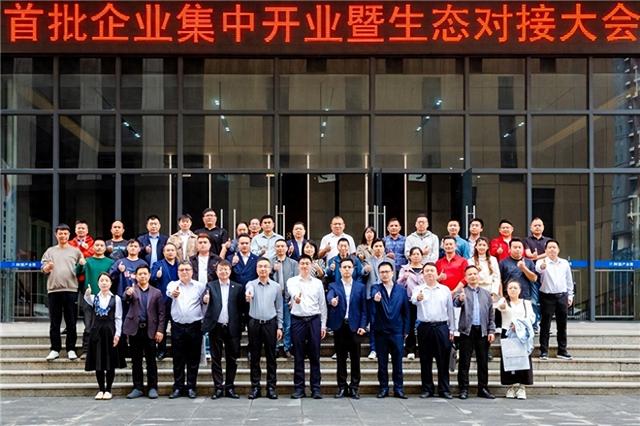
政企协同育新质 产业孵化启新程 —— 中铁城运(惠州)未来产业孵化器首批入驻企业集中开业
Xin Lang Cai Jing· 2025-12-24 11:38
Core Insights - The opening ceremony of the "Qihang·Gathering·Win-Win - China Railway City Operation (Huizhou) Future Industry Incubator" took place on December 24, 2025, marking a significant milestone in the strategic cooperation between Huizhou, Zhongkai High-tech Zone, and China Railway City Operation Company [1] Group 1 - The incubator has successfully attracted 36 high-quality enterprises since its launch in April 2025, achieving a recruitment rate of over 90%, thereby forming a scale industrial ecosystem that injects strong momentum into the industrial upgrade of Huizhou Zhongkai High-tech Zone [3] - The successful operation of the incubator is seen as a key entry point for deepening strategic cooperation between China Railway Real Estate and Huizhou, aligning with regional development and future industry layout [4] - The incubator aims to leverage its comprehensive advantages in urban operation, industrial empowerment, and capital operation to contribute to regional technological innovation and high-quality industrial development [4] Group 2 - During the ecological docking session, executives from various companies shared their experiences in entrepreneurial support and capital empowerment, facilitating a platform for collaboration among the upstream and downstream of the industrial chain [6] - The entry of quality enterprises into the incubator is expected to enhance the industrial agglomeration effect and accelerate the transformation of technological achievements, supporting Huizhou Zhongkai High-tech Zone in becoming an innovation hub for industries [6] - The ceremony included a ribbon-cutting event with leaders from the Zhongkai High-tech Zone, China Railway City Operation Company, and Huizhou Advanced Manufacturing Company, alongside representatives from the 36 enterprises participating in the launch ceremony [6]
斯迪克子公司太仓斯迪克拟引进投资者工融金投 获增资2.5亿元
Zhi Tong Cai Jing· 2025-12-24 11:37
本次增资符合公司及太仓斯迪克实际经营及未来发展需要,通过引入长期权益资金专项用于偿还有息负 债,可以有效降低资产负债率和有息负债规模,调整优化资产负债结构。 斯迪克(300806)(300806.SZ)发布公告,公司全资子公司太仓斯迪克新材料科技有限公司(以下简称"太 仓斯迪克"或"标的公司")拟引进工融金投二号(北京)新兴产业股权投资基金合伙企业(有限合伙)(以下简 称"工融金投"或"增资方")以现金方式进行增资并实施市场化债转股,增资金额2.5亿元。 ...

滨化股份拟与专业投资机构共同设立创业投资基金
Zhi Tong Cai Jing· 2025-12-24 11:33
Group 1 - The company, Binhu Chemical (601678.SH), announced a partnership with its subsidiary, Hengqin Changyue, to establish a venture capital fund with a total scale of 400 million yuan [1] - The company will contribute 199 million yuan as a limited partner, while Hengqin Changyue will invest 1 million yuan as a general partner [1] - The fund will focus on strategic emerging industries such as synthetic biology, new energy, new materials, specialty chemicals, energy conservation and environmental protection, and high-end equipment manufacturing [1]

2025年版鼓励外商投资产业目录出炉!减税红利直达,先进制造、现代服务成鼓励热点
Zheng Quan Shi Bao· 2025-12-24 11:30
Core Points - The release of the "Encouragement Directory for Foreign Investment (2025 Edition)" aims to optimize the direction of foreign investment in China, effective from February 1, 2026, replacing the 2022 version [1] Group 1: Encouragement of Foreign Investment - The new directory emphasizes encouraging foreign investment in advanced manufacturing, adding sectors such as nucleic acid drug development, zero-magnetic medical equipment, smart detection equipment, and key components for robotics [1] - It also promotes foreign investment in modern service industries, including new material technology platforms, high-end shipping services, virtual power plant operations, and various consumer services like pet care and sports tourism [1] - The directory encourages foreign investment in the central and western regions, northeastern areas, and Hainan Province, tailored to local resources and industrial advantages [2] Group 2: Policy Benefits and Implementation - Industries included in the directory will benefit from significant policy incentives, such as tax exemptions on imported equipment and preferential land supply for industrial projects [3] - In western regions and Hainan, foreign investors can enjoy a reduced corporate income tax rate of 15% [3] - The government plans to enhance the business environment for foreign investment by addressing issues faced by companies and facilitating investment cooperation [4]