云计算

Search documents
广发证券:维持腾讯控股“买入”评级 AI成为新业务基因
Zhi Tong Cai Jing· 2025-12-19 07:08
Group 1 - Tencent Holdings has achieved solid results in advertising and gaming through AI technology and category expansion, with the advertising business expected to maintain strong growth momentum due to continuous iterations of AI technology and the proliferation of systems like AIM+ [1] - Tencent Cloud has made initial progress in international markets, opening services in 22 physical regions and 64 availability zones globally, with over 3,200 global acceleration nodes [1] - Southeast Asia is identified as a key focus area for Tencent Cloud over the next 3-5 years, driven by stable energy and power supply, with Thailand and Indonesia being primary infrastructure targets [1] Group 2 - Tencent has established a comprehensive AI strategy, enhancing talent acquisition to accelerate AI integration into its business model [2] - The company maintains its profit forecast, projecting revenues of 752.4 billion and 827.8 billion yuan for 2025 and 2026, respectively, with adjusted net profits expected to be 258.6 billion and 295.3 billion yuan [3] - The estimated fair value based on the latest share capital is 754.73 HKD per share for 2026 [3]


为什么说,时间是公平且坚固的壁垒?| 轻分享
高毅资产管理· 2025-12-19 07:00
Core Viewpoint - The article emphasizes that time is a crucial barrier in business, as it cannot be bought or replicated, and it plays a significant role in establishing competitive advantages [5][12][33]. Group 1: Strategic Six Variables - The article introduces the "Strategic Six Variables" which include value, scarcity, barriers, assets, leverage, and flywheel, highlighting their importance in building a business [5]. - It acknowledges that while these variables are essential, the most significant barrier for ordinary people is time, which is often overlooked [5][6]. Group 2: Barriers in Manufacturing - In manufacturing, the true barrier is often the "ineffable know-how" that comes from years of experience rather than just equipment or standard operating procedures [7][8]. - An example is given of Corning, which has developed its expertise in glass manufacturing over 170 years, creating a barrier that competitors cannot easily overcome [9][10][11]. Group 3: Time as a Barrier - Time is presented as a unique barrier because it is the one resource that cannot be purchased; companies like Amazon have leveraged their early start in cloud computing to build significant advantages that later entrants struggle to replicate [15][16]. - The article encourages businesses to identify what unique aspects they possess that competitors cannot quickly copy, emphasizing the importance of investing time in building these advantages [16][30]. Group 4: The Value of Persistence - The article discusses the importance of persistence in business, using examples like Luo Zhenyu, who has built a brand over years through consistent effort [27][28]. - It suggests that businesses should focus on long-term projects that accumulate value over time rather than seeking immediate returns [22][31]. Group 5: Conclusion - The article concludes by encouraging businesses to embrace time as a friend and to focus on building enduring barriers that will yield rewards in the long run [34][35].



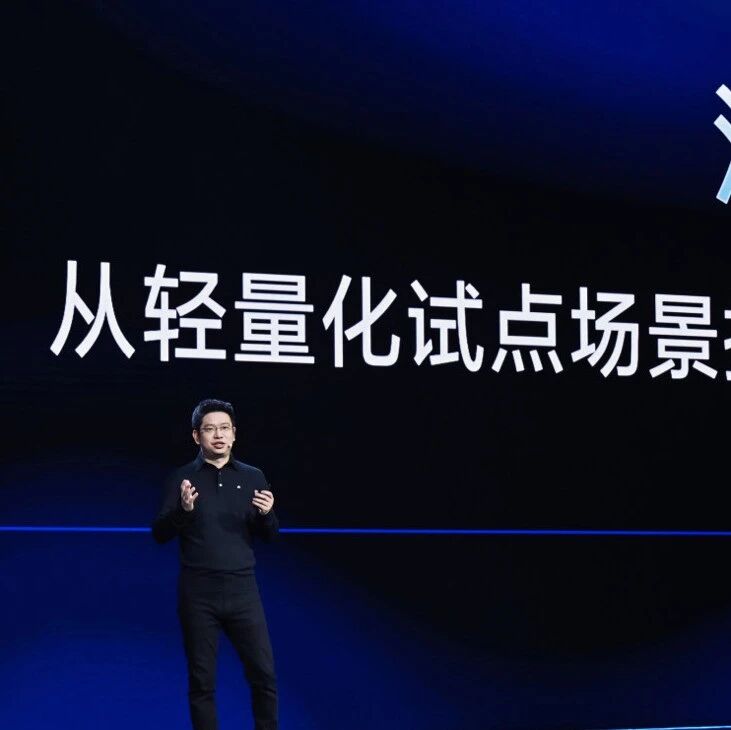
火山引擎总裁谭待:谈论Agent与APP冲突还太早
第一财经· 2025-12-19 06:51
Core Insights - The article discusses the recent advancements in AI models by ByteDance's Volcano Engine, highlighting the launch of Doubao Model 1.8 and Seedance 1.5 pro, with Doubao's daily token usage exceeding 50 trillion, up from 30 trillion in September [2]. Group 1: AI Model Developments - Doubao Model's daily token usage has significantly increased, indicating growing adoption and demand for AI solutions [2]. - The industry is still in the early stages of AI implementation, with the transition from the APP era to the Agent era being characterized as a conflict of perspectives rather than a definitive shift [2][3]. - The core value of AI lies in optimizing unmet needs and enhancing efficiency, rather than merely replacing existing platforms [2]. Group 2: Challenges and Ecosystem Readiness - The exploration of AI and Agents is still in a trial phase, with market demand present but models not yet fully developed, a situation expected to persist for about three more years [3]. - The readiness of the ecosystem for comprehensive Agent integration is contingent on the improvement of Agent tools [3][4]. - Key challenges for Agents include foundational capabilities and real-world application requirements, such as stability, scalability, and data security [4]. Group 3: Multi-Modal AI and Future Trends - The introduction of multi-modal capabilities in AI models allows them to perform tasks similar to human functions, marking a shift towards deeper application scenarios [4]. - The rapid evolution of models is addressing many issues, with significant advancements made since last year [4]. - The competition among AI firms should focus on expanding the market and accelerating AI implementation across various industries [4]. Group 4: Cloud Services and Market Dynamics - Volcano Engine emphasizes the value of cloud services in the AI era, drawing parallels between the growth of AI cloud services and the GPU market surpassing CPUs [5]. - The shift towards AI-driven cloud services is expected to render traditional private deployment models obsolete, as the technology continues to evolve rapidly [5]. - The importance of cloud infrastructure is underscored by the challenges faced by fixed-capacity machines in supporting diverse AI applications [5].
甲骨文百亿项目融资突然“告吹” 美国AI泡沫恐慌来袭
Xin Lang Ke Ji· 2025-12-19 06:22
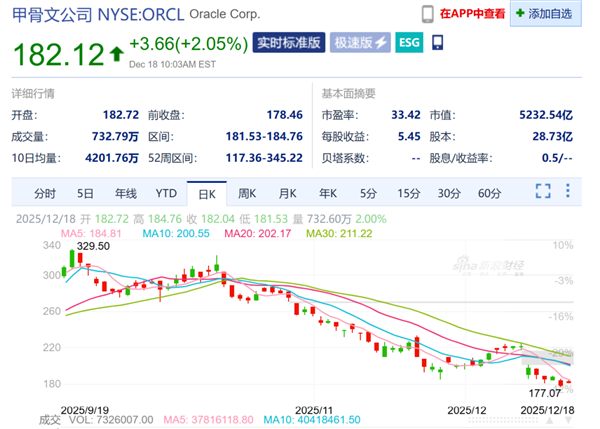
Core Viewpoint - Oracle's significant data center project in Michigan, valued at $10 billion, will not receive funding from Blue Owl Capital, raising concerns about the AI bubble and leading to a nearly 45% drop in Oracle's stock price since its peak in early September [1] Group 1: Financial Performance and Market Reaction - Oracle's stock price surged from approximately $122 on April 21 to over $320 in early September, driven by AI narratives, but has since retraced all gains as investors focus on the costs of realizing these promises [4] - Jim Chanos criticized Oracle's rapid asset expansion, indicating that the return on new capital investments is only about 8.5%, compared to nearly 40% for Microsoft, suggesting Oracle may struggle to recover its incremental capital costs [4][5] - Analysts are questioning how much Oracle is investing in AI, with management failing to provide clear financial guidance during a recent earnings call [6] Group 2: Funding and Project Viability - Blue Owl Capital, previously a key financier for Oracle's data center projects, has opted out of the Michigan project due to changing market attitudes towards AI spending and Oracle's debt levels, leading to stricter loan terms [7][9] - Concerns are growing regarding the reliability of OpenAI's commitments to Oracle, with analysts suggesting that Oracle should consider restructuring its contract with OpenAI to manage capital deployment more responsibly [11] Group 3: Competitive Landscape and Future Outlook - OpenAI's partnerships with Microsoft and Amazon indicate a diversification of its computing resources, potentially diminishing Oracle's role in OpenAI's ecosystem [12] - The competitive landscape is shifting, with stronger players like Google accelerating their AI capabilities, raising questions about OpenAI's ability to maintain its lead [13][14] - Uncertainties remain regarding a potential agreement between OpenAI and Nvidia, which could impact Oracle's future revenue from AI infrastructure [15] Group 4: Capital Structure and Investment Strategy - Oracle's traditional business model, characterized by predictable cash flows and high gross margins, is being challenged by the capital-intensive nature of AI investments, which require longer return periods [16] - The company's ability to sustain high levels of investment in AI will ultimately depend on decisions made by founder Larry Ellison, as the market shifts focus from grand AI visions to the sustainability of capital structures during prolonged return delays [16]
商务部电子商务司负责人介绍2025年1—11月我国电子商务发展情况
Sou Hu Cai Jing· 2025-12-19 05:23
Group 1: E-commerce Development in China - The online retail sales in China grew by 9.1% from January to November, indicating a strong potential for domestic demand [1] - Digital products monitored by the Ministry of Commerce saw an increase of 8.2%, with smart wearables and smart robots growing by 22.1% and 19.4% respectively [1] - Online service consumption surged by 21.7%, contributing to the rapid growth of the express delivery business, which exceeded 180 billion packages by November 30, setting a historical record [1] Group 2: Innovation and Transformation in E-commerce - The industrial e-commerce sector facilitated nearly 450 events to support the digital transformation of small and medium-sized enterprises in agriculture and industry, with rural online retail growing by 9.8% [1] - Key monitored industrial e-commerce platforms reported transaction growth of 6.6% for textiles and 3.5% for pharmaceuticals [1] - Major e-commerce platforms achieved an average R&D intensity of 8.3% in the first three quarters, leading in AI cloud, self-developed text-to-video, and text-to-image models globally [1] - Revenue from cloud computing and big data services grew by 13.4%, while technology service revenue from e-commerce platforms increased by 12.1% [1] Group 3: International Cooperation through E-commerce - The "Silk Road Cloud Products" e-commerce month event promoted products from Australia, Uzbekistan, and Indonesia, resulting in sales growth exceeding 10 times and a 5.6% increase in retail sales of imported goods [2] - Capacity-building initiatives included overseas training sessions in Thailand and Laos, engaging over 150 representatives from government, industry, and SMEs, contributing to the construction of a community of shared destiny [2]

美国众议院通过《Speed Act》 2026年?AI基建有望迈入加速阶段
Zhi Tong Cai Jing· 2025-12-19 03:14
Group 1 - The U.S. House of Representatives has passed the "Speed Act" aimed at simplifying the permitting process for AI infrastructure and energy systems, with a vote of 221 in favor and 196 against [1] - Major U.S. tech companies, including Micron, OpenAI, and Microsoft, have publicly supported the "Speed Act," which is expected to reduce the federal permitting risks associated with energy infrastructure for large data centers [2] - The "Speed Act" is designed to accelerate the construction of AI data centers by addressing external constraints related to obtaining power and energy infrastructure approvals, thereby reducing the "time-to-power" risk [2][3] Group 2 - The legislation will narrow and expedite the National Environmental Policy Act (NEPA) processes, allowing certain projects to bypass redundant reviews and focusing environmental impact analyses on direct effects [3] - The act is seen as a tool to facilitate faster energy supply projects, which are critical for the expansion of AI data centers, especially in regions with tight power loads [3] - However, the "Speed Act" does not address other significant bottlenecks faced by tech giants, such as local zoning issues, community resistance, and utility cost-sharing [4] Group 3 - The "Genesis Project," initiated by the White House, aims to enhance the application of emerging technologies, including AI, in scientific exploration and energy projects, with 24 leading AI companies, including Microsoft and Google, signing agreements to participate [4] - The project is expected to significantly boost the productivity of U.S. researchers by automating experimental design and accelerating simulation processes [4] Group 4 - A report from Bank of America indicates that the global AI arms race is still in its early to mid-stages, with Vanguard noting that the AI investment cycle may have only reached 30%-40% of its peak [5] - Major financial institutions believe that the investment wave in AI infrastructure, particularly in AI chip computing hardware, is just beginning, with potential investments reaching $3 trillion to $4 trillion by 2030 [5]




密歇根州通过争议性协议 监管机构批准为甲骨文(ORCL.US)和OpenAI数据中心供电
Zhi Tong Cai Jing· 2025-12-19 03:04
Core Viewpoint - The Michigan regulatory agency has unanimously approved DTE Energy Co.'s request to provide power for a large-scale data center project planned by Oracle and OpenAI, despite public opposition [1][2]. Group 1: Project Details - DTE Energy's plan involves a $1.4 billion facility in Saline Township, which will require significant power supply [1]. - Oracle will cover most of the project's costs, including a minimum monthly fee and termination fees, as part of a financing deal worth approximately $14 billion [2]. - The data center is part of OpenAI's broader plan to build 8 gigawatts of capacity in the U.S., contributing to a total investment of over $450 billion in the next three years [2]. Group 2: Regulatory and Public Response - The Michigan Public Service Commission stated that the agreements protect the grid and the public, ensuring net financial benefits for DTE's other customers [1]. - The approval process has been contentious, with concerns raised about the potential for data centers to consume power at the expense of public services during emergencies [2]. - Public opposition was evident during the hearing, highlighting growing hostility towards data centers in certain regions of the U.S. [3].
美国众议院通过《Speed Act》 2026年 AI基建有望迈入加速阶段
Zhi Tong Cai Jing· 2025-12-19 02:58
Core Viewpoint - The passage discusses the passage of the "Speed Act" in the U.S. House of Representatives, aimed at simplifying the permitting process for AI infrastructure and energy systems, which is now moving to the Senate for further consideration [1]. Group 1: Legislative Impact - The "Speed Act" was passed with bipartisan support, receiving 221 votes in favor and 196 against, and aims to ease the permitting process for AI infrastructure and large data centers [1]. - The act is expected to reduce the federal government permitting risks associated with energy infrastructure for major tech companies like Google and Microsoft, enhancing delivery certainty rather than accelerating construction timelines [2]. Group 2: Engineering and Project Management - The act will narrow and expedite the National Environmental Policy Act (NEPA) processes, allowing certain projects to bypass redundant reviews and focusing environmental impact analyses on direct effects [3]. - This legislative change is anticipated to accelerate the construction of power transmission and related infrastructure, making financing and long-term power contracts easier for data centers [3]. Group 3: Challenges and Additional Initiatives - Despite the potential benefits of the "Speed Act," significant bottlenecks remain, including local site selection issues, community resistance, and utility cost-sharing challenges, which are not addressed by NEPA reforms [4]. - The "Genesis Plan," initiated by the White House, aims to enhance the application of emerging technologies, including AI, in scientific exploration and energy projects, with participation from 24 leading AI companies [4]. Group 4: Market Outlook - Major financial institutions, including Bank of America and Vanguard, indicate that the global AI arms race is still in its early to mid-stages, with AI infrastructure investment expected to reach $3 trillion to $4 trillion by 2030 [5]. - The demand for AI computing power is driving a significant investment wave in AI infrastructure, which is still considered to be at the beginning of its growth cycle [5].
*ST宇顺2025年12月19日跌停分析
Xin Lang Cai Jing· 2025-12-19 02:22
Core Viewpoint - *ST Yushun (sz002289) experienced a limit down on December 19, 2025, with a price of 24.61 yuan, reflecting a decline of 5.02%, and a total market capitalization of 6.897 billion yuan [1] Group 1: Company Financials and Risks - The company is facing significant operational difficulties, with a projected negative net profit for 2024 and revenue below 300 million yuan. If there is no improvement in 2025, it risks delisting, which raises substantial concerns among investors [2] - A major restructuring requires a cash payment of 3.35 billion yuan and financial support of 1.5 billion yuan, while the company's cash reserves were only 11.76 million yuan at the end of 2024, creating immense financial pressure [2] Group 2: Market Environment and Industry Factors - The company is transitioning from electronic manufacturing to cloud computing, facing challenges in business integration and requiring the management team to adapt to a new business domain [2] - The acquisition may lead to high goodwill, and the target company, Aihua Data, has not yet commenced operations, adding uncertainty to the company's transformation [2] Group 3: ESG Rating and Investor Sentiment - The company's ESG rating was downgraded to B in October 2025, which may negatively impact its image and long-term investment value among investors [2] - Despite the introduction of a new "annual strong" concept on November 7, 2025, the complex fundamentals have prevented sustained support for the stock price [2] Group 4: Capital Flow and Technical Analysis - Although institutional buying was noted on December 15, 2025, it may only represent short-term capital behavior [2] - The company faces numerous negative factors from a technical perspective, leading to diminished investor confidence and increased selling pressure, resulting in the stock hitting the limit down [2]

国信证券:维持腾讯控股(00700)“优于大市”评级 海外云与游戏双轮驱动 AI赋能构筑新增长引擎
智通财经网· 2025-12-19 02:01
Core Viewpoint - Guosen Securities maintains an "outperform" rating for Tencent Holdings, highlighting that overseas markets have become a clear second growth curve for Tencent's gaming and cloud businesses, with strategic investments beginning to yield results [1] Group 1: Overseas Cloud Business Expansion - Tencent is accelerating its overseas cloud infrastructure, planning to invest $150 million in the Middle East and $500 million in Indonesia, with new data centers being established in Saudi Arabia and Japan [2] - The global infrastructure now covers 22 regions across five continents, operating 64 availability zones and over 3,200 global acceleration nodes [2] Group 2: Competitive Advantages - Tencent Cloud's competitive edge is driven by technology and localized services, excelling in audio-visual, gaming, and database sectors, with its media cloud services being globally recognized [3] - Localized data center construction enhances response speed, as evidenced by the migration of GoTo Group's core services to Tencent Cloud, resulting in improved app response times [3] Group 3: Market Positioning and Future Outlook - Tencent Cloud focuses on PaaS and SaaS services, avoiding price wars by leveraging high cost-performance and localized services, while also addressing chip supply issues [4] - Tencent aims to capture growth from Chinese enterprises going overseas and deepen its local SaaS market presence, with expectations of scale and profit growth in emerging markets like Southeast Asia [4] Group 4: Gaming Business Growth - Tencent's international gaming revenue grew by 43% year-on-year to RMB 20.8 billion in Q3 2025, driven by revenue from Supercell and new game releases [5] - The company anticipates overseas gaming revenue to reach RMB 75.7 billion in 2025, accounting for 32% of Tencent's total gaming revenue, an increase of 3 percentage points [5] Group 5: GaaS and IP Development - Tencent is enhancing its GaaS model by applying domestic long-term operation experiences to extend product lifecycles and strengthen IP value through cross-media development [7] - AI is being integrated into all aspects of game production, improving efficiency and enhancing player experience, with 95% of employees using AI tools [8] Group 6: AI Technology in Gaming - Tencent has made significant advancements in AI technology for gaming, achieving capabilities in scene coherence and real-time generation, although challenges remain in character behavior and continuity [9] - The company is positioned to leverage its expertise in both gaming and AI to create tailored gaming experiences and enhance production capabilities [9]