基金

Search documents
公告速递:兴银现金增利基金2026年春节假期前调整大额申购、大额转换转入及大额定期定额投资业务
Sou Hu Cai Jing· 2026-02-11 01:20
Core Viewpoint - The announcement from Xingyin Fund Management indicates a temporary adjustment to large subscription, conversion, and regular investment limits for the Xingyin Cash Increase Money Market Fund ahead of the 2026 Spring Festival, aimed at protecting the interests of existing fund shareholders [1] Group 1 - Starting from February 12, 2026, the fund will impose a limit of 10,000 yuan on subscriptions, conversions, and regular investments [1] - The adjustments are made specifically for the period leading up to the Spring Festival holiday [1] - The announcement is generated based on publicly available information and does not constitute investment advice [1]
中国境内ETF规模亚洲第一
Mei Ri Jing Ji Xin Wen· 2026-02-11 01:20
Group 1 - The core viewpoint of the reports indicates that the Chinese ETF market is experiencing rapid growth, surpassing significant milestones in 2025 [1] - The market reached a historic size of 6.02 trillion yuan, making it the largest in Asia, overtaking Japan [1] Group 2 - The Shanghai Stock Exchange and Shenzhen Stock Exchange released the "ETF Industry Development Report (2026)" and "ETF Market Development White Paper (2025)" respectively [1] - The reports highlight that the Chinese ETF market broke through the 4 trillion, 5 trillion, and 6 trillion yuan thresholds within the same year [1]
公告速递:鑫元安鑫宝基金调整大额申购(转换转入、定期定额投资)业务限额
Sou Hu Cai Jing· 2026-02-11 01:20
以上内容为证券之星据公开信息整理,由AI算法生成(网信算备310104345710301240019号),不构成 投资建议。 证券之星消息,2月11日鑫元基金管理有限公司发布《关于鑫元安鑫宝货币市场基金调整大额申购(转换 转入、定期定额投资)业务限额的公告》。公告中提示,为保护基金份额持有人利益,自2026年2月12日 起鑫元安鑫宝货币市场基金调整大额申购(转换转入、定期定额投资)业务限额。 ...
境内ETF总规模突破6万亿元 高质量发展驶入快车道
Xin Lang Cai Jing· 2026-02-11 01:13
在资本市场深化改革与政策红利双重加持下,境内ETF市场正迎来历史性跨越。 深交所最新发布的《ETF市场发展白皮书(2025年)》以及上交所发布的《ETF行业发展报告 (2026)》显示,截至2025年底,境内ETF总规模历史性突破6万亿元大关,年度增幅高达62%,占A股 流通市值比重提升至6.1%。 从首个万亿耗时16年,到如今第六个万亿仅用4个月,ETF市场不仅刷新规模增长纪录,更在产品创 新、投资者结构优化及国际化等方面实现质效双升,逐步发展成为居民财富管理和中长期资金入市的重 要载体。 规模跃升结构优化 宽基与科技主题双引擎发力 2025年,在《促进资本市场指数化投资高质量发展行动方案》及推动中长期资金入市等顶层设计的强力 推动下,境内ETF市场呈现出爆发式增长态势。 深交所报告数据显示,截至2025年底,境内上市ETF总数达1381只,非货币ETF规模达5.84万亿元,较 2024年底净增2.28万亿元,增幅64%。值得关注的是,市场增量呈现"双轨驱动"特征——存量产品规模 持续扩张与新增产品贡献并重,其中宽基ETF作为市场"压舱石"整体规模增长17%,千亿级宽基ETF不 断涌现,显示出投资者对核心资 ...
大股东频繁增资“输血”挂牌“清仓” 中小型公募基金面临生存危机
Xin Lang Cai Jing· 2026-02-11 01:13
Core Insights - The announcement from Hongyi Yuanfang Fund Management Company highlights the ongoing survival crisis faced by small and medium-sized fund management institutions in the public fund industry [1][2] Group 1: Fund Management Challenges - Hongyi Yuanfang Fund received an additional investment of 29 million yuan from its major shareholder, marking it as the first public fund to implement capital increase this year [1] - As of the end of 2025, out of 167 public fund management institutions, 101 have a management scale of less than 100 billion yuan, accounting for over 60% of the total, with a combined scale of 2.75 trillion yuan, representing approximately 7.60% of the market [1][4] - The management scale of Hongyi Yuanfang Fund peaked at over 1.8 billion yuan in June 2021 but has since declined to 805 million yuan by the end of 2025, ranking 155th among 167 public institutions [2][3] Group 2: Market Competition - The public fund industry is highly competitive, with the top 10 institutions managing over 14.06 trillion yuan, accounting for 38.84% of the total market, while 56 institutions manage between 100 billion and 1 trillion yuan, making up 53.56% [4] - The remaining 101 institutions are competing for only 7.60% of the market share, indicating significant challenges for smaller firms [4] - Many small institutions, such as Zhongke Wotu Fund and Guodu Securities, have very low management scales, with some funds facing liquidation risks due to their small sizes [4][5] Group 3: Financial Performance - Hongyi Yuanfang Fund has undergone multiple rounds of capital increases since its establishment in 2018, with its registered capital increasing from 380 million yuan to 409 million yuan after the latest round [1] - In contrast, Huachen Future Fund has faced severe financial difficulties, with its management scale dropping to 0.45 million yuan by the end of 2025, and it reported a net loss of 1.14 million yuan in the first three quarters of 2025 [3] - The ongoing financial struggles of smaller funds are exacerbated by the need to cover operational costs, leading to a preference among investors for larger, more liquid funds [5]
刚刚!“爱理财的小羊”,抖音大号、小号,被禁言!
Zhong Guo Ji Jin Bao· 2026-02-11 01:12
Group 1 - The account of the financial influencer "Love to Invest Little Sheep" on Douyin has been banned, causing widespread attention in the investment community [1][2] - The influencer clarified that the banned account was not his, but a mimic account, while his own account was set to private [1] - The ban is linked to violations related to promoting funds without proper qualifications, where a fund company collaborated with unqualified internet influencers to market their products [3] Group 2 - The fund company involved, referred to as D Fund Company, was found to have engaged in misleading marketing practices that did not adequately disclose risks to investors [3] - Regulatory measures have been taken against D Fund Company, including a directive to correct its practices and a suspension of public fund product registrations [3] - The influencer had previously attracted a large following through humorous and engaging content, and had publicly disclosed his investment in D Fund Company's product, totaling 3.087 million yuan [4]
多数机构建议持股过节
21世纪经济报道· 2026-02-11 00:55
Core Viewpoint - The prevailing consensus among institutions is to "hold stocks during the festival," driven by historical data analysis and current market conditions, with a focus on a "stable before the festival, aggressive after" strategy [1][5][9]. Historical Data Support - Historical data from the past decade indicates a clear pattern in the A-share market of "weak before the festival, strong after," with an average return of -2.20% in the second week before the festival and a recovery to 0.53% in the last week before the festival [3][4]. - The first week after the festival shows an average return of 2.03%, with an 80% probability of an increase, while the second and third weeks yield average returns of 0.86% and 0.83%, respectively [3]. - Smaller market caps and growth styles exhibit a more pronounced reversal effect around the festival, with industries such as computer, electronics, communication, non-ferrous metals, and machinery showing the strongest post-festival rebound [3][4]. Institutional Consensus - A survey indicates that 62.16% of private equity firms prefer to hold significant positions during the festival, with 69.23% optimistic about post-festival market performance [6]. - The favored investment strategy is a "low-valuation blue-chip + technology growth" combination, with 41.18% of firms supporting this approach [6]. Market Trends and Strategies - Institutions emphasize a balanced and defensive approach before the festival, adopting a "dumbbell strategy" that combines defensive and aggressive investments [9]. - Post-festival, the focus shifts to technology growth and industry trends, with recommendations for sectors like AI, semiconductors, and high-end manufacturing [10][11]. - The "resource + manufacturing" combination is highlighted as an important foundational investment, with a focus on commodities like oil, copper, and aluminum, as well as traditional manufacturing sectors [11]. Investment Recommendations - Institutions suggest maintaining a balanced portfolio that includes defensive sectors such as banking and utilities, alongside growth sectors like technology and consumer goods [11]. - For different types of funds, strategies vary, with long-term investors encouraged to maintain equity positions, while those needing liquidity may consider money market funds [11].


基金早班车丨机构齐声“持股过节”,哑铃策略备战春节红包
Sou Hu Cai Jing· 2026-02-11 00:44
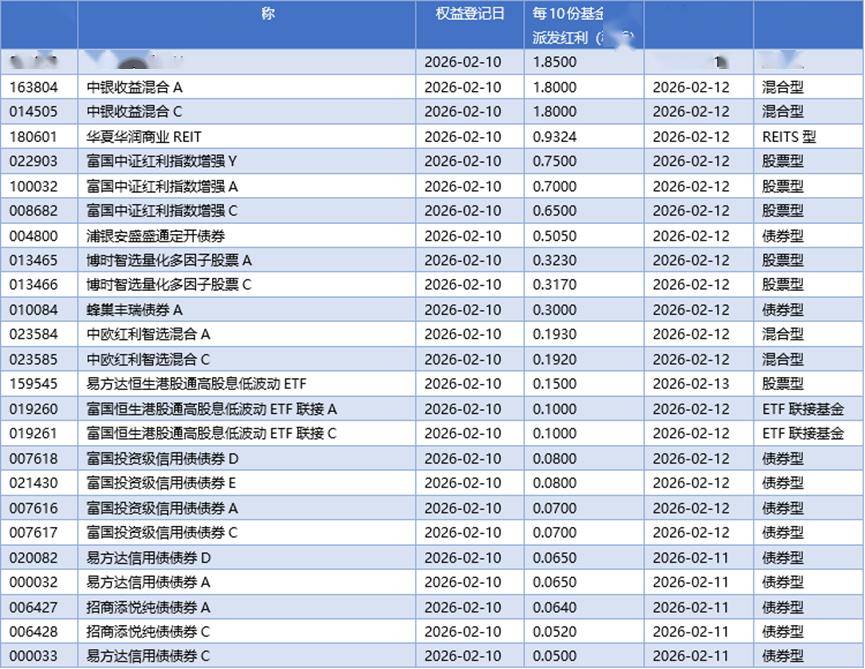
Group 1: Market Overview - The last trading week before the Spring Festival sees brokerages, public funds, and private equity leaning towards "holding stocks for the festival" with expectations for a positive post-holiday market driven by portfolio structure [1] - A "barbell strategy" is emerging as a consensus among institutions, focusing on high-dividend, low-valuation defensive assets on one end and technology growth offensive varieties on the other to prepare for potential spring market excitement [1] - On February 10, A-shares exhibited a "structural differentiation" pattern, with the Shanghai Composite Index rising by 5.28 points (0.13%) to 4128.37 points, while the Shenzhen Component Index increased by 2.19 points (0.02%) to 14210.63 points, and the ChiNext Index fell by 12.23 points (0.37%) to 3320.54 points [1] Group 2: Fund News - No new funds were launched on February 10, but 43 funds distributed dividends, primarily bond funds, with the highest dividend payout from the Bank of China Income Mixed Securities Investment Fund at 1.8500 yuan per 10 fund shares [2] - From February 3, there was a reversal in net outflows from stock ETFs, with a significant inflow of over 10 billion yuan into the market, particularly favoring small-cap ETFs like the CSI 1000 and CSI 2000, while ETFs related to non-ferrous metals faced net outflows [2] - By the end of 2025, the total scale of domestic ETFs is expected to exceed 6 trillion yuan, with an annual growth rate of 62%, increasing their share of A-share market capitalization to 6.1% [2]
全球资本为何加速“抛售美国”?
Sou Hu Cai Jing· 2026-02-10 23:53
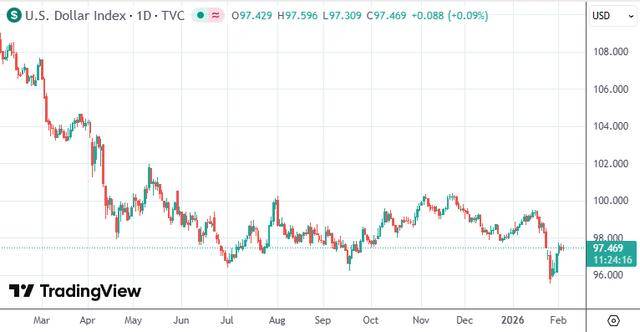
Group 1 - The core viewpoint of the article is that there is a significant trend of global capital reducing its exposure to US dollar assets, indicating a potential decline in the dollar's dominance in the global financial system [2][21]. - The current wave of dollar asset reduction is characterized by "institutional leadership, expanding scope, and increasing scale" [3]. - Major institutional investors, such as the largest private pension fund in Sweden, have significantly reduced their holdings of US Treasury bonds due to concerns over the unpredictability of the US government and rising debt levels [4][5]. Group 2 - The scope of the sell-off is broadening, with central banks like India's reducing their holdings of US Treasury bonds, which have dropped by 26% from their peak in 2023 [8]. - UK pension funds are also reducing their exposure to US equities due to concerns over potential bubbles in the US AI sector and uncertainty surrounding US government policies [8]. - A survey by OMFIF indicates that nearly 60% of central banks plan to seek alternative assets in the next one to two years, reflecting a shift away from dollar-denominated reserves [9]. Group 3 - The scale of the reduction is significant, with the IMF reporting that the dollar's share in global foreign exchange reserves fell to 56.92%, the lowest level since 1995 [10]. - The global central bank gold holdings have surpassed US Treasury bonds for the first time since 1996, indicating a shift in asset preferences [10]. - There is a strong demand for physical gold-related ETFs, with record inflows in North America and Asia, as investors seek to optimize their reserve asset structures in response to uncertainties in the global monetary system [11][13]. Group 4 - Multiple factors are undermining the dollar's dominance, including the aggressive policies of the Trump administration, which have created significant uncertainty and eroded confidence in dollar assets [14]. - The US's use of financial sanctions and the weaponization of the dollar have raised concerns among countries about the safety of their dollar-denominated assets [19]. - The ongoing high levels of US debt are leading global investors to reassess the long-term creditworthiness of US Treasury bonds, further contributing to the decline in demand for dollar assets [19]. Group 5 - The large-scale reduction of dollar assets is expected to impact the US financial market and economic policies, potentially increasing government and corporate borrowing costs and suppressing investment and consumption [20]. - The weakening of the dollar's status as a reserve currency will accelerate the transition towards a more diversified global monetary system [20]. - The current trend of dollar asset reduction is seen as a rational choice by global capital in response to unilateralism and hegemony, marking a significant shift in the international financial order [21].
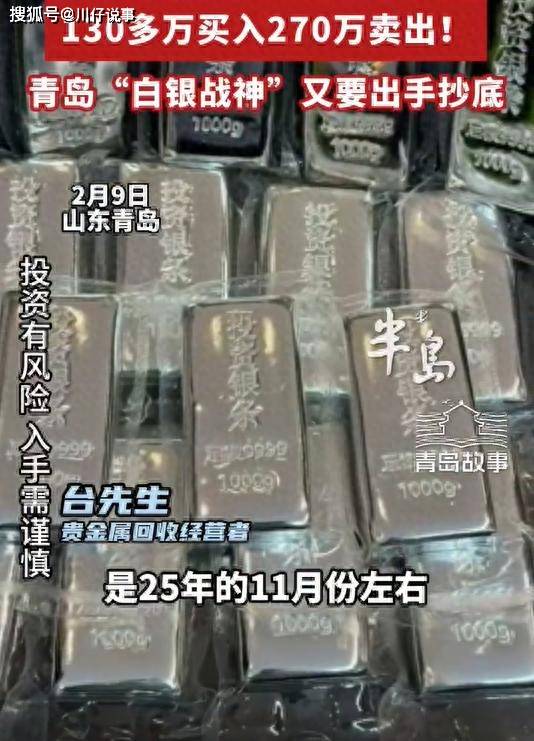
青岛一男子130万买银板赚140万,现在又要抄底,银价的“过山车”,比股市还刺激?
Sou Hu Cai Jing· 2026-02-10 23:27
Core Viewpoint - The volatility in silver prices has created significant uncertainty for investors, with recent fluctuations leading to both substantial gains and losses in the market [2][10]. Group 1: Market Performance - A notable case involved an investor who purchased silver for 1.3 million and later sold it for 2.7 million, realizing a 100% profit [1]. - On February 10, gold opened high but fell by 0.7% to 1118.20 RMB per gram, while silver experienced a more severe drop of 2.4%, closing at 19.281 RMB per gram, nearly 2 RMB lower than the previous week [1][5]. - The domestic silver price was reported at 19.35 RMB, while the international price was 18.16 USD, indicating a significant disparity in market conditions [3]. Group 2: Investor Sentiment - Investors are experiencing heightened anxiety due to the unpredictable nature of silver prices, likening the situation to a roller coaster ride [2]. - The reopening of the Guotou Silver LOF fund saw a sharp decline of 4.26% in its stock price, leading to frustration among investors who felt misled by the temporary suspension [4][6]. - Comments from investors reflect a mix of envy for those who profited and criticism towards those perceived as reckless gamblers in the market [8]. Group 3: Economic Influences - The fluctuations in precious metal prices are largely influenced by the uncertainty surrounding the Federal Reserve's policies, with a 50% probability of a rate cut expected in June [5]. - Market speculation regarding upcoming U.S. employment and inflation data could significantly alter investor expectations and market dynamics [5][9]. - The ongoing volatility serves as a reminder that high returns in precious metal investments come with substantial risks, emphasizing the need for rational investment strategies [11].