外卖

Search documents
滴滴阻击美团入巴西:中国出海企业为何这样“自相残杀”?
Hu Xiu· 2025-08-23 00:22
Core Viewpoint - The article highlights the phenomenon of "involution" in China's competitive landscape, particularly in the automotive and food delivery sectors, where companies engage in destructive price wars and self-sabotage rather than focusing on innovation and collaboration [1][20][39]. Group 1: Involution in the Automotive Industry - The German publication points out that despite Chinese automotive companies winning globally, they are trapped in a price war that leads to "bad money driving out good" [1]. - The article suggests that this competitive behavior is detrimental to the long-term sustainability and direction of the industry [1]. Group 2: Involution Externalization in Food Delivery - Chinese companies are now exporting their "involution" practices abroad, as seen in the case of Didi's food delivery platform, 99Food, which is engaged in exclusionary tactics against fellow Chinese company Meituan in Brazil [2][20]. - The competitive strategies employed by 99Food, such as the "choose one" policy for merchants, mirror past domestic practices and highlight a troubling trend of self-inflicted harm among Chinese firms [8][9]. Group 3: Legal and Competitive Actions - 99Food has been accused of unfair competition by Meituan, which claims that 99Food's actions in Brazil, including significant prepayments to merchants, are designed to stifle competition [3][10]. - The Brazilian legal system is involved, with Meituan filing lawsuits against 99Food for its aggressive tactics, including keyword advertising that misleads potential customers [12][14]. Group 4: Historical Context and Lessons - The article draws parallels to past failures of Chinese motorcycle companies in Southeast Asia, which engaged in price wars that ultimately led to their market share being overtaken by Japanese brands [21][22]. - It warns that the current food delivery sector may be repeating these mistakes, risking the overall reputation of Chinese brands in international markets [21][26]. Group 5: Call for Change in Competitive Strategy - The article advocates for a shift from "involution" to "co-creation," urging Chinese companies to focus on innovation and collaboration rather than destructive competition [30][40]. - It emphasizes the need for companies to adopt a mindset of creating new markets and demands, rather than merely competing for existing shares [31][32]. Group 6: Implications for Brand Image - The ongoing internal competition among Chinese firms could damage the overall image of Chinese brands, leading to stricter scrutiny and a less favorable business environment abroad [27][28]. - The article stresses that to succeed internationally, Chinese companies must demonstrate innovation and cooperation rather than engage in low-quality, price-driven competition [29][40].


100观察丨小米汽车计划2027年登陆欧洲:从“性价比”到“高端化”的基因重塑之战
Mei Ri Jing Ji Xin Wen· 2025-08-22 14:00
Strategic Decision - Xiaomi plans to officially enter the European market with its electric vehicles in 2027, aiming to enhance its high-end image leveraging Europe's luxury automotive recognition [1][3] - The gross margin for Xiaomi's automotive business reached 26.4% in Q2, providing confidence for this strategic move [1] Challenges - Xiaomi faces significant challenges in Europe, including a weaker "Mi Fan" base compared to its domestic market, and its smartphone business is primarily perceived as mid-to-low end, making it difficult to convert to a high-end automotive customer base [2] - The brand's ability to resonate with European consumers, who prioritize brand heritage and cultural recognition, will be tested, as established brands like Porsche and Mercedes have deep-rooted consumer trust [2] Operational Measures - Ideal Auto has commenced nationwide delivery of its first pure electric six-seat SUV, the Ideal i8, across 44 cities, with a target to deliver over 8,000 units by the end of September [5] - The aggressive delivery target reflects the competitive landscape in the second half of the year, and the success of the Ideal i8 will depend on its acceptance in the pure electric vehicle market [5] Industry Expansion - Meituan's international delivery brand Keeta has launched in Doha, Qatar, marking its second entry into the Middle East after Saudi Arabia, with plans to expand further in the region and into Brazil [6] - This move is part of Meituan's strategy to replicate its domestic delivery capabilities in emerging markets with low delivery penetration [6] Technological Innovation - GAC Group has introduced a new range extender technology called "Star Source Range Extender," achieving an industry-leading fuel-to-electric conversion rate of 3.73 kWh/L [8] - This technology addresses key consumer pain points such as high fuel consumption when depleted, weak power, and engine noise, positioning GAC favorably in the hybrid market [8] Important Collaborations - BYD Battery and JD Auto have signed a strategic cooperation agreement, launching the first official online store for BYD batteries on JD's platform [9] - This partnership aims to enhance battery safety, addressing consumer concerns in the rapidly growing two-wheeler and three-wheeler battery market [9] Financial Technology Collaboration - Bank of China has signed a strategic cooperation agreement with Huawei Technologies to collaborate in areas such as ICT infrastructure, cloud computing, and artificial intelligence [11] - This partnership aims to strengthen Bank of China's digital financial foundation, aligning with the trend of digital transformation in financial institutions [11]




外卖混战中的宿迁餐饮业:泡沫是如何破灭的
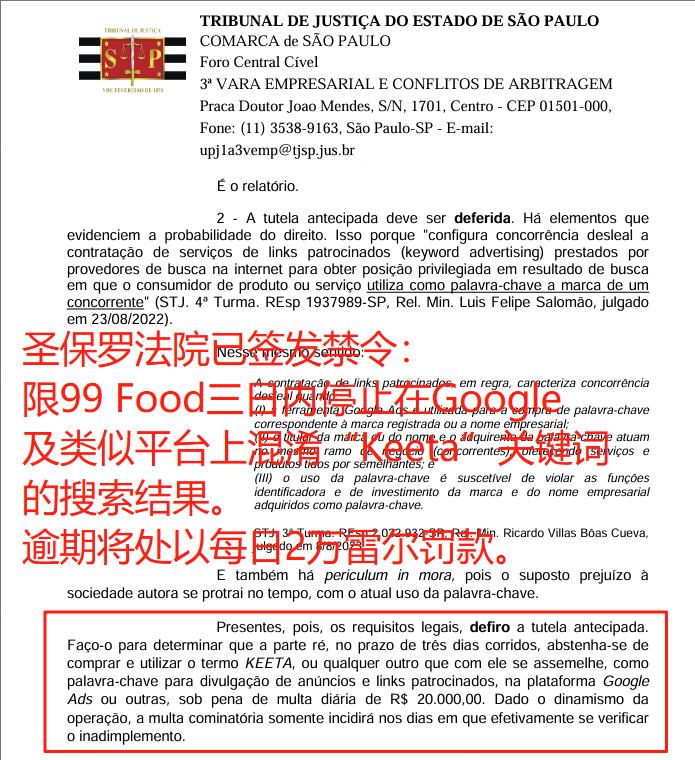
Sou Hu Cai Jing· 2025-08-22 11:07
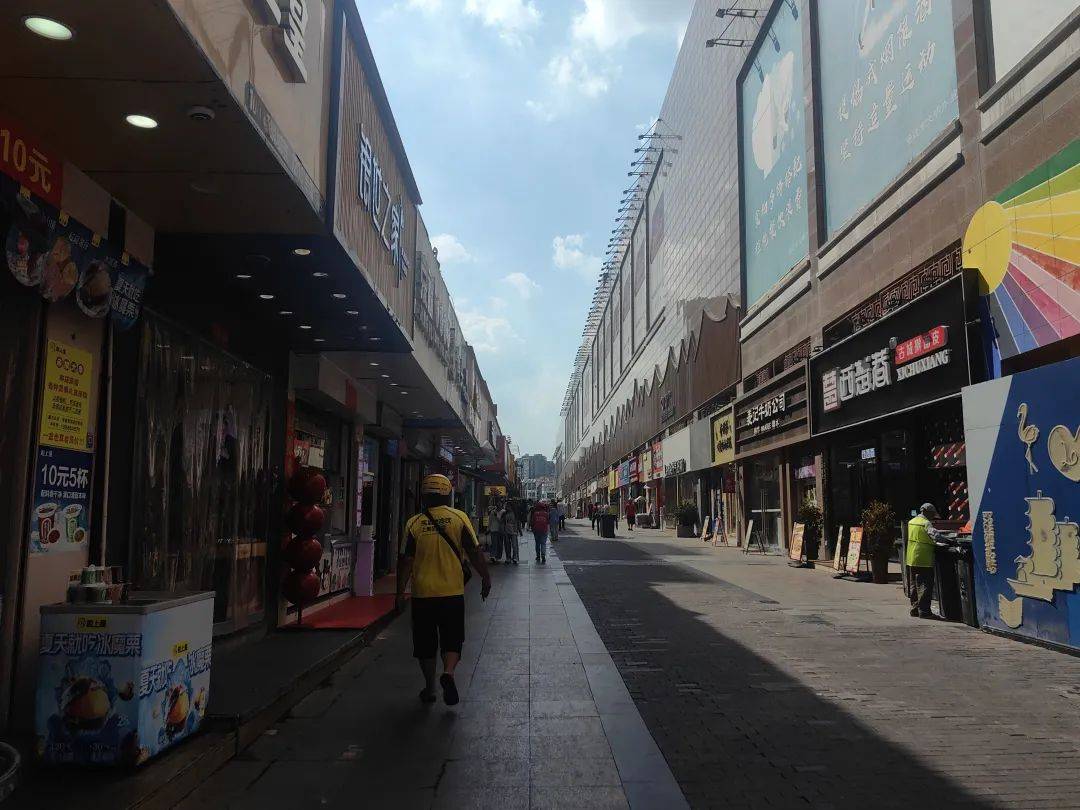
文丨刘纾含 编辑丨赵磊 从"盼着继续补贴"到"被逼着内卷",过去几个月,宿迁这座苏北小城的餐饮生态,在号称"史上最大"的 外卖补贴战中,经历了被催熟的速生与速朽。 这里是"最激烈的战场"之一。宿迁是刘强东的老家,当地餐饮业曾率先支持京东外卖,也最早享受到京 东百亿补贴的红利;淘宝闪购入局后,带来了更猛烈的补贴力度,一直持续至今;宿迁也是美团测试业 务边界的试验场,在美团核心本地商业CEO王莆中看来,宿迁是外卖大战打得最激烈的地方,"已经打 成焦土了"。在宿迁,10块钱吃顿饭已成为日常。 补贴也让宿迁餐饮业变得畸形。受消费市场和餐饮业内卷的影响,本就惨淡的堂食门店客流继续下滑, 许多以堂食为主的餐饮门店生意萧条,同样受到影响的,还有依附在餐饮业上讨生活的人们,比如代驾 师傅、驻唱歌手、餐饮设备回收商。 而享受过一波补贴红利的外卖商家们发现,平台牢牢把握着流量和补贴的规则,他们被裹挟而进,不得 不继续参与补贴,但在扭曲的价格里,想赚以往同样的钱,付出的辛苦成倍增加。 宿迁为我们展示了,非理性的补贴创造的不是需求,而是泡沫。当狂欢过后,所有的参与者都要一起买 单。 美食街上,只剩外卖骑手 7月末,宝龙后街一家蹄花店 ...
京东入局破除外卖寡头格局 “反内卷”仍需破解行业顽疾
Zhong Guo Jing Ying Bao· 2025-08-22 10:06
Core Viewpoint - The competition in the food delivery market is intensifying, particularly due to a subsidy war among platforms, raising questions about market expansion, protection of rights for riders, merchants, and consumers, and the future of the industry once subsidies decline [1][8]. Group 1: Market Structure and Issues - The food delivery market in China has been dominated by two platforms, Meituan and Ele.me, with Meituan holding a 70% market share, leading to various issues such as low profit margins for restaurants [2][3]. - Over 50% of food delivery businesses report profit margins below 5%, primarily due to high commission and marketing costs associated with the dominant market structure [3]. - The high costs force many merchants to cut expenses, leading to the emergence of "ghost kitchens," which operate without proper licenses and pose food safety risks [3][4]. Group 2: Impact of Competition - New entrants like JD's "Qixian Xiaochu" are emerging, which focus on quality and collaboration with established restaurants, potentially improving market dynamics and reducing the prevalence of "ghost kitchens" [5][6][7]. - JD's model allows partners to sell dishes without upfront investment, sharing profits while maintaining quality control, indicating a shift from cash subsidies to asset investment for long-term sustainability [6][7]. Group 3: Concerns Over Subsidy Wars - The ongoing subsidy wars may lead to unsustainable practices, with platforms potentially transferring costs to weaker entities in the supply chain, which could harm product quality and consumer welfare [9][10]. - The effectiveness of subsidies is diminishing, and the intense competition may negate the benefits of these subsidies for merchants, leading to further profit declines [10]. - There is a need for clearer rules regarding subsidy distribution and transparency in how platforms allocate resources to ensure fair competition and protect smaller merchants [10].
市场监管总局:督促电商平台全面取消“仅退款”等不合理限制
Sou Hu Cai Jing· 2025-08-22 09:38
Group 1 - The core viewpoint is that China's platform economy is undergoing a critical transformation, with digital technology accelerating integration across industries, leading to new growth points but also potential risks such as traffic prioritization and algorithm abuse [1] - The government emphasizes a balanced approach to encourage innovation while regulating development, aiming to establish a policy framework that promotes orderly competition and innovation in the platform economy [2] - New regulations have been introduced, including the "Network Transaction Supervision Management Measures" and the "Interim Measures for Network Transaction Law Enforcement Collaboration," to enhance regulatory effectiveness and clarify competition rules in the platform economy [2] Group 2 - The government has taken strong actions against market irregularities, resulting in the deletion of 4.541 million pieces of illegal product information and the suspension of services for 58,000 online stores [3] - There is a focus on addressing issues in live e-commerce, with significant cases being investigated, such as "Three Sheep" and "Northeast Rain Sister," to enhance monitoring and enforcement against violations [3] - Platforms are required to eliminate unreasonable restrictions such as "refund only" policies and to improve the transparency and reasonableness of their fees [3] Group 3 - The government has issued guidelines to encourage platforms to fulfill their compliance management responsibilities, aiming to improve compliance mechanisms [4] - Compliance reminders are issued during major events like "6.18" and "Double Eleven" to guide platforms in standardizing promotional practices [4] - Regular communication with various stakeholders, including platforms, merchants, and delivery personnel, is conducted to address concerns and provide guidance, enhancing the regulatory approach [4]
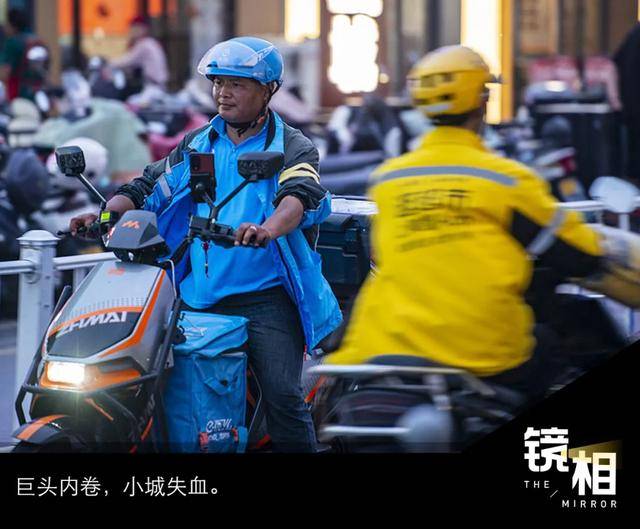
巨头内卷,小城失血
Hu Xiu· 2025-08-22 08:58
从"盼着继续补贴"到"被逼着内卷",过去几个月,宿迁这座苏北小城的餐饮生态,在号称"史上最大"的外卖补贴战中,经历了被催熟的速生与速朽。 这里是"最激烈的战场"之一。宿迁是刘强东的老家,当地餐饮业曾率先支持京东外卖,也最早享受到京东百亿补贴的红利;淘宝闪购入局后,带来了更猛 烈的补贴力度,一直持续至今;宿迁也是美团测试业务边界的试验场,在美团核心本地商业CEO王莆中看来,宿迁是外卖大战打得最激烈的地方,"已经 打成焦土了"。在宿迁,10块钱吃顿饭已成为日常。 补贴也让宿迁餐饮业变得畸形。受消费市场和餐饮业内卷的影响,本就惨淡的堂食门店客流继续下滑,许多以堂食为主的餐饮门店生意萧条,同样受到影 响的,还有依附在餐饮业上讨生活的人们,比如代驾师傅、驻唱歌手、餐饮设备回收商。 而享受过一波补贴红利的外卖商家们发现,平台牢牢把握着流量和补贴的规则,他们被裹挟而进,不得不继续参与补贴,但在扭曲的价格里,想赚以往同 样的钱,付出的辛苦成倍增加。 宿迁为我们展示了,非理性的补贴创造的不是需求,而是泡沫。当狂欢过后,所有的参与者都要一起买单。 一、美食街上,只剩外卖骑手 7月末,宝龙后街一家蹄花店的老板陈莉关掉了她的店铺。在 ...
滴滴“背刺”美团:中企相争,外资得利?
3 6 Ke· 2025-08-22 08:29
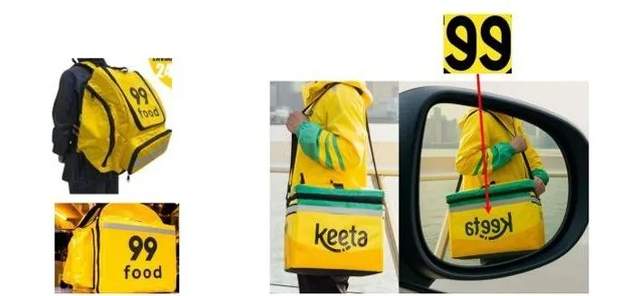
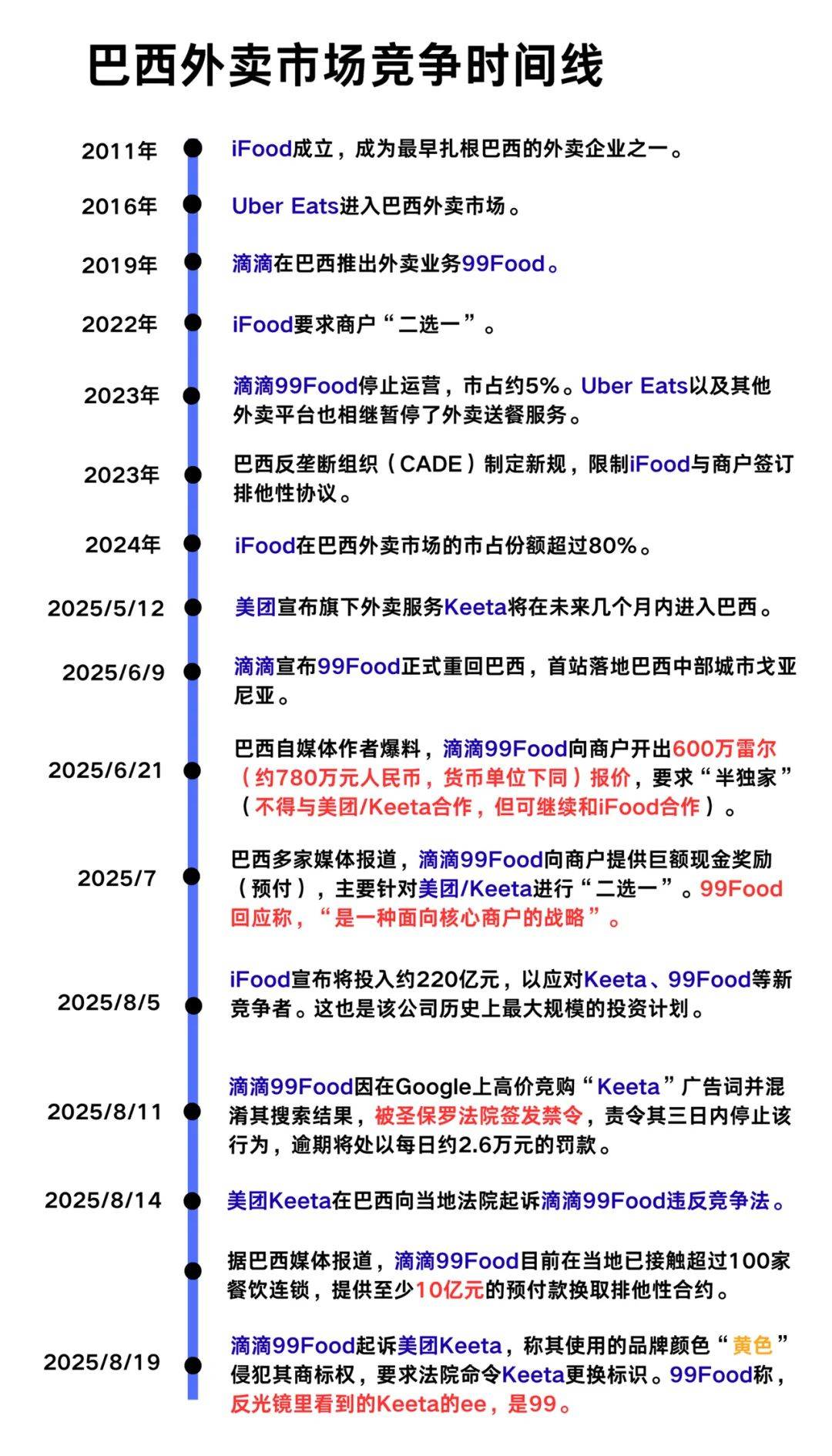
Core Viewpoint - The competition between Chinese companies Didi's 99Food and Meituan's Keeta in the Brazilian food delivery market exemplifies a case of "internal competition externalized," where companies focus on undermining each other rather than addressing the dominant local player, iFood [2][12][16]. Group 1: Competitive Strategies - Didi has invested 1.1 billion RMB to implement a "choose one" strategy, offering high subsidies to local merchants to prevent them from collaborating with Meituan while allowing partnerships with iFood [1][4][8]. - Didi has engaged in various aggressive tactics, including purchasing keywords to confuse search results and filing lawsuits against Meituan for trademark infringement [3][10]. - The "choose one" clause designed by Didi explicitly prohibits merchants from working with Meituan but does not restrict partnerships with iFood, indicating a targeted exclusion strategy [7][8]. Group 2: Market Dynamics - iFood has responded to the entry of Chinese competitors by announcing a significant investment plan of 17 billion BRL (approximately 22 billion RMB) to strengthen its market position [15]. - The Brazilian food delivery market is valued at approximately 12 billion USD, with Didi previously holding a maximum market share of 5% [12]. - The competitive actions of Didi and Meituan have inadvertently benefited iFood, allowing it to stabilize its market position amidst the influx of Chinese companies [15][16]. Group 3: Implications of Internal Competition - The aggressive competition between Didi and Meituan reflects a broader issue of Chinese companies adopting a zero-sum mentality, focusing on eliminating competitors rather than creating value for consumers [16][18]. - This approach risks damaging the reputation of Chinese brands in international markets and may lead to regulatory scrutiny, as seen with iFood's past penalties for similar practices [13][17]. - The article emphasizes the need for Chinese companies to shift from destructive competition to value creation and collaboration in overseas markets to achieve sustainable growth [18][19].
滴滴巴西的“二选一”奖金真香,我都想去巴西开饭馆了
Sou Hu Cai Jing· 2025-08-22 08:10
Core Insights - The competition between Chinese companies Meituan and Didi in Brazil's food delivery market has intensified, with both companies employing aggressive tactics against each other before Meituan's service has even launched [2][5][10] - iFood, a dominant player in Brazil's food delivery market with over 80% market share, is backed by Prosus, which is also a major shareholder of Tencent [4][10] - Didi's strategy involves using "choose one" tactics against Meituan, similar to what iFood previously used against Didi, indicating a shift in focus from competing with iFood to undermining Meituan [5][13] Company Strategies - Didi has reportedly offered significant financial incentives to restaurants to prevent them from partnering with Meituan, while still allowing partnerships with iFood [7][10] - Meituan has responded by filing lawsuits against Didi for its aggressive tactics, including a claim that Didi has provided at least 900 million reais (approximately 1.18 billion RMB) in prepayments to secure exclusivity against Meituan [10][11] - Both companies have engaged in multiple legal disputes within a short timeframe, indicating a highly competitive and contentious market environment [15] Market Dynamics - The Brazilian food delivery market is projected to exceed $20 billion by 2025, making it an attractive target for international expansion [18] - iFood has initiated defensive measures, including a significant investment of 17 billion reais (approximately 22 billion RMB) to strengthen its market position against new entrants [16][18] - The aggressive competition between Didi and Meituan may lead to a scenario where both companies exhaust their resources without significantly impacting iFood's dominance [19][20] Industry Implications - The internal competition between Didi and Meituan raises concerns about the perception of Chinese companies in international markets, potentially harming their reputation [16][20] - There is a call for both companies to focus on collaboration rather than internal conflict, as the ultimate goal is to capture a larger market share rather than engage in detrimental competition [20] - The emphasis on traditional competitive tactics like "choose one" may hinder innovation and the development of differentiated services, which are crucial in the current AI-driven market landscape [20]

【环球财经】面对美团与滴滴挑战 巴西外卖巨头iFood联手Mottu招募骑手
Zhong Guo Jin Rong Xin Xi Wang· 2025-08-22 07:38
Core Insights - iFood partners with motorcycle rental platform Mottu to offer better rental conditions for delivery riders starting September, aiming to attract and retain more riders [1] - Riders can benefit from a deposit reduction of up to 20% and flexible policies upon signing or renewing contracts, with potential additional monthly earnings of up to 350 Brazilian Reais based on delivery volume [1] - iFood's rider count in Brazil has increased from 310,000 to 450,000 over the past year, while Mottu's motorcycle rental fleet has expanded from 70,000 to 130,000, with a future target of 1 million [1] Industry Developments - Chinese companies are accelerating their food delivery presence in Brazil, with Meituan approved to operate its delivery brand Keeta and planning to invest $1 billion over the next five years [1] - Didi is reviving its 99 Food delivery service, leveraging its large user base of 50 million and 700,000 motorcycle riders to capture a larger market share [1] - The Brazilian food delivery market is valued at approximately $12 billion, with an annual growth rate of around 20%, indicating intensifying competition as iFood, Meituan, and Didi expand their operations [2] Company Investments - iFood announced plans to invest 17 billion Brazilian Reais (approximately $3.5 billion) from April 2025 to March 2026 to enhance platform traffic, user engagement, and expand its operational team [2] - The company aims to hire 1,100 new employees in the coming year, with half of these positions in technology, increasing total staff to over 8,600 [2]

美团外卖业务出海巴西,疑遭“同胞”多重阻击
3 6 Ke· 2025-08-22 07:24
Core Viewpoint - The competition between Chinese companies Meituan and Didi in the Brazilian food delivery market is intensifying, with both companies engaging in lawsuits and aggressive market strategies to establish their presence [1][2][5]. Group 1: Legal Disputes - Didi's food delivery platform "99Food" has filed a lawsuit against Meituan's overseas brand "Keeta" for trademark infringement and unfair competition, claiming that Keeta's branding is too similar to 99Food's [2][5]. - Meituan has also initiated legal action against Didi's 99Food, alleging that it has engaged in "exclusive" agreements that hinder competition [5][6]. - The Brazilian court has ordered 99Food to cease its practices of confusing search results related to the "Keeta" brand on Google, with potential fines for non-compliance [9][10]. Group 2: Market Strategies - Didi's 99Food has reportedly signed "exclusive" agreements with over 100 restaurant chains, offering substantial cash incentives to prevent them from partnering with Meituan/Keeta, while allowing cooperation with local giant iFood [6][8]. - iFood holds a dominant market share of over 80% in Brazil's food delivery sector, making it a significant competitor for both Meituan and Didi [11][13]. - iFood has announced a major investment plan of 17 billion reais (approximately 22 billion RMB) by 2026 to strengthen its market position against international competitors like Keeta and 99Food [13][14]. Group 3: Industry Insights - The global online food delivery industry is characterized by low profit margins, with major platforms expected to achieve net profit margins between 1.5% and 3.3% in 2024 [16]. - The competitive landscape in Brazil suggests that foreign companies must either eliminate potential rivals or collaborate to effectively compete against established players like iFood [11][16]. - The ongoing legal battles and aggressive market tactics reflect a broader trend of "internal competition" among Chinese companies expanding overseas, which may hinder their long-term growth prospects [16].