
数据中心

Search documents
有人提出疑问,美国的用电量量已经差不多10多年没有增长,而他们的GDP还在翻倍的长
Sou Hu Cai Jing· 2025-10-14 14:47
Core Insights - The article highlights a paradox in the U.S. economy where GDP has doubled from approximately $14 trillion in 2007 to $27 trillion in 2023, while total electricity consumption has remained relatively flat, increasing only from about 3.9 trillion kWh to 4.1 trillion kWh during the same period [3][5] Group 1: Economic Structure and Energy Consumption - The decline in the manufacturing sector's contribution to GDP from 16% in 2000 to below 11% today is noted, yet the service sector, including data centers, continues to consume significant energy [5] - Despite the growth in sectors like artificial intelligence and cloud computing, the overall increase in energy consumption does not correlate with the dramatic rise in GDP, raising questions about the sustainability of this growth model [5][7] Group 2: Inflation and Economic Metrics - The article discusses how inflation may be masking underlying economic issues, with productivity growth potentially overstated due to the inclusion of price increases in productivity metrics [7] - The reliance on credit and the ability to print money as a means of economic growth is emphasized, suggesting that this model may not be sustainable in the long term [9][11] Group 3: Global Trust in the Dollar - There is a noted decline in global trust in the U.S. dollar, with countries like Japan, Saudi Arabia, and China reducing their holdings of U.S. debt, leading to a decrease in the dollar's share of global foreign exchange reserves from 71% to 58% over the past 20 years [9] - The potential consequences of waning trust in the dollar could lead to a reevaluation of the U.S. economic narrative, which heavily relies on credit and financial instruments rather than tangible energy and resources [9][11]


不投AI投电站:VC正在调转枪口
Hu Xiu· 2025-10-14 08:06
Core Insights - The article discusses a shift in investment focus from AI and technology to tangible assets in the infrastructure sector, particularly in renewable energy and nuclear power projects [2][3][4]. Group 1: Investment Trends - Investors are increasingly turning to infrastructure assets, with a notable interest in renewable energy sources such as solar and charging stations [2][4]. - The market for infrastructure investments is becoming more active, with diverse participants including state-owned enterprises, private equity firms, and insurance capital [6][10]. - Major private equity firms like KKR and Blackstone are raising record amounts for infrastructure funds, indicating a growing recognition of these assets [7][19][20]. Group 2: Market Dynamics - There is a significant funding gap in global infrastructure, projected to reach $57-67 trillion by 2030, creating ample investment opportunities [22]. - The demand for infrastructure investments is driven by trends in digitalization, green energy, and the need for stable cash flows amid economic uncertainty [8][30]. - The focus of capital is primarily on data centers and renewable energy assets, which are seen as strategic investment areas [24][28]. Group 3: Challenges and Considerations - Infrastructure investments require substantial capital and long-term commitment, often conflicting with the typical investment horizons of private equity firms [34][37]. - The need for strong government relationships and policy understanding is critical for private equity firms to successfully navigate the infrastructure landscape [35]. - Innovative solutions, such as partnerships with long-term capital providers and structured products, are being explored to address the challenges of investing in infrastructure [38][39].
拉美或成能源投资新中心
Zhong Guo Hua Gong Bao· 2025-10-14 06:19
Core Insights - Major tech companies are increasingly investing in data centers in Latin America to support the expansion of the AI industry, with an estimated investment exceeding $2 billion in 2024 alone [2] - The Latin American data center market is projected to double by 2030, reaching a market size of $14.3 billion [2] - The energy demand from data centers in Latin America is expected to grow significantly, with McKinsey estimating an annual growth rate of 19% to 22% globally from 2023 to 2030 [3] Investment Trends - The "industrial sunshine belt" from Brazil to Mexico, along with nearshore outsourcing advantages, is driving significant investments in data centers [2] - The region's potential for renewable energy, particularly solar power, positions it as an ideal location for large-scale data center projects [4] - The influx of investment is anticipated to enhance production efficiency, upgrade infrastructure, and promote overall economic development in Latin America [4] Energy Demand and Supply Challenges - McKinsey's report highlights a potential severe energy supply gap by 2030, necessitating the construction of energy capacity at least double that of the last 25 years [3] - The energy demand for data centers in Latin America is expected to mirror or exceed global averages, raising concerns about resource allocation [3] Regulatory and Market Dynamics - New local regulations and the trend towards nearshore outsourcing are positioning Latin America as a digital infrastructure hub [4] - The region's rich fossil fuel resources and abundant solar energy potential are critical for supporting the growth of data centers [4] Socioeconomic Implications - While the data center boom presents investment opportunities, it also poses challenges related to resource competition and potential negative impacts on local communities [5] - Sustainable resource management is essential to balance the needs of data processing and AI infrastructure with the welfare of vulnerable communities [5] - Proper planning could turn the data center investment surge into a dual opportunity for clean energy development and local economic growth [5]
谷歌押注印度:100亿美元建数据中心!印度还想要更多
Guan Cha Zhe Wang· 2025-10-14 04:23
Core Insights - Alphabet, Google's parent company, plans to invest over $10 billion in a 1 GW data center in Visakhapatnam, Andhra Pradesh, marking a significant bet on the Indian market as part of its global expansion strategy [1] - The Andhra Pradesh government aims to establish a total of 6 GW of data centers by 2029, highlighting the importance of such infrastructure for job creation and economic activity [1][3] Investment and Market Trends - The demand for data centers is surging globally, with India emerging as a major beneficiary; Amazon plans to invest $12.7 billion in cloud infrastructure in the region by 2030, and OpenAI is seeking to establish a 1 GW data center [3] - According to CBRE, India's data center market investment is projected to exceed $100 billion by 2027 [3] Energy Infrastructure and Challenges - Indian Prime Minister Modi emphasizes technology as a key driver for economic revitalization and poverty alleviation, although challenges such as limited water resources and unstable electricity supply persist [3] - The Indian government is enhancing its power generation capacity, with a record addition of 34 million kW in 2024, primarily from renewable sources, which contributed over 85% of the new capacity [3][4] - Andhra Pradesh is actively seeking to improve its electricity supply, including plans for coal power plants, despite facing peak load shortages [3][4] Government Support and Policy - The Andhra Pradesh government is introducing clean energy projects to diversify its energy structure, with ReNew Energy investing $2.5 billion in a 2.8 million kW wind-solar hybrid project [4] - The Telugu Desam Party, led by N. Chandrababu Naidu, is a key supporter of the data center investment plans, leveraging its influence to secure favorable policies for investing companies [4]

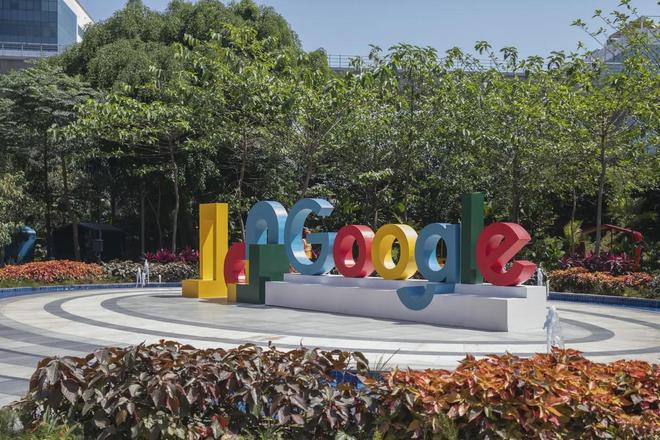
加码AI基建!谷歌(GOOGL.US)斥资逾100亿美元在印度投建吉瓦级数据中心
智通财经网· 2025-10-14 03:30
目前,泰卢固之乡党正试图凭借自身影响力,为在安得拉邦投资的企业争取更优惠的联邦政策。洛克什 表示:"我们愿意开展对话,必要时甚至会推动联邦层面的政策干预。"他将这一策略形容为"双引擎驱 动的高速列车"。 在人工智能(AI)系统需求的推动下,全球数据中心建设热潮兴起,印度已成为其中最大受益国之一。亚 马逊(Amazon.com Inc.)计划到2030年在这个南亚国家投资127亿美元建设云基础设施;ChatGPT开发商 OpenAI也正寻求在印度建设一座1吉瓦规模的数据中心。世邦魏理仕集团(CBRE Group Inc.)数据显示, 到2027年,印度数据中心市场的投资规模预计将突破1000亿美元。 印度总理纳伦德拉·莫迪(Narendra Modi)一直将数据中心等科技产业视为提振国民经济、帮助数百万民 众脱贫的关键抓手。然而,印度在实现这一愿景的过程中面临诸多挑战:水资源短缺与电力供应不稳定 仍是制约数据中心建设的重要瓶颈。 洛克什所在的泰卢固之乡党(Telugu Desam Party)由其父亲领导,该政党是莫迪施政计划的重要合作伙 伴。安得拉邦政府为新增工业项目提供土地与电力补贴——早在上世纪90年代末 ...

ABB与英伟达共同推进吉瓦级数据中心建设,800VDC供电架构引关注
Huan Qiu Wang· 2025-10-14 03:04
据ABB披露,双方合作的核心是支持英伟达计划推出的800V直流(DC)供电架构。该架构专为1兆瓦级服务器机柜设计,通过将电网13.8kV交流电直接转 换为800V直流电,大幅减少电力传输中的能量损耗。据悉,相较于传统54V直流供电系统,800V架构可将铜母线用量减少45%,同时提升5%的端到端效 率,显著降低数据中心的建设与运营成本。 【环球网科技综合报道】10月14日消息,据外媒报道,全球工业自动化与能源管理企业ABB正与英伟达展开深度合作,共同加速开发面向未来的吉瓦级 (GW)新一代数据中心。 英伟达此前在GTC 2025大会上已展示基于800VDC的电源机架原型,集成72kW电源单元(PSU)与锂离子超级电容器(LIC),效率达98%,占地面积减少 30%。 为推动800VDC架构落地,英伟达已联合全球电气生态系统合作伙伴,包括芯片供应商英飞凌、德州仪器,电源组件厂商台达电子、立讯精密,以及电力系 统巨头伊顿、施耐德电气。业内认为,ABB的加入将强化电力输送环节的技术整合能力,其专长于高压直流(HVDC)输电与智能电网管理,与英伟达的算 力基础设施形成互补。(青山) ...


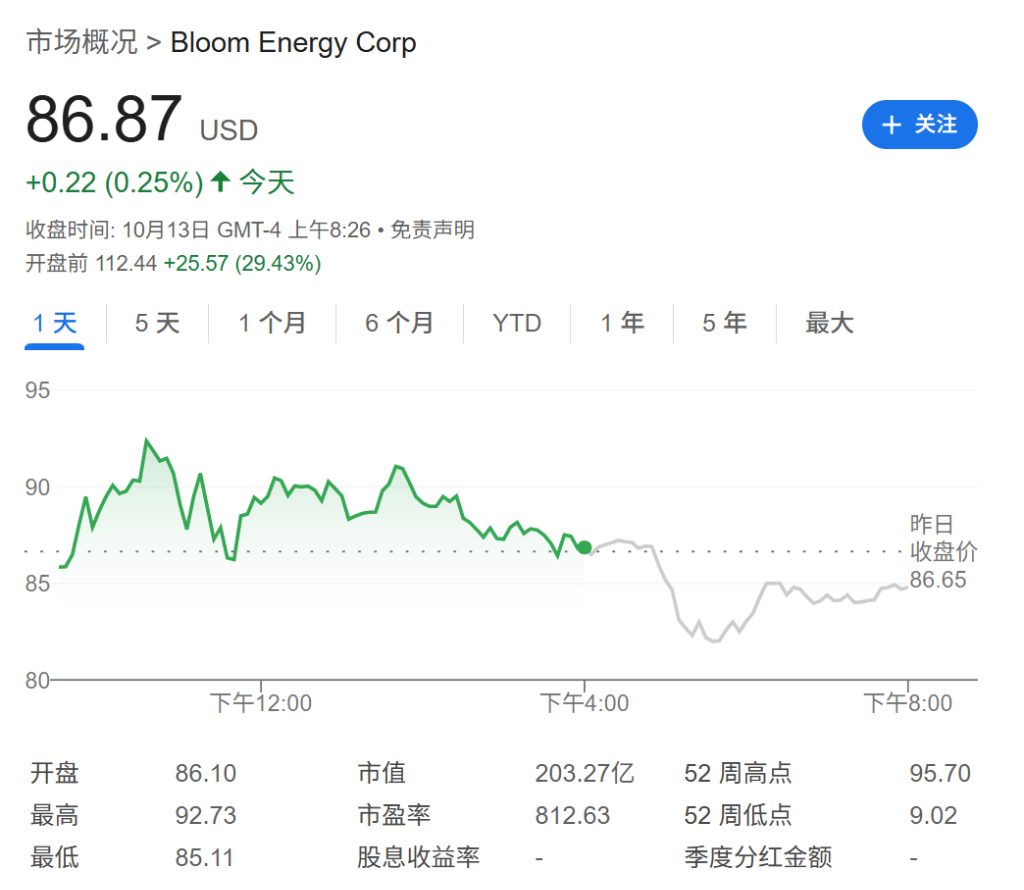
股价暴涨近30%!Bloom Energy与Brookfield达成50亿美元数据中心供电项目 燃料电池成AI供电新宠?
美股IPO· 2025-10-13 16:03
Core Insights - Brookfield Asset Management is set to invest up to $5 billion in collaboration with Bloom Energy to deploy onsite fuel cell power generation technology for AI data centers, aiming to bypass the constraints of an aging power grid [1][2] - The investment is a strategic move to address the significant power demand of AI, which is projected to reach 10 gigawatts, comparable to the electricity consumption of New York City during peak summer [3][6] Group 1: Investment and Collaboration - Brookfield's investment marks its first major commitment to support the power and computing infrastructure for AI data centers [2][6] - The partnership with Bloom Energy is seen as a critical milestone for the commercialization of Bloom's technology in the AI sector [6] Group 2: Industry Challenges and Solutions - The AI industry's rapid expansion is putting unprecedented pressure on the electrical system, with new data center projects facing challenges due to the slow and complex process of increasing power supply capacity [3] - Onsite power generation is emerging as a key solution to the power supply challenges faced by data centers, allowing for faster deployment and greater energy autonomy [3][6] Group 3: Global Strategy - Both companies are collaborating globally to design and deliver "AI factories," with plans to announce a specific project location in Europe by the end of the year [2][4] - Brookfield has been actively investing in Europe, previously announcing a €20 billion plan to develop AI projects, aiming to create the largest AI infrastructure cluster in the region [6]


燃料电池成AI供电新宠?Bloom Energy与Brookfield达成50亿美元数据中心供电项目
Hua Er Jie Jian Wen· 2025-10-13 12:35
Core Insights - Brookfield Asset Management has partnered with Bloom Energy to deploy onsite power generation technology for AI data centers, with an investment of up to $5 billion [1][5] - The collaboration aims to address the energy constraints faced by the rapidly expanding AI industry, particularly in relation to the aging U.S. power grid [3][4] Group 1: Investment and Strategic Importance - Brookfield's investment marks its first significant commitment to support the power and computing infrastructure for AI data centers [1][5] - The partnership is a milestone for Bloom Energy, enhancing its market presence and scaling its technology in the AI sector [5] Group 2: Energy Solutions and Market Demand - The AI industry's growth is creating unprecedented pressure on the power system, with significant power demands, such as the 10 gigawatts required for new data center clusters [4] - Onsite power generation is emerging as a critical solution to meet the energy needs of data centers, providing reliable power without relying on the existing grid [4][3] Group 3: Global Collaboration and Future Projects - Brookfield and Bloom Energy are collaborating globally to design and deliver "AI factories," with plans to announce a specific project location in Europe by the end of the year [3][5] - This partnership reflects a broader trend among major investors seeking to leverage alternative energy technologies to overcome energy limitations in AI development [3]
立昂技术:公司密切关注新疆国际融合算力中心项目的建设与发展
Zheng Quan Ri Bao Wang· 2025-10-13 11:46
Core Viewpoint - The company is focusing on building a comprehensive AI computing power ecosystem by leveraging its strengths in the IDC sector and expanding its data center operations across key regions in China [1] Group 1: Company Strategy - The company is developing an AI computing power park in Southwest China and a computing center in Nansha, Guangzhou, as part of its network layout around the national eight major computing power hubs [1] - The company aims to create an innovative application ecosystem that integrates computing power, algorithms, and applications, facilitating efficient allocation of computing resources [1] Group 2: Future Plans - The company plans to expand its data center business in cities such as Beijing-Tianjin-Hebei, Hangzhou Bay, Greater Bay Area, Chengdu-Chongqing, Wuhan, and Xinjiang [1] - The company is closely monitoring the development of the Xinjiang International Integrated Computing Power Center project and possesses the technical and service capabilities to support such projects [1] - Currently, the company has not signed a formal cooperation agreement for the first phase of the project but intends to actively pursue related cooperation opportunities [1]

瑞银:若MSCI中国指数跌至74点 料引发资金逢低买入
Zhi Tong Cai Jing· 2025-10-13 07:17
Core Viewpoint - UBS's latest report on the Chinese stock market suggests that if the MSCI China Index declines to the 74-point level, the market may receive significant support, prompting investors to re-enter at lower prices. Currently, the MSCI China Index is around 85 points [1]. Group 1: Market Analysis - The MSCI China Index has rebounded approximately 36% since its low point following the escalation of the tariff war in April [1]. - The current market trend is highly similar to the situation in April, where the index attracted substantial capital inflow near the 74-point mark [1]. - UBS believes that the current valuations are attractive, and with rising policy expectations, market funds are likely to repeat the trend of buying on dips [1]. Group 2: Sector Performance - Sectors that performed poorly during the April sell-off but showed a significant rebound may face greater selling pressure this time, including data centers, internet, technology hardware, automotive and components, and biotechnology [1].