
商业地产

Search documents
暴涨108% !大湾区内地城市商业地产逆势走俏
2 1 Shi Ji Jing Ji Bao Dao· 2025-07-29 13:15
从物业类型来看,戴德梁行的报告指出,受惠于跨境电商的持续发展与扩张,大湾区内地城市物流板块 相关物业的表现最好。2025年上半年,在剔除广州与深圳的粤港澳大湾区内地城市的商业地产成交案例 中,工业物流相关案例占98%,剩下2%则为惠州的一例用于酒店业的成交案例。 21世纪经济报道记者 孙迟悦 实习生 顾泯骏 香港报道 7月29日,戴德梁行发布《2025半年度粤港澳大湾区住宅市场及商业物业投资市场回顾与展望》,戴德 梁行中国资本市场部副董事总经理陈彩丽指出,2025年上半年,大湾区内地城市的商业物业总成交额达 247亿元,同比上升108%,创下历史新高。 从成交金额来看,陈彩丽表示,2025年上半年,大湾区内地城市商业物业的成交以小额交易为主。在这 期间,大湾区内地城商业物业共成交31宗,高于2023年的22宗与2024年的21宗;然而,在今年的这些交 易中,交易总额高于10亿元的交易总共有4宗,反观2023年同期则为11宗。 但陈彩丽也提醒道,在未来2-3年内,大湾区内地城市仓储市场将迎来约50%的新增供应,届时空置率 将会上升,租金水平也将受压。此外,地缘政治环境的不确定走向也为物流行业带来了不确定性,相关 ...
王健林想不到,刚卖完家当不到72小时,刘强东就出了这么大的风头
Sou Hu Cai Jing· 2025-07-29 11:13
Group 1 - The article discusses the rise and fall of prominent business figures, particularly focusing on Wang Jianlin and Liu Qiangdong, highlighting the contrasting paths they are currently taking [2][4][6] - Wang Jianlin, once a titan in the commercial real estate sector, is facing significant challenges, including asset sales and debt pressures, as he navigates a complex business environment [7][9][15] - Recent developments include China Ruyi's announcement of acquiring a 30% stake in Kuaiqian Financial for 240 million yuan, marking a strategic shift for Wang Jianlin's Wanda Group [11][13][15] Group 2 - Wang Jianlin's asset divestitures are part of a broader strategy to alleviate financial strain, with this being the third major asset sale in six months [15][27] - The article notes that Wanda has faced legal challenges from former partners like Suning and Rongchuang, further complicating its financial situation [29][30] - In contrast, Liu Qiangdong is expanding his business ventures, recently launching a new delivery service and a "product partner" program, showcasing a proactive approach to growth [31][32][37] Group 3 - Liu Qiangdong's recent participation in high-profile events, including a meeting with national leaders, underscores his rising prominence and the government's support for private enterprises [41][45][49] - The article emphasizes the stark differences in the trajectories of Wang Jianlin and Liu Qiangdong, illustrating how market dynamics and personal choices shape their respective fates [53][57][66] - The narrative concludes with a reflection on the inevitability of change in business, suggesting that no one remains at the top forever, as new leaders emerge [68][69][71]


戴德梁行:大湾区楼价仍存下调压力 全年或录0-5%跌幅
智通财经网· 2025-07-29 08:36
Group 1: Residential Market Overview - The residential market in the Greater Bay Area showed signs of fatigue in Q2 due to tariff uncertainties, with market confidence expected to take time to recover, despite a potential easing of US-China trade tensions in the second half of the year [1] - The average monthly transactions for new homes are projected to be between 27,000 to 28,000, with an estimated total of around 300,000 new home sales for the year, while property prices may face a downward pressure of 0-5% [1] - The sales performance in the first half of the year was notably strong in Guangzhou and Shenzhen, indicating that quality properties in prime locations continue to attract buyers even amid market instability [1] Group 2: Commercial Property Investment Outlook - The logistics and commercial sectors are expected to perform well in the second half of the year, driven by strong demand for logistics assets due to the expansion of cross-border e-commerce [2] - The Greater Bay Area's warehousing market is anticipated to face significant new supply in the next two to three years, which may lead to increased vacancy rates and pressure on rental levels [2] - There is a growing interest in community commercial projects, particularly in second-tier cities, where owners are more pragmatic, making these projects attractive to insurance and real estate funds [2][3] Group 3: Policy and Economic Environment - The government policies in the Greater Bay Area have continued to support the stabilization of the real estate market, focusing on easing financial pressures on the supply side while maintaining demand-side support [3] - The recovery of the residential market is primarily driven by the overall economic environment rather than policy changes, with potential positive impacts from favorable economic factors such as interest rate cuts by the Federal Reserve [3]
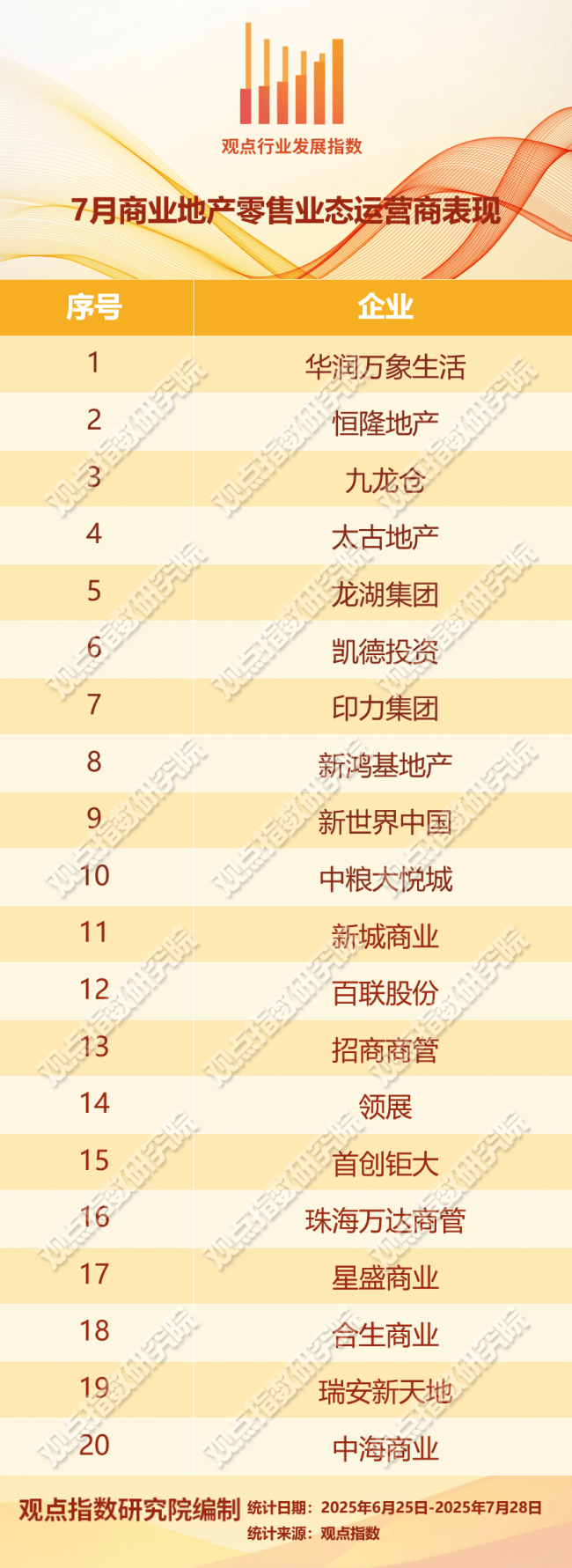
2025年7月商业地产零售新趋势:优质资产上市加速,跨界扩张与消费政策并进
Sou Hu Cai Jing· 2025-07-29 01:41
Group 1 - Recent policies and market dynamics in the domestic commercial sector indicate vitality and diversity in industry development, with multiple cities implementing departure tax refund policies to attract foreign tourists and boost the duty-free economy [1] - Guangzhou's Tianhe District has launched the city's first "immediate refund" centralized refund point for departure tax, marking a significant step in enhancing inbound consumption efficiency [1] - Dalian and Hubei Province have also started implementing departure tax refund policies for foreign travelers, while Shanghai plans to optimize the consumption environment by adding more refund stores [1] Group 2 - Companies are selling non-core assets for strategic focus or capital recovery, such as Vanke in Hangzhou selling its Zhishanghui commercial center project, which has a total construction area of approximately 10,000 square meters [1] - He Youjun has become the largest shareholder of Huanyu Commercial through his controlled company, indicating a potential integration of eSports IP into Huanyu's shopping malls and ski resorts, creating a "eSports + night economy" business model [1] Group 3 - Commercial enterprises are expanding their business through light asset cooperation, with China Resources Vientiane Life signing a cooperation agreement with Fujian Sanxin Group to upgrade the Putian Jinding Plaza project, set to reopen in 2026 as the first Vientiane Hui commercial entity in Fujian [4] - The expansion and renovation of shopping malls are becoming important means to enhance space value, with Shanghai Hang Lung Plaza's expansion expected to add approximately 3,080 square meters of floor area by the second half of 2026 [4] - Community commercial developments are also on the rise, such as the transformation of the former Hualian supermarket in Beijing into a DT-X neighborhood center, enhancing residents' convenience [4] Group 4 - Commercial brands are actively expanding into new markets, with BaWang Tea accelerating its layout in Hong Kong and launching multiple new stores [6] - Lao Xiang Ji has submitted a listing application on the Hong Kong Stock Exchange, showing continuous growth in revenue and gross profit [6] - The REITs market is showing vitality, with the listing of CICC China Green Development Commercial REIT seeing a 30% increase on its first day, reflecting investor enthusiasm for consumer infrastructure REITs [6][8]

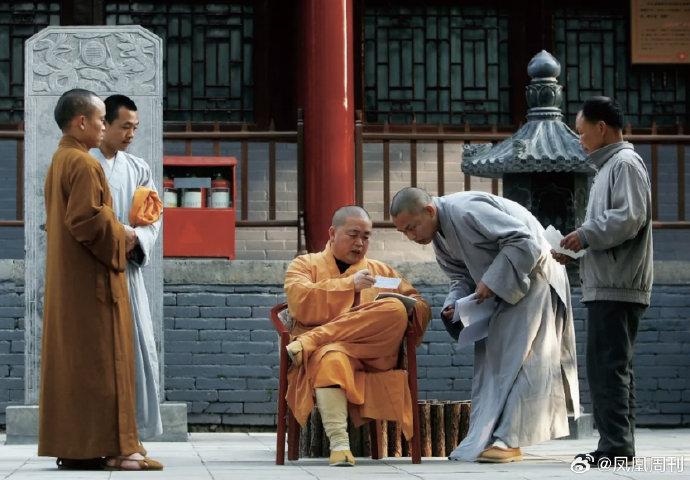
释永信独揽寺内外合作大权,2025被查事件揭商业帝国核心运作
Xin Lang Cai Jing· 2025-07-28 00:27
Group 1 - The core feature of the operational model of the Shaolin Temple is the absolute decision-making power held by Shi Yongxin, which is also the key background for the investigation in 2025 [1][3] - All cooperation projects, regardless of size, require final approval from Shi Yongxin, creating a "one pen" decision-making model [1][3] - Shi Yongxin's dual identity as both a religious leader and a business entity hub blurs the boundaries between faith and capital [1][3] Group 2 - The internal supervision mechanism at the Shaolin Temple is ineffective, lacking checks and balances, which leads to passive obedience among the monks [1][4] - Financial records are muddled between the temple and associated companies, with no public audits conducted [1][4] - External regulatory oversight is absent, allowing significant financial transactions to go unexamined [1][4] Group 3 - The traditional donation system has been distorted into a tool for rent-seeking, with funds being misappropriated [1][5] - Overseas assets, such as hotels and golf courses, are directly controlled by Shi Yongxin, with opaque cross-border financial flows becoming a focus of economic crime investigations [1][5] - The public's trust in the faith has collapsed due to Shi Yongxin's personal misconduct, which contradicts Buddhist precepts [1][5] Group 4 - The downfall of Shi Yongxin's model illustrates the dangers of absolute power without a framework of checks and balances, such as a decision-making committee and independent audits [1][5] - The case raises questions about whether commercialization inevitably leads to corruption or if power monopolization fosters systemic decay [1][5]
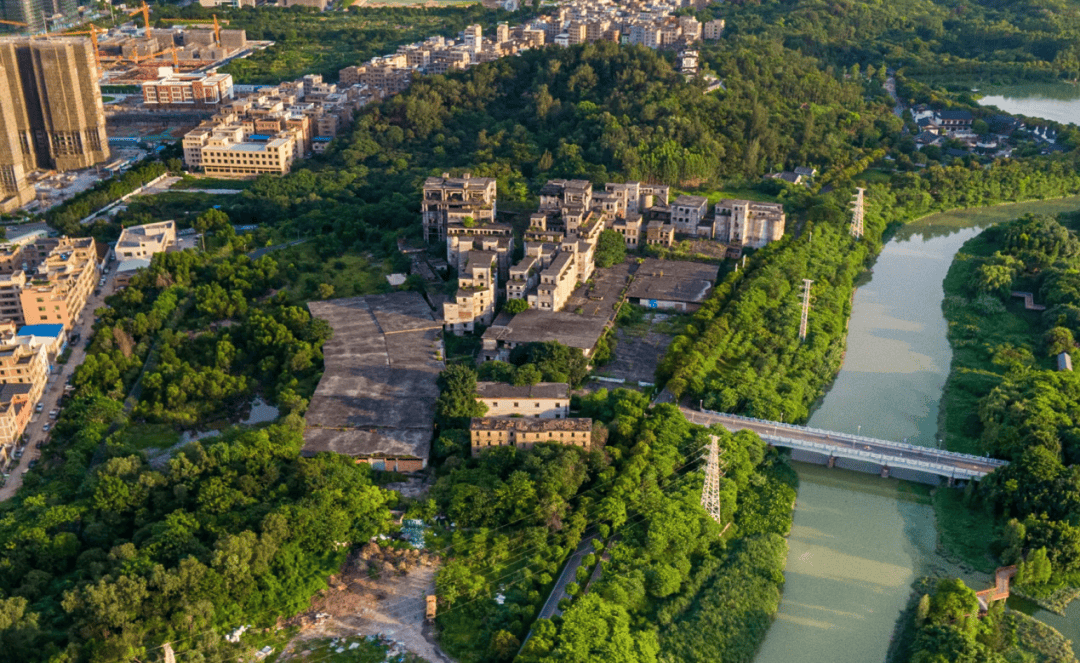
港资加速“抄底”:1.1万亿消费只是表象,千年商都更有性价比
Sou Hu Cai Jing· 2025-07-27 05:51
Core Insights - Guangzhou, a historical commercial hub, is experiencing a resurgence in high-end commercial development, primarily driven by Hong Kong capital [1][24] - The entry of notable Hong Kong enterprises into Guangzhou's commercial market signifies a shift from a "commercial depression" to a "traffic hub" for investment [1][24] Group 1: Hong Kong Capital's Influence - Hong Kong enterprises dominate the high-end commercial landscape in Guangzhou, with successful projects like Taikoo Hui and K11 leading the market [1][19] - Recent reports indicate that Hong Kong-listed Link REIT's property revenue in mainland China has seen significant growth, highlighting the robust performance of retail assets in Guangzhou [19] - The operational excellence of Hong Kong commercial entities has established them as industry leaders, creating immersive consumer experiences that differ from traditional shopping centers [19][25] Group 2: New Developments and Projects - The new Xinqing Cement Factory project, a collaboration involving Ruian New World and renowned architect Jean Nouvel, aims to revitalize an industrial site into a cultural and tourism destination [3][6] - The Guangzhou Poly Bay Taikoo Li, set to be the first waterfront Taikoo Li in the region, is expected to open in phases starting in 2027, enhancing the city's commercial offerings [8][10] - K11 Select, the first of its kind in the Greater Bay Area, is positioned as a mixed-use development that integrates residential, commercial, and high-end office spaces [10][12] Group 3: Urban Renewal and Market Potential - Guangzhou's urban renewal initiatives, including a planned investment of over 100 billion RMB for village renovations, present ample opportunities for Hong Kong enterprises to engage in redevelopment projects [21][24] - The city's consumer market is projected to exceed 1.1 trillion RMB in retail sales, with a steady growth rate of 4.5% over the past four years, indicating a vibrant economic environment [20][25] - The availability of old industrial sites for redevelopment, such as the Xinqing Cement Factory, provides a strategic advantage for Hong Kong investors looking to capitalize on urban renewal [23][24]
“精彩夜上海”系列活动启幕 5个夜经济人气地标、夜生活好去处发布
Jie Fang Ri Bao· 2025-07-27 03:55
首批"夜生活好去处"分别为:引入"餐饮+现场演出+摩天轮"复合业态,整体营业至凌晨2时的静安 大悦城"夜食天台";以全业态夜生活体验为核心,集国际风尚购物、环球特色美食、沉浸式文化娱乐、 常态化人气活动于一体的普陀"环球不夜港";以"夜间文化社交聚场"为核心,构建多维夜生活矩阵的杨 浦"活力大学路";打造沉浸式、场景化文化消费体验中心的闵行"首尔夜市";以上生新所为核心,融 合"文化体验+美食消费+夜间社交"的长宁"上生·夜未央"。 市领导华源出席并启动"精彩夜上海"系列活动。 昨天晚上,"精彩夜上海"系列活动在新天地南里正式启幕,为正在火热开展的第二届"上海之夏"国 际消费季再添一把火。活动现场发布了首批5个"夜间经济人气地标"和5个"夜生活好去处",供广大游客 和市民"按图索骥"。 首批"夜间经济人气地标"分别为:以"石库门+漫步式夜生活"为特色,汇聚多国料理、艺术展览、 主题酒吧与音乐节庆的新天地——太平湖区域;以"露台经济"为特色,路易号巨轮火爆出圈,打造"静 安夜航"的吴江路——丰盛里区域;以"水岸多元业态"为特色,打造"艺术+空间+消费"滨水休闲集聚区 的西岸梦中心区域;以"浦江夜景"为特色,联动 ...
外资巨头与浙企联手投 30 亿抄底中国房地产,会带来什么影响?
Sou Hu Cai Jing· 2025-07-26 12:03
Group 1 - Global asset management giants like Schroders Capital and local firm Xizi International have raised 3 billion to invest in discounted office buildings and shopping malls in the Yangtze River Delta region [1][3] - Foreign investment in commercial real estate has increased, with foreign capital accounting for 45% of the total transaction volume in Shanghai's property market in the first half of the year, despite a decrease in overall transaction value [1][3] - The auction of Taihe Building in Shanghai illustrates the trend, where the property sold for 660 million, significantly lower than its previous asking price of 1.6 billion [1] Group 2 - Recent policy changes allowing foreign investment in commercial real estate have prompted firms like Schroders to establish funds targeting properties with potential for improvement [3] - Foreign investors are focusing on consumer-oriented spaces, with significant purchases such as the 1.29 billion acquisition of four shopping centers by Canadian pension funds and others, driven by favorable policies for consumer REITs [3] - The collaboration between foreign and local firms is expected to enhance the liquidity of quality assets in the market, potentially leading to healthier developments in the real estate sector [5]

变现520亿,王健林还在卖家当
商业洞察· 2025-07-26 07:56
Group 1 - Wang Jianlin has sold a 30% stake in Kuaiqian Financial for 240 million yuan, marking a significant divestment of his financial assets [2][6][22] - Kuaiqian Financial, a licensed payment institution, was once a core asset in Wang's financial portfolio, but its value has significantly decreased from an estimated 3 billion yuan to around 800 million yuan [13][24] - This sale is part of a broader trend where Wang has liquidated over 52 billion yuan in assets, including hotels and shopping malls, to address financial pressures [7][39] Group 2 - Wang Jianlin's divestment of Kuaiqian follows the sale of 100% of Wanda Hotel Management to Tongcheng Travel for 2.49 billion yuan, indicating a strategic retreat from the hospitality sector [28][34] - The hotel management business, which includes over 200 operating hotels, has been significantly downsized, with Wang now focusing on investment properties and overseas operations [36][41] - The financial strain is evident as Wang's company faces over 43.9 billion yuan in short-term debts, with only 15.1 billion yuan in cash available [44][45] Group 3 - Wang's aggressive asset liquidation strategy aims to maintain creditworthiness, as he has not publicly defaulted on debts despite ongoing financial challenges [45][46] - Legal issues persist, with former partners like Suning and Rongchuang pursuing claims against him, adding to the financial turmoil [48][50] - Control over remaining valuable assets, such as Zhuhai Wanda Commercial Management, is gradually being relinquished as external investors gain influence [52][53]

破解新业态活力的独特密码
Jing Ji Ri Bao· 2025-07-26 02:23
Core Insights - Non-standard commercial spaces are transforming the consumer landscape by emphasizing uniqueness and local culture, moving away from traditional shopping formats [1][2] - The rise of non-standard commercial reflects a shift in consumer psychology, where individuals seek to express their identity and preferences through their shopping experiences [1][2] Group 1: Characteristics of Non-Standard Commercial - Non-standard commercial is characterized by unique architectural forms, diverse business combinations, and innovative operational strategies, creating immersive experiences for consumers [1][2] - These spaces are designed to provide a dynamic shopping atmosphere that aligns with trends like "self-consumption" and "emotional consumption," fostering deeper emotional connections [2] Group 2: Market Dynamics - The growth of non-standard commercial is a direct response to consumer fatigue from homogenized shopping environments, prompting a reevaluation of traditional retail strategies [2][3] - Urban renewal initiatives are revitalizing old factories and traditional shopping centers, encouraging the development of hybrid, fashionable, and community-oriented commercial spaces [2] Group 3: Challenges and Strategies - Balancing uniqueness with commercial scalability is a key challenge for non-standard commercial entities, requiring precise target audience identification and thoughtful content planning [3] - Sustainable growth should focus on innovative core concepts rather than mere replication of successful models, ensuring the preservation of the non-standard essence [3]