交通运输

Search documents
地标演绎·北京华章|顺义:一座国际空港 一个开放新城
Bei Jing Ri Bao Ke Hu Duan· 2025-09-15 03:24
Core Viewpoint - Shunyi is positioned as a significant international gateway and a new urban area, evolving from an airport-centric zone to a model of integrated port, industry, and city development [1] Group 1: Development and Growth - Shunyi is referred to as "China's first national gate," symbolizing its role as a starting point for global engagement with China [1] - The district is recognized as a crucial part of the capital's development, with expansive growth potential stemming from its airport infrastructure [1] - Efforts are underway to transform Shunyi into a high-quality modern city, aiming to create a benchmark for integrated port and industrial urban development [1] Group 2: Economic Significance - The area is characterized as an economic hotbed, leveraging its position as a transportation hub to foster economic growth [1] - The narrative emphasizes the transition from mere transportation functions to a comprehensive urban development strategy [1]
胜宏科技上周获融资资金买入超230亿元丨资金流向周报
2 1 Shi Ji Jing Ji Bao Dao· 2025-09-15 02:51
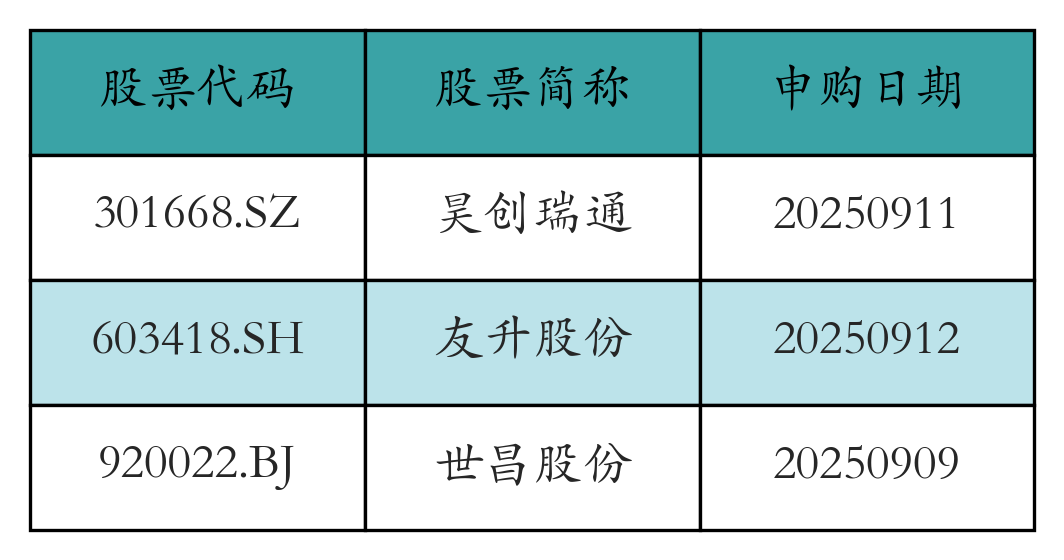
Market Overview - The Shanghai Composite Index rose by 1.52% to close at 3870.6 points, with a weekly high of 3892.74 points [1] - The Shenzhen Component Index increased by 2.65% to 12924.13 points, reaching a peak of 13048.52 points [1] - The ChiNext Index saw a 2.1% rise, closing at 3020.42 points, with a maximum of 3056.53 points [1] - Global markets also experienced gains, with the Nasdaq Composite up by 2.03%, the Dow Jones Industrial Average up by 0.95%, and the S&P 500 up by 1.59% [1] - In the Asia-Pacific region, the Hang Seng Index rose by 3.82% and the Nikkei 225 Index increased by 4.07% [1] New Stock Issuance - Three new stocks were issued last week, with details as follows: - Wu Chuang Rui Tong (301668.SZ) on September 11, 2025 - You Sheng Co., Ltd. (603418.SH) on September 12, 2025 - Shi Chang Co., Ltd. (920022.BJ) on September 9, 2025 [2] Margin Trading - The total margin trading balance in the Shanghai and Shenzhen markets reached 23437.04 billion yuan, with a financing balance of 23270.98 billion yuan and a securities lending balance of 166.06 billion yuan [3] - This represents an increase of 641.61 billion yuan from the previous week [3] - The Shanghai market's margin trading balance was 11954.33 billion yuan, up by 289.49 billion yuan, while the Shenzhen market's balance was 11482.71 billion yuan, increasing by 352.12 billion yuan [3] - A total of 3449 stocks had margin buying, with 223 stocks having over 1 billion yuan in buying amounts, led by Shenghong Technology, Zhongji Xuchuang, and Xinyisheng with buying amounts of 230.93 billion yuan, 181.28 billion yuan, and 180.25 billion yuan respectively [3] Fund Issuance - Eight new funds were launched last week, including: - Huatai-PineBridge Stable Return Bond D - Huatai-PineBridge Dual Enjoy Return Bond D - Manulife Hongda Mixed C - Huatai-PineBridge Dual Yi Bond D - Dongfanghong Credit Bond D - CITIC JianTou Enjoy 6-Month Holding Period Bond A - CITIC JianTou Enjoy 6-Month Holding Period Bond C - Great Wall Stable Growth Bond F [5] Share Buybacks - Thirteen companies announced share buybacks last week, with the top five by execution amount being: - Jing'ao Technology (002459) - Delisted Changyou (601975) - Lianchuang Electronics (002036) - Yinhui Technology (300221) - Bairun Shares (002568) [7] - The highest amounts for buybacks were concentrated in the electric equipment, transportation, and electronics industries [8]


国家统计局:1—8月全国固定资产投资同比增长0.5%
Guo Jia Tong Ji Ju· 2025-09-15 02:31
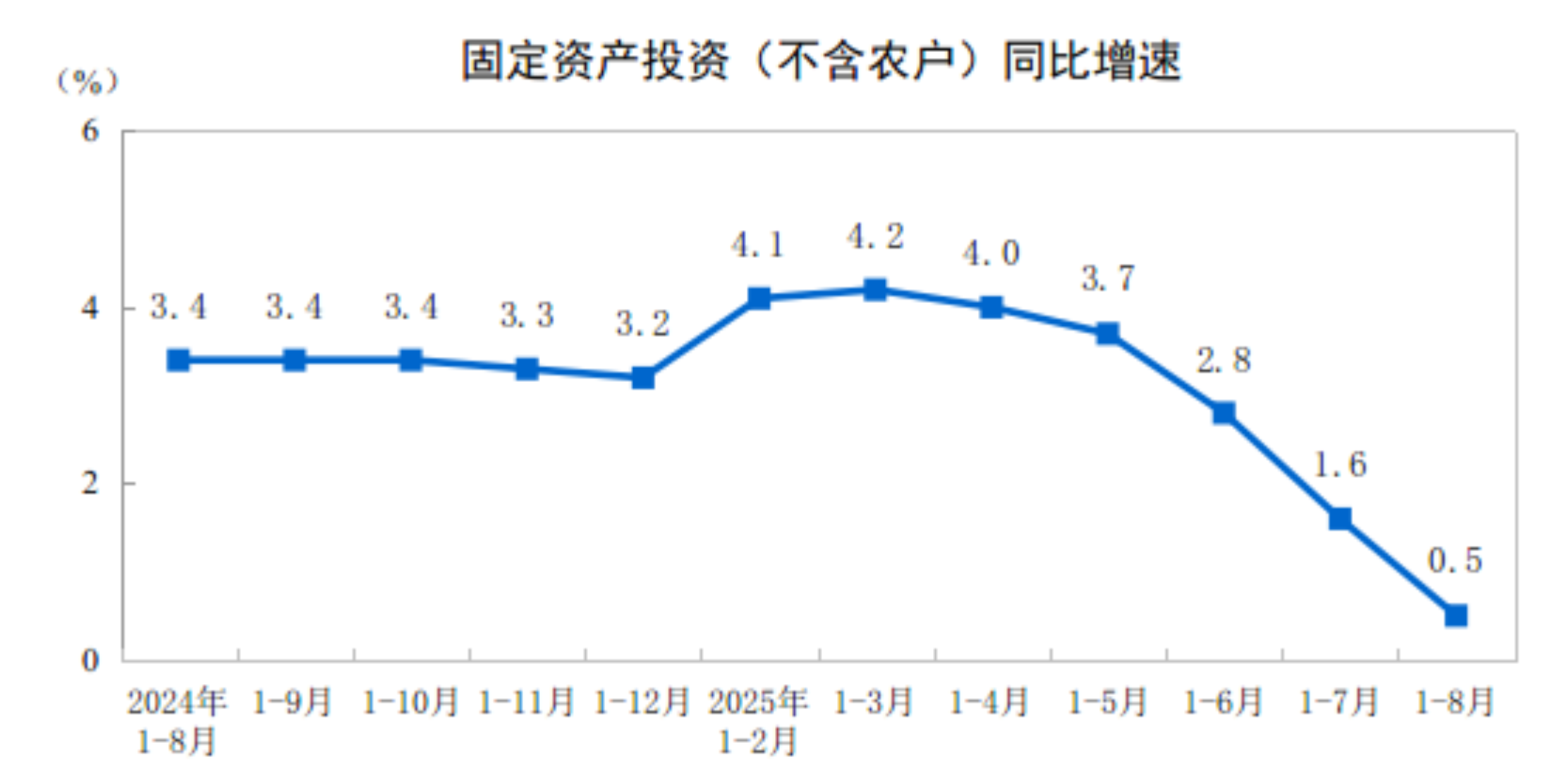
Core Insights - National fixed asset investment (excluding rural households) reached 32,611.1 billion yuan from January to August 2025, showing a year-on-year growth of 0.5% [1][3] - Private fixed asset investment experienced a year-on-year decline of 2.3% [3][4] - In August, fixed asset investment (excluding rural households) decreased by 0.20% month-on-month [1][3] Investment by Industry - First industry investment totaled 646.1 billion yuan, with a year-on-year increase of 5.5% [3][4] - Second industry investment reached 1,182.46 billion yuan, growing by 7.6% [3][4] - Third industry investment was 2,014.04 billion yuan, showing a decline of 3.4% [3][4] - Within the second industry, industrial investment grew by 7.7%, with mining investment increasing by 3.0%, manufacturing investment by 5.1%, and investment in electricity, heat, gas, and water production and supply rising by 18.8% [3][4] Infrastructure and Regional Investment - Infrastructure investment (excluding electricity, heat, gas, and water production and supply) in the third industry grew by 2.0% [3][4] - Investment in water transportation increased by 15.9%, water conservancy management by 7.4%, and railway transportation by 4.5% [3][4] - By region, eastern investment declined by 3.5%, while central and western regions saw increases of 2.5% and 2.3%, respectively; northeastern investment fell by 6.0% [3][4] Investment by Registration Type - Domestic enterprise fixed asset investment grew by 0.5%, while investment from Hong Kong, Macau, and Taiwan enterprises increased by 2.3% [3][4] - Foreign enterprise fixed asset investment saw a significant decline of 15.4% [3][4]

国家统计局:1-8月份电力、热力、燃气及水生产和供应业投资增长18.8%
Guo Jia Tong Ji Ju· 2025-09-15 02:16
Core Insights - National fixed asset investment (excluding rural households) reached 326.111 billion yuan from January to August 2025, showing a year-on-year growth of 0.5% [1][4] - Private fixed asset investment experienced a decline of 2.3% year-on-year [1][5] Investment by Industry - Investment in the primary industry was 64.61 billion yuan, with a year-on-year increase of 5.5% [3][5] - Investment in the secondary industry totaled 1182.46 billion yuan, growing by 7.6% [3][5] - Investment in the tertiary industry was 2014.04 billion yuan, reflecting a decrease of 3.4% [3][5] - Within the secondary industry, industrial investment rose by 7.7%, with mining investment increasing by 3.0%, manufacturing investment by 5.1%, and investment in electricity, heat, gas, and water production and supply rising by 18.8% [3][5] Infrastructure and Regional Investment - Infrastructure investment (excluding electricity, heat, gas, and water production and supply) in the tertiary industry grew by 2.0%, with water transport investment increasing by 15.9%, water conservancy management investment by 7.4%, and railway transport investment by 4.5% [3][5] - Investment in the eastern region declined by 3.5%, while the central region saw a growth of 2.5%, the western region increased by 2.3%, and the northeastern region experienced a decline of 6.0% [3][5] Investment by Registration Type - Domestic enterprises' fixed asset investment grew by 0.5%, while investment from Hong Kong, Macau, and Taiwan enterprises increased by 2.3%. In contrast, foreign enterprises' fixed asset investment fell by 15.4% [3][5]
2025年1—8月份全国固定资产投资增长0.5%
Guo Jia Tong Ji Ju· 2025-09-15 02:00
Core Insights - The total fixed asset investment (excluding rural households) in China from January to August 2025 reached 32,611.1 billion yuan, showing a year-on-year growth of 0.5% on a comparable basis [1][5] - Private fixed asset investment experienced a decline of 2.3% year-on-year [1][5] Investment by Industry - Investment in the primary industry amounted to 646.1 billion yuan, with a year-on-year increase of 5.5% [3][6] - The secondary industry saw an investment of 11,824.6 billion yuan, growing by 7.6% year-on-year, with industrial investment specifically increasing by 7.7% [3][6] - The tertiary industry investment totaled 20,140.4 billion yuan, reflecting a year-on-year decrease of 3.4% [3][6] - Within the secondary industry, mining investment grew by 3.0%, manufacturing investment increased by 5.1%, and investment in electricity, heat, gas, and water production and supply surged by 18.8% [3][6] Investment by Region - Eastern region investment declined by 3.5% year-on-year, while the central region saw a growth of 2.5%, and the western region increased by 2.3%. The northeastern region experienced a decline of 6.0% [3] Investment by Registration Type - Domestic enterprises' fixed asset investment grew by 0.5%, while investment from Hong Kong, Macau, and Taiwan enterprises increased by 2.3%. In contrast, foreign enterprises' investment fell by 15.4% [4][6]
当A股再度站在4000点门前
3 6 Ke· 2025-09-15 01:37
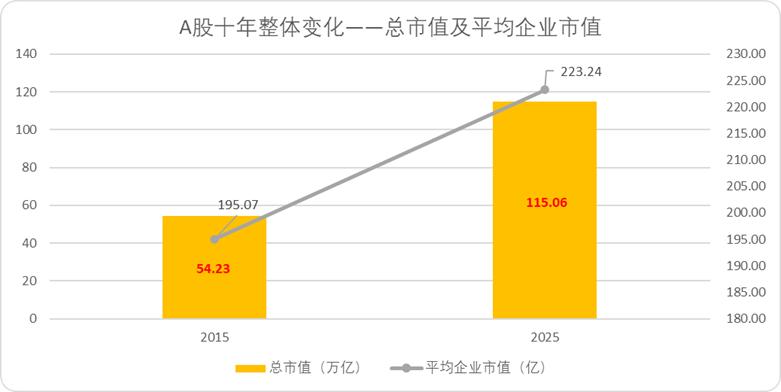
Market Overview - The A-share market has reached a new high after ten years, standing at the 4000-point threshold, indicating significant growth and development compared to the previous decade [2][3] - The market size has more than doubled, with the number of listed companies increasing from approximately 2780 in 2015 to 5154 as of September 12, 2025, and total market assets growing from 54 trillion to over 115 trillion [4][6] Valuation and Leverage - The overall market valuation is relatively high, with a PE-ttm ratio of approximately 21.7-22.1x, reflecting a 50% increase compared to the previous year [7][9] - The current leverage ratio is manageable, with the margin financing balance reaching a historical high of 2.3 trillion, yet still below the 4-5% peak seen in 2015 [10][12][14] Fund Structure - The structure of market funds has improved, with a 2% increase in the proportion of fund holdings and a 0.5% increase in shareholding by social capital compared to 2015 [15] Industry Valuation - The current market is characterized by a "semiconductor bull" theme, with significant growth in the electronics and semiconductor sectors, contrasting with the real estate and infrastructure focus of 2015 [16][19] - The absolute valuation of many industries remains within reasonable ranges, suggesting that concerns about bubbles may be premature [20][23] Asset Quality - The overall asset quality has improved, with a 1.01% decrease in the average debt ratio and a shift towards more tangible assets [25][29] - The profitability of assets has seen a decline, but the quality of earnings has improved, with operational income increasing as a percentage of total profits [30][32] Growth Potential - Short-term growth rates are weaker compared to 2015, with cumulative revenue growth dropping to 1.27% from 17.07%, and profit growth declining by 3.75% [35][37] - Despite the short-term challenges, there is a notable increase in R&D investment, indicating a long-term focus on innovation [41][43] Operational Efficiency - Operational efficiency has improved, with a significant reduction in management fees and enhanced inventory turnover rates compared to 2015 [46][50] - The overall cash flow situation has weakened, but the ability to repay debts has strengthened, reflecting a more robust financial position [55] Summary - The current bull market shows advantages in valuation, asset quality, and operational efficiency compared to 2015, while facing challenges in short-term growth and industry differentiation [57][62]
TMT多主题出现形态
Huafu Securities· 2025-09-14 11:26
Group 1 - The report emphasizes the establishment of a thematic investment database aimed at identifying high-quality price-volume patterns and monitoring the peak rhythm of popular themes and the adjustment levels of leading stocks [2][9]. - The thematic indices show various patterns, with 0 at the bottom, 6 in breakout, 17 in main rise, and 11 in acceleration. The main industries for breakout are communication, transportation, and agriculture, while the main industries for the main rise are non-ferrous metals, communication, and electronics [12]. - The trading heat for humanoid robots has risen to 89%, with Changsheng Bearing's closing price above MA60 by 8.3%. For Deepseek, the trading heat is at 76%, with Daily Interaction's closing price above MA60 by 11.9% [3][17]. Group 2 - The report outlines two main objectives of the thematic database: to find investment opportunities and to provide warnings for potential peaks [9]. - The report indicates a quantitative screening of four types of patterns to identify high-odds thematic opportunities and the construction of trading heat indicators to grasp the peak rhythm of popular themes [2][9]. - The report will regularly update the thematic investment data system to provide investors with more objective references for capturing the rhythm of thematic investments [9].
603516,四连板!600376,8天7涨停
中国基金报· 2025-09-14 08:01
Core Viewpoint - The A-share market has shown significant upward momentum, with major indices reaching multi-year highs, indicating a strong recovery and investor confidence in technology stocks [1][3][4]. Market Performance - The Shanghai Composite Index approached 3900 points, marking a 10-year high, while the Shenzhen Component Index reached over 13000 points, a 3-year high. Other indices like the ChiNext and CSI 300 also hit multi-year highs, with total weekly trading volume exceeding 11.63 trillion yuan for five consecutive weeks [1]. - Margin trading saw a net buy of over 523 billion yuan, more than doubling from the previous week, with a total margin balance reaching a historical high of 2.32 trillion yuan [3]. Sector Analysis - The electronics sector attracted over 693 billion yuan in net inflows, while machinery and equipment received over 284 billion yuan. Other sectors like computers, automobiles, and communications also saw significant inflows, with only banking and comprehensive sectors experiencing net outflows [4]. - Technology stocks regained prominence, particularly in the semiconductor sector, with storage chip indices reaching historical highs. Companies like Chunzong Technology and Shenghui Integration achieved consecutive trading limits and historical price highs [4][6]. Industry Trends - The storage chip market is expected to see a price increase in Q4, setting a positive tone for the spring market in 2024. Companies like Chip Origin reported a record high order backlog of 3.025 billion yuan, with a significant increase in new orders related to AI computing [6]. - The humanoid robot industry is accelerating commercialization, with companies like Shenzhen Huizhi and Zhiyuan forming strategic partnerships, and IDC predicting a substantial increase in sales volume by 2030 [8]. Future Outlook - The market is expected to maintain a V-shaped recovery trend, with a focus on growth-oriented technology stocks and sectors supported by strong performance metrics. The emphasis will be on sectors with high elasticity and catalysts for growth [8].


周末利好,福建重磅部署
Zheng Quan Shi Bao· 2025-09-14 07:53
Group 1: Core Objectives of the Action Plan - The action plan aims for a comprehensive green transformation in Fujian by 2030, with significant advancements in green production and lifestyle, and improved resource utilization efficiency [1][3] - Specific targets include achieving a scale of approximately 300 billion yuan for the energy-saving and environmental protection industry, and a non-fossil energy consumption ratio exceeding 30% by 2030 [1][3] Group 2: Development of Green Low-Carbon Industries - The plan emphasizes the growth of green low-carbon industries, focusing on areas such as optoelectronic information, integrated circuits, and new energy, with the goal of cultivating national-level strategic emerging industry clusters [3] - It aims to innovate in future industries, particularly in data intelligence, hydrogen energy, advanced new materials, and health and new medicine [3] Group 3: Renewable Energy Initiatives - The plan promotes the development of non-fossil energy sources, including upgrades to onshore wind power and the construction of offshore wind projects, as well as the safe development of nuclear power [3][5] - By 2030, the non-fossil energy consumption ratio is targeted to exceed 30% [3] Group 4: Transportation and Infrastructure - The plan includes initiatives to promote low-carbon transportation, such as the electrification of public service vehicles and the development of electric ships and aircraft [4] - It aims to reduce carbon emissions from operational transport vehicles by approximately 9.5% compared to 2020 levels by 2030 [4] Group 5: Marine Economy Development - The marine economy is highlighted as a key driver for Fujian's economic growth, with a projected marine GDP of 1.25 trillion yuan in 2024, reflecting a 6.1% year-on-year increase [7] - The plan includes the establishment of marine economic development demonstration zones in Fuzhou and Xiamen [7] Group 6: Market Mechanisms for Green Transition - The plan outlines the establishment of a carbon emissions trading market and the reform of natural resource asset usage systems to support market-oriented mechanisms for green transformation [8] - It emphasizes the importance of scientific planning and strategic development in optimizing the marine industry structure and enhancing technological innovation [9]

周末利好!福建,重磅部署!
证券时报· 2025-09-14 07:48
Core Viewpoint - The article discusses the acceleration of various industries in Fujian, focusing on the comprehensive green transformation of the economy as outlined in the action plan by the Fujian Provincial Government, aiming for significant advancements in green production and lifestyle by 2030 [2]. Industry Development - The action plan emphasizes the growth of green low-carbon industries, particularly in areas such as optical information, integrated circuits, and new energy, with a target of reaching a scale of approximately 300 billion yuan in the energy-saving and environmental protection industry by 2030 [4]. - The plan aims to significantly increase the share of non-fossil energy consumption to over 30% by 2030, promoting the development of onshore and offshore wind power, nuclear power projects, and exploring marine energy [4][6]. Transportation Sector - The plan promotes low-carbon transportation tools, including the expansion of electric vehicles and the electrification of public service vehicles, with a goal to reduce carbon emissions from operational transport tools by approximately 9.5% compared to 2020 levels by 2030 [5]. - Infrastructure development is crucial for green transportation, with initiatives to create low-carbon stations, airports, and charging facilities, aiming for regular use of shore power by docked vessels by 2030 [5]. Marine Economy - The marine economy is highlighted as a key driver for Fujian's economic development, with a projected marine production value of 1.25 trillion yuan in 2024, reflecting a year-on-year growth of 6.1% [8]. - The action plan includes the establishment of marine economic development demonstration zones in Fuzhou and Xiamen, and emphasizes the exploration of marine energy development [8]. New Energy Industry - Fujian has positioned itself as a leader in the national new energy sector, with lithium battery exports reaching 119.165 billion yuan in 2024, accounting for 27.4% of the national total [6]. - The implementation of the action plan is expected to further solidify Fujian's competitive advantage in the new energy industry [6].