
进出口贸易

Search documents
稳出口政策“组合拳”发力 外贸展现较强韧性
Jin Rong Shi Bao· 2025-08-08 07:59
今年以来,我国外贸保持平稳增长,彰显出强大韧性和国际竞争力。据海关总署统计,2025年前5 个月,我国货物贸易进出口总值17.94万亿元,同比(下同)增长2.5%。5月份,我国货物贸易进出口总 值3.81万亿元,增长2.7%。其中,出口2.28万亿元,增长6.3%;进口1.53万亿元,下降2.1%。 记者注意到,在地方层面,各地纷纷出台创新举措,为企业发展注入信心。5月份以来,福建、湖 北等地深化"福品销全球""千企百展出海拓市场"等活动,加大新兴市场境外展会补助力度,鼓励外贸企 业"走出去";深圳推出金融助力稳外贸相关措施,推出多款创新金融产品;天津整合政府、协会、机 构、企业四方资源,搭建企业"一站式"出海服务基地,为企业提供融入新市场的全程服务。这些举措与 国家层面的稳外贸政策相互配合、协同发力,共同护航外贸企业发展。 数据显示,以美元计价,5月份我国出口额增长4.8%,其中对美出口下降34.5%。业内专家认为,5 月份出口同比增速回落,符合市场预期。"主要源于高关税影响下,5月份对美出口降幅扩大。与此同 时,近期美国关税政策下,外需整体呈现走弱态势。此外,去年同期出口基数偏高,也在下拉今年5月 份出口 ...
法国上半年贸易逆差扩大 官员警告美国关税措施不良影响
Xin Hua She· 2025-08-08 06:28
Core Insights - France's trade deficit reached €43 billion in the first half of the year, an increase of €4.4 billion compared to the second half of 2024 [1] - Imports grew by 1.9% year-on-year, while exports only increased by 0.7%, leading to a widening trade deficit [1] - In the second quarter alone, the trade deficit was €22.9 billion, up €2.8 billion from the first quarter, primarily due to declines in exports of electricity, aerospace products, and ships, alongside record-high imports of pharmaceuticals [1] Trade Deficit Analysis - The increase in trade deficit signals a warning for France, especially in light of new trade agreements between the EU and the US [1] - The French Minister for Foreign Trade, Laurent Saint-Martin, emphasized the need for France and Europe to enhance competitiveness and accelerate efforts to avoid falling behind [1] - US tariff measures are expected to have multiple adverse effects, including rising prices for American consumers and potential global economic slowdown [1] Economic Implications - The trade agreement between the US and the EU poses a dual threat to France and Europe, with reduced exports to the US and the risk of a global economic slowdown [1]
法国上半年贸易逆差扩大 官员警告美国关税措施不良影响
Xin Hua She· 2025-08-08 06:21
Core Viewpoint - France's trade deficit reached 43 billion euros in the first half of the year, an increase of 4.4 billion euros compared to the second half of 2024, primarily due to higher import growth than export growth [1] Trade Data Summary - In the first half of the year, imports increased by 1.9% year-on-year, while exports grew by only 0.7%, leading to an expanded trade deficit [1] - In the second quarter alone, the trade deficit amounted to 22.9 billion euros, which is an increase of 2.8 billion euros from the first quarter [1] - The decline in exports of electricity, aerospace products, and ships, along with a record high in pharmaceutical imports, contributed to the trade deficit [1] Government Response - Laurent Saint-Martin, the French Minister responsible for foreign trade, indicated that the widening trade deficit serves as a warning signal for France, especially in light of a new trade agreement between the EU and the US [1] - He urged France and Europe to take action to enhance competitiveness and accelerate efforts to avoid falling behind [1] - Saint-Martin also highlighted the negative impacts of US tariff measures, which could lead to higher prices for American consumers and potentially slow global economic growth, posing a dual threat to France and Europe [1]
中国7月出口增长超预期
Ge Lin Qi Huo· 2025-08-08 05:39
Report Industry Investment Rating - No relevant information provided Core Viewpoints - China's overall export growth in the first seven months of this year exceeded that of 2024, despite negative year-on-year growth in exports to the US, due to export diversification [2][8] - The adjustment of the so - called "reciprocal tariffs" by the US on August 7 and China's front - loaded exports in the first seven months, along with a relatively high export base in Q4 2024, will lead to a slowdown in China's export growth [3][11] Summary by Related Content Overall Export and Import Situation - In July, China's US - dollar - denominated exports increased by 7.2% year - on - year (estimated 5.8%, previous 5.9%), imports increased by 4.1% year - on - year (estimated 0.3%, previous 1.1%), and the trade surplus was $98.24 billion (previous $114.75 billion) [1][4] - From January to July, China's cumulative export value increased by 6.1% year - on - year (5.82% in 2024), and the cumulative import value in the first half of the year decreased by 2.7% year - on - year (1.03% in 2024) [1][4] Export to Major Trade Partners - In July, China's exports to ASEAN increased by 16.6% year - on - year (16.9% in June, 13.5% from January to July, 12% in 2024), exports to the EU increased by 9.2% year - on - year (7.6% in June, 7.0% from January to July, 3.0% in 2024), and exports to the US decreased by 21.7% year - on - year (down 16.1% in June, - 12.6% from January to July, 4.9% in 2024) [2][5] - In July, China's exports to South Korea increased by 4.6% year - on - year (down 6.7% in June, - 1.1% from January to July, - 1.8% in 2024), and exports to Japan increased by 2.5% year - on - year (6.6% in June, 4.4% from January to July, - 3.5% in 2024) [5] Export Diversification - In July, China's exports to countries and regions outside the top five export destinations increased by 13.5% year - on - year, faster than the overall 7.2% year - on - year growth of China's US - dollar - denominated exports in July [2][8] - In the first seven months, China's exports to Belt and Road Initiative countries increased by 10.4% year - on - year, and exports to Africa in July increased by 42.4% year - on - year (34.8% in June, 24.5% cumulative year - on - year from January to July, 3.5% in 2024) [2][8] Export Product Categories - In the first seven months, China's exports of mechanical and electrical products were $1.18 trillion, a year - on - year increase of 8.1% (7.5% in 2024), and exports of high - tech products increased by 6% year - on - year (4.8% in 2024) [3][9] - In the first seven months, exports of traditional labor - intensive products such as clothing, toys, and furniture decreased year - on - year, as did exports of home appliances and mobile phones, while exports of high - tech and high - value - added products such as integrated circuits, automobiles, and ships increased [3][9] Impact of US Tariff Policy - On July 31, the US signed an executive order to adjust the so - called "reciprocal tariffs" on multiple trading partners, with rates ranging from 10% to 41%, effective August 7, which will impact global trade [3][11]
中国股票策略 -A 股情绪平稳,交易量下降China Equity Strategy-A-Share Sentiment Remained Flat With Lower Trading Volume
2025-08-08 05:02
Summary of Key Points from the Conference Call Industry Overview - **Industry**: A-Shares in China - **Current Sentiment**: Investor sentiment in the A-share market remained flat, with a weighted Morgan Stanley A-share Sentiment Indicator (MSASI) at 95% as of July 30, 2025, unchanged from the previous period [1][5][7] - **Trading Volume**: Average daily turnover for A-shares decreased by 7% to RMB 1,675 billion, while equity futures and Northbound turnover dropped by 9% to RMB 264 billion and 10% to RMB 107 billion, respectively [1][2] Core Insights - **Market Caution**: Investors are cautioned against underpricing the risks associated with US-China tensions, with a preference for A-shares in the short term due to expected higher volatility [1][12] - **Earnings Estimates**: The consensus earnings estimate revision breadth remains negative but has shown slight improvement compared to the previous week [1] - **Export Trends**: Macro data indicates a divergence in export mix, with exports to the US and ASEAN moderating, while exports to Taiwan and Korea rebounded, likely due to tech-specific factors [3] Additional Important Information - **Home Prices**: The property market shows a slight widening in home price declines, with transaction home prices dropping 1.1% month-on-month and 9.8% year-on-year in approximately 50 sample cities [10] - **Trade Negotiations**: Uncertainty over trade negotiations is expected to weigh on home sales, contributing to a cautious outlook on home prices [10] - **Future Monitoring**: Key factors to monitor include the upcoming NPC Standing Committee meeting, clarity on macro policy, and the conclusion of the 2Q earnings season, which could alleviate profit-taking pressures [13] Market Preferences - **Near-term Preference**: A-shares are preferred in the near term due to anticipated volatility from the expiration of the US-China trade truce and weakening consumption momentum [12] - **Long-term Outlook**: The setup for the Hong Kong market is expected to improve post-September as risk factors become clearer [12] Conclusion - The A-share market is currently experiencing flat sentiment with declining trading volumes, while macroeconomic factors and geopolitical tensions are influencing investor behavior and market dynamics. Monitoring upcoming policy meetings and trade negotiations will be crucial for future market direction.
中国7月贸易进出口增速创年内新高 钢材前七月出口同比上涨11.4%
Jin Tou Wang· 2025-08-08 02:58
Trade Overview - In the first seven months of this year, China's total goods trade value reached 25.7 trillion yuan, reflecting a year-on-year growth of 3.5% [1] - In July alone, the total trade value was 3.91 trillion yuan, marking a year-on-year increase of 6.7%, which is 1.5 percentage points higher than June, achieving a new high for the year [1] Import Data Energy Imports - In July, China imported 47.204 million tons of crude oil, with a cumulative import of 326.568 million tons from January to July, up 2.8% year-on-year [2] - July's refined oil imports were 4.031 million tons, with a cumulative import of 23.391 million tons from January to July, down 16.6% year-on-year [2] - Natural gas imports in July totaled 10.632 million tons, with a cumulative import of 70.144 million tons from January to July, down 6.9% year-on-year [2] Mineral Imports - In July, iron ore and its concentrates imports were 104.623 million tons, with a cumulative import of 696.569 million tons from January to July, down 2.3% year-on-year [3] - Copper ore and its concentrates imports in July were 2.560 million tons, with a cumulative import of 17.314 million tons from January to July, up 8.0% year-on-year [3] Wood and Pulp Imports - In July, imports of logs and sawn timber reached 465.3 million cubic meters, with a cumulative import of 33.479 million cubic meters from January to July, down 12.3% year-on-year [4] - Pulp imports in July were 2.877 million tons, with a cumulative import of 21.455 million tons from January to July, up 6.5% year-on-year [4] Export Data - In July, steel exports were 9.836 million tons, with a cumulative export of 67.983 million tons from January to July, up 11.4% year-on-year [5] - Exports of unwrought aluminum and aluminum products in July were 542,000 tons, with a cumulative export of 3.462 million tons from January to July, down 7.9% year-on-year [5] - Rare earth exports in July totaled 5,994.3 tons, with a cumulative export of 38,563.6 tons from January to July, up 13.3% year-on-year [5]
中国7月对美出口同比减少22%,减幅扩大
日经中文网· 2025-08-08 02:51
Core Viewpoint - China's exports to the U.S. in July amounted to $35.8 billion, marking the fourth consecutive month of decline, primarily due to the ongoing impact of U.S. tariffs on Chinese goods [2][4]. Group 1: Export Performance - In July, China's exports to the U.S. decreased by 22% year-on-year, a larger decline compared to June's 16% [2][4]. - The decline in exports to the U.S. has been consistent, with April seeing a 21% drop, May a 35% drop, and June a reduced drop of 16% [4]. - The cumulative tariffs imposed by the U.S. on China reached 145% by April, with a subsequent agreement in May reducing tariffs by 115%, leaving a 30% tariff rate on Chinese goods [4]. Group 2: Inventory and Demand Dynamics - One reason for the decline in exports to the U.S. may be the stagnation in the movement of U.S. inventory following the significant tariff reductions in mid-May [5]. - The demand for logistics to the U.S. has been decreasing, with container price indices for exports from Ningbo-Zhoushan Port to the U.S. West Coast dropping nearly 70% compared to May 30 [5]. - The price index for exports to the U.S. East Coast has also decreased by nearly 60%, indicating downward pressure on prices due to declining demand [5]. Group 3: Alternative Export Markets - In contrast, China's exports to regions outside the U.S. have shown strong performance, with exports to ASEAN increasing by 17%, the EU by 9%, and Japan by 2% [5]. - The increase in exports to Southeast Asia may be attributed to circumvention of U.S. tariffs, with Vietnam and Thailand seeing significant year-on-year growth of 28% and 26%, respectively [5]. Group 4: Future Implications - U.S. President Trump announced new reciprocal tariff rates on August 7, which will increase export costs for Asian countries to the U.S. [5]. - There are concerns that if China continues to export through countries like Vietnam to avoid tariffs, the U.S. may raise tariffs on these exports, which could inevitably impact China's overall export performance [5].

7月出口加快,哪些品类在增长?
HUAXI Securities· 2025-08-08 01:24
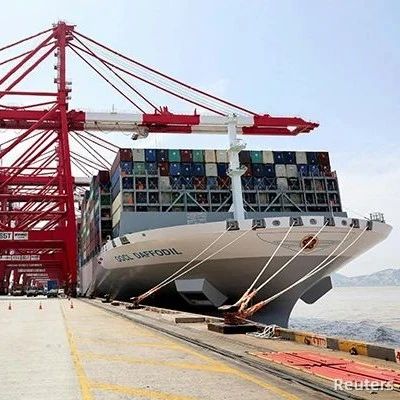
Export Performance - In July 2025, China's total export value reached $321.8 billion, a year-on-year increase of 7.2%, exceeding market expectations of 5.79%[1] - Exports to economies excluding the U.S. increased by 3.0 percentage points to 12.6%, contributing 2.5 percentage points to the overall export growth[1] - Key regions driving export growth included Latin America (+0.8 pct), South Korea (+0.5 pct), and Taiwan (+0.4 pct)[1] U.S. Export Trends - Exports to the U.S. fell by 21.6% year-on-year in July, a decline of 5.6 percentage points compared to June, impacting overall exports by 3.3 percentage points[2] - Container shipping rates to the U.S. dropped approximately 28% in the last week of July compared to the last week of June, indicating a slowdown in trade[2] - The expected monthly export range to the U.S. is projected between $35.8 billion and $38.2 billion, with year-on-year growth unlikely to return to positive figures[2] Regional Export Dynamics - South Korea's exports grew by 5.9% in July, the highest rate this year, driven by semiconductor exports which rose by 31.6%[3] - Vietnam maintained a high export growth rate of 17.7% in July, with exports to the U.S. increasing by 26%[3] - The export growth of labor-intensive products, machinery, and high-tech products showed varying degrees of slowdown, with labor-intensive products declining to -0.6%[4] Import Trends - Total imports in July reached $223.5 billion, a year-on-year increase of 4.3%, up 3 percentage points from June[4] - Significant contributors to import growth included bulk commodities, pharmaceuticals, and agricultural products, with increases of 1.6, 0.5, and 0.3 percentage points respectively[4] - The import of crude oil and copper ore saw notable rebounds, while iron ore imports fell by 8.8%[4] Future Outlook - China's export resilience is expected to continue, with positive year-on-year growth anticipated from August to October 2025, despite potential short-term declines in November and December due to high base effects[6] - The recent increase in U.S. tariffs may further impact global trade dynamics, with uncertainties surrounding the U.S. economic outlook and potential tariff expansions to other economies[6]
21社论丨中国外贸有望保持“量稳质升”的强劲韧性
21世纪经济报道· 2025-08-08 01:06
Core Viewpoint - China's foreign trade shows resilience and steady growth despite complex international economic conditions, with a 3.5% year-on-year increase in imports and exports in the first seven months of the year, driven by supportive policies and enhanced international cooperation [1][4]. Group 1: Trade Performance - In the first seven months of the year, China's total import and export value reached 3.91 trillion yuan in July, marking a historical monthly high with a year-on-year growth of 6.7% [1]. - Exports grew by 7.3% while imports decreased by 1.6%, indicating a strong performance in external demand [1]. - The trade value with ASEAN reached 4.29 trillion yuan, a 9.4% increase, making it China's largest trading partner [2]. Group 2: Trade Structure - The export of mechanical and electrical products reached 9.18 trillion yuan, accounting for 60% of total exports, with integrated circuits and automobiles being key growth drivers [3]. - Traditional labor-intensive product exports declined by 0.8%, indicating a shift towards high-tech and high-value products [3]. - The export of new energy vehicles and related products has seen significant growth, reflecting the industry's adaptation to global energy transition trends [3]. Group 3: Policy Support and Future Outlook - The Chinese government has implemented a series of supportive policies, including tax reductions and improved business environments, to stabilize foreign trade growth [4]. - There is an expectation for continued strong growth in trade with emerging markets, enhancing resilience against external risks [5]. - The ongoing deepening of economic cooperation with Europe is expected to foster mutual benefits and industry development [5].
外媒评中国外贸7月“成绩单”:出口增长“超预期”
Huan Qiu Shi Bao· 2025-08-07 22:50
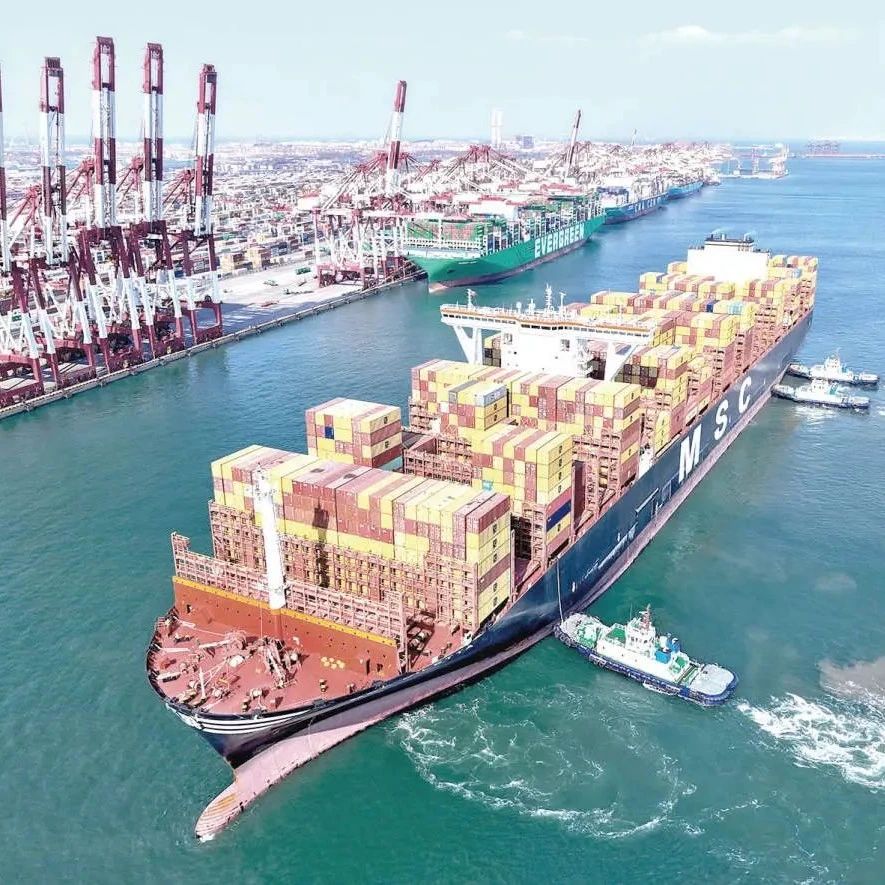
Group 1 - The total value of China's goods trade import and export reached 25.7 trillion yuan in the first seven months of 2025, with a year-on-year growth of 3.5% [1] - Exports amounted to 15.31 trillion yuan, showing a year-on-year increase of 7.3% [1] - In July alone, the total value of goods trade was 3.91 trillion yuan, with a year-on-year growth of 6.7%, marking the highest growth rate of the year [1] Group 2 - China's exports in July exceeded expectations, with a growth rate of 7.3% compared to the predicted 5.4% [1] - Imports in July reached 1.6 trillion yuan, with a year-on-year increase of 4.8%, also surpassing international economists' expectations [1] - The continuous growth in foreign trade is seen as a significant contributor to China's economic growth, with a GDP increase of 5.3% in the first half of the year [1] Group 3 - China is focusing on expanding export markets beyond the United States, as exports to the U.S. fell by 21.67% in July, while exports to ASEAN grew by 16.6% [2] - The "temporary pause" on U.S.-China tariffs is set to expire on the 12th of this month, raising concerns about a potential slowdown in export momentum [2] - The ASEAN, EU, Africa, and Central Asia regions have shown significant growth in trade with China, with respective year-on-year increases of 9.4%, 3.9%, 17.2%, and 16.3% [1]