乳制品

Search documents
拟逾8亿元出售优诺中国45.22%股权,天图投资登上新三板龙虎榜
Zheng Quan Shi Bao Wang· 2025-12-03 03:12
Group 1 - TianTu Investment is the first venture capital institution listed on both "New Third Board + H-shares," planning to sell its 45.22% stake in Yuno China for a cash consideration of 814 million RMB [1] - Other sellers hold approximately 41.74% of Yuno China and will also sell their entire equity, totaling 751.3 million RMB [1] - Yuno China is the business entity for Yoplait, the second-largest yogurt brand globally, which entered the Chinese market in 2013 [1][2] Group 2 - In recent years, Yuno China has expanded its core business of low-temperature yogurt products from the classic Yusi series to include Greek yogurt, Icelandic yogurt, and children's yogurt, among others [2] - TianTu Investment views this sale as an opportunity to realize investment returns and fulfill exit obligations for managed funds, aiming to increase liquidity for other investment opportunities [2] - The company plans to continue focusing on the consumer goods sector, leveraging its industry resources and experience to discover and empower more excellent brands and innovative enterprises [2] Group 3 - Kunshan Noyuan Ruiyuan Management Consulting, the buyer, is backed by IDG Capital, a prominent private equity fund manager in China, focusing on investments in consumption, technology, and health sectors [3] - IDG Capital has also invested in companies like Heytea, Anker Innovations, Ecovacs, and Three Squirrels, supporting their growth from early stages to scale [3]
49家港股公司回购 斥资8.79亿港元
Zheng Quan Shi Bao Wang· 2025-12-03 01:51
Summary of Key Points Core Viewpoint - On December 2, 49 Hong Kong-listed companies conducted share buybacks, totaling 24.43 million shares and an aggregate amount of HKD 879 million [1][2]. Group 1: Share Buyback Details - Tencent Holdings repurchased 1.028 million shares for HKD 636 million, with a highest price of HKD 625.50 and a lowest price of HKD 615.50, bringing its total buyback amount for the year to HKD 67.96 billion [1][2]. - Xiaomi Group-W repurchased 2.5 million shares for HKD 10.15 million, with a highest price of HKD 40.72 and a lowest price of HKD 40.50, totaling HKD 3.54 billion for the year [1][2]. - China COSCO Shipping repurchased 3 million shares for HKD 41.05 million, with a highest price of HKD 13.81 and a lowest price of HKD 13.62, totaling HKD 5.99 billion for the year [1][2]. Group 2: Buyback Rankings - The highest buyback amount on December 2 was from Tencent Holdings at HKD 636 million, followed by Xiaomi Group-W at HKD 10.15 million [1][2]. - In terms of share quantity, China Feihe led with 4 million shares repurchased, followed by China COSCO Shipping and Xiaomi Group-W with 3 million and 2.5 million shares, respectively [1][2].


中国必选消费12月投资策略:市场风格继续有利
Haitong Securities International· 2025-12-03 00:41
Investment Focus - The report highlights a favorable market style for essential consumer goods in China, with several companies rated as "Outperform," including Guizhou Moutai, Wuliangye, and Yili [1]. Industry Overview - In November 2025, four out of eight tracked essential consumer sectors showed positive growth, including condiments, frozen foods, soft drinks, and dining, while four sectors, such as high-end and below-average baijiu, dairy products, and beer, experienced negative growth [3][8]. - The overall growth rate across all sectors has weakened compared to the previous month, attributed to macroeconomic conditions, structural industry conflicts, and seasonal factors [3][8]. Price Trends - In November, wholesale prices for most baijiu brands declined, with Guizhou Moutai's prices dropping by 110 to 90 yuan compared to the previous month [4][20]. - The average price for Wuliangye remained stable, while the market for high-end baijiu showed a decline in both volume and price [9][10]. Cost Analysis - The cost index for six categories of consumer goods mostly increased in November, with soft drinks and dairy products rising by 2.50% and 0.74%, respectively [4][48]. - The prices of raw materials such as paper and plastic have shown significant year-on-year changes, with paper prices increasing by 17.5% [4]. Fund Flow - As of the end of November, net inflows into Hong Kong Stock Connect reached 111.58 billion yuan, with the essential consumer sector's market capitalization share increasing by 0.32 percentage points [5]. Valuation Metrics - By the end of November, the PE historical percentile for A-share food and beverage was at 21%, with the beer sector at a low of 1% [5]. - The median valuation for leading A-share food and beverage companies remained stable at 22x, while H-share essential consumer sector PE historical percentile was at 24% [5]. Recommendations - The report suggests focusing on high-dividend stocks as a long-term strategy, particularly in the dairy sector, which is expected to recover first, and regional leaders in the baijiu market [6].





天图投资出售优诺中国股权
Shen Zhen Shang Bao· 2025-12-02 23:23
Core Insights - IDG Capital is acquiring a 45.22% stake in Yoplait China from Tian Tu Investment for approximately 814 million RMB, with additional sellers holding 41.74% of the equity for a total consideration of 751.3 million RMB [1][2] - The acquisition will retain the existing management team of Yoplait China to enhance brand competitiveness and support regional expansion and product innovation [1] - Yoplait, a brand with a 60-year history, is the second-largest yogurt brand globally and entered the Chinese market in 2013 [2] Company Overview - Yoplait China was established in July 2013 and focuses on the production and sale of yogurt and other dairy beverages [1] - In 2023, Yoplait China reported revenues of 454 million RMB and a net profit of 8.515 million RMB, with projected revenues of 810 million RMB and a net profit of 95.454 million RMB for 2024 [1] Investment Context - Tian Tu Investment views the sale as an opportunity to realize long-term investment returns and enhance liquidity for other investment opportunities [2] - Tian Tu Investment, founded in 2002, specializes in the Chinese consumer sector and has over 25 billion RMB in assets under management, with more than 200 investments [2] - The company reported a revenue of 14.223 million RMB in the first half of 2023, a decrease of 33.78% year-on-year, but achieved a net profit of 76.005 million RMB, reversing previous losses [2]
新帅在华“动刀”:雀巢、惠氏营养品合并
2 1 Shi Ji Jing Ji Bao Dao· 2025-12-02 23:08
Core Viewpoint - Nestlé is undergoing a significant top-down reform, merging its Wyeth Nutrition and Nestlé Infant Nutrition business units into a single Nestlé Nutrition business starting January 1, 2026, to enhance growth and consolidate its leadership in the Chinese infant nutrition market [1][2]. Group 1: Business Strategy and Market Position - The merger aims to leverage the strong brand influence of Wyeth and S-26 with Nestlé's industry and channel advantages to achieve sustainable growth in a competitive market [5]. - The infant formula market in China is transitioning to a mature phase, with a reported growth rate of only 0.6% in Q2 2025, as the new baby boom is expected to decline [3]. - The ultra-premium segment is becoming mainstream, with a 13.3% year-on-year growth in the ultra-premium+ market, while other segments are experiencing declines [4]. Group 2: Competitive Landscape - The competition in the ultra-premium market is intensifying, as evidenced by Feihe's revenue decline of 9.36% to 9.151 billion yuan in the first half of the year, highlighting the challenges faced by brands in this segment [5]. - Domestic brands like Feihe and Yili have surpassed foreign brands in market share, indicating a shift in the competitive landscape of the infant formula market [5]. Group 3: Organizational Changes and Leadership - Nestlé has recently undergone significant leadership changes, with a new CEO, Frits van Paasschen, appointed in September 2025, emphasizing a performance-driven culture and a focus on growth [7][8]. - The restructuring in Nestlé China, led by CEO Mark Schneider, includes key personnel changes in the coffee and finance sectors, indicating a strategic shift towards more agile management [10]. - The new head of the infant nutrition business, Joel Seah, has a background in the Southeast Asian market, suggesting a strategic inclination towards leveraging regional expertise [11][12].
严审婴幼儿配方液态乳产品配方
Ren Min Ri Bao· 2025-12-02 22:33
Core Points - The Market Regulation Administration has officially started accepting registration applications for infant formula liquid milk products as of December 1, 2023 [1] - The new Food Safety Law, effective from December 1, includes infant formula liquid milk in the registration management system [1] - The registration process for infant formula liquid milk will follow similar procedures as those for infant formula powder [1] Regulatory Requirements - The regulatory body has introduced stricter technical requirements for infant formula liquid milk compared to infant formula powder, focusing on microbial risks in raw materials and product stability [1] - Specific requirements include controlling microorganisms like psychrotrophic bacteria and heat-resistant spores in raw milk, ensuring production water meets drinking water standards, and establishing internal control evaluation standards [1] - Additional requirements involve the selection of aseptic filling and post-sterilization processes, as well as labeling that includes consumption warnings after opening [1] Industry Impact - The regulatory measures aim to enhance the safety and scientific validity of infant formula liquid milk products, reinforcing risk prevention throughout the production and operation processes [2] - These initiatives are expected to contribute to the high-quality development of the industry [2]
市场监管总局正式受理注册申请 严审婴幼儿配方液态乳产品配方
Ren Min Ri Bao· 2025-12-02 22:09
Core Viewpoint - The market regulatory authority has officially started accepting registration applications for infant formula liquid milk products as of December 1, aligning the registration process with that of infant formula powder products [1][2]. Group 1: Regulatory Changes - The new Food Safety Law, effective December 1, includes infant formula liquid milk under registration management [1]. - The market regulatory authority has released a revised management method for infant formula powder products and a new technical document outlining the registration application materials and requirements for infant formula liquid milk [1]. Group 2: Technical Requirements - Stricter technical requirements have been established for infant formula liquid milk due to its higher moisture content and rich nutritional components, compared to infant formula powder [1]. - Specific requirements include controlling microbial risks in raw milk, ensuring production water meets drinking water standards, and developing internal control evaluation standards and testing methods [1]. - Additional requirements involve the selection of aseptic filling and sterilization processes, verification of sterilization effectiveness, and labeling guidelines that include consumption warnings after opening [1]. Group 3: Industry Impact - The regulatory authority aims to enhance the safety and scientific validity of infant formula liquid milk products, reinforcing risk prevention throughout the production and operation processes to support high-quality industry development [2].
82岁爱马仕继承人被骗150亿美元细节曝光;盒马鲜生前CEO李卫平掌舵高鑫零售丨消费早参
Mei Ri Jing Ji Xin Wen· 2025-12-02 21:00
Group 1: Nestlé and Wyeth Nutrition Merger - Nestlé plans to merge its Wyeth Nutrition business with its infant nutrition business in the Greater China market, officially establishing Nestlé Nutrition by January 1, 2026 [1] - This merger aims to integrate brand, channel, and R&D advantages, aligning with Nestlé's global strategy to simplify its organization and enhance resource synergy and market responsiveness [1] - The consolidation of leading foreign brands in the infant nutrition sector is expected to intensify market competition and drive the industry towards greater scale and quality amid declining birth rates and accelerated domestic alternatives [1] Group 2: Hermès Heir Fraud Case - The heir of Hermès, Nicolas Puech, has accused his wealth manager of orchestrating a scheme that led to the loss of $15 billion in Hermès shares [2] - This case highlights trust risks and regulatory gaps in ultra-high-end wealth management, prompting leading companies in the luxury sector to strengthen shareholding lock-in and internal control mechanisms [2] - The incident serves as a warning for the stock market regarding asset allocation for high-net-worth individuals, emphasizing the need for transparency in corporate share structures and risk management in entrusted wealth management [2] Group 3: Maxigenes Counterfeit Milk Powder Incident - Maxigenes has responded to concerns regarding counterfeit "Blue Fatty" milk powder being sold through unofficial channels, asserting that their product is 100% imported from Australia [3] - The counterfeit issue poses a risk to Maxigenes' brand reputation and tests its channel management and quality control capabilities, potentially affecting investor perceptions of its market operational efficiency [3] - This incident is likely to accelerate the industry's focus on channel compliance and traceability technology, prompting leading brands to enhance their official channel strategies and anti-counterfeiting systems [3] Group 4: Leadership Change at Gao Xin Retail - Gao Xin Retail has appointed Li Weiping as the new CEO, effective December 1, 2025, following the resignation of Shen Hui due to personal reasons [4] - Li Weiping brings over 20 years of management experience in the retail industry, having previously held significant positions at Hema, including CEO [4] - This leadership change occurs during a critical period for Gao Xin Retail as it seeks to recover from losses and transition towards community-based operations, with Li's experience expected to accelerate operational upgrades and enhance investor confidence in the company's transformation [4]
雀巢,联合作战
Sou Hu Cai Jing· 2025-12-02 17:07
Core Insights - Nestlé is restructuring its operations in the Greater China market by merging its Wyeth Nutrition and Nestlé Infant Nutrition businesses, effective January 1, 2026, with Joel Seah appointed as the head of the new unit [1][10] - This merger is seen as a strategic response to the changing dynamics of the Chinese market, aiming to enhance competitiveness and drive sustainable growth [3][7] - The integration is expected to create significant synergies, leveraging brand strength, product development, and channel resources to capture growth opportunities [12][9] Company Strategy - The merger aligns with Nestlé's broader strategy to simplify its organizational structure and respond more flexibly to market competition, as emphasized by the new CEO, Phil Navratil [3][9] - The integration aims to combine the strong brand influence of Wyeth in the mid-to-high-end market with Nestlé's penetration in the mass market, allowing for comprehensive coverage across different consumer segments [12][10] - Nestlé plans to continue investing in brand and channel development to regain growth momentum and maintain its leadership position in the infant nutrition market in China [10][12] Market Context - The infant formula market in China is undergoing structural adjustments due to declining birth rates and rising costs, with market growth slowing to 0.6% by Q2 2025 [7][9] - The competitive landscape is shifting from "incremental sharing" to "market share acquisition," making resource integration essential for enhancing competitiveness [7][9] - Analysts suggest that the merger will consolidate resources, allowing for more effective competition against other brands in a highly concentrated market [9][12] Leadership and Execution - Joel Seah, with over 20 years of experience in the fast-moving consumer goods sector, is seen as a key figure in ensuring a smooth transition and maximizing the merger's potential [5][14] - The successful integration will depend on addressing cultural differences and ensuring talent retention while fostering innovation tailored to local market needs [14][12] - The new unit is expected to focus on developing customized products that cater to the specific needs of Chinese consumers, enhancing collaboration with local supply chains to reduce costs [14][12]

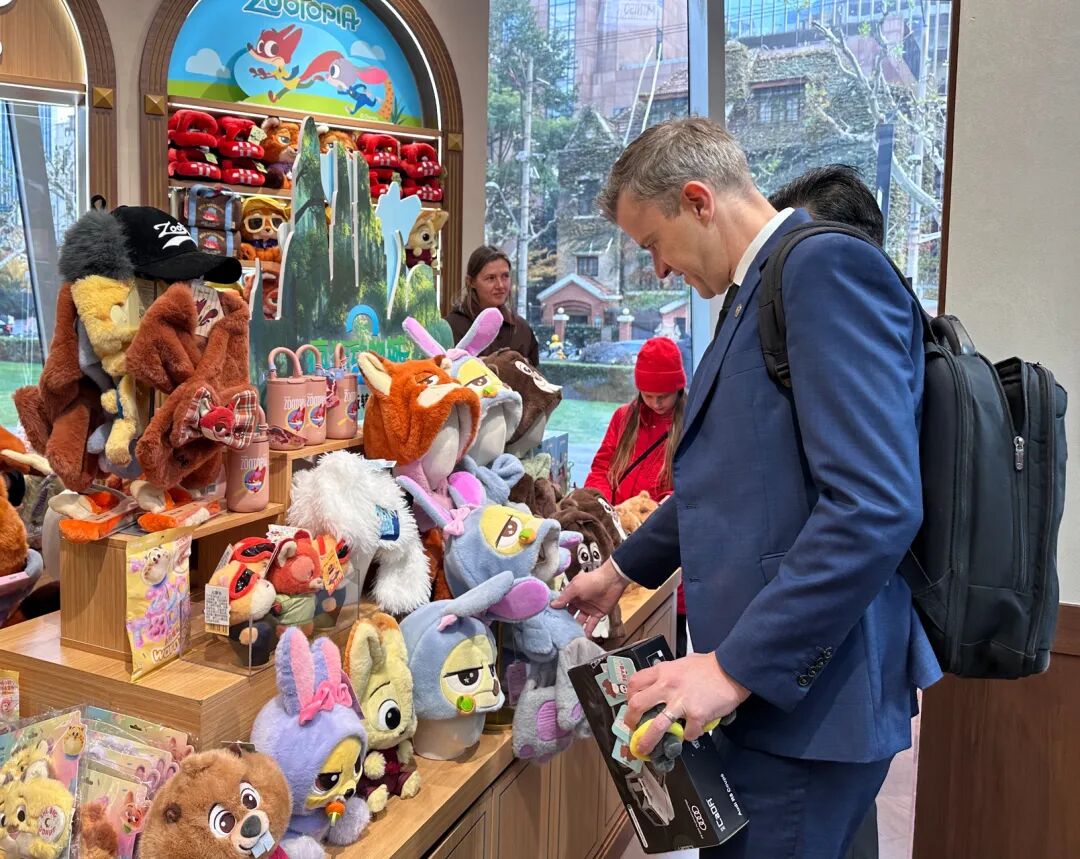
从影院到货架全刷屏!超60个品牌抱上《疯狂动物城2》IP大腿
Guo Ji Jin Rong Bao· 2025-12-02 15:24
Core Insights - The popularity of "Zootopia 2" is expanding beyond cinemas into the consumer market, with a box office exceeding 2.08 billion yuan within a week of release, setting records for single-day box office in China [1] - The film has received positive reviews, currently holding a Douban score of 8.5, and is projected to surpass 4 billion yuan in total box office revenue [1] Group 1: Consumer Brand Collaborations - Over 60 consumer brands have partnered with the "Zootopia 2" IP, spanning various sectors including dairy beverages, apparel, and trendy toys, leading to a surge in demand for co-branded products [2] - Notable brands like Pop Mart, Miniso, and 52TOYS have launched co-branded products, with some items like the "Zootopia 2" blind boxes selling out quickly and experiencing significant price premiums on third-party platforms [2][4] - Miniso has integrated its brand into the film's storyline, leveraging Disney's IP for global exposure, and reported a total revenue of 15.19 billion yuan in the first three quarters of the year, with overseas revenue accounting for nearly 40% [4] Group 2: Market Impact and Trends - The success of "Zootopia 2" is anticipated due to its established fan base and Disney's reliable collaboration model, with brands like Starbucks and Luckin Coffee launching related products ahead of the film's release [4] - The film's popularity has also positively impacted unrelated brands, such as DQ Ice Cream, which saw increased sales due to a social media trend linking their product to the film's themes [6] - The "Zootopia" theme park at Shanghai Disneyland has maintained high engagement since its opening in 2023, indicating the potential for sustained interest in the IP through both online and offline channels [8]