
证券业

Search documents
南华宏观周报-20250801
Nan Hua Qi Huo· 2025-08-01 10:44
1. Report Industry Investment Rating No relevant content provided. 2. Core Viewpoints of the Report - In July, the manufacturing PMI declined marginally, and the economic momentum of the manufacturing industry also showed a marginal decline, indicating downward pressure on the overall economy. However, the Politburo meeting has set a positive policy tone, and the economy is expected to make steady progress. The government will speed up the issuance of government bonds, and incremental policies may be introduced when economic data shows continuous downward pressure [3][7]. - The Fed's Powell made relatively hawkish remarks at the FOMC meeting. The Fed's core goals are employment and inflation. The inflation data in June was pushed up by rising commodity prices, slightly exceeding expectations, adding uncertainty to the Fed's interest - rate cut timing [3]. 3. Summary by Relevant Catalogs 3.1 Economic Marginal Decline, Policy Still Has Resilience 3.1.1 Manufacturing PMI Marginal Decline - In July, the manufacturing PMI was 49.3%, down 0.4 percentage points from the previous month, lower than market expectations, and below the boom - bust line for four consecutive months. The production index decreased by 0.5 percentage points to 50.5%, and the new order index decreased by 0.8 percentage points to 49.4%. The new export order index dropped to 47.1%. The raw material purchase price index and ex - factory price index increased by 3.1 and 2.1 percentage points respectively [4]. 3.1.2 Policy Tone Continues to Be Proactive and Effective - The Politburo meeting at the end of July continued the previous policy tone and further clarified the intensity and direction of policy efforts in the second half of the year. The decision - makers are aware of the economic situation, acknowledging that while the economy has shown good performance in the first half, there are still potential risks in the second half. The consumer demand is weak, and corporate profit growth is negative, with over - capacity in some industries [9]. - The policy space in the second half of the year is sufficient, and fiscal and monetary policies will work together. The government will speed up the issuance of government bonds, and there is still room for interest - rate cuts in the future, which may be implemented when overseas interest - rate pressure eases and domestic economic pressure increases. Service consumption may become a new engine for consumption growth in the second half of the year, and the stock market's allocation value is gradually emerging [12][17][19]. 3.1.3 Focus on US Inflation and Employment Data - The inflation data in June slightly exceeded market expectations, mainly driven by rising commodity prices. At the FOMC meeting, the Fed paused interest - rate cuts as expected, and there was internal disagreement. Powell's speech sent a hawkish signal, and the subsequent path of inflation is uncertain, so the expectation of interest - rate cuts may fluctuate with economic data [21]. 3.2 Key Economic Data and Events to Focus On 3.2.1 Domestic Key Events - Important policies include the release of the national childcare subsidy plan, market regulation of inferior and low - price competition, and strengthening the governance of key industries such as new - energy vehicles and photovoltaics. Key economic data shows that the total operating income of state - owned enterprises from January to June was 40.75 trillion yuan, a year - on - year decrease of 0.2%, and the manufacturing PMI in July was 49.3%, down 0.4 percentage points from the previous month [24][27]. 3.2.2 Overseas Key Events - In the US, the Treasury Department significantly increased its borrowing estimate for the third quarter. The Fed maintained the interest rate unchanged, and there were internal differences. There were also issues related to tariffs, employment, and economic growth. Geopolitical events included Trump's stance on Russia, and cease - fire agreements in Thailand and Cambodia [28][34]. 3.3 Key Events and Data to Focus on Next Week - The table lists key events and data to be released next week, including US treasury bill auction rates, eurozone PPI, US export and import volumes, and Chinese CPI and PPI data [36]. 3.4 Weekly Performance of Major Asset Classes - The report provides charts of domestic stock index trends, bond market trends, and various commodity index trends, including the CSI 500, CSI 1000, and various South China commodity indices [38].
上半年申城经济开局平稳呈现韧劲 入境游客同比再增39%
Sou Hu Cai Jing· 2025-08-01 03:08
东方网记者项颖知7月31日报道:上海市第十六届人大常委会第二十三次会议30日听取市人民政府关于2025年上半年 上海市国民经济和社会发展计划执行情况的报告。报告显示,上半年上海市经济呈现平稳开局、韧性增长态势,就业 和物价保持稳定,市场预期和信心逐步改善,高质量发展扎实推进,展现出韧劲和活力,实现"时间过半、完成任务 过半"。 上半年全市生产总值达到2.62万亿元,同比增长5.1%;其中,工业、金融、信息服务、交通运输、房地产业增加值分 别增长5%、8.8%、14.6%、6.3%和1.8%。 财政收入实现正增长。据报告,上半年全市地方一般公共预算收入4684.4亿元,同比增长0.2%;其中税收收入占比 84.9%。先导性指标回升向好。6月份制造业PMI指数、非制造业商务活动指数分别为50和51.5,均回升至扩张区间。 与此同时,上海继续着力培育壮大新动能,二三产业协调发展。 从消费端看,上半年全市社会消费品零售总额同比增长1.7%。统计显示,上半年消费品以旧换新补贴资金直接带动社 会消费额超过540亿元。截至6月底,汽车以旧换新补贴共申请10.2万辆、新车销售额超200亿元,带动上半年新能源车 销售额增长8. ...


减持债券增持基金 低利率周期银行理财配置变局
Zhong Guo Jing Ji Wang· 2025-08-01 00:52
Core Insights - The banking wealth management sector is adjusting its asset allocation strategies in response to declining interest rates, with a shift away from bonds and equities towards public funds, cash, bank deposits, and non-standardized debt assets [1][4]. Asset Allocation Changes - As of the end of June, the asset allocation of wealth management products remains predominantly in fixed-income assets, while the proportion of bonds and equities has decreased. Specifically, the balance of investments in bonds and equities was 13.78 trillion yuan and 0.78 trillion yuan, accounting for 41.8% and 2.38% of total investment assets, respectively [2]. - The allocation to public funds has significantly increased, with a balance of 1.38 trillion yuan, representing 4.2% of total investment assets, an increase of 0.45 trillion yuan compared to the end of the first quarter [3]. Yield Trends - The average annualized yield of wealth management products has decreased to 2.12% in the first half of the year, down 0.53 percentage points from 2.65% in 2024. The difficulty in obtaining yields from fixed-income assets has increased, leading to a clear differentiation between allocation and trading strategies [4][5]. - The demand for credit bonds remains strong, with credit bonds accounting for 90% of bond allocations. However, the supply of high-yield assets is decreasing, which may lead to further declines in yields for wealth management products [4][5]. Market Growth and Challenges - As of the end of June, the total scale of the banking wealth management market was 30.67 trillion yuan, reflecting a growth of 2.4% year-to-date and 7.54% year-on-year. However, the growth rate may slow down in the medium to long term due to declining yields [5][6]. - The pressure on the expansion of wealth management product scales is expected to increase as the yield advantage of flexible redemption products diminishes compared to deposits [6].
减持债券 增持基金 低利率周期银行理财配置变局
Zhong Guo Zheng Quan Bao· 2025-07-31 21:09
Core Viewpoint - The banking wealth management sector is adjusting its asset allocation strategies in response to declining interest rates, shifting away from bonds and equity assets towards public funds, cash, bank deposits, and non-standardized debt assets [1][4]. Asset Allocation Changes - As of the end of June, the asset allocation of wealth management products remains predominantly in fixed-income assets, while the proportion of bonds and equity assets has decreased. Specifically, the balance of investments in bonds and equity assets was 13.78 trillion yuan and 0.78 trillion yuan, accounting for 41.8% and 2.38% of total investment assets, respectively [2][3]. - The allocation to public funds has significantly increased, with a balance of 1.38 trillion yuan, representing 4.2% of total investment assets, an increase of 0.45 trillion yuan compared to the end of the first quarter [3]. Challenges in Fixed-Income Asset Returns - The average annualized return of wealth management products has declined to 2.12% in the first half of the year, down from 2.65% in 2024, indicating a 0.53 percentage point decrease. The difficulty in obtaining returns from fixed-income assets has increased, with a notable differentiation between allocation and trading strategies [4][5]. - Credit bonds continue to dominate the allocation, comprising 90% of bond investments, with a total holding of 12.79 trillion yuan, which is 38.79% of total investment assets [4]. Market Trends and Future Outlook - The total scale of the banking wealth management market reached 30.67 trillion yuan by the end of June, reflecting a 2.4% increase from the beginning of the year and a 7.54% year-on-year growth. However, the growth rate may slow down in the medium to long term due to declining returns on wealth management products [5][6]. - The pressure on the expansion of wealth management product scales is expected to increase as the advantages of returns, particularly for cash management products, diminish compared to deposits [6].
低利率周期银行理财配置变局
Zhong Guo Zheng Quan Bao· 2025-07-31 21:02
Core Insights - The banking wealth management sector is adjusting its asset allocation strategies in response to declining interest rates, shifting from bonds and equity assets to public funds, cash, bank deposits, and non-standardized debt assets [1][4] Asset Allocation Changes - As of the end of June, the balance of wealth management products invested in bonds and equity assets was 13.78 trillion yuan and 0.78 trillion yuan, accounting for 41.8% and 2.38% of total investment assets, respectively. This represents a decrease from 43.9% and 2.6% at the end of the first quarter [2] - The proportion of public fund allocations in wealth management products has significantly increased, with a balance of 1.38 trillion yuan, representing 4.2% of total investment assets, up from 0.93 trillion yuan in the previous quarter [2][3] Shift to Low-Volatility Assets - Wealth management products have increased their allocation to low or non-volatile assets, with cash and bank deposits totaling 8.18 trillion yuan and non-standardized debt assets at 1.82 trillion yuan, representing 24.8% and 5.52% of total investment assets, respectively [3] Declining Yield Trends - The average annualized yield of wealth management products has dropped to 2.12% in the first half of the year, down from 2.65% in 2024, indicating increasing difficulty in generating returns from fixed-income assets [3][4] Credit Bond Dominance - Credit bonds remain the primary focus within bond allocations, with a total of 12.79 trillion yuan held, accounting for 38.79% of total investment assets, although this is a decrease of 2.34 percentage points from the previous year [2][4] Market Growth and Future Outlook - As of the end of June, the total scale of the banking wealth management market was 30.67 trillion yuan, reflecting a growth of 2.4% year-to-date and 7.54% year-on-year. However, the growth rate may slow down in the medium to long term due to declining yields [4][5] - Analysts predict that while short-term growth may continue due to deposit pricing effects, the attractiveness of wealth management products may diminish as yields decline, leading to increased pressure on expansion [5][6]
国信证券: 国信证券股份有限公司2025年面向专业投资者公开发行公司债券(第五期)募集说明书
Zheng Quan Zhi Xing· 2025-07-31 16:15
国信证券股份有限公司 2025 年面向专业投资者公开发行公司债券(第五期)募集说明书 声明 发行人将及时、公平地履行信息披露义务,发行人及其全体董事、监事、高 级管理人员或履行同等职责的人员保证募集说明书信息披露的真实、准确、完整, 不存在虚假记载、误导性陈述或重大遗漏。 主承销商已对募集说明书进行了核查,确认不存在虚假记载、误导性陈述和 重大遗漏,并对其真实性、准确性和完整性承担相应的法律责任。 发行人承诺在本期债券发行环节,不直接或者间接认购自己发行的债券。债 券发行的利率或者价格应当以询价、协议定价等方式确定,发行人不会操纵发行 定价、暗箱操作,不以代持、信托等方式谋取不正当利益或向其他相关利益主体 输送利益,不直接或通过其他利益相关方向参与认购的投资者提供财务资助、变 相返费,不会出于利益交换的目的通过关联金融机构相互持有彼此发行的债券, 不实施其他违反公平竞争、破坏市场秩序等行为。 发行人如有董事、监事、高级管理人员、持股比例超过 5%的股东及其他关 联方参与本期债券认购,发行人将在发行结果公告中就相关认购情况进行披露。 中国证券监督管理委员会、深圳证券交易所对债券发行的注册或审核,不代 表对债券的 ...

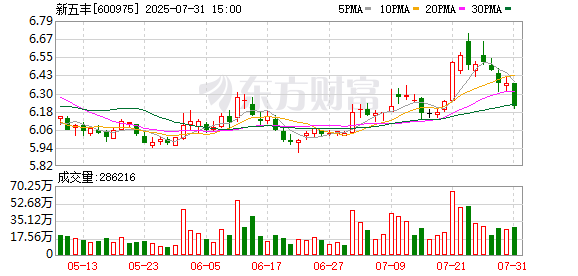
新五丰:关于提前归还临时补充流动资金的募集资金公告
Zheng Quan Ri Bao· 2025-07-31 14:15
Group 1 - The company Xinwufeng announced that it has fully returned 140 million yuan of idle raised funds to the designated account for raised funds as of the date of the announcement [2] - The company has notified its independent financial advisor, China Merchants Securities Co., Ltd., and the lead advisor about the return of the raised funds [2]

债市稳住股市虹吸“逆风局” 理财赎回未现“负反馈”
2 1 Shi Ji Jing Ji Bao Dao· 2025-07-31 13:28
Core Viewpoint - The recent capital market dynamics show a significant shift in fund flows between equity and bond markets, with a notable increase in equity market performance as the bond market experiences volatility [1][2]. Group 1: Market Dynamics - The stock market has shown resilience, with the Shanghai Composite Index breaking through 3600 points, while the bond market has faced fluctuations, indicating a "see-saw" effect between the two [1][2]. - The bond market has seen a sharp increase in the 10-year government bond yield, rising from approximately 1.65% in mid-July to 1.75% by July 25, reflecting a shift in investor sentiment [1][2]. - Recent net liquidity operations have tightened the market, causing overnight repo rates to rise above 1.65%, leading to a significant tilt in the balance between equity and bond markets [2]. Group 2: Fund Flows and Investment Trends - There is a clear trend of funds migrating from bond markets to equities, driven by improved risk appetite and a shift in market sentiment towards sectors with higher profitability certainty, such as consumer and pharmaceutical stocks [2][5]. - The redemption signals in the bond market were triggered by a decline in net asset values of bond funds, with a cumulative drop of 15.1 basis points over three days, indicating a significant reaction from institutional investors [3]. - The demand for traditional savings products, such as savings bonds, has decreased as investors seek higher returns in the equity market, leading to a notable decline in the attractiveness of these once-popular investment vehicles [5][6]. Group 3: Institutional Behavior - Institutional investors, particularly banks and funds, have been reducing their bond holdings significantly, indicating a proactive defensive strategy in anticipation of rising interest rates [3][4]. - The current market environment has allowed institutions to accumulate floating profits, enhancing their resilience to bond market fluctuations, which has not yet resulted in negative feedback from redemptions [4]. - The trend of investors seeking higher returns has led to increased activity in the large-denomination certificate of deposit market, with many investors opting to redeem their deposits early to invest in equities [6].
央行:6月份沪市日均交易量环比增加8.6%
Di Yi Cai Jing· 2025-07-31 10:37
Market Overview - In June, the average daily trading volume in the Shanghai Stock Exchange was 510.4 billion yuan, an increase of 8.6% month-on-month; the Shenzhen Stock Exchange's average daily trading volume was 796.9 billion yuan, up 11.5% month-on-month [1][7] Bond Market Issuance - In June, the bond market issued a total of 87,939.5 billion yuan in various bonds, including 15,903.9 billion yuan in government bonds, 11,753.2 billion yuan in local government bonds, 10,738.7 billion yuan in financial bonds, 14,257.3 billion yuan in corporate credit bonds, 247.2 billion yuan in credit asset-backed securities, and 34,569.3 billion yuan in interbank certificates of deposit [2] Bond Market Operation - In June, the interbank bond market had a total transaction volume of 34.3 trillion yuan, with an average daily transaction of 1.7 trillion yuan, a year-on-year decrease of 1.2% but a month-on-month increase of 6.2% [3] Foreign Participation in Bond Market - As of the end of June, the custody balance of foreign institutions in the Chinese bond market was 4.3 trillion yuan, accounting for 2.3% of the total custody balance [4] Money Market Activity - In June, the interbank lending market had a transaction volume of 8.4 trillion yuan, a year-on-year increase of 11.2% and a month-on-month increase of 26.0% [5] Commercial Paper Market - In June, the acceptance amount of commercial bills was 3.5 trillion yuan, and the discount amount was 2.8 trillion yuan [6] Stock Market Performance - By the end of June, the Shanghai Composite Index closed at 3,444.4 points, an increase of 96.9 points or 2.9% month-on-month; the Shenzhen Component Index closed at 10,465.1 points, up 424.5 points or 4.2% month-on-month [7]
中国央行:6月份债券市场共发行各类债券87939.5亿元
智通财经网· 2025-07-31 10:19
Bond Market Issuance - In June 2025, the total issuance of various bonds in the bond market reached 87,939.5 billion yuan, including 15,903.9 billion yuan of government bonds, 11,753.2 billion yuan of local government bonds, 10,738.7 billion yuan of financial bonds, 14,257.3 billion yuan of corporate credit bonds, 247.2 billion yuan of credit asset-backed securities, and 34,569.3 billion yuan of interbank certificates of deposit [3] Bond Market Custody Balance - As of the end of June, the custody balance of the bond market was 188.5 trillion yuan, with 166.7 trillion yuan in the interbank market and 21.9 trillion yuan in the exchange market. The custody balances by bond type included 37.2 trillion yuan of government bonds, 51.7 trillion yuan of local government bonds, 42.7 trillion yuan of financial bonds, 33.7 trillion yuan of corporate credit bonds, 1.0 trillion yuan of credit asset-backed securities, and 21.1 trillion yuan of interbank certificates of deposit [3] Bond Market Trading Activity - In June, the interbank bond market saw a total transaction volume of 34.3 trillion yuan, with an average daily transaction of 1.7 trillion yuan, reflecting a year-on-year decrease of 1.2% but a month-on-month increase of 6.2%. The exchange bond market recorded a transaction volume of 3.8 trillion yuan, with an average daily transaction of 190.5 billion yuan [4] Foreign Participation in Bond Market - By the end of June, the custody balance of foreign institutions in the Chinese bond market was 4.3 trillion yuan, accounting for 2.3% of the total custody balance. Foreign institutions held 2.1 trillion yuan of government bonds, 1.2 trillion yuan of interbank certificates of deposit, and 0.8 trillion yuan of policy bank bonds [5] Money Market Activity - In June, the interbank lending market recorded a transaction volume of 8.4 trillion yuan, a year-on-year increase of 11.2% and a month-on-month increase of 26.0%. The bond repurchase transactions totaled 156.3 trillion yuan, reflecting a year-on-year increase of 32.7% and a month-on-month increase of 20.4% [6] Commercial Paper Market - In June, the acceptance amount of commercial bills was 3.5 trillion yuan, and the discount amount was 2.8 trillion yuan. By the end of June, the acceptance balance of commercial bills was 19.3 trillion yuan, and the discount balance was 14.8 trillion yuan. Small and micro enterprises accounted for 93.2% of the total bill issuers and 69.8% of the total bill issuance amount [7] Stock Market Performance - At the end of June, the Shanghai Composite Index closed at 3,444.4 points, up 96.9 points or 2.9% from the previous month. The Shenzhen Component Index closed at 10,465.1 points, up 424.5 points or 4.2%. The average daily trading volume in the Shanghai market was 510.4 billion yuan, an increase of 8.6% month-on-month, while the Shenzhen market's average daily trading volume was 796.9 billion yuan, an increase of 11.5% month-on-month [9] Bond Market Holder Structure - As of the end of June, there were 3,989 institutional members in the interbank bond market, all of which were financial institutions. The top 50 investors in corporate credit bonds held 48.0% of the total, primarily concentrated in public funds, state-owned commercial banks, and insurance financial institutions [10]