农产品加工

Search documents
外贸提质带动产业链延伸
Jing Ji Ri Bao· 2025-10-22 22:10
Group 1 - The AGV project at Ganqimaodu Port has significantly improved operational efficiency, allowing for 24-hour operations and reducing labor costs, with a daily transport capacity of approximately 30,000 tons [1] - Since its trial run in July 2022, the AGV system has transported a total of 6.9249 million tons of coal, increasing transport efficiency by five times compared to traditional methods [1] - The port's management has implemented a real-time monitoring platform for customs and border inspection, facilitating "unmanned customs clearance" [1] Group 2 - The agricultural development company in Bayannur has achieved an export value of over 10 million yuan in the first half of the year, primarily targeting North America and the Middle East [2] - Bayannur's foreign trade has seen a total import and export value of 24.67 billion yuan in the first half of the year, marking an 8.1% year-on-year increase, leading the region [2] - The city plans to enhance its foreign trade transformation by supporting deep processing of products and establishing a public service platform for cross-border e-commerce [2]
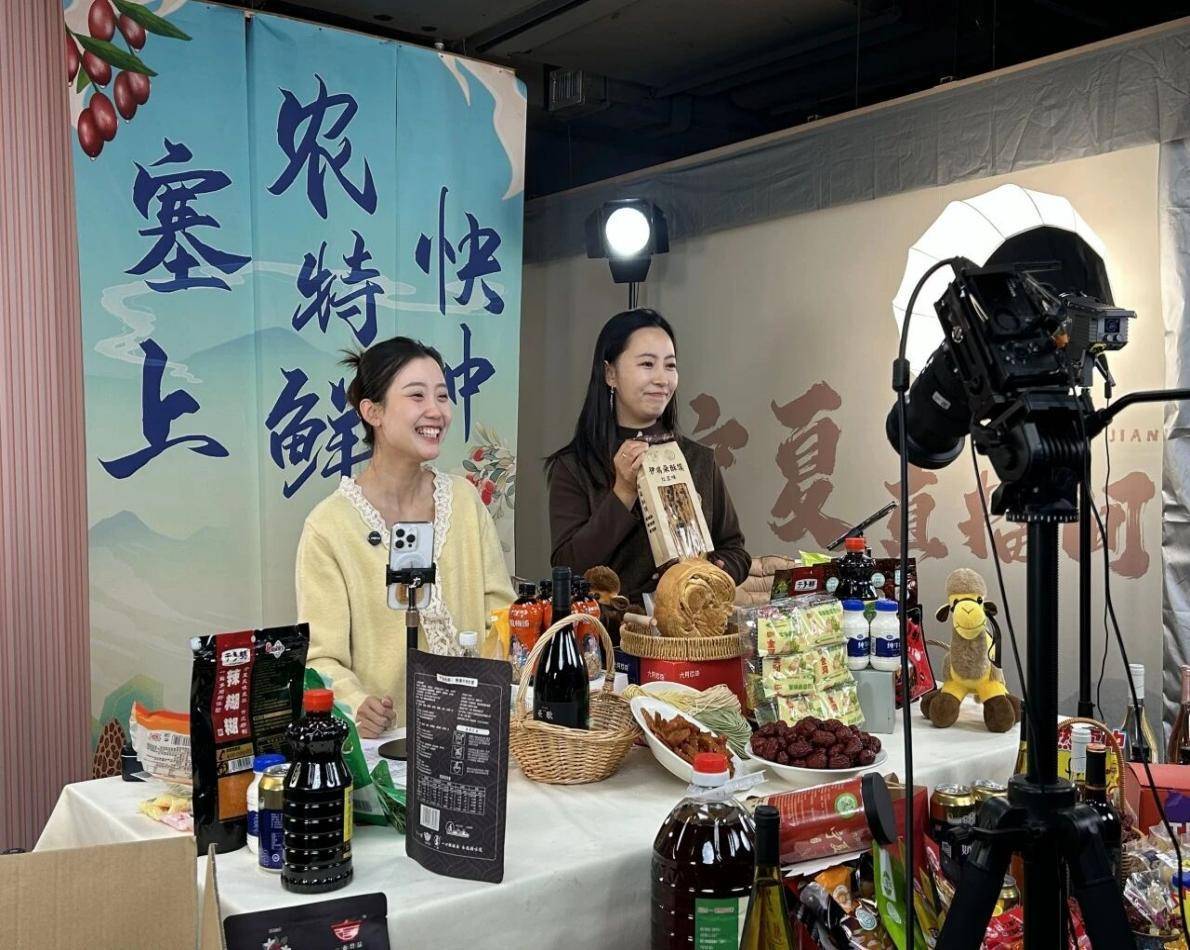
宁夏银川 闽宁电商助农季创意直播带火电商农产品
Sou Hu Cai Jing· 2025-10-22 16:36
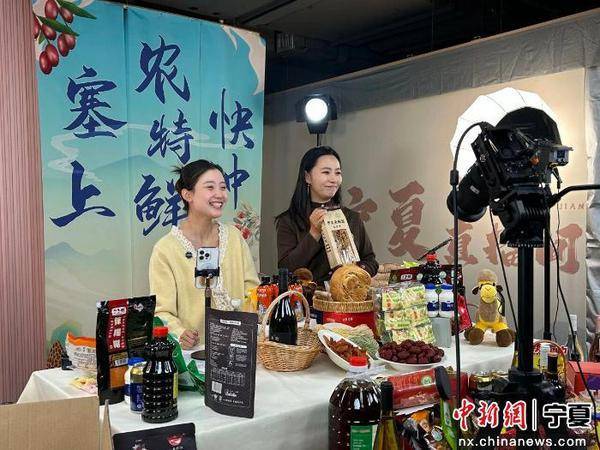
Core Insights - The "Follow the Minning Girl to Pick Fresh Goods" creative live-streaming event successfully connected Ningxia's quality agricultural products with the national market, achieving both social and economic benefits [1][5] - The event featured renowned agricultural influencer Benny, who showcased local products and shared e-commerce sales techniques, enhancing consumer understanding and providing valuable learning opportunities for local farmers and e-commerce practitioners [3][5] Summary by Sections Event Overview - The event was part of the "Yinchuan City Business Bureau Minning Cooperation E-commerce Season" and aimed to deepen cooperation and promote high-quality regional economic development [1] - The live-stream attracted over 2,000 peak viewers and generated over 2 million yuan in online and offline sales during the event [1] Product Promotion - Featured products included Yinchuan's specialty eight-treasure tea, goji berries, dairy products, and various hot pot ingredients, promoted through interactive formats like flash sales and lucky bags [1][3] - Benny provided insights into the cultivation and production processes of the showcased products, enhancing consumer engagement and product appeal [3] E-commerce Development - The Yinchuan City Business Bureau has been actively involved in e-commerce initiatives to support local farmers, including training programs that have developed skilled local influencers like Benny [3][5] - A comprehensive rural e-commerce service system has been established, including five county-level service centers and 163 village-level service stations, facilitating online sales of agricultural products [3]


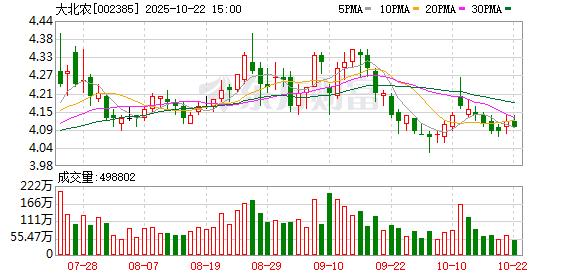
大北农:2025年前三季度归属于上市公司股东的净利润同比增长92.56%
Zheng Quan Ri Bao· 2025-10-22 13:39
(文章来源:证券日报) 证券日报网讯 10月22日晚间,大北农发布2025年第三季度报告称,2025年前三季度公司实现营业收入 20,743,564,082.81元,同比增长2.99%;归属于上市公司股东的净利润为256,998,228.40元,同 比增长92.56%。 ...

ST朗源:前三季度归母净利润为-765.11万元
Bei Jing Shang Bao· 2025-10-22 13:34
Core Viewpoint - ST Langyuan reported a significant increase in third-quarter revenue but continued to face net losses in both the third quarter and the first three quarters of 2025 [1] Financial Performance - In the third quarter, the company achieved operating revenue of 81.26 million yuan, representing a year-on-year growth of 51.7% [1] - For the first three quarters, the company recorded total operating revenue of 184 million yuan, with a year-on-year increase of 13.96% [1] - The net profit attributable to the parent company for the third quarter was -2.42 million yuan [1] - Cumulatively, the net profit attributable to the parent company for the first three quarters was -7.65 million yuan [1]

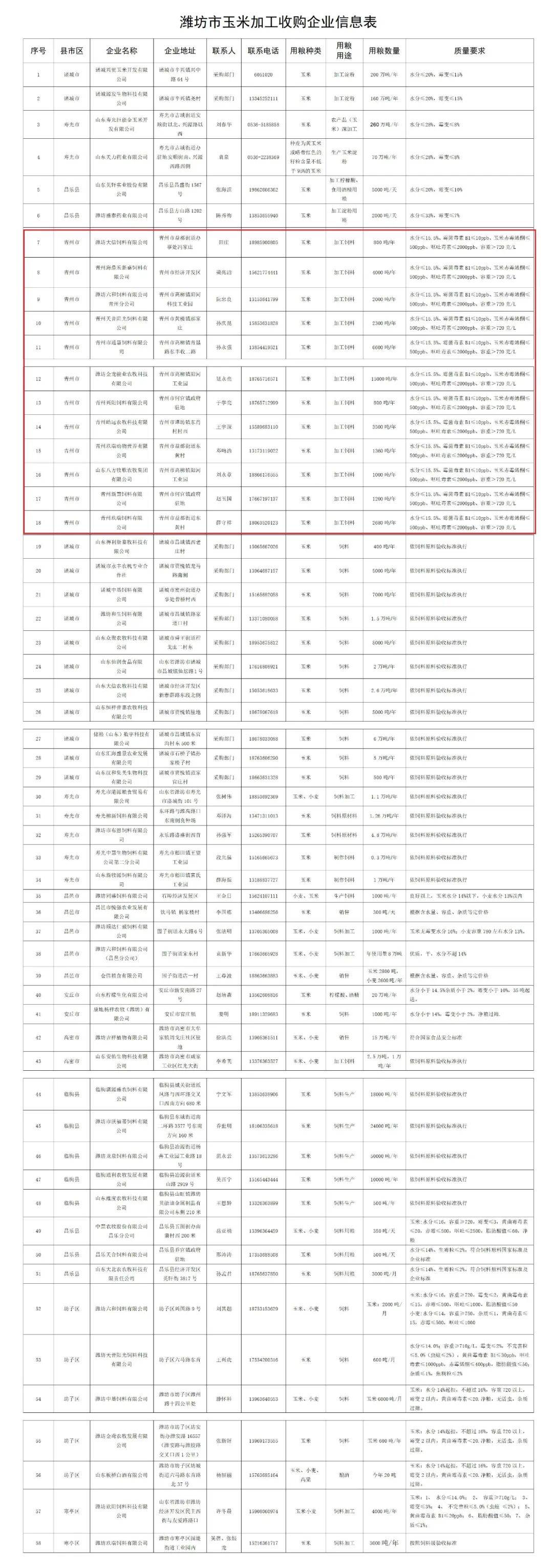
潍坊市玉米加工收购企业信息公布
Sou Hu Cai Jing· 2025-10-22 11:09
潍坊市玉米加工收购企业信息公布 | HEN LEAR / SE FEAS ME | 用福中日照明不日 | 五米 | 依饲料原料验收标准执行 | 27 | 瑞城市 | 米解题(1 | 18638033088 | 1242 | e Dele | 润杆乐 500米 | 限公司 | | | --- | --- | --- | --- | --- | --- | --- | --- | --- | --- | --- | --- | --- | | 山东汇率盛景农业发展 | 请城市有桥了该孙 | 居威市 | 保持科研科研组织体技有 | 28 | 求期责(1 | 18163606280 | 天不 | 何树 | 8 月底/4 | 有限公司 | 家校手村 | | | 山东汉和集美生物科技 | 煤炭中后铁膜设置 | 消滅市 | 北京高出1 | 18663631358 | 大米 | 何村 | 500 millish | 依饲料原料验收标准执行 | 29 | 有限公司 | 原庄村 | | | 寿光市港派织食贸易有 | 山东省建筑市寿光 | 寿光市 | 张树井 | 阿特斯王 | 1.1 万吨年 | 依饲料原料验收标准执行 | 30 ...
银河期货花生日报-20251022
Yin He Qi Huo· 2025-10-22 10:29
Group 1: Report Industry Investment Rating - No relevant content mentioned Group 2: Core Viewpoints of the Report - The supply of peanuts is increasing, but downstream demand remains weak. Peanut spot prices are expected to be relatively stable in the short term, and peanut futures will continue to fluctuate at the bottom. The new - season peanut production is expected to be the same as last year, and the planting cost has decreased. Peanut 01 will likely show a relatively strong oscillation [4][10] Group 3: Summary by Directory 1. First Part: Data - **Futures Disk**: For PK604, the closing price was 7944, down 38 (-0.48%), with a trading volume increase of 45.78% and an open - interest decrease of 15.18%. PK510 had no valid data. For PK601, the closing price was 7838, down 42 (-0.54%), with a trading volume of 124,185 (up 21.32%) and an open - interest of 186,853 (down 6.49%) [2] - **Spot and Basis**: The spot price of Rizhao peanut meal was 3250, Henan Nanyang peanut was 8600, Shandong Jining and Linyi peanuts were 8400 each. Rizhao soybean meal was 2900, peanut oil was 14580, and Rizhao first - grade soybean oil was 8440. The price of Rizhao soybean meal dropped 20 yuan/ton, and the price of Henan Nanyang peanuts dropped 200 yuan/ton, while other prices remained stable. The basis between soybean meal and peanut meal was 762 in some cases, and the basis between peanut oil and soybean oil was 6140. The import price of Sudanese peanuts was 8500, and that of Senegalese peanuts was not available [2] - **Spread**: The spread between PK01 and PK04 was - 106, down 4. Other spreads had no valid data [2] 2. Second Part: Market Analysis - Peanut prices in Henan and Northeast China were stable. The price of 308 common peanuts in Fuyu, Jilin was 4.15 yuan/jin, and in Changtu, Liaoning was 4.2 yuan/jin. The price of Baisha common peanuts in Henan was 4.2 - 4.3 yuan/jin, and in Junan, Shandong was 4.1 yuan/jin. The import price of Sudanese refined peanuts was 8600 yuan/ton, and that of Senegalese oil peanuts was 7600 yuan/ton. Some peanut oil mills started purchasing, with the mainstream transaction price at 7800 - 7900 yuan/ton, and the theoretical break - even price at 7920 yuan/ton. The prices of soybean oil and peanut oil were stable. The spot price of Rizhao soybean meal dropped 20 yuan/ton, and the unit - protein spread between peanut meal and soybean meal was high, with peanut meal expected to be weak in the short term [4][8] 3. Third Part: Trading Strategies - **Unilateral**: For 01 and 05 peanuts, which are oscillating at low levels, one can take a light - position short - term long position [11] - **Monthly Spread**: Adopt a wait - and - see approach [12] - **Options**: Sell and hold pk601 - P - 7600 [13] 4. Fourth Part: Related Attachments - The report includes six figures, namely the spot price of Shandong peanuts, peanut oil mill's crushing profit, peanut oil price, the basis between peanut spot and continuous contract, the spread between peanut 10 - 1 contracts, and the spread between peanut 1 - 4 contracts, all with data sources from Galaxy Futures and iFinD Information [15][23][26]
宁夏银川:闽宁协作电商助农创意直播带火农产品
Sou Hu Cai Jing· 2025-10-22 08:50
Core Insights - The "Follow the Min-Ning Girl to Pick Fresh Goods" creative live-streaming event successfully connected high-quality agricultural products from Ningxia with the national market, achieving both social and economic benefits [1][4] Group 1: Event Overview - The event was hosted by well-known agricultural influencer @MinNingGirl Benny, focusing on local specialties such as Eight Treasure Tea, goji berries, dairy products, and various food ingredients [3] - The live-stream attracted a peak viewership of over 2,000 people and facilitated online and offline sales exceeding 2 million yuan during the event [3] Group 2: Marketing Strategy - Unlike traditional sales methods, the live-stream included detailed product introductions and showcased the production processes, enhancing consumer understanding of the quality and appeal of Ningxia's agricultural products [3] - The host shared e-commerce sales techniques, providing valuable learning opportunities for local farmers and e-commerce practitioners [3] Group 3: E-commerce Development - The Yinchuan Municipal Bureau of Commerce has been actively promoting e-commerce to assist farmers, enhancing skills through various training programs and nurturing local influencers like @MinNingGirl Benny [3] - A comprehensive rural e-commerce service system has been established, including five county-level service centers and 163 village-level service stations, supporting online sales of agricultural products [3] Group 4: Future Plans - The Yinchuan Municipal Bureau of Commerce plans to continue its "Digital Commerce Promotes Agriculture" initiative, organizing more e-commerce assistance activities and deepening collaborations with e-commerce platforms and enterprises [4]
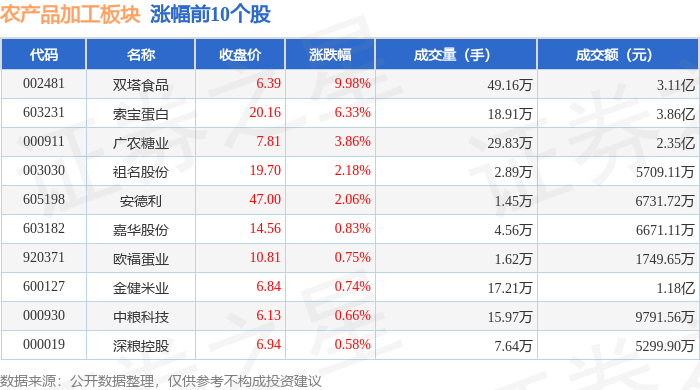
农产品加工板块10月22日涨0.02%,双塔食品领涨,主力资金净流入8326.65万元
Zheng Xing Xing Ye Ri Bao· 2025-10-22 08:19
证券之星消息,10月22日农产品加工板块较上一交易日上涨0.02%,双塔食品领涨。当日上证指数报收 于3913.76,下跌0.07%。深证成指报收于12996.61,下跌0.62%。农产品加工板块个股涨跌见下表: | 代码 | 名称 | 收盘价 | 涨跌幅 | 成交量(手) | 成交额(元) | | --- | --- | --- | --- | --- | --- | | 002481 | 双塔食品 | 6.39 | 9.98% | 49.16万 | 3.11亿 | | 603231 | 索宝蛋白 | 20.16 | 6.33% | 18.91万 | 3.86亿 | | 000911 | 广农糖业 | 7.81 | 3.86% | 29.83万 | 2.35亿 | | 003030 | 祖名股份 | 19.70 | 2.18% | 1 2.89万 | 5709.11万 | | 605198 | 安德利 | 47.00 | 2.06% | 1.45万 | 6731.72万 | | 603182 | 喜卖股份 | 14.56 | 0.83% | 4.56万 | 6671.11万 | | 920371 | 欧福蛋 ...


铜冠金源期货商品日报-20251022
Tong Guan Jin Yuan Qi Huo· 2025-10-22 02:37
1. Report Industry Investment Rating No relevant content provided. 2. Core Views of the Report - Overseas, the Russia-Ukraine peace talks have hit a snag, and European countries advocate an "immediate ceasefire" at the current front line. The US government shutdown has led to a lack of economic data, and the market is digesting the situation. Domestically, A-shares have risen, but the trading volume is still low. In the short term, the stock market is expected to be volatile and weak, while in the long term, it is cost-effective to buy on dips. The bond market has also recovered [2]. - The silver squeeze has ended, and the Sino-US economic and trade relations are showing signs of easing. The precious metal prices are entering an adjustment phase, and the adjustment slope may be steeper, especially for silver [3][4]. - The copper price has slightly declined due to the rebound of the US dollar index and the weakening of market risk aversion. The supply of copper is increasing, while the demand is mainly for rigid replenishment. The copper price is expected to remain volatile in the short term [6][7]. - The aluminum price is oscillating. The macro - sentiment is stable, and the supply - demand situation is favorable. The aluminum price is expected to maintain a high - level oscillation [8]. - The alumina price is weakly oscillating. The winter procurement by aluminum plants in the northwest is putting downward pressure on the price. The theoretical loss of northern alumina production capacity is expanding, and the price is expected to have limited further downside [9]. - The zinc market shows an external - strong and internal - weak pattern. The domestic supply is increasing, while the demand is weak. The LME has a low - inventory and strong - structure. The zinc price is expected to stabilize and oscillate narrowly in the short term [10]. - The lead price is oscillating narrowly. The supply in the domestic market is regionally tight, but the import window has opened, and the supply pressure is expected to increase gradually, causing the lead price to decline [11]. - The tin price is oscillating narrowly. The supply improvement of tin ore is limited, and the downstream procurement is cautious. The tin price is expected to maintain a high - level narrow - range oscillation in the short term [12]. - The industrial silicon price is oscillating narrowly. The supply is stable, and the demand is mixed. The social inventory has increased, and the price is expected to continue to oscillate at a low level in the short term [14][15]. - The lithium carbonate price is oscillating. The supply increase is limited, and the demand is improving marginally. The lithium price may adjust in the short term after the first upward rush is blocked [16][17]. - The nickel price is oscillating. The inventory is increasing, but the price is at the lower end of the range with cost support. The nickel price is expected to oscillate strongly in the short term [18][19]. - The price difference between soda ash and glass is expected to widen. The soda ash fundamentals are slightly better than those of glass, and both are facing inventory accumulation pressure [20]. - The steel price is under pressure. The terminal demand is weak, and the supply pressure is increasing. The steel price is expected to oscillate under pressure [21]. - The iron ore price is oscillating weakly. The port inventory has increased, and the demand is weakening. The iron ore price is expected to adjust in an oscillating manner [22][23]. - The soybean meal price is weakly oscillating. The Brazilian rainy season is expected to return in November, and the domestic supply is sufficient. The soybean meal price is expected to maintain a weak oscillation in the short term [24]. - The palm oil price is oscillating widely. The production and demand of palm oil in Malaysia are increasing slightly, and the market driving force is limited. The palm oil price is expected to oscillate widely in the short term [25][26]. 3. Summary by Relevant Catalogs 3.1 Macro - Overseas, the Russia - Ukraine peace talks are complicated. The US government shutdown has affected economic data. The market is waiting for the CPI data on the 24th and the APEC Sino - US summit at the end of the month. Domestically, A - shares have risen, the bond market has recovered, and the short - term stock market is expected to be volatile and weak [2]. 3.2 Precious Metals - The silver squeeze has ended, and the Sino - US economic and trade relations are easing. The precious metal prices have fallen sharply, and the adjustment slope may be steeper, especially for silver [3][4]. 3.3 Copper - The copper price has slightly declined. The market risk aversion has weakened, and the supply is increasing. The copper price is expected to remain volatile in the short term [6][7]. 3.4 Aluminum - The aluminum price is oscillating. The macro - sentiment is stable, the supply - demand situation is favorable, and the aluminum price is expected to maintain a high - level oscillation [8]. 3.5 Alumina - The alumina price is weakly oscillating. The winter procurement by aluminum plants in the northwest is putting downward pressure on the price. The theoretical loss of northern alumina production capacity is expanding, and the price is expected to have limited further downside [9]. 3.6 Zinc - The zinc market shows an external - strong and internal - weak pattern. The domestic supply is increasing, while the demand is weak. The LME has a low - inventory and strong - structure. The zinc price is expected to stabilize and oscillate narrowly in the short term [10]. 3.7 Lead - The lead price is oscillating narrowly. The supply in the domestic market is regionally tight, but the import window has opened, and the supply pressure is expected to increase gradually, causing the lead price to decline [11]. 3.8 Tin - The tin price is oscillating narrowly. The supply improvement of tin ore is limited, and the downstream procurement is cautious. The tin price is expected to maintain a high - level narrow - range oscillation in the short term [12]. 3.9 Industrial Silicon - The industrial silicon price is oscillating narrowly. The supply is stable, and the demand is mixed. The social inventory has increased, and the price is expected to continue to oscillate at a low level in the short term [14][15]. 3.10 Lithium Carbonate - The lithium carbonate price is oscillating. The supply increase is limited, and the demand is improving marginally. The lithium price may adjust in the short term after the first upward rush is blocked [16][17]. 3.11 Nickel - The nickel price is oscillating. The inventory is increasing, but the price is at the lower end of the range with cost support. The nickel price is expected to oscillate strongly in the short term [18][19]. 3.12 Soda Ash and Glass - The price difference between soda ash and glass is expected to widen. The soda ash fundamentals are slightly better than those of glass, and both are facing inventory accumulation pressure [20]. 3.13 Steel - The steel price is under pressure. The terminal demand is weak, and the supply pressure is increasing. The steel price is expected to oscillate under pressure [21]. 3.14 Iron Ore - The iron ore price is oscillating weakly. The port inventory has increased, and the demand is weakening. The iron ore price is expected to adjust in an oscillating manner [22][23]. 3.15 Soybean and Rapeseed Meal - The soybean meal price is weakly oscillating. The Brazilian rainy season is expected to return in November, and the domestic supply is sufficient. The soybean meal price is expected to maintain a weak oscillation in the short term [24]. 3.16 Palm Oil - The palm oil price is oscillating widely. The production and demand of palm oil in Malaysia are increasing slightly, and the market driving force is limited. The palm oil price is expected to oscillate widely in the short term [25][26].
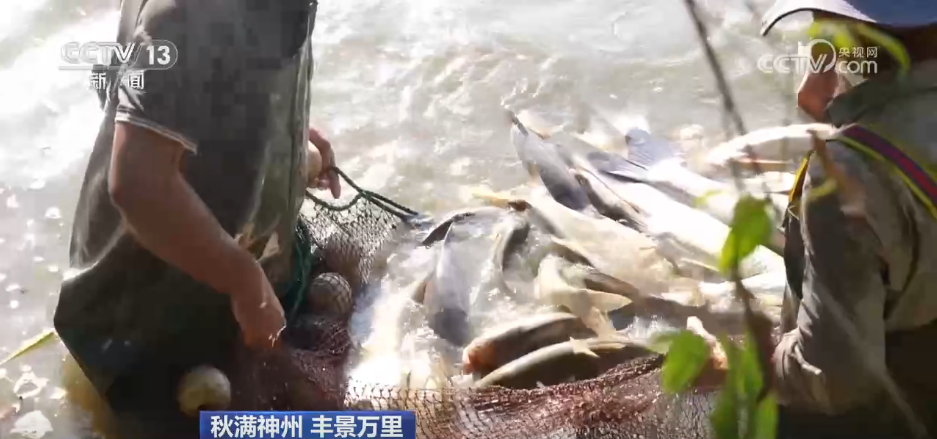
桑基鱼塘、青春IP 解码千年农业文化遗产破“圈”之路
Yang Shi Wang· 2025-10-22 02:25
Core Viewpoint - China's agricultural cultural heritage, with 25 globally recognized sites and 188 nationally significant sites, plays a crucial role in preserving ancient farming wisdom while injecting new vitality into rural revitalization [1][14]. Group 1: Agricultural Cultural Heritage - The "Sangji Fish Pond" system in Huzhou, Zhejiang, exemplifies a sustainable ecological model that has been preserved for over 2,500 years, integrating mulberry cultivation, silkworm breeding, and fish farming [4][11]. - The heritage site has become a modern success story, generating significant economic benefits, with annual fish production exceeding 12,000 pounds and total income around 50,000 yuan from a 5-acre pond [4][8]. Group 2: Economic Impact and Community Engagement - The village of Ogan has developed over 40 educational programs related to fish culture and sericulture, attracting more than 100,000 visitors and generating over 5 million yuan in additional income for local residents [6][8]. - The tourism revenue for Ogan village has surpassed 140 million yuan this year, with total annual output value exceeding 200 million yuan, benefiting over 1,000 local households [8][14]. Group 3: Innovation and Modernization - Young innovators are utilizing technology to enhance the visibility and sustainability of agricultural heritage, including interactive tourism experiences and creative cultural products [9][13]. - The "Yiyuan Tea House Youth Version" project has received international recognition, showcasing innovative educational approaches to promote agricultural heritage [13]. Group 4: Broader Trends in Agricultural Heritage - Other regions in China, such as Longma Village in Yunnan and various locations in Guizhou, are also revitalizing their agricultural heritage through community-driven tourism initiatives, addressing the challenge of maintaining cultural significance while achieving economic viability [14][15]. - The integration of agriculture, tourism, and cultural experiences is transforming static agricultural heritage into dynamic economic assets, contributing to rural revitalization across the country [17].