水果种植与销售

Search documents
榴莲老饕如何“速通”马来西亚榴莲季
Xin Hua She· 2025-10-28 05:44
Core Insights - Malaysia's durian harvest season in October sees popular varieties like "Musang King," "Black Thorn," and "Sultan King" becoming available, with enhanced logistics and technology facilitating faster delivery to China [1][2] Group 1: Market Dynamics - Over 70% of Malaysia's durian exports are directed to China, which is one of the largest durian consumption markets globally [2] - The signing of a plant quarantine agreement in 2024 will allow fresh durians to be exported to China, further boosting Malaysia's durian industry [2] - The introduction of "air cold chain + cross-border customs clearance" allows for rapid delivery to major Chinese cities, with the fastest delivery time being just 36 hours [2] Group 2: Technological Advancements - A new non-destructive quality inspection system called "Durian Detective" enables three-dimensional quality checks, ensuring traceability from farm to consumer [5] - The use of advanced scanning technology allows for precise assessment of durian quality, including internal structure and potential defects [4][5] - The technology is expected to expand beyond durians to other tropical fruits, enhancing quality management across various products [5] Group 3: Travel and Accessibility - The number of flights from China to Malaysia exceeds 500 weekly, with routes extending to various cities, making travel for durian enthusiasts more accessible [3] - Visa exemption policies have increased the flow of travelers between the two countries, facilitating easier access to durian tasting experiences [3] - New flight routes are being established to further connect Chinese cities with Malaysia, enhancing opportunities for consumers to experience fresh durians [3]
长江期货鲜果周报:震荡偏强-20251024
Chang Jiang Qi Huo· 2025-10-24 10:23
长江期货鲜果周报 长江期货股份有限公司交易咨询业务资格:鄂证监期货字{2014}1号 2025-10-24 【长期研究|棉纺团队】 黄尚海 执业编号:F0270997 投资咨询编号:Z0002826 震荡偏强 目 录 01 苹果:震荡偏强 02 红枣:震荡偏强 01 苹果:震荡偏强 01 周度观点 1 整体观点:本周新季晚富士上货量继续增加,下树进度及入库量较去年同期有所推迟。西部晚富士交易陆续进入中后 期,客商对好货收购积极,一般货源收购相对谨慎,目前西部入库工作陆续开展。山东产区上货量仍显有限,小单车 要货增加,客商收购好货难以足量,入库工作零星开始。销区交易氛围仍显清淡,周内走货不快,需求端承压。新果 上市,价格明显高于去年,价格有望维持强势。(数据来源:上海钢联) 2 风险因素:市场消费情况、宏观政策因素 02 行情回顾 Ø 本周苹果主力震荡调整运行。 Ø 苹果基差23元,较上周+92。 数据来源:博易大师、IFIND、上海钢联、中果网、长江期货 03 苹果批发市场价格走势 04 苹果主产区情况 数据来源:IFIND、上海钢联、中果网、长江期货 Ø 山东产区:目前市场晚富士成交价格来看,85#一二级价 ...
苹果市场周报-20251024
Rui Da Qi Huo· 2025-10-24 09:26
Report Overview - Report Title: Apple Market Weekly Report [2] - Report Date: October 24, 2025 [2] - Researcher: Wang Cuibing [3] 1. Investment Rating - No investment rating for the industry is provided in the report. 2. Core Viewpoints - This week, the price of the Apple 2601 futures contract rose, with a weekly increase of 2.61%. The new-season late-maturing Fuji apples in the western region have seen an increase in the volume of goods on the market, and the prices show a significant polarization. Due to the high enthusiasm of merchants for purchasing high-quality goods and the general enthusiasm for ordering ordinary goods, the prices of high-quality goods in the producing areas are running strongly. The Shandong production area is still mainly in the coloring stage affected by the weather, and most merchants have transferred to the western region for purchases. In the sales area market, the wholesale trading atmosphere of apples is still general, the replenishment efforts of second- and third-level wholesalers are not strong, and the sales of high-quality goods are not fast. Additionally, the listing volume of new-season late-maturing Fuji apples in the producing areas has increased this year, and the progress of picking and warehousing has been postponed compared to the same period last year. The trading of late Fuji in the western region has gradually entered the middle and late stages. Merchants are active in purchasing high-quality goods and relatively cautious in purchasing ordinary goods. The volume of new apples on the market in the Shandong production area is still limited, the demand for small trucks has increased, and it is difficult for merchants to purchase enough high-quality goods, and the warehousing work is relatively sporadic. In the sales area market, the trading atmosphere is still light, the sales are still not fast, and the demand side is under pressure. However, considering the current situation where high-quality new fruits are hard to find and high-quality fruits command high prices, it is expected that the short-term apple futures price will maintain a volatile and upward trend. [4] - It is recommended to mainly adopt the idea of buying long positions on dips for the Apple 2601 contract in the short term. Future trading prompts include the price of late-maturing Fuji and consumption. [4] 3. Summary by Directory 3.1 Weekly Highlights Summary - This week, the price of the Apple 2601 futures contract rose, with a weekly increase of 2.61%. The new-season late-maturing Fuji apples in the western region have seen an increase in the volume of goods on the market, and the prices show a significant polarization. The Shandong production area is affected by the weather, and most merchants have transferred to the western region for purchases. The trading atmosphere in the sales area market is still general, and the demand side is under pressure. It is expected that the short-term apple futures price will maintain a volatile and upward trend. It is recommended to mainly adopt the idea of buying long positions on dips for the Apple 2601 contract in the short term. Future trading prompts include the price of late-maturing Fuji and consumption. [4] 3.2 Futures and Spot Markets Futures Market - This week, the price of the Apple 2601 futures contract rose, with a weekly increase of 2.61%. As of the end of the week, the latest price was 8850, with a daily increase of 33 or 0.37%. The total trading volume was 96,625 lots, and the open interest was 130,794 lots. The net position of the top 20 futures holders was 7,096 lots, and the number of futures warehouse receipts was 0. [7][13] Spot Market - As of October 24, 2025, the mainstream price of 80 first- and second-grade fruit farmer's goods of bagged red Fuji in Qixia, Shandong was 3.2 yuan per catty; the price of bagged 75 and above Fuji apples in Yiyuan, Shandong was 2.3 yuan per catty. [16] 3.3 Industry Situation and Options Supply Side - In the 2025/26 production season, the new fruits have not been warehoused yet, and the data release has been suspended. [23] Demand Side - As of October 23, the average daily number of early-morning arriving trucks at the main apple wholesale markets in Guangdong has decreased. The profit of 80 first- and second-grade apple storage merchants has been suspended (replaced by 0), waiting for the new fruits to be picked. As of October 17, 2025, the wholesale price of all varieties of apples was 9.52 yuan per kilogram, a week-on-week decrease of 0.10 yuan per kilogram; the wholesale price of Fuji apples was 9.38 yuan per kilogram, a week-on-week increase of 0.04 yuan per kilogram. The weekly average wholesale price of 5 kinds of fruits (including Fuji apples, bananas, grapes, pears, and watermelons) was 7.05 yuan per kilogram, a week-on-week decrease of 0.01 yuan per kilogram. According to customs data, in August 2025, China's fresh apple exports totaled approximately 68,400 tons, with an export value of 69,739,352 US dollars and an average export price of 1,019 US dollars per ton. The export volume increased by 27.61% month-on-month compared to July and decreased by 17.61% year-on-year compared to August 2024. From January to August 2025, China's total fresh apple exports were 530,000 tons, a cumulative year-on-year decrease of 7.60%. [27][32][36][39] Options Market - The report presents a chart of the implied volatility of at-the-money options for apples this week, but no specific data is provided. [40] 3.4 Futures - Stock Correlation - The report presents a chart of the price-to-earnings ratio of Honghui Fruit & Vegetable Co., Ltd., but no specific analysis is provided. [42]
阳光食育,营养“佳”倍——佳沛中国携手儿基会与复旦儿科,共同守护儿童健康成长
Zhong Guo Shi Pin Wang· 2025-10-22 05:56
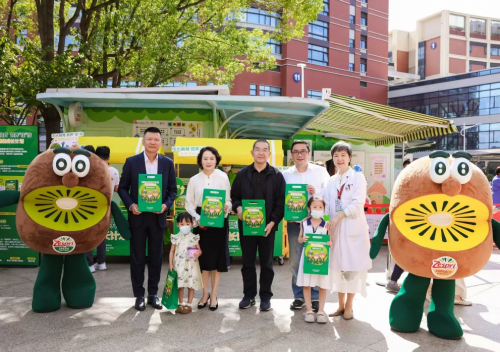
Group 1 - The event "Sunshine Nutrition: Nutrition 'Jia' Double Health Growth Plan" was held at Fudan University Children's Hospital, focusing on children's health and nutrition in response to national initiatives [1][2] - The Shanghai Children's Foundation, in collaboration with Fudan Pediatric Hospital and supported by Zespri China, launched the "Children's Nutrition Healthy Recipe for 3 Days" to provide practical dietary guidance for families [2][3][4] - The recipe is based on evidence-based medicine and the "2022 Dietary Guidelines for Chinese Residents," offering daily meal suggestions to promote balanced diets and enhance children's immunity [3][4][6] Group 2 - Zespri China donated nutrition care packages containing the recipe, interactive toys, and fresh kiwis to families visiting the hospital, emphasizing the importance of balanced diets [6][8] - The initiative aims to raise awareness of nutrition among families and support children's health education, aligning with national health strategies [9][11] - Zespri's commitment to sustainable nutrition and health for the next generation is reflected in its collaboration with authoritative institutions to promote high-nutrient-density fruits [12][13]

延安苹果产业尝到期货“甜头”
Qi Huo Ri Bao Wang· 2025-10-21 00:43
Core Insights - The apple industry in Yan'an has become a crucial pillar of the local agricultural economy, but it faces challenges such as weakened seasonal patterns and competition from substitute fruits [1] - The maturation of the apple futures market is providing new opportunities for risk management and high-quality development in the apple industry [1] Group 1: Challenges Faced by the Apple Industry - Apple procurement merchants in Yan'an are experiencing uncertainty due to fluctuating market conditions, leading to concerns about over-purchasing or under-purchasing apples [2] - The increase in apple production in 2023 compared to 2022 has not alleviated the market's unpredictability, causing anxiety among merchants [2] Group 2: Adoption of Futures and Options - A merchant successfully utilized futures contracts to hedge against price fluctuations, pre-selling 26,000 jin of apples at an average price of 9,308 yuan/ton, which allowed for secure procurement [3] - The merchant achieved a profit of 53,000 yuan from the futures market, despite a decline in the wholesale price of apples by 3.38% from mid-October to December [3] Group 3: Innovative Risk Management Strategies - The merchant later sought advice on options trading to mitigate potential losses from price drops after the Spring Festival, successfully using options to earn premiums [4] - The understanding of risk management through futures and options has led to a significant shift in the merchant's approach to business operations [4] Group 4: Industry Development and Integration - The general manager of Chengxin Agricultural Development Co. emphasized the importance of having a reliable pricing reference in the spot market to effectively engage in futures hedging [5] - The "e+Gold" apple industry development system promotes standardized production and order-based procurement, enhancing stability and reliability in the apple supply chain [5] Group 5: High-Quality Development through Financial Integration - The integration of futures and options tools, along with innovative practices like the "e+Gold" system, is driving deep development in the Yan'an apple industry [6] - The futures market's price discovery function aids stakeholders in making informed production and operational decisions, while its hedging capabilities mitigate price volatility risks [7] - The apple industry is exploring new business models, such as "equity + dividends" and "cooperatives + farmers," to promote comprehensive development and integration of various operational aspects [7]
苹果红满枝 果农笑开颜——陕西白水县苹果丰收一线见闻
Xin Hua She· 2025-10-19 23:55
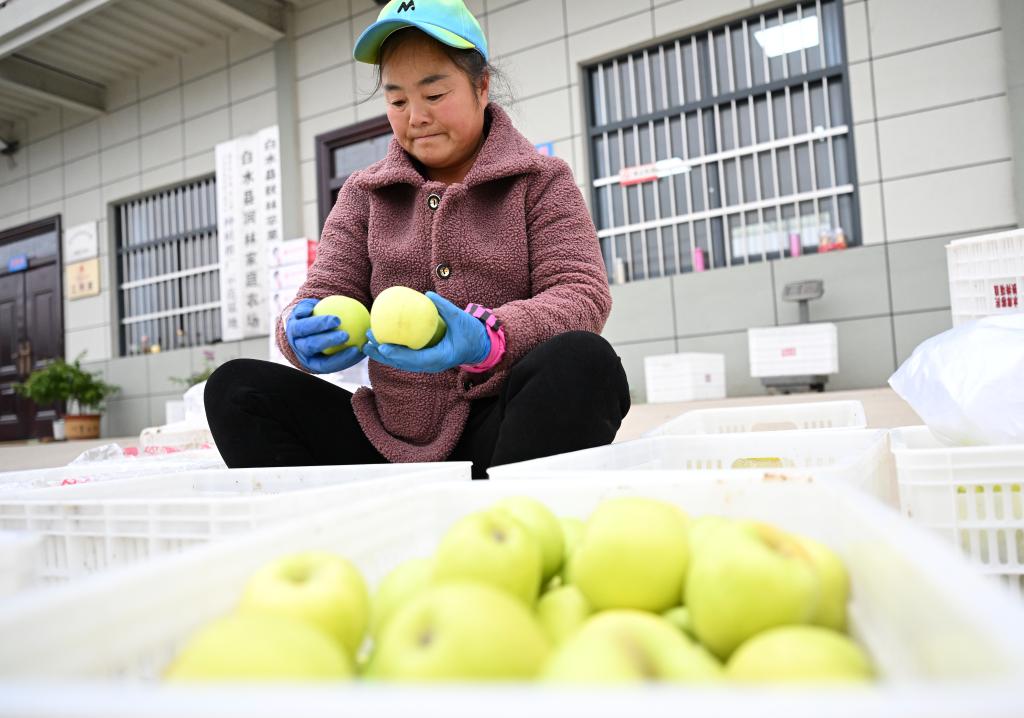
Core Insights - The apple harvest season in Bai Shui County, Shaanxi Province, is thriving, with farmers actively engaged in picking apples, particularly the "Rui Xue" variety, which is known for its sweet taste and vibrant color [1][3] - Bai Shui County has established itself as a significant apple trading hub in Northwest China, with over 80% of the local population involved in the apple industry, and an average annual export of 150,000 tons of apples [4] Industry Developments - Bai Shui County has developed a strong apple cultivation base, with over 100,000 acres planted with the "San Rui" apple varieties, which include "Rui Yang," "Rui Xue," and "Rui Xiang Hong," recognized for their thin skin and juicy flesh [3] - The region has implemented modern agricultural practices, including standardized demonstration gardens and subsidies for advanced cultivation techniques, enhancing the quality and yield of apple production [3] Sales and Marketing Strategies - The apple industry in Bai Shui is leveraging e-commerce and live streaming to boost sales, with reports of selling over 20,000 boxes of apples in just 20 minutes during a live broadcast [3][4] - Local businesses are actively engaging in both online and offline sales strategies, with daily apple storage reaching approximately 600,000 pounds, and exports to 14 countries including Thailand and Malaysia [3] Economic Impact - The apple industry has become a vital source of income for local farmers, with potential earnings of 50,000 to 60,000 yuan per acre from well-managed orchards [4] - The influx of young entrepreneurs returning to their hometowns to engage in apple e-commerce is contributing to the local economy, with daily sales exceeding 10,000 yuan [4]
葡萄柚成新晋爆款,福建水果如何在拼多多炼成区域“金招牌”?
Nan Fang Du Shi Bao· 2025-10-16 03:08
Core Insights - The article highlights the success of young farmers in Fujian, particularly Zhang Jin, who transitioned from a sports education background to selling local agricultural products on Pinduoduo, leveraging the platform's support to boost sales and help local farmers [1][2][4]. Group 1: Market Dynamics - Fujian is a major fruit-producing province in southern China, with products like honey pomelo and grapefruit becoming significant contributors to the local economy, exemplified by the honey pomelo industry reaching a valuation of 100 billion yuan [2]. - The article notes that agricultural products are high-frequency repurchase items, with lower competitive pressure compared to other categories like pets and electronics, making them attractive for young entrepreneurs [3]. Group 2: Sales Performance - Zhang Jin's sales of honey pomelo reached over 20 million yuan in just two months before the Mid-Autumn Festival, doubling from the previous year's total sales of over 40 million yuan [4]. - The introduction of high-end products like the "tail degree pomelo" and "grapefruit" has been successful, with sales strategies focusing on gift-giving scenarios [4][6]. Group 3: Platform Support - Pinduoduo's "100 billion support" plan has significantly aided small and medium-sized businesses, with increased consumer engagement through substantial coupon offerings, leading to rapid sales growth [6]. - The platform's report indicates a 47% year-on-year increase in agricultural product sales, with seasonal fruit sales rising by 51% [7].

苹果期货月报:9月呈现震荡偏强波动-20251015
Guo Jin Qi Huo· 2025-10-15 09:02
Group 1: Report Industry Investment Rating - No relevant information provided Group 2: Core Viewpoints - In September 2025, the apple futures market showed a volatile and slightly stronger trend, with the monthly operating center of the main contract ap2601 shifting slightly upward. The factors influencing the apple market in September, including spot price fluctuations, weather changes in production areas, and the relative impact of other fruits, changed smoothly without unexpected changes, resulting in a relatively stable impact on prices. The market is optimistic about the high opening price of new - season late Fuji apples [3]. Group 3: Summary by Directory 1. Futures Market 1.1 Contract Price Analysis - The main apple futures contract ap2601 showed a volatile and slightly stronger trend in September, with its monthly operating center moving slightly upward. The three factors affecting the apple market in September changed smoothly and had a relatively gentle impact on prices [3]. 1.2 Variety Market Analysis - The total open interest of apple futures was 111,461 lots, the trading volume was 1,883,035 lots, and the turnover was 156.5155 billion yuan. The specific contract data is shown in the apple futures monthly market table [4][5]. 2. Spot Market 2.1 Basis Data - In September, the apple futures basis was negative overall, meaning the spot price was lower than the futures price [7]. 2.2 Registered Warehouse Receipts - The number of registered warehouse receipts was 0 [8]. 3. Influencing Factors 3.1 Influencing Factor Analysis - Substitutes such as grapes and pomegranates had a partial impact. The old - stock Fuji apples in inventory were not fully cleared, and the remaining goods did not move quickly. The market sales were uneven. Some merchants stocked up as needed approaching the National Day and Mid - Autumn Festival. The cost of high - quality new fruits remained high. The export volume increased in August with the new - season fruits hitting the market. The prices of mid - and late - maturing varieties in the production areas were relatively stable, and the market was optimistic about the high opening price of new - season late Fuji [8][9][10]. 3.2 Technical Analysis - In September, the technical aspect of apple futures showed a volatile and slightly stronger trend. The short - term moving averages provided some support for the price, and the price fluctuated within a relatively stable range. The moving averages formed a long - position combination, and the long - position power on the disk was slightly dominant [11]. 4. Market Outlook - On the supply side, the flowering period in the western production areas was affected by adverse weather, resulting in small single fruits, and the high - temperature and drought conditions hindered fruit coloring, with a预计 low excellent - fruit rate. The remaining amount of apples in cold storage nationwide is at the lowest level in the past five years. The new - season apples in the western region are generally uneven in size, and the subsequent weather after bag removal needs attention. On the demand side, the market was slightly boosted by the stocking for the Mid - Autumn Festival and National Day, but the overall effect was limited. The market is still affected by the sales of seasonal fruits, and the arrival volume of vehicles remains low. In the short term, as the new - season apples are about to be launched in large quantities, the price of the ap2601 contract on the disk may face upward pressure and will likely show a high - level volatile trend [13].
凭什么中国人吃水果可以这么便宜?
虎嗅APP· 2025-10-12 09:15
Core Viewpoint - The article discusses the evolution of China's fruit industry, highlighting the shift from scarcity to abundance, and the impact of technological advancements and improved agricultural practices on fruit prices and availability [5][16]. Group 1: Industry Evolution - In the past, fruits were considered luxury items in China, with limited availability and high prices due to low production and high wastage rates [17][27]. - The planting area for Sunshine Rose grapes increased from less than 150,000 acres in 2015 to approximately 1.5 million acres now, while blueberry cultivation reached 1.4 million acres last year [12][13]. - Technological advancements, such as AI and automated nutrient management in large-scale farms, have significantly improved production efficiency [15]. Group 2: Price Dynamics - The price of blueberries has dropped from 24.9 yuan for 125 grams to 5 yuan per box during promotional events, indicating a significant reduction in consumer costs [8][9]. - The article emphasizes that the reduction in fruit prices is akin to a technological revolution, driven by large-scale production and the cultivation of superior varieties [28][30]. Group 3: Branding and Market Position - The lack of international brands in the Chinese fruit market limits the ability to command premium prices, as seen in the comparison between New Zealand's Zespri and China's Qifeng Fruit Industry [79][81]. - The article suggests that with ongoing improvements in standardization and branding, China is on the path to developing its own premium fruit brands [82]. Group 4: Cold Chain and Distribution - The development of cold chain logistics has enabled the export of fruits like lychee to international markets, with prices reaching up to 500 yuan per kilogram in Europe [66][67]. - Innovations in cold chain technology, such as mobile cooling units and space electric field preservation, have extended the shelf life of fruits significantly [69][70]. Group 5: Social Impact - The rise of fruit e-commerce has transformed labor dynamics, providing stable employment opportunities for individuals previously engaged in low-wage, unstable jobs [90][92]. - The article highlights that the affordability of fruits not only enhances consumer satisfaction but also contributes to broader social welfare and economic stability [94][96].
凭什么中国人吃水果可以这么便宜?
36氪· 2025-10-12 09:06
Core Viewpoint - The article discusses the evolution of China's fruit industry, highlighting the significant advancements in production, technology, and market accessibility that have transformed fruit consumption from a luxury to a more affordable staple for the general population [5][12]. Group 1: Historical Context - In the 1950s and 1960s, fruit was considered a luxury item in China, with limited availability and high prices, making it unaffordable for many [14][27]. - The lack of proper agricultural practices and market information led to high wastage and low profitability for fruit farmers, resulting in minimal fruit cultivation [20][25]. Group 2: Current Market Dynamics - The planting area for Sunshine Rose grapes has increased from less than 150,000 acres in 2015 to approximately 1.5 million acres today, while blueberry cultivation reached 1.4 million acres last year [10]. - Technological advancements, such as AI-managed nutrient solutions and large-scale planting bases, have significantly improved fruit production efficiency [10][12]. Group 3: Price Reduction and Accessibility - The article emphasizes that the reduction in fruit prices is akin to a technological revolution, driven by large-scale production and the development of superior fruit varieties [28][30]. - The availability of high-quality fruits at lower prices has made them accessible to a broader audience, with examples like blueberries dropping from 24.9 yuan per box to 5 yuan during promotions [7][10]. Group 4: Branding and Market Positioning - The lack of international branding for Chinese fruits limits their pricing power, as seen in the comparison between New Zealand's Zespri and China's Qifeng Fruit Industry [78]. - The article suggests that with ongoing improvements in standardization and branding, China could develop its own premium fruit brands in the future [80]. Group 5: E-commerce and Labor Dynamics - The rise of fruit e-commerce has eliminated middlemen, allowing for direct sales from producers to consumers, which has also led to price reductions [81]. - The shift towards e-commerce has restructured labor needs in the fruit industry, creating new job opportunities in logistics and customer service for previously underemployed individuals [82][84].