液冷

Search documents
国内政策细则出台助推太空算力发展,再提能源强国指引核聚
GUOTAI HAITONG SECURITIES· 2025-12-16 13:49
Investment Rating - The report assigns an "Accumulate" rating for the industry [2]. Core Insights - Recent domestic policy details have been released to promote the development of space computing capabilities, with a focus on satellite data security and efficient utilization [2][3]. - The Central Economic Work Conference has reiterated the goal of building an "Energy Power," providing strategic guidance for the development of nuclear power and controlled nuclear fusion [2][3]. - The semiconductor equipment sales have shown steady growth, with a reported 11% year-on-year increase in global semiconductor equipment shipments in Q3 2025 [2][3]. Summary by Sections Investment Highlights - The mechanical equipment index increased by 1.80% from December 8 to December 12, outperforming the CSI 300 index, which decreased by 0.08% [6]. - The report recommends several companies across different sectors, including humanoid robots, engineering machinery, and liquid cooling systems [2][3]. Policy Developments - The National Space Administration has issued a plan to promote high-quality and safe development in commercial aerospace from 2025 to 2027, emphasizing the importance of satellite data security and application [2][3]. - The "Energy Power" strategy aims to accelerate the construction of a new energy system and expand the application of green electricity, providing a clear roadmap for nuclear energy development [2][3]. Semiconductor Equipment Market - The global semiconductor equipment shipment value reached $33.66 billion in Q3 2025, marking an 11% increase year-on-year and a 2% increase quarter-on-quarter [2][3]. - China remains the largest market for semiconductor equipment, with a shipment value of $14.56 billion in Q3 2025, reflecting a 13% year-on-year growth [2][3]. Industry Performance - The mechanical industry index has shown a year-to-date increase of 39.36%, significantly outperforming the CSI 300 index, which has increased by 19.91% [9].
2026年机器人投资策略
2025-12-16 03:26
Summary of Key Points from the Conference Call Industry Overview - The robot industry is entering a peak period with the upcoming launch of Tesla's V3 robot and the listing of domestic companies like Yushuzhiyuan, which will drive valuation reconstruction opportunities in the supply chain [1][2] - The liquid cooling sector is benefiting from increased demand in data centers, with companies like Minshi, Feilong, and Yinlun transitioning from automotive to liquid cooling applications, further driving business growth [1][4] Core Insights and Arguments - Tesla's robot hardware is gradually being finalized, which will lead to increased orders for core component suppliers such as Top, Sanhua, Hengli Hydraulic, Junsheng Electronics, Shuanghuan, and Aikedi, enhancing their market positions [1][5] - The liquid cooling market in China is projected to reach approximately 16 billion yuan in 2024, with expectations to grow to a scale of 100 billion yuan [3][17] - Key catalysts for the robot industry in 2026 include Tesla's robot launch, brain upgrades, and the listing of domestic companies, which will stimulate upward development in the sector [6][8] Company-Specific Developments - Companies like Top, Sanhua, Hengli Hydraulic, and Junsheng Electronics are expected to gain more orders in critical areas such as actuator assemblies, head modules, and dexterous hands [3][5] - New Yuan Zhuomei has received significant orders from companies like Xiaopeng, Xiaomi, and Jike, with profits expected to double, reaching over 150 million yuan in 2026 [3][23] - Xiaopeng is diversifying into multiple application areas, including robots and low-altitude aircraft, which enhances its valuation potential [21] Emerging Trends and Future Outlook - The domestic robot industry is in a rapid breakthrough phase, with companies like Yushuzhiyuan, Ubtech, and Xiaopeng showing strong performance in production and profits [8] - The development of "brain" technology in robotics is being driven by advancements in AI and large models, with Tesla leading in efficient data processing and execution [14][16] - Companies like Junsheng, Shuanghuan, and Aikedi are expected to achieve significant breakthroughs in the robot sector in 2026, potentially enhancing their overall valuations [22] Additional Important Insights - The flexibility and valuation of component companies can be assessed based on global market scales, similar to investment opportunities in the new energy vehicle sector [7] - The liquid cooling technology is rapidly evolving due to AI computing demands, with significant growth expected in the market for cooling solutions [17] - The hardware development in the robot sector is focusing on dexterous hand hardware convergence and the differentiation brought by "brain" technology, which will help companies achieve higher valuations [15][16]


谷歌本周审厂?液冷放量元年在即—2026年行业逻辑梳理及出海展望
傅里叶的猫· 2025-12-15 13:16
Core Viewpoint - The liquid cooling industry is expected to experience rapid demand growth starting in 2026, while supply will lag behind, creating a highly favorable market environment for early movers in the sector [17]. Demand Side - As the power consumption of AI computing cards and cabinets increases, traditional air cooling solutions become inadequate, necessitating the adoption of liquid cooling solutions for effective heat dissipation. Specifically, cabinets with power consumption exceeding 35-40KW cannot utilize air cooling [4]. - North America faces severe electricity shortages, and liquid cooling can significantly reduce Power Usage Effectiveness (PUE), thereby saving energy costs and alleviating delays in data center projects caused by power shortages. Liquid cooling solutions can achieve a PUE of less than 1.2 [4]. - Many data centers in North America are located near economic centers or residential areas, and liquid cooling can significantly reduce noise levels compared to air cooling, accelerating project implementation and reducing financial costs [6]. Supply Side - The supply landscape for liquid cooling in North America is currently dominated by American and Taiwanese manufacturers, with limited participation from mainland Chinese firms. The primary technology used is cold plate liquid cooling, which accounts for over 98% of the market [11]. - The verification process for liquid cooling products is lengthy and complex, creating high barriers to entry for new suppliers. This process can take anywhere from six months to two years, making it challenging for many manufacturers to enter the market [11]. Company-Specific Insights - NVIDIA is projected to ship 100,000 cabinets of the GB series (primarily GB300) by 2026, with a liquid cooling value per cabinet estimated at $90,000 to $100,000, leading to a total liquid cooling value of approximately $10 billion [7]. - Google is expected to ship 2.2 to 2.3 million TPU V7 and above chips by 2026, translating to a need for around 35,000 cabinets with liquid cooling solutions, with a total liquid cooling value estimated at $2.6 billion [9]. - Meta anticipates shipping 1 million MTIA V2 chips, requiring about 14,000 cabinets, with a projected liquid cooling value of approximately $1.05 billion [10]. - Amazon's AWS Trainium3 is expected to ship 1.2 million chips, corresponding to around 16,000 cabinets, with an estimated liquid cooling value of $1.25 billion [10]. Market Opportunities for Mainland Chinese Manufacturers - North American CSP technology companies are increasingly looking to mainland Chinese liquid cooling manufacturers to ensure supply chain security, as existing production capacities in North America and Taiwan may not meet the surging demand by 2026 [13]. - Mainland Chinese manufacturers can offer liquid cooling products at a lower cost compared to their foreign counterparts, potentially enhancing project profitability for data centers [13]. - Some leading mainland Chinese manufacturers possess competitive technological advantages in liquid cooling products, which can improve the efficiency of downstream data center products [13]. Future Outlook - The liquid cooling industry is expected to see a significant increase in demand starting in 2026, with early adopters benefiting from the first wave of industry growth. The process of engaging with overseas manufacturers, obtaining samples, and securing initial orders will be crucial for companies looking to capitalize on this trend [17].





机械团队26年年度策略:重点推荐装备出海+AI设备高景气机会
2025-12-15 01:55
Summary of Key Points from Conference Call Records Industry Overview - The engineering machinery industry is characterized by high cost-performance, with profit growth relying on overseas markets while the domestic market is experiencing a reversal of difficulties [1][7] - The forklift market has significant potential, driven by interest rate cuts in Europe and the US, and the maturity of unmanned forklift technology [1][13] - The export chain benefits from US interest rate cuts and the expected recovery of manufacturing in Europe and the US [1][6] Core Companies and Investment Recommendations - **Sany Heavy Industry** and **XCMG** are recommended for their growth potential, with valuations at 16x and just over 10x respectively, and expected growth rates of 30% and 20% [1][7] - **Nuwei Co.** is highlighted for its high cost-performance, rapid order growth, and potential in water and power valve sectors, with a projected profit growth of 40% [1][15] - **Jereh** is noted for its high valuation due to fast order fulfillment in gas turbine business, with a potential market cap between 80 billion and 120 billion [1][14] - In the semiconductor equipment sector, **North Huachuang**, **Zhongwei**, **Weida**, and **Maiwei** are recommended based on expected storage expansion and increased domestic production rates [1][16] Market Trends and Performance - The PCB and lithium battery sectors performed well in 2025, with many stocks achieving multiple-fold increases [1][4] - The engineering machinery market is improving, with notable growth in small excavators driven by specific regional demands [1][10][9] - The export of engineering machinery accounts for 50% of total sales, with significant growth in large excavators, particularly in Africa and the Middle East [1][11] Future Development Trends - The engineering machinery industry is expected to see a shift towards electric machinery, particularly in mining equipment, driven by ESG requirements [1][12] - The forklift market is poised for growth due to the high cost of labor in Europe and the US, with unmanned forklifts expected to gain traction [1][13] - The photovoltaic equipment sector is anticipated to benefit from new technologies and capital expenditure opportunities, particularly for companies like **Maiwei** and **Aotewi** [1][17] Specific Investment Opportunities - The PCB sector presents historical opportunities, especially in the drilling segment, with expected capital expenditure growth of 70%-80% [1][18] - Liquid cooling technology is seen as a promising area in AI applications, with potential for significant growth as server cabinets are deployed [1][19][20] Conclusion - The engineering machinery and related sectors are positioned for growth, driven by overseas demand, technological advancements, and favorable market conditions. Key companies are recommended based on their growth potential and market positioning.


富国基金罗擎:AI将是贯穿全年的最明显主线 看好光模块、液冷行业发展
Zhi Tong Cai Jing· 2025-12-12 12:36
智通财经APP获悉,近期,富国基金经理罗擎分享了他对人工智能(AI)领域的深度观察与最新研判。他 表示,对明年主线非常乐观,认为AI将是贯穿全年的最明显主线。但过程中必然有波折,要对短期快 速上涨保持警惕。 罗擎指,长期看好AI产业前景,行业仍在快速演进——如OpenAI与芯片巨头的深度绑定、Sora2的突破 表现等,但也指出经历三季度大幅上涨后,部分公司股价已较充分反映当前基本面,投资性价比有所回 落。 至于能走多远,罗擎指要观察两个方面,即市场驱动因素:一是企业业绩,这是根本;二是市场流动 性。总结来说,看好基本面,但资金面需边走边看。 此外,他也持续看好光模块行业的整体发展。同时认为短期涨幅确实夸张,在如此大的体量下,短期再 涨后可能需要休整,但长远看好。 今年三季度,光模块龙头公司的业绩出现分化,有的光模块公司业绩很好,但也有不少公司业绩不佳或 低于预期。核心差别就在于对原材料的准备。物料准备越充分的公司,明年业绩越可能表现出色。 在液冷方面,他表示,液冷本质上是AI的一个分支,看好明年行业开始放量。因为随着AI机柜密度和 芯片功率提升,发热量越来越高,必须使用液冷这种高效散热方式来维持系统稳定。现在 ...
液冷行业深度报告:千亿液冷元年已至,看好国产供应链加速入局
2025-12-12 02:19
Summary of Liquid Cooling Industry Conference Call Industry Overview - The liquid cooling industry is experiencing significant growth driven by the surge in data center cooling demands and stricter PUE (Power Usage Effectiveness) regulations. The global AIDC (Artificial Intelligence Data Center) liquid cooling market is projected to reach approximately 110-115 billion RMB by 2026 [1][9]. Key Points and Arguments - **Market Dynamics**: The cost of cooling systems is expected to double to around 10% of total costs due to rapid server iterations. For instance, the value of server modules increased from $75,000 to $95,000, a 20% rise, as the GB300 phase introduced independent cold plates for each GPU [9][10]. - **Liquid Cooling Technology**: The technology is categorized into indirect contact, direct contact, and spray cooling. The single-sided cold plate is dominant in the North American market, while the Inrow model is suitable for new data centers, and the Inrack model is for retrofitting existing centers [2][6][7]. - **Key Components**: Liquid cooling plates are critical components, with significant technical barriers in the design and manufacturing of microchannel plates. These plates enhance heat transfer but require high stability and leak-proof performance [3][8][12]. Emerging Opportunities - **Domestic Supply Chain**: The opening of supplier permissions by NVIDIA in the GB300 phase allows domestic suppliers to enter the market, increasing the demand for cost-effective solutions as NVIDIA shifts towards cloud services [10][11]. - **Company Performance**: Leading companies like Yingwei and Hongsheng are expected to achieve significant performance milestones by 2026. Yingwei's market value is projected to reach 150 billion RMB, while Hongsheng's profits are expected to exceed 300 million RMB [3][5][14]. Additional Insights - **Technological Challenges**: The manufacturing of microchannel plates faces challenges such as low yield rates and high costs due to complex processes. Companies are actively experimenting to find efficient and cost-effective solutions [12][13]. - **Competitive Landscape**: Yingwei is recognized as a leading player with substantial orders from major clients like Google, while Hongsheng is positioned well within the supply chain, indicating a competitive edge in the liquid cooling market [14]. Conclusion - The liquid cooling industry is poised for rapid growth, driven by technological advancements and market dynamics. The shift towards domestic supply chains and the performance of key players will be crucial in shaping the future landscape of this industry [4][10].


AI数据中心进入液冷时代 国产供应链正加速入局
Hua Er Jie Jian Wen· 2025-12-08 05:24
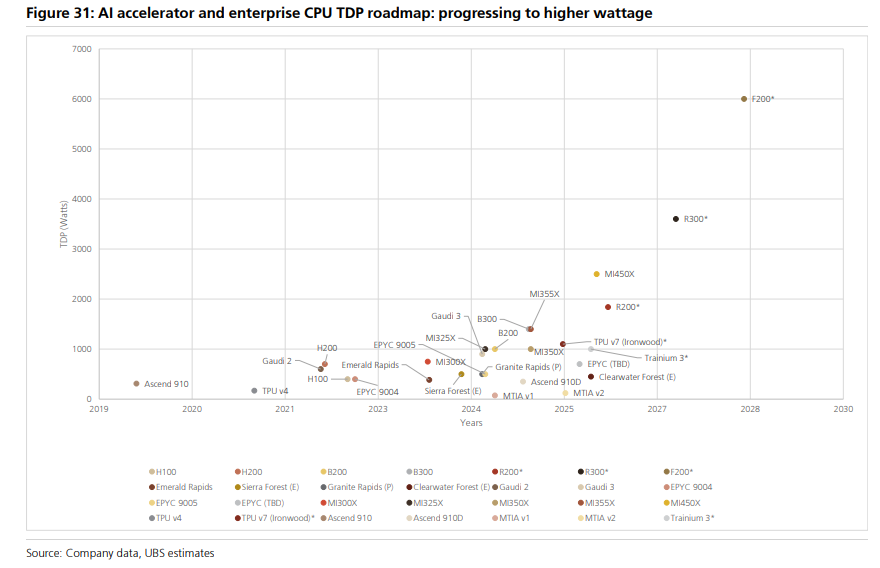
Core Insights - The transition to liquid cooling in data centers is becoming essential due to the rising power consumption of AI chips, marking a significant structural change in the industry [1][2][4] - The global market for direct liquid cooling (DLC) is projected to grow from $1.138 billion in 2024 to $31.599 billion by 2030, driven by the doubling of liquid cooling value per rack [12] Group 1: Market Dynamics - The shift to liquid cooling is not just a hardware upgrade but a strategic necessity driven by intense competition in AI chip development [1] - The liquid cooling market is expected to experience a super cycle worth $31.191 billion, reshaping the global supply chain and opening opportunities for domestic manufacturers [1][12] - The efficiency of traditional air cooling systems diminishes significantly when cabinet power density exceeds 30-40 kW, making liquid cooling a more viable option [5][4] Group 2: Technological Advancements - AI accelerators are pushing thermal design power (TDP) to unprecedented levels, with NVIDIA's GPUs projected to reach up to 7000W in the future [2][10] - Cold plate technology remains dominant for applications below 3500W, while micro-channel lid (MCL) technology is expected to become standard for higher power chips [9][10] - Liquid cooling technology can achieve a cooling capacity 4-9 times greater than air cooling, making it a more effective solution for modern data centers [7] Group 3: Supply Chain Evolution - NVIDIA is shifting its supply chain strategy from a closed model to an open ecosystem, allowing more manufacturers to enter its supply chain [14][16] - This change enables domestic suppliers to either enter as secondary suppliers or potentially become primary suppliers as their technologies mature [16] - The market for liquid cooling systems required for ASIC chips is projected to reach 35.3 billion RMB by 2026, with NVIDIA's platform requiring even more [16]
AI进入“液冷时代”,市场低估了“转变力度”,国产供应链正加速入局
Hua Er Jie Jian Wen· 2025-12-08 03:07
Core Insights - The transition to liquid cooling in data centers is becoming essential due to the rising power consumption of AI chips, marking a significant structural shift in the industry [1][2][4] - The global market for direct liquid cooling (DLC) is projected to grow from $1.138 billion in 2024 to $31.191 billion by 2030, with a compound annual growth rate (CAGR) of 51% [14][16] - The shift towards liquid cooling is driven by the need to meet stringent energy efficiency standards and the increasing power density of server cabinets [7][10] Market Dynamics - AI accelerator thermal design power (TDP) is rapidly increasing, with NVIDIA's GPUs expected to reach power levels between 1,800W to 7,000W in the coming years [2][4] - Traditional air cooling methods are becoming inadequate as cabinet power density exceeds 30-40kW, necessitating a shift to liquid cooling solutions [5][10] - Liquid cooling technology can reduce Power Usage Effectiveness (PUE) to below 1.2, making it a favorable option for meeting regulatory requirements [7] Technology Trends - The liquid cooling market is bifurcating into two main technology segments: Cold Plate technology for applications below 3,500W and Micro-Channel Lid (MCL) technology for higher power applications [10][12] - Cold Plate technology is expected to remain dominant for lower power applications, while MCL technology is anticipated to become mainstream for high-performance chips by 2026 [11][12] - The value of liquid cooling per rack is expected to quadruple by 2030, indicating a significant increase in market value [15] Supply Chain Evolution - NVIDIA is shifting its supply chain strategy from a "closed delivery" model to an "open ecosystem," allowing more suppliers to enter its supply chain [17][19] - This change provides opportunities for domestic suppliers to become either secondary suppliers through ODMs or primary suppliers as their technologies mature [17][19] - The estimated market for liquid cooling systems required for ASIC chips is projected to reach 35.3 billion RMB by 2026, with NVIDIA's platform requiring even more [19]
中金2026年展望 | 机械:聚焦科技,关注出口与周期机会
中金点睛· 2025-12-07 23:42
Group 1 - The mechanical industry is expected to have significant investment opportunities in the technology innovation sector by 2026, with a focus on new infrastructure and applications driven by technological advancements [4][6] - The export sector faces uncertainties but is anticipated to benefit from structural opportunities as internationalization progresses and the Federal Reserve's interest rate cuts take effect [4][6] - Domestic demand is expected to stabilize, with potential for stock price rebounds as capacity clears and general enterprises transition to growth sectors [4][6] Group 2 - The AI infrastructure sector is experiencing high capital expenditure and rapid technological iterations, leading to new opportunities in the mechanical development space [4][6] - The demand for PCB and AIDC equipment is expected to continue growing due to overseas capital expenditure exceeding expectations, with a focus on domestic substitution opportunities [4][11] - The human-shaped robot industry is projected to accelerate production by 2026, with domestic companies like Yushu and Zhiyuan expected to go public and enhance their competitive edge [7][8] Group 3 - The engineering machinery sector is witnessing a significant increase in export volumes, with excavator exports rising from 34,000 units in 2020 to a peak of 109,000 units in 2022, reflecting a CAGR of 77.5% [19][21] - The internationalization of engineering machinery is expected to drive long-term profitability, with overseas gross margins typically exceeding domestic margins by 5-10 percentage points [19][23] - The fixed asset investment in railways remains high, with a 5.8% year-on-year increase, supporting new vehicle demand [24] Group 4 - The motorcycle sector is expected to capture 15-20% of the global market share for large-displacement motorcycles by 2025, driven by competitive pricing [39] - The oil service equipment sector is benefiting from high demand for natural gas compressors in the Middle East and North Asia, as well as for gas turbines in North America [41] - The general cyclical sector is expected to see a bottoming out of demand, with opportunities arising from structural changes in the market [44] Group 5 - The lithium battery equipment sector is anticipated to experience accelerated capital expenditure growth, driven by independent energy storage projects [55][58] - The solid-state battery technology is expected to create valuation elasticity in the sector, with significant advancements in production processes [58][59] - The photovoltaic equipment sector is focusing on industry recovery and the expansion of semiconductor-related business lines [60]

2026年AI算力硬件出海逻辑及重大边际变化梳理
傅里叶的猫· 2025-12-07 13:13
Group 1: Optical Modules - The optical module industry is experiencing the highest growth and performance realization among AI hardware this year, driven by high verification barriers for North American CSP tech giants and increasing demand due to the acceleration of supernode technology [2][4] - The average ratio of optical modules to GPUs is continuously increasing, with demand for 800G and 1.6T optical modules being revised upwards, indicating a strong upward resonance in demand [2][4] - By 2026, the demand for 1.6T optical modules is expected to exceed 30 million units, with an average price of $900-1000 per unit, while high-end EML optical chips are projected to face a 25-30% supply shortage [4][5] Group 2: Liquid Cooling - The liquid cooling industry has seen fluctuating trends this year, with initial enthusiasm dampened by low penetration rates, followed by a resurgence in August and significant breakthroughs in November [5][9] - The demand for liquid cooling in North America is expected to expand rapidly by 2026, with penetration rates in the NVIDIA ecosystem projected to rise from 20-30% to over 80-90% [7][9] - A leading domestic manufacturer is anticipated to capture a market share of 13-17% in North America by 2026, with Google expected to implement liquid cooling solutions for over 200,000 TPU V7 chips, creating a market space exceeding $24-28 billion [9][10] Group 3: AI PCB - The AI PCB industry is thriving, with companies like Shenghong, Huidian, and Shengyi achieving performance realization in North America, despite some quarterly fluctuations [10][12] - The supply side is seeing an increase in product value and manufacturing difficulty due to upgrades in customer chips and cabinet solutions, leading to a marginal differentiation in the supply landscape [10][12] - By 2026, the introduction of orthogonal backplanes is expected to significantly increase unit value, with M9 material processing anticipated to break through, although mass production is expected to ramp up in 2027 [12][13] Group 4: Server Power Supply - The server power supply market has shown similar trends to liquid cooling, with initial excitement followed by a divergence in performance among manufacturers [13][14] - The supply side is dominated by Taiwanese manufacturers, with a high concentration of market share, while domestic manufacturers are expected to make significant breakthroughs in North America by 2026 [14][15] - The adoption of HVDC technology is projected to replace traditional UPS solutions, with an expected market scale exceeding $20-30 billion by 2026 [15]