消费电子

Search documents
市场分析:电子半导体领涨,A股震荡整理
Zhongyuan Securities· 2026-01-16 11:20
Investment Rating - The industry is rated as "stronger than the market," indicating an expected relative increase of over 10% compared to the CSI 300 index within the next six months [15]. Core Insights - The A-share market experienced slight fluctuations with a high opening, facing resistance around 4140 points, and sectors like consumer electronics, semiconductors, electronic components, and photovoltaic equipment performed well, while internet services, cultural media, energy metals, and mining sectors lagged [2][3][7]. - The average price-to-earnings ratios for the Shanghai Composite Index and the ChiNext Index are 16.88 times and 53.38 times, respectively, which are above the median levels of the past three years, suggesting a favorable environment for medium to long-term investments [3][14]. - The trading volume on January 16 was 30,568 billion, indicating active market participation, with a notable increase in margin financing balances, suggesting a clear influx of new capital [3][14]. - The continuous decline in domestic risk-free interest rates and the trend of household savings moving towards equity markets are providing a robust liquidity environment, enhancing the attractiveness of RMB assets and boosting market risk appetite [3][14]. - The Consumer Price Index (CPI) showed a slight increase year-on-year in December 2025, indicating marginal improvements in domestic demand [3][14]. - The report anticipates that the current market rally is likely to continue, recommending a dual focus on technological innovation and the recovery of traditional industries for investment strategies [3][14]. Summary by Sections A-share Market Overview - On January 16, the A-share market showed slight fluctuations, with the Shanghai Composite Index closing at 4,101.91 points, down 0.26%, and the Shenzhen Component Index at 14,281.08 points, down 0.18% [7][8]. - The market saw over 50% of stocks decline, with sectors like semiconductors, electric machinery, and electronic chemicals leading in gains, while cultural media and mining sectors faced significant losses [7][9]. Future Market Outlook and Investment Recommendations - The report suggests that the Shanghai Composite Index is likely to maintain a slight upward trend, advising investors to closely monitor macroeconomic data, changes in overseas liquidity, and policy developments [3][14]. - Short-term investment opportunities are highlighted in sectors such as consumer electronics, semiconductors, electronic components, and photovoltaic equipment [3][14].
中国消费品牌出海迈向新周期:把爆款做成体系,把增长做成复利
3 6 Ke· 2026-01-16 11:17
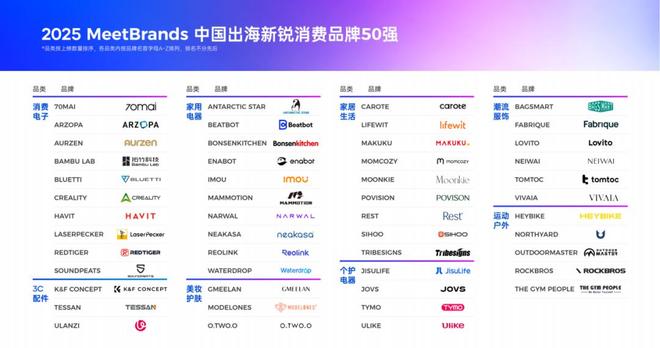
Core Insights - The rising cost structure for outbound consumer brands is significantly impacting their operations, with Google Ads CPC increasing by 10% and Meta CPL soaring by 20% year-on-year, indicating a shift from a growth model reliant on spending to one focused on brand value [1][2] - The "2025 MeetBrands Top 50" list reflects a structural upgrade in the outbound industry, with brands evolving not just through competition but also due to changing market rules [2] Group 1: Brand Evolution - Sixteen brands have graduated to become benchmarks, achieving annual overseas revenues of $500 million, global presence in over ten countries, and establishing themselves as category leaders [4] - The new entrants on the list are characterized as "category leaders," with revenues transitioning from millions to billions, emphasizing technology and scenario positioning over low-quality traffic competition [6] Group 2: Regional Dynamics - The Pearl River Delta remains the engine of outbound brands, contributing 62% of the listed brands, while the Yangtze River Delta has become a hub for brand operations, accounting for 26% of the list [8] - The industry is moving from isolated breakthroughs to regional collaboration, forming a more resilient ecosystem [8] Group 3: Hidden Barriers to Growth - Many mid-tier outbound brands face hidden capability barriers that hinder growth, such as over-reliance on low prices and traffic, lack of localized narratives, and disconnection between digital investments and business operations [10] - Overcoming these barriers is essential for brands to evolve from growth phases to becoming new leaders [10] Group 4: D-MES Model and Brand Capabilities - The D-MES model has been upgraded to better assess brands' long-term effectiveness, focusing on digital capabilities, consumer influence, product innovation, and commercial conversion [11][14] - Digital capabilities are crucial, with brands leveraging AI and digital tools to enhance decision-making and operational efficiency [15] Group 5: Consumer Trust and Localization - Brands must address the "high awareness, low trust" gap by deeply localizing their narratives and aligning with consumer values [17] - Successful examples include TESSAN, which tailored its messaging to different cultural preferences, enhancing local consumer engagement [17] Group 6: Product Innovation - The focus on product innovation should shift from merely competing on specifications to solving real consumer pain points through data-driven insights [19] - Brands like Rest have successfully identified and addressed specific consumer needs, leading to significant premium pricing and increased repurchase rates [19] Group 7: Commercial Conversion and Market Expansion - The emphasis on commercial conversion has shifted towards multi-regional expansion and omnichannel operations, with brands increasingly establishing independent online platforms and entering offline channels [21][22] - Emerging markets are becoming significant growth areas, with brands diversifying their strategies to tap into regions like Latin America, the Middle East, and Southeast Asia [22] Group 8: Long-term Strategy and Brand Resilience - The future of outbound brands is focused on stability and precision rather than speed, emphasizing profit margins and customer loyalty over rapid growth [24] - Brands are encouraged to enhance their operational efficiency and consumer experience to navigate the complexities of the market [26][28]

小米集团:“人家车全生态”,小米要打高端局
Zheng Quan Ri Bao· 2026-01-16 11:06
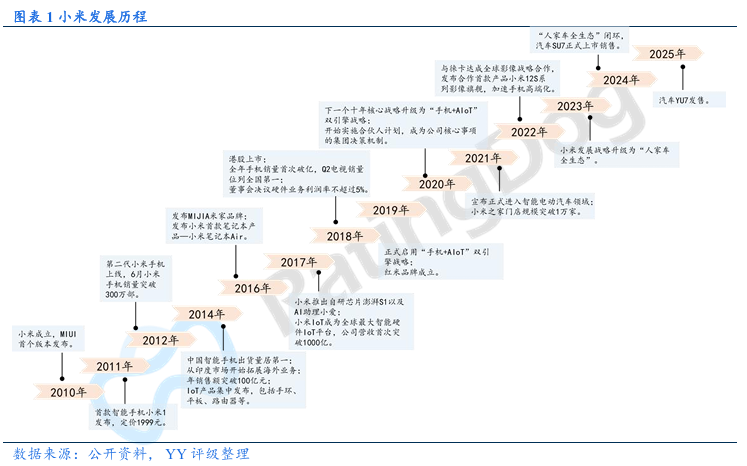
Core Viewpoint - Xiaomi Group is a leading consumer electronics and smart manufacturing company in China, known for its "extreme cost-performance" strategy. The company is pushing for a high-end transformation, with the launch of its electric vehicle, the Xiaomi SU7, in 2024, marking a significant step in its "home, car, and ecosystem" strategy [1]. Group 1: Company Overview - Xiaomi's business model is described as a "triathlon," focusing on market expansion through cost-effective hardware, profit generation via high-margin internet services, and enhanced sales efficiency through a new retail model that integrates online and offline channels [1]. - The company has established a stable user base, with its internet services primarily driven by advertising and value-added services [2]. Group 2: Smartphone Segment - Smartphones are Xiaomi's core products, with a strong competitive position in emerging markets. The company is transitioning from a low-cost to a high-end market strategy, including collaborations with Leica for high-end imaging and the development of its own 3nm smartphone chip, expected to launch in 2025 [2]. - Despite the growth in average selling price (ASP) for high-end smartphones, Xiaomi's ASP remains lower than that of domestic competitors like Samsung and Vivo, indicating a need for further brand elevation [2]. Group 3: IoT and Consumer Products - Xiaomi is a global leader in the smart IoT platform, with a product ecosystem structured as "1+4+N." The synergy between its various business segments is expected to enhance overall performance [3]. - The company faces competition in the home appliance sector, particularly from leading brands, and may encounter growth pressures due to the reduction of government subsidies [3]. Group 4: Smart Automotive - Xiaomi entered the smart electric vehicle market in 2021, and the SU7 has quickly become a bestseller due to its high configuration, competitive pricing, and brand influence. However, challenges such as supply chain rigidity and increasing market competition are present [3]. - Concerns regarding the safety of autonomous driving features and the overall driving experience of Xiaomi vehicles have been raised, necessitating further validation of their technology [3]. Group 5: Financial Analysis - The company's revenue has seen rapid growth in recent years, driven by its high-end transformation and automotive business expansion. Gross margins are on the rise, indicating improved profitability [4]. - Xiaomi's R&D expenses have significantly increased, but remain at a reasonable proportion of revenue. The company maintains a healthy cash flow and liquidity position, with a debt-to-asset ratio around 50% [4].

华勤技术:公司坚信合作共赢的力量
Zheng Quan Ri Bao· 2026-01-16 10:47
Core Insights - The company, Huaqin Technology, reported a total R&D expenditure of 4.62 billion RMB for the first three quarters of 2025, representing a year-on-year increase of 23.7%, with an expectation to exceed 6 billion RMB for the entire year [2] Group 1 - The company emphasizes the importance of collaborative win-win strategies in its operations [2] - During the CES exhibition, Huaqin Technology showcased its core technological breakthroughs in consumer electronics, automotive electronics, PC, and AIoT, highlighting its R&D innovation capabilities and ecosystem collaboration [2] - The company's R&D investment focuses on a product layout of 3+N+3 and supports business growth needs, while also allocating resources for forward-looking research in areas such as acoustics, optics, thermodynamics, and radio frequency [2] Group 2 - Huaqin Technology has established an X-lab R&D laboratory to explore new technologies and product directions, including AI edge computing, super nodes, and automotive electronics [2] - The company maintains close collaboration with upstream and downstream partners in the industry chain to jointly explore smart hardware solutions, such as the high-level autonomous driving collaboration with NVIDIA on the Drive Thor platform [2]

盈趣科技(002925):25Q4归母净利润实现高增长 定增募资加码深化业务布局
Xin Lang Cai Jing· 2026-01-16 10:44
Core Viewpoint - The company expects significant growth in revenue and net profit for 2025, driven by stabilization in various business segments and strategic investments in global operations and R&D [1][2][4]. Group 1: Revenue and Profit Forecast - The company anticipates 2025 revenue between 4.037 billion and 4.216 billion yuan, representing a year-on-year growth of approximately 13% to 18% [1][2]. - The projected net profit attributable to shareholders is expected to be between 540 million and 660 million yuan, showing a substantial year-on-year increase of 114.69% to 162.40% [1][2]. - For Q4 2025, the company forecasts revenue of 1.155 billion to 1.334 billion yuan, with a year-on-year growth of 11.72% to 29.03% [1][2]. Group 2: Business Segment Performance - The company’s automotive electronics segment is expected to face increased competition, but it plans to enhance its market share through technological advancements and resource reallocation [2]. - The health and environment segment is projected to grow rapidly due to core customer projects entering mass production, with ongoing collaboration and product line expansion [2]. - The E-bike product inventory has returned to healthy levels, indicating a gradual recovery in demand [2]. Group 3: Fair Value Changes and Net Profit Drivers - The significant increase in net profit is attributed to substantial fair value changes in the company's equity investments, expected to add 381 million yuan to net profit attributable to shareholders [3]. - The company’s non-recurring net profit is expected to remain stable compared to the previous year, despite rising expenses due to increased R&D investments and a new equity incentive plan [3]. Group 4: Fundraising and Strategic Investments - The company plans to raise up to 800 million yuan through a private placement to enhance its global operations and R&D capabilities [4]. - The raised funds will focus on expanding manufacturing bases in Malaysia and Mexico, optimizing the product structure in the health environment sector, and upgrading R&D centers to strengthen technological capabilities [4]. Group 5: Investment Outlook - The company is positioned as a platform enterprise in the innovative consumer electronics and IoT sectors, with strong foundational R&D capabilities and a leading UDM system [5]. - Continued investment in R&D and expansion in automotive electronics and health products are expected to drive profitability growth, with projected revenues of 4.238 billion, 5.235 billion, and 6.271 billion yuan from 2025 to 2027 [5]. - The forecasted net profit for the same period is 545 million, 491 million, and 588 million yuan, with corresponding P/E ratios indicating a favorable investment outlook [5].

中国消费品牌出海迈向「新周期」:把爆款做成体系,把增长做成复利
3 6 Ke· 2026-01-16 10:41
Core Insights - The rising cost structure for outbound consumer brands is significantly impacting their operations, with Google Ads CPC increasing by 10% and Meta CPL soaring by 20% year-on-year, indicating a shift from a growth model reliant on spending to one focused on brand value [1][2] - The "2025 MeetBrands Top 50" list reflects a structural upgrade in the outbound industry, with brands entering and exiting not solely due to competition but also due to changing market rules [2] - The report highlights a transition from external growth drivers to the development of internal capabilities among successful outbound brands, which share common strategies and thinking [1] Brand Performance - Sixteen brands have graduated to become benchmarks, achieving annual overseas revenues of $500 million, global presence in over ten countries, and establishing themselves as category leaders [4] - The new entrants to the list, totaling 33 brands, are characterized as "category leaders," with revenues rising from millions to hundreds of millions, focusing on technological and situational advantages rather than low-quality traffic competition [8] Regional Insights - The Pearl River Delta remains the "engine" for outbound brands, contributing 62% of the listed brands, with Shenzhen recognized as a "hardware Silicon Valley" [10] - The Yangtze River Delta has emerged as a "brand operation highland," accounting for 26% of the listed brands, emphasizing brand quality and user relationships [11] Challenges and Opportunities - Many mid-tier outbound brands face "invisible capability thresholds" that hinder growth, such as over-reliance on low prices and traffic, lack of localized narratives, and digital investment misalignment [14] - The D-MES evaluation system has been upgraded to better assess brands' long-term capabilities, focusing on digitalization, consumer influence, product innovation, and commercial conversion [15][18] Digitalization and Consumer Engagement - Digital capabilities are crucial for brands, with successful companies embedding AI into core operations and viewing digitalization as a long-term strategy [19] - Brands must establish localized narratives to build trust with overseas consumers, as evidenced by TESSAN's strategy of aligning its brand with travel scenarios to resonate with local cultural preferences [21] Product Innovation and Market Expansion - The focus on product innovation should be based on real market data to address genuine consumer pain points rather than merely competing on features [23] - Brands are increasingly expanding into offline channels and emerging markets, with a notable shift towards multi-regional operations and a focus on long-term sustainability [25][26] Strategic Direction - The future of outbound brands is shifting towards stability and precision rather than speed, emphasizing profit margins and customer loyalty over rapid growth [28] - Brands are encouraged to enhance conversion efficiency by addressing key friction points in the sales process, thereby improving overall sales growth [29] Consumer Trust and Brand Loyalty - Winning consumer trust involves establishing value, penetrating niche markets, and building loyal communities around shared values [30] - The industry is moving towards a model driven by capabilities rather than opportunities, where sustainable growth is determined by a brand's ability to adapt and innovate [32]

中国消费品牌出海迈向「新周期」:把爆款做成体系,把增长做成复利
36氪· 2026-01-16 10:36
Core Insights - The article highlights the rising cost structure faced by outbound consumer brands, with Google Ads CPC increasing by 10% and Meta CPL soaring by 20%, indicating a shift from a growth model reliant on spending to one focused on brand value [1][3][4] - The "2025 MeetBrands Top 50" list reflects a structural upgrade in the outbound industry, where brands are evolving not just through competition but also due to changing market rules [3][4] Brand Evolution - Sixteen brands have graduated from "emerging" to "benchmark" status, achieving annual overseas revenues of $500 million and establishing a global presence in over ten countries [6][7] - The new entrants on the list exhibit characteristics of "category leaders," with revenues transitioning from millions to billions, driven by technological and situational advantages [9][10] Market Dynamics - The Pearl River Delta remains a key player, contributing 62% of the listed brands, while the Yangtze River Delta has become a hub for brand operations, accounting for 26% [13][14] - The competition landscape is shifting from a focus on low-cost and traffic-driven strategies to a more sustainable model emphasizing long-term operations and brand value [36][39] Capability Challenges - Many mid-tier outbound brands face "invisible capability thresholds" that hinder growth, such as over-reliance on low prices and traffic, lack of localization, and digital disconnection [16][17] - The D-MES evaluation model has been upgraded to better assess brands' long-term capabilities, focusing on digitalization, consumer influence, product innovation, and commercial conversion [19][21] Digitalization and Consumer Trust - Digital capabilities are becoming a crucial competitive advantage, with brands like Anker leading in integrating AI into their core operations [22][23] - Building consumer trust through deep localization and addressing the "high awareness, low trust" gap is essential for brands to succeed in overseas markets [24][25] Product Innovation and Market Expansion - Successful brands are focusing on solving real consumer pain points rather than competing on superficial features, as demonstrated by Rest's innovative product development [28][29] - The emphasis is shifting towards multi-channel operations and expansion into emerging markets, with brands diversifying their strategies beyond traditional mature markets [31][33] Long-term Strategy - The future of outbound brands lies in a "steady, precise, and strong" approach, prioritizing profit margins and customer loyalty over rapid growth [36][40] - Brands must transition from a focus on traffic to enhancing conversion efficiency across the sales process, addressing key friction points in customer experience [37][38]
本周沪深两市成交额超17万亿元,创历史单周新高
Zhong Guo Jin Rong Xin Xi Wang· 2026-01-16 10:07
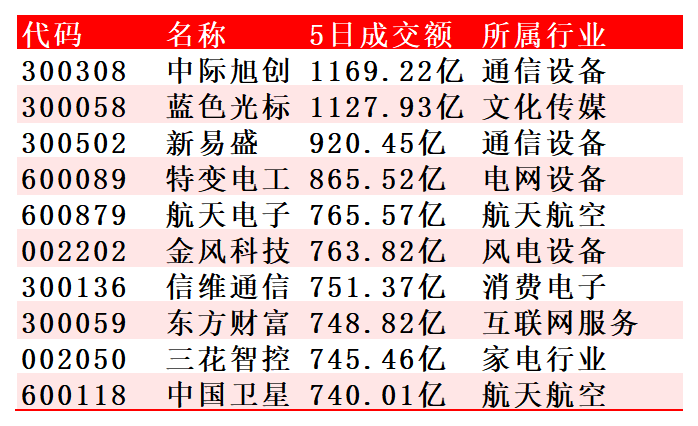
Group 1 - The A-share market experienced active trading this week, with total trading volume exceeding 17 trillion yuan, reaching 17.1 trillion yuan, setting a record for the highest weekly trading volume in history [1] - The average daily trading volume for the week was approximately 3.42 trillion yuan, marking the first time the average daily trading volume surpassed 3 trillion yuan [1] - The previous record for weekly trading volume was 14.8 trillion yuan, recorded during the week of August 25 to 29, 2025, with an average daily trading volume that did not exceed 3 trillion yuan [1] Group 2 - The stock with the highest trading volume this week was Zhongji Xuchuang, with a total trading volume of 116.922 billion yuan [2] - BlueFocus Media followed closely with a trading volume of 112.793 billion yuan, both stocks exceeding 100 billion yuan in trading volume for the week [2] - Other notable stocks in the top ten by trading volume included Aerospace Electronics, Goldwind Technology, China Satellite, and Xinwei Communication, all related to the commercial aerospace theme [1][2]



北水动向|北水成交净买入0.94亿 芯片股再获加仓 北水抢筹中芯国际(00981)超10亿港元
智通财经网· 2026-01-16 09:48
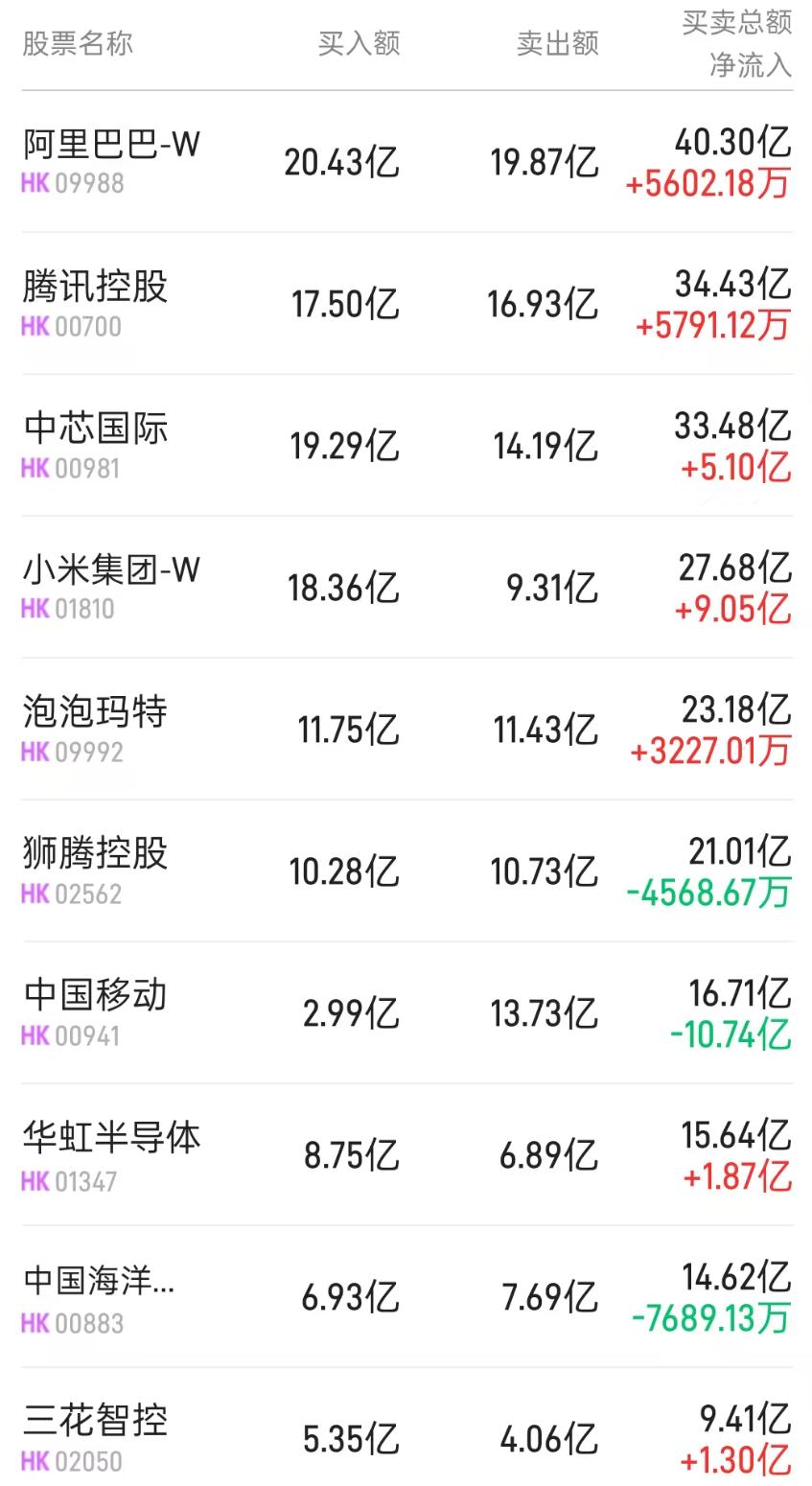
Group 1: Market Overview - Northbound trading recorded a net buy of HKD 0.94 billion, with a net buy of HKD 10.06 billion from the Shanghai Stock Connect and a net sell of HKD 9.13 billion from the Shenzhen Stock Connect [1] - The most bought stocks included SMIC (00981), Xiaomi Group-W (01810), and Hua Hong Semiconductor (01347), while the most sold stocks were China Mobile (00941), Alibaba Health (00241), and CNOOC (00883) [1] Group 2: Stock Performance - Alibaba-W (09988) saw a net buy of HKD 395.9 million, while Lion Group (02562) and Alibaba Health (00241) experienced net sells of HKD 42 million and HKD 461 million respectively [6] - Tencent Holdings (00700) had a net buy of HKD 342.8 million, while China Mobile (00941) faced a significant net sell of HKD 10.74 billion [8] Group 3: Sector Insights - SMIC (00981) and Hua Hong Semiconductor (01347) received net buys of HKD 10.84 billion and HKD 5.85 billion respectively, driven by news of the U.S. easing export restrictions on Nvidia's H200 chips to China [4] - Xiaomi Group-W (01810) gained a net buy of HKD 8.67 billion, with the announcement of new purchasing incentives for its popular model, the Xiaomi YU7 [5] - Bubble Mart (09992) attracted a net buy of HKD 1.41 billion, with growth drivers identified for 2026, including monetization of existing IPs and new IP launches [5]

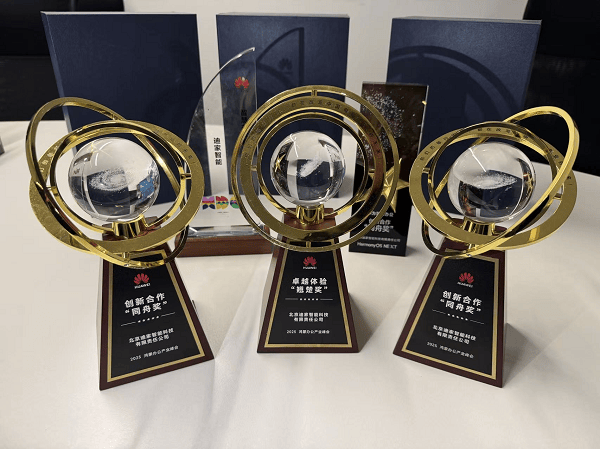
鸿蒙办公新纪元领航者!迪家智能携双品牌揽双奖
Sou Hu Cai Jing· 2026-01-16 08:27
Core Insights - The first "Harmony Office Industry Summit" in Wuhan marks a significant milestone in the upgrade of China's commercial PC industry, with Huawei announcing the public testing of HarmonyOS for enterprise computers and the official release of Huawei's Qingtian HM740, indicating a shift to high-dimensional competition focused on system-level security, intelligent experience, and full-scene collaboration [1][11] Group 1: Company Developments - Dijiasheng Intelligent Technology Co., Ltd. (Dijiasheng), a core subsidiary of Dixin Communication Technology Group, has been deeply engaged in the smart terminal field since its establishment in 2017, leveraging Huawei's HarmonyOS ecosystem support to expand its market presence [3][12] - Dijiasheng has achieved the first batch of HarmonyOS peripheral compatibility certification and the 001 product certification, significantly lowering the adaptation threshold for industry peripherals [3][6] Group 2: Product Offerings - The Cyberjoy brand, targeting the consumer market (ToC), offers a comprehensive range of peripherals, including mechanical keyboards, silent mice, noise-canceling headphones, and various other devices, ensuring full coverage of diverse scenarios such as office work, entertainment, and travel [7][12] - The Qiancheng Zongheng brand focuses on the enterprise (ToB) and government (ToG) markets, providing customized solutions for sectors like finance, healthcare, and digital governance, with products designed for high security and efficiency [9][12] Group 3: Industry Recognition - Dijiasheng's recent awards and certifications reflect Huawei's recognition of its technical strength, innovation capability, and market insight, affirming the effectiveness of its dual-brand strategy and comprehensive product layout [11][14] - The company aims to enhance its brand strength and product offerings continuously, contributing to the prosperity of the Harmony ecosystem and collaborating with Huawei and industry partners to create a smarter and more convenient global office environment [14]