
农产品加工

Search documents
1至8月哥伦比亚非矿产品出口强劲增长
Shang Wu Bu Wang Zhan· 2025-10-17 17:29
Core Insights - Colombia's non-mining energy product exports reached $17.291 billion from January to August, marking a significant year-on-year increase of 21.3% with a volume growth of 14.4% [1] Export Performance by Sector - Agriculture accounted for 42.9% of total exports, with a remarkable growth rate of 36.9% [1] - The agro-industrial sector represented 15.6% of exports, experiencing a growth of 39.7% [1] - Industrial manufactured goods made up 41.4% of exports, with an increase of 11.8% [1] Notable Export Products - Coffee exports were particularly strong, totaling $3.798 billion, which is a year-on-year increase of 77.4% [1] - Palm oil exports grew by 77.9%, while coffee extracts increased by 58.7% [1] - Pesticides saw a growth of 20.3%, and other products like bananas, sugar, pharmaceuticals, transformers, aluminum doors and windows, beauty products, and flowers also maintained growth [1] Economic Implications - The robust performance of non-mining energy exports indicates that Colombia's economic structure is diversifying, with agriculture and manufacturing becoming new growth drivers [1]
金龙鱼(300999.SZ):子公司拟将扎旗公司100%股权转让给兴安盟众恒
Ge Long Hui A P P· 2025-10-17 12:22
Core Viewpoint - The company announced a share transfer agreement where its wholly-owned subsidiary, Inner Mongolia Hefeng Agricultural Co., Ltd., will transfer 100% of its stake in Zhaqi Company to Xingan League Zhongheng, resulting in Zhaqi Company no longer being included in the company's consolidated financial statements [1] Group 1 - The share transfer is part of a comprehensive transaction that includes debt waiver for part of the loans provided by the company to Zhaqi Company to clarify the debt relationship [1] - After the completion of this transaction, the loans will effectively represent financial support provided by the company to an entity outside the consolidated financial statements, reflecting the continuation of financial assistance to the former subsidiary [1] - The sugar beet business has a minimal impact on the company's main operations, and this transaction will not significantly affect the company's daily operations or harm the interests of the company and minority shareholders [1]

油脂油料产业日报-20251017
Dong Ya Qi Huo· 2025-10-17 10:15
1. Report Industry Investment Rating - No relevant content provided 2. Core Views of the Report Palm Oil - International market: Malaysian BMD crude palm oil futures are oscillating around 4,500 ringgit. After repeated oscillations, it's necessary to observe if it can effectively stand above 4,500 ringgit supported by export data. Next week, the release of export and production data will impact the market. If the fundamentals are bullish, the futures may rise to 4,650 ringgit; otherwise, a break below 4,500 ringgit will open a new downward space [3]. - Domestic market: Dalian palm oil futures are in an oscillating pattern, mainly fluctuating around the 60 - day moving average, with obvious resistance from the 40 - day moving average. Concerned about the lack of an upward trend in Malaysian palm oil, Dalian palm oil will continue to oscillate. If it fails to break through the resistance around 9,400 yuan, there is a risk of a decline. Attention should be paid to the support of the 60 - day moving average and whether Malaysian palm oil can stand above 4,500 ringgit [3]. Soybean Oil - Yesterday, CBOT soybeans and soybean oil rose due to active domestic soybean crushing in the US and reduced US soybean oil inventory, which supported the domestic oil market. Currently, the cost of imported soybeans is high, and oil mills are operating at a loss. Chinese buyers have not locked in 8 - 9 million tons of Brazilian soybeans before the new crop is available early next year due to high premiums, which may limit the supply in the first quarter and prompt traders to support prices. However, the current supply of soybean oil in factories is sufficient while market demand is weak. With both bullish and bearish factors, the short - term fluctuation of Dalian soybean oil is limited. The January contract is trading above 8,200 yuan, and if CBOT soybeans continue to rise, the January contract may face resistance around 8,500 yuan [4]. Bean Meal - Dalian bean meal contract 01 saw a decline with increased positions. Rumors of imported soybean auctions and position adjustments by some institutions in response to Sino - US negotiations led to foreign investors increasing short positions and reducing long positions, with a net short increase of over 40,000 lots in a single day. The short - term main contract of Dalian bean meal stabilized after falling to the range of 2,850 - 2,880 yuan/ton and is waiting for clear information. In the spot market, the fixed - price of oil mills decreased by 20 - 30 yuan/ton, and the near - month basis rebounded locally by 10 - 20 yuan. Some traders in East and South China saw prices fall below 2,900 yuan/ton, stimulating feed mills and middlemen with low inventories to replenish stocks, and overall trading volume increased slightly. The short - term spot price will range from 2,850 to 3,100 yuan/ton [17]. 3. Summary by Relevant Catalogs Oil Price and Spread - **Palm Oil**: Palm oil 01 is at 9,308 yuan/ton with a - 0.04% change; palm oil 05 is at 9,264 yuan/ton with a 0.06% change; palm oil 09 is at 8,946 yuan/ton with a - 0.11% change; BMD palm oil main contract is at 4,559 ringgit/ton with a 0.86% change; Guangzhou 24 - degree palm oil is at 9,210 yuan/ton with a 20 - yuan increase; Guangzhou 24 - degree basis is at - 122 yuan/ton with a 10 - yuan decrease; POGO is at 522.239 US dollars/ton with a - 1.168 - dollar decrease; international毛豆 - 毛棕 is at 29.5 US dollars/ton with a 24.62 - dollar increase [8]. - **Soybean Oil**: Soybean oil 01 is at 8,256 yuan/ton with a - 1.34% change; soybean oil 05 is at 8,042 yuan/ton with a - 1.06% change; soybean oil 09 is at 7,946 yuan/ton with a - 0.7% change; CBOT soybean oil main contract is at 50.85 cents/pound with a 0.04% change; Shandong first - grade soybean oil spot is at 8,500 yuan/ton with a 40 - yuan increase; Shandong first - grade soybean oil basis is at 204 yuan/ton with a 26 - yuan increase; BOHO (weekly) is at 48.482 US dollars/barrel with a - 13.5728 - dollar decrease; domestic first - grade soybean oil - 24 - degree palm oil is at - 620 yuan/ton with a 50 - yuan increase [14]. - **Oil Spreads**: P 1 - 5 is 54 yuan/ton with a - 30 - yuan change; P 5 - 9 is 302 yuan/ton with a - 26 - yuan change; P 9 - 1 is - 356 yuan/ton with a 56 - yuan change; Y 1 - 5 is 194 yuan/ton with a - 8 - yuan change; Y 5 - 9 is 86 yuan/ton with a 8 - yuan change; Y 9 - 1 is - 280 yuan/ton with no change; OI 1 - 5 is 441 yuan/ton with a 13 - yuan change; OI 5 - 9 is 92 yuan/ton with a - 4 - yuan change; OI 9 - 1 is - 533 yuan/ton with a - 9 - yuan change; Y - P 01 is - 1056 yuan/ton with a 14 - yuan change; Y - P 05 is - 1196 yuan/ton with a - 8 - yuan change; Y - P 09 is - 980 yuan/ton with a - 42 - yuan change; Y/M 01 is 2.84 with a 0.39% change; Y/M 05 is 2.9402 with a 0.07% change; Y/M 09 is 2.7957 with a 0.05% change; OI/RM 01 is 4.2026 with a - 0.27% change; OI/RM 05 is 4.1171 with a - 0.45% change; OI/RM 09 is 3.9257 with a - 0.36% change [5]. Oilseed Futures Price and Spread - **Futures Price**: Bean meal 01 is at 2,868 yuan with a - 39 - yuan change and a - 1.34% change; bean meal 05 is at 2,713 yuan with a - 29 - yuan change and a - 1.06% change; bean meal 09 is at 2,833 yuan with a - 20 - yuan change and a - 0.7% change; rapeseed meal 01 is at 2,306 yuan with a - 58 - yuan change and a - 2.45% change; rapeseed meal 05 is at 2,276 yuan with a - 30 - yuan change and a - 1.3% change; rapeseed meal 09 is at 2,370 yuan with a - 25 - yuan change and a - 1.04% change; CBOT yellow soybeans are at 1,011.75 with no change; the offshore RMB is at 7.1279 with a - 0.0025 change and a - 0.04% change [18]. - **Spreads**: M01 - 05 is 165 yuan with a - 12 - yuan change; M05 - 09 is - 111 yuan with a 2 - yuan change; M09 - 01 is - 54 yuan with a 10 - yuan change; RM01 - 05 is 58 yuan with a - 1 - yuan change; RM05 - 09 is - 89 yuan with a 1 - yuan change; RM09 - 01 is 31 yuan with no change; bean meal Rizhao spot is at 2,950 yuan with a - 30 - yuan change; bean meal Rizhao basis is at 73 yuan with a 10 - yuan change; rapeseed meal Fujian spot is at 2,480 yuan with no change; rapeseed meal Fujian basis is at 116 yuan with a - 7 - yuan change; the spot spread between bean meal and rapeseed meal is 500 yuan with no change; the futures spread between bean meal and rapeseed meal is 543 yuan with a - 17 - yuan change [19][21].
吉林玉米即将上市,盘面底部震荡
Yin He Qi Huo· 2025-10-17 08:55
1. Report Industry Investment Rating No information provided in the given text. 2. Core Views of the Report - The US corn is expected to continue to see a downward adjustment in yield, but the production is at a high level. The US corn has been oscillating around 420 cents per bushel this week, with strong support at 400 cents per bushel for the December contract. The market focus has shifted to Jilin corn, and there is still expected to be selling pressure when Jilin corn enters the market. The selling pressure of Northeast corn has eased in the short - term, and the corn spot may rebound slightly, but the rebound height is limited. The market expects the low point of the corn price at the northern port to be around 2050 yuan per ton. The corn futures contract 01 is expected to be in bottom - range oscillation, while the expectation for contract 05 remains strong [4]. - The operating rate of starch factories has increased, downstream demand is still weak, but提货量 (pick - up volume) has increased, and the starch inventory has risen to a historical high for the same period. As the corn spot price has declined, the starch spot price has also dropped. The profit of North China starch factories has expanded, and the operating rate of starch enterprises will continue to rise, but there is still room for the starch spot price to fall with the large - scale listing of new corn. The corn starch futures contract 01 is expected to follow the corn in bottom - range oscillation [4]. 3. Summary According to the Directory Chapter 1: Comprehensive Analysis and Trading Strategies - **Market Situation and Outlook**: The US corn is in a state of bumper harvest, but the yield may continue to be adjusted downward. The December contract of US corn has strong support at 400 cents per bushel and is in short - term narrow - range oscillation. The current market selling pressure has weakened, and the spot has short - term rebound space. However, there will still be selling pressure in late October when Jilin corn enters the market, so the rebound space of the corn spot is limited. In the short - term, corn will continue to oscillate at the bottom. Contracts 01 and 05 of corn are expected to oscillate at the bottom. The market expects corn to be in short supply after the Chinese New Year, so the spread between contracts 1 and 5 will remain large [4]. - **Trading Strategies** - Unilateral: Try to buy the December contract of US corn around 400 cents per bushel. Adopt a short - term bullish approach for contract 01 of corn and buy contract 05 of corn below 2200 yuan per ton [5]. - Arbitrage: Stay on the sidelines [5]. - Options: Implement a cumulative purchase strategy for contract 05 of corn [5]. Chapter 2: Core Logic Analysis International Market - **Supply and Demand Tables**: The USDA's September global and US corn supply - demand balance tables show that the expected yield of US corn has decreased slightly, while the expected yield of other major countries such as Argentina remains unchanged. The ending inventory in the global supply - demand table has decreased slightly, and in the US supply - demand table, the ending inventory has also decreased slightly [8]. - **Position and Production**: As of September 23, the non - commercial net short position of US corn has increased, and the ethanol production in the US has increased. The US corn is oscillating at the bottom, around 420 cents per bushel [17]. Domestic Market - **Inventory and Consumption of Deep - processing Enterprises**: As of October 16, the average corn inventory of 47 large - scale feed mills has slightly decreased compared with the previous week and the same period last year. From October 8 - 15, 2025, the consumption of corn by 149 major corn deep - processing enterprises has increased compared with the previous week. As of September 17, the corn inventory of 96 deep - processing enterprises has increased, but it is expected to decrease next week [21][22]. - **Port Inventory**: On October 10, the corn inventory at the four northern ports has increased compared with the previous week, and the throughput has also increased. In the Guangdong port, the domestic - trade corn inventory has decreased, while the foreign - trade inventory, imported sorghum, and imported barley inventories have increased, and the total grain inventory has increased [25]. - **Starch Market**: From October 9 - 15, the national corn processing volume and starch production have increased, and the operating rate has risen. The corn spot price in North China has decreased, the starch spot price has decreased, the by - product price has remained stable, and the profit in Shandong has turned profitable. The corn starch inventory has increased and is expected to continue to rise next week [28]. - **Substitute Market**: The wheat price in North China has remained basically stable at around 2460 yuan per ton. The spread between wheat and corn has widened, the corn prices in North China and Northeast China have declined, the spread between North China and Northeast corn has narrowed, and the spread between North China corn and the 01 corn contract has decreased [36]. Chapter 3: Weekly Data Tracking - **Livestock and Poultry Farming**: From October 9 - 16, the self - breeding and self - raising profit of pigs has decreased by 67 yuan per head compared with the previous week, and the profit of purchasing piglets for breeding has decreased by 51 yuan per head. From October 9 - 15, the breeding profit of white - feather broilers has slightly increased compared with the previous week, and the egg - laying hen breeding profit has decreased [40][46]. - **Starch Downstream Consumption**: This week, the operating rate of F55 high - fructose corn syrup and malt syrup has increased compared with the previous week, and the operating rate of corrugated paper and boxboard paper has also increased [49]. - **Prices of Corn and Substitutes**: The price of wheat in North China has remained stable, and the prices of corn and related products have shown certain fluctuations. The spreads between different corn contracts and between corn and starch contracts have also changed [36][58].
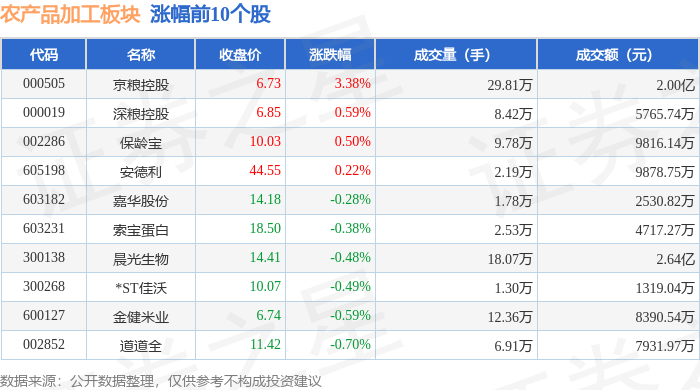
农产品加工板块10月17日跌1.4%,国投中鲁领跌,主力资金净流出2.11亿元
Zheng Xing Xing Ye Ri Bao· 2025-10-17 08:24
Market Overview - On October 17, the agricultural processing sector declined by 1.4%, with Guotou Zhonglu leading the drop [1] - The Shanghai Composite Index closed at 3839.76, down 1.95%, while the Shenzhen Component Index closed at 12688.94, down 3.04% [1] Stock Performance - Key stocks in the agricultural processing sector showed mixed results, with Jingliang Holdings rising by 3.38% to close at 6.73, while Guotou Zhonglu fell by 4.54% to 20.39 [2][1] - The trading volume for Jingliang Holdings was 298,100 shares, with a transaction value of 200 million yuan [1] Capital Flow - The agricultural processing sector experienced a net outflow of 211 million yuan from institutional investors, while retail investors saw a net inflow of 226 million yuan [2] - The detailed capital flow for individual stocks indicates that Jingliang Holdings had a net inflow of 19.15 million yuan from institutional investors, while it faced a net outflow of 1.82 million yuan from retail investors [3]


鄱阳湖畔,一粒豆的产业革命
新华网财经· 2025-10-17 06:50
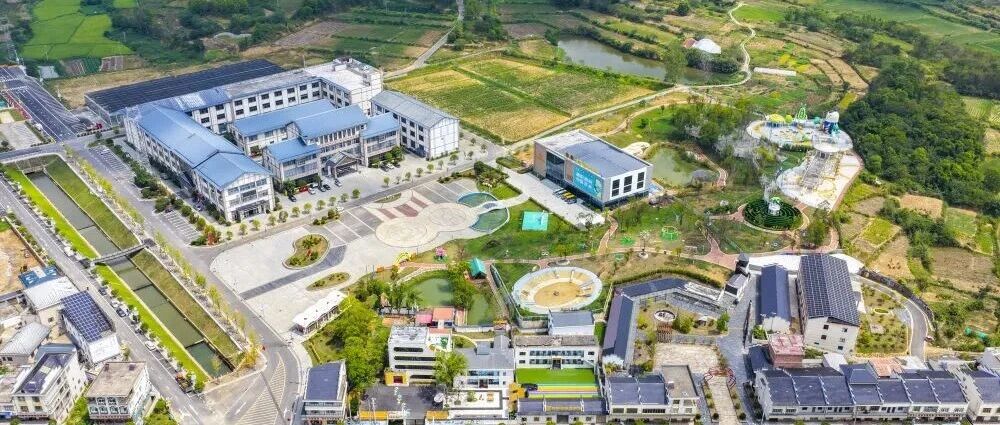
Core Viewpoint - The article highlights the transformation of Liufang Township from a "hollow village" to a thriving "Bean Aroma Town," driven by the development of a bean culture industry and the integration of agriculture, tourism, and education [3][29]. Group 1: Background and Challenges - Four years ago, Liufang faced common rural challenges such as population outflow and land abandonment, despite having a rich history of bean cultivation [2][5]. - The traditional farming methods led to low prices for beans, with wholesale prices dropping below 3 yuan per kilogram [5]. Group 2: Strategic Transformation - A self-examination led to the realization of the township's strengths, including its historical bean cultivation and traditional processing techniques [6]. - The local government developed a ten-year plan for the bean industry, emphasizing the strategy of "one bean, one industry, and enriching the local people" [6][9]. - Initial funding of 4.6 million yuan was raised to kickstart the "Bean Aroma Town" project [6]. Group 3: Infrastructure and Development - By 2019, the township secured 60 million yuan in special bond funds, accelerating the construction of the bean culture industry park [9]. - The park now features a 28,000 square meter complex with standardized factories, attracting various enterprises and creating a robust industrial chain [10]. Group 4: Innovative Agricultural Practices - The establishment of a "living museum" for beans showcases over a hundred varieties, promoting a comprehensive understanding of bean cultivation [13]. - A green circular economy model has been implemented, maximizing the value of every bean through innovative practices [14]. Group 5: Community and Economic Impact - The integration of various sectors has transformed beans into not just agricultural products but also tourism and educational resources [27]. - Local residents are benefiting from stable incomes, with some earning 40,000 yuan annually from mushroom cultivation and others generating additional income through homestays [28]. Group 6: Future Vision and Sustainability - The township aims to create a "flow entrance" to attract visitors for consumption and learning, enhancing the local economy [17]. - The experience of Liufang demonstrates that rural revitalization requires a focus on local resources, adherence to natural laws, and sustained efforts [29].
近期菜粕供需形势分析
Qi Huo Ri Bao· 2025-10-17 03:41
Core Viewpoint - The reduction in imported canola seed from Canada due to anti-dumping investigations has significantly impacted China's canola seed imports, leading to low domestic crushing volumes and a potential shift in supply dynamics for canola meal and oil [1][4]. Group 1: Impact of Anti-Dumping Investigation - China's imports of canola seed have sharply decreased, with no imports expected in October and November, and only one shipment of 65,000 tons anticipated in December [1]. - The anti-dumping investigation has led to a theoretical profit margin exceeding 1,000 yuan for importing Canadian canola seeds, but the overall international canola prices are under pressure due to increased supply from new harvests [1][5]. - The relationship between China and Canada shows signs of improvement, which could lead to a potential cancellation of the anti-dumping investigation if trade conditions change [2]. Group 2: Supply and Demand Dynamics - From January to August, China imported 2.33 million tons of canola seed, a decrease from 3.42 million tons in the same period last year, with a significant drop in imports from Canada [3]. - The import of canola meal has not declined despite the reduction in canola seed imports, with a notable increase in imports from Dubai and India [4]. - The domestic demand for canola meal is expected to remain stable, with the supply being sufficient to meet the needs despite the seasonal decline in consumption during the fourth quarter [4]. Group 3: International Market Trends - The USDA forecasts a global canola seed production of 89.54 million tons for the 2025/2026 season, which is a slight decrease from previous estimates but still represents a historical high [5]. - International canola prices are under pressure, particularly for Canadian canola, which is experiencing a more significant price drop compared to other major producing regions [5].
金流沃野护粮安——建行江苏省分行构建服务生态赋能粮食产业
Zhong Guo Jin Rong Xin Xi Wang· 2025-10-17 03:28
Core Insights - The theme of this year's World Food Day emphasizes global cooperation for food security and the importance of diverse food cultures [1] Group 1: Food Security and Financial Support - Food security is a national priority that impacts the economy and people's livelihoods [2] - Jiangsu Branch of the Construction Bank has provided financial support to ensure food security from production to consumer [2] Group 2: Agricultural Innovation and Financing - Jiangsu Jin Tan Seed Company has developed well-known rice brands and received 3 million yuan in financing through a specialized product that does not require collateral, addressing its funding challenges for research and development [3][4] - The bank's support has enabled the company to continue its research and development efforts, contributing to agricultural innovation [4] Group 3: Supply Chain Financing - The bank has implemented innovative financial models to support agricultural processing companies, such as Hai'an Jia Hui Oil Development Co., which received an additional 20 million yuan in supply chain financing to alleviate seasonal cash flow pressures [5] - This financing model has stabilized the supply chain and ensured efficient operations within the agricultural sector [5] Group 4: Seasonal Challenges and Solutions - The bank has addressed seasonal funding challenges for grain purchasing companies like Liyang Grain Industry, providing 2 million yuan in financing within five working days to facilitate timely grain purchases during peak seasons [7] - The bank's services extend beyond financing, including agricultural training and management system integration to enhance grain quality [8] Group 5: Ecosystem Empowerment in Agriculture - The bank is shifting from single-point services to ecosystem empowerment, providing 250 million yuan in credit to support the development of rice processing enterprises in Shuyang [9] - The bank has also identified opportunities in the health food sector, providing 14.5 million yuan in loans to a health food company, enabling it to expand production and sales [9]
邮储银行枣庄分行解农户“燃眉急”,助客户抓“商机”
Qi Lu Wan Bao· 2025-10-17 03:17
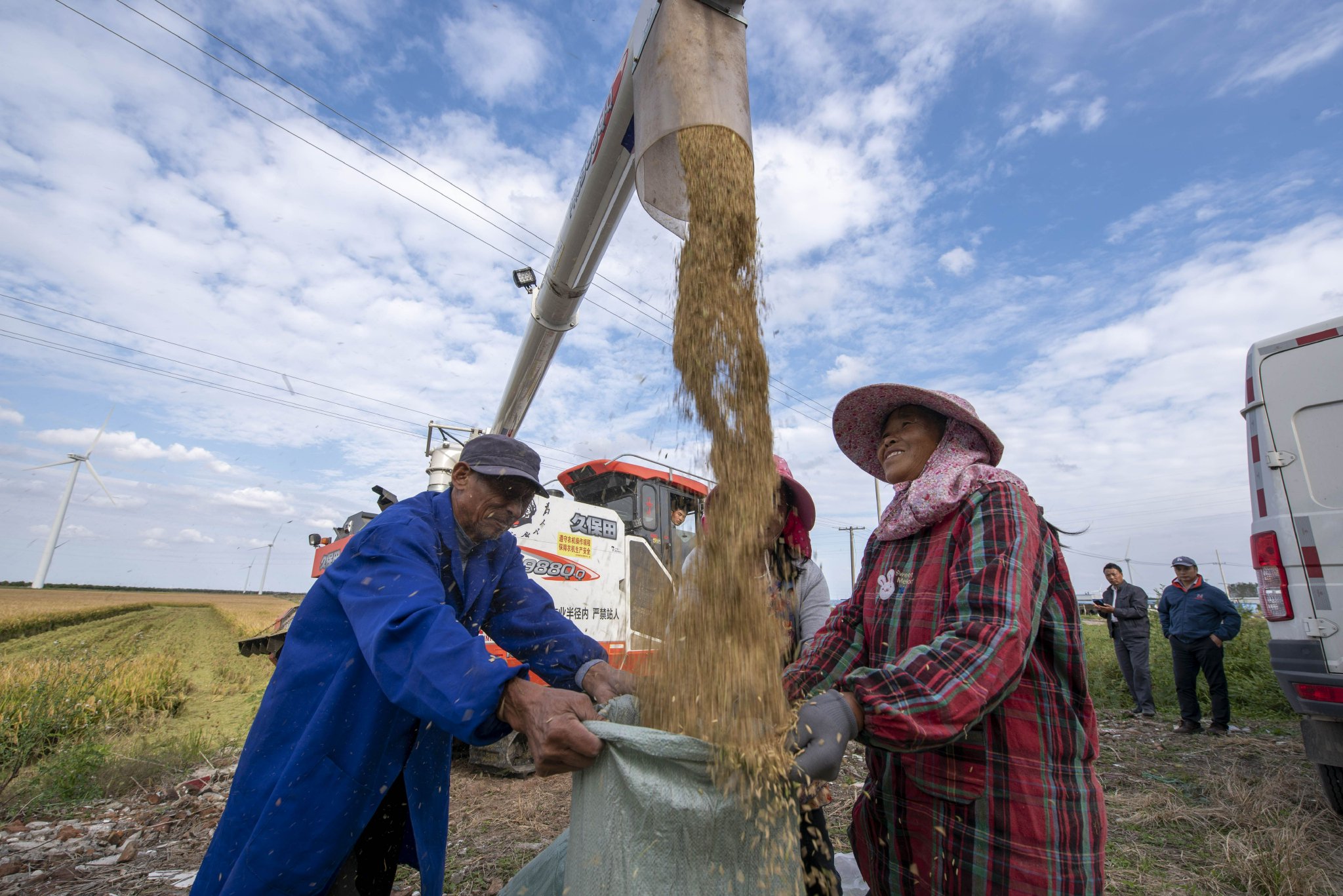
Core Insights - The article highlights the increasing demand for corn drying services in Zaozhuang City due to adverse weather conditions affecting the corn harvest, leading to investment opportunities in agricultural machinery [1][2] - Postal Savings Bank has played a crucial role in facilitating loans for local agricultural cooperatives to acquire high-end drying machines, thus supporting the local economy and farmers [1] Group 1: Company Operations - The FQ Agricultural Machinery Cooperative in Tengzhou applied for a loan of 500,000 yuan to purchase a high-end corn dryer costing 1.2 million yuan, enabling them to dry approximately 300 tons of corn daily [1] - The Daxing Agricultural Machinery Cooperative in Xuecheng received a credit loan of 1.5 million yuan, allowing them to set up five drying machines, making it the largest drying point in the area with a capacity of 500 tons [1] Group 2: Market Statistics - Zaozhuang City has a total of 60 corn drying points, with 26 of them being served by Postal Savings Bank, representing 43.33% of the market [2]

广宁县首佳农业专业合作社:用手机养跑山鸡,年产值突破2000万元㉓丨聚焦兴农“新”力量
Nan Fang Nong Cun Bao· 2025-10-17 02:33
Core Viewpoint - The article highlights the success of the Shoujia Agricultural Cooperative in Guangning County, which utilizes technology and ecological practices to achieve significant production and income growth in poultry farming, specifically the "Phoenix Chicken" [1][5][41]. Group 1: Business Model and Production - The cooperative produces over 1 million "Phoenix Chickens" annually, generating an annual output value exceeding 20 million yuan, and involves 513 farming households [6][50]. - It employs an integrated model of "company + cooperative + farmers," achieving a closed-loop of "breeding - planting - processing - sales" [8][41]. - The cooperative has invested in a pre-prepared food production line, introducing new products like salt-baked chicken and white-cut chicken to capitalize on the growing market for prepared foods [42]. Group 2: Technological Integration - The cooperative uses IoT sensors to monitor 15 environmental parameters in chicken coops, allowing for remote management via a mobile app [2][3]. - Collaboration with South China Agricultural University has led to advancements in disease prevention and genetic selection, improving chick survival rates from 82% to 96% [25][26]. Group 3: Ecological Practices - The cooperative practices natural free-range farming, allowing chickens to roam in a 680-acre area of orchards and bamboo forests, which enhances their quality and taste [18][22]. - Chicken manure is converted into organic fertilizer, with an annual production of 3,000 tons, reducing chemical fertilizer use by 80% and increasing soil organic matter by 25% [35][36]. Group 4: Market Expansion and Brand Development - The cooperative has established a strong market presence by promoting "Guangning High Mountain Free-Range Chicken" and other local products through various high-end channels [43][46]. - It utilizes a "product + influencer + live streaming" model to enhance sales and brand awareness, leading to increased demand for its products [45][46]. Group 5: Community Impact - The cooperative has significantly improved local livelihoods, with an average income increase of 28,000 yuan per household for the 513 participating families [50]. - It has created 320 job opportunities, attracting young returnees to the agricultural sector and providing stable employment for local residents [52][53].
