
软件

Search documents
Revvity(RVTY) - 2025 FY - Earnings Call Transcript
2025-12-02 15:00
Financial Data and Key Metrics Changes - The company experienced an uplift of approximately $60 million from Q3 to Q4, driven by three primary factors including the Genomics England contract which contributed around $7 million in Q4 compared to $2 million in Q3 [1][2] - The foreign exchange (FX) impact was a drag of $5-$7 million, which is 1% less than previously predicted, affecting absolute dollar amounts but having minimal impact on growth and earnings per share (EPS) [3] Business Line Data and Key Metrics Changes - The life sciences instrumentation side has shown good activity, with seasonal uplift expected rather than a significant budget flush [2][12] - The reagents business, particularly from BioLegend, faced modest impacts from government shutdowns, but the pharma biotech sector has shown signs of recovery [5][8] - The software segment has grown over 20% each quarter, significantly exceeding guidance, driven by diligent investment and customer engagement [19][21] Market Data and Key Metrics Changes - The U.S. market for EUROIMMUN has increased from 5% to 15-20% of total revenue since acquisition, with expectations to reach 40-45% as more assays are introduced [36] - The China diagnostics market is projected to stabilize, with expectations of it contributing 5-6% to total revenue, while autoimmune testing is anticipated to grow significantly [43][44] Company Strategy and Development Direction - The company is focusing on leveraging AI and machine learning in drug discovery and development, positioning itself as a critical player in the future of pharmaceutical research [22][31] - Strategic acquisitions will continue, with a focus on sensible and financially sound opportunities, as demonstrated by the recent acquisition of ACD/Labs [57] Management's Comments on Operating Environment and Future Outlook - Management expressed optimism about the recovery in the pharma biotech sector, indicating that increased discussions and activity are signs of normalization [15][16] - The company is confident in its 2026 growth projections of 2-3% and 28% margins, accounting for stable market conditions and the impact of calendarization on China [54][56] Other Important Information - The company has been actively integrating AI across its product lines and internal operations, enhancing productivity and efficiency [34][35] - The newborn screening market has shown growth due to geographic expansion and the introduction of new assays, with partnerships driving further opportunities [46][48] Q&A Session Summary Question: Can you discuss the impact of the government shutdown on the reagents business? - The reagents business, particularly from BioLegend, experienced a modest impact from the shutdown, but the pharma biotech sector has continued to perform well [5][8] Question: What are the expectations for the software business moving into 2026? - The software business is expected to continue performing well, with a focus on annualized portfolio value (APV) rather than just organic growth [27][28] Question: How does the company view the China diagnostics market going forward? - The company anticipates that the China diagnostics market will stabilize, contributing around 5-6% to total revenue, with a focus on localizing operations and obtaining faster approvals [43][44]

今日财经要闻TOP10|2025年12月2日
Xin Lang Cai Jing· 2025-12-02 11:41
Group 1: Market Performance - The Shanghai Composite Index fell by 0.55%, the Shenzhen Component Index dropped by 0.77%, and the ChiNext Index decreased by 0.88% during the morning session [1][8] - The total trading volume in the Shanghai, Shenzhen, and Beijing markets reached 10,560 billion, a decrease of 1,807 billion compared to the previous day [1][8] - Over 3,900 stocks in the market experienced declines, with sectors such as energy metals, gaming, education, battery materials, rare earth permanent magnets, and film and television showing significant losses [1][8] Group 2: Sector Highlights - The pharmaceutical commercial sector, along with local stocks from Fujian, Hainan Free Trade Zone, tourism and hotels, AI mobile phones, real estate, and coal mining, saw notable gains [1][8] - AI mobile phone concept stocks remained active, with companies like Daoming Optics achieving a four-day consecutive rise and Furong Technology securing two consecutive gains [1][8] - Fujian local stocks continued to rise in the afternoon, with Dongbai Group hitting the daily limit, and several other stocks such as Zhaobiao Co., Pingtan Development, and Hai Xin Food also reaching their limits [3][8] Group 3: Policy Developments - The Fujian provincial government announced 12 new policies aimed at enhancing trade and cultural exchanges with Taiwan, including support for Taiwanese enterprises and optimizing tax services for Taiwanese businesses [7][14] - The launch of China's drug price registration system is set for December 2, 2025, allowing domestic and foreign pharmaceutical companies to independently declare drug prices, promoting transparency and global market integration [4][11] Group 4: International Relations - Two Japanese organizations have requested to visit China, reflecting concerns over recent remarks by Japanese Prime Minister Suga regarding Taiwan, which have strained Sino-Japanese relations [2][10] - The Chinese Coast Guard has taken measures to drive away a Japanese fishing vessel that illegally entered the waters around the Diaoyu Islands, emphasizing China's stance on territorial sovereignty [5][12]


公司问答丨卓易信息:全资子公司南京百敖软件有限公司是中国大陆唯一获得英特尔授权的独立BIOS供应商
Ge Long Hui· 2025-12-02 08:52
Core Viewpoint - The company, through its wholly-owned subsidiary Nanjing Bai'ao Software Co., Ltd., is the only independent BIOS supplier authorized by Intel in mainland China, indicating a significant partnership and unique market position [1] Group 1 - The company confirmed its relationship with Intel in response to an investor inquiry, highlighting its status as the sole authorized independent BIOS supplier in mainland China [1] - The specific cooperation details between the company and its clients will be disclosed through statutory information channels, including regular reports and relevant announcements [1]


卓易信息(688258.SH):子公司是中国大陆唯一获得英特尔授权的独立BIOS供应商
Ge Long Hui· 2025-12-02 08:13
格隆汇12月2日丨卓易信息(688258.SH)在投资者互动平台表示,公司的全资子公司南京百敖软件有限公 司是中国大陆唯一获得英特尔授权的独立BIOS供应商,公司与客户的具体合作情况以公司在法定信息 披露渠道披露的定期报告与相关公告为准。 ...
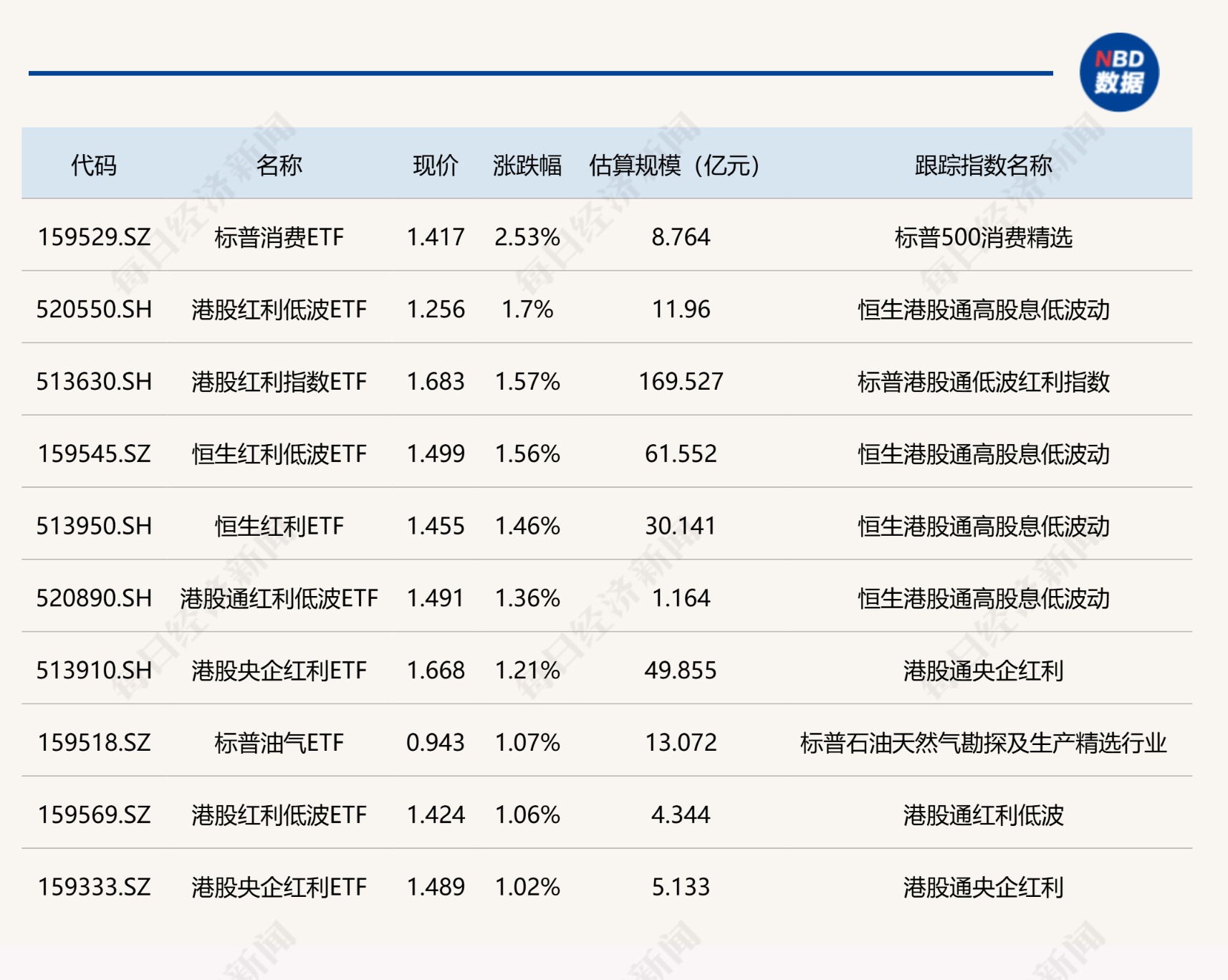
ETF今日收评 | 标普消费ETF涨超2% 传媒ETF跌超2%
Mei Ri Jing Ji Xin Wen· 2025-12-02 07:42
Market Overview - The market experienced fluctuations throughout the day, with the Shenzhen Component Index and the ChiNext Index both dropping over 1% at one point [1] - The Fujian sector showed strong performance, while the battery and shipping sectors faced declines [1] ETF Performance - The S&P Consumer ETF rose by over 2%, and several dividend-related ETFs increased by more than 1% [1] - Specific ETF performance includes: - S&P Consumer ETF: 2.53% increase, estimated size of 8.764 billion [2] - Hong Kong Dividend Low Volatility ETF: 1.7% increase, estimated size of 11.96 billion [2] - Hong Kong Dividend Index ETF: 1.57% increase, estimated size of 169.527 billion [2] - Other notable ETFs include the Hang Seng Dividend Low Volatility ETF and the Hang Seng Dividend ETF, both showing increases around 1.5% [2] Institutional Investment Trends - Analysts suggest that some institutions may sell high-valuation, volatile growth stocks to lock in annual returns, shifting towards high-dividend, high-safety margin Hong Kong dividend sectors [2] - The period from December to January is noted as a peak for insurance premiums, leading some insurance funds to quickly build positions in high-dividend assets to match liability costs, creating a rigid buying pressure [2] Media Industry Outlook - Long-term prospects for the media industry are expected to improve due to a gradual recovery in content supply, ongoing AI technology integration, and supportive policies alongside consumer recovery expectations [4] - Companies in the film and television, gaming, and advertising sectors are recommended for their strong performance, as well as those involved in digital assets and AIGC-related technologies [4]

长沙优禾食品有限公司成立 注册资本10万人民币
Sou Hu Cai Jing· 2025-12-02 04:49
天眼查App显示,近日,长沙优禾食品有限公司成立,法定代表人为颜一彪,注册资本10万人民币,经 营范围为许可项目:食品销售;第三类医疗器械经营;第三类医疗设备租赁(依法须经批准的项目,经相 关部门批准后方可开展经营活动,具体经营项目以批准文件或许可证件为准)一般项目:日用家电零 售;食品销售(仅销售预包装食品);建筑防水卷材产品销售;汽车装饰用品销售;美发饰品销售;玩具销售; 针纺织品及原料销售;针纺织品销售;皮革制品销售;鞋帽零售;鞋帽批发;五金产品零售;五金产品批发;照相 器材及望远镜零售;劳动保护用品销售;家居用品销售;家具销售;办公用品销售;体育用品及器材零售;图书 出租;化妆品零售;化妆品批发;第一类医疗设备租赁;第一类医疗器械销售;第二类医疗设备租赁;第二类医 疗器械销售;计算机软硬件及辅助设备零售;计算机软硬件及辅助设备批发;软件开发;软件销售;初级农产 品收购;农副产品销售;食用农产品零售;食用农产品批发;互联网销售(除销售需要许可的商品);电子产 品销售;音响设备销售;家用视听设备销售;家用电器销售(除依法须经批准的项目外,自主开展法律法规 未禁止、未限制的经营活动)。 ...
首度表态可能“卖币” 比特币概念股龙头MSTR盘中暴跌
Hua Er Jie Jian Wen· 2025-12-02 02:33
龙玥,华尔街见闻 作为全球持有比特币最多的上市公司,MicroStrategy 12月1日周一宣布,已通过出售股票筹集资金,设 立了一个价值14.4亿美元的"美元储备金"。 此举旨在应对加密货币市场的剧烈波动,并为其股息和债务利息的支付提供保障。此前,比特币价格已 从10月初超过12.6万美元的高点,在一个多月内跌至约8.5万美元。 该公司高管表示,如果其衡量企业价值与加密货币持有量之间关系的指标"mNAV"跌破1,并且公司无 法通过其他方式融资,那么将出售比特币以补充美元储备。这一表态被视为公司战略的重大转折点,打 破了其创始人Michael Saylor长期以来倡导的"永远买入并持有"的理念。 美元储备金:应对"比特币寒冬"的保险 面对加密市场的逆风,MicroStrategy正在采取措施加固其财务状况。据英国《金融时报》等媒体报道, 这笔14.4亿美元的储备金由公司出售股票的收益提供资金。公司目标是维持足以支付"至少12个月股 息"的美元储备,并最终扩大到能覆盖"24个月或更长时间"的规模。 据报道,这笔资金是通过上周发行820万股股票筹集的,足以覆盖公司未来21个月的全部利息支出。目 前,MicroS ...


前10月软件业务收入增长13.2%
Ren Min Ri Bao· 2025-12-01 19:08
Core Insights - The software industry in China has shown robust growth in revenue and profit, with software business income reaching 1,251.04 billion yuan, a year-on-year increase of 13.2% [1] - The total profit of the software industry amounted to 157.21 billion yuan, reflecting a year-on-year growth of 7.7% [1] - Software business exports reached 51.09 billion USD, marking a year-on-year increase of 6.7%, with positive growth maintained for eight consecutive months [1] Software Product Revenue - Software product revenue for the first ten months was 265.04 billion yuan, representing a year-on-year growth of 11.2%, accounting for 21.2% of the total industry revenue [1] - Basic software product revenue was 15.83 billion yuan, with a year-on-year increase of 12.0% [1] - Industrial software product revenue reached 26.19 billion yuan, showing a year-on-year growth of 9.9% [1] Information Technology Services - Revenue from information technology services maintained double-digit growth, totaling 860.53 billion yuan, with a year-on-year increase of 14.4% [1] - Cloud computing and big data services generated 130.78 billion yuan, reflecting a year-on-year growth of 13.4% [1] - Integrated circuit design revenue was 35.91 billion yuan, with a year-on-year increase of 17.2% [1] - E-commerce platform technology service revenue reached 115.76 billion yuan, growing by 12.1% year-on-year [1] Information Security and Embedded Systems - Revenue from information security products and services was 181.0 billion yuan, showing a year-on-year growth of 6.5% [1] - Embedded system software revenue reached 107.36 billion yuan, with a year-on-year increase of 9.7% [1]
国家明确2027年更新200万套工业软件目标,创业板软件ETF华夏(159256)持仓股润泽科技大涨超3%
Mei Ri Jing Ji Xin Wen· 2025-12-01 03:49
Core Insights - The A-share index opened higher and continued to rise, with the commercial aerospace sector showing strong performance, alongside storage, humanoid robots, and solid-state battery sectors [1] - The "Guidelines for Equipment Renewal and Technological Transformation in Key Industrial Sectors" highlight the need for updates in industrial software and operating systems, aiming to complete approximately 2 million sets of industrial software and 800,000 sets of industrial operating systems by 2027 [1] - The software industry plays a crucial role in the AI industry chain, providing essential technology support and application implementation [1] Group 1 - The commercial aerospace sector and related stocks, such as software ETFs, are experiencing significant gains, with specific stocks like Runze Technology and Hand Information leading the charge [1] - The focus on updating programmable logic controllers, distributed control systems, and embedded software indicates a substantial market opportunity for companies involved in industrial software [1] - The software industry is positioned in the midstream technology layer and downstream application layer of the AI industry, providing AI frameworks and development platforms essential for application development [1] Group 2 - AI large models, exemplified by domestic open-source models like DeepSeek, are accelerating the development of industrial software and lowering application barriers [2] - Companies in the ERP sector are creating multi-layered AI product service systems, offering various AI models and development tools, which presents diverse investment opportunities [2] - Relevant products include the ChiNext Software ETF (159256), ChiNext 200 ETF (159573), and AI ETF (515070), indicating a growing interest in AI-related investments [2]

中国移动被调出上证50指数;微软承认Win11新BUG | 科技风向标
2 1 Shi Ji Jing Ji Bao Dao· 2025-12-01 02:26
21世纪经济报道新质生产力研究院综合报道 早上好,新的一天又开始了。在过去的24小时内,科技行业发生了哪些有意思的事情?来跟21tech一起 看看吧。 【巨头风向标】 中国移动被调出上证50指数,机构称不代表基本面变化 近日,上交所和中证指数公司公告了2025年下半年的调样安排。根据指数编制方案,上证50指数对样本 空间内的证券按照过去一年的A股日均总市值、日均成交金额进行综合排名。如中国移动今年以来股价 小幅下跌约5%,A股总市值约为1000亿元,最新排名位于沪市第100名左右,结合成交金额后的综合排 名不满足上证50指数的纳入条件,因此在本次调样中被调出。本次调样实施后,中国移动仍为上证 180、沪深300、中证A500等主要指数的成份股,调出上证50指数并不代表其基本面发生了变化。同 时,因权重有限,亦不会对其股价产生显著影响,投资者无需多虑。 微软承认Win11新BUG,锁屏界面的"密码登录图标"会离奇消失 微软承认部分Windows 11设备在安装2025年8月可选更新(KB5064081)及后续补丁后,锁屏界面的"密 码登录图标"会离奇消失。主要影响群体是Windows 11 25H2和24H2用 ...
