啤酒

Search documents
食品饮料行业周报:秋糖热度平淡,继续关注高股息品种-20251018
Shenwan Hongyuan Securities· 2025-10-18 14:38
Investment Rating - The report maintains a cautious outlook on the industry, suggesting that the liquor sector is in a bottoming process while food companies should seek structural opportunities from the bottom up [6][8]. Core Views - The liquor industry is expected to experience a prolonged period of inventory digestion, with pressure on third-quarter reports anticipated to continue into the first quarter of 2026. The report emphasizes that stock price recovery may precede fundamental improvements [6][7]. - For consumer goods, the report highlights the potential for structural growth driven by new consumption trends, recommending companies with strong long-term competitive advantages [6][8]. Summary by Sections 1. Weekly Industry Insights - The food and beverage sector outperformed the market, with a weekly increase of 0.86%, while the liquor segment rose by 1.78%. The sector ranked third among 31 sub-industries [5][29]. - Key stocks that performed well included Kweichow Moutai and Qingdao Beer, while stocks like Jinzi Ham faced significant declines [5]. 2. Market Performance by Sector - The report indicates that the liquor sector is facing significant adjustment pressures, with high channel inventories and weak demand expected to persist into the next year. The report anticipates that the sales performance during the 2026 Spring Festival will be under pressure due to high base effects from 2025 [7][29]. - The consumer goods sector is viewed positively, particularly in dairy and beer, with recommendations for stocks like Yili and Yanjing Beer, while also noting potential competition in the snack and beverage segments [8][29]. 3. Key Company Updates - Moutai's bottle price is reported at 1750 RMB, down 15 RMB week-on-week, while Wuliangye's price remains stable at approximately 830 RMB. The report notes that the autumn sugar and wine fair had a subdued atmosphere, reflecting ongoing market challenges [7][19]. - The report highlights significant profit growth for companies like Chenguang Biotech, with a projected net profit increase of 344.05% to 401.55% year-on-year for the first three quarters of 2025 [9][10]. 4. Valuation Metrics - As of October 17, 2025, the food and beverage sector's dynamic PE is reported at 19.74x, with a premium rate of 24%. The liquor sector's dynamic PE stands at 18.33x, with a premium rate of 15% [19][28]. 5. Sectoral Excess Returns - The food and beverage industry outperformed the Shenwan A index by 4.44 percentage points during the period from October 13 to October 17, 2025, with various sub-sectors showing different levels of performance [29][30].






广发食饮 | 秋季糖酒会跟踪:行业正处变局中
Sou Hu Cai Jing· 2025-10-18 04:03
Group 1: Core Insights - The demand for liquor has reached a bottom, with a focus on restructuring the industry chain to be consumer-centric rather than manufacturer-centric [6][2] - The sales amount of liquor during the Mid-Autumn Festival is expected to decline by 25% year-on-year, with higher-priced products (above 100 yuan) seeing a 27% drop [2][6] - The liquor industry is anticipated to experience a recovery in demand post-clearance, with a potential double bottom in valuation and performance by 2025 [4][13] Group 2: Market Feedback - During the double festival period, liquor sales across various regions have decreased by approximately 20% year-on-year, although top brands have seen less decline in core products [3][8] - In the Nanjing market, the inventory levels remain low, with products priced between 100-300 yuan performing better than those priced between 300-600 yuan [9][10] - The overall atmosphere at the liquor exhibition was subdued, with a notable decrease in attendance compared to previous years, and a shift back to more basic product forms [11][4] Group 3: Consumer Trends - Consumers are increasingly seeking value and high-quality products, prompting liquor companies to adapt to these changing preferences [4][13] - The industry is witnessing a transformation where the focus is shifting towards health, convenience, and functionality in product offerings [4][13] - The trend of online sales is expected to grow significantly, with projections indicating that online sales could account for 30% of total sales within the next 3-5 years [8]


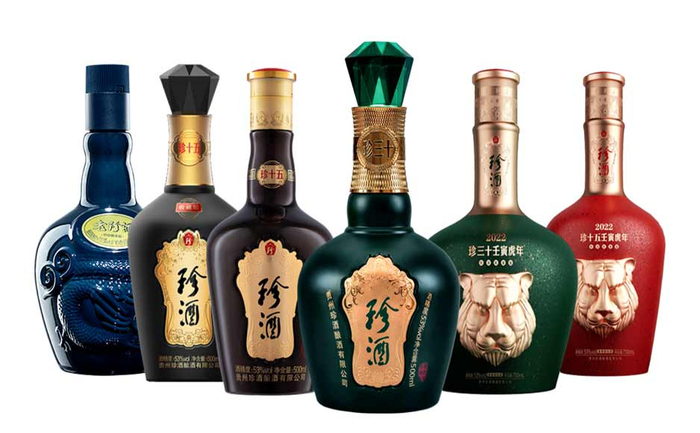
更换CEO、二代接班,珍酒李渡管理层密集调整能否破局?
Xin Lang Cai Jing· 2025-10-18 02:27
Core Viewpoint - The recent management changes at Zhenjiu Lidou Group, including the appointment of a new CEO, reflect the company's ongoing adjustments amid significant performance pressures, as evidenced by declining revenue and net profit figures [1][2]. Management Changes - Tang Xiangyang has been appointed as the new CEO, succeeding Yan Tao, with a three-year term and a total annual compensation of 5 million yuan [1]. - Yan Tao, who has been with the company for nearly 20 years, will continue as an executive director and vice chairman, focusing on business operations and development [1]. - Wu Qirong, son of the chairman, has been appointed as an executive director, indicating a generational transition within the company's leadership [2]. Financial Performance - Zhenjiu Lidou reported its first revenue and net profit decline since its listing in 2023, with revenue of 2.497 billion yuan, down 39.6% year-on-year, and a net profit of 575 million yuan, down 23.5% [2]. - The company incurred 266 million yuan in equity-settled share incentive expenses in the first half of 2024, significantly higher than the 38.43 million yuan in the same period of 2025, indicating a more substantial decline in actual profitability [2]. Market Challenges - The company faces significant market price challenges, with actual sales prices for products like "Zhen Fifteen" and "Zhen Thirty" being substantially lower than their suggested retail prices, leading to a price inversion issue [3][5]. - A distributor noted that the suggested retail price of 899 yuan for "Zhen Fifteen" is being sold at around 350 yuan, highlighting the pricing difficulties faced by the company [3]. Strategic Initiatives - The "Wanshang Alliance" plan launched in May aims to stabilize pricing and enhance distributor relationships through unified price control and profit-sharing mechanisms [5]. - The first season of the "Wanshang Alliance" project saw 2,416 alliance merchants sign contracts, with 1,182 completing shipments from May to August [5]. - The company is also diversifying its product line, having launched a new product "Da Zhen" targeting the price gap between "Zhen Fifteen" and "Zhen Thirty," with initial sales generating 370 million yuan in revenue [5][6]. Product Development - Zhenjiu Lidou has introduced a new craft beer "Niu Shi," which has received positive market feedback, ranking first in sales on Tmall and among the top three on JD.com for 15 consecutive days [9]. - The company is also developing a new beer variant that will be aged for 1-2 years, indicating a commitment to expanding its product offerings beyond traditional liquor [9].
食品饮料行业双周报(2025、10、03-2025、10、16):市场情绪边际回暖,关注三季报业绩反馈-20251017
Dongguan Securities· 2025-10-17 07:54
Investment Rating - The report maintains an "Overweight" rating for the food and beverage industry, expecting the industry index to outperform the market index by over 10% in the next six months [56]. Core Viewpoints - Market sentiment is marginally improving, with a focus on the performance feedback from the third-quarter reports. The liquor sector is under pressure due to ongoing constraints in consumption scenarios, particularly in government and business banquets, leading to a subdued performance in the second quarter. The market is currently engaged in left-side speculation regarding a reversal of industry difficulties, while long-term assessments will depend on economic recovery and distributor confidence [6][51]. - The food and beverage industry index rose by 2.26% from October 9 to October 16, 2025, outperforming the CSI 300 index by approximately 2.74 percentage points during the same period [13][14]. - Approximately 69% of stocks in the industry recorded positive returns during the same period, with notable gainers including Kweichow Moutai (+21.10%) and Baba Food (+11.73%) [18]. Summary by Sections Market Review - The SW food and beverage industry index outperformed the CSI 300 index, with a rise of 2.26% from October 9 to October 16, 2025, ranking seventh among Shenwan's primary industry sectors [13]. - Most sub-sectors outperformed the CSI 300 index, with the other liquor sector showing the highest increase at 5.69%, while the soft drink sector had the largest decline at -1.17% [14]. Industry Data Tracking - **Liquor Sector**: The price of Feitian Moutai remained stable at 1760 RMB/bottle, while the prices of Wuliangye and Guojiao 1573 increased by 10 RMB/bottle to 850 RMB/bottle [24]. - **Condiment Sector**: Prices for soybean meal and white sugar increased, with soybean meal at 3010 RMB/ton and white sugar at 5790 RMB/ton [27]. - **Beer Sector**: The average price of barley was 2232.50 RMB/ton, with glass prices at 15.70 RMB/square meter [32]. - **Dairy Sector**: The average price of fresh milk remained unchanged at 3.04 RMB/kg [39]. - **Meat Products Sector**: The average wholesale price of pork decreased to 18.02 RMB/kg, down 1.29 RMB/kg from the previous month [41]. Important News - In the first eight months of 2025, Jiangsu Province's liquor production decreased by 17.6% [44]. - The national liquor price index showed a slight decline in September, with a total index of 99.63, down 0.37% [45]. - Sales of liquor on Douyin increased by 58% month-on-month in September [46]. Company Announcements - **Wuliangye**: Announced the completion of a stock buyback plan, acquiring 627.33 million shares [49]. - **Qiaqia Food**: Reported progress on its share repurchase plan, buying back 105.52 million shares [50]. Industry Weekly Perspective - The report suggests focusing on high-certainty stocks such as Kweichow Moutai and other regional liquors like Shanxi Fenjiu and Guojiao [51][52].



餐饮+新零售共振,联名成食品行业创新突破口
Sou Hu Cai Jing· 2025-10-17 06:02
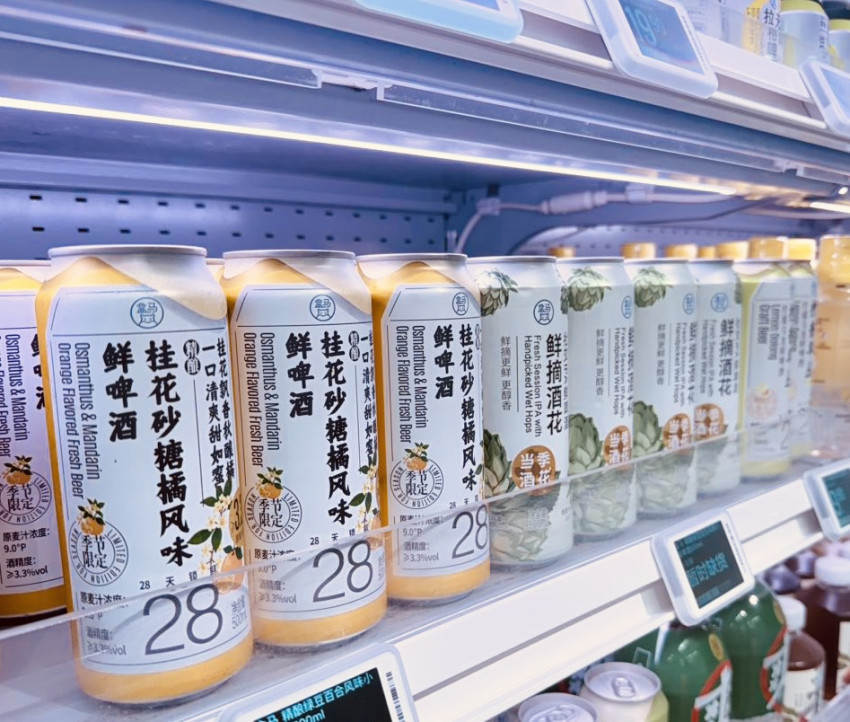
Core Insights - Hema has successfully launched seasonal craft beers, including a new osmanthus-flavored fresh beer, which has gained popularity on social media platforms [1] - The craft beer sales at Hema have seen a year-on-year growth of 52% this year, indicating a strong market demand [1] - Hema's strategy of combining craft beer with seasonal fruits has attracted younger consumers, contributing to user growth [1][3] Company Strategy - Hema has introduced a series of Chinese-flavored craft beers since last year, including products like mung bean and lily-flavored fresh beer, which have generated excitement on social media [3] - The company has optimized its supply chain to reduce the prices of craft beers, making them more accessible to consumers [3] - Hema's product lineup includes seasonal limited flavors, entry-level products, and advanced IPA series, catering to diverse consumer preferences [3] Market Recognition - Hema ranked fifth in the "Beer and Pre-mixed Drinks" category in a recent brand preference survey by Yicai Magazine, being the only supermarket brand on the list [3] - The variety of self-operated craft beers offered by Hema meets the increasingly refined demands of consumers, contributing to its recognition in the market [3] Sales Performance - Hema's hazy IPA, priced at 19.9 yuan per liter, has seen a sales growth of over 200% year-on-year, making it the fastest-growing product in Hema's craft beer series [4] - The high repurchase rate of this product indicates a successful transition of consumers from entry-level to advanced craft beers [4] - Hema plans to introduce new craft beer products for the upcoming season, including a return of the popular candied hawthorn flavor and collaborations with domestic hop farms for new flavors [4]
蜜雪冰城开卖啤酒了
3 6 Ke· 2025-10-17 02:09
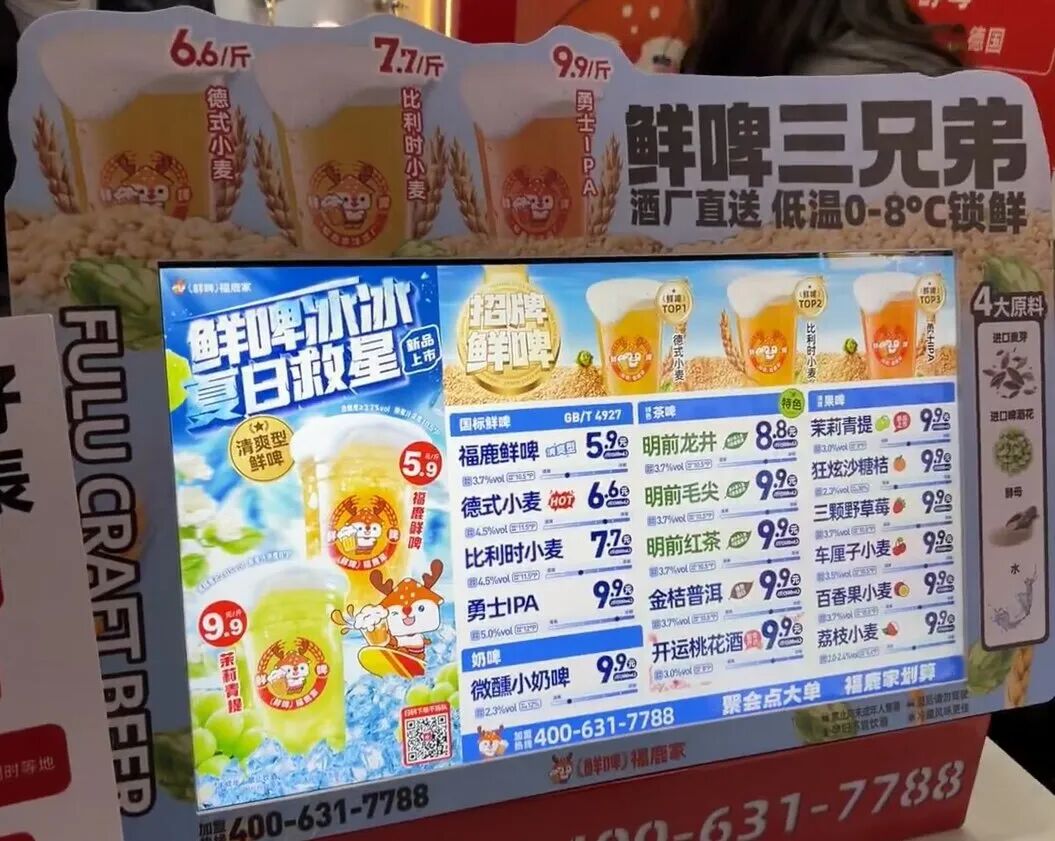
Core Insights - The acquisition of a 53% stake in "Xianpi Fulujia" for 297 million yuan marks the first major acquisition by Mixue Ice City since its IPO in March 2023, signaling its entry into the fresh beer market [1][2] - The deal has raised discussions about the connections between the companies, particularly the relationship between Zhang Hongfu, CEO of Mixue Group, and Tian Haixia, the actual controller of Fulujia, who is also Zhang's wife [1][4] - The valuation of the acquisition has been questioned, with a calculated price-to-earnings ratio of approximately 523 times, significantly higher than the industry average [2][3] Acquisition Details - The acquisition was structured as a capital increase and share transfer, with Mixue Group investing 285.6 million yuan for a 51% stake and acquiring an additional 2% from a third-party shareholder for 11.2 million yuan [2] - The valuation of Fulujia was based on an independent assessment, with a market value range of 244.7 million to 276.6 million yuan, and the acquisition price slightly exceeding the upper limit of this range [2][3] - Post-acquisition, Tian Haixia's direct shareholding in Fulujia decreased to 29.43%, while her total stake, including indirect holdings, is valued at approximately 220 million yuan, yielding an investment return of about 8.2 times [4] Business Strategy - Mixue Ice City aims to leverage its strong supply chain to enhance Fulujia's operations, potentially reducing production costs and improving logistics efficiency [12] - The fresh beer market is projected to grow significantly, with estimates suggesting a market size nearing 100 billion yuan by 2025, indicating a strategic shift for Mixue Ice City to diversify its revenue streams [13][14] - The acquisition aligns with Mixue's broader strategy to explore new growth avenues amid slowing growth in the tea beverage sector [13] Market Positioning - Fulujia has rapidly expanded its presence, with around 1,200 stores across 28 provinces, primarily targeting community and university markets through a franchise model [8] - The branding and operational strategies of Fulujia closely resemble those of Mixue Ice City, suggesting a synergistic relationship between the two brands [9][10] - The fresh beer segment is becoming increasingly competitive, with established players and new entrants vying for market share, posing challenges for Mixue Ice City as it enters this space [15]

食品饮料板块分化中寻机遇:高景气赛道领跑,餐饮链复苏引关注
Mei Ri Jing Ji Xin Wen· 2025-10-17 01:57
Core Viewpoint - The consumption data during the holiday period indicates a gradual recovery in the catering industry, which is driving a rebound in the entire industry chain [1] Group 1: Catering Industry Recovery - The first four days of the holiday saw an increase in catering sales, with daily foot traffic exceeding expectations [1] - There are significant signs of recovery in the catering chain, with notable improvements in the sales of condiments, which slightly exceeded expectations during September and the holiday period [1] - The demand for frozen foods in the B-end has also shown slight recovery, reflecting the transmission effect of catering recovery on upstream industries [1] Group 2: Snack Sector Performance - The snack sector continues to show high levels of activity, with some companies benefiting from strong sales in gift-giving scenarios during the holiday [1] - Traditional channels have seen stable growth, and the volume of customers in bulk snack stores during the holiday indicates strong channel vitality and consumer demand, becoming a key driver of growth in the sector [1] Group 3: Market Confidence and Investment Opportunities - The recent rise in the sector is attributed to the dual themes of "snack sector vitality and catering recovery," with data validating the high activity levels in the snack sector [1] - The continuous improvement in catering has boosted expectations for sub-sectors such as condiments and beer, enhancing market confidence in consumer recovery [1] - The food and beverage ETF (515170) has attracted significant capital, with over 1.1 billion yuan raised in the last five trading days, indicating strong investor interest [1] - From a valuation perspective, the food and beverage sector remains at a low level, suggesting a favorable configuration opportunity at present [1]
雪王又来再造蜜雪冰城了
3 6 Ke· 2025-10-17 00:43
Core Insights - Mixue Ice Cream and Tea has expanded its business into the fresh beer market by acquiring a 53% stake in the fresh beer chain brand Fulu Family for 297 million yuan, marking a significant shift from its traditional tea and coffee offerings [1][20] - Fulu Family, established in 2021, has rapidly grown to over 1,200 stores across 28 provinces in China and is projected to achieve a net profit of 1.07 million yuan in 2024, indicating a profitable business model [1][6] - The acquisition is seen as a strategic move to tap into the growing low-alcohol beverage market, which is expected to reach 570 billion yuan in 2024, with a compound annual growth rate exceeding 30% [8][31] Business Strategy - The pricing strategy for Fulu Family's products ranges from 5.9 yuan to 14.9 yuan, appealing to a younger demographic that Mixue aims to attract [2][4] - The brand's marketing slogan positions it as "adult milk tea," targeting a similar customer base as Mixue, thus creating a complementary product line [4][19] - Mixue's existing infrastructure and supply chain capabilities are expected to enhance Fulu Family's operational efficiency, potentially reducing logistics costs by 15% to 20% [14][21] Market Trends - The fresh beer market in China is projected to grow significantly, with the craft beer segment expected to reach a market size of 80 billion yuan in 2024, reflecting a 30% year-on-year increase [7][8] - The demographic of consumers aged 18-26 constitutes 41% of the low-alcohol beverage market, indicating a substantial target market for Fulu Family [9][31] - The shift in consumer preferences towards low-alcohol beverages aligns with Mixue's strategy to diversify its product offerings and capture a larger share of the beverage market [6][8] Competitive Landscape - Fulu Family's rapid expansion outpaces traditional beer establishments, with a goal to double its store count to 2,500 by 2026, leveraging Mixue's established brand and operational expertise [20][26] - The fresh beer market is becoming increasingly competitive, with other brands like Qingdao Beer and Huaren Beer also exploring similar business models [22][31] - The success of Fulu Family will depend on its ability to differentiate itself in a crowded market and maintain profitability at the store level, as evidenced by challenges faced by competitors like "Fresh Beer 30 Kilometers" [26][31]
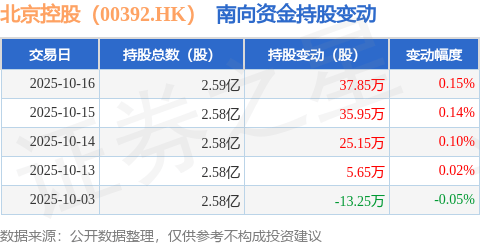
北京控股(00392.HK):10月16日南向资金增持37.85万股
Sou Hu Cai Jing· 2025-10-16 22:22
Group 1 - The core point of the news is that southbound funds have increased their holdings in Beijing Enterprises Holdings Limited (00392.HK) by 378,500 shares on October 16, 2025, marking a positive trend in investment interest [1] - Over the past five trading days, there have been four days of net increases in holdings, totaling 913,500 shares [1] - In the last twenty trading days, there were thirteen days of net increases, amounting to 1,069,800 shares [1] - As of now, southbound funds hold 259 million shares of Beijing Enterprises Holdings, representing 20.54% of the company's total issued ordinary shares [1] Group 2 - The total number of shares held by southbound funds on October 16, 2025, is 259 million, with a change of 378,500 shares, reflecting a 0.15% increase [2] - The previous trading day, October 15, 2025, saw a total holding of 258 million shares with a change of 359,500 shares, a 0.14% increase [2] - The company operates primarily in the gas business through five segments, including gas distribution, water services, environmental services, beer production, and other consulting and investment services [2]

百威集团邓明潇:与上海共同擦亮“夜经济”的金色名片
Guo Ji Jin Rong Bao· 2025-10-16 11:20
Core Insights - China is a crucial market for the company, and it remains committed to long-term investments in the region, particularly in Shanghai, which is viewed as an attractive tourist destination with efficient city management and robust infrastructure [1][3] Group 1: Company Strategy and Market Potential - The company plans to introduce global events like the Tomorrowland electronic music festival to Shanghai, aiming to enhance the city's appeal as a tourist destination [3][5] - The CEO emphasizes the importance of a vibrant nightlife economy, noting that nearly 60% of global consumer activities occur after 6 PM, which correlates with a GDP growth rate of approximately 4% in cities with active night economies [5][6] - Shanghai's night economy is projected to see 4.03 million active night trips in 2024, with a comprehensive night economy index ranking first in the country [5][6] Group 2: Economic Impact and Cultural Significance - The night economy in Shanghai is expected to generate over 88 billion yuan in total consumption by mid-2025, reflecting a year-on-year growth of 3.3% [5][6] - The company aims to support the night economy by investing in cultural and entertainment events, which will enhance Shanghai's international image and cultural soft power [6][7] - The company has established nearly 30 breweries in China since 1984, showcasing its confidence in the Chinese market and contributing to the high-quality development of the local economy [7]