
电商

Search documents
2026合肥电商春“皖”活动举办
Xin Lang Cai Jing· 2025-12-27 15:38
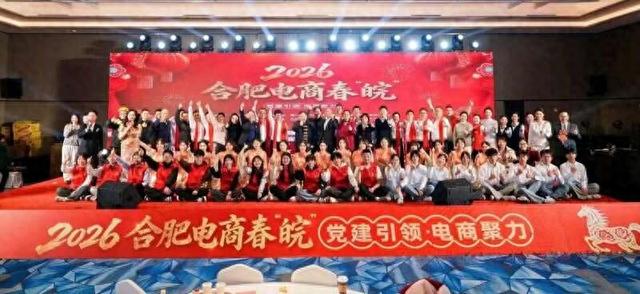
中国青年报客户端合肥12月27日电(中青报·中青网记者 王海涵)12月27日下午,以"党建引领·电商聚 力"为主题的2026合肥电商春"皖"活动在合肥市高新区举办。 活动由合肥市电子商务协会党支部联合蜀山区数字商务联合党委,合肥市电商行业工会、行业团工委、 行业妇联,市网络女主播联盟、守心巾帼宣讲团主办,合肥市电子商务协会各专委会、合肥市电商行业 志愿服务队承办,集中展现合肥市电商行业青年取得的奋斗成果。 场。合肥市电子商务协会供图 活动分为"红旗指引""聚力奋斗""梦想启航"三大篇章,通过歌舞、微党课、情景剧、合唱、朗诵等艺术 形式,演绎了合肥电商行业坚持党建引领、服务发展大局的生动实践。其中,行业志愿者、社区工作者 与外卖骑手共同创排的音乐情景剧《星光订单·温暖同行》,真实再现了新就业群体融入社区治理、传 递城市温暖的感人故事。 来源:中国青年报客户端 场。合肥市电子商务协会供图 合肥市电子商务协会负责人表示,协会积极探索"党建+产业链+服务"新模式,打造"红电商"特色党建品 牌。近年来,累计开展各类活动超1200场。协会携手368家会员单位,在促消费、稳就业、育人才、促 活动现 融合等方面成效显著,打造 ...

台湾网红馆长厦门成立电商公司,首度介绍新办公室
Xin Lang Cai Jing· 2025-12-27 06:27
特别声明:以上文章内容仅代表作者本人观点,不代表新浪网观点或立场。如有关于作品内容、版权或其它问 题请于作品发表后的30日内与新浪网联系。 #台湾#网红馆长在厦门成立首家电商公司,12月26日介绍了新办公室。馆长陈之汉首次大陆行至今才半 年时间。#微博中长视频激励计划##台湾网红馆长大陆行# 台湾网红馆长厦门成立电商公司,首度介绍新办公室 台湾网红馆长厦门成立电商公司,首度介绍新 办公室 ...

烧钱的一年 金融时报:外卖大战损害美团利润制约海外扩张
Feng Huang Wang· 2025-12-27 03:59
Core Viewpoint - Meituan is facing intense competition from Alibaba and JD.com in the food delivery market, leading to significant financial losses and impacting its international expansion plans [1][2]. Group 1: Financial Impact - Meituan has incurred its largest quarterly loss since its IPO in 2018, with a loss of 16 billion RMB in Q3 due to heavy subsidies to compete with rivals [2][3]. - Analysts estimate that Meituan is losing approximately 1 RMB on average for each instant delivery order this year [2]. - If the subsidy war continues, Meituan's cash reserves are projected to drop to 74 billion RMB by next year, compared to 110 billion RMB in 2025 [4]. Group 2: Market Dynamics - Alibaba's resurgence has altered the competitive landscape, with the company investing 7 billion USD in subsidies and rapidly increasing its active user base in the food delivery sector [4]. - Meituan's market share in instant delivery is expected to decline from 73% in 2024 to 55% by 2027, while Alibaba's share is projected to rise from 21% to 40% in the same period [5]. Group 3: International Expansion Challenges - The fierce competition in the domestic market is hindering Meituan's international ambitions, as it must focus on defending its local market position [8]. - Meituan has made strides in international markets, surpassing competitors in Hong Kong and Saudi Arabia, but faces tougher challenges in Brazil due to stronger local players [8][9]. Group 4: Employee Morale and Company Culture - Employee morale at Meituan is reportedly low, with staff working long hours to support ongoing subsidy campaigns and manage the demands of both domestic and international operations [10]. - The company's stock has declined over 30% this year, contrasting sharply with the rebound of other Chinese internet stocks [10].



抖音推长图文功能,剑指微信公众号;Cursor CEO:AI代码恐成豆腐渣工程;新版「QQ秀」内测,支持照片生成 | 极客早知道
Sou Hu Cai Jing· 2025-12-27 03:30
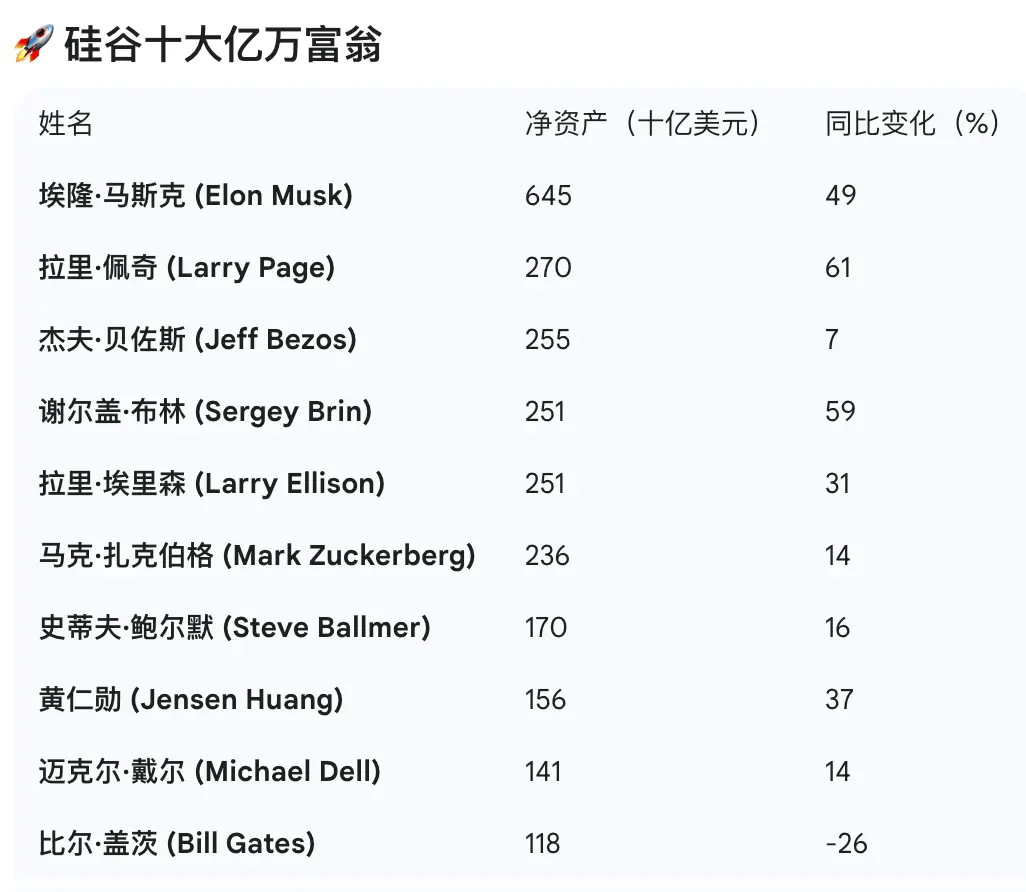
Group 1: Wealth Increase of Tech Billionaires - The wealth of top U.S. tech billionaires increased by over $550 billion (approximately 3.86 trillion RMB) this year, driven by investor enthusiasm for leading AI companies [1] - As of Christmas Eve, the total cash, equity, and other investment assets held by the top ten tech founders and CEOs in the U.S. approached $2.5 trillion, up from $1.9 trillion at the beginning of the year [1] - Elon Musk remains at the top with a net worth of $645 billion, having seen an increase of nearly 50% [1] Group 2: Performance of Key Individuals - Larry Page's net worth increased by 61% to $270 billion, while Jeff Bezos saw a 7% increase to $255 billion [2] - Jensen Huang, founder of Nvidia, ranks eighth among U.S. tech executives with a net worth of $156 billion, reflecting a 37% increase [2] - Bill Gates experienced a decline in net worth by 26%, now standing at $118 billion [2] Group 3: Investment in Hard Technology - China has established three venture capital funds focused on "hard technology," each exceeding 50 billion RMB (over $7.1 billion) [7] - The funds aim to invest in early-stage companies with valuations below 500 million RMB, targeting key areas such as integrated circuits, quantum technology, and biomedicine [7] - The investment strategy emphasizes a broad approach to cover a wide range of innovative enterprises while managing project risks [7] Group 4: New Product Launches - Honor launched the WIN series smartphones featuring a 10,000mAh battery, marking a significant advancement in battery capacity [12] - The new devices support 100W wired fast charging and 80W wireless fast charging, addressing power anxiety for users [12][16] - Tianma Microelectronics announced the mass production of a 185Hz AMOLED display, showcasing advancements in high refresh rate technology [18] Group 5: New App Developments - JD.com is testing a new app called "JD AI Purchase," designed to assist users with shopping and life services using AI [10] - The app features proactive suggestions for shopping strategies and allows users to create orders with simple commands [11] - The return of the QQ Show, a nostalgic feature, includes new functionalities for users to generate personalized avatars and interact with friends [20]


国家创业投资引导基金正式启动 今年1月至11月家电以旧换新超1.28亿台
Sou Hu Cai Jing· 2025-12-27 02:21
Equity Market - The market experienced a slight increase on December 26, with the Shanghai Composite Index rising by 0.1%, marking an eight-day consecutive gain [4] - The total trading volume in the Shanghai and Shenzhen markets reached 2.16 trillion yuan, an increase of 235.7 billion yuan compared to the previous trading day [4] - Over 3,400 stocks in the market declined, indicating rapid rotation of market hotspots [4] Domestic Policies - Jiangsu Province's Finance Department introduced measures to optimize the management of enterprise-related financial funds, aiming to address issues of "dispersed, inefficient, and redundant" fund management [6] - The Ministry of Ecology and Environment announced the fourth batch of excellent cases and lists for beautiful bays, with four locations in Jiangsu selected [6] - The National Development and Reform Commission launched three regional venture capital guidance funds to support entrepreneurship [7] Corporate Developments - Peter Schiff, a Wall Street economist, highlighted the risk of investor confidence in U.S. fiscal and monetary stability for 2026, predicting silver prices could reach $100 per ounce [8] - The Japan Semiconductor Equipment Association reported that sales of chip manufacturing equipment in November 2025 reached 420.67 billion yen, a 3.7% increase year-on-year, marking the 23rd consecutive month of growth [8] - LG Electronics announced the launch of a new gaming monitor with built-in AI technology capable of enhancing content resolution to 5K [8] - Toyota plans to set its global production target for 2026 at over 10 million vehicles, responding to strong demand for hybrid vehicles in North America [8] - Tesla's full self-driving system is expected to launch in the UAE next month, featuring advanced driver assistance capabilities [8]


美股终结五连阳!中概股走高,金银铜铂钯“闪耀”圣诞假日
Di Yi Cai Jing· 2025-12-27 01:17
Market Performance - The three major U.S. stock indices all rose over 1% this week, with the S&P 500 index up 1.4%, marking its fourth weekly gain in five weeks [1][2] - The Dow Jones Industrial Average and Nasdaq also saw gains exceeding 1% this week [1] Economic Indicators - Mid to long-term U.S. Treasury yields showed narrow fluctuations, with the 2-year Treasury yield falling below 3.50% [1][3] - Strong economic data and expectations of potential policy easing by the new Federal Reserve chair next year have contributed to the stabilization of the stock market [2] Sector Performance - The recent market rally is broadening beyond technology stocks, with financial and industrial sectors driving the S&P 500 index to new highs [3] - Analysts predict a 15.5% profit growth for S&P 500 companies in 2026, up from 13.2% in 2025, indicating a positive outlook for corporate earnings [2] Company News - Nvidia shares rose by 1% following the announcement of a technology licensing agreement with startup Groq [4] - Target's stock increased by 3.3% amid pressure from hedge fund TCIM Capital Management, which holds a significant stake in the company [5] - Chinese tech stocks also performed well, with Alibaba up 1.5%, Pinduoduo up 1.4%, and Baidu up 1.2% [5] Commodity Market - International oil prices declined, with WTI crude oil down 2.76% to $56.74 per barrel [5] - Precious metals saw significant gains, with COMEX gold futures rising 1.08% to $4529.10 per ounce and COMEX silver futures up 7.68% [5]
孙正义藏了44年的长女自曝身份;周大福客服回应“牛马”吊坠被指阴阳打工人;霸王茶姬发长文回应质疑丨邦早报
创业邦· 2025-12-27 01:09
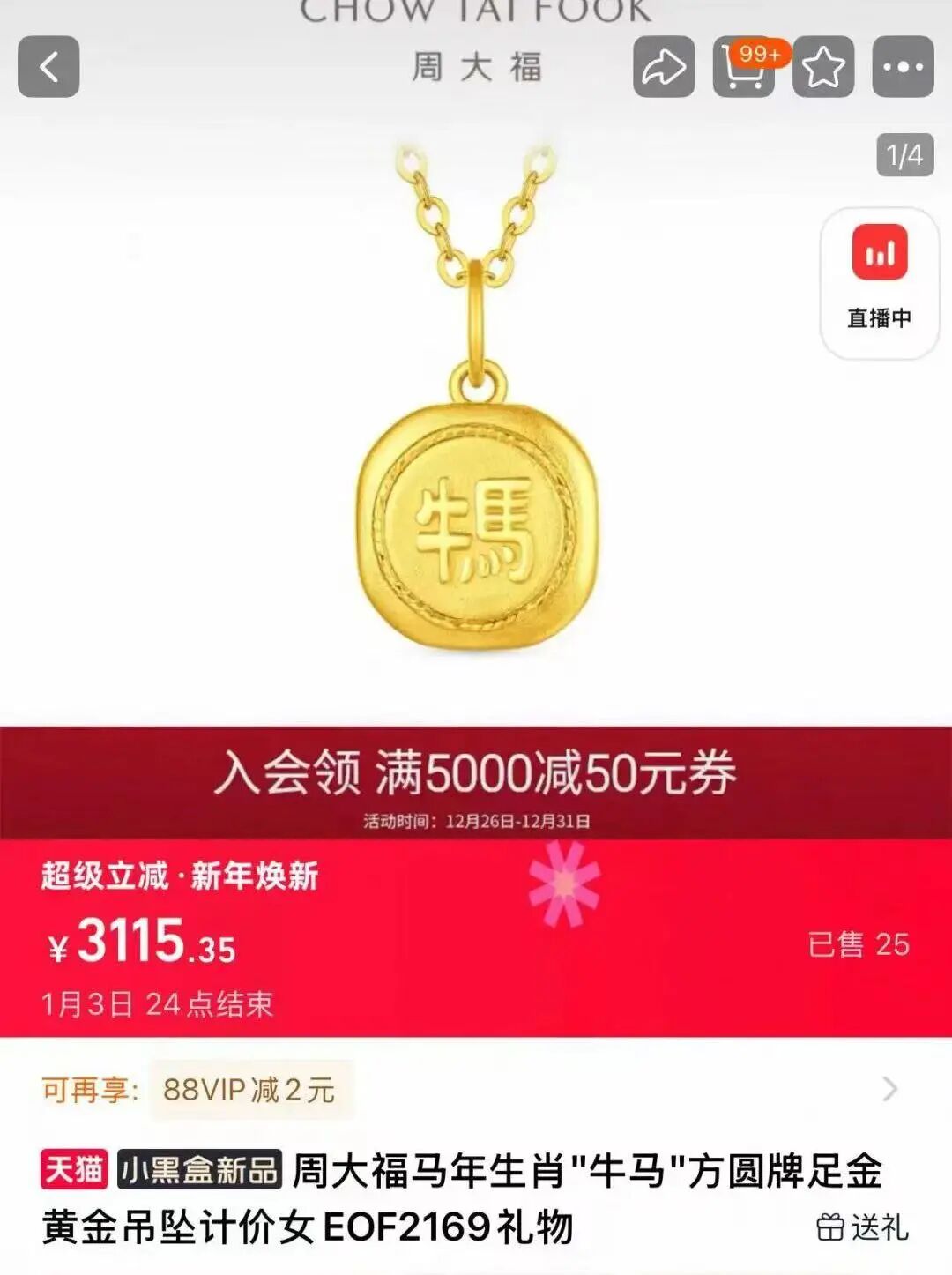
Group 1 - The article discusses the announcement by Spiber, a biotech unicorn in Japan, regarding the involvement of Masaya Kawanami, the daughter of SoftBank's founder Masayoshi Son, in the company's operations starting in the first half of 2026. This marks her first public acknowledgment of her family background in a business context, raising speculation about potential succession plans for SoftBank [2] - Realme, a smartphone brand under OPPO, has responded to rumors of large-scale layoffs, stating that business operations are normal and that the rumored layoffs are part of regular personnel changes at year-end. The company is set to launch new products in January [4] - Bawang Tea's stock price fell nearly 15% due to concerns over caffeine content in their products, prompting the company to issue a statement clarifying that their tea's caffeine levels are comparable to that of a latte and significantly lower than that of an Americano [4] - Chow Tai Fook faced backlash over a gold pendant design, which was criticized on social media. The company responded that the product is selling well online and that customer feedback will be considered for future designs [6] - Dong'an Group confirmed the suspension of three Porsche dealerships due to operational difficulties, with plans to address employee salary issues within 60 days. The company denied rumors of investor flight [9] - Midea's Building Technology division announced a 5% price increase across all product lines due to rising raw material costs, effective from December 15, 2025 [11][12] - The first national standards for AI large models have been implemented, focusing on technical evaluation and aiding over 30 companies in technology iteration [13] Group 2 - Lenovo plans to unveil an AI super-intelligent agent at CES, which is expected to compete with existing AI assistants by offering more comprehensive features and cross-device connectivity [17] - Douyin has launched a long-form content feature allowing users to publish articles up to 8,000 words, enhancing its content creation capabilities [17] - The UK used car market saw a 2.8% growth in Q3 2025, with over 2 million transactions, marking the strongest performance since 2021 [22] - Apple's smartphone sales in China doubled in November, with a 128.4% year-on-year increase, while the overall smartphone market grew less than 2% [22]

9点1氪丨小米17 Ultra徕卡版被炒至2万元;周大福黄金吊坠被指阴阳打工人;和睦家医院回应女明星生产信息疑被泄露
3 6 Ke· 2025-12-27 01:09
Group 1 - Xiaomi's 17 Ultra Leica version sold out within hours of its pre-sale launch, with the highest resale price reaching 20,000 yuan, significantly above the official starting price of 8,999 yuan [1][1][1] - The 16GB+512GB version is available on Xiaomi's official store, while the 16GB+1TB version is out of stock across various platforms, indicating high demand [1][1] - Over 1 million reservations were recorded on JD platform for the Xiaomi 17 Ultra Leica version [1] Group 2 - Zhou Dafu responded to criticism regarding its "cow and horse" gold pendant, stating it is only sold online and has seen high sales; they are open to customer feedback for future improvements [2][2] - The pendant is priced starting at 3,044.7 yuan, and the company clarified the pendant's meaning as representing resilience and good fortune [2] Group 3 - Xiaopeng Motors officially entered the Mauritius market after establishing a strategic partnership, following its previous entry into Qatar [7][7] - The company also opened a flagship showroom in Abu Dhabi and a large service center in New Cairo, Egypt [7] Group 4 - Douyin launched a long-form text feature allowing users to publish articles up to 8,000 words with up to 30 images and background music [6][6] - The mobile version of this feature is expected to roll out soon [6] Group 5 - LV responded to a customer's complaint regarding a pair of shoes that caused injury, stating that they only offered an exchange and did not support returns for used products [8][8] - The shoes were purchased for 9,250 yuan, and the customer required medical treatment due to the injury [8] Group 6 - The first mandatory standard for electric vehicle energy consumption will be implemented in China starting January 1, 2026, tightening limits by approximately 11% compared to previous recommendations [10][10] - This standard aims to guide the development of energy-saving technologies while accommodating diverse vehicle types [10] Group 7 - The first batch of L3 autonomous vehicles in China has begun large-scale road operation in Chongqing, consisting of 46 vehicles equipped with L3 autonomous driving systems [16][16] - These vehicles are authorized to operate on specific urban roads [16] Group 8 - Fujitsu will join a next-generation memory development project led by SoftBank, aiming for commercialization by the 2027 fiscal year [22][22] - This project will utilize technologies from Intel and the University of Tokyo [22]



传媒行业投资策略:AI与IP相融共生,共驱内容繁荣-开源证券
Sou Hu Cai Jing· 2025-12-26 20:10
Group 1 - The core logic of the report revolves around "AI and IP coexisting," indicating that the media industry is expected to experience high overall prosperity, with profits and valuations likely to resonate together. The media industry is projected to rise by 24% in 2025, driven by breakthroughs in AI large models and performance releases [1][22] - The media industry's revenue for the first three quarters of 2025 grew by 6% year-on-year, while net profit attributable to shareholders increased by 38%. In Q3 alone, net profit growth reached 61%, significantly enhancing profitability [1][26] - In the gaming sector, both supply and demand are robust, with revenue and net profit increasing by 24% and 89% year-on-year, respectively. The film industry benefited from high-quality IP content, with net profit soaring by 110% year-on-year [1][28] Group 2 - AI has become the core growth engine, with accelerated application across multiple fields. Major companies are rapidly iterating large models, establishing a foundation for the application ecosystem. In the gaming sector, relaxed licensing has boosted new game supply, while AI is restructuring development processes to reduce costs and enhance efficiency [2][47] - The film industry is experiencing a resurgence due to supportive policies like the "21 Regulations," which have relaxed content restrictions. AI video tools and short dramas are expected to expand the industry significantly, benefiting companies like Mango TV and Shanghai Film [2][39] - In marketing, AI continues to empower programmatic advertising platforms, optimizing algorithms to improve customer acquisition efficiency. Companies like HuiLiang Technology and Inertia Media are expected to benefit significantly [2][14] Group 3 - The IP business is undergoing multi-dimensional upgrades, with overseas expansion becoming a core growth driver. Categories such as online literature, games, and trendy toys are rapidly increasing their market share abroad, with companies like Pop Mart seeing significant growth in overseas revenue [3][10] - The expansion of categories continues to deepen, with IP extending from online content to offline derivatives and theme parks, achieving full-scene coverage. The capitalization process is accelerating, with companies like Card Game and 52TOYS filing for listings [3][11] - Leading companies like Yuewen Group and Aofei Entertainment are leveraging their rich IP reserves and full industry chain operational advantages to lead the market [3][14]






锚定目标 乘势而上
Xin Lang Cai Jing· 2025-12-26 19:59
Core Insights - The Guizhou Municipal Economic Work Conference has outlined the economic goals and key tasks for 2026, emphasizing the importance of a strong start to the "14th Five-Year Plan" [1][2][3] Economic Goals and Strategies - The conference identified the need for a focus on six major industrial clusters to guide economic work in the coming year, providing a clear direction and path for development [3][4] - The emphasis on innovation-driven growth and the activation of educational and technological talent is crucial for enhancing productivity and fostering new industries [3][4] Support for Private Sector - The conference aims to boost confidence in the development of the private economy, with initiatives to improve the business environment and enhance communication between government and enterprises [2][5] - The city will promote investment and consumption, focusing on new retail formats and enhancing consumer experiences through various initiatives [5] Digital Economy and Data Development - The strategy includes a commitment to achieving a target of 300 billion in the digital economy, with a focus on integrating data, artificial intelligence, and electronic information industries [4][5] - The "Four Cities Linkage" initiative aims to deepen the integration of technological innovation with industrial development [3][4] Employment and Talent Development - The human resources system will prioritize job stability and expansion, particularly for key groups such as recent graduates and rural laborers [6][7] - Efforts will be made to enhance the talent environment and optimize policies to attract and retain skilled professionals [7][8] Urban Development and Infrastructure - The city will focus on urban renewal projects and the optimization of state-owned capital layout to support industrial cluster development [7][8] - The Guizhou Supply and Marketing Cooperative will enhance services for agriculture and rural development, aiming to strengthen its market competitiveness [8]