
半导体

Search documents
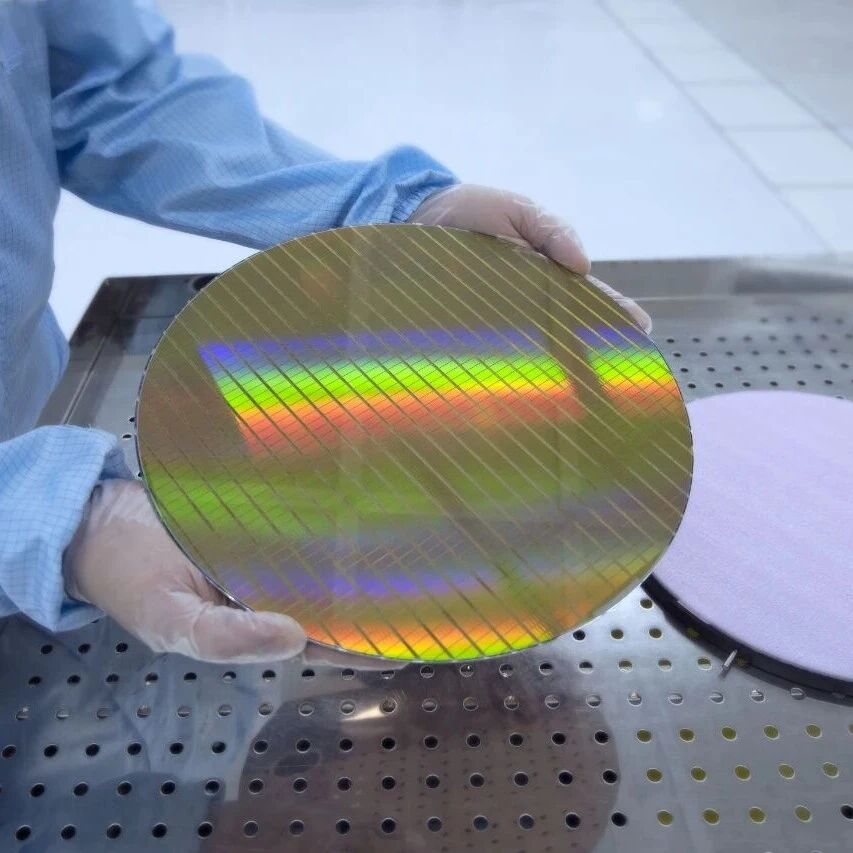
英特尔晶圆厂,终于快挣钱了
半导体行业观察· 2026-03-05 01:13
Core Viewpoint - Intel is gaining confidence in achieving breakeven for its foundry business, driven by strong customer demand amid the AI boom and successful production of the Panther Lake processor [2][5]. Group 1: Foundry Business Developments - Intel's CFO, David Zinsner, expressed optimism about the foundry business, indicating that the company is on track to achieve breakeven by 2027 if customer interest translates into actual orders [5]. - The 18A chip series, including derivatives like 18A-P, is expected to attract customer orders, with notable interest from Apple and Nvidia [2][3]. - Demand for Panther Lake chips currently exceeds supply, which is anticipated to enhance profit margins as production ramps up [2]. Group 2: 14A Chip Development - Despite initial skepticism regarding the 14A chip's adoption, Zinsner confirmed that production is still on schedule, with mass production expected by 2029 [3][4]. - The company remains cautious with capital expenditures for the 14A chip, balancing customer and internal market demands [3]. Group 3: Advanced Packaging Technology - Intel's advanced packaging technology is projected to generate "billions of dollars" in revenue, with potential customer adoption starting in the second half of this year [4]. - The EMIB and EMIB-T solutions are attracting interest from several fabless manufacturers, including discussions with Apple, Nvidia, and Qualcomm [4]. Group 4: Financial Outlook - Intel anticipates that improvements in yield and increased demand for mature process nodes will help the foundry business return to profitability soon [5].


RISC-V迎来关键拐点
半导体行业观察· 2026-03-05 01:13
Core Insights - RVA23 marks a turning point in mainstream CPU performance expansion by mandating the use of RISC-V Vector Extensions (RVV), elevating structured, explicit parallel computing to the same architectural status as scalar execution [2] - The shift from speculative execution to deterministic execution is significant, as it allows predictable, vector-driven parallel computing to become a reliable mainstream method for performance enhancement [2][9] Group 1: Changes in Software Performance Contracts - Mandatory vector support fundamentally alters the software performance contract, allowing compilers, libraries, and applications to assume the presence of RVV in every compatible core [3] - Optimization strategies shift from "letting the CPU guess" to explicit, structured parallel processing, enabling developers to work with a predictable model for expanding loops and data parallel workloads [3] Group 2: Historical Context of Speculative Execution - Speculative execution evolved from techniques that relaxed strict sequential execution limits, with significant contributions from Robert Tomasulo and James Thornton in the 1960s [4] - The introduction of branch prediction in the late 1970s established speculative operations on a probabilistic basis, leading to a paradigm where memory became a preemptively fetched object rather than a passive one [4] Group 3: Industry Adoption and Cost Implications - Major companies like Intel and IBM adopted speculative out-of-order execution as a mainstream CPU template, continuously expanding speculative capabilities without questioning the approach [5] - The rising costs associated with energy consumption, particularly in memory access, have become increasingly apparent, with energy becoming the primary constraint in computing rather than transistor density or raw logic speed [5] Group 4: Evolution of Memory Systems - Modern processors face pressure on memory systems due to interference and unpredictable access patterns, many of which are driven by speculative execution rather than committed calculations [6] - Deterministic execution optimizes for known factors, viewing latency as a schedulable element rather than a problem to be masked by increased bandwidth [6] Group 5: Advantages of Structured Parallelism - The structured parallelism enforced by RVA23 ensures hardware support for workloads that are inherently data-parallel, making explicit parallelism more advantageous than speculative guessing [8] - RVA23 does not eliminate speculation but rather removes its exclusivity, allowing for a balanced approach where structured parallelism is no longer secondary [8][9] Group 6: Impact on Future Architectures - The transition brought by RVA23 reduces uncertainty in vector computation capabilities, allowing deterministic methods to achieve top-tier performance without solely relying on speculative computation [9] - This shift signifies the end of speculation's monopoly in RISC-V CPUs, marking a crucial contribution to processor architecture beyond any single technical feature [9]

博通披露多颗重磅芯片:大厂自研持续
半导体行业观察· 2026-03-05 01:13
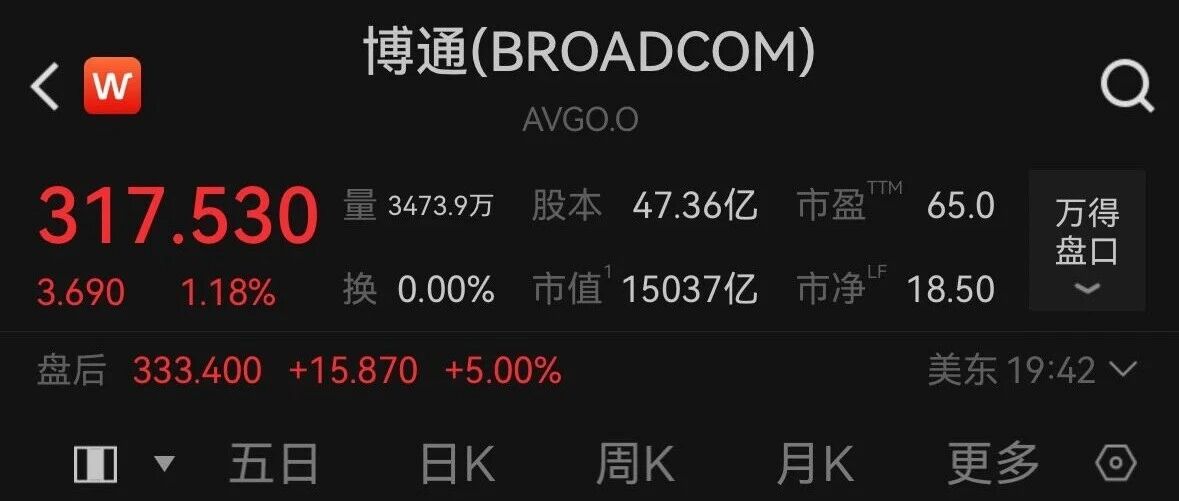
Core Viewpoint - Broadcom's CEO, Chen Fu Yang, anticipates that the company's AI chip sales will exceed $100 billion by next year, marking significant progress in a market dominated by Nvidia [2][3]. Group 1: AI Chip Sales and Revenue - Broadcom expects AI chip revenue for the current quarter to reach $10.7 billion, indicating a substantial leap towards the $100 billion annual revenue goal [2]. - In the first quarter, Broadcom's AI business revenue reached $8.4 billion, a 106% year-over-year increase, driven by strong demand for custom AI accelerators and network products [3][8]. - The company reported total semiconductor solutions revenue of $12.52 billion, surpassing analyst expectations of $12.25 billion [3]. Group 2: Stock Buyback and Financial Performance - Broadcom announced a stock buyback plan of up to $10 billion, approved by its board for implementation before 2026 [4]. - The company reported second-quarter revenue of approximately $22 billion, exceeding the average analyst forecast of $20.5 billion [2]. Group 3: Market Position and Competitors - Despite Nvidia being the largest manufacturer of AI accelerators, Broadcom positions itself as an alternative with its custom semiconductor products [2]. - Broadcom's AI chip goals include both accelerators and network chips, aiming to capture a significant share of the growing AI market [2]. Group 4: Partnerships and Future Prospects - Broadcom has secured a $10 billion custom chip order from Anthropic, indicating strong demand for its AI solutions [4]. - The company is collaborating with Google on Tensor Processing Units (TPUs), which are gaining attention and are expected to boost Broadcom's prospects [7][8].

算力的新因果:AI Agent时代,被重估的CPU价值与新机遇
半导体行业观察· 2026-03-05 01:13
Core Insights - The article discusses a paradigm shift in artificial intelligence from large language models (LLMs) to autonomous agents (Agents), emphasizing the redefined role of CPUs as the backbone of data centers rather than GPUs [1] - This transition is driven by the evolving workload characteristics of AI, leading to a reevaluation of CPU's strategic value in the AI landscape [1] Group 1: Understanding CPU's Role - CPUs have always been crucial in traditional cloud computing and data center architectures, serving as the foundation for virtualization, container orchestration, and database operations [3] - The rise of LLMs led to a perception that GPUs were the primary drivers of AI success, sidelining CPUs to a supporting role focused on data preprocessing and task scheduling [3][4] - The misconception that "AI = large models = GPU" overlooks the necessity of CPUs for general intelligence, especially as AI moves towards executing complex tasks in open environments [4] Group 2: Expansion of CPU's Work Boundaries - The emergence of AI Agents has significantly broadened the operational scope of CPUs, making them critical for determining AI response speed and cost [6] - AI Agents utilize sandbox virtual machines for task execution, with CPUs managing all processes, leading to exponential growth in CPU core demand as millions of Agents operate concurrently [7] - The industry is adopting micro virtual machine technology to optimize resource usage, which places unprecedented demands on CPU scheduling capabilities and device access bandwidth [7] Group 3: Performance Bottlenecks - Research indicates that CPUs are becoming the new bottleneck for AI response times, with studies showing that CPU processing accounts for over 90% of total latency in certain Agent frameworks [10][12] - Under high-concurrency loads, CPU energy consumption has surged, with studies revealing that CPU energy usage can reach 44% in specific tasks, necessitating a reevaluation of power and cooling strategies in data centers [14][15] - The need for high-capacity memory for AI models has increased the pressure on CPU bandwidth, as inactive cache data is offloaded to CPU memory, creating new bottlenecks [15] Group 4: Future Trends and Opportunities - The demand for CPUs is expected to grow long-term due to the proliferation of cloud computing and the increasing need for CPU resources to support AI Agents [16] - Major semiconductor companies are recognizing this trend, with NVIDIA investing in cloud service providers to enhance CPU capabilities for AI workloads [16][17] - The evolving landscape presents opportunities for various CPU architectures, including x86, Arm, and RISC-V, each with distinct advantages and challenges in meeting the demands of AI Agents [17][23] Group 5: Architectural Insights - The x86 architecture remains dominant in enterprise markets due to its extensive software ecosystem and stability, particularly in sectors sensitive to system reliability [17] - Arm architecture is gaining traction for its energy efficiency and suitability for cloud-native applications, with significant adoption by leading cloud service providers [18][19] - RISC-V, while promising due to its open-source nature, faces challenges in achieving widespread adoption in enterprise-level server applications, requiring significant ecosystem development [23][24]

光力科技(300480) - 300480光力科技投资者关系管理信息20260304
2026-03-05 00:52
Group 1: Business Development - In Q1 2026, the company maintained a high production capacity for semiconductor slicing equipment, continuing the momentum from H2 2025 [2] - The IoT business remains stable, with efforts to enhance production efficiency and capacity to meet customer delivery demands [2] Group 2: Product Progress - The company is advancing its laser slicing machines and grinding machines, with ongoing client validation and development of a grinding and polishing integrated machine [2] - The domestic soft blade business is expected to see new growth opportunities in 2026, with several models already in mass production [3] Group 3: Client Base and Product Range - The company's air spindles are produced in the UK and China, serving high-precision processing clients in both domestic and international markets [4] - The 8230 model, a 12-inch dual-axis fully automatic wafer slicing machine, has the highest sales volume among domestic semiconductor slicing machines, with an increasing sales proportion of high-end models developed in collaboration with clients since 2025 [5] Group 4: Operational Stability - The geopolitical situation in the Middle East has limited impact on the operations of the Israeli subsidiary ADT, which remains stable and operational under government protection [6] - ADT's management has maintained communication with clients to ensure order delivery and minimize external disruptions, demonstrating strong risk management capabilities [6]

博通
小熊跑的快· 2026-03-05 00:50
Core Insights - The company reported total revenue of $19.31 billion for Q1 fiscal 2026, a 29% year-over-year increase, driven by strong demand for AI semiconductor offerings, which grew 106% year-over-year to $8.40 billion, representing 43.5% of total revenue [10][12] - The AI semiconductor backlog stands at approximately $73 billion, expected to be delivered over the next 6 to 8 quarters, indicating strong future demand [11] - The company anticipates Q2 revenue of $22 billion, with AI semiconductor revenue projected to reach $10.7 billion, reflecting continued growth [17] Revenue Breakdown - AI semiconductor revenue reached $8.4 billion, accounting for 43.5% of total revenue, with custom AI accelerators (XPU) contributing $5.9 billion and AI networking (including CPO) contributing $2.5 billion [2][10] - Semiconductor solutions revenue was $12.52 billion, up 52% year-over-year, while infrastructure software revenue was $6.79 billion, up 1% year-over-year [12][14] Gross Margin Analysis - The GAAP gross margin was reported at 76.9%, down 1% sequentially, primarily due to the higher mix of lower-margin AI semiconductor revenue [15][23] - The company expects gross margins to stabilize in the 75% to 77% range over the next several quarters as the mix of higher-margin CPO products increases [23] Future Outlook - The company expects AI semiconductor revenue to increase to $10.7 billion in Q2, with a stable adjusted EBITDA margin of approximately 68% [17][23] - Approximately 75% of the AI backlog is attributed to XPU, while 25% is from AI networking, including CPO, indicating a strategic focus on high-growth areas [23]

涨近12%!亚太股指飙升
Wind万得· 2026-03-05 00:48
3月5日, 日韩股市均强劲反弹。 韩国综合指数(KOSPI) 高开3.09%至5250.92点,随后涨幅持续扩大,盘中一度涨近12%。 两大权重股领涨市场,三星电子涨幅超13%,SK海力士涨幅超15%。 受市场剧烈波动影响, KOSPI 程序化交易被 交易所临时暂停。 | | | | 5623.79 | | 昨收 | 5093.54 | 成交额 | 0.00 | | --- | --- | --- | --- | --- | --- | | +530.25 +10.41% | | 今井 | 5250.92 | 成交量 | 2.50亿 | | 上涨 | 780 | 平盘 | 25 | 下跌 | 23 | | 最高价 | 5695.64 | 市智率 | 24.15 | 近20日 | 7.65% | | 最低价 | 5248.13 | 市净率 | 1.86 | 今年来 | 33.45% | | 分时 | | | 五日 日日K 周K 月K 更多 | | O | | 音加 15695.64 | | | | | 均价: -- 11.82% | | 5093.54 | | | | | 0.00% | | 4491.44 | ...

中国银河证券:A股市场震荡并非趋势性转向 配置机会上关注三大主线
智通财经网· 2026-03-05 00:46
Core Viewpoint - The recent volatility in the A-share market is not indicative of a trend reversal but rather a short-term emotional release under external pressures, with a medium to long-term positive trend remaining intact [1][2][3] Market Characteristics - The A-share market has experienced significant fluctuations driven by geopolitical risks, market structure differentiation, and capital dynamics, resulting in wide index oscillations and extreme sector divergence [2] - External geopolitical factors, particularly the ongoing Middle East tensions, have triggered short-term volatility, while domestic economic fundamentals and policy direction continue to dominate medium to long-term trends [2][3] Investment Opportunities - The market is expected to transition from emotion-driven movements to fundamentals-driven dynamics, characterized by "oscillation digestion, momentum enhancement, and structural focus" [3] - Key investment themes include: - **Theme One**: Short-term certainty in price increases and risk aversion, particularly in sectors like oil and gas, petrochemicals, coal, non-ferrous metals, and shipping ports, which are benefiting from rising energy prices and inflation expectations [3][4] - **Theme Two**: Improvement in supply-demand dynamics and industry profit recovery, with a focus on sectors such as basic chemicals, steel, construction materials, and financials, especially banks [4] - **Theme Three**: New productive forces in the domestic economy, including storage, computing power, consumer electronics, communication equipment, communication services, semiconductors, and military industries, as well as consumer sectors with strong domestic and external demand expectations [4]

越骂越火?山姆一冰块卖37.9元,多门店已售罄!网友吵翻天;一秒1块钱,Seedance2.0生成视频价格公布;拼多多一招商经理受贿208万被抓
雷峰网· 2026-03-05 00:29
Group 1 - The article discusses the controversy surrounding a high-priced ice product sold at Sam's Club, which has sparked intense debate among consumers regarding its value and pricing strategy [4][6] - The product, "Farmer Spring Pure Transparent Ice 1.38kg," is priced at 37.9 yuan, leading to comparisons with similar products from competitors, which are significantly cheaper [6] - The ongoing debate has resulted in increased demand, with reports of the product selling out in many locations and even being resold at a premium [4][6] Group 2 - Pinduoduo's manager was sentenced to three years and five months for accepting bribes totaling over 2.08 million yuan, including a Rolex watch [9][10][11] - The court found that the manager exploited his position to benefit merchants on the platform, leading to significant legal repercussions [10][11] Group 3 - ByteDance's Seedance 2.0 pricing has been announced, with costs averaging 1 yuan per second for video generation, reflecting a competitive pricing strategy in the AI video generation market [5][12] - The service offers two pricing tiers based on video input, with the inclusion of video editing resulting in a higher cost due to increased computational requirements [12] Group 4 - Aion M9 has achieved over 280,000 units delivered, claiming top rankings in sales, quality, safety, reputation, and resale value in the luxury SUV segment [15][16] - The company aims to sell an additional 1 million units within two years, targeting a total of 2 million units sold [16] Group 5 - Alibaba's Qwen AI model team is undergoing a restructuring, with the core leader stepping down, which has raised questions about the future direction of the project [19][20] - The company emphasizes that this change is part of a broader team expansion rather than a contraction, aiming to enhance resource allocation [20] Group 6 - GPU manufacturer Muxi expects a first-quarter loss of 90.76 million to 182 million yuan, despite projected revenue growth of 24.84% to 87.26% year-on-year [21] - The company is focusing on innovation and market expansion in the high-performance GPU sector, driven by the rapid growth of the AI industry [21] Group 7 - The robotics company Dajie has completed a multi-million D round of financing, which will be used to enhance its technology and expand into strategic emerging sectors [22] - The funding will support advancements in industrial intelligence and market penetration in key industries such as energy and aerospace [22] Group 8 - Xiaomi's robots have been operational in its automotive factory, achieving a 90.2% success rate in a specific task, showcasing advancements in robotics technology [26] - The company plans to scale up the deployment of humanoid robots in its factories over the next five years [26] Group 9 - GAC Honda is undergoing internal restructuring amid a significant drop in sales, with February sales down 68.93% year-on-year [28] - The company is adjusting its marketing and operational strategies to address the declining performance [28] Group 10 - The semiconductor industry has made a breakthrough in observing internal chip defects, which could enhance the reliability of high-performance chips [46] - This advancement is expected to aid in the debugging and optimization processes within semiconductor manufacturing [46] Group 11 - Qingwei Intelligent has initiated its IPO process, potentially becoming the first publicly listed company focused on reconfigurable chips in China [49][50] - The company has achieved significant sales milestones, with over 30 million units shipped, indicating strong market demand for its products [50] Group 12 - RuiXiang Intelligent has successfully passed the IPO review, focusing on smart manufacturing in the flexible printed circuit board sector [51][52] - The company has demonstrated steady revenue growth, with a compound annual growth rate of 33.80% over the past three years [52]



中信证券:海外与国内算力需求持续超预期 建议关注新技术趋势与国产算力
智通财经网· 2026-03-05 00:26
Core Viewpoint - The report from CITIC Securities indicates that both domestic and overseas demand for computing power continues to exceed expectations, suggesting sustained price increases and a favorable outlook for the technology sector [1] Group 1: Market Overview - The technology sector experienced significant differentiation in February, with CSP and software stocks under pressure. Major companies like Amazon, Microsoft, and Google saw cumulative declines of 17%, 9%, and 2% respectively, reflecting a clear discount on the sustainability of capital expenditures and return paths [1] - The IGV software index dropped by 21.8% during the same period, with notable declines in individual stocks such as Salesforce and AppLovin exceeding 30% [1] Group 2: Factors Influencing Market Sentiment - Despite positive guidance on AI investments and revenues during the 2025 Q4 earnings season, concerns remain about the long-term impact of AI on traditional SaaS value capture [2] - The emergence of Anthropic's new Claude model, showcasing capabilities in autonomous software interface operations, has intensified market worries regarding the sustainability of SaaS pricing power [2] Group 3: Supply Chain Dynamics - The upstream supply chain, particularly components like GPUs, TPUs, and HBM, is experiencing strong demand driven by CSPs increasing their AI capital expenditures. Micron's stock rose by 45.36% in February, while semiconductor equipment and liquid cooling server indices also outperformed [2] - TSMC has raised its 2026 capital expenditure forecast to a range of $52-56 billion, driven by increased demand for storage, advanced packaging, and hybrid integration [2] Group 4: Investment Recommendations - Investors are advised to focus on technology sectors with sustained growth, particularly those driven by dual forces of training and inference in computing power demand. The release of new models like Doubao-Seed-2.0 and Qwen3.5 has led to a surge in training computing power needs [3] - The report highlights the expected price increases across various components in Q1 2026, recommending attention to storage, PCB, and optical fiber sectors [4] Group 5: Upcoming Events - Key upcoming events in March 2026 include the GTC and OFC conferences, which are expected to showcase advancements in computing power technologies and new product releases [5] - The GTC will focus on the Feynman architecture and its 3D stacking capabilities, while the OFC will highlight progress in CPO technology [5] Group 6: Long-term Outlook - The report suggests that the current volatility in U.S. tech stocks is leading to structural undervaluation, particularly in the software sector. The narrative around AI potentially replacing software is causing short-term valuation pressures [6] - Long-term, a rebalancing between Agents and SaaS is anticipated, with SaaS providers expected to deliver enterprise-level solutions that integrate Agent capabilities [6]
