商超

Search documents
盒马宣布本财年内新开近100家盒马鲜生店 新增进入城市超50个
Zheng Quan Shi Bao Wang· 2025-08-07 05:39
Core Insights - Hema plans to open nearly 100 new Hema Fresh stores and expand into over 50 new cities in the current fiscal year [1] - By March 31, 2025, Hema is expected to have over 420 stores, achieving its first annual profit in the last fiscal year [2] - Hema's GMV for the fiscal year 2025 is projected to exceed 75 billion yuan, marking its first year of adjusted EBITDA profitability [2] - Hema ranked among the top three in the 2024 Chain Top 100 list by the China Chain Store & Franchise Association, achieving double-digit growth in sales and store count [2] - Hema has established 8 supply chain centers, over 300 direct sourcing bases, and 8 logistics transfer warehouses over the past decade [2] - Hema has focused on two core business models: Hema Fresh and Hema NB, while strategically closing some stores [2] - The recent closure of the last remaining Hema X membership store in Shanghai reflects a strategic adjustment in the company's operations [2] - Hema is targeting the lower-tier market through a dual-line strategy of Hema Fresh focusing on community fresh produce and Hema NB covering high-frequency essential needs [2] - Hema's revenue is expected to reach a billion-level this year, potentially becoming the second-largest hypermarket chain in China after Walmart [3] - Hema is leveraging Alibaba's consumer platform to expand its customer base, including a recent integration of the 88VIP and Hema membership systems [3]
盒马会员店将“归零”,原因何在?
财联社· 2025-08-06 00:54
Core Viewpoint - Hema's X membership stores are set to close, marking a significant shift in the company's strategy as it focuses on its main store formats and discount models [1][2][4]. Group 1: Closure of Hema X Membership Stores - Hema has begun shutting down its X membership stores, including locations in Beijing, Suzhou, and Nanjing, with the last store in Shanghai set to close on August 31, 2025 [1][3]. - The closure aligns with Hema's strategic focus on its main store formats and discount stores, as indicated by industry insiders [2][4]. - Hema X membership stores were launched in 2020, aiming to compete with Costco's membership model, but have not met growth expectations [3][4]. Group 2: Industry Context and Challenges - The membership store model in China has faced challenges, with Costco experiencing low membership renewal rates of 62% compared to a global average of 90% [5][6]. - Other retailers, such as Metro, are attempting to differentiate themselves by increasing the proportion of unique products offered [5]. - Hema's exit from the membership store segment reflects a broader trend where traditional retailers are moving away from membership models in favor of more established formats [7]. Group 3: Hema's Strategic Shift - Hema is pivoting towards hard discount formats and targeting lower-tier markets to create a new growth avenue [8]. - The company has merged its neighborhood and outlet stores into the "Hema NB Division," focusing on low-cost, high-frequency essential goods [8]. - Hema aims to open nearly 100 new fresh stores in 2025, primarily in third and fourth-tier cities, while expanding its neighborhood and outlet store presence [9].


淘宝将推大会员体系,饿了么、飞猪、盒马等或接入88VIP
3 6 Ke· 2025-08-05 10:04
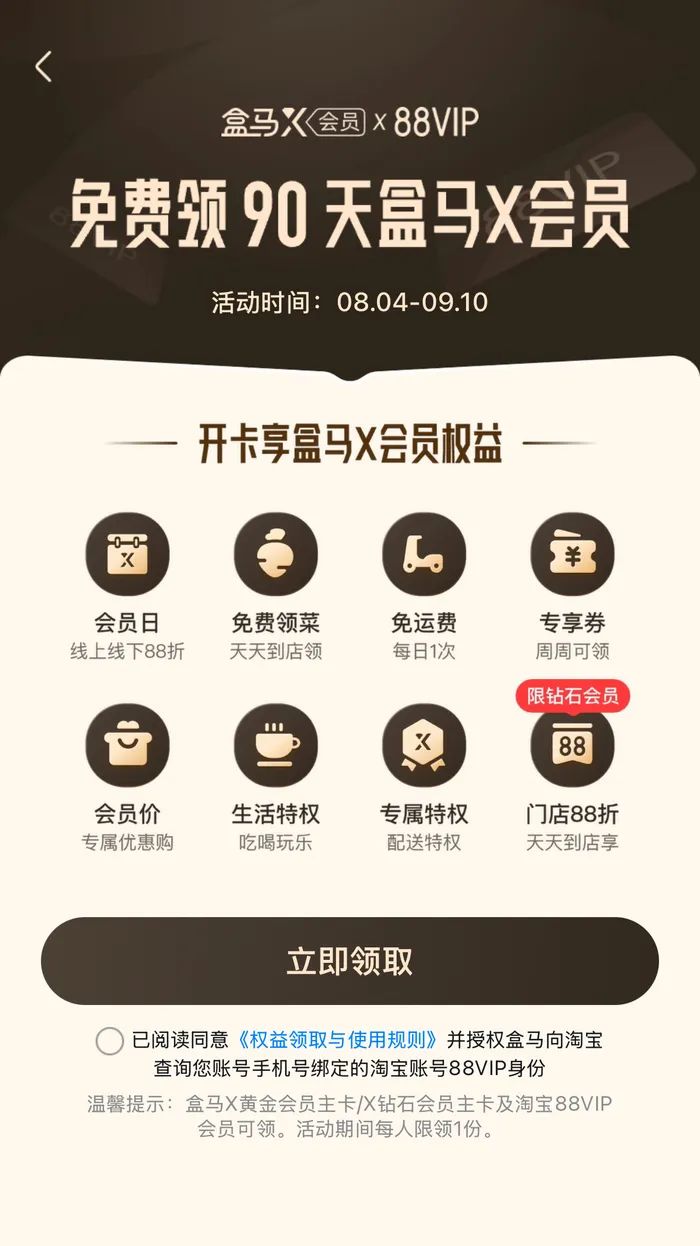
Core Insights - Alibaba's Taobao is launching a new membership system that integrates resources from Ele.me, Fliggy, and Hema, covering various consumer rights including shopping, food delivery, travel, and more, thereby expanding the 88VIP membership benefits [1][10] Membership Expansion - The new membership initiative allows 88VIP members to receive 90 days of free Hema X membership benefits, including discounts and free shipping, from August 4 to September 10 [1] - The 88VIP membership, launched in August 2018, has evolved to include various benefits across shopping, entertainment, and food delivery, with over 50 million members reported during the 618 shopping festival [9] Strategic Shift - The integration of more Alibaba platforms into the 88VIP system is seen as a significant step in Alibaba's strategy to transition from e-commerce to a broader consumer platform [9][10] - In June, Alibaba's CEO announced the incorporation of Ele.me and Fliggy into the Alibaba China E-commerce Group, maintaining their independent management while aligning their business decisions with centralized goals [9] Business Adjustments - Hema has announced the closure of its last Hema X membership store, indicating a strategic shift away from the membership store model, which was initially seen as a growth opportunity [10][11] - The Hema X membership store, which opened in October 2020, struggled to establish a competitive edge in the market, leading to a focus on Hema Fresh and Hema NB (Neighbour Business) for future growth [10][11] User Base and Cost Management - The integration of Hema into the 88VIP system is expected to leverage the existing user base to expand its customer reach [11] - As the membership base diversifies and benefits expand, Alibaba faces challenges in managing costs, user segmentation, and ensuring seamless integration of services across platforms [11]

销售额135.85亿元 胖东来业绩来了!A股学徒业绩表现不一
Zhong Guo Ji Jin Bao· 2025-08-05 00:28
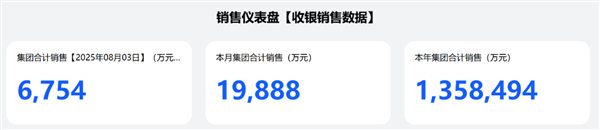
Core Insights - The retail company Pang Donglai reported a cumulative sales figure of 13.585 billion yuan as of August 3, 2023, with a single-day sales of 67.54 million yuan on that date [1] - The company has achieved 68% of its annual sales target for 2024, which is set at 16.964 billion yuan, indicating a strong likelihood of surpassing this target in 2025 [2][3] Sales Performance - As of August 3, 2023, Pang Donglai's sales distribution shows that supermarkets account for the largest share, with sales reaching 7.411 billion yuan, representing approximately 55% of total sales [3] - The top three stores by sales are the Times Square store (3.470 billion yuan), the Big Fat store (1.937 billion yuan), and the Angel City store (1.930 billion yuan) [5] Market Position and Competition - Pang Donglai remains a regional player, with all its stores located in Henan province, specifically in Xuchang and Xinxiang, totaling 14 stores [5] - The success of Pang Donglai has attracted attention from traditional supermarkets in China, including listed companies like Yonghui Supermarket and Zhongbai Group, which are attempting to learn from its business model [6] Industry Challenges - In contrast to Pang Donglai's growth, other A-share listed supermarkets are experiencing mixed performance, with some facing significant losses [7][8] - Yonghui Supermarket and Zhongbai Group both forecasted losses exceeding 200 million yuan for the first half of 2025, highlighting the challenges faced by traditional retailers [8] - The transformation efforts of these companies, such as store renovations and supply chain upgrades, are ongoing but have resulted in short-term financial impacts [10]
胖东来,业绩来了!
Zhong Guo Ji Jin Bao· 2025-08-04 15:17
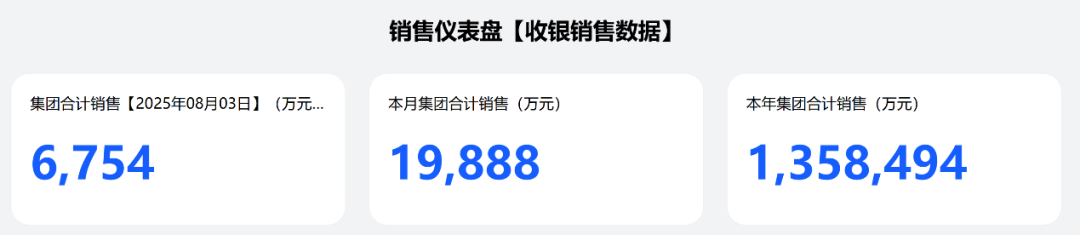
Core Insights - The retail company Pang Donglai reported a cumulative sales figure of 13.585 billion yuan as of August 3, 2023, with a single-day sales of 67.54 million yuan on that date [1] - The company has achieved 68% of its annual sales target for 2023, which is set at 20 billion yuan for 2025, with an expected profit of 1 billion yuan [3][4] - The supermarket segment is the largest contributor to sales, accounting for approximately 55% of total sales, with a total of 7.411 billion yuan [4] Company Performance - Pang Donglai's top three stores by sales are Times Square Store, Da Pang Store, and Angel City Store, with sales of 3.470 billion yuan, 1.937 billion yuan, and 1.930 billion yuan respectively [6] - The company is recognized as a leading "internet celebrity" supermarket, attracting traditional supermarkets in China to learn from its success [8] Industry Comparison - In contrast to Pang Donglai's growth, other A-share listed companies like Yonghui Supermarket and Zhongbai Group are experiencing mixed performance, with some facing transformation challenges [9] - Yonghui Supermarket and Zhongbai Group both forecasted losses exceeding 200 million yuan for the first half of 2025 [10] - Other companies like Bubugao and Jiajiayue are also undergoing transformations, with Bubugao reporting a potential profit due to significant restructuring efforts [10][11] Strategic Initiatives - Yonghui Supermarket is in a critical transformation phase, having adjusted 93 stores and closed 227 underperforming ones, which has impacted short-term revenue and profit [11] - The company is also pursuing a fundraising plan to raise approximately 4 billion yuan to support its store transformation initiatives [12]

胖东来,业绩来了!
中国基金报· 2025-08-04 15:12
Core Viewpoint - As of August 3, 2023, the retail company Pang Dong Lai has achieved a cumulative sales revenue of 13.585 billion yuan, reaching approximately 68% of its annual sales target [2][3][5]. Group 1: Sales Performance - Pang Dong Lai's sales revenue for the year has reached 13.585 billion yuan, with a single-day sales figure of 67.54 million yuan on August 3 [2]. - The company aims for a sales target of 16.964 billion yuan for 2024, indicating that surpassing this figure in 2025 seems highly likely based on current performance [4]. - The supermarket segment constitutes the largest portion of Pang Dong Lai's sales, accounting for approximately 55% of total sales, with a revenue of 7.411 billion yuan as of August 3 [5]. Group 2: Store Distribution and Performance - Pang Dong Lai operates 14 stores in the Henan province, specifically in Xuchang and Xinxiang, and has not expanded beyond this region [8]. - The top three stores by sales revenue are the Times Square store (3.470 billion yuan), the Big Fat store (1.937 billion yuan), and the Angel City store (1.930 billion yuan) [8]. Group 3: Industry Impact and Competitors - Pang Dong Lai's success has attracted attention from traditional retail companies in China, including publicly listed firms like Yonghui Supermarket, Zhongbai Group, Bubugao, and Jiajiayue, who are looking to learn from its model [10]. - In contrast to Pang Dong Lai's growth, some of its competitors are experiencing mixed performance, with Yonghui Supermarket and Zhongbai Group both forecasting losses exceeding 200 million yuan for the first half of 2025 [11]. - Bubugao is expected to achieve a net profit of 180 to 220 million yuan for the same period, largely due to recognizing significant restructuring gains [12].
北京实施食品减损技术指南
Ren Min Ri Bao· 2025-07-31 22:22
Group 1 - The article discusses the implementation of local standards for food waste reduction in the catering industry, initiated by the Beijing Culinary Association, which encourages food donation and discount promotions for unsold food that is still within its shelf life [1] - KFC stores in Beijing have established "Food Stations" to provide unsold food for free to citizens, ensuring food safety by sealing and labeling the products with storage dates and consumption guidelines [1] - Supermarkets like Hema Fresh and Yonghui are offering discounts on near-expiry products during specific times, which helps reduce waste and provides consumers with affordable options [1] Group 2 - Third-party platforms like "Food Saving Magic Bag" are helping businesses connect surplus food with consumers, saving a total of 10,000 tons of food over three years by using inventory management technology [2] - The approach of packaging surplus food into "magic bags" has led to a 40% reduction in waste rates for some brands, demonstrating a successful model for reducing food waste [2] - Experts emphasize the importance of food security and the need for innovative measures in the catering and retail sectors to create a win-win situation for businesses, consumers, and platforms [2]

为余量食物找“归宿” 北京实施食品减损技术指南
Ren Min Ri Bao· 2025-07-31 21:52
Core Insights - The implementation of the local standard "Food Waste Reduction Technical Guidelines" in Beijing aims to address food waste by encouraging restaurants to donate or discount unsold food [1] - Several fast-food chains and supermarkets are adopting innovative strategies to reduce food waste, such as "food stations" and discount sales for near-expiry products [1][2] - Third-party platforms like "Food Saving Magic Bag" are facilitating the connection between consumers and businesses with surplus food, significantly reducing waste [2] Group 1 - The Beijing Cooking Association has initiated a local standard to promote food donation and discounting practices in the restaurant industry [1] - KFC stores in Beijing have established "food stations" to provide unsold but safe food for free to those in need [1] - Supermarkets like Hema Fresh and Yonghui are implementing discount sales for near-expiry products, benefiting both consumers and businesses [1] Group 2 - The "Food Saving Magic Bag" platform has successfully saved 10,000 tons of food over three years by connecting consumers with surplus food from over 200 stores in Beijing [2] - The waste rate for the Chinese pastry brand Luxihe has decreased by 40% through the sale of "magic bags" containing surplus food [2] - Experts emphasize the importance of food security and the need for innovative measures in the restaurant and supermarket sectors to combat food waste [2]
白酒在胖东来、山姆、盒马找到“新卖场”|行业风向标
Tai Mei Ti A P P· 2025-07-31 10:51
Core Insights - The emergence of new retail formats, such as supermarkets like Fat Donglai, Sam's Club, and Hema, is reshaping the distribution channels for liquor, particularly for the Chinese liquor industry [2][3][5] - The collaboration between Fat Donglai and liquor companies, such as the launch of "Jiu Gui·Zi You Ai," indicates a shift towards self-operated liquor brands in supermarkets, which is becoming a clear trend in the industry [3][5] - The traditional liquor distribution channels are facing significant challenges, leading to a decline in sales and the need for liquor brands to adapt to new retail environments [9][10] Industry Trends - New supermarkets are leveraging their supply chain, pricing strategies, and brand partnerships to promote self-operated liquor products, creating new growth opportunities for the liquor sector [3][7] - The sales of self-operated liquor brands in new supermarkets are showing promising results, with Fat Donglai's "Bao Feng·Zi You Ai" achieving over 400 million yuan in annual sales within two years [3][5] - The trend of low-priced liquor is gaining traction, with products like the 9.9 yuan liquor from Aldi becoming popular among consumers, indicating a shift in consumer preferences towards affordable options [4][5] Market Dynamics - Traditional supermarkets are experiencing a decline, with major players like Carrefour and Yonghui closing numerous stores, which is impacting the availability of traditional liquor distribution channels [6][9] - The number of liquor distributors is decreasing, with a notable drop from 58,437 in 2023 to 56,747 in 2024, reflecting the challenges faced by traditional distribution models [9][10] - The rise of new retail formats is leading to a two-tier market for liquor distribution, where traditional channels are struggling while new supermarkets thrive [8][10] Consumer Behavior - Consumers are increasingly drawn to the affordability of liquor products in new supermarkets, with many offerings priced below 200 yuan, making them attractive alternatives to traditional brands [5][6] - The shift towards self-operated liquor brands in supermarkets is driven by consumer demand for high-quality products at competitive prices, which traditional channels are struggling to provide [7][10]
永辉超市“背水一战”!
IPO日报· 2025-07-31 04:42
Core Viewpoint - Yonghui Supermarket is attempting a comprehensive transformation to regain vitality after four consecutive years of losses and the closure of half its stores, with a significant capital raise aimed at store upgrades and operational efficiency [1][2]. Financial Performance - In 2024, Yonghui Supermarket reported total revenue of 67.574 billion yuan, a year-on-year decrease of 14.07%, and a net loss attributable to shareholders of 1.465 billion yuan, accumulating losses of approximately 9.501 billion yuan over four years [5][9]. - The company's aggressive store closure strategy led to the shutdown of 232 underperforming stores in 2024, resulting in a 2.08 billion yuan impairment provision for related assets [7][9]. Capital Raising and Utilization - Yonghui plans to raise up to 3.992 billion yuan through a private placement to no more than 35 specific investors, with funds allocated primarily for store upgrades (3.213 billion yuan), logistics and warehousing improvements (309 million yuan), and working capital replenishment (470 million yuan) [2][10]. - This capital raise follows the acquisition of a 29.40% stake by Miniso Group, marking a strategic shift towards a "quality retail" development route [11]. Store Transformation Strategy - The store upgrade initiative, referred to as the "Fat Donglai model," aims to enhance various aspects of the shopping experience, including product selection, store layout, and customer service [10][12]. - As part of this transformation, Yonghui has already opened 23 newly remodeled stores by July 2025, with plans to complete 200 store upgrades by September 30 [12].