
国际贸易

Search documents
第五届湖北改革奖揭晓 32个“改革先锋”上榜
Xin Lang Cai Jing· 2026-01-17 02:22
聚焦科创引领战略。推进智能网联汽车试点示范,武汉在全国率先开展Robotaxi、无人巴士等示范应 用,在首批"双智试点"城市综合评估中位列全国第二。武汉产业创新发展研究院推进科技创新与产业创 新融合,探索"共投共担"机制,经验做法被中央科技办推广。湖北三峡实验室常务副主任李少平带领团 队攻克工业黄磷生产电子级磷酸关键技术,填补国内产品空白。 湖北日报讯 (记者曾雅青、通讯员许海涛)近日,省委、省政府公布第五届湖北改革奖表彰决定,32 个改革先进典型入选。 聚焦文化创新、区域联动战略。云梦县博物馆守护千年文脉,湖北长江人民艺术剧院传承长江文化,让 中华文明瑰宝永续留存、泽惠后人,激励人们不断增强民族自豪感和自信心。武穴市农业农村局、闵洪 艳、田淑娴等一批一线单位和个人,致力于推进农业发展模式创新、农村科技创新、基层治理体系创 新,是新时代乡村改革创新的典型代表。 湖北改革奖每两年评选表彰一次,是我省落实党中央改革决策部署、健全改革激励机制的重大举措。本 次评出的32个先进典型分为项目奖、单位奖、企业奖、个人奖,全面聚焦支点建设七大战略,围绕激活 力、育新质、优环境、善治理、惠民生、强党建,更加突出解决实际问题, ...
阿塞拜疆媒体:阿中合作如何重塑欧亚贸易与物流
Xin Lang Cai Jing· 2026-01-16 23:10
Core Insights - The relationship between Azerbaijan and China has evolved into a comprehensive strategic partnership, driven by changing global power dynamics and the need for resilient supply chains [1][3] - Azerbaijan aims to diversify its economic partnerships and position itself as a key node in Eurasian connectivity, while China views Azerbaijan as a stable partner crucial for its broader economic and logistical vision in Eurasia [1][3] Economic Cooperation - The bilateral trade volume between Azerbaijan and China is projected to reach approximately $3.74 billion in 2024, with a significant increase to $4.21 billion from January to November 2025, surpassing the total trade of the previous year [2] - Azerbaijan encourages Chinese companies to establish manufacturing, assembly, and processing facilities in its industrial parks, aiming to combine Chinese capital and technology with local advantages [2] - This collaboration is expected to enhance technological cooperation, skill development, and integration of Azerbaijani enterprises into regional and global value chains [2] Transportation and Logistics - The "Middle Corridor" connecting Central Asia, the Caspian Sea, and the Caucasus is strategically significant, with Azerbaijan positioned as a key transit hub for maritime, rail, and road infrastructure [2] - This corridor provides China with a more diversified and resilient route to European markets, reducing reliance on single routes and enhancing supply chain flexibility [2] Energy Cooperation - Azerbaijan remains an important energy partner in the Caspian region, with opportunities for collaboration in renewable energy technologies, including solar and wind projects, energy storage systems, and smart grid technologies [3] - This shift reflects a transition from a traditional oil and gas focus to a more diversified and future-oriented energy partnership [3] Technology and Digital Cooperation - Cooperation in digital infrastructure, e-commerce platforms, smart city solutions, and industrial automation aligns with Azerbaijan's goals for economic modernization and productivity enhancement [3] - Integrating these technologies is expected to improve Azerbaijan's value chain position, governance efficiency, and competitiveness in regional markets [3] Future Challenges - The next phase involves transforming quantity growth into quality balance through increased exports, local production, and higher value-added creation [4] - Successfully addressing this challenge could solidify the Azerbaijan-China relationship as a significant and enduring component of the evolving geopolitical landscape in Eurasia [4]
特朗普威胁中国断绝与伊朗贸易,宣布对华征税25%,关税战要再度开打?
Sou Hu Cai Jing· 2026-01-16 10:41
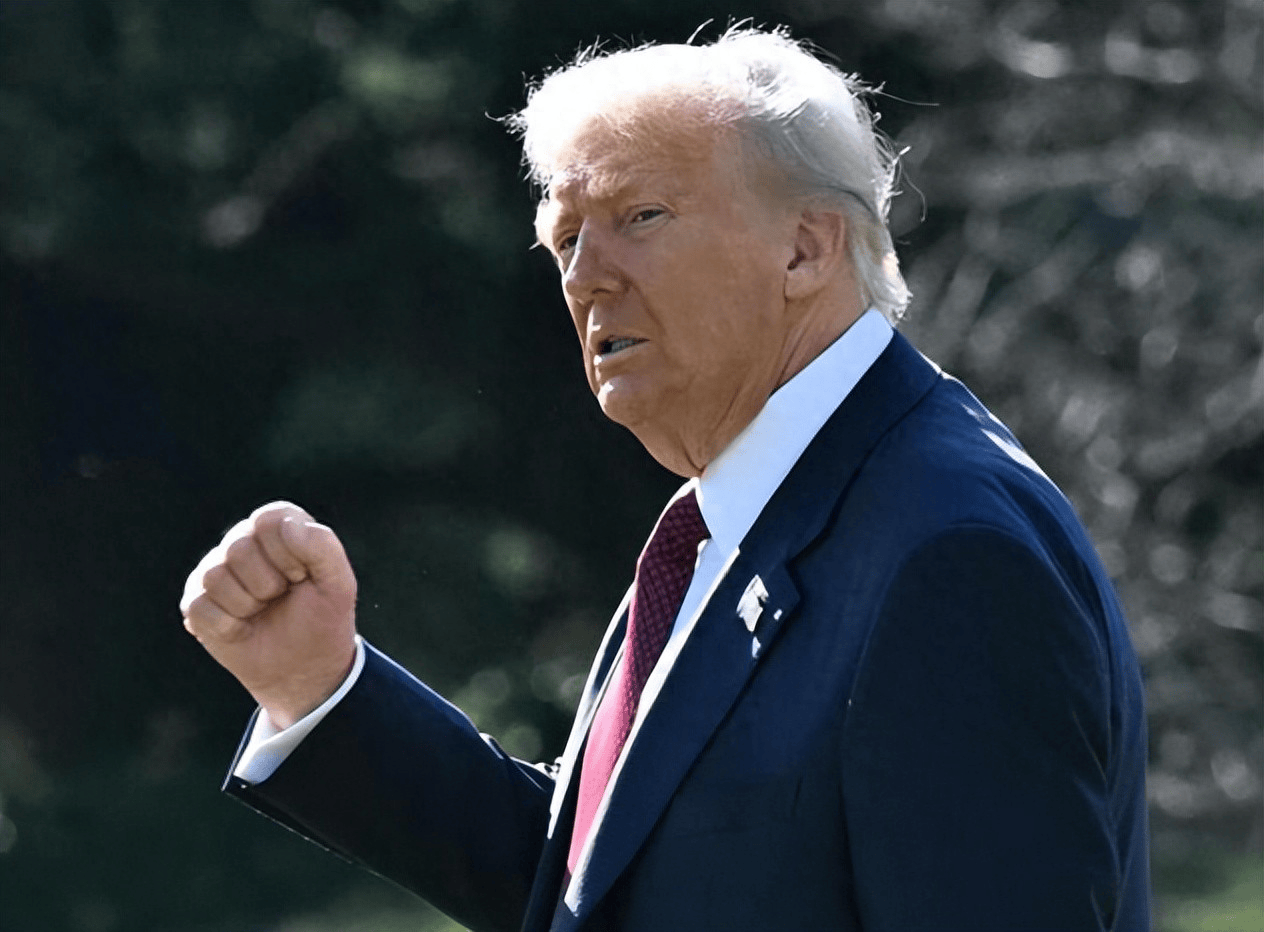
在当前错综复杂、瞬息万变的国际局势中,美国针对伊朗的政策,显然不仅仅是单纯地对这一中东国家进行孤立和施压。更深层的层面,是一场涉及全球经 济格局和国际关系走向的战略博弈。2026年1月12日,美国总统特朗普投下了一颗经济炸弹,宣布对所有与伊朗有贸易往来的国家加征25%的惩罚性关税。 特朗普的核心意图非常明确:通过这种所谓的长臂管辖,切断伊朗的经济命脉,同时借此机会重新塑造全球贸易秩序,最大化地谋取美国自身的利益。然 而,这一举动背后隐含着巨大的系统性风险。据海关数据统计机构的数据显示,2025年上半年,全球有超过100个国家与伊朗保持着不同程度的贸易往来, 除了中国、印度、土耳其等主要经济体外,还包括了巴基斯坦、阿联酋、巴西等区域性关键国家。俄罗斯甚至在2025年与伊朗签署了新的自由贸易协定,进 一步促进了双边贸易的发展。从这一维度来看,特朗普的关税政策,实际上不仅是针对伊朗的单方面打压,更多的是将矛头直接对准了伊朗的广泛贸易伙 伴。尤其是作为伊朗最大贸易伙伴的中国,毫无疑问成为了最主要的目标。 美国有线电视新闻网(CNN)早已指出,中国作为伊朗的最大贸易伙伴,若被迫承受25%的惩罚性关税,无疑会使得中国对美 ...

“让美国再次伟大”撞上“中国制造迈向中高端”,世界产业链如何重构?
Xin Lang Cai Jing· 2026-01-16 07:25
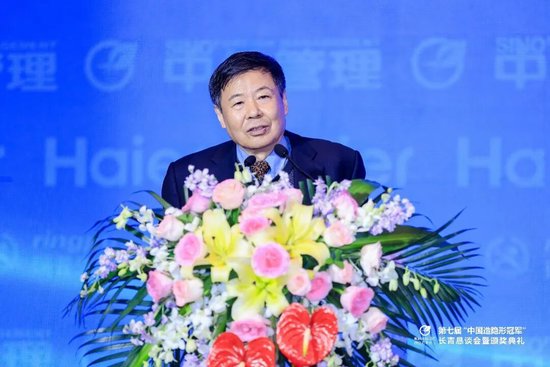
专题:第七届"中国造隐形冠军"长青恳谈会 来源:中外管理传媒 在新的全球格局中,中国的"隐形冠军"们如何成为定义未来的关键力量? 演讲:朱光耀(国家财政部原副部长) 整理:中外管理传媒 庄文静 责任编辑:胸怀天下 12月19日,第七届"中国造隐形冠军"长青恳谈会在中国金融中枢——北京西城隆重举办。 本次大会以"金融强国与隐形冠军强链"为主题,汇聚官、产、学各界精英,大会不仅清晰勾勒出金融活 水精准浇灌实体、隐形冠军筑牢产业根基的共生路径,更昭示着一个更为确定的未来:当专注创新 的"隐形脊梁"与耐心智慧的资本深度融合,当细分领域的"单打冠军"成长为产业链上协同共进的"团体 冠军",中国制造迈向中高端的步伐必将更加坚实有力。随着"中国上市隐形冠军俱乐部"等平台的搭 建,以及北京西城等金融高地的持续赋能,一条具有特色的产融共促、冠军辈出的发展道路正愈发清 晰。期待这些"隐形冠军"们继续以专注铸就卓越,以创新引领变革,在全球产业链重构的时代浪潮中, 不仅成为中国的骄傲,更成为定义世界产业未来的关键力量! 国家财政部原副部长朱光耀在大会上发表了题为《激烈大国竞争情况下的全球贸易金融格局与产业变 局》的主题演讲。 以下为 ...
朝闻国盛:2025年社融回顾与2026年展望:财政色彩渐浓
GOLDEN SUN SECURITIES· 2026-01-16 00:03
Group 1: Macro Overview - The report indicates that in 2025, credit expansion showed marginal improvement, with a notable reliance on fiscal expansion, as the proportion of government bonds in social financing reached a historical high [3] - Monthly data reveals that new credit has decreased year-on-year for six consecutive months, with corporate credit performing better than household credit, driven mainly by the implementation of policy financial tools [3] - Looking ahead, the report suggests that the economy remains in a "weak reality," with significant downward pressure, and anticipates proactive policy measures in 2026 to stimulate economic growth [3] Group 2: Fixed Income Analysis - The report discusses the recent volatility in 30-year government bonds, which rose from approximately 1.85% in early July to around 2.3%, an increase of 45 basis points, while local government bonds remained stable [4] - The fitted model indicates that the current 10-year and 30-year local government bond to government bond spreads are at 16 basis points, with upper limits of approximately 23 and 21 basis points, respectively, suggesting limited room for further increases in spreads [4] Group 3: Industry Performance - The report highlights the top-performing industries in January, with Media leading at 25.5%, followed by Non-ferrous Metals at 23.2%, and Defense Industry at 20.5%, while the bottom performers included Banks at -2.5% and Food & Beverage at -1.8% [1] - Over the past year, Non-ferrous Metals showed a remarkable increase of 112.4%, indicating strong sector performance [1] Group 4: Company Insights - The report emphasizes that SenDa Group is a leading player in China's overseas expansion into Africa, leveraging its capabilities to empower the brand LeShuShi through channel, product, and market structure enhancements [5] - Key success factors for SenDa Group include early identification of the direction for industrial and trade integration, local factory establishment, product localization, and deep channel development [5] - The report draws parallels with the operations of Charoen Pokphand Group in China, suggesting that there are valuable lessons to be learned from their century-long operational history [5] Group 5: Strategic Partnerships - The report details a strategic cross-holding agreement between SF Express and J&T Express, where SF will acquire 10% of J&T's shares, while J&T will hold approximately 4.29% of SF's shares, enhancing long-term cooperation [7] - This partnership aims to leverage both companies' strengths in logistics networks and operational capabilities, facilitating better resource allocation and market coverage in key regions [8]

非洲出海系列一:森大集团赋能乐舒适的思考
GOLDEN SUN SECURITIES· 2026-01-15 06:52
Investment Rating - The report rates the investment in Leshu Comfort (乐舒适) as "Buy" with projected EPS of 0.16 in 2024, increasing to 0.25 by 2027, and a PE ratio decreasing from 24.20 in 2024 to 133.60 in 2027 [6]. Core Insights - The report highlights that SenDa Group is a leading Chinese enterprise in Africa, leveraging its capabilities to empower Leshu Comfort through its channel, product, and market structure [1]. - SenDa Group has established a comprehensive industrial group that integrates overseas manufacturing, international trade, and industrial investment, with a strong presence in various sectors including home decoration materials, fast-moving consumer goods, and hardware [1][12]. - The report draws parallels between SenDa Group's expansion in Africa and Charoen Pokphand Group's (正大集团) historical success in China, suggesting that SenDa Group is poised to replicate this success in emerging markets [5][4]. Summary by Sections SenDa Group: Deepening Localization in Africa - SenDa Group has been operating in Africa for over 20 years, transitioning from traditional trade to localized manufacturing, creating jobs, and driving industry development [12][29]. - The company has established 32 manufacturing operations globally, with sales covering over 60 countries, showcasing its strong global operational capabilities [12][14]. - Key factors for SenDa's success include early identification of the integrated trade and manufacturing model, local production, and strong government-business relationships [32][33]. Empowering Leshu Comfort - SenDa Group provides financial support to Leshu Comfort through loans and advances, enhancing its capital turnover efficiency [3]. - The group offers supply chain and management support, including raw materials, technical assistance, and administrative services [3]. - Leshu Comfort has established a wide sales network across 12 countries with 18 branches and over 2800 wholesalers and retailers [3][39]. Learning from Charoen Pokphand Group's Journey - The report identifies several successful strategies from Charoen Pokphand Group's history, such as seizing market opportunities, extending the industrial chain, and diversifying financing channels [4]. - SenDa Group's current trajectory mirrors that of Charoen Pokphand Group, indicating potential for significant growth in Africa [5]. Market Position and Competitive Advantage - Leshu Comfort's products are competitively priced, with a gross margin of around 30%, making them attractive compared to international brands [38][39]. - The company's localized production strategy allows for rapid response to market demands, reducing shipping times and costs [38][41]. - SenDa Group's investments in local manufacturing not only enhance brand acceptance but also contribute to local economic development [41][42].
这五年,这个城市服务贸易创新高
Zhong Guo Jing Ji Wang· 2026-01-15 03:44
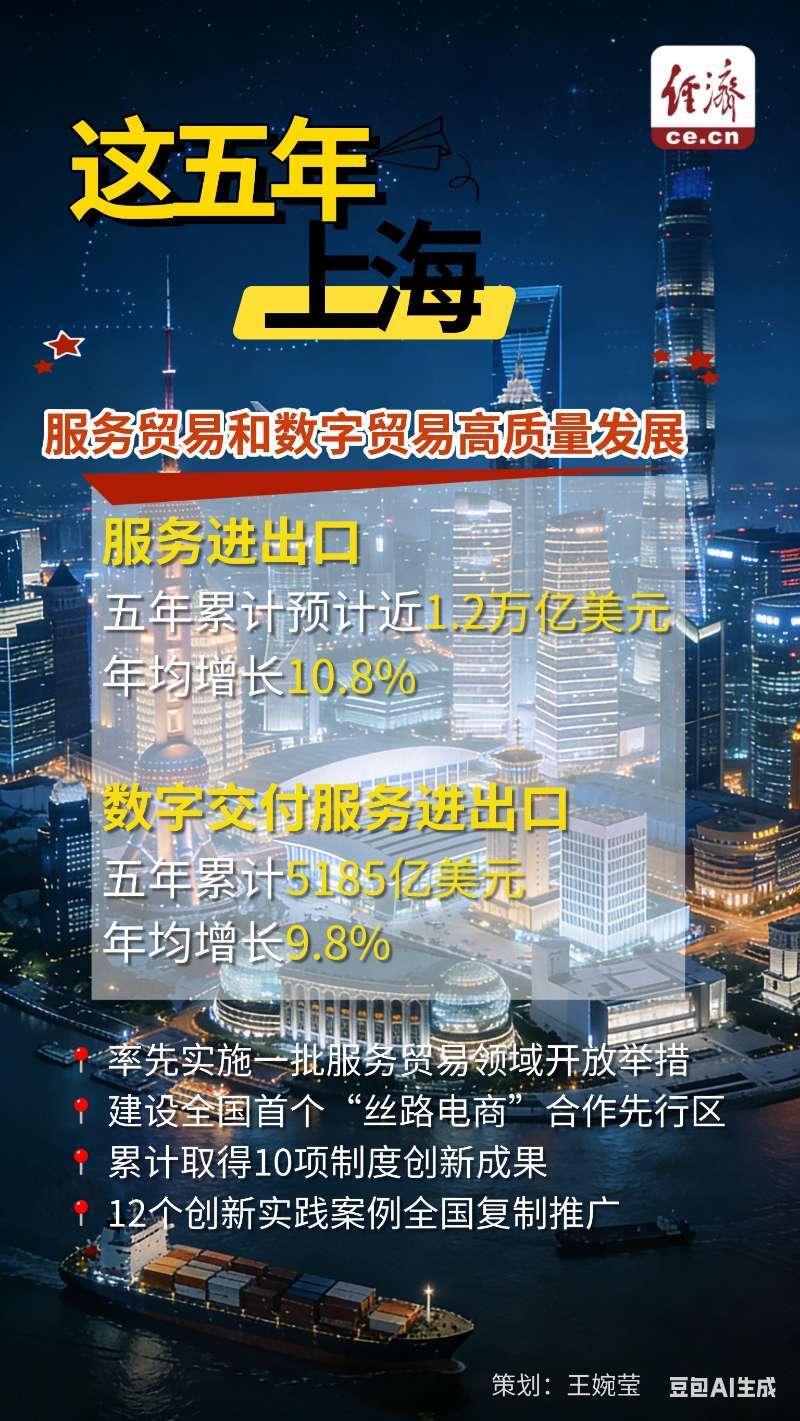
Group 1 - The core viewpoint is that Shanghai has made significant progress in enhancing its international trade center during the 14th Five-Year Plan period, improving its position in the global trade network and showcasing the effects of its open policy initiatives [1][4]. - The International Import Expo (CIIE) has been highlighted as a major platform for opening up, with its spillover effects continuing to expand [1][8]. - Shanghai's exhibition area is projected to reach 19.336 million square meters by 2025, with international exhibition space accounting for 80% [4][5]. Group 2 - The port trade scale has reached new heights, with total port trade volume increasing from 8.7 trillion yuan to over 11 trillion yuan, maintaining Shanghai's status as a leading global city [7]. - Shanghai's container throughput has ranked first in the world for 16 consecutive years, while its air cargo volume has jumped to third globally [7]. - The city is promoting the integration of culture, tourism, commerce, and sports, enhancing the international influence of large consumer festivals and continuously improving the capabilities of the international exhibition city [8].
李稻葵:建议出台房贷贴息政策,70亿财政补贴可撬动280万亿市场规模
Xin Lang Cai Jing· 2026-01-15 03:01
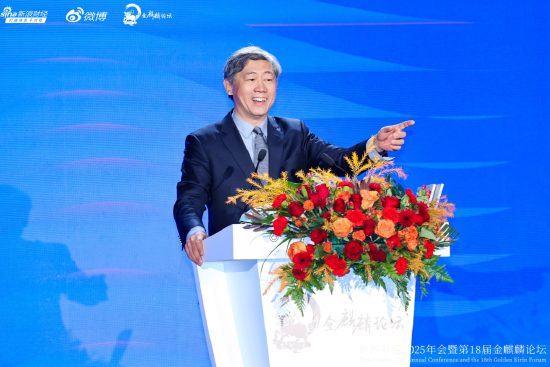
Core Viewpoint - The "2025 Sina Finance Annual Conference and the 18th Golden Unicorn Forum" will be held on January 15, 2026, in Beijing, focusing on the theme of "Starting the 14th Five-Year Plan, New Economic Voyage - Reshaping Growth Paradigms, Co-creating Future Prosperity" [1][7]. Group 1: Economic Potential and Government Transformation - The potential for China's economic growth remains significant, and there is a need for confidence in this potential [3][9]. - A transformation from a "development-oriented government" to a government that promotes comprehensive and high-quality economic development is essential [3][10]. - A new framework of "government and market economics" is proposed, which includes establishing four national-level coordination mechanisms [10]. Group 2: Proposed Coordination Mechanisms - The first mechanism is a Human Resources Development Committee to coordinate investments in education, healthcare, and elderly care [10][11]. - The second mechanism is a Real Estate Development Committee aimed at enhancing top-level design, with a suggestion to provide interest subsidies to help young people buy homes, potentially leveraging a market scale of 280 trillion yuan [10][11]. - The third mechanism is an International Trade Balance Development Committee to address external trade frictions [4][11]. - The fourth mechanism is an Artificial Intelligence Development and Governance Committee to coordinate technological innovation and employment security [4][11]. Group 3: Economic Outlook for the Year - There are several positive expectations for the year, including stabilization of real estate prices in key regions [5][11]. - The stock market is expected to be optimistic, with a shift in investment interest towards A-shares as international assets become cheaper [5][11]. - A recovery in nominal GDP growth is anticipated for the year [5][11].
湖北咸宁加速区域联动 融入长江中游城市群发展
Xin Lang Cai Jing· 2026-01-14 11:23
Group 1 - The core viewpoint of the news is that Xianning aims to enhance regional connectivity and development by 2026, focusing on collaboration with Wuhan and other cities in the Yangtze River middle reaches [1][3] - During the 14th Five-Year Plan period, Xianning has made significant progress in reforms, with 250 national and provincial pilot reform projects undertaken, and the number of enterprises engaged in import and export activities increasing to 283 [3] - The establishment of the Xianning International Trade "Single Window" service platform has successfully initiated operations, establishing trade relations with 189 countries and regions, and expanding international cooperation [3] Group 2 - Xianning will focus on key areas of regional collaboration, leveraging infrastructure projects like the Tianzi Mountain Bridge and Baizhou Bay Yangtze River Bridge to enhance connectivity and promote industrial and ecological cooperation [3] - The city aims to capitalize on provincial strategic opportunities, such as the Wu-E-Huang-Huang-Xianke Innovation Corridor, to integrate more technology, industry, and cultural tourism projects into the Wuhan metropolitan area’s 15th Five-Year Plan [3] - Efforts will be made to include the revolutionary old areas of Hunan, Hubei, and Jiangxi in the new round of revitalization support, accelerating the establishment of a commercial logistics center and promoting green development initiatives [3][4]
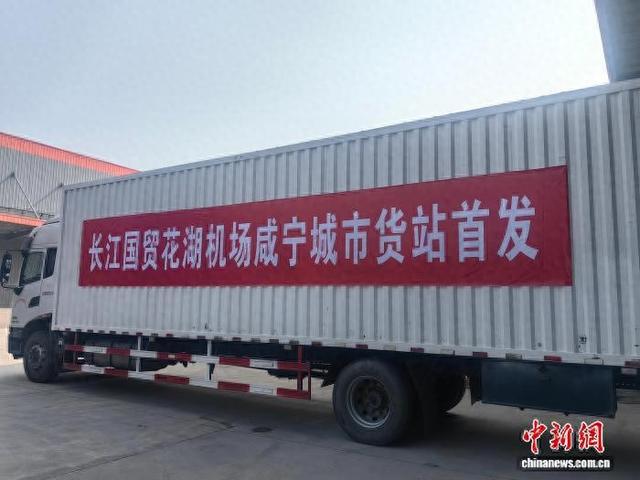
2025年我国与近250个国家和地区保持贸易往来
Xin Hua She· 2026-01-14 02:37
Group 1 - The core viewpoint of the article highlights that by 2025, the number of countries and regions engaging in trade with China will reach 249, with significant increases in trade scale categories [1] - There will be 14 countries and regions with trade volumes exceeding 1 trillion, 62 exceeding 100 billion, and 137 exceeding 10 billion, marking an increase of 2, 6, and 10 respectively compared to 2024 [1] - China has become a major trading partner for over 160 countries and regions globally, an increase of more than 20 since 2020 [1]