物流

Search documents
央行出手稳汇率;“沪七条”再松绑丨一周热点回顾
Di Yi Cai Jing· 2026-02-28 03:26
Group 1: Silver Economy and Elderly Care - The State Council meeting on February 24 emphasized the potential of the silver economy and the need for supportive measures to promote elderly care services and industries [2][3] - By the end of 2025, the population aged 60 and above in China is expected to reach 320 million, with projections indicating it will exceed 400 million by 2035, leading to a silver economy scale surpassing 30 trillion yuan [2] Group 2: Currency and Foreign Exchange - The People's Bank of China announced a reduction in the foreign exchange risk reserve ratio for forward foreign exchange sales from 20% to 0%, marking the first use of this tool in nearly three and a half years [4] - The renminbi exchange rate saw significant appreciation, with onshore and offshore rates surpassing 6.87 and 6.84 respectively, reaching a new high since April 2023 [4] Group 3: Real Estate Policy Adjustments - Shanghai's new real estate policies, known as "Shanghai Seven," include easing restrictions for non-local residents on purchasing homes and increasing the maximum public housing loan limit from 1.6 million yuan to 2.4 million yuan [5][6] - The policies aim to activate the local housing market and attract eligible non-local buyers, potentially leading to a "small spring" in the real estate market [6] Group 4: Food Safety Regulations - New regulations for online food delivery and sales were introduced, requiring merchants to have real physical stores and adhere to strict food safety standards, with penalties for violations increased significantly [7][8] - The regulations aim to address rampant issues in the online food market, including false advertising and substandard products, promoting a more regulated and safe industry environment [8] Group 5: Software Industry Concerns - The software sector faced significant sell-offs, highlighted by IBM's stock dropping over 13%, the largest single-day decline in 25 years, due to fears surrounding AI's impact on traditional software business models [10][11] - A report predicting a potential "intelligent crisis" by 2028 raised concerns about mass unemployment and economic collapse, further fueling market anxiety [11] Group 6: U.S. Tariff Proposals - The U.S. government is considering new tariffs on approximately six industries, including large batteries and industrial chemicals, citing national security concerns [12] - This move follows a recent Supreme Court ruling against previous large-scale tariffs, with the Trump administration planning to implement transitional tariffs while exploring more permanent measures [12]
河北廊坊市市长刘媛:以协同之力 聚融合之势 谋发展新篇
Xin Lang Cai Jing· 2026-02-28 02:43
Core Viewpoint - The article emphasizes the deep integration and high-quality development of the Beijing-Tianjin-Hebei (Jing-Jin-Ji) region, highlighting the strategic initiatives and achievements of Langfang City in this collaborative effort during the 14th Five-Year Plan and the new opportunities presented in the 15th Five-Year Plan [1][3][4]. Group 1: Achievements and Strategic Initiatives - Langfang City has actively integrated into the Jing-Jin-Ji collaborative development framework, leveraging its unique geographical advantages to enhance transportation, industry, public services, and ecology [3][4]. - During the 14th Five-Year Plan, Langfang's GDP exceeded 400 billion yuan, ranking third in per capita GDP in the province, and second in per capita disposable income [4][5]. - The city has established 266 subsidiaries of central enterprises and built 126 joint R&D platforms with Beijing and Tianjin, achieving an annual growth of 41.8% in technology contract transactions with these cities [4][5]. Group 2: Future Plans and Development Goals - In the 15th Five-Year Plan, Langfang aims to deepen its integration into the Jing-Jin-Ji collaborative development, focusing on the spatial coordination outlined in the modern capital metropolitan area plan [7][8]. - The city plans to enhance its role in the "two corridors and four belts" industrial collaborative innovation framework and actively seek to establish a branch of the Beijing-Tianjin-Hebei International Technology Innovation Center [7][8]. - Langfang will continue to develop its transportation, industry, public services, and ecological sectors to achieve greater breakthroughs in collaboration with Beijing and Tianjin [7][8]. Group 3: Economic Corridors and Industry Development - Langfang has constructed a "two chains and five corridors" economic corridor, focusing on integrating into the Jing-Jin-Ji industrial layout [11][12]. - The city is developing two key industrial chains: the new energy and intelligent connected vehicle industry chain, and the robotics industry chain, with significant growth in revenue and project signings [11][12]. - Langfang is also building five distinctive industrial corridors, including logistics, computing power, intelligent manufacturing, health care, and cultural tourism, to enhance its economic competitiveness [13][15][19].


攻坚应变顶压前行 稳中有进向新向优——《2025年国民经济和社会发展统计公报》评读
Xin Hua Wang· 2026-02-28 01:54
Core Insights - The article emphasizes the significant achievements of China's economy in 2025, highlighting the resilience and adaptability in the face of complex domestic and international challenges [2][3]. Economic Growth and Development - In 2025, China's GDP grew by 5.0%, surpassing 140 trillion yuan for the first time, marking a successful completion of the "14th Five-Year Plan" [3]. - The economic growth resulted in an increase of over 5 trillion yuan, reflecting enhanced production capabilities in agriculture and industry, as well as a vibrant service sector [3]. Per Capita Development - China's per capita GDP reached 99,665 yuan, a 5.1% increase from the previous year, translating to approximately 13,953 USD, maintaining above 13,000 USD for three consecutive years [4]. - Labor productivity improved by 6.1%, outpacing economic growth by 1.1 percentage points [4]. International Influence - China's 5% economic growth positioned it among the top global economies, contributing approximately 30% to world economic growth [5]. - In 2025, China's goods imports reached 18.5 trillion yuan, maintaining its status as the world's second-largest import market for 17 consecutive years [5]. Modern Industrial System - The modernization of the industrial system accelerated, with R&D expenditure increasing by 8.1%, reaching 2.80% of GDP, surpassing the OECD average for the first time [6][7]. - High-tech manufacturing value added grew by 9.4%, accounting for 17.1% of total industrial value added [7]. Digital Economy - The digital economy thrived, with the value added of digital product manufacturing increasing by 9.3% and the information technology service sector growing by 11.1% [8]. - Online retail sales approached 16 trillion yuan, reflecting an 8.6% growth [8]. Domestic and International Circulation - Domestic consumption reached over 50 trillion yuan, with a 3.7% increase, contributing 67.3% to economic growth [10]. - The total goods import and export volume exceeded 45 trillion yuan, marking a 3.8% increase and solidifying China's role in global supply chains [11]. High-Quality Development - The focus on high-quality development led to significant reforms, including a reduction in market access restrictions and an increase in new business registrations [12][13]. - The urbanization rate reached 67.89%, with rural residents' income growing by 6.5% [13]. Green Transition - Clean energy consumption rose to 30.4% of total energy consumption, with significant reductions in energy intensity and carbon emissions [14]. - The production of new energy vehicles exceeded 16 million units, maintaining a global leadership position [14]. Social Welfare - The urban unemployment rate averaged 5.2%, with 12.67 million new jobs created, supporting a 5.0% increase in per capita disposable income [15][16]. - Social services expanded, with significant increases in healthcare and education infrastructure, enhancing overall quality of life [16].
2799辆“盐城造”汽车启航出海
Xin Lang Cai Jing· 2026-02-27 20:32
Core Insights - The article highlights the successful loading of 2,799 new "Yue Da Kia" cars onto the Korean roll-on/roll-off ship "Glo Champion," marking a significant achievement for Binhai Port in enhancing its role as a hub for automobile exports [1][2] - The operation was completed in approximately 15 hours, showcasing the port's efficient service capabilities and the collaborative efforts of various stakeholders [1][2] Group 1: Operational Efficiency - Binhai Port has established a "one-stop" inspection and clearance mechanism involving customs, border inspection, and maritime authorities to streamline the export process, significantly reducing waiting times for ships [2] - The port's dedicated automobile storage area spans 453,500 square meters, with a static storage capacity of 26,300 vehicles, providing robust support for ongoing export operations [2] Group 2: Strategic Goals - The port aims to facilitate the export of 100,000 "Made in China" vehicles this year, reflecting its ambition to expand its global market reach [2] - The successful loading operation is seen as a testament to Binhai Port's growing status as a key maritime hub for automobile exports in the coastal region [2]
广东“新春第一会”:“两业协同”如何激活万亿产业新动能?
Xin Lang Cai Jing· 2026-02-27 19:29
Core Viewpoint - The Guangdong Provincial High-Quality Development Conference emphasizes the collaborative development of manufacturing and service industries, marking a significant shift in Guangdong's industrial development strategy for the upcoming years [2][4]. Group 1: Economic Goals and Projections - Guangdong aims to achieve a GDP of 14.58 trillion yuan by 2025, maintaining its position as China's largest economy for 37 consecutive years [2]. - By 2025, the industrial added value is projected to reach 4.89 trillion yuan, while the service sector's added value is expected to be 8.5 trillion yuan, accounting for 10.5% of the national total [2][5]. Group 2: Industrial Structure and Development Strategy - The conference introduces a "3+N" industrial matrix to accelerate the development of three major trillion-yuan industrial clusters: intelligent equipment, core components, and industrial services [2][3]. - The integration of manufacturing and service industries is seen as crucial for building a modern industrial system and enhancing new productivity in Guangdong [4][6]. Group 3: Policy Initiatives and Support - Guangdong has implemented various policies, including the "Guangdong Provincial Manufacturing High-Quality Development Promotion Regulations" and measures to promote deep integration between manufacturing and productive services [7]. - A significant financial initiative includes a loan interest subsidy program for eligible enterprises, with a total subsidy scale of up to 600 billion yuan over three years [7]. Group 4: Technological Integration and Innovation - The Guangdong government is focusing on the integration of digital technology as a catalyst for the collaborative development of manufacturing and services [11]. - Companies like Guangzhou Industrial Control Group are leveraging AI and digital platforms to enhance operational efficiency and service offerings, demonstrating the shift towards service-oriented manufacturing [11]. Group 5: Market Expansion and Global Competitiveness - Guangdong aims to attract over 1,000 influential domestic and international brands to establish their first stores in the province by 2027, with a target of 783.5 billion yuan in foreign investment in the service sector by 2025 [8]. - The collaborative model of "product + service" is being adopted to create unique competitive advantages, as seen in the initiatives by Guangzhou Industrial Control Group [9][10].

京津冀自贸试验区搭台助企业融入“大市场”
Xin Lang Cai Jing· 2026-02-27 17:29
Group 1 - The Beijing-Tianjin-Hebei Free Trade Zone focuses on key sectors such as biomedicine, digital economy, and modern logistics, creating a collaborative development opportunity list for 41 key enterprises [1][2] - In the biomedicine sector, the opportunity list integrates information from various stages including research, production, distribution, and clinical application, highlighting collaboration opportunities in AI drug development, gene editing, and clinical trial services [1] - A specific example includes a biomedical company in Changping seeking partners for gene editing technology applications in crops and synthetic biology product development [1] Group 2 - The digital economy sector's opportunity list includes information on computing power, data, security, and application scenarios, promoting collaboration in data sharing, cross-border data flow, and digital empowerment [2] - Beijing International Computing Power Service Co. aims to collaborate with enterprises in healthcare, finance, and autonomous driving to develop high-quality data sets and address compliance issues in data transactions [2] - In the modern logistics sector, the opportunity list covers international logistics, transportation services, and supply chain finance, with companies like SF Express looking to connect with international clients and provide supply chain solutions for automotive enterprises in Hebei and Tianjin [2]
企呼我应助企纾困 营商赋能共赢未来
Xin Lang Cai Jing· 2026-02-27 17:29
Core Viewpoint - The article emphasizes the importance of optimizing the business environment in Qujiang District, highlighting the innovative mechanisms and services that enhance enterprise support and satisfaction, ultimately driving regional economic development [1][12]. Group 1: Mechanism Innovation - Qujiang District has established a three-dimensional closed-loop mechanism called "No Worry Handling · Three-Color Assessment + Timely Response + Face-to-Face on Tuesdays" to address enterprise demands efficiently [2][3]. - The mechanism categorizes enterprise requests based on complexity and urgency, ensuring rapid and precise responses, as demonstrated by the resolution of a certification issue for a local property management company [2][3]. - A special task force was formed to coordinate with various governmental levels to address complex requests, leading to significant improvements in service delivery and efficiency [3][4]. Group 2: Service Quality Enhancement - The "Enterprise Comprehensive Service Center" in Qujiang District has been established to streamline services, achieving a satisfaction rate of 99.96% among enterprises [1][7]. - The district has implemented a "one-stop" service model, integrating various service functions to reduce bureaucratic hurdles and enhance the overall experience for businesses [5][7]. - The district's proactive approach to service delivery has resulted in a significant reduction in processing times for policy implementation, with a 90% rate of immediate policy enjoyment for enterprises [7][8]. Group 3: Industry Empowerment - Qujiang District focuses on industry-specific support, particularly in the logistics and short drama sectors, to foster high-quality development [9][10]. - The district has created a comprehensive service model for the Qujiang Port area, reducing logistics costs by 30% and enhancing operational efficiency for businesses [9][10]. - The establishment of a dedicated service window for the film industry has streamlined the approval process for filming, making Qujiang a preferred location for short drama productions [11].
港股风向标|科技权重止跌恒指放量反弹 机构看好顺周期涨价机会
Sou Hu Cai Jing· 2026-02-27 14:36
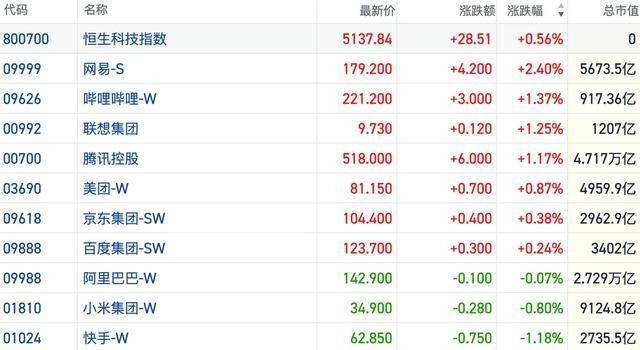
Market Overview - The Hong Kong stock market showed signs of recovery, with the Hang Seng Index rising by 0.95% to close at 26,630 points, while the Hang Seng China Enterprises Index and the Hang Seng Tech Index increased by 0.51% and 0.56% respectively [1][2]. Technology Sector Performance - Major tech stocks led the market rebound, with Tencent's stock price reaching 530 HKD during the day. Other tech companies such as NetEase, Meituan, JD.com, and Baidu also saw positive performance [2][3]. Stock Performance Data - Notable stock performances included: - Tencent Holdings (00700) at 518.00 HKD, up by 6.00 HKD (+1.17%), with a total market capitalization of 4.717 trillion HKD - NetEase (09999) at 179.20 HKD, up by 4.20 HKD (+2.40%), with a market cap of 567.35 billion HKD - Meituan (03690) at 81.15 HKD, up by 0.70 HKD (+0.87%), with a market cap of 495.99 billion HKD [3]. Sector Movements - Other sectors such as banking, real estate, and coal also showed strength, while power, steel, and oil stocks were active [4]. - Conversely, sectors like aviation, consumer electronics, and building materials experienced declines [4]. Market Dynamics - The overall trading volume in the Hong Kong market was 288.42 billion HKD, indicating increased liquidity. Short selling amounted to 36.55 billion HKD, representing 12.67% of the total trading volume, highlighting ongoing market divergence [4]. - The market is experiencing rapid rotation of hot and cold sectors, with cyclical stocks like steel and rare earths gaining strength, while AI-related sectors such as storage and chips faced declines [5][7]. Policy Implications - Recent meetings by the Central Political Bureau emphasized the need for more proactive macro policies to expand domestic demand and optimize supply, which may provide further support for the market [7]. A-Share Market Correlation - The A-share market mirrored the performance of the Hong Kong market, with a total trading volume of approximately 24,880.24 billion HKD, showing a decrease of about 504.22 billion HKD from the previous trading day. Over 3,200 stocks rose, particularly in the cyclical sector [8].

天顺股份:关于2025年度利润分配预案的公告
Zheng Quan Ri Bao Zhi Sheng· 2026-02-27 14:13
Core Viewpoint - Tian Shun Co., Ltd. announced a profit distribution plan for the year 2025, stating that due to a net profit attributable to shareholders of -23.83 million yuan, the company will not distribute cash dividends, issue bonus shares, or increase capital from reserves. The plan has been approved by the board and awaits shareholder meeting review [1]. Group 1 - The company reported a negative net profit of -23.83 million yuan for the year [1]. - The board has approved the decision not to distribute cash dividends or issue bonus shares [1]. - The profit distribution plan is pending approval from the shareholders' meeting [1].

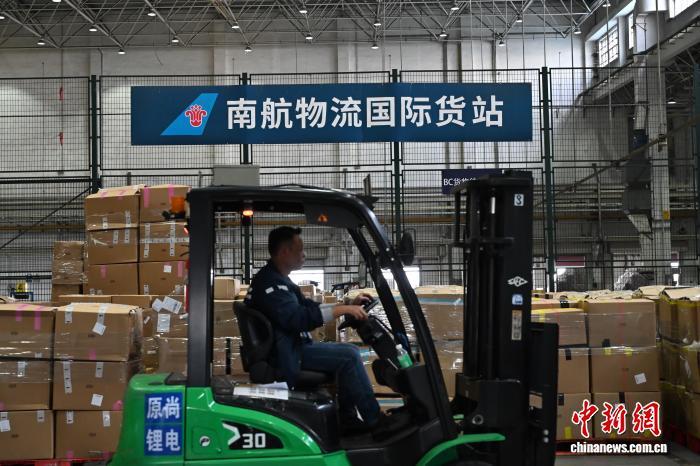
春节假期南航物流在穗国际货邮总量超1.4万吨
Zhong Guo Xin Wen Wang· 2026-02-27 13:38
Core Insights - During the Spring Festival holiday, China Southern Airlines Logistics (CSAL) reported a total international cargo volume exceeding 14,000 tons, with outbound cargo increasing by 12% and inbound cargo by 13% compared to last year [1][3] - The cross-border e-commerce export volume reached a historical single-day high, contributing significantly to Guangdong's foreign trade performance [1][3] Group 1: Operational Efficiency - CSAL maintained uninterrupted service during the holiday, implementing customized solutions to ensure efficient logistics operations, thereby facilitating the smooth export of local goods and import of international products [1][3] - A 24-hour special support team was established to optimize warehouse operations and reduce waiting times for cargo owners during peak periods [1][3] Group 2: Cross-Border E-commerce Focus - To address the surge in cross-border e-commerce exports, CSAL enhanced its cargo inspection capabilities at the Guangzhou International Cargo Station, allowing for pre-inspection and pre-declaration of goods, significantly reducing customs clearance and ground operation times [3] - The company utilized a smart cargo station system to monitor cargo volumes in real-time, dynamically reallocating resources to prevent congestion during peak periods [3] Group 3: Import Services - On the import side, CSAL focused on consumer needs by opening green channels for essential goods such as infant formula and fresh produce, providing temperature-controlled and priority customs clearance services [3] - The company ensured that overseas high-quality products are delivered fresh and safely to the Guangzhou and Greater Bay Area markets through a comprehensive supply chain solution [3] Group 4: Future Developments - As work and production resume post-holiday, CSAL plans to continuously upgrade its service offerings and enhance its operational capabilities to support the development of the Guangzhou National Logistics Hub [3]