
重卡

Search documents
A股开盘速递 | A股三大股指集体低开 沪指跌0.35% 光刻机等板块跌幅居前
智通财经网· 2025-09-26 01:40
Market Overview - The three major A-share indices opened lower, with the Shanghai Composite Index down 0.35% and the ChiNext Index down 0.42%. Sectors such as photolithography machines, storage chips, and CPO experienced significant declines [1] Institutional Insights - CITIC Securities emphasizes a focus on resources, new productive forces, and overseas expansion as the framework for industry selection. The shift of resource stocks from cyclical to dividend attributes, driven by supply constraints and global geopolitical tensions, is expected to lead to a revaluation of these stocks. The anticipated volatility from the Federal Reserve's interest rate cuts is considered negligible. The key mid-term insight is the globalization of China's manufacturing leaders, which is expected to convert market share advantages into pricing power and profit margin improvements, leading to market capitalization growth that surpasses domestic economic fundamentals [2] - Guojin Securities believes that a bull market driven by the recovery of China's profit fundamentals may be in the making. With the easing of liquidity constraints, there may be a rebound in Hong Kong stocks that experienced stagnation from June to August. Additionally, growth investments are expected to shift from technology-driven to export-oriented. Opportunities in cyclical manufacturing sectors (non-ferrous metals, machinery, chemicals) are anticipated to become the mid-term focus. The recommended sectors include upstream resources (copper, aluminum, oil, gold), capital goods (engineering machinery, heavy trucks, lithium batteries, wind power equipment), and raw materials (basic chemicals, fiberglass, paper, steel) [3]
A股盘前播报 | 特朗普对重卡、家居、医药征关税 两大能源巨头筹划战略重组!
智通财经网· 2025-09-26 00:41
Industry Insights - Trump announced a 25% tariff on all imported heavy trucks, a 50% tariff on kitchen cabinets and bathroom vanities, a 30% tariff on upholstered furniture, and a 100% tariff on any brand or patented drugs unless companies are building pharmaceutical plants in the U.S. [1] - The Digital Renminbi International Operation Center has officially launched in Shanghai, introducing three major business platforms: cross-border digital payment, blockchain services, and digital asset platforms, which are expected to enhance China's multilateral foreign trade system amid tariff uncertainties [4] Company Developments - Trump signed an executive order for a new TikTok U.S. operation plan, ensuring compliance with U.S. laws and establishing a joint venture responsible for data and content security, with a revenue-sharing mechanism between ByteDance and the new joint venture [2] Macro Developments - The U.S. Commerce Department has placed three companies, including Saroni Tech and Alcon, on the unreliable entity list, while three others, including Huntington Ingalls Industries, are on the export control list, indicating a cautious approach to foreign entities deemed harmful to national security [3]
8月重卡同比五连增,天然气迎来复苏
Ge Long Hui· 2025-09-24 22:20
Core Insights - In August, domestic heavy truck sales reached 92,000 units, representing a year-on-year increase of 47% and a month-on-month increase of 8% [1][2] - The sales of natural gas heavy trucks in August were 16,000 units, showing a year-on-year growth of 32% and a month-on-month growth of 30% [1][3] - The heavy truck industry is expected to gradually recover, with projected sales of 1.067 million units in 2025, an 18% year-on-year increase [1] Sales Performance - Cumulative sales of domestic heavy trucks from January to August reached 716,000 units, a year-on-year increase of 15% [2] - The sales structure in August showed that semi-trailer trucks accounted for 50.6%, cargo trucks for 27.8%, and non-complete vehicles for 21.7% of total heavy truck sales [2] - In August, semi-trailer truck sales were 49,000 units (up 42% YoY), heavy cargo truck sales were 24,000 units (up 54% YoY), and heavy non-complete vehicle sales were 19,000 units (up 50% YoY) [2] Natural Gas Heavy Trucks - Cumulative sales of domestic natural gas heavy trucks from January to August were 116,000 units, down 9% year-on-year [3] - The penetration rate of natural gas in heavy trucks was 17% in August, with semi-trailer trucks having a penetration rate of 32% [3] - The cost-effectiveness of natural gas usage for trucks with an annual mileage exceeding 150,000 km is highlighted, suggesting potential for increased penetration [3] New Energy Heavy Trucks - In August, domestic new energy heavy truck sales reached 15,000 units, a significant year-on-year increase of 197% [3] - Cumulative sales of new energy heavy trucks from January to August were 103,000 units, reflecting a year-on-year growth of 175% [3] - The penetration rate of new energy in heavy trucks was 16% in August, with a cumulative rate of 14% for the year [3]
国泰海通:8月重卡同比五连增 天然气重卡迎来复苏
智通财经网· 2025-09-24 12:36
Core Viewpoint - The domestic heavy truck sales are expected to gradually recover due to economic recovery and the introduction of the "old-for-new" policy in 2025, with projected sales of 1.067 million units, representing an 18% year-on-year increase [1] Group 1: Sales Performance - In August, domestic heavy truck sales reached 92,000 units, a year-on-year increase of 47% and a month-on-month increase of 8% [2] - Cumulative sales from January to August reached 716,000 units, reflecting a 15% year-on-year growth [2] - The "old-for-new" policy has contributed to stable growth in the heavy truck market, leading to five consecutive months of rapid year-on-year growth [2] Group 2: Sales Structure - By August 2025, the sales distribution of semi-trailer trucks, cargo trucks, and incomplete vehicles is projected to be 50.6%, 27.8%, and 21.7% respectively [2] - In August, semi-trailer truck sales were 49,000 units, up 42% year-on-year and 14% month-on-month [2] - Heavy cargo truck sales in August were 24,000 units, showing a 54% year-on-year increase, although down 2% month-on-month [2] - Heavy incomplete vehicle sales reached 19,000 units in August, a 50% year-on-year increase and a 7% month-on-month increase [2] Group 3: Natural Gas Heavy Trucks - In August, domestic natural gas heavy truck sales were 16,000 units, a year-on-year increase of 32% and a month-on-month increase of 30% [3] - Cumulative sales from January to August for natural gas heavy trucks were 116,000 units, down 9% year-on-year [3] - The penetration rate of natural gas in heavy trucks was 17% in August, with 32% for semi-trailer trucks [3] Group 4: New Energy Heavy Trucks - In August, domestic new energy heavy truck sales reached 15,000 units, a significant year-on-year increase of 197% and a month-on-month increase of 13% [3] - Cumulative sales from January to August for new energy heavy trucks were 103,000 units, reflecting a 175% year-on-year growth [3] - The penetration rate of new energy in heavy trucks was 16% in August, with a cumulative rate of 14% from January to August [3]

中国重汽午后涨超5% 8月重卡销量创近八年同期次高 中国重汽Q3业绩或超预期
Zhi Tong Cai Jing· 2025-09-24 06:16
Core Viewpoint - China National Heavy Duty Truck Group (China National Heavy Truck) saw its stock price increase by over 5%, reflecting strong market performance driven by significant growth in heavy truck sales in August, supported by government policies [1] Group 1: Sales Performance - In August, wholesale sales of heavy trucks reached approximately 87,000 units, representing a year-on-year increase of about 40% and a month-on-month increase of 2%, marking the second highest level for the same period in the past eight years [1] - The terminal heavy truck sales experienced a year-on-year growth rate of around 50% in August, indicating the sensitivity of heavy truck sales to policy catalysts, particularly the "old-for-new" policy [1] Group 2: Market Outlook - With the arrival of the "golden September and silver October" period, along with the increasing urgency for policy applications by year-end, sales are expected to experience another surge [1] - The current heavy truck subsidy policy has been largely implemented nationwide, and Q3 terminal demand is anticipated to continue expanding, which will release elasticity in wholesale sales [1] Group 3: Annual Projections - The subsidy is expected to stimulate an additional 100,000 to 150,000 units, with the industry annual sales potentially reaching 1,000,000 to 1,050,000 units, achieving double-digit growth [1] - China National Heavy Truck is positioned as an industry leader, with expectations for both domestic and export sales to resonate upwards in Q3, leading to improvements in performance and valuation [1]

数据解放生产力——琰究摩托车数据系列(2025年8月)【民生汽车 崔琰团队】
汽车琰究· 2025-09-21 11:47
Core Viewpoint - The motorcycle industry is experiencing significant growth, particularly in the sales of larger displacement motorcycles, with a notable increase in year-on-year sales figures for August 2025 [2][4]. August Data Observation - For motorcycles with displacement over 250cc, August sales reached 84,000 units, representing a year-on-year increase of 23.6% but a month-on-month decrease of 4.4%. Cumulative sales from January to August totaled 675,000 units, up 36.0% year-on-year [2]. - In the 250ml to 400ml displacement category, August sales were 47,000 units, up 28.5% year-on-year and 6.5% month-on-month, with cumulative sales of 356,000 units from January to August, reflecting a 36.5% year-on-year increase [3]. - For the 400ml to 500ml category, August sales were 17,000 units, down 28.5% year-on-year and 27.9% month-on-month, with cumulative sales of 170,000 units, showing a slight year-on-year increase of 0.9% [4]. - In the 500ml to 800ml category, August sales reached 19,000 units, a significant year-on-year increase of 231.4% and a month-on-month increase of 0.8%, with cumulative sales of 131,000 units, up 130.2% year-on-year [4]. - For motorcycles over 800cc, August sales were 1,000 units, down 39.4% year-on-year and 16.6% month-on-month, with cumulative sales of 17,000 units, up 77.6% year-on-year [4]. Company Performance - Chuanfeng Power sold 15,000 units in August, a year-on-year increase of 14.4%, with a market share of 17.4%, down 3.5 percentage points month-on-month. The cumulative market share from January to August was 21.0%, an increase of 1.2 percentage points compared to the full year of 2024 [5]. - Longxin General sold 14,000 units in August, a year-on-year increase of 29.0%, with a market share of 16.9%, up 1.0 percentage points month-on-month. The cumulative market share from January to August was 14.2%, unchanged from the full year of 2024 [5]. - Qianjiang Motorcycle sold 9,000 units in August, a year-on-year decrease of 18.5%, with a market share of 10.2%, down 1.3 percentage points month-on-month. The cumulative market share from January to August was 13.1%, down 3.7 percentage points compared to the full year of 2024 [5]. Industry Outlook - The industry is advised to focus on key companies such as Geely Automobile, Xiaopeng Motors, Li Auto, BYD, Xiaomi Group, Chuanfeng Power, and others as potential investment opportunities [6][10][12].






外资机构,密集调研!最新动向→
证券时报· 2025-09-21 04:35
Group 1 - The A-share market has shown high activity recently, attracting attention from over 400 foreign institutions conducting research on listed companies since Q3 of this year, with more than 30 institutions conducting over 10 research sessions each [1] - Point72, a notable foreign institution, has actively researched companies such as Ningbo Bank and China National Heavy Duty Truck Group, focusing on product exports and dividend policies [1] - Goldman Sachs has also been frequently involved in research activities, with recent visits to companies like Weichai Power, discussing industry developments and future prospects [2] Group 2 - The companies that have attracted the most foreign research interest include Huichuan Technology, Estun Automation, and Deep South Circuit, with many of them being in the technology sector, particularly in chips, PCBs, and robotics [3] - The market interest spans companies of various market capitalizations, including those exceeding 100 billion and others below 20 billion [3] - Foreign institutions are showing a preference for companies in the technology sector, as well as some consumer sector firms, indicating a diverse investment interest [3]


战略&价值双导向 斯堪尼亚国产化战略规划曝光!| 头条
第一商用车网· 2025-09-20 13:05
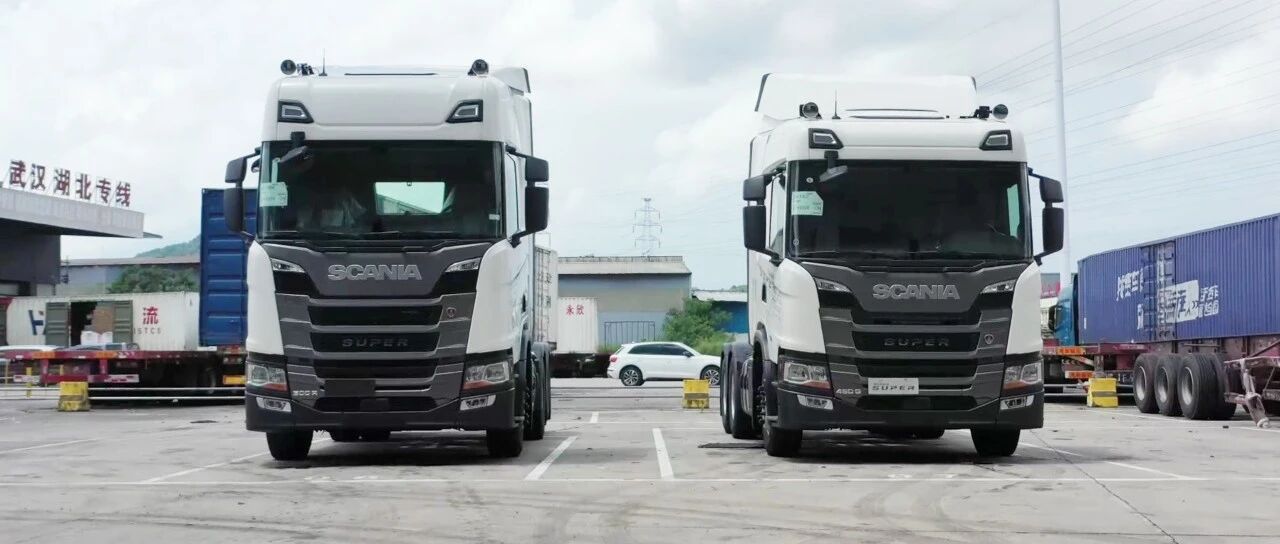
Core Viewpoint - Scania is set to enhance its presence in the Chinese market with the launch of a localized production base and new products, aiming to create a complete commercial ecosystem that integrates R&D, manufacturing, sales, and services [1][3][16]. Group 1: Market Strategy - Scania has been in the Chinese market for 60 years and views it as a key strategic area for global expansion [3]. - The company plans to leverage its new production base in Rugao to achieve continuous sales growth and transformation in the Chinese market [3][4]. - Scania aims to develop a diverse product portfolio tailored to various transportation scenarios, enhancing its reliability and profitability in the logistics sector [3][4]. Group 2: Product and Service Offerings - Scania is focusing on specific segments such as trunk transportation, cold chain logistics, and automotive parts transport, while optimizing transportation efficiency and costs [4]. - The company has introduced a new range of seven domestic fuel heavy-duty trucks, emphasizing traditional fuel power while also planning for electric truck options in the future [9]. - Scania is enhancing its service network by establishing a 150 km service radius and offering value-added services like fleet management to improve user profitability [9][10]. Group 3: Aftermarket and Dealer Network - Scania has expanded its parts inventory from 4,500 to over 7,000 types and optimized its distribution network to ensure faster delivery of parts [10]. - The company is increasing its dealer network in China, aiming to grow from 27 to over 40 dealers by the end of 2025, with plans to reach 70 dealers within a year [10]. Group 4: Financing Solutions - Scania has introduced operating and financing lease models to alleviate financial pressures on users, allowing for better resource allocation and cost control [11][12]. - The company offers diverse financing solutions, including trailer financing and insurance services, to meet the needs of users for low initial capital and flexible operations [14].
“客户第一”不只是口号:三一重卡以“直服”重塑行业生态 | 头条
第一商用车网· 2025-09-19 06:48
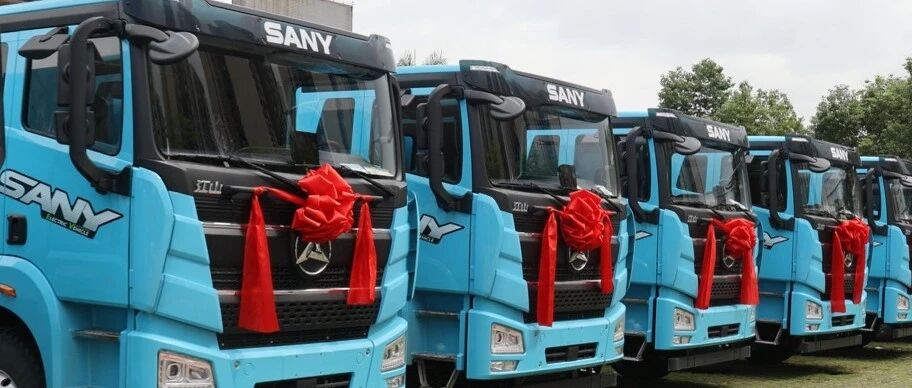
Core Viewpoint - The article emphasizes that the service model is becoming a key factor in user experience and brand image in the rapidly developing new energy heavy truck market, with SANY Heavy Truck leading the way through its "Direct Service" model [1][20]. Group 1: Industry Context - The transition to new energy heavy trucks represents not only a change in power sources but also a transformation in operational models, requiring faster response and specialized service due to the unique technical demands of electric systems compared to traditional fuel vehicles [3][6]. - Traditional multi-layered agency models hinder timely service responses, negatively impacting user experience, which has prompted SANY Heavy Truck to innovate its sales and service approach [5][6]. Group 2: SANY's Direct Service Model - SANY Heavy Truck has implemented a "Direct Sales" model, allowing direct contracts between manufacturers and customers, ensuring customized solutions based on actual operational scenarios, thus eliminating information misalignment and cost increases [5][9]. - The "Direct Service" model is a complete reconstruction of the service ecosystem, providing on-site support and tailored solutions without intermediaries, enhancing customer trust and service efficiency [7][9]. - SANY's approach emphasizes a "customer-first" philosophy, focusing on creating a service loop rather than merely selling vehicles, which contrasts with competitors still relying on third-party service providers [9][17]. Group 3: Service Efficiency and Commitment - Under the "Direct Service" model, SANY employs its own staff for on-site repairs, equipped with mobile parts warehouses, ensuring rapid response to customer needs and high service efficiency [12][15]. - SANY has established over 170 direct service stations and mobile service warehouses nationwide, supported by a large team of engineers and technicians, committing to a service promise of rapid response times and effective problem resolution [15][19]. Group 4: Strategic Implications - The "Direct Service" model not only enhances SANY's market position but also serves as an innovative benchmark for the industry, promoting a shift from a "selling vehicles" mindset to a "user operation" mindset [19][20]. - SANY's commitment to high investment in service infrastructure and human resources aims to ensure a broad and responsive service network, which is crucial for building brand loyalty and market share in the competitive new energy heavy truck sector [19][20].
开源证券晨会纪要-20250916
KAIYUAN SECURITIES· 2025-09-16 14:42
Core Insights - The macroeconomic environment shows strong supply but weak demand, indicating a cautious outlook for various sectors [4][11][15] - The report emphasizes the potential for recovery in the ChiNext index, driven by policy support and advancements in battery storage technology [17][24][28] Macroeconomic Overview - Construction activity is showing signs of improvement, with a slight increase in operational rates for key materials like asphalt and cement, although still below historical averages [6] - Industrial production remains robust, with high operational rates in the chemical sector, but automotive sales have seen a decline [6][13] - Demand in the construction sector is weak, with negative year-on-year growth in building materials [6][12] Commodity Prices - International commodity prices are fluctuating, with significant increases in gold prices, while domestic industrial prices are stable [7] Real Estate Market - New housing transactions have turned positive, with a notable increase in sales in first-tier cities due to relaxed policies [8] - The second-hand housing market is showing marginal improvement, with transaction volumes increasing in major cities [8] Export Trends - Exports are projected to grow by approximately 4% year-on-year in early September, supported by favorable tariff conditions [9] Consumer Market - Retail sales growth has slowed, with a year-on-year decline in August, but the "trade-in" policy is expected to boost sales in the coming months [12][32] Investment Trends - Fixed asset investment has weakened, particularly in real estate, with a significant year-on-year decline in property development investment [14][34] Automotive Industry - Heavy truck sales have surged, with a year-on-year increase of about 40% in August, indicating a strong recovery in the domestic market [52] - The penetration rate of new energy heavy trucks has reached a record high, driven by supportive policies and market demand [53] Battery and Storage Sector - The new energy storage policy aims to significantly increase installed capacity by 2027, indicating strong future growth potential for the battery sector [25][27] - The battery industry is experiencing improved market conditions, with solid-state batteries and lithium batteries gaining traction [27] Machinery Sector - The development of Tesla's robotic technology, particularly the "dexterous hand," is crucial for achieving mass production, highlighting the importance of advanced robotics in manufacturing [58][59]
