
影视

Search documents
暑期经济热潮涌动,消费活力全面绽放
Sou Hu Cai Jing· 2025-09-01 16:31
Group 1: Consumer Market Trends - The summer season has seen unprecedented prosperity in China's cultural tourism and consumer markets, driven by red tourism, the "park economy" fueled by popular IPs, and a surge in electronic product consumption [1] - The electronic products market is experiencing a "renewal" peak, with significant sales growth in smartphones, laptops, and tablets during the "818" shopping festival, particularly among university students preparing for the new school year [1] - Su Ning's data indicates that long-focus smartphones, laptops, and tablets have seen substantial sales increases, highlighting a trend towards smart and personalized consumption [1] Group 2: Film and Entertainment Industry - The summer film season has attracted massive audiences, with total box office revenue surpassing 11.6 billion yuan and over 300 million admissions [3] - Diverse film genres, including historical dramas and domestic animated films, have catered to various audience preferences, with films like "Wang Wang Mountain Little Monster" standing out for their excellent reviews and box office performance [3] - Cinemas are innovating to enhance viewer experiences, transforming traditional screening venues into comprehensive cultural spaces through activities like viewing groups and themed park events [4] Group 3: Cultural Tourism Developments - Red tourism has gained renewed vitality, with historical sites like the "September 18th" Historical Museum in Shenyang attracting large numbers of visitors, enhancing the significance of their trips [3] - Theme parks such as Shanghai Lego Land and Guangzhou Chimelong Safari Park have seen peak visitor numbers during the summer, reflecting the popularity of the "park economy" [3] - Emerging travel trends, such as traveling to concerts and exhibitions, are becoming increasingly popular among young people, with significant increases in hotel and attraction searches during major cultural events [3] Group 4: Innovation in Consumer Experiences - New consumer experiences, such as AI technology exhibitions, are drawing large crowds in places like Yangjiang, further diversifying the consumer market [4] - The overall prosperity of the consumer market is not limited to electronics and cultural tourism, as personalized consumption scenarios are continuously activating new consumer dynamics [4]


传媒行业周观察(20250825-20250829):阿里云收入高增、谷歌推出AI图像模型NanoBanana出圈,继续看好AI应用从预期走向兑现
Huachuang Securities· 2025-09-01 09:44
Investment Rating - The report maintains a "Recommendation" rating for the media industry, expecting the industry index to rise more than 5% over the next 3-6 months compared to the benchmark index [45]. Core Insights - The media sector is currently experiencing a significant shift towards AI applications, with a focus on content output enhancing cultural confidence. The report anticipates 2025 to be a pivotal year for the explosion of open-source large models and the reshaping of application landscapes, particularly in public cloud value reconstruction and industry growth recovery [6][27]. - The report highlights the impressive performance of Alibaba Cloud, which achieved revenue of 33.4 billion yuan in Q2 2025, marking a year-on-year increase of 26% [6][31]. - The gaming sector is expected to see a high growth inflection point in Q3, with several companies showing promising mid-year results and new product expectations [6][28]. - Google's recent launch of the AI image model "Nano Banana" is noted for its superior image editing capabilities, which are expected to accelerate applications in e-commerce, advertising, design, film, and gaming [28][29]. Market Performance - The media sector index rose by 1.05% last week, underperforming the CSI 300 index, which increased by 2.71%, resulting in a relative underperformance of 1.66% [7][8]. - The total market capitalization of the media sector is approximately 189.15 billion yuan, with 140 listed companies [3]. Gaming Market - The report indicates that Tencent's products dominate the iOS gaming sales rankings, with "Honor of Kings" and "Peacekeeper Elite" holding the top two positions [14]. - The gaming sector is expected to benefit from the recent approval of 166 domestic game licenses, indicating a positive trend in the market [30]. Film Market - As of August 29, 2025, the film box office has reached 35.086 billion yuan, recovering approximately 85% of the box office compared to the same period in 2019 [18][21]. - The report notes that the summer box office for 2025 has surpassed 11 billion yuan, with significant contributions from films like "Nanjing Photo Studio" [30]. AI Developments - The report emphasizes the importance of AI integration across various sectors, with the Chinese government promoting the "Artificial Intelligence +" initiative to enhance productivity and economic growth [27]. - The launch of Google's "Nano Banana" model is highlighted for its ability to generate high-quality images quickly and cost-effectively, which is expected to lower barriers for users in various industries [28][29].


光线传媒净利大涨、中国儒意扭亏为盈 上半年影视上市公司盈利不只靠《哪吒》
Bei Jing Shang Bao· 2025-09-01 06:05
Core Insights - The film industry has seen significant profitability in the first half of the year, driven primarily by blockbuster films and improved operational efficiencies [1][2][8] - Companies that can integrate their operations and innovate their business models are expected to have a competitive advantage in the evolving market landscape [1][8] Group 1: Financial Performance - Wanda Film and Light Media reported substantial increases in net profit, with year-on-year growth of 372.55% and 371.55% respectively [1] - Jin Yi Film and Happiness Blue Sea turned losses into profits, with net profit growth of 146.73% and 128.99% respectively [1] - Beijing Culture reported a revenue of 1.58 billion yuan, a year-on-year increase of 1944.24%, but a net loss of 233 million yuan, a decline of 610.29% [8] Group 2: Box Office and Audience Engagement - The total box office for the first half of 2025 reached 29.231 billion yuan, with a year-on-year growth of 22.91%, and domestic films accounted for 91.2% of the box office [2] - The film "Nezha: The Devil's Child" generated over 15.4 billion yuan, contributing significantly to the overall box office [2] - Companies are increasingly focusing on audience engagement through diversified offerings, such as food and beverage pairings with movie experiences [5][6] Group 3: Operational Strategies - Companies are optimizing their business models by enhancing consumer experiences and diversifying product offerings, such as introducing new food and beverage items [4][5] - Cost control measures have been implemented, with Jin Yi Film reporting reductions in various operational costs, including travel and marketing expenses [7] - The trend of integrating retail and service offerings in cinemas is becoming more prevalent, with companies transforming concession stands into mini-supermarkets [6][7] Group 4: Future Outlook - The competition in the film industry is shifting from content creation to comprehensive operational capabilities, indicating that companies with strong integration and innovation will thrive [3][8] - The upcoming National Day holiday is expected to drive a new wave of growth in the film market, particularly for leading companies like Wanda Film and Light Media [7]


百度欲从瑞士开启欧洲无人驾驶业务;比亚迪宣布马来西亚建厂并加大印尼投资;京东拟在新加坡设立REIT|一周大公司出海动态
Tai Mei Ti A P P· 2025-09-01 06:03
Group 1: Autonomous Driving Initiatives - Baidu is launching its autonomous driving business in Europe, starting with an office in Zurich and plans to operate in Switzerland and Europe by next year, initially with safety drivers in vehicles [1] - Pony.ai is planning to deploy a fleet of autonomous taxis in Hong Kong after overcoming regulatory hurdles, while downplaying competition from Tesla [2] Group 2: Automotive Industry Developments - ZhiMi Technology has officially announced its entry into the automotive sector, aiming to produce a luxury electric vehicle comparable to Bugatti, with a team of nearly 1,000 people and a patent portfolio of 6,379 applications [4] - BYD's vehicle registrations in the EU doubled in July, surpassing Tesla's registrations, with 13,503 units sold across the EU and additional countries [9] - BYD has launched the Atto 1 in Indonesia, with two models priced at 2.09 billion and 2.49 billion Indonesian Rupiah [10] - BYD announced plans to build an assembly plant in Malaysia, expected to start production in 2026 [12] - BYD's Thailand factory has produced and exported over 900 Dolphin electric vehicles to Europe, marking a significant milestone for the company [14] Group 3: Consumer Brands Expansion - Mixue Group reported a revenue of 14.87 billion yuan in the first half of 2025, with a net profit of 2.72 billion yuan and a global store count of 53,014 [5] - Lucky Coffee has opened its first overseas store in Malaysia, offering a localized menu alongside classic products [7] - Xiaomi has established around 200 stores overseas, with a target of over 100 stores in Southeast Asia by 2025 [8] Group 4: Investment and Financing Activities - JD.com is planning to establish a real estate investment trust (REIT) in Singapore, with assets potentially exceeding $1 billion [18] - Chery Automobile has made significant progress towards its IPO in Hong Kong, with plans to issue up to 699 million shares [19]



帮主郑重:早盘不简单,这些暗线正在发酵!
Sou Hu Cai Jing· 2025-09-01 05:01
各位老朋友们,我是帮主郑重,二十年财经记者,中长线投资的老兵。今天早盘的A股,乍一看风平浪静——几大指数波动不大,沪指微涨0.12%,深成指 0.11%,创业板稍强一点,0.55%。但你往细处看,全市场居然有3100多家在涨,说明情绪并不弱,这里面有干货。 最抢眼的肯定是黄金和有色这类"硬通货"。国际金价一路冲高突破3480美元,A股的黄金股直接起飞,西部黄金、湖南白银早早封住涨停——这明显是资金 在赌避险和通胀预期,动作相当一致。 不止资源股,创新药也在悄悄走强。迈威生物、百花医药先后涨停,长春高新也在跟涨。医药板块最近政策暖风频吹,业绩拐点预期升温,资金开始回流布 局。还有影视、旅游酒店这类假期概念,文投控股强势封板——大消费复苏这条线,正在被资金提前埋伏。 科技这边也没掉队,半导体继续活跃,利扬芯片、源杰科技20cm涨停,华虹复牌也大涨超10%。硬科技有业绩有逻辑,资金依然愿意买单,这条线千万别 轻易看空。 成交额比昨天缩了287亿,说明大家在这个位置还是有些犹豫。但对咱们中长线投资者来说,震荡市才是检验成色的时候——谁能走出持续逻辑,谁只是昙 花一现,市场正在给我们答案。 总体来看,早盘不声不响、但内 ...
突发,金价大涨!A股黄金、有色金属板块集体拉升!高盛再度上调寒武纪目标价至2104元
Hua Xia Shi Bao· 2025-09-01 04:36
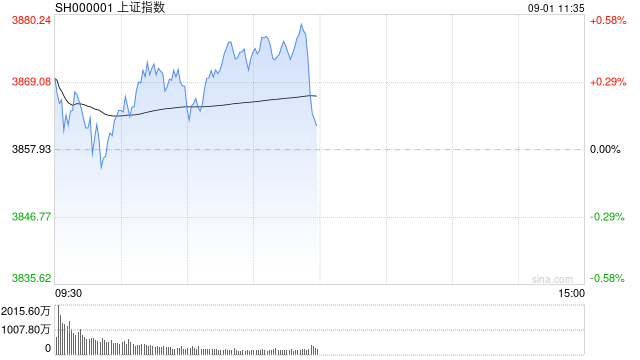
Market Overview - On the first trading day of September, A-shares opened higher with the Shanghai Composite Index up by 0.12%, Shenzhen Component Index up by 0.11%, and ChiNext Index up by 0.55%. However, the North Stock 50 Index fell by 0.76% [1] - The total trading volume in the three major markets (Shanghai, Shenzhen, and Beijing) reached 18,465 billion yuan, a decrease of 287 billion yuan from the previous day, with over 3,100 stocks rising [1] Sector Performance - The gold and non-ferrous metal sectors experienced significant gains, with gold stocks collectively surging. Notable stocks such as Western Gold, Hunan Silver, and Shengda Resources hit the daily limit [3][4] - The international spot gold price opened high on September 1, reaching a peak of 3,485 USD/ounce, marking the highest level since late April [5] - In August, the main gold futures contract on the New York Mercantile Exchange saw a cumulative increase of over 5%, achieving the best monthly performance since April [6] Financing and Investment Trends - The financing balance in A-shares continues to rise, reaching 22,454.72 billion yuan as of August 29, just 211.63 billion yuan short of the historical high. The Shenzhen market's financing balance hit a record high of 10,971.74 billion yuan [7] Company-Specific News - Alibaba Cloud responded to rumors regarding a significant order for Cambrian's chips, clarifying that the reported order of 150,000 units was inaccurate. Following this, Cambrian's stock experienced a sharp decline, with a drop of 8.96% at one point [8] - Goldman Sachs has raised its 12-month target price for Cambrian by 14.7% to 2,104 yuan, marking the second upward revision within a week [9][10]

A股午评:三大指数集体上涨,创新药、有色金属板块强势!超3000股上涨,成交额18465亿缩量287亿;机构解读
Sou Hu Cai Jing· 2025-09-01 04:04
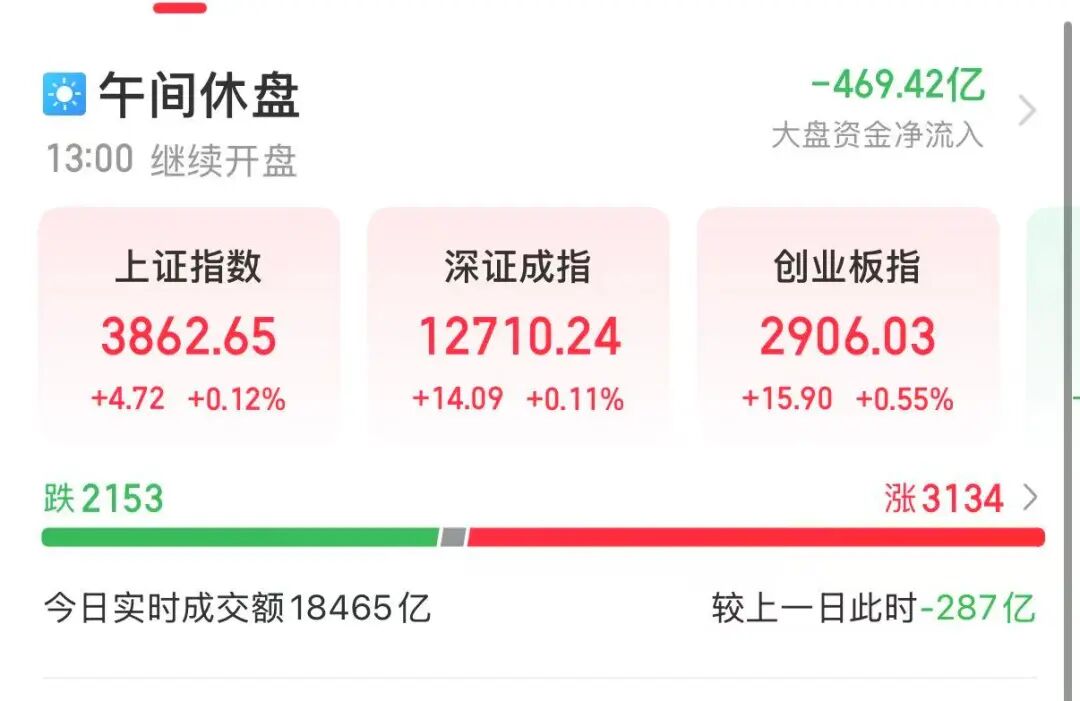
Market Overview - The three major stock indices experienced gains, with the Shanghai Composite Index closing at 3862.65 points, up 0.12%, the Shenzhen Component at 12710.24 points, up 0.11%, and the ChiNext Index at 2906.03 points, up 0.55% [2] Sector Performance - The film and cinema sector saw significant gains, with multiple stocks hitting the daily limit up [2] - The innovative drug sector also performed well, with stocks like Maiwei Biotech and Baihua Medicine reaching the daily limit up [4] - The gold concept stocks, including China Ruilin and Shengda Resources, also saw gains, driven by bullish forecasts for gold prices from international financial institutions [5] Key Developments - The National Healthcare Security Administration announced the preliminary review of the innovative drug directory, which includes new cancer treatment drugs and globally unique products [4] - Goldman Sachs raised the 12-month target price for Cambrian to 2104 yuan, citing strong Q2 performance and increased AI chip shipments [8] - The National Development and Reform Commission is set to release detailed implementation plans for the "Artificial Intelligence+" initiative, focusing on six key industry areas [7] Financial Insights - The film industry reported a box office of 119.66 billion yuan for the summer season, with a year-on-year increase of 2.76% [7] - The white wine sector's performance in the first half of the year met market expectations, with a positive outlook for mid-term domestic demand recovery [9]
深市融资余额,创历史新高
财联社· 2025-09-01 03:49
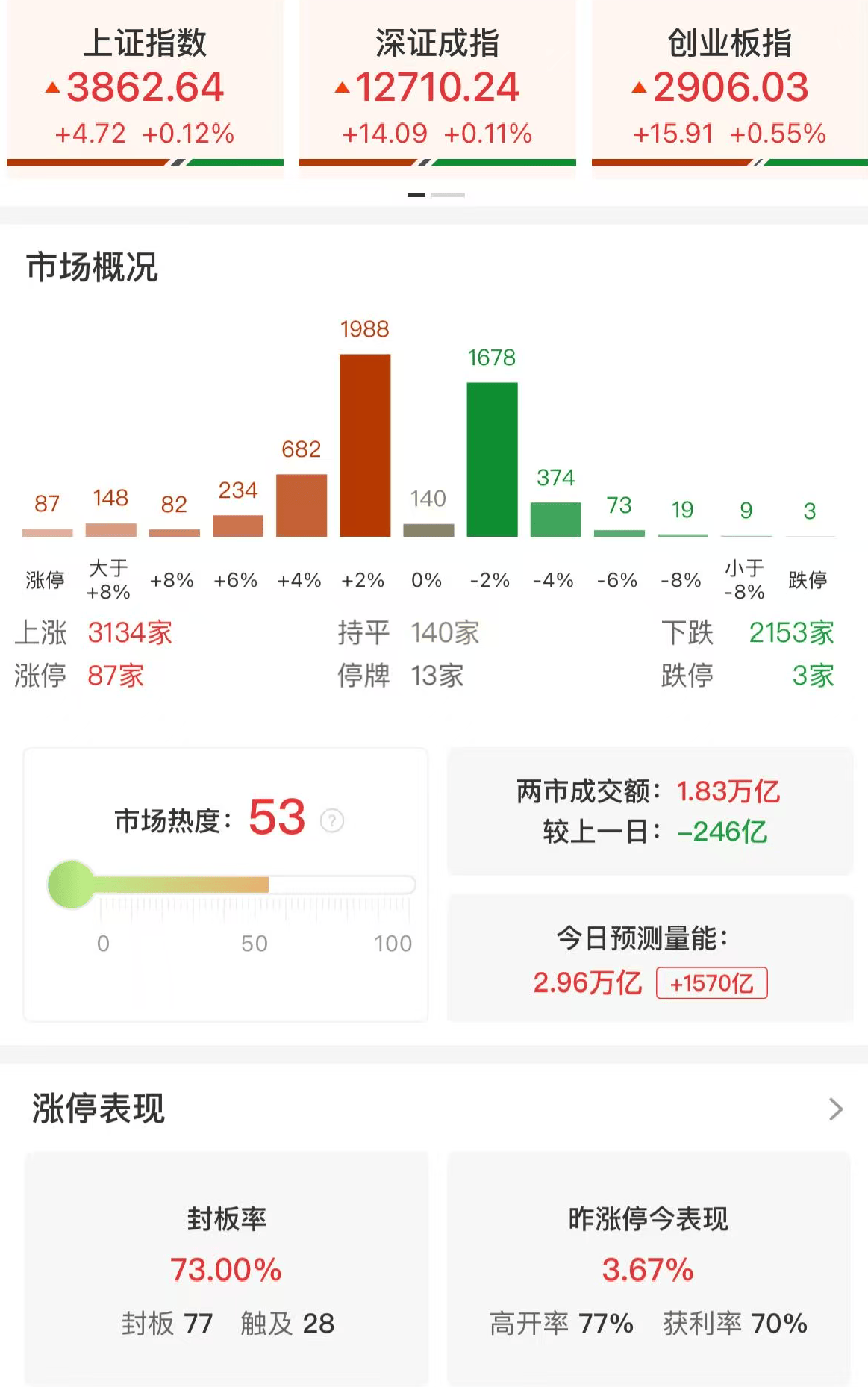
Group 1 - The A-share market experienced a slight increase in the morning session, with the three major indices showing small gains. The total trading volume in the Shanghai and Shenzhen markets reached 1.83 trillion yuan, a decrease of 24.6 billion yuan compared to the previous trading day, with over 3,100 stocks rising across the market [1][3] - In terms of sector performance, gold concept stocks surged collectively, with companies like Western Gold hitting the daily limit. Chip and computing hardware stocks rebounded, with companies like Yuanjie Technology reaching new historical highs. Innovative drug concept stocks also saw a rebound, with Changchun Gaoxin hitting the daily limit. Conversely, satellite communication concept stocks underwent adjustments, with China Satellite and China Satcom both dropping over 5% [3] - The financing balance in the Shenzhen market reached a historical high, with the total financing balance across the Shanghai, Shenzhen, and Beijing markets reaching 2,245.472 billion yuan as of August 29, marking a near ten-year high and just 21.163 billion yuan short of the historical record. The Shenzhen market's financing balance stood at 1,097.174 billion yuan, also a historical high [4]

A股午评:三大指数上涨,沪指涨0.12%创指涨0.55%,黄金、医药板块领涨!超3100股上涨,成交额18465亿缩量287亿
Ge Long Hui· 2025-09-01 03:46
Market Overview - The three major A-share indices collectively rose in early trading, with the Shanghai Composite Index up 0.12% at 3862.65 points, the Shenzhen Component Index up 0.11%, and the ChiNext Index up 0.55%. The North Star 50 Index fell by 0.76% [1] - The total trading volume in the Shanghai and Shenzhen markets reached 184.65 billion yuan, a decrease of 28.7 billion yuan compared to the previous day, with over 3100 stocks rising across the market [1] Sector Performance - International gold prices surpassed 3480 USD/ounce, reaching a four-month high, leading to significant gains in gold-related stocks such as Shengda Resources and Western Gold, which hit the daily limit [3] - The pharmaceutical sector showed strong performance, with stocks like Baihua Pharmaceutical and Changchun High-tech hitting the daily limit [3] - The film industry also saw a rise, with the summer box office exceeding 11.9 billion yuan, a year-on-year increase of 2.76%, and stocks like China Film rising over 6% [3] - The semiconductor sector continued its upward trend, with stocks like Yuanjie Technology and Liyang Chip hitting the daily limit, and Huahong's stock rising over 12% following its announcement to acquire a 97.5% stake in Huali Microelectronics [3] - Alibaba's H-shares surged by 19%, positively impacting related stocks such as Xinhua Dou and Ronglian Technology, with Alibaba's capital expenditure on AI and cloud infrastructure reaching 38.6 billion yuan last quarter [3] Declining Sectors - The satellite navigation sector experienced significant declines, with China Satellite falling over 7% and China Satcom down over 5% [4] - The brokerage sector also faced downward pressure, with stocks like Huaxi Securities and Dongfang Fortune dropping over 2% [4]
A股午评:创业板指涨0.55%,超3100股上涨!黄金、医药板块领涨
Ge Long Hui· 2025-09-01 03:40
Market Overview - The three major A-share indices collectively rose in the morning session, with the Shanghai Composite Index up 0.12% at 3862.65 points, the Shenzhen Component Index up 0.11%, and the ChiNext Index up 0.55%. The North Star 50 Index fell by 0.76. The total trading volume in the Shanghai and Shenzhen markets reached 184.65 billion yuan, a decrease of 28.7 billion yuan from the previous day, with over 3100 stocks rising across the market [1][1][1] Sector Performance - International gold prices surpassed 3480 USD/ounce, reaching a four-month high, leading to significant gains in gold-related stocks such as Shengda Resources, Western Gold, and Hunan Silver, which all hit the daily limit [1][1] - The pharmaceutical sector showed strong performance, with stocks like Baihua Pharmaceutical and Changchun High-tech also hitting the daily limit [1][1] - The film industry saw a broad increase, with WenTou Holdings hitting the daily limit and China Film rising over 6%. The summer box office exceeded 11.9 billion yuan, a year-on-year increase of 2.76% [1][1] - The semiconductor sector continued its upward trend, with stocks like Yuanjie Technology and Liyang Chip hitting the daily limit, and Huahong Semiconductor rising over 12%. Huahong announced plans to acquire 97.5% of Huali Micro and raise matching funds [1][1] - Alibaba's H-shares surged by 19%, which stimulated gains in Alibaba-related stocks, including Xinhua Du, Ronglian Technology, and Sanjiang Shopping, all hitting the daily limit. Alibaba's capital expenditure in AI and cloud infrastructure reached 38.6 billion yuan last quarter [1][1] Declining Sectors - The satellite navigation sector experienced significant declines, with China Satellite falling over 7% and China Satcom dropping over 5% [1][1] - The brokerage sector faced volatility, with Huaxi Securities and Dongfang Fortune both declining over 2% [1][1]
