
玩具

Search documents
上海便利通关助力首发经济
Jing Ji Ri Bao· 2025-06-03 22:03
Group 1 - The core viewpoint of the article is the introduction of a pilot program for import consumer goods inspection facilitation measures in Shanghai, aimed at speeding up customs clearance for newly launched products [1][2] - The new facilitation measures are based on a "whitelist + differentiated qualification assessment" inspection model, which is a nationwide first [1] - The "First Launch Shanghai 3.0" support policy includes three new initiatives and seven continued measures, focusing on facilitating customs clearance for newly launched imported products [1] Group 2 - The facilitation measures are centered around three institutional innovations: expanding the scope to cover all categories of imported consumer goods, implementing flexible mechanisms for regulatory oversight, and establishing cross-departmental collaborative services [1] - The measures allow for rapid clearance of small batches of new products (fewer than 20 items) and enable expedited clearance for larger batches with qualified laboratory testing reports [1] - The implementation of these measures is attracting more companies to choose Shanghai as their product launch location, with eight international brands already applying for the customs whitelist in the Jing'an District [2] Group 3 - Customs data indicates that over 500,000 batches of imported consumer goods, including clothing and toys, have passed through Shanghai ports this year, accounting for half of the national total [2] - The new facilitation measures are expected to improve the average customs clearance efficiency by over 80% per shipment [2]
【笔记20250603— 利率债,“半新不旧”经济的代表】
债券笔记· 2025-06-03 12:57
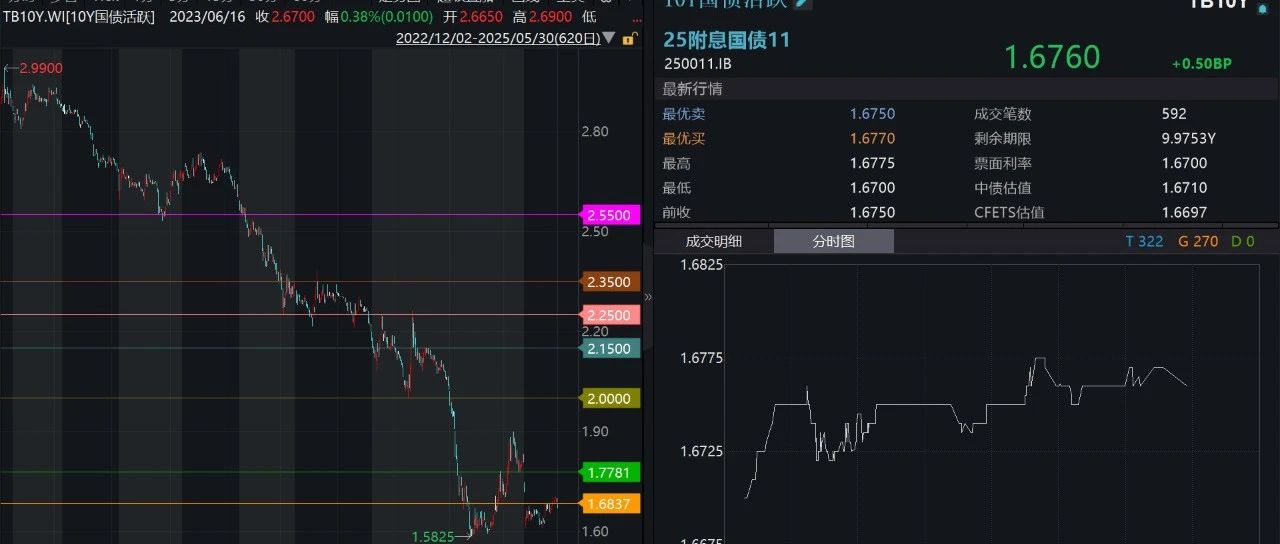
Group 1 - The market is experiencing a slight upward trend due to a balanced and loose funding environment, with long-term bond yields rising slightly [1][2][4] - The People's Bank of China conducted a 454.5 billion yuan reverse repurchase operation, with a net withdrawal of 375.5 billion yuan today [2] - The interbank funding rates have shown a decline, with DR001 around 1.41% and DR007 around 1.55% [2][3] Group 2 - The 10-year government bond yield opened slightly lower at 1.67% but rebounded to around 1.675%, indicating a narrow fluctuation [4] - The Caixin Manufacturing PMI for May was below expectations, contributing to a slight increase in the stock market [4] - Different sectors are showing divergent trends, with "new consumption" and "hard currency" stocks reaching new highs, while "old economy" sectors like coking coal continue to decline [4]

【财经分析】端午消费观察:亲子经济火爆成为新增长点
Xin Hua Cai Jing· 2025-06-03 08:26
Group 1 - The core viewpoint of the articles highlights the significant rise in parent-child consumption during the Dragon Boat Festival, coinciding with International Children's Day, indicating a shift towards family-centered consumption models in the market [1][5][6] - Data from Meituan Travel shows a 500% year-on-year increase in searches for "children's parent-child themed hotels" since May 1, with a 73% increase in one-stop package bookings at high-star hotels in county areas during the holiday [2] - Ctrip reports that parent-child families became the main force in travel during the holiday, accounting for 25% of orders, with nearly 90% of the top 50 scenic spots being parent-child themed [2] Group 2 - The rise in parent-child consumption is seen as a signal of economic structural transformation, with experts suggesting that businesses should focus on differentiated strategies and enhance product and service quality to meet evolving consumer demands [1][6] - Various businesses, including Haidilao and Pop Mart, are adapting to the growing parent-child economy by creating dedicated spaces and immersive experiences for families, indicating a shift in consumer expectations [4][6] - The potential of the parent-child economy is emphasized, with experts noting that as parents' educational philosophies evolve and their spending power increases, sectors like parent-child travel, education, and entertainment will continue to thrive [5][6]
外贸企业从容应对市场波动、中国风点燃消费新引擎、多家国际投行上调中国经济增速预期...
Sou Hu Cai Jing· 2025-06-03 02:59
Group 1: Foreign Trade Resilience - Foreign trade is a crucial component of China's open economy and plays a key role in facilitating domestic and international dual circulation [4] - Despite external uncertainties, foreign trade enterprises are actively exploring new markets and developing new business models to maintain steady growth [4][5] - In Linyi, Shandong, the daily export cargo volume reached 680 standard containers, with a 20% increase in cargo volume following recent trade talks [5][6] Group 2: Market Diversification Strategies - Linyi foreign trade companies are accelerating their market diversification strategies, targeting emerging markets in Southeast Asia and enhancing domestic market presence [6] - Companies are increasing investments in e-commerce and redesigning products to cater to domestic consumer preferences [6] - Linyi organized events to help foreign trade enterprises expand into domestic markets, resulting in significant order acquisitions [6] Group 3: Economic Growth Predictions - Several international investment banks, including Goldman Sachs and Morgan Stanley, have raised their forecasts for China's economic growth due to effective macro policies and progress in Sino-U.S. trade talks [30][31] - Goldman Sachs increased its 2025 GDP growth forecast by 0.6 percentage points, while Morgan Stanley raised it by 0.3 percentage points [30][31] - The positive outlook is supported by strong retail sales data and government policies aimed at boosting consumption and investment [31][32] Group 4: Automotive Industry Competition - The China Automobile Manufacturers Association has issued an initiative to oppose chaotic price wars in the automotive industry, emphasizing the need for fair competition [35][38] - The Ministry of Industry and Information Technology supports this initiative, highlighting that price wars negatively impact production and industry sustainability [36][38] - The ministry plans to enhance oversight of the automotive sector to maintain a healthy competitive environment and protect consumer interests [36][40] Group 5: Employment Services Enhancement - The government is focusing on improving employment services for graduates, with a projected increase in the number of graduates in 2025 [41] - Initiatives include personalized employment guidance and the use of AI technology to assist students in job preparation [45] - The aim is to create a comprehensive employment service system that connects talent with job opportunities effectively [46]
中国制造的创新性、时尚感更凸显(开放谈)
Ren Min Ri Bao Hai Wai Ban· 2025-06-02 23:31
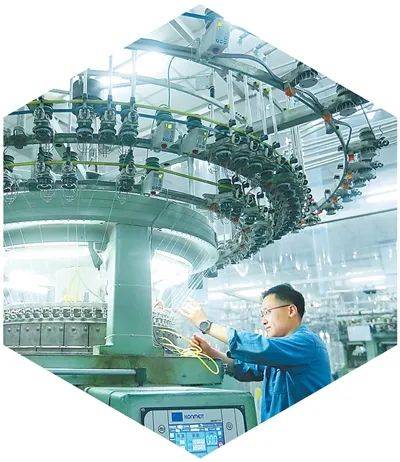
Group 1 - China's manufacturing is transitioning from "OEM" to "China Creation," focusing on high-quality development and innovation [1][3] - The global market perception of Chinese manufacturing is improving due to enhanced product quality and design [1][3] - China's manufacturing has historically relied on low-cost labor and produced low-value goods, but is now moving towards higher value-added products [1][2] Group 2 - In the white goods sector, brands like Haier, Midea, and Gree have captured over 50% of the global market share for refrigerators, washing machines, and air conditioners [2] - Smart cleaning devices such as robotic vacuums and floor washers are gaining popularity in overseas markets, with some Chinese brands achieving over 30% market share in certain countries [2] - China remains the largest toy producer and exporter globally, with improved design and innovation leading to increased popularity of domestic brands [2] Group 3 - Government policies, including tax incentives, support innovation in Chinese manufacturing [3] - The large domestic consumer market drives innovation and guides companies in product development [3] - Despite progress, challenges remain in high-end technology sectors, necessitating increased R&D investment and brand internationalization [3] Group 4 - The future of Chinese manufacturing is focused on innovation and global resource integration, aiming for high-quality development [3]
泡泡玛特“吃大肉”,52TOYS着急“喝口汤” | BUG
Xin Lang Ke Ji· 2025-06-02 23:28
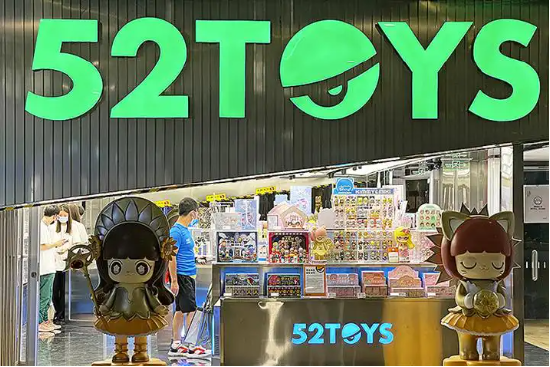
Core Viewpoint - 52TOYS, a Chinese toy company, is planning to go public in Hong Kong, but its financial performance raises concerns about its competitiveness in the rapidly growing IP toy market [2][4]. Financial Performance - 52TOYS reported a revenue of 630 million RMB in 2024, representing a year-on-year growth of 68%, but its net profit growth was only 12%, which is significantly lower than its peers [2][7]. - The company's gross margin decreased from 58% to 52% over the same period, indicating a decline in profitability [2][9]. - From 2022 to 2024, 52TOYS experienced a cumulative loss of 195 million RMB, with annual losses increasing each year [7][8]. Revenue Sources - 64.5% of 52TOYS' revenue comes from licensed IP, while its own IP revenue share is declining, raising concerns about sustainability if licenses are lost [2][9]. - The company has spent over 100 million RMB on licensing fees for IPs from 2022 to 2024, indicating a heavy reliance on external IPs [9][11]. Market Position - The Chinese IP toy market is expected to grow from 486 billion RMB in 2020 to 756 billion RMB in 2024, with 52TOYS lagging behind competitors like Pop Mart and TOPTOY, which have shown stronger revenue growth [5][6]. - 52TOYS' revenue growth rate from 2022 to 2024 is 16.7%, significantly lower than competitors like Card Game at 55% and Bluku at over 150% [6][9]. Ownership and Investment - The founder and partners of 52TOYS have cashed out a total of 57.73 million RMB prior to the IPO, raising questions about their confidence in the company's future [3][4]. - Major shareholders include Suzhou Qiming Rongke and CICC Cultural Consumption Fund, with the founder holding approximately 36.81% of the shares [5][6]. Competitive Landscape - 52TOYS aims to differentiate itself by focusing on collectible toys rather than becoming a second Pop Mart, but analysts suggest it still operates within a similar framework [12]. - The company faces challenges in establishing a unique market position, as its reliance on licensed IPs and distributors limits its control over brand representation and pricing [11][12].

新消费快讯|MAIA ACTIVE官宣虞书欣为品牌代言人;美团小象超市出海
新消费智库· 2025-06-02 13:28
Core Viewpoint - The article highlights significant developments in the new consumption sector, including brand endorsements, international expansions, and strategic partnerships, indicating a dynamic market landscape. Group 1: Brand Endorsements and Partnerships - MAIA ACTIVE announced actress and singer Yu Shuxin as its brand ambassador, marking an important advancement for the brand since its acquisition by Anta Group in 2023 [2] - Actor Wu Lei has been appointed as the brand ambassador for Bright Dairy's premium product line, aiming to enhance consumer health protection through a dual strategy of fresh nutrition and celebrity influence [3] - Meitu announced a strategic cooperation with Alibaba, involving a $250 million convertible bond investment, which will support Meitu's growth and innovation [5] Group 2: International Expansion - LILANZ opened its first overseas store in Malaysia, representing a significant step in its internationalization strategy [2] - Luckin Coffee plans to establish 30 Brazilian coffee-themed stores nationwide, alongside the launch of a Brazilian coffee museum [4] Group 3: New Product Launches - Lebao Beer introduced a new music-themed can, inspired by music festival rhythms, aiming to connect with consumers through a unique product experience [5] - The DTC jewelry brand Palmonas is set to raise $6.5 million in its first round of institutional financing, focusing on semi-fine jewelry production [8] Group 4: Company Developments - Juewei Foods established a wholly-owned subsidiary in Changsha, expanding its business training and catering services [8] - Adidas opened its first global flagship store on Anfu Road in Shanghai, representing a high-level entry into the sports fashion market [9] - Lawson China has expanded its coverage to 124 cities, indicating significant growth in its convenience store operations [9]

港股午后回升,恒指跌幅收窄至1%,比亚迪股份、快手跌3%,泡泡玛特涨超4%
news flash· 2025-06-02 08:14
香港恒生指数收跌0.57%,恒生科技指数收跌0.70%。新世界发展跌超6%,四只永续债延迟派息;数字 货币概念股大涨,众安在线涨超9%。 ...

泡泡玛特总市值超三丽鸥,海外店铺要增8成
3 6 Ke· 2025-06-02 02:30
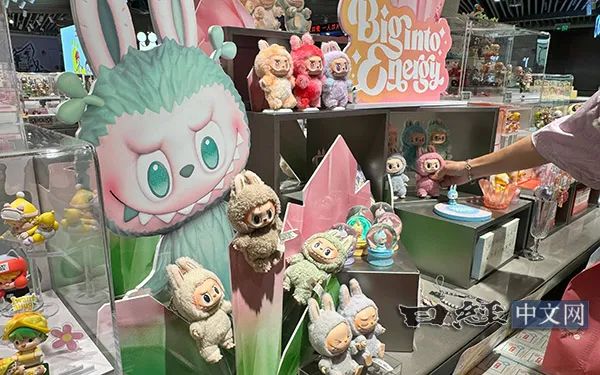
Core Insights - The sales related to "LABUBU" have increased more than eightfold within a year, reaching 3 billion RMB in the 2024 fiscal year, which is 8.3 times the previous fiscal year [4] - The company plans to expand its store count outside of China to approximately 230 by the end of the 2025 fiscal year, an increase of 80% from the previous fiscal year [2] - The total market value of the company has risen to approximately 250 billion HKD, surpassing Japan's Sanrio [5] Company Performance - The company's revenue for the 2024 fiscal year increased to 13 billion RMB, which is 2.1 times the previous fiscal year, while net profit reached 3.1 billion RMB, a 2.9 times increase [4] - The COO stated that LABUBU figurines have become a fashion statement among young people globally [4] Market Expansion - The company has accelerated its overseas market expansion, with plans to open 100 stores in Japan, Thailand, and other regions by 2025 [6] - As of 2024, the company has established 130 stores outside of China, with overseas business accounting for nearly 40% of total revenue [6] Competitive Landscape - The company is known for developing proprietary IP products in collaboration with various artists, distinguishing itself from competitors like Miniso, which focuses on collaborations with well-known IPs [4] - The company is seen as a pioneer in China's IP business, moving away from traditional manufacturing to focus on creative product development [4][6] Industry Context - The company is positioned as a representative enterprise in Asia's character economy, reflecting a shift in China's economic model from manufacturing to innovation and IP utilization [5][6] - The ongoing trade tensions between China and the U.S. may impact production costs and pricing strategies, with potential price increases in the U.S. market being hinted at by the COO [7]
涉及儿童书包、安全座椅等 我国已发布210余项儿童相关领域国家标准
Yang Shi Xin Wen· 2025-06-02 02:04
Group 1: National Standards for Children's Products - Over 210 national standards related to children's products have been published in China [1] - Standards for children's textiles, footwear, and clothing specify quality and safety requirements from materials to design and production [1] - Strict requirements are established for various children's products, including paper products, furniture, and bathing items, ensuring health and safety for children [1] Group 2: Standards for Toys and Educational Supplies - The "Toy Safety" series of national standards regulates safety, mechanical properties, and specific element migration for various toy products [2] - Clear requirements are set for student supplies, children's backpacks, writing tools, and digital textbooks to ensure safety during play and learning [2] - Standards for preventing myopia and promoting physical health in children are detailed, including specifications for sports equipment and venues [2] Group 3: Standards for Online Safety and Transportation - National standards are established to protect minors online, including regulations for internet content and monitoring systems [2] - Mandatory national standards for school buses and child safety seats ensure the safety of children during transportation [2]