
非银金融

Search documents
半日主力资金丨加仓电子、计算机板块 抛售银行板块
Xin Lang Cai Jing· 2025-08-22 03:48
Group 1 - Main capital inflow was observed in the electronic, computer, and non-bank financial sectors, while outflows were noted in the banking, public utilities, and pharmaceutical sectors [1] - Specific stocks with significant inflows include Zhongke Shuguang, SMIC, and Northern Rare Earth, attracting net inflows of 4.529 billion, 3.295 billion, and 2.601 billion respectively [1] - Stocks experiencing notable outflows include Hanyu Pharmaceutical, Agricultural Bank, and Ping An Bank, facing sell-offs of 312 million, 287 million, and 280 million respectively [1]





171家上市公司披露半年度分红预案 拟合计派现超1200亿元
Cai Jing Wang· 2025-08-22 02:36
Core Viewpoint - The focus on cash dividends has intensified among A-share listed companies, with a total proposed distribution of 124.58 billion yuan for the first half of 2025, reflecting a growing trend in dividend payouts and an expanding participant base [1][2]. Group 1: Dividend Distribution - A total of 171 A-share listed companies have disclosed their dividend plans, with 15 companies proposing dividends exceeding 1 billion yuan [1]. - China Mobile and China Telecom are the two companies proposing dividends over 10 billion yuan, with China Mobile planning to distribute over 54 billion yuan and China Telecom proposing 16.58 billion yuan [1]. - Seven companies are set to distribute over 2 billion yuan, with notable amounts including 5 billion yuan from Muyuan Foods and over 4 billion yuan from CATL [2]. Group 2: Investor Sentiment and Company Strategy - Companies are implementing mid-term dividends to enhance investor satisfaction, with Muyuan Foods indicating that its proposed cash dividend of 5 billion yuan represents 47.5% of its net profit for the first half of the year [2]. - Companies are expected to adjust their dividend ratios based on market conditions, cash flow, and capital expenditure plans, aiming to align shareholder returns with company development stages [2]. Group 3: Policy and Market Implications - High mid-term dividends signal positive market sentiment and reflect deeper changes in the capital market, with policies encouraging such practices [3]. - Future increases in dividend payouts are anticipated, supported by regulatory incentives and a need for companies to integrate dividend policies into their strategic planning [3].



15个行业获融资净买入 44股获融资净买入额超1亿元
Zheng Quan Shi Bao Wang· 2025-08-22 01:40
Group 1 - On August 21, among the 31 first-level industries tracked by Shenwan, 15 industries experienced net financing inflows, with the computer industry leading at a net inflow of 2.626 billion yuan [1] - Other industries with significant net financing inflows included electronics, telecommunications, non-bank financials, automotive, and home appliances, each exceeding 300 million yuan in net inflows [1] Group 2 - A total of 1,820 individual stocks received net financing inflows on August 21, with 207 stocks having net inflows exceeding 30 million yuan [1] - Among these, 44 stocks had net inflows exceeding 100 million yuan, with Zhinanpen leading at 530 million yuan in net inflows [1] - Other notable stocks with significant net inflows included Inspur Information, China Unicom, Sifang Jingchuang, Northern Huachuang, Cambrian, Tonghuashun, Zhongji Xuchuang, China Rare Earth, and Huagong Technology, each with net inflows exceeding 200 million yuan [1]
171家上市公司中期拟合计派现超1200亿元
Zheng Quan Ri Bao· 2025-08-21 16:39
Core Viewpoint - The focus of investors has shifted towards cash dividends as A-share listed companies disclose their semi-annual reports, with a total proposed distribution of 124.58 billion yuan across various industries [1][2]. Group 1: Dividend Distribution - A total of 171 A-share listed companies have disclosed their semi-annual dividend plans, with 13 companies already implementing them [1]. - Among these, 15 companies plan to distribute over 1 billion yuan, with China Mobile proposing over 54 billion yuan and China Telecom proposing 16.58 billion yuan [1]. - Seven companies are set to distribute over 2 billion yuan, including Moutai Foods with 5 billion yuan and Ningde Times with over 4 billion yuan [1][2]. Group 2: Investor Sentiment and Company Strategy - Companies are implementing mid-term dividends to enhance investor satisfaction, with Moutai Foods indicating that its proposed cash dividend of 5 billion yuan accounts for 47.5% of its net profit [2]. - The high mid-term dividends are seen as a positive signal to the market, reflecting deeper changes in the capital market and encouraging long-term capital inflow [2][3]. - Companies are encouraged to integrate dividend policies into their strategic planning, considering cash flow and investment needs to enhance governance and value [3].
策略专题:“慢长牛”在途,怎么追,怎么切?
Guoxin Securities· 2025-08-21 12:59
Group 1 - The report discusses the "slow bull market" and how to navigate it, highlighting the systematic increase in index slope during the liquidity bull market from 2014 to 2015, with industry "bloom periods" becoming shorter [1][10] - It notes that from Q2 2014 to the peak in 2015, there was a significant rotation among industries, with leading sectors experiencing substantial underperformance in subsequent periods [15][16] - The report emphasizes that during the liquidity bull market, the market was less sensitive to fundamentals, with ROE becoming relatively important only during phases of poor profitability [22][31] Group 2 - The exploration of acceleration models indicates that during the liquidity bull market, the fundamental performance was not a major concern, and only in phases of poor profitability did ROE gain significance [22][31] - The report outlines that the reasonable forward valuation level for the ChiNext index during the bull market was between 81.0x and 102x, with a minimum of 15% overvaluation during peak periods [31][34] - It highlights that companies or sectors that cannot be precisely valued often end up in a state of high bubble, using LeTV as a case study where its market value exceeded 100 billion due to speculative trading [34][38] Group 3 - The report analyzes the cashing-out model, indicating that preemptive cashing out often requires event-driven catalysts, with examples such as the merger of China South Locomotive and China North Locomotive [43][46] - It discusses how high-amplitude stocks can create continuous excess returns, with higher daily volatility correlating with increased chances of excess returns during upward trends [49][50] - The report concludes that index resonance upward relies on structural rotation and the stability of high-position stocks, which can provide positive feedback to market sentiment [55][59]
8月21日沪深两市强势个股与概念板块
2 1 Shi Ji Jing Ji Bao Dao· 2025-08-21 10:08
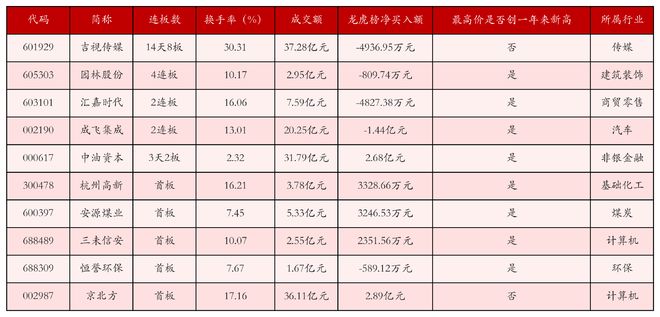
Strong Stocks - As of August 21, the Shanghai Composite Index rose by 0.13% to 3771.1 points, while the Shenzhen Component Index fell by 0.06% to 11919.76 points, and the ChiNext Index decreased by 0.47% to 2595.47 points [1] - A total of 58 stocks in the A-share market hit the daily limit up, with the top three strong stocks being: Jishi Media (601929), Garden Shares (605303), and Huijia Times (603101) [1] - Jishi Media (601929) had 14 trading days with 8 limit ups, a turnover rate of 30.31%, and a transaction amount of 3.728 billion yuan, with a net buying amount from the Dragon and Tiger list of -49.3695 million yuan [1] - Garden Shares (605303) achieved 4 consecutive limit ups, a turnover rate of 10.17%, and a transaction amount of 295 million yuan, with a net buying amount of -8.0974 million yuan [1] - Huijia Times (603101) recorded 2 consecutive limit ups, a turnover rate of 16.06%, and a transaction amount of 759 million yuan, with a net buying amount of -48.2738 million yuan [1] Strong Concept Sectors - The top three concept sectors with the highest increase in A-shares were: Combustible Ice, Digital Currency, and Cross-Border Payment (CIPS) [2] - The Combustible Ice sector rose by 3.12%, with 8.33% of its component stocks hitting the limit up, and 100% of its component stocks increasing [2] - The Digital Currency sector increased by 2.38%, with 7.22% of its component stocks hitting the limit up, and 79.38% of its component stocks rising [2] - The Cross-Border Payment (CIPS) sector saw a rise of 2.19%, with 5.41% of its component stocks hitting the limit up, and 82.43% of its component stocks increasing [2]

中加基金固收周报︱流动性推动牛市前进
Xin Lang Ji Jin· 2025-08-21 09:24
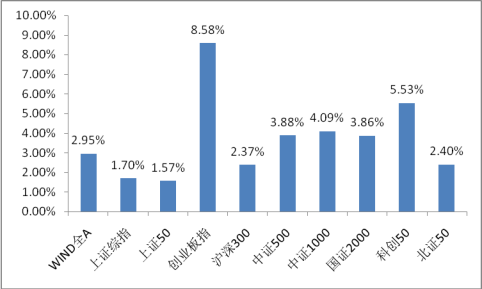
Market Overview - A-shares experienced an upward trend last week, with major indices rising and trading volume remaining high [1] - Among the 31 Shenwan first-level industries, communication, electronics, and non-bank financials performed relatively well [1] Macro Data Analysis - In July 2025, the central bank reported a decrease in new RMB loans by 50 billion, against a market expectation of a decrease of 15 billion, with a previous value of 22,400 billion [4] - The total social financing scale was 11,600 billion, below the market expectation of 14,100 billion and significantly lower than the previous value of 41,993 billion [4] - M2 year-on-year growth was 8.8%, exceeding the market expectation of 8.3% [4] - A notable increase in government bond financing by 12,440 billion year-on-year, indicating a strong driving force [4] - A significant decline in household deposits by 11,100 billion year-on-year, suggesting a trend of "deposit migration" [4] Economic Indicators - The industrial added value for July increased by 5.7% year-on-year, but decreased by 1.1 percentage points month-on-month [5] - Retail sales for July reached 3.9 trillion, with a year-on-year increase of 3.7%, but also a month-on-month decline of 1.1 percentage points [5] - Fixed asset investment from January to July grew by 1.6% year-on-year, a decrease of 1.2 percentage points compared to the first half of the year [5] - Manufacturing investment saw a cumulative year-on-year decline of 6.2%, marking four consecutive months of slowdown [6] Market Strategy Outlook - The market showed strong fluctuations last week, with liquidity remaining ample and a bullish sentiment prevailing [7] - The current two-margin balance as a percentage of total A-share market capitalization is 2.08%, significantly lower than the 5% seen in 2015 [7] - Despite concerns over potential economic downturns in Q3, the supportive monetary policy and low-interest environment continue to foster liquidity [7] Long-term Perspectives - The long-term dynamics of the US-China relationship have been established, with international capital markets questioning the US government's governance capabilities [8] - Opportunities may arise in domestic demand, technology, and overseas expansion, particularly for undervalued stocks [8] Industry Insights - Defensive dividend sectors are recommended for allocation, while a "barbell strategy" remains effective in the current market environment [9] - The banking sector is showing signs of stabilization, with expectations of increased insurance capital inflow supporting dividend sectors [9] - In the offensive sector, technology remains a focus, especially with potential trading opportunities arising from domestic policy stability [9]
上证指数体系将带来哪些投资新逻辑?
Sou Hu Cai Jing· 2025-08-21 08:15
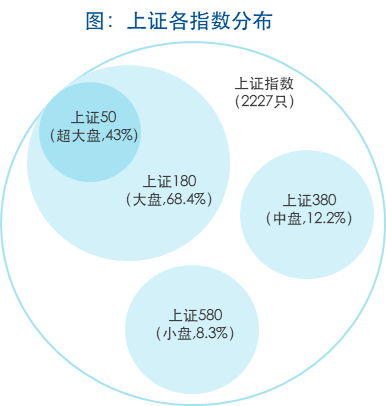
Core Viewpoint - The article discusses the advantages of index investing, particularly focusing on the Shanghai Stock Exchange flagship index system, which includes the SSE 50, SSE 180, SSE 380, and SSE 580 indices, highlighting their unique characteristics and investment logic. Group 1: SSE 50 Index - The SSE 50 Index consists of 50 representative stocks from the Shanghai market, characterized by large market capitalization and good liquidity, including major companies like Kweichow Moutai and Industrial and Commercial Bank of China [5][6]. - It exhibits high profitability stability due to its composition of leading enterprises, making it less susceptible to market fluctuations [6]. - The index offers a high dividend yield, as these large companies are known for their strong profitability and generous dividends, making it suitable for conservative investors seeking asset preservation and appreciation [7]. - The SSE 50 Index is closely tied to macroeconomic performance, typically performing well during stable economic growth phases, allowing investors to benefit from economic development [7]. Group 2: SSE 180 Index - The SSE 180 Index includes 180 stocks with large market capitalization and good liquidity, covering various important sectors such as finance, energy, and consumer goods, thus providing a broader representation than the SSE 50 [10]. - It combines value and growth attributes, featuring traditional blue-chip stocks alongside companies with growth potential in emerging sectors [10][11]. - The industry distribution of the SSE 180 is more diversified compared to the SSE 50, with significant representation from electronics and pharmaceuticals, making it suitable for investors looking to balance risk and participate in multiple industry growth opportunities [11]. Group 3: SSE 380 Index - The SSE 380 Index focuses on mid-cap stocks, selecting 380 companies with high revenue growth rates and stable profitability, reflecting the overall performance of mid-cap stocks in the Shanghai market [14][15]. - The index has been optimized to better represent mid-cap stocks, balancing traditional and emerging industries, and reducing risks associated with frequent rebalancing [15]. - It is particularly relevant for investors optimistic about China's economic restructuring and the rise of new industries, with a projected compound annual growth rate of 17.35% in net profit over the next two years [15]. Group 4: SSE 580 Index - The SSE 580 Index includes 580 smaller-cap stocks, aiming to reflect the overall performance of small-cap stocks in the Shanghai market, with a significant portion being companies listed on the Sci-Tech Innovation Board [17][19]. - Approximately 30% of the index's sample weight consists of companies from the Sci-Tech Innovation Board, and over 40% are private enterprises, highlighting its innovative growth potential [19]. - The index has shown strong growth potential for small-cap innovative stocks, making it an attractive option for investors with a higher risk tolerance seeking substantial returns from small-cap innovation [19][20].
富途控股(FUTU):2025年半年报点评:全球业务增长态势强劲
Soochow Securities· 2025-08-21 07:43
Investment Rating - The report maintains a "Buy" rating for Futu Holdings [1] Core Views - Futu Holdings demonstrated strong global business growth, with total revenue reaching 10 billion HKD in the first half of 2025, a year-on-year increase of 75%, and net profit attributable to shareholders reaching 4.7 billion HKD, up 110% year-on-year [1] - The company is expanding its international strategy and deepening its layout in the cryptocurrency sector, with a total trading volume of 68 trillion HKD, a year-on-year increase of 133% [1] - The report projects significant growth in net profit for 2025-2027, with estimates of 9.52 billion HKD, 11.81 billion HKD, and 15.04 billion HKD respectively, reflecting a robust long-term growth outlook [1] Revenue Summary - In the first half of 2025, brokerage commissions increased by 99% to 4.9 billion HKD, driven by a rebound in Hong Kong stocks and active US markets [1] - Interest income rose by 48% to 4.4 billion HKD, attributed to the expansion of customer margin scales and growth in margin financing [1] - Other operating income surged by 139% to 800 million HKD, mainly due to increased demand for wealth management services [1] Cost Summary - Research and development expenses increased by 130% to 800 million HKD, reflecting investments in internationalization and cryptocurrency business [1] - Sales expenses surged by 320% to 800 million HKD, driven by significant investments in global brand promotion and customer acquisition [1] - Management expenses rose by 261% to 800 million HKD, primarily due to increased personnel costs associated with global business expansion [1] User Growth - As of the end of the first half of 2025, the number of registered users reached 27.12 million, a year-on-year increase of 16%, while the number of account holders grew by 30% to 5.24 million [1] - The total number of asset-holding clients increased by 41% to 2.88 million, with total client assets reaching 973.9 billion HKD, a 68% year-on-year increase [1] Profit Forecast and Valuation - The report revises profit forecasts upward, projecting net profits of 9.52 billion HKD, 11.81 billion HKD, and 15.04 billion HKD for 2025-2027, with corresponding P/E ratios of 20, 16, and 13 times [1]

53只股上午收盘涨停(附股)
Zheng Quan Shi Bao Wang· 2025-08-21 04:53
Market Overview - The Shanghai Composite Index closed at 3779.52 points, up 0.35% [1] - The Shenzhen Component Index closed at 11980.08 points, up 0.45% [1] - The ChiNext Index rose by 0.21%, while the Sci-Tech 50 Index increased by 0.96% [1] Stock Performance - Among the tradable A-shares, 2511 stocks rose, accounting for 46.64%, while 2672 stocks fell [1] - There were 53 stocks that hit the daily limit up, and 6 stocks hit the limit down [1] - The leading sectors for limit-up stocks included basic chemicals, computers, and electronics, with 6, 6, and 5 stocks respectively [1] Notable Stocks - Zhongyou Capital (000617) had the highest limit-up order volume with 13433.53 million shares and a closing price of 10.87 yuan [1] - Yuyin Co. (002177) and Shenzhen Huachuang (000062) also had significant limit-up orders, with 8606.43 million shares and 2204.86 million shares respectively [1] - The highest limit-up order funds were for Zhongyou Capital (1.46 billion yuan), Yuyin Co. (782.32 million yuan), and Shenzhen Huachuang (715.70 million yuan) [1] Continuous Limit-Up Stocks - Kosen Technology (300626) has achieved 5 consecutive limit-up days, the highest among all stocks [1] Industry Insights - The non-banking financial sector, computer industry, and electronic industry showed strong performance with multiple stocks hitting the limit up [1] - The basic chemicals sector also had a notable presence among the limit-up stocks [1]


