饮料

Search documents
事关王老吉海外商标,加多宝和王老吉大健康再打诉讼战
Di Yi Cai Jing· 2025-10-10 09:31
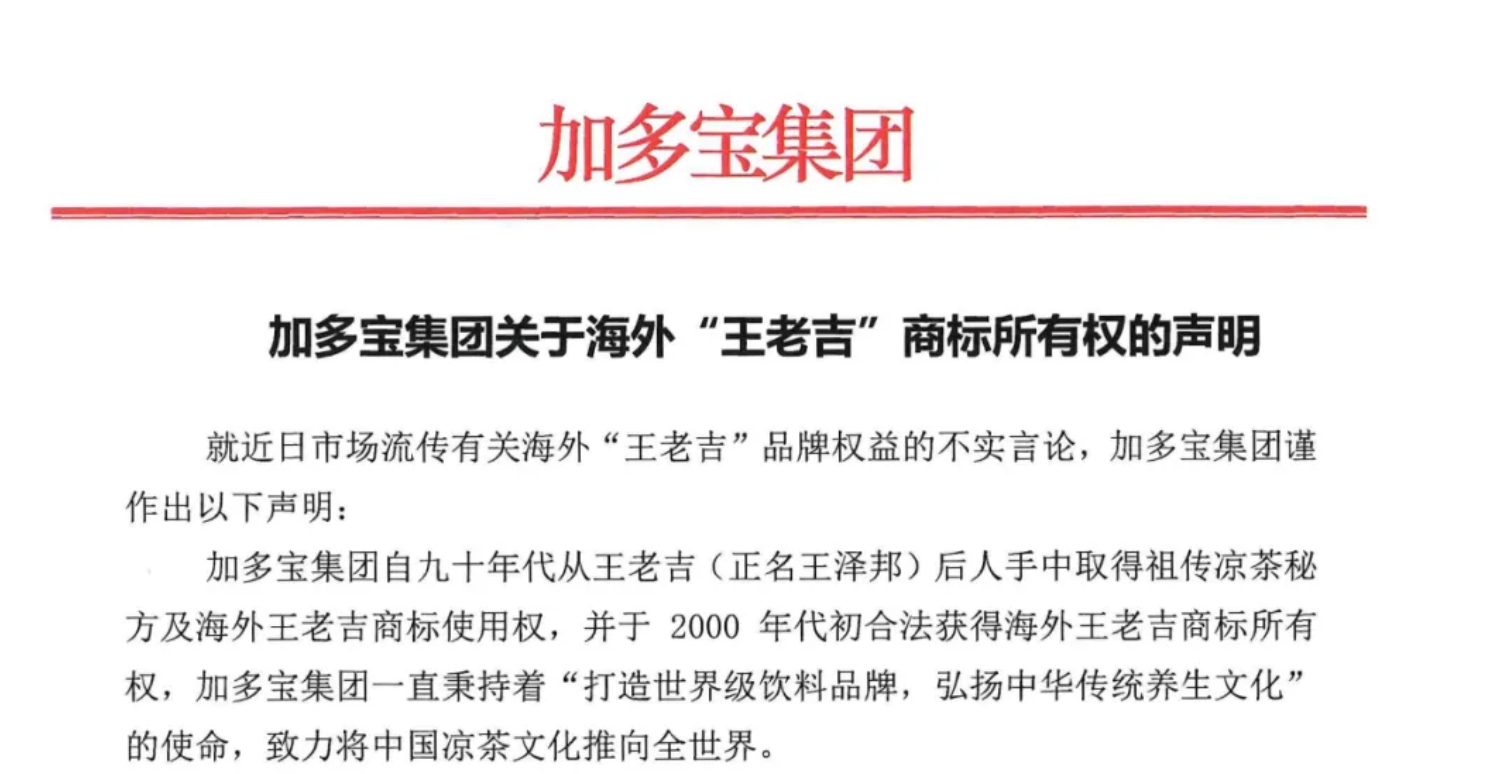
Core Viewpoint - The trademark dispute over the "Wang Lao Ji" brand has escalated into an international battle, with both Jia Duo Bao Group and Wang Lao Ji Health Industry Company claiming ownership of the overseas trademark rights, highlighting the strategic importance of brand recognition in expanding into overseas markets [1][3][4]. Trademark Ownership Claims - Jia Duo Bao Group asserts that it acquired the overseas trademark rights in the 1990s and has registered the "Wang Lao Ji" trademark in 60 countries and regions [1]. - Wang Lao Ji Health Industry Company claims that the trademark owner is Guangzhou Baiyunshan Pharmaceutical Group and has registered the "Wang Lao Ji" and "WALOVI" trademarks in over 100 countries [3]. Legal Actions and Market Impact - Both companies are engaged in legal battles, with Jia Duo Bao claiming victories in multiple lawsuits in Canada and the EU, while Wang Lao Ji has initiated actions in 21 countries against Jia Duo Bao's alleged malicious registrations [3][4]. - The ongoing trademark dispute is seen as a strategic move to gain dominance in the overseas market, which is crucial for both companies as domestic competition intensifies [4]. Financial Performance - Wang Lao Ji Health Industry Company reported a revenue of 6.5 billion yuan in the first half of 2025, an increase of 8.4% year-on-year, with a net profit of approximately 1.3 billion yuan, up 15.8% [4]. - The company's revenue figures from 2022 to 2024 were 9.35 billion, 10.01 billion, and 8.76 billion yuan, respectively, indicating fluctuations in performance [4]. - Over the past decade, Wang Lao Ji's overseas market size has grown 6.5 times, with an annual compound growth rate exceeding 25% [4].

东鹏饮料更新招股书上半年营收净利双增领跑行业
Xin Lang Cai Jing· 2025-10-10 09:08
Core Viewpoint - Dongpeng Beverage has demonstrated strong growth in the functional beverage market, achieving significant revenue and profit increases while expanding its product offerings and market presence [1]. Financial Performance - For the first half of 2025, Dongpeng Beverage reported revenue of 10.737 billion yuan, a year-on-year increase of 36.37%, and a net profit attributable to shareholders of 2.375 billion yuan [1]. Market Position - Dongpeng Beverage has ranked first in China's functional beverage market for four consecutive years since 2021, with market share increasing from 15.0% in 2021 to 26.3% in 2024 [1]. Product Strategy - The company has accelerated the development of a diversified product matrix, with the electrolyte water product "Dongpeng Buli La" achieving revenue of 1.493 billion yuan in the first half of 2025, matching its total sales for 2024 [1]. - The new product "Dongpeng Guo Zhi Cha" has been introduced with innovative positioning, offering three flavors and two packaging sizes to cater to various consumption scenarios [1]. National Expansion - Dongpeng Beverage's national strategy has shown significant results, with revenue growth in traditional markets like Guangdong and nearly 80% growth in northern markets [1]. - The company has invested in 13 planned production bases, with 9 already operational, which will reduce logistics costs and improve supply chain efficiency [1]. Distribution Network - Dongpeng Beverage has established a comprehensive distribution network with over 3,200 distributors and more than 4.2 million active retail points, reaching over 250 million unique consumers [1]. Competitive Landscape - The beverage industry is increasingly competitive, and Dongpeng Beverage has built a competitive edge through its multi-category product strategy, national supply chain, and deep distribution network [1].

国盛证券:华润饮料(02460)注册地迁移至香港 维持“增持”评级
Zhi Tong Cai Jing· 2025-10-10 08:05
Core Viewpoint - Guosheng Securities maintains an "overweight" rating on China Resources Beverage, highlighting the company's strong position in the beverage industry and its focus on growth in the Hong Kong market [1] Group 1: Company Strategy and Market Position - The company emphasizes the importance of water as a necessity that can withstand business cycles, with a clear advantage from years of deep cultivation in the industry [1] - The company is focusing on increasing its self-produced ratio while decreasing its outsourcing ratio, which is expected to enhance profit margins [1] - The company is committed to maintaining stable operations in the Hong Kong market, benefiting from the new company registration system introduced by the Hong Kong government [1] Group 2: Business Development and Product Innovation - In the packaging water segment, the company adheres to a multi-brand and multi-water source development strategy, with a focus on the Yibao and Benyou brands [2] - In the beverage segment, the company launched 14 new SKU products in the first half of 2025, aiming to develop a second growth curve [2] - Key product developments include tea beverages, fruit juices, and other drinks such as sports drinks and coffee beverages [2]
国盛证券:华润饮料注册地迁移至香港 维持“增持”评级
Zhi Tong Cai Jing· 2025-10-10 08:04
Core Viewpoint - Guosheng Securities maintains an "overweight" rating on China Resources Beverage (02460), highlighting the company's strong position in the essential water category and its focus on beverage business development, which is expected to lead to revenue recovery [1] Group 1: Company Strategy - The company emphasizes the importance of the Hong Kong market and maintains stable operations, with the recent relocation of its registration aimed at simplifying cross-border compliance and enhancing operational continuity [1] - The relocation is based on several considerations, including the retention of legal entity status under Hong Kong's new registration system, the stability and predictability of the business environment, and the strengthening of investor confidence [1] Group 2: Financial Performance - The company is expected to see improved profit margins due to an increase in self-produced products and a decrease in outsourcing [1] - The report indicates that the company will continue to operate steadily without changes to its assets, investments, management, or financial status as a result of the relocation [1] Group 3: Product Development - In the packaging water segment, the company adheres to a multi-brand and multi-water source development strategy, focusing on brands like Yibao and Benyou [1] - For the first half of 2025, the company plans to launch 14 new SKU products, targeting the second growth curve with new offerings in tea beverages, fruit juices, and other drinks such as sports drinks and coffee [1]
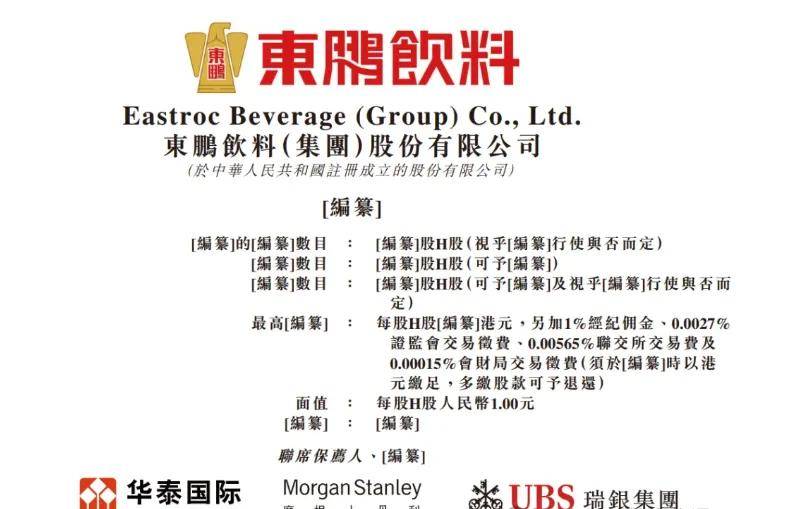
东鹏饮料赴港IPO“解困”?
Sou Hu Cai Jing· 2025-10-10 06:54
Core Viewpoint - Dongpeng Beverage has submitted an application for listing on the Hong Kong Stock Exchange, aiming to enhance its brand recognition and expand its market presence internationally, particularly in Southeast Asia [2][5]. Fundraising Purpose - The net proceeds from the listing will primarily be used for capacity expansion, supply chain upgrades, brand building, consumer engagement, national strategy implementation, overseas market exploration, digital transformation, product development, and general corporate purposes [4]. Previous Listing Attempts - Dongpeng Beverage previously submitted a listing application to the Hong Kong Stock Exchange on April 3, 2025, but the prospectus became invalid on October 3, 2025. The company had successfully listed on the A-share market in 2021 [4]. Market Strategy - The company aims to leverage the Hong Kong platform to attract global investors and enhance brand awareness, following the internationalization strategies of competitors like Red Bull and Monster [5]. Shareholder Considerations - A significant factor for the Hong Kong listing is the need for shareholders to reduce their holdings, as they have collectively reduced their stakes by over 5 billion yuan since the A-share listing [5]. Regulatory Challenges - Dongpeng Beverage faced regulatory scrutiny from the China Securities Regulatory Commission, requiring additional information regarding its business scope and compliance with foreign investment policies [6]. Financial Performance - Dongpeng Beverage has shown rapid revenue growth, with revenues of approximately 8.5 billion yuan in 2022, 11.26 billion yuan in 2023, and 15.83 billion yuan in the first half of 2025. Gross profits and net profits have also increased significantly during this period [7][8]. Product Strategy - The company has adopted a "1+6 multi-category strategy," focusing on its core product, Dongpeng Special Drink, while expanding into six new categories, including electrolyte drinks and coffee beverages [9]. Channel Development - Dongpeng Beverage is addressing the challenge of maintaining and upgrading its distribution channels while exploring e-commerce and new retail opportunities to cater to younger consumers [10].
东鹏饮料正式赴港上市,出海布局要怎么打?
Guan Cha Zhe Wang· 2025-10-10 06:04
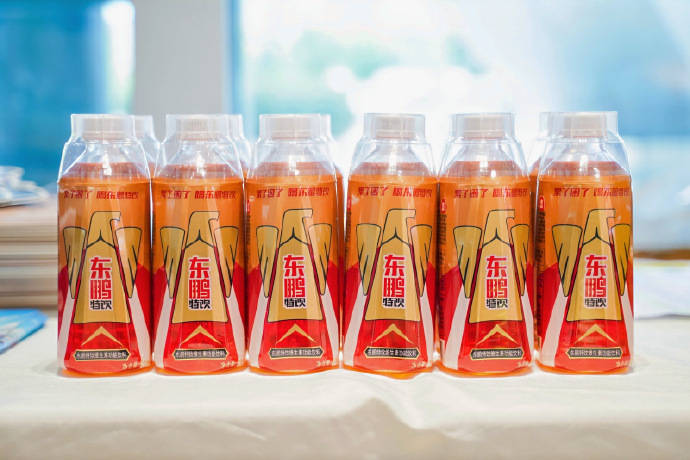
Core Viewpoint - Dongpeng Beverage is making a significant impact in the functional beverage market, aiming for a dual listing in Hong Kong to enhance its capital strength and international brand image while expanding its overseas market presence [1][6]. Group 1: Financial Performance - As of the end of last year, Dongpeng Beverage had cash on hand of 56.53 million and total cash assets exceeding 142.23 billion, indicating strong liquidity [1]. - The company's stock price has risen significantly, reaching a peak of 336 yuan per share, with a market capitalization exceeding 1,747 billion yuan [1]. - Dongpeng Beverage's revenue is projected to grow from 85.05 billion in 2022 to 158.3 billion by 2024, with a compound annual growth rate (CAGR) of 36.5% [2]. - The net profit is expected to increase from 14.4 billion in 2024 to 33.26 billion, reflecting a CAGR of 52% [2]. - In the first half of this year, the company reported revenue of 107.32 billion, a year-on-year increase of 36.4%, and a net profit of 23.75 billion, up 37.2% [3]. Group 2: Market Position and Strategy - Dongpeng Beverage has maintained the top position in the domestic functional beverage market for four consecutive years, with market share increasing from 15% in 2021 to 26.3% in 2024 [2]. - The company is focusing on a multi-category strategy, expanding beyond its core product, Dongpeng Special Drink, to include electrolyte drinks, coffee beverages, sugar-free tea, pre-mixed cocktails, coconut water, and large-packaged drinks [5]. - The revenue growth for the electrolyte drink "Bup Shui La" reached 213.7% in the first half of 2025, indicating a successful diversification strategy [5]. Group 3: International Expansion - Dongpeng Beverage has begun expanding into Southeast Asian markets, with 0.2% of sales coming from regions like Hong Kong, Indonesia, and Vietnam [6]. - The company plans to adapt its business model to local market conditions and consumer preferences as part of its global strategy [6]. - The Hong Kong listing is expected to attract global investors and enhance brand recognition, facilitating future expansion into Southeast Asia [6].
恒生指数午盘跌1.14%,恒生科技指数跌2.45%,半导体概念股走弱
Mei Ri Jing Ji Xin Wen· 2025-10-10 04:23
Core Viewpoint - The Hong Kong stock market experienced a decline, with the Hang Seng Index falling by 1.14% and the Hang Seng Tech Index dropping by 2.45% on October 10th [1] Group 1: Semiconductor Sector - The semiconductor sector in Hong Kong showed weakness, with notable declines in key stocks: SMIC fell over 5%, Fudan Microelectronics and Hua Hong Semiconductor dropped more than 4%, and InnoCare and ChipMOS fell over 3% [1] Group 2: Beverage Sector - In contrast, the beverage sector performed well, with Gu Ming rising over 13%, Mixue Group increasing nearly 6%, and other companies like Hou Shang Ayi, Cha Ba Dao, Uni-President China, and Nongfu Spring also seeing gains [1]


递表港交所!知名深企再传新消息
Nan Fang Du Shi Bao· 2025-10-10 04:22
Core Viewpoint - Dongpeng Beverage has restarted its IPO process in Hong Kong, aiming to enhance its capital strength and global competitiveness, while addressing challenges in the highly competitive functional beverage market [1][11]. Financial Performance - Dongpeng Beverage has shown rapid growth over the past three years, with a compound annual growth rate (CAGR) of 36.5% in revenue and a net profit growth rate of 52% [4]. - From 2022 to 2024, revenue is projected to increase from 8.5 billion RMB to 15.83 billion RMB, while net profit is expected to rise from 1.44 billion RMB to 3.33 billion RMB [5][6]. - The gross profit margin has steadily increased, reaching 44.1% in 2024 and 44.4% in the first half of 2025 [6]. Revenue Structure - Dongpeng Beverage heavily relies on its core product, Dongpeng Special Drink, which has contributed over 80% of total revenue in the past three years [8]. - Despite efforts to diversify with products like electrolyte drinks, the overall revenue contribution from these new products remains significantly lower than that of energy drinks [8][7]. Market Position and Competition - Dongpeng Beverage has maintained its position as the top seller in China's functional beverage market for four consecutive years, with market share increasing from 15% in 2021 to 26.3% in 2024 [8]. - The company faces risks associated with over-reliance on a single product category, which could limit growth potential and expose it to market saturation risks [8]. Distribution and Operational Challenges - The company has established a sales network covering over 4.2 million retail outlets, but this extensive network incurs high operational costs [9]. - Sales expenses increased by 37.09% in 2024, driven by rising employee compensation, advertising, and channel promotion costs [10]. Strategic Intentions - The IPO in Hong Kong is part of Dongpeng Beverage's strategy to enhance its international brand image and support its global expansion efforts [11]. - The company aims to maintain its core energy drink business while successfully developing a "second growth curve" through product and channel diversification [11].
招商证券:双节期间餐饮链环比改善 继续推荐高景气赛道
智通财经网· 2025-10-10 03:45
Core Insights - Overall demand for consumer goods remained relatively weak in July and August, with the seasoning sector affected by the slow recovery in dining demand. However, September showed signs of improvement as dining demand rebounded, leading to a more stable consumption and travel environment during the holiday period [1][2] Group 1: Holiday Performance - During the recent holiday period, key retail and dining enterprises saw a 3.3% year-on-year increase in sales, with an average daily flow of 304 million people, up 6.2% year-on-year, slightly better than previous expectations [2] - The performance of various sectors during the holiday showed differentiation, with snacks leading in overall vitality, followed by beverages, dining chains (seasoning, beer, frozen foods), dairy products, and finally, liquor [2][3] Group 2: Sector Analysis - **Liquor**: Sales during the holiday met expectations, particularly for high-end liquor and banquet scenarios. Post-holiday feedback indicated a 20% year-on-year decline in overall liquor sales, consistent with pre-holiday expectations [3] - **Seasoning**: After a weak performance in July and August, the seasoning sector saw improved sales in September due to the gradual recovery in dining. The holiday period showed a year-on-year increase in sales, driven by the recovery in dining demand [3] - **Dairy Products**: The demand for liquid milk remained weak, with a low single-digit decline expected for major brands. Sales during the holiday were under pressure, with inventory levels remaining relatively healthy [3] - **Beverages**: The beverage sector is entering a slow season, but leading brands continue to perform well. Brands like Nongfu Spring and sugar-free tea maintained good growth, while packaged water continued to gain market share [4] - **Beer**: The beer sector experienced weak downstream demand, particularly in on-premise and dining channels. Companies are increasing investments in instant retail channels to capture new opportunities [4] - **Snacks**: The snack sector continues to show high vitality, benefiting from holiday gifting scenarios. Traditional retail channels saw stable growth in September, with good customer traffic during the holiday [4] - **Frozen Foods**: The frozen food sector saw slight improvements in sales during the holiday, although the overall improvement was limited. Demand for certain products like hot pot ingredients showed some recovery [5]

招股书失效仅6日便再次递表,东鹏饮料着急二次上市背后有何谋划?
Sou Hu Cai Jing· 2025-10-10 02:52
Core Viewpoint - Dongpeng Beverage is seeking a secondary listing on the Hong Kong Stock Exchange to enhance its international financing capabilities and support its overseas expansion plans, particularly in Southeast Asia [3][5][12]. Group 1: Listing Motivation - The timing of Dongpeng Beverage's application for a Hong Kong listing comes shortly after the expiration of its previous prospectus, indicating urgency in securing overseas funding [3]. - The company aims to leverage the more diverse and efficient financing channels available in the Hong Kong market compared to the A-share market, which is subject to stricter foreign exchange controls [5][6]. - Dongpeng Beverage has expressed intentions to establish subsidiaries in Indonesia and Vietnam, highlighting its commitment to international expansion [5]. Group 2: Financial Strategy - Dongpeng Beverage's major shareholders have been reducing their stakes, raising concerns about the company's financial health and growth potential in the A-share market [9][11]. - The company's asset-liability ratio has been increasing, reaching 66.08% in 2024, primarily due to significant growth in short-term borrowings and contract liabilities [11]. - The company plans to utilize 11 billion RMB of idle funds for investment products, indicating a strategy to manage cash flow amid rising debt levels [11]. Group 3: Market Positioning - Dongpeng Beverage's price-to-earnings (PE) ratio has decreased from a peak of 80 times to 40 times, while the Hong Kong market offers more stable valuations for consumer leaders [8]. - The company is exploring acquisitions, such as the Malaysian brand PowerUp, potentially using shares from its Hong Kong listing as part of the transaction [8][12]. - The pursuit of a dual listing (A+H) reflects Dongpeng Beverage's ambition to enhance its brand visibility and credibility in international markets [12].