外卖

Search documents
Uber财报强劲:外卖业务增速超网约车,200亿美元回购彰显信心,华尔街看好其多元化及自动驾驶
美股IPO· 2025-08-07 04:39
Core Viewpoint - Uber's latest financial report indicates strong growth signals with revenue exceeding expectations and a significant $20 billion stock buyback plan. The traditional ride-hailing business is experiencing a slowdown, while the food delivery segment is accelerating, driven by the success of the Uber One membership program, which is becoming a new pillar of performance [1][3]. Financial Performance - In Q2 2025, Uber reported revenue of $12.65 billion, an 18% year-over-year increase, surpassing analyst expectations of $12.46 billion. Net profit rose to $1.36 billion, or $0.63 per share, exceeding last year's $1.02 billion. Total order volume grew 17% to $46.8 billion, with monthly active platform users (MAPCs) increasing 15% to a record 180 million [3][4]. Stock Buyback - Uber announced a new $20 billion stock buyback authorization, bringing the total buyback capacity to approximately $23 billion, reflecting the company's commitment to returning value to shareholders [3]. Delivery Business Growth - The food delivery segment saw total order volume reach $21.73 billion in Q2, a 20% year-over-year increase, significantly outpacing the traditional ride-hailing business. The growth in the delivery segment is attributed to the successful Uber One membership program, which now has 36 million members, a 60% increase year-over-year [6][8]. Ride-Hailing Business Slowdown - In contrast to the delivery segment, Uber's core ride-hailing business experienced a slowdown, with total order volume of $23.76 billion, an 18% year-over-year increase, slightly below market expectations. However, the total number of trips increased by 19%, indicating healthy user engagement [8][12]. Autonomous Driving Strategy - Uber's strategy in the autonomous vehicle (AV) sector focuses on a "light asset" and "platform-led" approach, avoiding heavy investments in full-stack self-development. The company has established partnerships with 20 AV-related firms, including Waymo and Baidu's Apollo [9][10]. Profitability Outlook - Uber provided a stable performance outlook, expecting Q3 total order volume between $48.25 billion and $49.75 billion, with year-over-year growth of 17% to 21%. However, analysts are concerned about the profit margin, with adjusted EBITDA projected between $2.19 billion and $2.29 billion, indicating a decrease in profit margin compared to Q2 [12][14]. Market Sentiment - Wall Street analysts maintain a positive outlook on Uber's future, with Bank of America reiterating a "buy" rating and a target price of $115, citing strong revenue growth and a significant discount compared to the FANG sector. JPMorgan also maintains an "overweight" rating, highlighting Uber's advantageous position in future AV deployments [15].



“零工时代”!美国四大“自由职业”平台同日发财报,自由现金流都大幅上涨
Hua Er Jie Jian Wen· 2025-08-07 03:07
Core Insights - The U.S. gig economy is demonstrating strong profitability, with major platforms Uber, DoorDash, Lyft, and Airbnb collectively generating $4.2 billion in free cash flow, exceeding expectations [1] Group 1: Uber - Uber leads the gig economy with a free cash flow of $2.475 billion, a year-on-year increase of 44%, and revenue of $12.7 billion, up 18% [2] - The total bookings for Uber's ride-hailing and delivery services grew by 16% and 20%, respectively, indicating sustained growth in a competitive market [1][2] - Uber's CEO announced a $20 billion stock buyback plan and raised third-quarter booking guidance to between $48.25 billion and $49.75 billion, surpassing analyst expectations [2] Group 2: Lyft - Lyft's revenue for the quarter was $1.59 billion, slightly below expectations, but it reported a free cash flow of $329 million, which is 7% of total bookings, indicating a higher profitability level than Uber [2] - Lyft raised its booking guidance for the quarter to between $4.65 billion and $4.8 billion, significantly above the expected $4.59 billion [3] Group 3: DoorDash - DoorDash reported a revenue increase of 25% to $3.28 billion, exceeding expectations, with a total order volume growth of 20% to 761 million orders [4] - The company's market gross order value (GOV) reached $24.2 billion, up 23% year-on-year, and it is accelerating its expansion in Europe [4] Group 4: Airbnb - Airbnb's second-quarter revenue was $3.1 billion, a 13% increase, surpassing market expectations, with a net profit of $642 million, up 16% [6] - The company announced a new $6 billion stock buyback plan, reflecting confidence in its future business prospects [6] Group 5: Gig Economy Trends - The strong performance of these platforms reflects the deep expansion of the U.S. gig economy, with non-employer businesses growing at an average rate of 2.7% annually from 2012 to 2023, significantly outpacing traditional employer businesses [7] - The transportation and warehousing sectors are major drivers of this growth, with over 200,000 new non-employer businesses added between 2022 and 2023 [7]



扩内需与反“内卷”要双向发力(评论员观察)——从夏日经济看统一大市场建设②
Sou Hu Cai Jing· 2025-08-07 02:05
Group 1 - The article emphasizes the need for a dual approach to expand domestic demand and combat "involution," highlighting that healthy competition should focus on quality, innovation, and service rather than price wars [1][3] - The charging treasure industry is experiencing a shift as some manufacturers adopt low-quality, low-price strategies, leading to safety concerns and regulatory responses from civil aviation authorities [1] - The new energy vehicle sector is facing challenges due to aggressive price cuts and unrealistic sales targets, necessitating a comprehensive approach to restore rational competition [1][2] Group 2 - The article discusses the importance of fair competition as the essence of a market economy, stating that "involution" represents inefficient and unfair competition that results in losses for all parties involved [1][2] - It highlights the role of government and enterprises in combating "involution," advocating for the regulation of local investment attraction practices to prevent market fragmentation [2] - The article mentions successful innovations by companies like Haier, which have moved beyond price competition to develop unique products that address consumer pain points, thereby enhancing their market position [2][3] Group 3 - The article notes various recent initiatives aimed at promoting healthy competition, including public consultations on price law amendments and industry associations advocating for better practices [3][4] - It suggests that creating new consumption scenarios and enhancing demand through innovative experiences can help steer the economy away from "involution" [3] - The article concludes that a collaborative effort to eliminate detrimental competition will support high-quality economic development [3]
从价格战到价值博弈:基金经理如何应对汽车、新能源和外卖等行业的内卷?
Morningstar晨星· 2025-08-07 01:05
Core Viewpoint - The automotive and new energy industries are facing intense competition and price wars, leading to significant price reductions and potential oversupply issues, while the food delivery sector is also experiencing aggressive pricing strategies from major players [2][3][11]. Group 1: Automotive Industry - The total market capitalization of the A-share automotive industry index is approximately 5 trillion, accounting for 5% of the total A-share market [1]. - In May 2023, BYD initiated a "100 billion subsidy" campaign, resulting in collective price reductions across 22 smart driving models, with other major players like Chery and Geely following suit [2]. - The average price reduction for new passenger cars in the first half of 2025 is projected to be around 21,000 yuan, with a reduction rate of 11.4% [2]. - The automotive parts industry is seen as having significant entry barriers and competitive advantages, which may provide long-term growth opportunities despite short-term price pressures [6][7]. Group 2: New Energy Industry - The new energy sector is experiencing an imbalance between supply and demand, with production capacity expected to exceed 1100 GW by the end of 2024, while global demand is projected at only 600 GW in 2025 [2]. - Prices for silicon materials, silicon wafers, battery cells, and components are expected to decline year-on-year in the first half of 2025 due to oversupply [2][7]. - Fund managers are cautious about the new energy sector, with some reducing their exposure in anticipation of regulatory changes aimed at curbing excessive competition [7][8]. Group 3: Food Delivery Industry - The food delivery market is witnessing intensified price wars, with major players like JD.com entering the market and offering zero commission for merchants [2]. - Ele.me has announced significant platform subsidies, indicating a competitive landscape where companies are vying for market share through aggressive pricing strategies [2]. - Fund managers recognize the competitive pressures in the food delivery sector, leading to adjustments in their investment strategies, particularly concerning Meituan [6][8]. Group 4: Regulatory Response - Regulatory bodies have begun addressing the issue of excessive competition, with discussions held among industry leaders in the automotive, new energy, and food delivery sectors [3]. - A draft amendment to the Price Law aims to regulate low-price dumping and restore order in market pricing, indicating a shift towards more rational competition [3][11]. - Fund managers are closely monitoring these regulatory developments, as they may significantly impact industry dynamics and investment strategies moving forward [7][11].






21评论丨从“抢用户”到“扶持商家” 外卖平台竞争进入新阶段
2 1 Shi Ji Jing Ji Bao Dao· 2025-08-06 23:14
Core Insights - Meituan has launched a support plan for small and medium-sized restaurants to help them achieve stable growth amid intensified competition in the food delivery industry [1] - Ele.me has also initiated a similar program, investing over 1 billion yuan to support merchants with various incentives, including fee discounts and digital operation services [1] - Regulatory bodies have prompted major platforms to engage in fair competition and establish a win-win ecosystem [2] Group 1: Company Initiatives - Meituan's support plan aims to provide cash assistance to over 100,000 small restaurants by the end of the year, with individual support reaching up to 50,000 yuan [1] - Ele.me's "优店腾跃计划" has been upgraded to include an additional investment of over 1 billion yuan, focusing on attracting chain brands and small restaurants [1][2] Group 2: Industry Dynamics - The recent measures taken by food delivery platforms are a response to regulatory requirements and a natural evolution of the market [2] - Food delivery platforms have transformed from merely converting offline demand to stimulating and creating new demand, enhancing industry efficiency and innovation [3][4] - The shift in competition from price-driven to value-driven approaches encourages merchants to develop their core competencies, leading to a more modern and data-driven industry [4][5] Group 3: Market Impact - The evolution of food delivery platforms has expanded market boundaries and created new demand, particularly in challenging circumstances like bad weather or pandemics [4] - The competition among platforms is pushing the restaurant industry towards modernization, improving efficiency, service, and food safety [4][5] - Merchants are encouraged to leverage the tools and data provided by platforms to build their unique value propositions while also considering emotional and niche aspects of their offerings [5]

扩内需与反“内卷”要双向发力(评论员观察)
Ren Min Ri Bao· 2025-08-06 22:49
Group 1 - The core viewpoint emphasizes that healthy competition should focus on enhancing quality, innovation, and service rather than merely competing on price or market share [1][2] - The charging treasure industry is undergoing a transformation due to safety concerns, leading to a renewed focus on product quality after incidents of low-quality products causing fires [1] - The new energy vehicle sector is facing challenges such as price wars and unrealistic sales targets, necessitating a multi-faceted approach to restore rational competition [1] Group 2 - The article highlights the need for both government and enterprises to play a role in combating "involution" by ensuring fair competition and avoiding local protectionism [2] - Innovation is presented as a key strategy for companies to grow, with examples like Haier developing unique washing machines that address specific consumer pain points [2] - The article calls for a combination of strong regulatory measures and long-term mechanisms to promote fair competition and help businesses escape the cycle of "involution" [2] Group 3 - The need for dual efforts in expanding domestic demand and combating "involution" is emphasized, suggesting that healthy competition should be guided towards more orderly practices [3] - Various initiatives, such as the revision of the Price Law and discussions among express delivery companies, indicate a collective movement towards advocating for healthy competition [3] - The article suggests that creating innovative experiences and boosting consumer demand can provide new pathways to move away from "involution" [3]
从“抢用户”到“扶持商家”,外卖平台竞争进入新阶段
2 1 Shi Ji Jing Ji Bao Dao· 2025-08-06 22:15
Group 1 - Meituan has launched a support plan for small and medium-sized merchants in the restaurant industry, providing cash assistance to help over 100,000 small restaurants achieve stable growth by the end of the year, with individual support up to 50,000 yuan [1] - Ele.me has also initiated the "优店腾跃计划," committing over 1 billion yuan to support merchants through various means including fee discounts, special subsidies, and digital operation services, with an additional investment of over 1 billion yuan announced in June [1] - Regulatory bodies have engaged with major platforms like JD, Meituan, and Ele.me to promote fair competition and a win-win ecosystem in the industry [1][2] Group 2 - The recent merchant support policies are seen as a response to regulatory requirements and a necessary evolution in the market, aiming for healthy competition rather than escalating price wars [2] - The understanding of food delivery platforms has evolved; they are now recognized as entities that stimulate demand, enhance industry efficiency, and innovate business models, rather than merely converting offline demand to online [3][4] - Food delivery platforms have expanded market boundaries and created new demand by transforming household labor into social division of labor, especially during adverse conditions like bad weather or pandemics [4] Group 3 - The industry is transitioning from demand-driven growth based on price competition to a model focused on creating greater value for merchants, encouraging them to develop core competencies in products, branding, and operations [4] - This shift is expected to drive the restaurant industry towards modernization and data-driven operations, enhancing efficiency, service quality, and food safety, ultimately meeting higher consumer demands [4] - Merchants are encouraged to leverage the tools and opportunities provided by platforms to build their unique core value, while also recognizing the importance of emotional value in the dining experience [5][6]
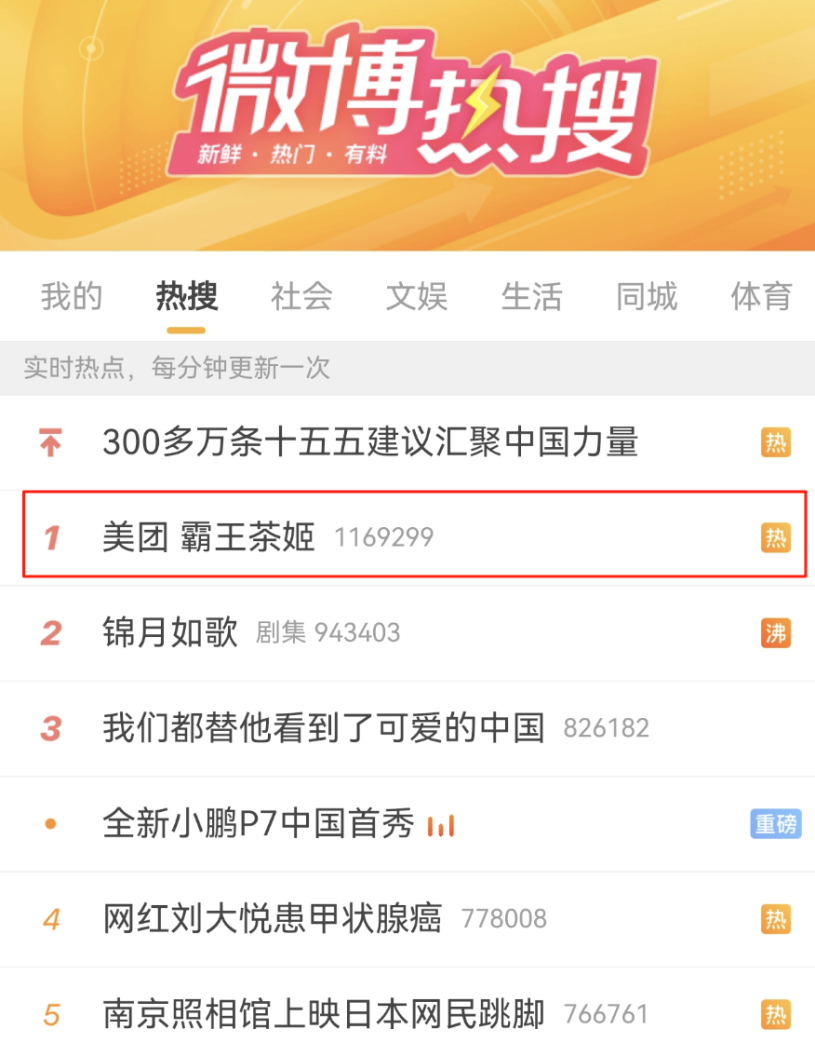
热搜第一!美团“玩不起”?最新回应来了
Zhong Guo Ji Jin Bao· 2025-08-06 13:35
Core Viewpoint - The incident involving Meituan's "霸王茶姬" promotion has generated significant public attention and criticism due to technical issues and user dissatisfaction with the coupon redemption process [1][3][5]. Group 1: Promotion Details - On August 6, Meituan launched a promotional event for "霸王茶姬" by distributing "伯牙绝弦" coupons valued at 17 yuan, which were set to expire at 23:59 the same day [3]. - Many users reported that after claiming the coupons, they were unable to use them due to system errors, with messages indicating "self-pickup coupon unavailable" or the coupons disappearing entirely [3][5]. Group 2: User Reactions - Users expressed frustration on social media, with comments highlighting their inability to redeem the coupons even after arriving at the stores, and experiencing congested customer service lines [5][9]. - Some users noted that the coupons were automatically restored but with restrictions, such as limited usage times and only for self-pickup [9]. Group 3: Company Response - In the evening of August 6, Meituan's official Weibo account addressed the situation, explaining that the coupons were released prematurely and encouraging users to enjoy the drinks [10]. - Meituan announced that all users who received the "霸王茶姬" drink coupons could redeem them at participating stores until August 10 [11]. - The company also planned to distribute 2.7 million free milk tea coupons to delivery riders and organize offline events in over 20 cities to enhance rider engagement [14].
热搜第一!美团“玩不起”?最新回应来了
中国基金报· 2025-08-06 13:28
Core Viewpoint - The article discusses the controversy surrounding Meituan's promotion of "霸王茶姬" tea vouchers, which were initially issued but then retracted, leading to user frustration and a subsequent clarification from Meituan [2][3][5]. Group 1: Incident Overview - On August 6, Meituan launched a promotional event distributing "霸王茶姬" vouchers worth 17 yuan, which were set to expire at 23:59 the same day [3]. - Many users reported that after claiming the vouchers, they were forcibly retracted by the system, displaying messages like "self-pickup voucher unavailable" or disappearing entirely [3][5]. - Users expressed their dissatisfaction, with some stating they were unable to redeem the vouchers even after arriving at the store, and the customer service was overwhelmed with complaints [5]. Group 2: Meituan's Response - In the evening of August 6, Meituan's official Weibo account addressed the situation, explaining that the vouchers were released prematurely and encouraged users to redeem them by August 10 [9]. - The company received positive feedback from users for its transparent communication and willingness to honor the vouchers despite the initial confusion [9]. Group 3: Additional Promotions - Prior to the incident, Meituan announced plans to distribute 2.7 million cups of new milk tea vouchers to delivery riders and provide over ten thousand free "relaxation therapy vouchers" to frontline employees during the autumn season [11]. - Meituan also plans to host offline pop-up events in over 20 cities, allowing riders to receive free tea and participate in entertainment activities [13].

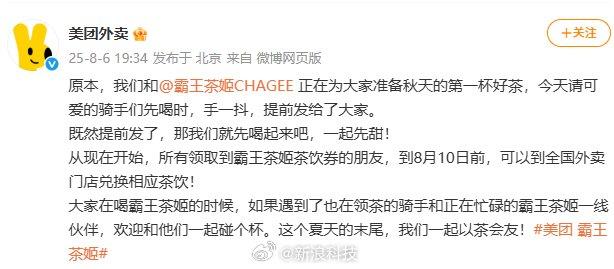
美团回应误发茶饮券称将提前兑现
Xin Lang Ke Ji· 2025-08-06 12:09
【#美团回应回收茶饮券#】@美团外卖 发文回应网传回收茶饮券称:原本,我们和@霸王茶姬 CHAGEE 正在为大家准备秋天的第一杯好茶,今天请可爱的骑手们先喝时,手一抖,提前发给了大 家。既然提前发了,那我们就先喝起来吧,一起先甜!#美团 霸王茶姬# ...