游戏

Search documents
中泰证券:春季行情启动 板块优先配置小盘成长与双创方向
智通财经网· 2026-01-12 23:41
Group 1 - The current market spring rally characteristics are gradually emerging, with leveraged funds becoming active again since mid-December, and the proportion of financing purchases in the A-share market is rising [1][5] - The trading volume of small-cap growth stocks has been increasing since late December, indicating a shift in funds towards this sector [1][5] - The previously net outflowing thematic/industry index ETFs have turned positive this week, showing a significant net inflow trend [1][6] Group 2 - The current market rally is supported by long-term funds, with significant inflows into the A500 ETF nearing 100 billion RMB, boosting market confidence [2] - The "spring rally" is characterized by seasonal trends, typically occurring from late December to the first quarter, with an average increase of about 15% during this period [3] Group 3 - Investment recommendations prioritize small-cap growth and innovation-driven sectors, suggesting a focus on small-cap innovation stocks [7] - The strategy emphasizes short-term trend tracking, participating in thematic sectors with recent fund accumulation, such as pharmaceuticals, robotics, and gaming [7] - The securities and financial technology sectors are expected to benefit from increased trading volumes and active leveraged funds, with financial technology companies being more sensitive to market fluctuations [7]

沪指17连阳!A股成交额破3.6万亿创纪录
Xin Lang Cai Jing· 2026-01-12 22:06
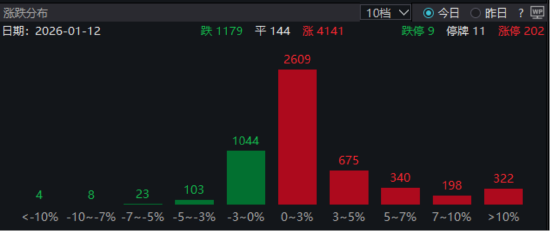
Market Performance - A-shares continued to rise on January 12, with the Shanghai Composite Index achieving a 17-day consecutive increase, reaching a new high not seen in over a decade, closing up 1.09% [2] - The total trading volume in the Shanghai, Shenzhen, and Beijing markets exceeded 3.6 trillion yuan, marking a significant increase of over 510 billion yuan compared to the previous trading day, setting a new record for single-day trading volume in A-shares [2] - Over 4,100 stocks rose, with more than 200 stocks hitting the daily limit [2] AI Sector Growth - The driving force behind the A-share market's rise on January 12 was the collective surge of AI application stocks, with the AI marketing index increasing by over 10% [3] - Notable individual stocks such as ZhiPu AI and multi-modal AI saw increases exceeding 8%, while AIGC and AI agent indices rose over 7% [3] - The Ministry of Industry and Information Technology emphasized the importance of AI in driving the integration of manufacturing and intelligence, planning to implement a "AI + manufacturing" initiative to enhance the smart upgrade of the manufacturing sector [3] Precious Metals Market - Gold and silver prices continued to rise due to high geopolitical uncertainty, with gold futures reaching a historical high of over $4,612 per ounce on January 11 and breaking the $4,600 mark on January 12 [7] - Domestic gold jewelry prices also increased, with several brands quoting prices above 1,400 yuan per gram, reflecting a general increase of 20 yuan per gram compared to the previous day [7] - Silver prices also surged, with London spot silver exceeding $84 per ounce, marking a rise of over 5.5% [8] Future Outlook - Institutions predict that despite short-term downward pressures, both precious metals and industrial metal prices are expected to have upward potential this year [9] - The AI sector is anticipated to see significant developments by 2026, with various retail segments benefiting from AI-driven logic, particularly in cross-border e-commerce and AI smart hardware [4] - The concept of Generative Engine Optimization (GEO) is gaining traction, with expectations that it will enhance brand visibility in AI-generated content, leading to increased commercial opportunities [6]


北京东城:奋力实现“十五五”良好开局!
Xin Lang Cai Jing· 2026-01-12 20:06
Core Perspective - The article emphasizes the commitment of Dongcheng District to high-quality development through practical measures and innovative strategies, aiming to enhance the quality of life for its residents while fulfilling its role as a core area of the capital city [1][3]. Group 1: Economic Development - Dongcheng District has successfully completed 132 municipal projects and has managed to eliminate 85,000 square meters of illegal buildings, showcasing effective urban planning and governance [4]. - The district has seen a 51% increase in inbound tourists, with the total retail sales of consumer goods surpassing 160 billion yuan, marking a significant growth in economic activity [7]. - The establishment of 111 new flagship stores and the recognition of Wangfujing commercial area as a national-level leisure street highlight the district's efforts to boost consumer engagement and economic vitality [7][8]. Group 2: Cultural Initiatives - Dongcheng District is actively promoting cultural heritage through the implementation of advanced technologies for heritage monitoring and the organization of various cultural events, including the successful Beijing Cultural Forum [10][11]. - The district has launched 15 cultural exploration routes and is supporting 44 intangible cultural heritage projects, enhancing community involvement in cultural preservation [10][12]. Group 3: Urban and Environmental Improvements - The district has made significant strides in urban renewal, with projects aimed at improving living conditions and enhancing the aesthetic appeal of historical neighborhoods [14]. - Environmental initiatives have led to a 14.5% reduction in PM2.5 levels, achieving the best air quality in history, while also enhancing green spaces and urban infrastructure [15]. Group 4: Social Welfare and Community Services - Dongcheng District has established two new regional elderly care centers and has launched a standardized home care service pilot, reflecting its commitment to improving elderly care services [16]. - The establishment of a comprehensive childcare service center aims to provide accessible and affordable childcare options, addressing the needs of families in the district [16].
中外资机构热议AI的投资机遇与风险
Zhong Guo Ji Jin Bao· 2026-01-12 16:06
Core Viewpoint - The narrative around AI is shifting from valuation expansion to the realization of technological capabilities, making discussions about an AI bubble premature [2][3]. Group 1: AI Narrative and Market Dynamics - AI's current boom is shaped by capital expenditure expansion and macro liquidity, with a focus on whether technological paths can translate into productivity gains and profit restructuring [2]. - The AI narrative is evolving from "irrational exuberance" to "rational bubble," driven by national strategies and corporate dynamics rather than mere emotional speculation [2]. - AI is expected to remain a significant theme in global markets through 2026, with opportunities expanding across various industries [2][3]. Group 2: Investment Opportunities - Investment opportunities in AI arise from two main areas: capital expenditure related to computing power and infrastructure, and applications that can translate technological advantages into industry penetration and cash flow improvement [4]. - Key sectors for investment include upstream hardware (e.g., chips like Nvidia) and computing infrastructure (data centers), as well as midstream cloud service providers (e.g., Microsoft, Alibaba Cloud) [4]. - Downstream, focus should be on "AI-First" companies that drive core value through AI, ensuring they have clear commercialization paths and high user retention [4]. Group 3: Sectoral Insights - AI applications are penetrating various sectors beyond technology, including finance, manufacturing, healthcare, and consumer industries, with financial institutions likely to benefit from AI in optimizing business models [5]. - The gaming sector, medical AI, and consumer electronics are currently showing strong performance, although some areas may experience localized overheating [6]. - The AI landscape may shift from dominance by a few major players to a more diversified market, especially as global AI industries challenge the strongholds of U.S. giants [6]. Group 4: Risks and Considerations - High valuations pose risks, as negative news could lead to significant volatility in AI-related stocks [7]. - Key risks include cyclical volatility due to high valuations, delays in profit realization, and crowded trades leading to compressed risk premiums [7][8]. - Investors should be cautious of short-term liquidity and valuation risks, as well as the potential for systemic risks if capital does not translate into commercial value [8].
中外资机构热议AI的投资机遇与风险
中国基金报· 2026-01-12 16:02
Core Viewpoint - The narrative around AI is shifting from valuation expansion to the verification of technological capabilities, making discussions about an AI bubble premature [3][4]. Group 1: AI Narrative and Market Dynamics - The current AI boom is shaped by capital expenditure expansion and macro liquidity, with technology sectors providing a fiscal stimulus effect amid traditional industry pressures [4]. - The AI narrative is evolving from "irrational exuberance" to "rational bubble," driven by national strategies and corporate dynamics rather than mere emotional speculation [4][5]. - AI's rapid adoption will remain a significant theme in global markets in 2026, with low chances of a trend reversal [5]. Group 2: Investment Opportunities in AI - Investment opportunities in AI arise from two main areas: certainty in capital expenditure related to computing power and infrastructure, and the ability to translate technological advantages into industry penetration and cash flow improvement [7]. - Key areas for investment include upstream hard technology (e.g., chips and hardware) and computing infrastructure, which are essential entry points for capital [7][8]. - Midstream platform companies, such as cloud service providers and open-source model ecosystems, are also highlighted as potential investment targets due to their long-term ecological barriers [8]. - Downstream, focus should be on "AI-First" companies that drive core value through AI, ensuring they have clear commercialization paths and high user retention [8]. Group 3: Sector-Specific Insights - AI applications are penetrating various sectors beyond technology, including finance, manufacturing, healthcare, and consumer industries, with significant potential in financial sectors benefiting from AI optimization [8]. - The gaming sector, medical AI, and smart consumer electronics are currently performing well, although some may experience localized overheating and volatility in 2026 [8][9]. - The AI landscape may shift from dominance by a few major players to a more diversified market, especially as challenges to the "moats" of US AI giants arise [9]. Group 4: Risks and Considerations - High valuations pose risks, with potential for increased volatility in response to negative news, particularly for highly leveraged companies [11]. - Key risks include cyclical volatility due to high valuations, delays in profit realization leading to path reassessment, and crowded trades compressing risk premiums [11][12]. - Short-term liquidity and valuation risks are highlighted, with indicators suggesting potential market overheating [12].

从 “工具” 到 “股东”:港股AI上市潮背后,游戏大厂的算力突围战
Guo Ji Jin Rong Bao· 2026-01-12 14:45
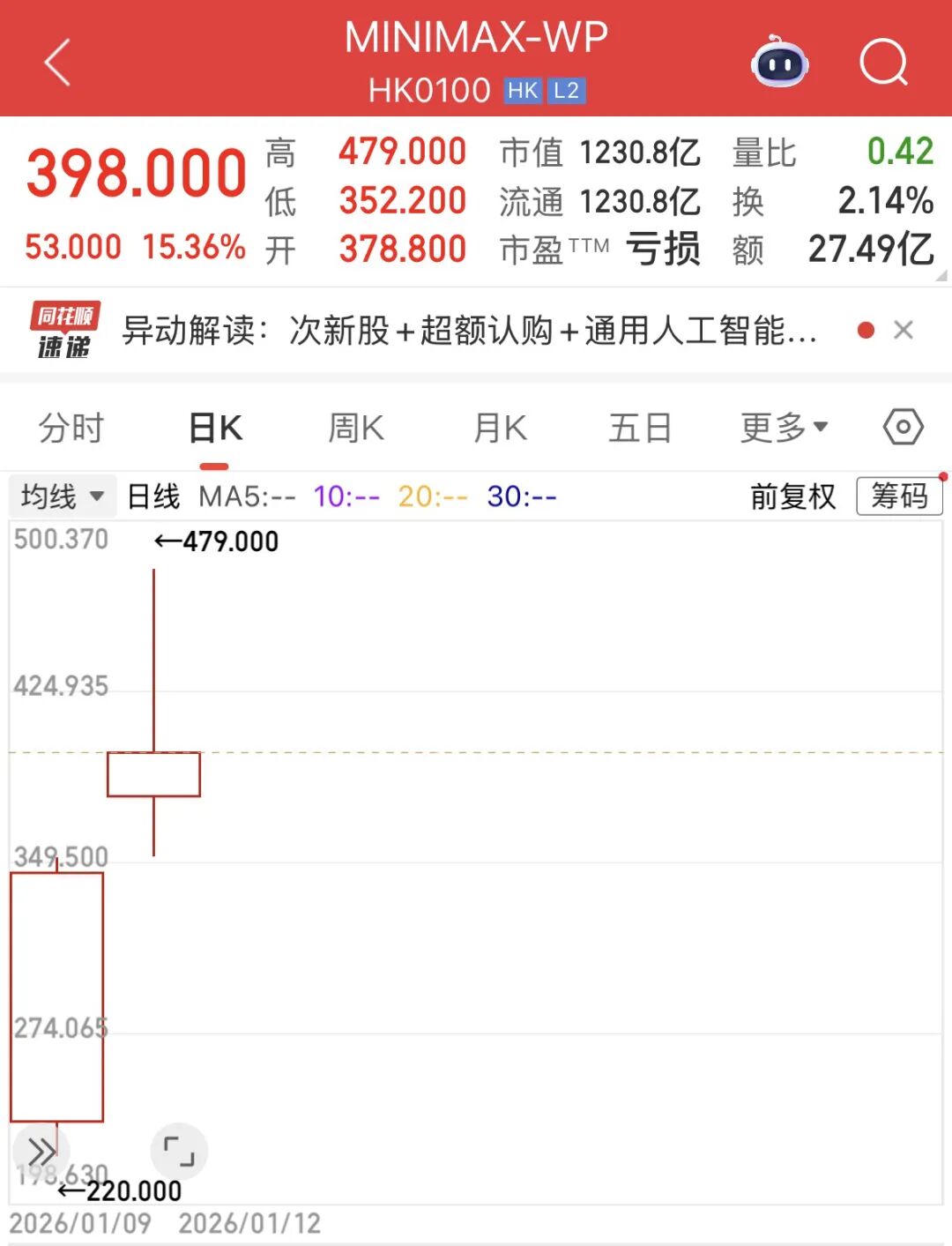
Group 1 - The Hong Kong stock market is experiencing a surge in AI-related listings, with several companies, including domestic GPU leaders, making their debut in early January 2026 [1][4] - MiniMax, a notable AI company, achieved a record for the fastest IPO from establishment to listing, completing this process in just four years [1][3] - On its first trading day, MiniMax's stock price increased by 109%, reaching a market capitalization of over 100 billion HKD [1][3] Group 2 - MiniMax has completed seven rounds of financing before its IPO, with significant investments from major players like Alibaba, Tencent, and Sequoia Capital, leading to a valuation exceeding 4.2 billion USD [3] - MiHoYo, a gaming giant, is a key investor in MiniMax, holding approximately 6.4% of its shares and utilizing MiniMax's AI models in game development [3][4] - Wall Street's interest in AI companies is reflected in the strategic investments made by gaming firms, which are transitioning from being mere consumers of computing power to active participants in the AI technology space [10][11] Group 3 - Wall Street's investment in AI companies is yielding substantial returns, as evidenced by Century Huatong's indirect investment in Moole Thread, which is expected to significantly impact its net profit [13] - The gaming industry is undergoing a transformation due to generative AI technology, which is reshaping product development and user experience [10][11] - Companies like 游族网络 (Youzu Interactive) are strategically investing in AI chip firms like 壁仞科技 (Birran Technology) and曦望 (Sunrise) to enhance their competitive edge in the AI computing landscape [6][8]
三七互娱:目前已投资的脑机接口公司包括华南脑控及强脑科技
Zheng Quan Shi Bao Wang· 2026-01-12 14:35
Group 1 - The core viewpoint of the article is that the company Sanqi Interactive Entertainment has invested in brain-computer interface companies, specifically Huannan Brain Control and Qiang Brain Technology, with investments of 20 million RMB and 20 million USD respectively [1] Group 2 - The investment in Huannan Brain Control amounts to 20 million RMB [1] - The investment in Qiang Brain Technology amounts to 20 million USD [1]

ETF日报:宏观经济修复叠加AI大模型驱动软件和应用发展,软件行业有望迎来修复,关注软件ETF、计算机ETF
Xin Lang Cai Jing· 2026-01-12 14:20
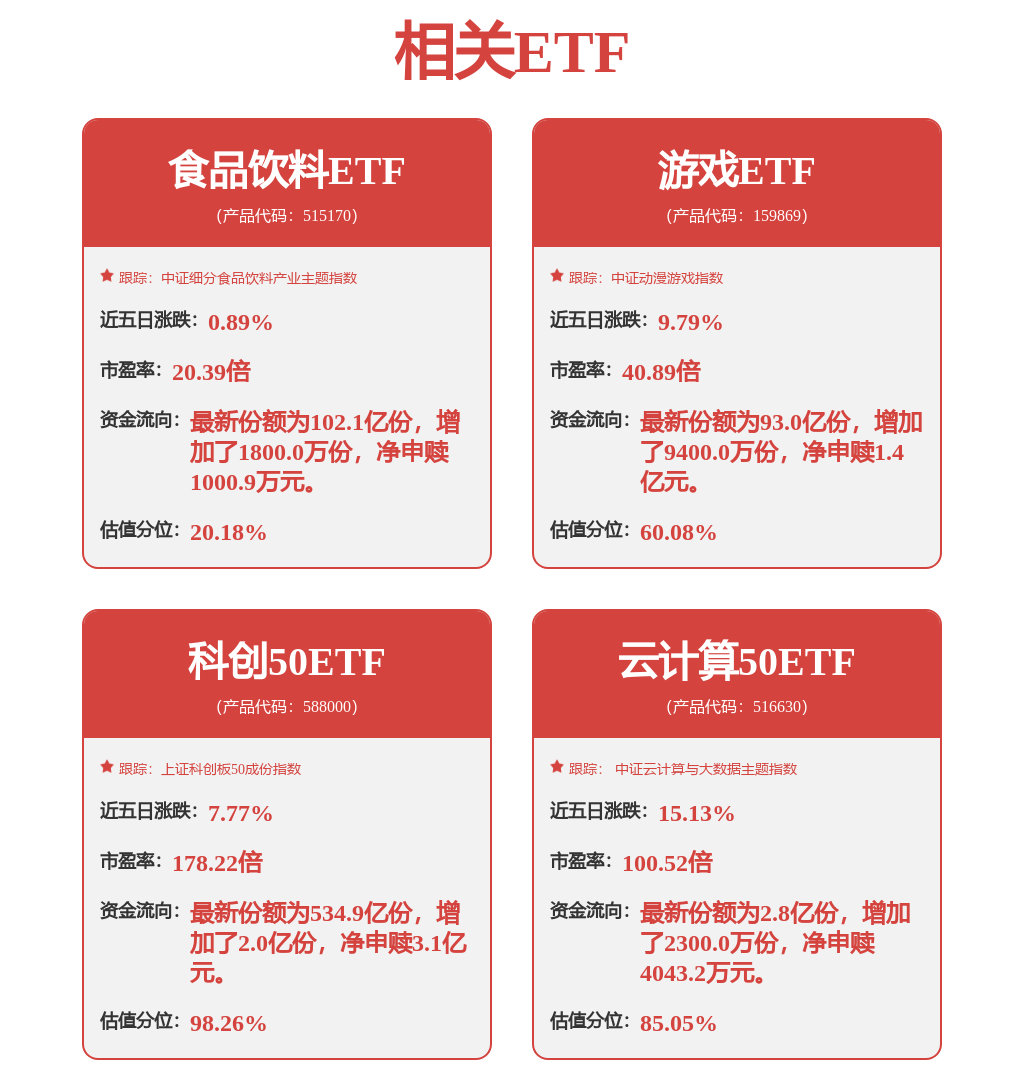
Market Overview - The A-share market experienced a significant increase today, with a total transaction volume of 3.64 trillion yuan, setting a new historical high. The Shanghai Composite Index rose by 1.09% to close at 4165.29 points, while the Shenzhen Component Index increased by 1.75% to 14366.91 points. Over 4100 stocks rose, with the media and computer sectors seeing a surge in limit-up stocks, exceeding 200 stocks hitting the limit. The Shanghai Index has recorded 17 consecutive days of gains, indicating a new phase of volume-price resonance in the market, with expectations for further expansion in the market trend [1][10]. Gaming Industry - The gaming sector is entering a new industrial cycle, driven by a "policy recovery + performance realization + AI implementation" synergy. The regulatory environment has improved significantly, with the number of approved domestic online game licenses reaching 1771 in 2025, a 25% increase compared to 2024. This stable supply of licenses boosts market confidence and leads to a recovery in overall industry revenue [3][12]. - The profitability of gaming companies is accelerating, with a net profit growth rate of approximately 49% for the first three quarters of 2025 among the Shenwan gaming index constituents. Some leading companies even achieved a doubling of profits, providing solid support for the revaluation of the sector [3][12]. AI Integration in Gaming - The practical application of AI is reshaping productivity and interaction experiences in the gaming industry. The deep integration of "AI + gameplay" is expected to create new blockbuster categories, further raising the industry's valuation ceiling. The gaming sector continues to hold high allocation value amid improving macro liquidity and a positive industry outlook [4][13]. Gold Market - Gold prices have been strong, with COMEX gold surpassing $4600 per ounce, setting a new historical high. The rise in gold prices is primarily driven by "liquidity easing" and "safe-haven demand." The deepening of the Federal Reserve's rate-cutting cycle and the increase in geopolitical uncertainties contribute to this trend. Additionally, global central bank demand for gold remains robust [5][14]. - Gold mining stocks exhibit a "Davis double play" effect, benefiting from both inventory appreciation and nonlinear profit margin expansion during bull markets. Gold stock ETFs, which include leading companies in the gold sector, provide a convenient way to share in the benefits of rising gold prices [5][14]. Software and AI Sector - The software ETF (515230) rose by 9.97%, and the computer ETF (512720) increased by 8.43%. The policy catalyst includes the issuance of a clear roadmap and quantitative goals for the "AI + manufacturing" initiative by multiple government departments, enhancing market expectations for profitability in computing power, models, and application scenarios [6][15]. - The GEO (Generative Engine Optimization) concept and AI healthcare applications are gaining traction. The integration of health services into ChatGPT is expected to drive significant changes in the advertising and healthcare sectors, with over 23 billion health-related inquiries weekly on the platform [7][15][16]. - The domestic AI sector is experiencing a wave of new listings, enhancing the synergy between industry and capital. This shift from "parameter competition" to "capability realization" is expected to accelerate technological iterations and application deployments, driving the overall upward trend in the AI industry [7][16].
又一家!零息可转债受热捧,多家港股公司入局
Zheng Quan Shi Bao· 2026-01-12 12:43
Core Viewpoint - The issuance of zero-coupon convertible bonds is becoming a significant tool for listed companies in Hong Kong to optimize their capital structure and drive strategic transformation, particularly in the context of a recovering stock market [1] Group 1: Company Announcements - Game company Tanwan announced the successful issuance of HKD 468 million zero-coupon convertible bonds maturing in 2027, with an initial conversion price of HKD 23.5 per share, potentially converting into approximately 1.99 million new shares, representing about 3.79% of existing shares [2] - The proceeds from Tanwan's bond issuance will be allocated to AI-related business investments, with 50% for developing AI infrastructure and technology, and the other 50% for acquiring shares in AI-related listed companies [2] - Guangfa Securities plans to issue zero-coupon convertible bonds totaling HKD 21.5 billion, with a net fundraising target of approximately HKD 39.59 billion, aimed at enhancing the capital strength of its overseas subsidiaries [2] - Jingtai Holdings intends to issue HKD 28.66 billion in zero-coupon convertible bonds to enhance its R&D capabilities and expand its business development and marketing teams [3] Group 2: Market Trends - The zero-coupon convertible bond market is experiencing a new wave of issuance, with several companies, including Alibaba and Baidu, having issued over HKD 930 billion in such bonds in recent years [3] - The zero-coupon structure allows companies to achieve long-term financing without interest payments, significantly reducing financing costs [4] - The trend of issuing zero-coupon convertible bonds reflects a growing preference among companies for flexible financing options that do not immediately dilute existing shareholders' equity [5] Group 3: Investor Implications - The issuance of zero-coupon convertible bonds is expected to attract long-term investors, enhancing market stability and international competitiveness [6] - This financing method provides a hybrid investment tool that meets the varying risk preferences of investors, indicating recognition of the fundamentals and development potential of quality Chinese enterprises [7]

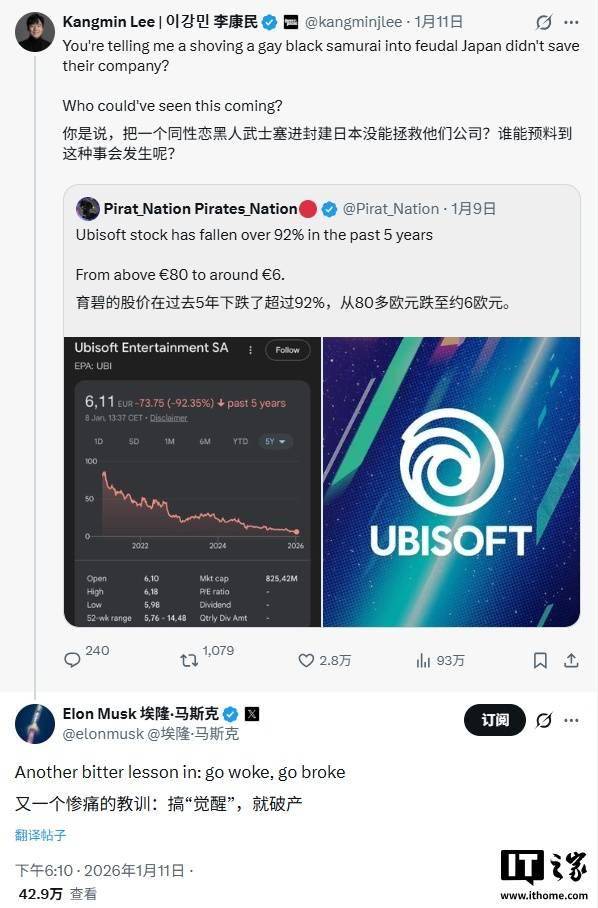
马斯克评育碧股价五年暴跌超92%:又一“觉醒后破产”案例
Sou Hu Cai Jing· 2026-01-12 12:31
在同一话题下,账号 @kangminilee 发布了一条带有讽刺意味的评论,称:"你是说把一个同性恋黑人武 士塞进封建时代的日本,都没能拯救他们的公司?谁能预料到这种事会发生?"这一言论明显影射了近 年来围绕育碧作品中角色设定、多元化与叙事方向的争议话题。 马斯克的评论进一步将"go woke, go broke"这一近年在海外互联网频繁出现的口号推到了风口浪尖。该 说法通常被用于批评企业在内容创作中过度强调政治正确、多元议题,可能与商业表现下滑存在关联。 随着马斯克的转发加入,这一话题已经从游戏圈延伸至更广泛的科技、资本与文化讨论领域。 IT之家注意到,推文内容显示,育碧股票在过去五年内累计下跌超过 92%,股价从 80 欧元以上跌至约 6 欧元。推文配图还展示了育碧近五年的股价走势曲线,整体呈现持续下行的状态。该推文发布后获得 了大量转发与点赞,引发了众多网友对育碧公司经营状况的讨论。 IT之家 1 月 12 日消息,昨日特斯拉公司 CEO 埃隆・马斯克在社交媒体平台上转发了一则关于游戏公司 育碧股价暴跌的推文,并发表评论称:"又一个惨痛的教训:觉醒,然后破产(Another bitter lesson ...