券商

Search documents
国庆假期之前的这轮股市上涨,真正的原因,该去怎么理解?
Sou Hu Cai Jing· 2025-10-02 19:48
Group 1 - A-shares experienced an unexpected rise before the National Day holiday, with the ChiNext Index increasing by 2.74% and the Shenzhen Component Index rising over 2% on September 29, leading to over 3,500 stocks in the market gaining [1][3] - The core reason for this market behavior was the significant improvement in industrial profits, with August data showing a year-on-year increase of 20.4%, reversing the previous decline of 1.5% in July, marking a new high in growth rate [3][10] - The expectation of global liquidity easing due to the Federal Reserve's interest rate cuts, with a probability exceeding 90% in September, also contributed positively to the A-share market, particularly benefiting growth sectors [3][6] Group 2 - The policy environment is supportive, with long-term special government bonds directed towards consumption recovery, technological upgrades, and infrastructure, enhancing market expectations for defensive sectors [5][6] - On September 29, brokerage stocks surged, with the sector index rising by 4.4%, driven by expectations of high growth in brokerage firms' Q3 performance and a prior significant price correction [6][10] - The electronics sector saw a notable increase of 3.86%, with semiconductor companies like SMIC reporting over 90% capacity utilization and Longi Green Energy achieving a 20.1% revenue growth, indicating an early recovery in the industry [7][11] Group 3 - The consumer sector, particularly high-end products like Moutai and Wuliangye, showed resilience, with tourism and hotel orders increasing by over 40% year-on-year, supported by policies promoting consumption upgrades [7][10] - Gold prices benefited from a weaker dollar and heightened risk aversion due to geopolitical tensions, with the dollar index hitting a six-month low amid expectations of Fed rate cuts [8][10] - Despite the market's positive performance, there was a significant increase in share reduction plans among listed companies, with 428 companies disclosing such plans in September, totaling 12.045 billion yuan, a 79.32% month-on-month increase [10][13] Group 4 - The manufacturing sector showed strong profit growth, with equipment manufacturing profits increasing by 7.2% in the first eight months, contributing significantly to overall industrial profit growth [11][13] - The cost situation for enterprises improved, with costs per 100 yuan of revenue decreasing by 0.20 yuan year-on-year, marking the first decrease since July 2025 [13] - A significant net inflow of capital was observed in the week leading up to the holiday, with 19 sectors receiving a total of 149.134 billion yuan in net inflows, particularly in electronics, power equipment, and computing [13][14]


港股收评:十月开门红!恒指收涨1.61%,半导体、黄金股强势爆发
Ge Long Hui· 2025-10-02 09:01
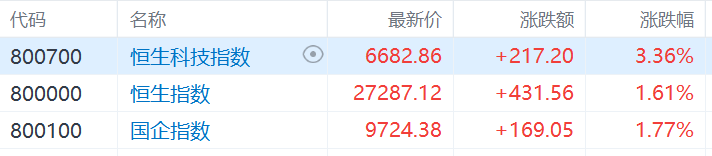
Market Overview - The Hong Kong stock market opened positively in the fourth quarter, with the Hang Seng Index rising by 1.61%, the Hang Seng Tech Index increasing by 3.36%, and the National Enterprises Index up by 1.77% [1][2]. Technology Sector - Major technology stocks saw significant gains, with Kuaishou rising over 8%, Baidu up over 4%, and Alibaba, Xiaomi, and JD.com each increasing by over 3% [4][5]. - Semiconductor and chip stocks strengthened, with SMIC rising over 12% [6][7]. - Kuaishou's AI model ranked first in global video generation benchmarks, indicating strong performance in the tech sector [5]. Gold and Precious Metals - Gold stocks continued their upward trend, with China Silver Group surging over 30% and other gold-related stocks also experiencing gains [8]. Apple-Related Stocks - Apple concept stocks were active, with Lens Technology rising nearly 9% and other related companies also seeing increases [10][11]. - The iPhone 17 series has shown strong global demand, with sales exceeding those of the previous model by 10%-15% [12]. Lithium Battery Sector - Lithium battery stocks performed well, with Tianqi Lithium rising nearly 13% and other companies like Ganfeng Lithium and BYD Electronics also gaining [13]. Automotive Sector - Automotive stocks rose, with NIO increasing over 6% and other manufacturers like Li Auto and Xpeng also reporting strong performance [14][15]. Real Estate Sector - The real estate sector showed weakness, with Longfor Group declining over 5% and other major developers following suit [16][17]. Brokerage Sector - Chinese brokerage stocks fell, with Shenwan Hongyuan down over 3% and other major firms also experiencing declines [18]. Alibaba's Performance - Alibaba's stock rose over 3%, reaching HKD 183.1, with a total market capitalization of HKD 349.22 billion [19][20]. - Morgan Stanley raised Alibaba's target price significantly, citing growth in cloud computing and e-commerce as key drivers [23].

全球流动性宽松开启!A股能否接住国际资本?顶层已有重要考量
Sou Hu Cai Jing· 2025-10-01 07:25
Group 1 - The current market has formed a dual circulation mechanism of sentiment and liquidity, indicating a weaker direct correlation between short-term market trends and economic fundamentals, with more emphasis on upward expectations and capital flow [2] - As investors observe market increases due to capital inflow, they tend to participate actively, leading to a broader trend of reallocating household savings to the capital market [4] - The capital market's development pace must align with long-term strategies, especially during the real estate market adjustment period, to avoid excessive short-term growth that could hinder future potential [4] Group 2 - The strategic development of the capital market is crucial for mitigating debt risks, stimulating effective demand, and enhancing asset valuations in the short term, while also positioning the country favorably in global competition for high-quality economic development in the long term [5] - China's industrial capacity is projected to account for 35% of global capacity by 2024, necessitating the expansion into overseas markets due to insufficient domestic consumption [7] - The need for innovation in original fields is critical for maintaining global competitive advantages, improving living standards, and creating employment opportunities, with the capital market playing a vital role in providing financing channels and fostering a virtuous cycle of innovation and development [7]

程强:三季度成长板块领涨市场
Sou Hu Cai Jing· 2025-10-01 05:30
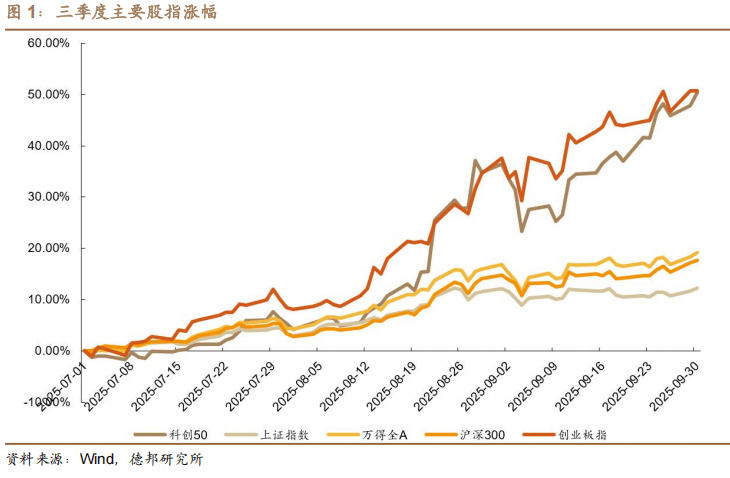
Market Overview - The A-share market showed a mixed upward trend, with technology stocks maintaining strength, while the 30-year treasury futures rebounded after hitting a new low [1] - The overall market liquidity remained abundant, supporting a structural market trend [2] Stock Market Analysis - In Q3, the ChiNext and Sci-Tech 50 indices rose approximately 50%, indicating a strong preference for technology growth sectors [3] - The last trading day before the holidays saw a divergence in market styles, with growth sectors continuing to perform well while defensive sectors like finance faced pressure [2][3] Bond Market Analysis - The treasury futures market strengthened, with the 10-year and 30-year contracts showing notable gains [5] - The overall funding environment was relaxed, alleviating cross-quarter pressures, and the short-term interest rates showed mixed trends [5] Commodity Market Analysis - The commodity market displayed significant divergence, with precious metals leading gains while black metals faced declines [6] - The focus has shifted from policy expectations to actual policy effects, particularly in the black metal sector, which has seen substantial price adjustments [6] Trading Hotspots - Key sectors to watch include precious metals, artificial intelligence, domestic chips, robotics, and consumer goods, driven by factors such as central bank policies and technological advancements [10][11] - The market is expected to transition from a "technology-led" rally to a more "balanced allocation" approach, with continued strong performance in specific segments of the technology sector [11]
9月29日【港股Podcast】恆指、百度、騰訊、中信證券、中國人壽、舜宇
Ge Long Hui· 2025-09-30 19:30
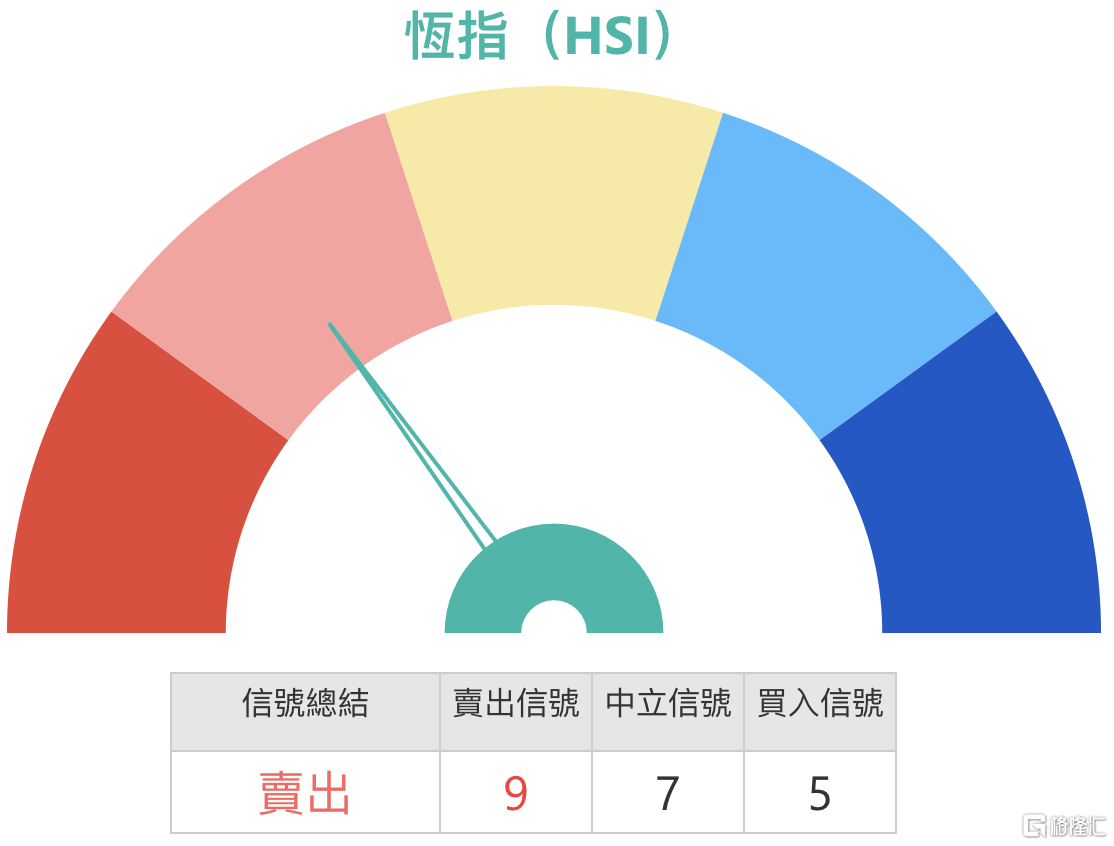
Group 1 - The Hang Seng Index (HSI) shows a bullish market sentiment, with most investors expecting an increase during the National Day holiday, targeting a rise to 27,000 points [1] - The closing price of the index is 26,622 points, with short-term technical signals indicating a "sell" recommendation. Resistance levels are at 27,009 and 27,300 points, while support levels are at 26,027 and 25,500 points [1] Group 2 - Baidu Group (09888.HK) investors believe that if the stock stabilizes at 130, there is potential for growth, with some targeting 180-200 HKD in the next three months. The current closing price is 131.5 HKD, with technical signals suggesting a "sell" [8] - Support levels for Baidu are at 117.3 and 103.3 HKD, while resistance levels are at 138 and 152 HKD. Investors are advised to consider options with a strike price around 138 HKD before moving to higher strike prices [8] Group 3 - Tencent Holdings (00700.HK) investors are questioning whether the stock can surpass 665 HKD. The closing price is near 660 HKD, with technical signals indicating a "sell" [15] - Resistance for Tencent is at 678 HKD, and there are options available with a strike price of 700 HKD, most expiring by the end of December. The implied volatility ranges from 29.5% to 33% [15] Group 4 - CITIC Securities (06030.HK) has seen a significant rise, with investors buying options with a strike price of 32.88 HKD. The closing price is 30.34 HKD, with technical signals suggesting a "sell" [21] - Resistance levels for CITIC are at 33 and 34 HKD, but there are limited options available around the 33 HKD strike price [21] Group 5 - China Life (02628.HK) investors are considering entry at 22 HKD, with some targeting 25 HKD. The closing price is 22.22 HKD, and technical signals are neutral [26] - Support levels are at 21.1 and 20.5 HKD, and investors holding options should monitor the redemption price [26] Group 6 - Sunny Optical Technology (02382.HK) investors are optimistic about challenging new highs this week, holding options with a strike price of 93.95 HKD. The closing price is 85.65 HKD, with technical signals being neutral [32] - Support levels are at 82.3 and 79.2 HKD, while resistance levels are at 88.8 and 92.1 HKD. Investors are advised to consider options with strike prices in the 88-92 HKD range [32]
又出手,狂买百亿!
Zhong Guo Ji Jin Bao· 2025-09-30 06:49
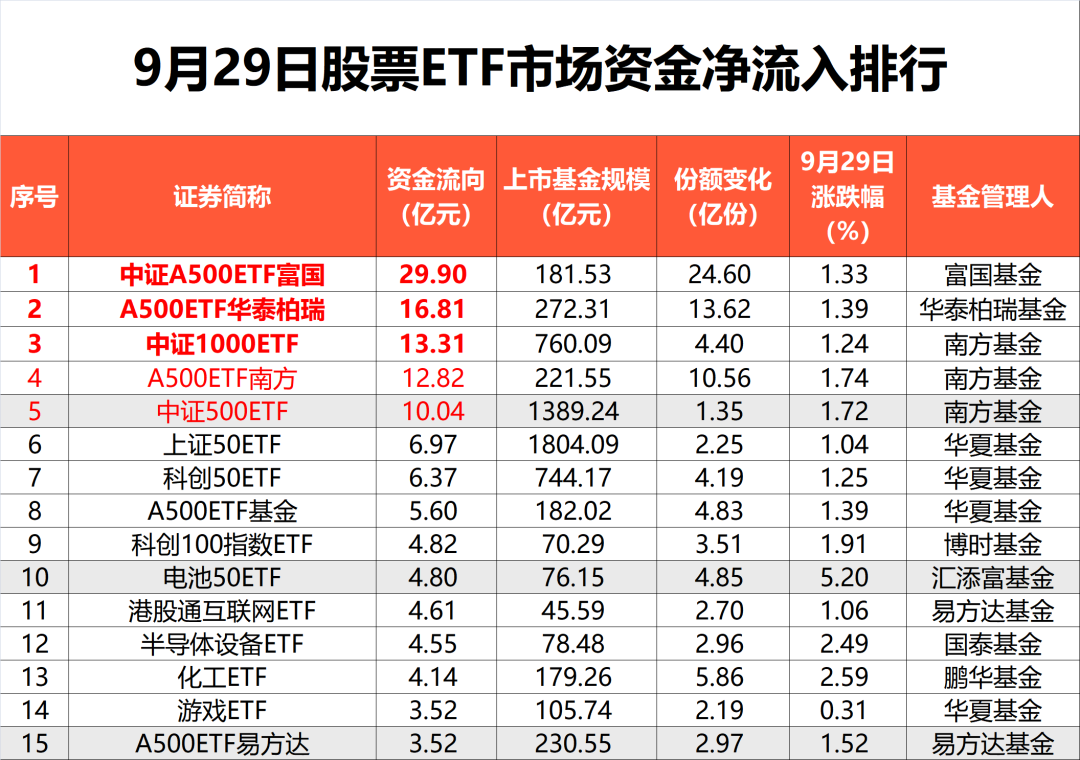
Group 1 - The core point of the article highlights that the stock ETF market experienced a net inflow of over 12 billion yuan, with the CSI A500 index being the main beneficiary, attracting nearly 7.5 billion yuan in net inflows [1][2][3] - On September 29, the total scale of 1,220 stock ETFs reached 4.55 trillion yuan, with a total net inflow of 12.33 billion yuan during the market surge [2] - The CSI A500 index saw a significant net inflow of 17.8 billion yuan over the past five days, indicating strong investor interest [4] Group 2 - The top-performing ETFs included the CSI A500 ETF from Fortune, which had a net inflow of 2.99 billion yuan, and other products tracking the CSI A500 index also saw inflows exceeding 1 billion yuan [5][6] - Conversely, the securities company index faced a net outflow of 3.468 billion yuan, indicating a shift in investor sentiment despite the overall market rally [7][8] - Major fund companies like E Fund and Huaxia Fund reported significant inflows in their ETFs, with E Fund's total ETF scale increasing by 15.08 billion yuan [6][9] Group 3 - Analysts from E Fund and Huaxia Fund suggest that the A-share market is likely to maintain an upward trend, driven by upcoming policy clarity and potential profit recovery [10] - The focus is recommended on technology innovation sectors and high-growth areas, particularly those benefiting from policy incentives and industrial upgrades [10]
又出手,狂买百亿!
中国基金报· 2025-09-30 06:44
Core Insights - The stock ETF market saw a net inflow of over 12 billion yuan, with the CSI A500 index being the main beneficiary, attracting nearly 7.5 billion yuan in net inflows [2][4]. Market Performance - On September 29, all three major A-share indices rose, with the ChiNext Index and Shenzhen Component Index both increasing by over 2%. The brokerage and precious metals sectors led the market, while coal, banking, and pharmaceutical sectors experienced pullbacks [2][4]. ETF Market Overview - As of September 29, the total scale of 1,220 stock ETFs (including cross-border ETFs) reached 4.55 trillion yuan. The total share of stock ETFs increased by 7.305 billion shares, with a net inflow of 12.33 billion yuan calculated based on average transaction prices [4]. - The broad-based ETFs and bond ETFs saw the largest net inflows, amounting to 11.98 billion yuan and 2.753 billion yuan, respectively. The CSI A500 index had the highest single-day net inflow of 7.46 billion yuan [4]. Fund Inflows - The top-performing ETFs in terms of net inflows included: - CSI A500 ETF from Fortune, with a net inflow of 2.99 billion yuan - A500 ETF from Huatai-PB, with a net inflow of 1.681 billion yuan - CSI 1000 ETF, with a net inflow of 1.331 billion yuan [5]. - Notably, the top fund companies continued to attract significant net inflows into their ETFs amid the market rally [5]. Sector Outflows - The industry-themed ETFs experienced the largest net outflows, totaling 67 million yuan. The brokerage sector, despite a 5% increase, faced significant net selling, with the securities company index seeing a net outflow of 3.468 billion yuan [8]. - Major outflows were recorded from: - Securities ETF from Guotai, with a net outflow of 1.583 billion yuan - Brokerage ETF from Huabao, with a net outflow of 964 million yuan [9]. Market Outlook - Analysts from E Fund, Huaan Fund, and Galaxy Fund expressed optimism about the A-share market's upward trajectory, suggesting that upcoming important meetings in October may clarify policy directions and drive earnings recovery across the board. They recommend focusing on technology innovation and high-growth sectors that benefit from policy incentives and industrial upgrades [10].

双节长假在即,做好节前风险管理
Hua Tai Qi Huo· 2025-09-30 05:57
Report Industry Investment Rating No information provided. Core Viewpoints - It is necessary to do a good job in pre - holiday risk management. During the National Day holiday, there are risks of pre - holiday adjustments in the stock index and pre - holiday depreciation of the RMB exchange rate, while there are opportunities in certain commodity sectors after the holiday. The domestic situation shows a greater gap between strong expectations and weak reality, and attention should be paid to post - holiday policy expectations and the correction of the current off - peak season expectation. The inflation outlook in the US is clearer, and the Fed has restarted the interest rate cut cycle. Different commodity sectors have different characteristics and investment opportunities [1]. - For commodities and stock index futures, it is recommended to allocate industrial products and precious metals on dips [2]. Summary by Related Catalogs Market Analysis - **Holiday Risk and Policy Expectations**: From October 1st to 8th is the National Day holiday in China, with 6 overseas trading days. Historically, the stock index may adjust before the holiday and rise after it, and the RMB exchange rate may depreciate before the holiday and recover after it. After the holiday, there may be opportunities in commodity sectors such as coking coal, steel ore, and non - metallic building materials. The domestic economic pressure increased marginally in August, with weak industrial, investment, and consumption data, and increased external tariff pressure. Recently, the government has frequently mentioned pro - growth policies. The central bank also proposed to strengthen monetary policy regulation. Six departments issued a steady - growth plan for the machinery industry, aiming for an average annual revenue growth rate of about 3.5% from 2025 - 2026. The scale of new policy - based financial instruments is 500 billion yuan [1]. - **US Economic Situation**: In August, the US ISM manufacturing index contracted for the sixth consecutive month, the new order improved, and the price index declined again. The CPI increased year - on - year, the PPI growth slowed down, and the new non - farm employment and unemployment rate were worse than expected, supporting the Fed's interest rate cut. The retail sales and new home sales increased. The Fed cut interest rates by 25 basis points, and the federal funds rate target range is now 4.00% - 4.25%. The risk of a US government shutdown has increased, and the US has imposed additional tariffs [1]. - **Commodity Analysis**: The black and new energy metal sectors are most sensitive to the domestic supply - side; precious metals and agricultural products can be concerned due to overseas inflation expectations. The black sector is still dragged down by downstream demand expectations, and the "anti - involution" situation should be focused on. The long - term supply limitation in the non - ferrous sector has not been alleviated, but the marginal supply has increased recently. The energy supply is expected to be relatively loose in the medium - term. In the chemical industry, the "anti - involution" space of some varieties is worthy of attention. Agricultural products are driven by tariffs and inflation expectations in the short - term. Precious metals, especially gold, are expected to continue to strengthen [1]. Strategy - Allocate industrial products and precious metals on dips for commodities and stock index futures [2]. To - do News - The six - department plan aims for the machinery industry to achieve an average annual revenue growth rate of about 3.5% from 2025 - 2026 and break through 10 trillion yuan in revenue. The NDRC will continue to implement macro - policies. The Fourth Plenary Session of the 20th Central Committee will be held from October 20th to 23rd. On September 29th, the A - share market rose, and the financial stocks such as securities firms exploded. The risk of a US government shutdown is high, and the EU will resume sanctions on Iran. Spot gold reached a new high, standing at $3,820 per ounce with a 1.6% intraday increase [4]. Macro - economy No detailed analysis provided, only some relevant charts are mentioned, including the Citi Economic Surprise Index, 30 - city commercial housing transaction area, etc. [5][7][10] Interest Rates No detailed analysis provided, only some relevant charts are mentioned, including the 10Y and 2Y China - US Treasury bond spreads, the US dollar exchange rate, etc. [5][14][16]
东海证券晨会纪要-20250930
Donghai Securities· 2025-09-30 05:11
Group 1: Non-Bank Financial Sector - The non-bank financial index decreased by 0.1%, underperforming the CSI 300 by 1.2 percentage points, with brokers and insurance indices showing divergent performance at -0.2% and +0.5% respectively [6] - The average daily trading volume of stock funds was 27,652 billion yuan, a decrease of 7.5% week-on-week, while the margin balance increased by 1.1% to 2.42 trillion yuan [6] - The insurance sector reported a significant increase in life insurance sales in August, with a year-on-year growth rate of 49.7%, driven by a reduction in the preset interest rate [8] Group 2: Securities Industry - The "14th Five-Year Plan" has established a solid foundation for the development of the capital market, with over 60 supporting regulations introduced under the "1+N" framework [7] - The total market capitalization of the A-share market surpassed 100 trillion yuan for the first time in August, with a direct financing ratio of 31.6% [7] - The securities sector is expected to attract market attention during the third quarter reporting period, benefiting from both market activity and institutional innovation [7] Group 3: Insurance Sector - The insurance industry has solidified its position as the second-largest insurance market globally, with significant growth in cumulative payouts and the establishment of a robust regulatory framework [8] - The property insurance sector saw a modest growth of 0.9% in August, primarily due to a decline in non-auto insurance premiums, which fell by 3.1% [8] - The adjustment of preset interest rates has catalyzed life insurance sales, with life, health, and accident insurance showing varying growth rates [8] Group 4: Electronic Industry - Nvidia plans to invest up to 100 billion USD in OpenAI to build AI data centers and deploy at least 10 GW of computing power [11][12] - Xiaomi launched the 17 series, aiming to compete directly with the iPhone, showcasing significant innovations in screen, battery, and imaging technology [13] - The electronic sector is experiencing a moderate recovery in demand, with recommendations to focus on AI server supply chains and automotive electronics [15] Group 5: Pharmaceutical and Biotechnology Sector - The pharmaceutical and biotechnology sector experienced a decline of 2.20%, underperforming the CSI 300 by 3.27 percentage points [17] - Lai Kai Pharmaceutical announced positive preliminary results for its LAE102 drug aimed at treating obesity, indicating a trend towards muscle gain and fat loss [18][19] - The GLP-1 weight loss drug market is evolving to focus on comprehensive metrics beyond just weight loss, emphasizing muscle preservation and long-term weight maintenance [19]
又有超百亿资金跑步入场,宽基ETF获爆买,券商主题遭弃
Feng Huang Wang· 2025-09-30 05:09
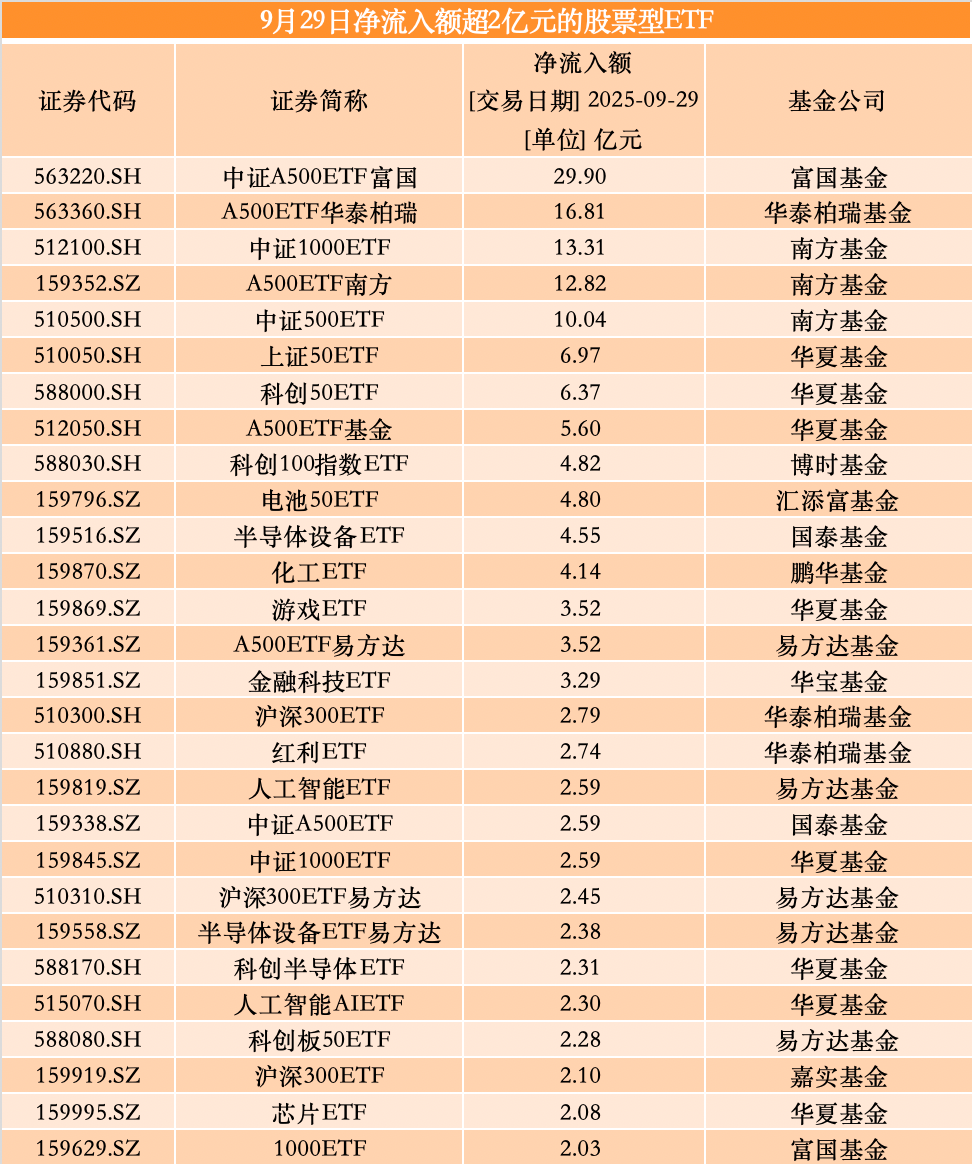
Group 1 - Stock ETFs have seen a strong inflow exceeding 10 billion yuan for two consecutive days, with net inflows of 193.93 billion yuan and 122.69 billion yuan on September 26 and 29 respectively [1] - Broad-based ETFs dominated the inflow rankings, with nine out of the top ten inflows on Monday being broad-based ETFs, while the only sector-themed ETF was related to the battery sector [1][3] - The A500 ETF led the inflow on September 29 with a net inflow of 29.90 billion yuan, followed by several other broad-based ETFs with inflows above 10 billion yuan [3][5] Group 2 - Despite a significant rise in the brokerage sector, many investors chose to take profits, leading to substantial outflows from several brokerage ETFs [2][6] - The top three sectors attracting capital this month have been brokerage, robotics, and batteries [2][8] - The net inflow for the brokerage sector ETF in September reached 109.82 billion yuan, making it the highest among all ETFs [8][9] Group 3 - Sector-themed ETFs such as battery, semiconductor, chemical, gaming, fintech, dividend, and artificial intelligence have also attracted significant capital [4] - The leading sector-themed ETFs by net inflow included the battery theme ETF with 4.80 billion yuan and the semiconductor materials and equipment theme ETF with 4.55 billion yuan [4][5] - Overall, the capital inflow in September has been strong across various sectors, with notable interest in chemicals, non-ferrous metals, semiconductors, consumption, gaming, and dividends [8][9] Group 4 - The market indices collectively rose on September 29, with the Shanghai Composite Index up by 0.9% and the ChiNext Index up by 2.74% [3] - The financial sector saw a significant rally in the afternoon, with major brokerage stocks hitting their daily limits [6][10] - The central bank's meeting emphasized the need for a moderately loose monetary policy to encourage financial institutions to increase credit supply [6][10]