先进制造业

Search documents
外资鼓励目录“上新”
Ren Min Ri Bao Hai Wai Ban· 2026-01-05 22:56
Core Viewpoint - The Chinese government has released the "Encouraged Foreign Investment Industry Catalog (2025 Edition)" to attract foreign investment in key sectors and regions, effective from February 1, 2025, which expands the scope and structure of encouraged industries compared to previous editions [5][7]. Summary by Relevant Sections Encouraged Sectors - The 2025 edition includes a total of 1,679 entries, an increase of 205 entries and 303 modifications compared to the 2022 edition, with 619 entries in the national catalog and 1,060 in the regional catalog [7]. - New sectors added include advanced manufacturing, modern services, and specific technologies such as zero-magnetic medical equipment and smart detection equipment [11]. Incentives for Foreign Investment - Foreign enterprises in encouraged sectors can enjoy tax exemptions on imported self-use equipment and preferential land supply policies, including reduced land transfer prices [8]. - The catalog allows for more flexible land use options, such as long-term leasing and "rent first, transfer later" arrangements, which can lower initial costs for foreign investors [9]. Regional Focus - The catalog emphasizes attracting foreign investment to the central and western regions, as well as the Northeast and Hainan Free Trade Port, with Hainan's encouraged industry entries increasing from 72 to 102 [13]. - Specific industries encouraged in Hainan include tropical agriculture, marine industries, and clean energy, aligning with the region's development goals [14]. Economic Impact - The catalog aims to enhance the quality of foreign investment and stimulate domestic consumption by attracting advanced business models and improving service offerings [12]. - The focus on advanced manufacturing and modern services is expected to drive high-quality development in these sectors, as seen in regions like Tianjin and Guangdong [10].

2025年,A港股涨超美股?2026年,投资要顺大势,逆小势!
雪球· 2026-01-05 13:01
Group 1 - The core viewpoint of the article emphasizes that in 2025, investing in mainstream indices yielded positive returns due to a favorable monetary policy environment, with significant gains in various asset classes, particularly gold and silver [2][4]. - Major global indices showed substantial growth, with the Hang Seng Index leading at 27.77%, followed by the Nikkei 225 at 26.18%, and the Shanghai Composite Index at 17.66% [5]. - Despite overall positive performance, there were notable fluctuations and risks throughout the year, including significant drawdowns in major indices due to various market events [11]. Group 2 - The investment landscape in 2025 was characterized by a structural shift towards technology and metals, with AI and advanced manufacturing sectors leading the market, while traditional sectors like coal and real estate lagged [13][14]. - Successful investing in 2025 required a diversified approach and the ability to select the right assets amidst rapid market rotations [15]. - Investor psychology played a crucial role in determining returns, with common pitfalls including emotional decision-making and mismanagement of market expectations [16][22]. Group 3 - Looking ahead to 2026, the article suggests that the prevailing low-interest-rate environment will continue to favor risk assets, encouraging investors to adopt a diversified investment strategy across various asset classes [24][25]. - The article highlights the importance of long-term investment strategies, such as dollar-cost averaging and dynamic rebalancing, to mitigate short-term market volatility and capture asset rotation opportunities [28].

先进制造业企业,增值税加计抵减政策详解!
蓝色柳林财税室· 2026-01-05 09:55
欢迎扫描下方二维码关注: 政策核 心 Part.1 自2023年1月1日至2027年12月31日,允许 先进制造业企业 按照 当期可抵扣进项税额加计5% 抵减应纳增值税税额(以下称加计 抵减政策)。 政策依据:《财政部 税务总局关于先进制造业企业增值税加计抵减政策的公告》(财政部 税务总局公告2023年第43号) 享受对象 Part.2 先进制造业企业 是指高新技术企业(含所属的非法人分支机构)中的制造业一般纳税人。 高新技术企业是指按照 《科技部 财政部 国家税务总局关于修订印发〈高新技术企业认定管理办法〉的通知》 (国科发火 〔2016〕32号)规定 认定的高新技术企业 。 先进制造业企业具体名单,由 各省、自治区、直辖市、计划单列市 工业和信息化部门会同同级科技、财政、税务部门确定。 加计抵减情形 Part.3 先进制造业企业按照现行规定计算一般计税方法下的应纳税额(以下称抵减前的应纳税额)后,区分以下情形加计抵减: 1.抵减前的应纳税额 等于零的 ,当前可抵减 加计抵减额 全部结转下期抵减; 2.抵减前的应纳税额 大于零,且大于当期可抵减加计抵减额的 ,当期可抵减加计抵减额全额从抵减前的应纳税额中抵减 ...
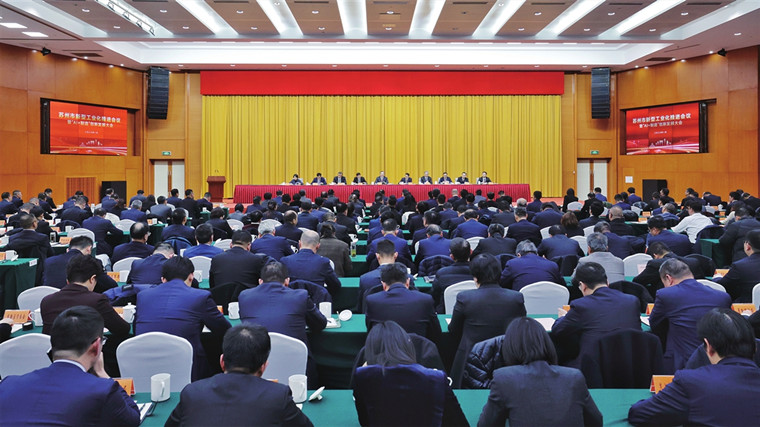
苏州市召开新型工业化推进会议暨“AI+制造”创新发展大会
Su Zhou Ri Bao· 2026-01-05 00:23
昨天(1月4日),我市召开新型工业化推进会议暨"AI+制造"创新发展大会,深入学习贯彻党的二十届 四中全会、中央经济工作会议精神和习近平总书记对江苏、苏州工作重要讲话重要指示精神,认真落实党中 央、国务院决策部署和省委、省政府工作安排,把握人工智能重大机遇,加快制造业全面转型,因地制宜发 展新质生产力,提升城市产业发展核心竞争力,奋力打造具有国际竞争力的"智造之城",为在江苏推进中国 式现代化走在前、做示范中勇挑大梁提供有力支撑。市委书记范波出席并讲话,市委副书记、市长吴庆文主 持会议。市人大常委会主任李亚平、市政协主席朱民、市委副书记黄爱军出席会议。 近年来,苏州坚持把发展经济的着力点放在实体经济上,深入推进新型工业化,2025年规上工业总产值 预计达4.89万亿元,形成3个万亿级产业集群,连续5年入选全国"营商环境最佳口碑城市"。新年伊始,推出 《苏州市推进新型工业化2026年行动方案》,实施新型工业化"八大工程",全力争创国家新型工业化示范 区,2026年力争规上工业总产值突破5万亿元。 范波指出,党的十八大以来,习近平总书记就推进新型工业化的一系列重大理论和实践问题作出重要论 述,提出一系列新思想、新 ...
结构性转变,有望推动中国股票继续上行
中国基金报· 2026-01-04 14:09
Group 1 - The core viewpoint of the article is that structural changes in the Chinese market are expected to drive continued upward momentum in Chinese stocks, particularly in the technology sector, with significant inflows into ETFs tracking these stocks [2][9]. - In 2025, the MCHI index, which tracks the MSCI China Index, achieved a return rate exceeding 30%, while the S&P 500 index returned approximately 16.39% during the same period [2]. - The total scale of 53 Chinese ETFs listed in the US is approximately $31.47 billion (about 220 billion RMB), with the largest being KWEB at $8.02 billion and MCHI at $7.78 billion [4]. Group 2 - The CQQQ ETF saw over $2 billion in inflows in 2025, making it a significant winner among Chinese ETFs, while KWEB and MCHI also received substantial inflows of $1.973 billion and $871 million, respectively [4]. - The interest in non-US ETFs, including Chinese ETFs, is expected to continue growing in 2026, driven by attractive valuations compared to US stocks [7]. - UBS forecasts that advanced manufacturing and technology will be new growth engines for the Chinese economy, with R&D spending expected to grow at a compound annual growth rate of at least 7% by 2030 [9].

【二〇二六中国经济展望①】奏响中国制造转型升级时代强音
Jing Ji Ri Bao· 2026-01-03 23:01
Group 1: Core Insights - The article highlights significant advancements in China's manufacturing sector, showcasing achievements such as the CR450 train setting a speed record and the successful launch of the reusable Zhuque-3 rocket, emphasizing the global impact of Chinese manufacturing by 2025 [1] - The "14th Five-Year Plan" emphasizes the integration of technological and industrial innovation, aiming to foster emerging pillar industries and promote the "AI + manufacturing" initiative, marking a critical phase for China's industrial transformation [2] Group 2: Manufacturing Industry Development - The manufacturing sector is identified as the foundation of the national economy, with a focus on high-quality development and breakthroughs in key technologies and products by 2025, while maintaining a balance between stability and progress in the face of complex economic conditions [2][3] - The "14th Five-Year Plan" suggests accelerating the construction of a manufacturing powerhouse, maintaining a reasonable proportion of manufacturing, and building a modern industrial system centered on advanced manufacturing [2] Group 3: Advanced Manufacturing - Advanced manufacturing is characterized by the deep integration of technological advancement, innovative models, and high-value outputs, shifting from scale expansion to quality enhancement and from factor-driven to innovation-driven growth [3] - A three-in-one ecosystem of "technological innovation, industrial ecology, and institutional support" is essential for the development of advanced manufacturing, focusing on foundational and original innovations, cluster cultivation, and supportive policies [3] Group 4: Traditional Industry Optimization - The article discusses the significant improvements in traditional industries through the application of new information technologies, leading to enhanced intelligence in various sectors such as steel and chemicals, and promoting green transformation [4] - The focus for 2026 includes optimizing traditional industries through equipment upgrades, process enhancements, and management innovations, with an emphasis on high-end, intelligent, green, integrated, and clustered development [4] Group 5: Digital Transformation - The digital transformation of manufacturing is progressing, with significant achievements in building intelligent factories and enhancing service capabilities through industrial internet platforms, with over 7,000 advanced and 500 excellent smart factories established [6] - Despite progress, the digital transformation remains at a superficial stage, with a need for deeper industry model innovation and organizational changes to meet diverse consumer demands and improve operational efficiency [7]

奏响中国制造转型升级时代强音
Jing Ji Ri Bao· 2026-01-03 21:53
Group 1: Core Insights - The article highlights significant advancements in China's manufacturing sector, showcasing achievements such as the CR450 train setting a speed record and the successful launch of the reusable Zhuque-3 rocket, emphasizing the global impact of Chinese manufacturing by 2025 [1] - The "14th Five-Year Plan" is set to begin in 2026, focusing on integrating technological and industrial innovation to foster emerging pillar industries and promote the "AI + manufacturing" initiative [1][2] Group 2: Manufacturing Industry Development - The manufacturing industry is deemed the foundation of the national economy, with a focus on high-quality development of key industrial chains and breakthroughs in significant technologies and products by 2025 [2] - The "14th Five-Year Plan" suggests accelerating the construction of a manufacturing powerhouse, maintaining a reasonable proportion of manufacturing, and building a modern industrial system centered on advanced manufacturing [2][3] Group 3: Advanced Manufacturing - Advanced manufacturing is characterized by the deep integration of technological advancement, innovative models, and high value, shifting from scale expansion to quality enhancement and from factor-driven to innovation-driven growth [2][3] - A three-in-one ecosystem of "technological innovation - industrial ecology - institutional support" is essential for developing advanced manufacturing, focusing on foundational and original innovations, cluster cultivation, and supportive policies [3] Group 4: Traditional Industry Optimization - The application of new-generation information technology in traditional industries has significantly improved their intelligence levels, with ongoing green transformation in sectors like steel and petrochemicals [4] - The focus for 2026 includes optimizing traditional industries through equipment updates, process upgrades, and management innovations, targeting high-end, intelligent, green, integrated, and clustered development [4] Group 5: Digital Transformation - By 2025, the digital transformation of China's manufacturing sector is progressing, with over 7,000 advanced and 500 excellent smart factories established, and more than 20,000 industrial 5G networks deployed [6] - The industrial internet is crucial for digital transformation, linking production equipment with resource elements, enhancing service capabilities, and achieving comprehensive coverage across various industrial categories [6][7] Group 6: Future Directions - The digital transformation is still in its early stages, focusing on single-point applications and independent data storage, with the ultimate goal of innovating industrial models and transforming organizational structures [7] - Future efforts will involve building an open innovation ecosystem, collaborating with educational and research institutions, and establishing a robust industrial internet platform to support manufacturing enterprises in their digital transition [7]
《山东省民营经济促进条例》为市场主体提供更完善法治保障
Da Zhong Ri Bao· 2026-01-03 01:15
Core Viewpoint - The implementation of the "Shandong Province Private Economy Promotion Regulations" aims to provide a more comprehensive legal guarantee for over 14.4 million private market entities, enhancing fair competition and addressing financing challenges for private enterprises [2][3]. Group 1: Legal Framework and Fair Competition - The regulations explicitly prohibit nine types of behaviors that hinder fair competition in public resource transactions, such as setting unreasonable performance thresholds and limiting ownership forms [2]. - The regulations emphasize the need for a negative list for market access and a strict review system for fair competition, aiming to eliminate hidden barriers to market entry for private capital [2][3]. Group 2: Financing Support for Private Enterprises - The regulations encourage financial institutions to optimize credit services and increase tolerance for non-performing loans to private enterprises, aiming to lower financing costs and broaden financing channels [3]. - Specific measures include enhancing support for first-time loans, credit loans, and loans backed by accounts receivable, warehouse receipts, equity, and intellectual property [3]. Group 3: Rights Protection and Government Accountability - The regulations establish a mechanism for government integrity in fulfilling contracts, imposing clear obligations on state agencies and state-owned enterprises regarding timely payments to private enterprises [3]. - It prohibits delays in payments due to administrative changes or internal processes, ensuring that private enterprises receive their dues without undue hindrance [3]. Group 4: High-Quality Development of Private Economy - The regulations support private enterprises in investing in strategic emerging industries and participating in major project construction, promoting their integration into provincial development strategies [4]. - Service optimization measures include elevating existing service models to legal status, shifting government services from passive approval to proactive empowerment [4].
地区生产总值跨越两个千亿级台阶
Xin Lang Cai Jing· 2026-01-02 22:39
Core Insights - Yibin City has made significant progress in its economic and social development during the "14th Five-Year Plan" period, achieving a strong start and a series of development accomplishments [1] Economic Growth - The regional GDP of Yibin has increased from 286.35 billion yuan in 2020 to 400.58 billion yuan in 2024, crossing two hundred billion thresholds and ranking third in the province [1] - The total industrial added value is projected to reach 160.79 billion yuan in 2024, which is 1.5 times that of the end of the "13th Five-Year Plan" [1] - The annual average growth rate of industrial added value in large-scale enterprises is around 10% [1] Population and Urban Development - The urban built-up area has expanded to 189.7 square kilometers, with a net increase of 184,000 permanent residents in urban areas [1] - Yibin has been recognized as one of China's "Top Ten Beautiful Livable Cities" and "Cities with the Most Happiness" [1] Research and Development - The "Jiangyuan Action" for new-type research and development institutions has led to a 49.5% increase in total R&D expenditure compared to the end of the "13th Five-Year Plan," with 337 new high-tech enterprises established, totaling 487 [1] Environmental Sustainability - The proportion of excellent water bodies in national and provincial assessment sections remains at 100%, with the Yangtze River mainstream maintaining a Class II water body ratio of 100% [1] - The green low-carbon industry accounts for 44.8% of the industrial output value of large-scale enterprises, with energy consumption per unit of industrial added value decreasing by 24.2% [1] Transportation Infrastructure - A comprehensive transportation system has been established, with a total railway operating mileage of 564 kilometers, including 275 kilometers of high-speed rail, enabling one-hour commutes to Chengdu and Chongqing [1] - Newly constructed highways have achieved county-level connectivity, with a total of 236 kilometers opened to traffic [1] - The annual growth rate of cargo throughput and container throughput at Yibin Port has achieved double-digit growth [1]
扩大高水平对外开放:为世界搭台 与伙伴共发展
Xin Lang Cai Jing· 2026-01-02 18:29
Group 1 - The year 2025 is pivotal for China's economic planning, marking the end of the "14th Five-Year Plan" and the beginning of the "15th Five-Year Plan," with a focus on high-level opening-up and international cooperation [2] - The Central Economic Work Conference highlighted the importance of maintaining openness and promoting win-win cooperation in various fields as a key task for 2026 [2] - A series of measures have been implemented to enhance China's openness, including the 240-hour visa-free transit policy, which has significantly increased foreign visitor numbers [3][4] Group 2 - The 240-hour visa-free transit policy has been in effect for one year, covering 55 countries and resulting in a 27.2% increase in foreign arrivals, with a 60.8% increase in those utilizing the policy [4] - The 8th China International Import Expo in November 2025 saw participation from 155 countries and regions, with a record intended transaction amount of $83.49 billion, up 4.4% from the previous year [4][5] - The launch of the Hainan Free Trade Port on December 18, 2025, marked a significant step in China's commitment to high-level opening-up, with notable increases in consumer spending and foreign investment [7] Group 3 - The Central Economic Work Conference emphasized the need for systematic opening-up and the expansion of service sector autonomy, indicating a strategic direction for future service trade development [8] - China's service trade has shown steady growth, with a total import and export value of 65.84 trillion yuan in the first ten months of 2025, reflecting a 7.5% year-on-year increase [8][9] - The deepening of international cooperation and the expansion of China's global partnerships are highlighted as essential for enhancing economic resilience and reducing reliance on single markets [9]