
金融

Search documents
What the Latest Lack of Economic Data Means for Long-Term Investors
Yahoo Finance· 2025-12-12 10:55
Economic Data and Market Impact - The Bureau of Labor Statistics (BLS) announced the cancellation of October's producer price index (PPI) data, contributing to uncertainty in the markets [2] - Over $1 trillion in market capitalization has been lost from crypto markets since early October, with Bitcoin experiencing a significant decline from its record highs [2] - The absence of key economic reports, such as the jobs report and PPI, typically helps anchor investor expectations regarding growth, inflation, and interest rates [4] Investor Sentiment and Economic Outlook - The lack of a shared reference point due to missing data widens the range of plausible economic outcomes, potentially reducing investors' situational awareness of economic trends over the long term [5] - The official reason for the missing data is attributed to a lack of economic survey work during a shutdown, raising concerns about the potential negative implications of the missing statistics [6] - Current private payroll data indicates a slowdown in hiring but not a drastic decline, while consumer spending suggests households are spending slightly more than the previous year [7] Investment Strategy Recommendations - Investors are advised to build portfolios that do not rely on perfect data, as ongoing delays and potential politicization of government statistics should be factored into investment planning [9] - The current market environment necessitates a strategy that can withstand periods of disruption rather than one that only functions under stable conditions [9]
金融系统重磅会议召开!
券商中国· 2025-12-12 09:24
Group 1 - The national financial system work conference emphasized the need for the financial sector to deeply learn and implement the spirit of the Central Economic Work Conference, accurately grasping the economic situation and main objectives [1] - The focus will be on risk prevention, strong regulation, and promoting high-quality development, with a commitment to effectively manage key financial tasks for 2026 [1] - There will be continued efforts to mitigate risks associated with local small and medium financial institutions, real estate companies, and local government financing platform debts, with strict controls on new risks and management of existing risks [1] Group 2 - The conference highlighted the importance of strengthening financial regulation, improving regulatory systems in key areas, and enhancing compliance and risk awareness among financial institutions [1] - A commitment to high-quality development will be maintained through moderately loose monetary policies, with increased financial support for expanding domestic demand, technological innovation, and small and micro enterprises [1] - The need for comprehensive leadership from the Party over financial work was stressed, along with the importance of implementing directives from General Secretary Xi Jinping and ensuring a good start for the 14th Five-Year Plan in finance [1]

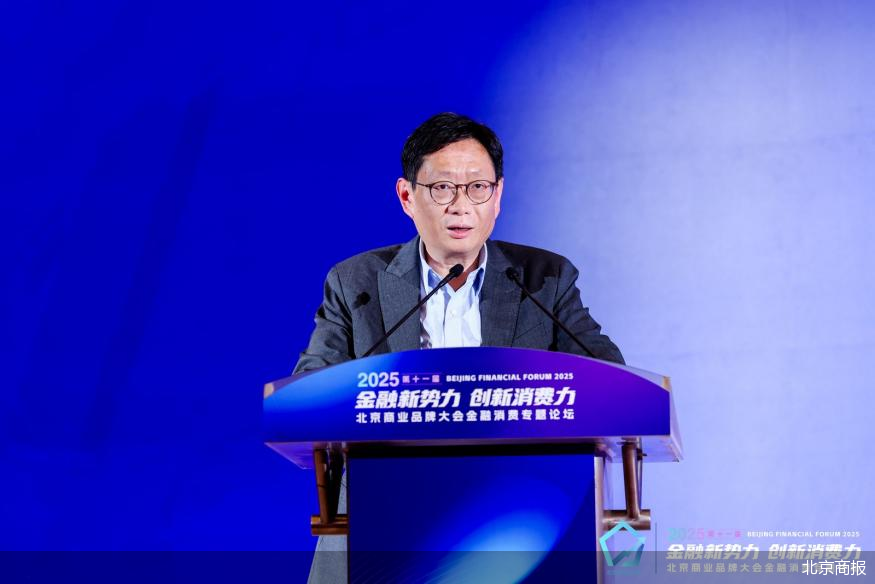
曾刚:培育新动能,服务经济高质量发展是未来五年金融业的核心任务
Bei Jing Shang Bao· 2025-12-12 08:47
12月11日,由中外企业文化、北京商报社主办的2025年度北京商业品牌大会金融消费专题论坛在北京召开。上海金融与发展 实验室首席专家、主任曾刚就"十五五"期间金融工作的重点与前瞻发表演讲。他指出,"十五五"是我国承上启下的关键五 年,金融工作将紧紧围绕国家战略,回归本源、服务实体经济,加快推进金融强国建设。 消费领域仍是关注重点,但"结构变化与新兴变化需要我们把握和捕捉"。金融从业者需提升对产业与科技的认知能力,在规 范发展中捕捉新的增长空间,真正实现"回归本源、服务实体"的初心使命。 在此背景下,金融领域的改革方向也相应明确。 从"十五五"规划建议关于金融的表述来看,曾刚对比指出,"十四五"期间金融工作的主题是"深化金融供给侧改革",旨在解 决金融总量过剩、结构失衡问题,政策环境相对偏紧;而"十五五"规划建议则明确提出"加快金融强国建设",标志着基础工 作已基本完成,政策环境将更加积极,金融体系进入发力支持高质量发展的新阶段。 与之相应,资本市场的定位也更趋重要,从偏重融资功能转向"投资与融资功能协调发展",意味着更注重市场的健康与长期 价值培育。在人民币国际化方面,表述也从"稳慎推进"调整为直接"推进人民 ...
上汽集团:12月12日召开董事会会议
Mei Ri Jing Ji Xin Wen· 2025-12-12 08:27
Group 1 - The core point of the article is that SAIC Motor Corporation Limited announced the convening of its ninth fifth board meeting via communication method on December 12, 2025, to review proposals including the establishment of branch offices [1] - For the year 2024, the revenue composition of SAIC Motor is projected to be 97.85% from the automotive manufacturing sector and 2.15% from the financial sector [1] - As of the report date, SAIC Motor's market capitalization stands at 180.7 billion yuan [1]

中央经济工作会议解读及市场策略:聚焦内需提振和经济增长
SPDB International· 2025-12-12 08:18
Core Insights - The report emphasizes the importance of boosting domestic demand and economic growth, with a focus on moderate policy stimulus that is data-driven and efficiency-oriented [3] - The central economic work conference outlines three main investment themes for the upcoming year: expanding domestic demand, promoting technological and industrial innovation, and advancing the construction of a unified national market [3] Group 1: Expanding Domestic Demand - The conference highlights the need to implement special actions to boost consumption, develop urban and rural income plans, and optimize the supply of quality goods and services [3] - It suggests that improving consumer capacity, enhancing willingness to consume, and creating favorable consumption conditions are essential for driving future consumption growth in China [3] - Key sectors to focus on include new retail, dining, hospitality, cultural tourism, and modern services such as healthcare, elderly care, childcare, and finance [3] Group 2: Technological and Industrial Innovation - The report calls for a comprehensive plan to advance education and technology talent development, strengthen the role of enterprises in innovation, and implement high-quality development actions for key industrial chains [3] - It emphasizes the strategic direction of artificial intelligence (AI) development, advocating for the "AI+" initiative to enhance technological research and industrial upgrading [3] - Investment opportunities are identified in high-end manufacturing, renewable energy, and AI-related industries, with a particular focus on AI application implementation in the coming year [3] Group 3: Unified National Market Construction - The conference indicates the need to establish regulations for a unified national market and to address "involution" competition [3] - The "anti-involution" approach is expected to support inflation and improve supply-demand relationships in traditional cyclical industries, while also benefiting emerging industries by regulating competition [3] - Sectors likely to benefit include new energy vehicles, e-commerce, lithium batteries, and photovoltaics, as they may experience enhanced output efficiency [3] Short-term Market Judgments and Investment Strategies - The report notes that while the central economic work conference has released positive policy signals, the short-term market will still be influenced by liquidity factors and market sentiment [3] - It suggests a balanced investment strategy, combining defensive sectors like banking, insurance, telecommunications, and utilities with growth sectors in technology, particularly those with strong AI attributes and reasonable valuations [3] - The report recommends focusing on AI-leading companies in the Hong Kong stock market and opportunities in the A-share computing power industry chain and AI application layer [3]
一周文商旅速报(12.08—12.12)
Cai Jing Wang· 2025-12-12 07:00
Group 1 - Xiangyuan Holdings is facing overdue repayment issues related to financial products linked to its real estate projects, with the company and its chairman Yu Faxiang taking joint guarantee responsibility and communicating with relevant parties about the situation [1] - Three listed companies under Xiangyuan Holdings, including Xiangyuan Cultural Tourism, Haichang Ocean Park, and Jiaojian Co., have issued statements clarifying that they are not responsible for any repayment or guarantee obligations related to the overdue financial products [1] Group 2 - New城控股 reported a total commercial operating revenue of approximately 12.85 billion yuan from January to November, reflecting a year-on-year growth of 10.36% [2] - In November alone, the company achieved a commercial operating revenue of about 1.16 billion yuan, an increase of 8.96% compared to the same month last year [2] - The total contract sales amount for the company from January to November reached approximately 17.92 billion yuan, with a total sales area of about 2.35 million square meters [2] Group 3 - Shanghai Disneyland will implement a tiered refund policy for its theme park tickets starting January 12, 2026, allowing for different refund conditions based on the timing of the refund request [3] - Under the new policy, full refunds can be requested up to seven days before the visit, while a service fee will apply for refunds requested closer to the visit date [3] Group 4 - Swire Properties announced the launch of Qiantan Place in Shanghai, which includes two Grade A office buildings, with a total construction area of approximately 125,600 square meters [4] - The project is part of the expansion of the Qiantan Taikoo Li integrated development and is expected to be completed by the end of 2026 [4] Group 5 - The Ministry of Culture and Tourism emphasizes the importance of developing smart tourism to enhance the experience and comfort of tourism products, aiming to enrich the supply of high-quality tourism products [5] - The focus is on improving the design and development of tourism products, promoting the renewal of tourist attractions, and cultivating leisure and specialty tourism products [5]




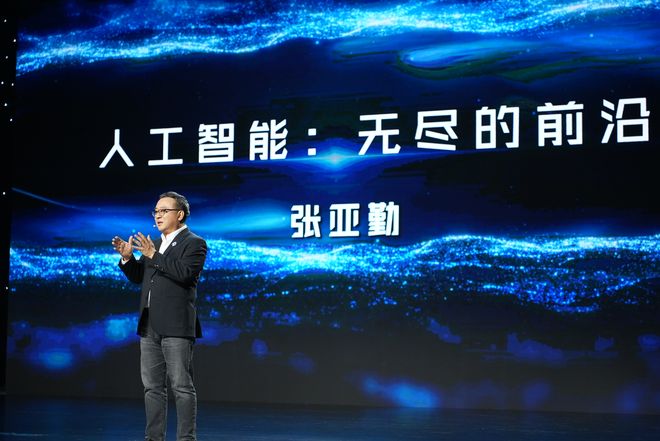
人工智能系列谈丨张亚勤:智能体AI如何影响人工智能发展的下一程?
Xin Hua She· 2025-12-12 06:52
Core Insights - The development of artificial intelligence (AI) is undergoing a profound paradigm shift, transitioning from mere technological breakthroughs to a new stage of deep industry integration and collaborative governance [3] - AI is acting as a core driving force, rapidly reconstructing productivity and production relationships while promoting deep integration across the physical, digital, and biological worlds [3][4] Industry Trends - The emergence of "Agentic AI" marks a new era where intelligent agents will possess enhanced goal-oriented capabilities, autonomous decision-making, and real-time interaction with their environments, with key performance indicators expected to grow exponentially [4] - The concept of the "Internet of Agents" will evolve, shifting the focus from "person-to-person" interactions to "agent-to-agent" interactions, potentially transforming various sectors such as finance, healthcare, and scientific research [5] Technological Development - AI is categorized into three levels: "Information Intelligence," which is close to achieving AGI within 3-4 years; "Physical Intelligence," expected to see breakthroughs in 5-10 years; and "Biological Intelligence," which may take 15-20 years to develop [6] - Achieving AGI requires new architectures and paradigms, including enhanced memory, evolutionary capabilities, and reasoning abilities to understand physical and biological worlds [6] Risk and Governance - The rise of AI capabilities is accompanied by increasing potential risks, necessitating global cooperation to address challenges such as malicious use in CBRN fields and safety hazards in autonomous systems [7][8] - The governance mechanisms are lagging behind technological advancements, highlighting the need for an efficient and inclusive governance system [7] Industry Restructuring - AI is fundamentally rewriting industry structures and business models, with significant impacts observed in sectors like energy, automotive, manufacturing, and healthcare [9] - Large enterprises leverage data and resources to develop large models, while small and medium-sized enterprises often utilize these models to solve real-world problems [9] China's AI Development Path - China is following a unique AI development path focused on optimizing computing power and model efficiency, with innovations like open-source models reducing entry barriers and breaking foreign monopolies [10][11] - Chinese AI models have reached the global first tier, with significant advancements in the "AI + application" domain, positioning China as a key player alongside the U.S. in the global AI landscape [11] Future Outlook - The transformation from generative intelligence to agentic leaps signifies an ongoing revolution in AI, reshaping economic forms and societal landscapes [12] - Emphasizing efficient, new architectures and open-source technology, while deepening vertical application scenarios, is crucial for China's competitive edge in the global AI arena [12]
工信部:今年前11个月工业绿色贷款新增735.6亿元 同比增长22.3%
Xin Hua Cai Jing· 2025-12-12 06:50
Core Viewpoint - The Ministry of Industry and Information Technology (MIIT) reported a significant increase in industrial green loans, highlighting the ongoing efforts to enhance financial support for green development in the industrial sector. Group 1: Industrial Green Loans - In the first 11 months of this year, new industrial green loans amounted to 73.56 billion yuan, representing a year-on-year growth of 22.3% [1][2] - The adaptability and precision of the industrial-financial cooperation have been continuously improving [1] Group 2: Policy and Framework - The MIIT, in collaboration with the People's Bank of China and other departments, is deepening industrial-financial cooperation to guide financial resources in supporting industrial green development [1] - Policies have been introduced to strengthen industrial green development and financial support for new industrialization, emphasizing the use of diverse financial tools such as green credit and green bonds [1] Group 3: Service Enhancement - A dedicated "Industrial Green Development" section has been established on the national industrial-financial cooperation platform, optimizing enterprise green labels and enriching the supply of financial products and services [2] - Over 100 green financial products, including energy-saving and green factory loans, have been launched [1][2] Group 4: Collaborative Innovation - A multi-departmental collaboration has been formed, involving various strategic financial institutions to participate deeply in industrial-financial cooperation [2] - Innovative green financial tools are being piloted in 66 cities to support the industrial green transformation and upgrading [2] - The "Technology-Industry-Finance Integration" initiative has facilitated the organization of 28 green low-carbon hard technology project roadshows, resulting in 600 million yuan in financing [2]
机构称港股从“估值修复”转向“估值重估”,恒生ETF(159920)午盘攀升涨近2%
Mei Ri Jing Ji Xin Wen· 2025-12-12 06:20
Core Viewpoint - The Hong Kong stock market is experiencing a positive trend, with the Hang Seng Index and Hang Seng Tech Index both showing gains, indicating a shift in investment logic towards new productivity and high-quality development [1] Market Performance - On December 12, the Hang Seng Index rose by 1.36% and the Hang Seng Tech Index increased by 1.45% [1] - Technology stocks saw widespread gains, while the metals sector led the increases [1] - The Hang Seng ETF (159920) rose nearly 2%, with notable performers including China Life, ZTO Express, China Hongqiao, and CK Infrastructure [1] - Conversely, companies like Hansoh Pharmaceutical, WuXi Biologics, and Zhongsheng Group experienced declines [1] Future Outlook - Jianyin International suggests that the investment logic for Hong Kong stocks has shifted from traditional valuation recovery to a revaluation based on new productivity and high-quality development [1] - There is potential for moderate expansion or improvement in valuations and earnings by 2026 [1] - Key catalysts and event windows include the reassessment of China's economic growth momentum at the start of the 14th Five-Year Plan, the Central Economic Work Conference in mid-December, and developments in US-China relations surrounding Trump's visit and the midterm elections [1] - Progress in AI capital expenditure and profitability is also highlighted as a significant factor [1] Notable Investment Targets - Core broad-based Hong Kong stock: Hang Seng ETF (159920) [1] - AI and platform economy focus: Hang Seng Tech Index ETF (513180) [1] - Focus on the development of Chinese enterprises in Hong Kong: Hang Seng China Enterprises ETF (159850) [1]
工信部有关负责人回答证券时报记者提问:要发挥绿色工厂评价对绿色金融的参考作用
Zheng Quan Shi Bao Wang· 2025-12-12 05:12
人民财讯12月12日电,12月12日,工业和信息化部举行"用好绿色金融政策支持绿色工厂建设"新闻发布 会。工业和信息化部节能与综合利用司司长王鹏在回答证券时报记者提问时表示,发挥绿色工厂评价对 绿色金融的参考作用,核心是建立一个"评价精准化、结果价值化、信息透明化"的工作机制。今年工信 部修订的《绿色工厂评价通则》,旨在通过科学的"尺子"量出真正的"含绿量",再通过金融工具将"含 绿量"转化为"融资易"和"成本低"的实实在在的好处,从而激励绿色工厂不断提高"含绿量"。具体作用 包括三方面。一是为绿色工厂精准"画像"。新修订的《绿色工厂评价通则》,大幅精简评价指标数量, 围绕节能降碳、资源循环、环境保护等方面形成以定量为主的14项评价指标。二是让评价结果"变现"。 获得评价分数后,更重要的是将其转化为金融机构可以理解和使用的"语言"和"工具",并应用到具体的 业务中。金融机构可以根据绿色工厂的评价分数开发差异化金融产品,提供不同额度、利率、审批效率 的金融产品。三是激活"绿色资产"。深入挖掘绿色工厂评价分数背后所代表的各类环境权益资产价值, 并创新金融工具予以盘活。 ...