制造业

Search documents
人工智能系列谈丨张亚勤:智能体AI如何影响人工智能发展的下一程?
Xin Hua She· 2025-12-12 06:52
Core Insights - The development of artificial intelligence (AI) is undergoing a profound paradigm shift, transitioning from mere technological breakthroughs to a new stage of deep industry integration and collaborative governance [3] - AI is acting as a core driving force, rapidly reconstructing productivity and production relationships while promoting deep integration across the physical, digital, and biological worlds [3][4] Industry Trends - The emergence of "Agentic AI" marks a new era where intelligent agents will possess enhanced goal-oriented capabilities, autonomous decision-making, and real-time interaction with their environments, with key performance indicators expected to grow exponentially [4] - The concept of the "Internet of Agents" will evolve, shifting the focus from "person-to-person" interactions to "agent-to-agent" interactions, potentially transforming various sectors such as finance, healthcare, and scientific research [5] Technological Development - AI is categorized into three levels: "Information Intelligence," which is close to achieving AGI within 3-4 years; "Physical Intelligence," expected to see breakthroughs in 5-10 years; and "Biological Intelligence," which may take 15-20 years to develop [6] - Achieving AGI requires new architectures and paradigms, including enhanced memory, evolutionary capabilities, and reasoning abilities to understand physical and biological worlds [6] Risk and Governance - The rise of AI capabilities is accompanied by increasing potential risks, necessitating global cooperation to address challenges such as malicious use in CBRN fields and safety hazards in autonomous systems [7][8] - The governance mechanisms are lagging behind technological advancements, highlighting the need for an efficient and inclusive governance system [7] Industry Restructuring - AI is fundamentally rewriting industry structures and business models, with significant impacts observed in sectors like energy, automotive, manufacturing, and healthcare [9] - Large enterprises leverage data and resources to develop large models, while small and medium-sized enterprises often utilize these models to solve real-world problems [9] China's AI Development Path - China is following a unique AI development path focused on optimizing computing power and model efficiency, with innovations like open-source models reducing entry barriers and breaking foreign monopolies [10][11] - Chinese AI models have reached the global first tier, with significant advancements in the "AI + application" domain, positioning China as a key player alongside the U.S. in the global AI landscape [11] Future Outlook - The transformation from generative intelligence to agentic leaps signifies an ongoing revolution in AI, reshaping economic forms and societal landscapes [12] - Emphasizing efficient, new architectures and open-source technology, while deepening vertical application scenarios, is crucial for China's competitive edge in the global AI arena [12]


GDP的顶梁柱:房地产之后下一个是什么?
Bank of China Securities· 2025-12-12 05:33
Economic Structure - The main contributors to China's GDP in 2024 are consumption (56.55%), investment (40.61%), and net exports (2.84%) [10] - The contribution rates to GDP growth are 44.47% from consumption, 25.22% from investment, and 30.31% from net exports [11] Real Estate Sector - The real estate sector's GDP share peaked above 8% between 2018 and 2020, but has since declined to 6.27% in 2024 [25][29] - The real estate industry's nominal GDP growth has been consistently lower than the overall economic growth since 2019, indicating a significant shift [27] Future Growth Drivers - Future economic growth is expected to be supported by technology-driven sectors such as information technology and leasing services, as well as industries benefiting from productivity improvements like wholesale retail and manufacturing [2] - Key areas for future growth include the modernization of the industrial system, driven by government policies and technological advancements [1] Policy Implications - Long-term national policies, such as the five-year plan, are crucial for ensuring sustainable economic development and balancing sectoral growth [2] - The macroeconomic policy environment is expected to maintain a positive fiscal stance and moderately loose monetary policy, with potential innovations in monetary tools [2] Risks - Potential risks include a resurgence of global inflation, rapid economic downturns in developed economies, and increasing international geopolitical complexities [2]
广州市小圆工贸有限公司成立 注册资本10万人民币
Sou Hu Cai Jing· 2025-12-12 05:21
Group 1 - Guangzhou Xiaoyuan Industrial and Trade Co., Ltd. has been established with a registered capital of 100,000 RMB [1] - The company's business scope includes manufacturing and sales of paper products, daily necessities, toys, and various retail and wholesale activities [1] - The company is involved in the production of arts and crafts, household items, cosmetics, electronic products, and office equipment [1]
田轩:真抓实干“十五五” | 立方大家谈
Sou Hu Cai Jing· 2025-12-12 03:06
Core Insights - The 2025 Central Economic Work Conference has established a clear policy blueprint for China's economic direction, emphasizing a "systematic thinking" and "effectiveness-oriented" approach to economic policy [2][3] Group 1: Economic Policy Focus - The conference highlights a shift from broad policy coverage to targeted and precise measures, integrating existing and new policies to address economic challenges [2] - Specific institutional designs and action plans have been introduced to tackle issues such as consumption restrictions, corporate debt, and real estate market fluctuations [2] Group 2: Identifying Challenges and Opportunities - The conference acknowledges the achievements of China's economy while also recognizing significant challenges, including external environmental changes and domestic supply-demand imbalances [3] - A consensus has been built around the long-term positive outlook for the economy, despite acknowledging transitional pains [3] Group 3: Practical Experience and Methodology - Five key principles for economic work have been identified: maximizing economic potential, balancing policy support with reform, ensuring effective governance, integrating investments in goods and people, and strengthening internal capabilities to face external challenges [4] - These principles provide a methodological framework for addressing economic governance and avoiding fragmentation [4] Group 4: Addressing Core Economic Issues - The conference identifies three main focus areas: expanding domestic demand, fostering innovation and reform, and managing risks in key sectors such as real estate and local government debt [5] - Measures to combat "involution" in competition and address deep-seated economic contradictions have been emphasized [5] Group 5: Policy Coordination and Expectations - The conference promotes a combination of proactive fiscal policy and moderately loose monetary policy, aiming for policy continuity while optimizing implementation strategies [6] - A focus on improving policy coherence and managing expectations is highlighted to stabilize market confidence [6] Group 6: Enhancing Domestic Demand - Specific actions to boost consumption include implementing a "Consumption Promotion Special Action" and a "Rural Residents Income Increase Plan," aimed at removing unreasonable restrictions and enhancing service consumption potential [7] - Investment strategies will focus on increasing central budget investments and optimizing local government bond usage to stimulate private investment [9] Group 7: Innovation and Reform Initiatives - The conference outlines plans for establishing three major international technology innovation centers and enhancing intellectual property protection in emerging fields [10] - A focus on integrating technology and industry innovation is emphasized, with a call for supportive policies for venture capital and long-term funding for early-stage projects [10] Group 8: Social Welfare and Employment - The conference emphasizes the importance of social welfare measures, including stabilizing employment for graduates and migrant workers, and enhancing social security for flexible employment [12] - Policies aimed at improving education, healthcare, and childcare support are highlighted to address public concerns and enhance living standards [12] Group 9: Risk Management Strategies - A targeted approach to risk management is proposed, particularly in the real estate sector and local government debt, with specific measures to control inventory and optimize debt restructuring [13][14] - The focus is on preventing systemic risks while addressing core risk areas through structured and effective measures [13] Group 10: Capital Market Development - The conference calls for continued deepening of capital market reforms to enhance market attractiveness and inclusivity, with a focus on long-term investment and institutional improvements [15][16] - Emphasis is placed on creating a multi-layered and differentiated market system to support various stages of enterprise development [16]

年末调仓信号:机构正买入“全球化”与“硬科技”
Sou Hu Cai Jing· 2025-12-12 01:57
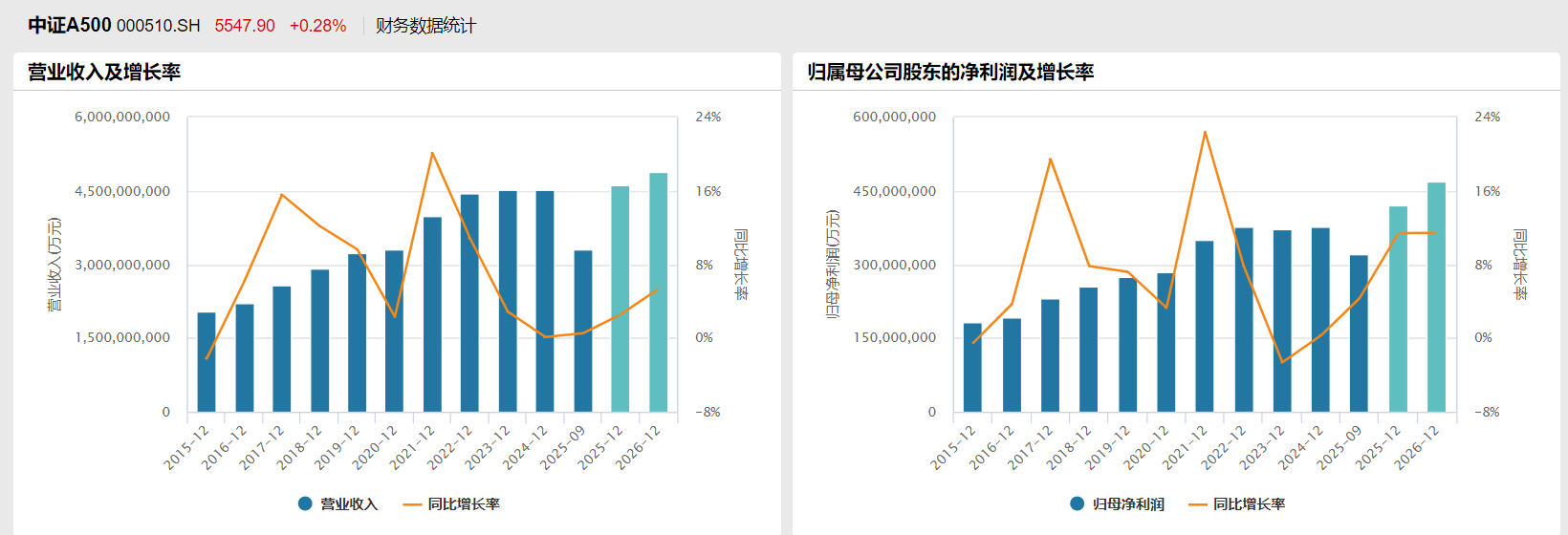
Group 1 - The recent active performance of the CSI A500-related ETFs and AI-related ETFs indicates a trend of institutional reallocation towards these assets as the year-end approaches, with the total scale of CSI A500 ETFs surpassing 200 billion yuan and the first batch of innovation-driven AI ETFs raising over 30 billion yuan during the issuance period [1][2] - The shift in development philosophy emphasizes both "Chinese economy" and "Chinese people's economy," indicating a transformation in development goals from focusing solely on domestic production scale to also considering the global income capabilities of citizens and enterprises [1][3][4] - The CSI A500 index reflects the globalization capabilities of Chinese enterprises, with nearly 70% of its constituent companies engaged in overseas business and over 40% of these companies deriving more than 20% of their revenue from abroad, showcasing a robust long-term performance [1][4][5] Group 2 - The combination of the CSI A500 and AI investments provides a complementary logic, where AI technology breakthroughs require global markets for validation and amplification, while the globalization of Chinese enterprises needs technological innovation to enhance competitiveness [2] - The CSI A500 index serves as a key tool for observing and investing in the transformation of Chinese enterprises from "world factory" to "global enterprises," focusing on their ability to integrate into global value chains and enhance their competitive positions [4][8] - The average overseas revenue growth rate of CSI A500 constituent stocks over the past five years reached 14.3%, outpacing the domestic revenue growth rate of 11.7%, indicating an acceleration in the expansion of Chinese enterprises in global markets [5][9] Group 3 - The AI sector is characterized by a significant divergence in stock performance, with some companies experiencing price corrections exceeding 40% due to a lack of core technological support, while leading firms with robust infrastructure and high-end chips continue to reach new highs [10][11] - The global AI market is projected to reach 500 billion dollars by 2027, with a compound annual growth rate exceeding 26%, driven by policy incentives, capital influx, and technological breakthroughs in China [14] - The main AI-related indices in the market exhibit distinct positioning, with the CS AI index covering the entire market, while others focus on specific sectors such as semiconductor and communication equipment, providing various investment tools for capturing opportunities in the AI industry [15][16] Group 4 - The top ten constituent stocks of the AI indices show significant differences in weightings, reflecting the varying focuses of each index, with the CS AI index heavily weighted towards semiconductor and computing sectors, while the innovation-driven AI indices emphasize communication equipment and software applications [18] - The E Fund AI ETF (159819) has surpassed 23 billion yuan in scale, with a three-year growth rate of 117.31%, making it the largest product tracking the CS AI index, while new AI ETFs have been launched to further enrich the product matrix for investors [19]
金融“活水”精准润泽新型工业化 向“新”向“智”向“绿”表现亮眼
Yang Shi Wang· 2025-12-12 01:29
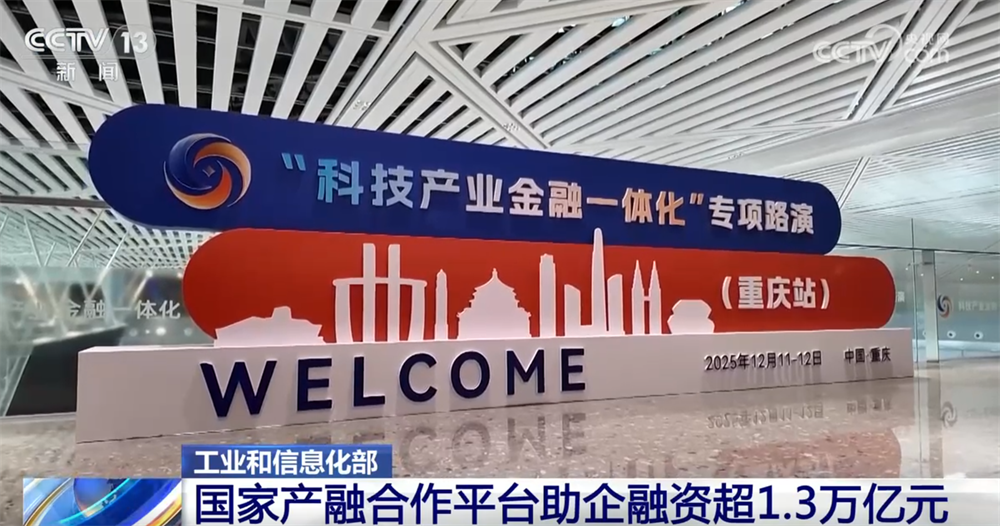
Group 1 - The core viewpoint is that the national financing cooperation platform has significantly increased its support for enterprises, with a total financing amount exceeding 1.3 trillion yuan, and 70% of this financing is directed towards innovative enterprises in specialized and advanced manufacturing sectors [1] - In the first 11 months of this year, the national financing cooperation platform added 289.7 billion yuan in financing for enterprises, indicating a strong commitment to supporting the manufacturing sector [1] - The platform has established 25 specialized service zones and has gathered over 400,000 enterprises, 3,000 financial institutions, and more than 800 financial products [1] Group 2 - In the first 11 months, loans in the manufacturing sector saw significant growth, with 18.1% increase in loans for high-end equipment manufacturing and 28.2% increase in loans for artificial intelligence [3] - Industrial green loans reached 735.6 billion yuan, reflecting a year-on-year growth of 22.3%, showcasing the emphasis on sustainable industrial practices [3] - The People's Bank of China and other departments have set a goal to fully meet the effective credit demand of manufacturing enterprises by 2027, indicating a long-term commitment to financial support for the sector [5] Group 3 - The Ministry of Industry and Information Technology has initiated 66 national pilot cities for financing cooperation, promoting integrated financing activities for technology and industry [5] - Over 130 hard technology projects have received equity financing exceeding 11 billion yuan, demonstrating the effectiveness of the financing initiatives [5]
全球大放水,美联储再降息,外资回流,中国或将成为大赢家?
Sou Hu Cai Jing· 2025-12-11 18:47
Group 1 - The Federal Reserve's recent interest rate cut of 25 basis points and the resumption of Treasury bond purchases signal a new wave of global monetary easing, impacting various sectors including housing, investments, and international relations [1][3][11] - The U.S. economy appears strong on the surface, but underlying issues such as slowing job growth, rising corporate financing costs, and a widening fiscal deficit indicate deeper structural problems [5][28] - The pressure from President Trump on the Federal Reserve to lower rates more aggressively has created unprecedented internal divisions within the Fed, highlighting the risks present in the economy [9][28] Group 2 - The Fed's actions aim to stabilize the financial system, lower long-term interest rates, and prevent the dollar from becoming overly strong, which could harm exports and manufacturing [11][21] - Global markets reacted positively to the Fed's decisions, with U.S. stocks rising and the dollar index weakening, indicating a shift from an anti-inflation stance to a focus on stable growth [13][21] - The interest rate differential between the U.S. and China has narrowed, but China's stable monetary policy makes its bonds attractive to foreign investors, especially as U.S. rates decline [15][19] Group 3 - The influx of foreign capital into Chinese assets is expected as global funds seek growth opportunities, particularly in China's core assets in the stock market [21][39] - The stability of the yuan and the easing of monetary policy in China provide a conducive environment for supporting the real economy and driving consumption [23][25] - The Fed's rate cut may lead to a short-term global economic recovery, benefiting China's manufacturing sector and improving cash flow for businesses [26][32] Group 4 - China must leverage this opportunity to address structural challenges, promote technological innovation, and reduce reliance on low-value manufacturing [32][34] - The current period of stable exchange rates and ample policy space allows China to accelerate infrastructure development and position itself for future economic competition [36][38] - The potential for increased employment and wage growth in China is tied to the Fed's actions, but there is a need for caution regarding the sustainability of this economic environment [38][39]

白酒低迷、AI订单排队,景林高云程,投资得学会“两边下注”
Sou Hu Cai Jing· 2025-12-11 17:37
Core Viewpoint - The market is experiencing a dichotomy, with traditional industries like high-end liquor and real estate facing significant challenges, while new economies such as AI and renewable energy are thriving [2][6]. Group 1: Traditional Industries - High-end liquor wholesale prices have been declining for six months, with distributors reporting minimal profits [2]. - The real estate market is seeing record-high listings, but buyers are cautious and negotiating aggressively, leading to frustration among sellers [2]. - The consumer sector is also under pressure, with companies in the food delivery space suffering significant losses despite heavy subsidies [7]. Group 2: New Economy - Companies in the AI supply chain are rapidly expanding production capacity, with some operating 24/7 to meet demand [4]. - The renewable energy sector is booming, with local governments proactively seeking partnerships for storage projects [4]. - AI technology is advancing quickly, with companies leveraging AI for efficiency gains, such as reducing meeting documentation time from two hours to ten minutes [9]. Group 3: Investment Strategies - The company is focusing on a framework called "MCGF," which identifies five key sectors for investment: social platforms, chip industry, scarce resources, AI models with public cloud integration, and outdoor brands [13][15]. - The strategy emphasizes investing in companies with strong economic moats, ensuring long-term viability regardless of market fluctuations [15][17]. - The company advises against trying to time the market, instead recommending a focus on companies with consistent returns on equity and reasonable valuations [17]. Group 4: Market Outlook - The company anticipates a challenging market in 2026, suggesting investors lower their return expectations and focus on fundamental research [18][19]. - There is an opportunity for reverse investment strategies, targeting companies that are undervalued but fundamentally sound [21]. - The market is viewed as a "淘汰赛" (elimination race), where only companies with strong technology and profitability will survive [23].




重磅定调!最新解读来了
Zhong Guo Ji Jin Bao· 2025-12-11 15:30
Core Viewpoint - The Central Economic Work Conference held on December 10-11, 2025, affirmed the economic performance and policy effectiveness during the "14th Five-Year Plan" period, emphasizing a stable yet progressive approach for 2026 to achieve qualitative improvements and reasonable quantitative growth in the economy [1][3]. Economic Performance and Policy Effectiveness - The conference recognized the resilience of China's economy amid multiple pressures, with GDP growth of 5.2% year-on-year in the first three quarters, surpassing the annual target of around 5.0% [3]. - The meeting highlighted the importance of internal capacity building to address external challenges, reflecting a confident stance on China's economic trajectory [3]. Macroeconomic Policy Direction - The macroeconomic policy for 2026 will maintain three key orientations: more proactive fiscal policy, moderately loose monetary policy, and a consistent macro policy framework [5][6]. - The fiscal deficit rate is expected to remain stable, while the scale of special bonds and long-term special treasury bonds will increase to support infrastructure and innovation projects [5][6]. Focus on Domestic Demand - The conference emphasized the need to strengthen domestic demand as a primary task for 2026, with policies aimed at boosting consumer spending and increasing residents' income [9]. - Specific measures include implementing consumption promotion actions and enhancing policies to improve consumer capacity and willingness [9]. Technological Innovation - The meeting underscored the importance of technological innovation as a key focus, aiming to cultivate new growth drivers and enhance development advantages [11]. - Future initiatives will include developing a comprehensive plan for education and talent in technology, establishing international innovation centers, and optimizing the industrial structure [11]. Real Estate Market Stability - The conference addressed the need to stabilize the real estate market and manage local government debt risks, with a focus on promoting high-quality development in the real estate sector [12][14]. - Key strategies include reforming the housing provident fund system and implementing policies to support the market's recovery [12][14]. Foreign Trade and Investment - The meeting shifted the focus from merely stabilizing foreign trade and investment to promoting win-win cooperation across multiple fields [16]. - Future efforts will include expanding service sector openness, fostering new trade dynamics, and enhancing bilateral and regional cooperation [16][17].
中小企业数量超6000万户,广东江苏山东占比近三成|数读“十四五”
Di Yi Cai Jing· 2025-12-11 13:09
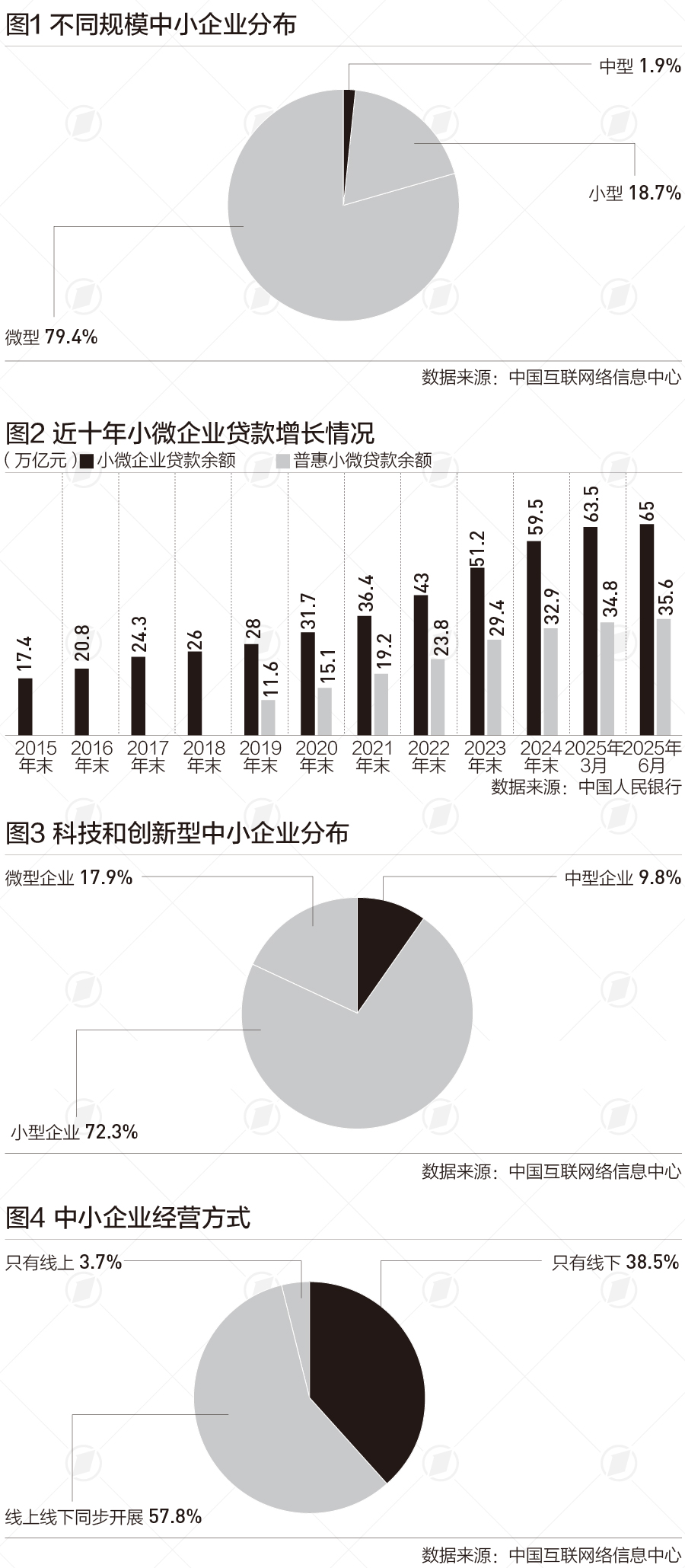
新增专精特新中小企业超过10万家。 随着数量、效益显著提高,中小企业发展进入新阶段。 中国互联网络信息中心近日发布的《从互联网大数据看中小企业发展(2025)》(下称《报告》)称,中小企业广泛分布于各 个产业细分领域,贡献了我国60%以上的GDP、70%以上的技术创新、80%以上的城镇劳动就业。 "'十四五'期间,我国中小企业的发展数量、效益、质量都有显著提高。"在今年9月举行的国新办发布会上,工业和信息化部部 长李乐成介绍称,截至2024年底,全国登记在册的中小企业数量超过6000万户。 从省份分布看,根据《报告》数据,广东、江苏、山东三个省份中小企业数量总计超过1800万户,占中小企业数量比重近三 成。 年均新增超400万户 李乐成在上述发布会上介绍称,2021年以来,平均年新增中小企业超过400万户。"去年,全国规模以上中小企业的用工人数超 过1.28亿,就业的主渠道作用进一步发挥。规模以上工业中小企业的增加值、营业收入、利润总额的年均增速分别为6.4%、 7.4%、5.4%,均高于大型企业。" 根据"微信公报",今年前8个月,规模以上工业中小企业增加值同比增长7.6%,增速比大型企业高3.3个百分点。 ...