超市零售

Search documents
机器人导购、视觉称重、无感离场、智能补货…… AI深度融入龙岗超市
Shen Zhen Shang Bao· 2025-07-17 16:39
Group 1 - The integration of AI in supermarkets is transforming the shopping experience, with features like AI shopping assistants, smart scales, and instant delivery services becoming commonplace [1][2] - The sp@ce Tianhong Supermarket 3.0 in Longgang District, Shenzhen, showcases advanced AI capabilities, including an AI assistant named "Xiao Tian" that provides product recommendations based on customer preferences [1][3] - The collaboration between Tianhong and Huawei has led to the development of a "smart retail model," enhancing customer experience through AI-driven recommendations and efficient checkout processes [1][3] Group 2 - Modern urban consumers prioritize health and convenience, leading to supermarkets like Aeon SM dedicating over 60% of their space to fresh produce and offering traceability for food products [2][3] - Self-checkout areas in Aeon SM stores have increased efficiency, with over 60% of transactions now conducted through self-service, significantly reducing wait times for customers [2][3] - The sp@ce Tianhong Supermarket promotes "small portion economy" to cater to single and small-family households, offering smaller packaging options to minimize waste [2][3] Group 3 - Digital tools are enhancing operational efficiency in supermarkets, with employees using handheld devices for inventory management and customer service, leading to quicker restocking and improved customer satisfaction [3] - Both Aeon and Tianhong are leveraging customer relationship management (CRM) systems to analyze member data, optimizing product offerings and personalized promotions [3] - The integration of AI across various operational aspects, from AI shopping assistants to supply chain management, is driving a shift towards data-driven retail practices [3]


山姆下架“口碑尖货”上架“大众品牌”,会员价值缩水引质疑
Qi Lu Wan Bao· 2025-07-17 13:44
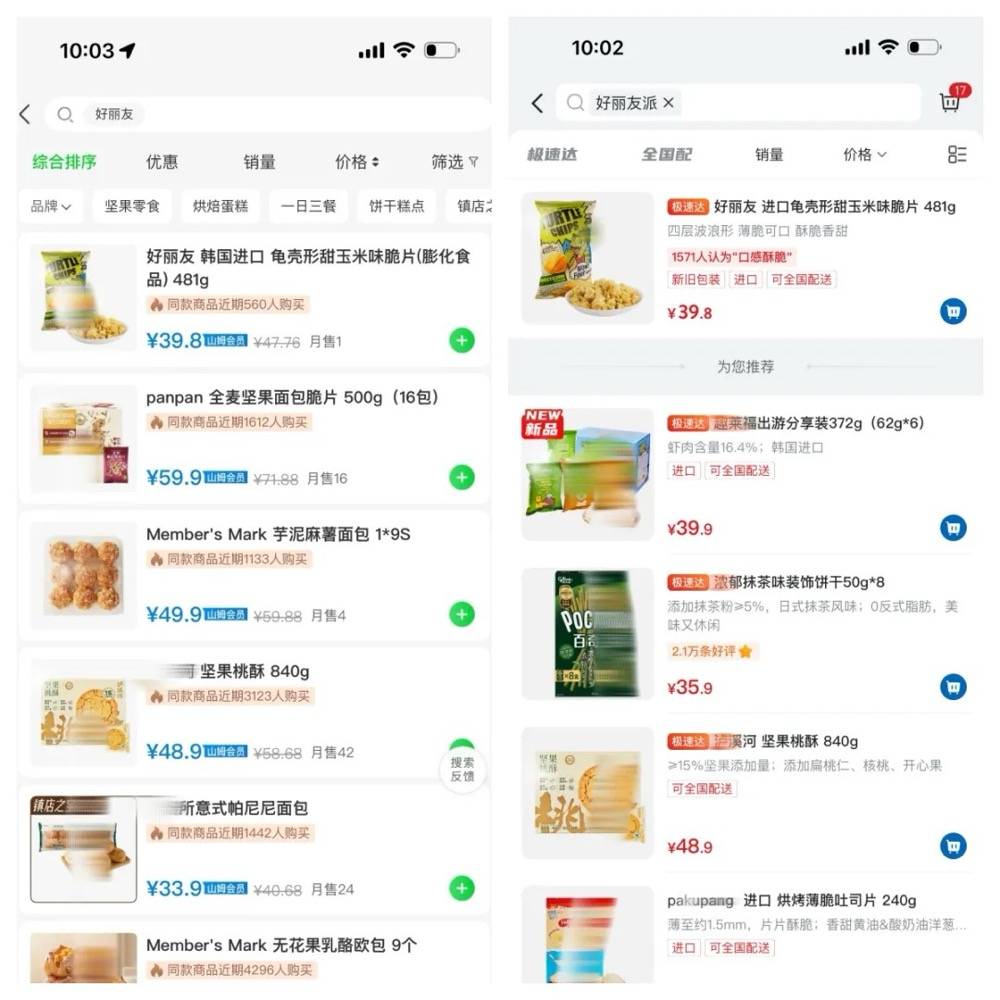
Core Viewpoint - Sam's Club has initiated a silent product replacement campaign, removing several exclusive items and replacing them with more common brands, leading to significant backlash from its membership base [1][4][10] Group 1: Product Changes - Sam's Club has quietly removed popular exclusive products such as Taiwanese-style sun cakes and low-sugar egg yolk pastries, replacing them with widely available brands like Orion and Wei Long [1][4] - The new products, including a low-sugar Orion cake, were marketed as improvements, claiming an 80% reduction in sugar and a 30% increase in cocoa content [6][7] Group 2: Member Reactions - Members expressed dissatisfaction, feeling that the quality of products has declined and that the unique selection that differentiated Sam's Club from regular supermarkets is disappearing [4][10] - Many members have voiced their concerns on social media, leading to a trending topic regarding the perceived decline in product quality and selection [4][10] Group 3: Financial Implications - Sam's Club charges an annual membership fee of 260 yuan for regular members and 680 yuan for premium members, with over 500,000 active members in China contributing to significant annual revenue [9] - The average annual spending required to break even on the membership is now estimated at 13,000 yuan, equating to an additional 5.2% "membership tax" on each purchase [9][10] Group 4: Business Model Concerns - The shift in product selection raises questions about the core value proposition of the membership model, as members expect unique products that cannot be found elsewhere [10] - Industry analysts suggest that maintaining a diverse and high-quality product range is essential for sustaining member loyalty and competitive advantage against e-commerce platforms [10]


「穷鬼超市」Iceland入华首店:一个长在直播间的超市
36氪· 2025-07-17 12:33
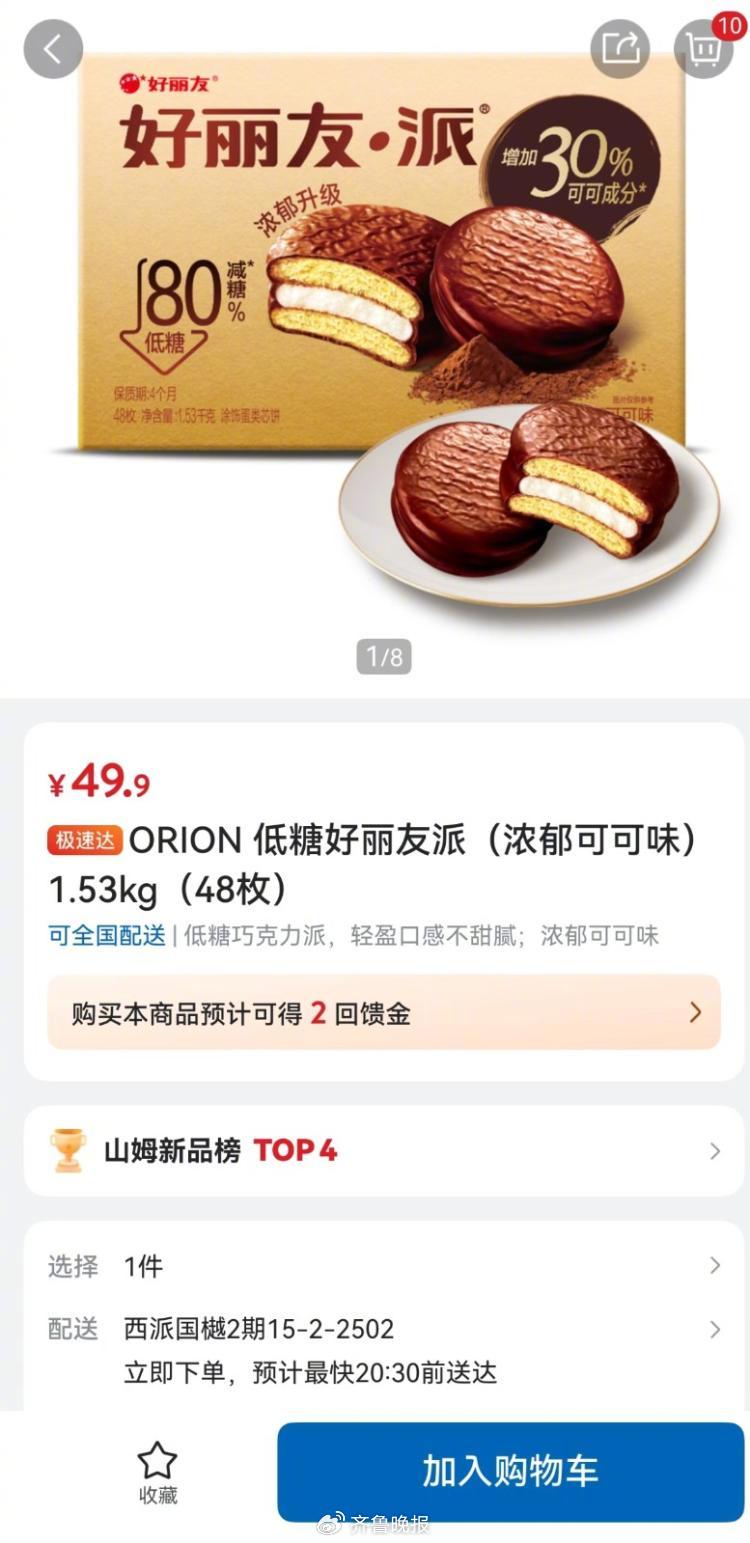
Core Viewpoint - Iceland has opened its first Asia-Pacific store in Beijing, named "Iceland Lab," which combines retail, e-commerce, and live streaming, marking a significant shift from traditional supermarket models [3][4][5]. Group 1: Store Concept and Operations - Iceland Lab is a collaborative project involving the Iceland brand, Shoulv Group, and the Mentougou government, focusing on attracting investment rather than solely retail sales [4][12]. - The store features a limited selection of around 600 SKUs, with only 30% being Iceland's own products, while the rest includes offerings from local brands and fresh food [5][4]. - The store operates primarily on weekends and aims to create a lively atmosphere to support online sales through content generation [5][7]. Group 2: Business Model and Strategy - The business model emphasizes online-first operations, with the physical store serving as a live streaming base rather than a traditional supermarket [7][10]. - The strategy includes leveraging online capabilities to enhance offline experiences, focusing on creating engaging content rather than maximizing in-store sales [17][10]. - The store aims to change consumer perceptions of frozen food, positioning itself as a "global gourmet good base" rather than a discount supermarket [23][31]. Group 3: Challenges and Future Plans - The company faces challenges in supply chain management and localizing products to meet consumer preferences [35][34]. - Future expansion plans will be cautious, focusing on opening stores in key regions rather than widespread locations, adapting product offerings to local tastes [36][34]. - The company intends to strengthen the Iceland brand while continuing to explore innovative retail strategies that integrate online and offline experiences [34][12].
山姆守不住中产的脸面了?
Sou Hu Cai Jing· 2025-07-17 08:36
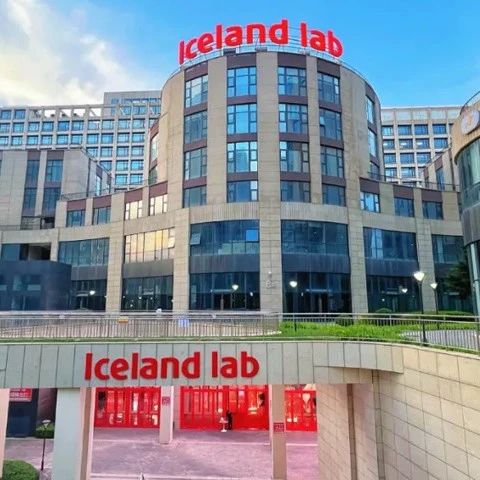
Core Viewpoint - The recent backlash against Sam's Club on social media, particularly regarding the introduction of a low-sugar chocolate pie, highlights a growing concern among middle-class consumers about the store's ability to maintain its premium image and product quality [1][3][11]. Group 1: Product and Pricing - The low-sugar chocolate pie from Sam's Club is priced at 49.9 yuan for a box of 48, which is significantly cheaper than similar products available on other platforms, where prices can reach nearly 70 yuan for the same quantity, indicating a strong value proposition [1]. - Despite the appealing pricing and health claims, the product has faced criticism from users who feel it does not justify the annual membership fees of 260 yuan or 680 yuan [3][10]. Group 2: Consumer Sentiment and Brand Image - Users on social media have expressed dissatisfaction with Sam's Club's product selection, suggesting that the introduction of common brands undermines the store's premium positioning [3][11]. - The backlash reflects a deeper concern about whether Sam's Club can continue to represent a desirable lifestyle for middle-class consumers, as they expect a balance of quality and prestige in their shopping experience [6][12]. Group 3: Competitive Landscape - Sam's Club faces increasing competition from local players like Hema and JD Seven Fresh, which are enhancing their product quality and delivery efficiency, thereby challenging Sam's market position [19][21]. - In 2024, Sam's Club's sales reportedly exceeded 100 billion yuan, but its growth rate has slowed significantly, with new store openings dropping from 40% in 2023 to 18% [19][21]. Group 4: Membership and Revenue - As of 2024, Sam's Club has over 5 million active members, generating annual membership revenue exceeding 1.3 billion yuan, with a 92% renewal rate for premium memberships [11][10]. - The membership model serves as a status symbol for consumers, reinforcing their middle-class identity, but recent criticisms may threaten this perception [10][12]. Group 5: Operational Challenges - Sam's Club's stringent product selection and quality control have been key to its competitive advantage, but recent issues with food safety and product quality have raised concerns among consumers [8][17]. - The company has faced multiple penalties for food safety violations, which could further erode consumer trust and loyalty [17][18].
惊天内幕曝光!265人死伤,是机长干的!
Sou Hu Cai Jing· 2025-07-17 03:35
Group 1 - The potential dismissal of Federal Reserve Chairman Jerome Powell by President Trump could lead to significant market volatility, with a possible 6%-7% depreciation of the US dollar if the independence of the Federal Reserve is undermined [4] - The news of Trump's consideration to fire Powell caused an immediate drop in US stock markets, but was later reassured by Trump's denial, leading to a recovery in stock prices [4] - The situation highlights the tension between Trump and Powell, particularly regarding interest rate policies, as Powell has resisted Trump's calls for rate cuts [4] Group 2 - Australian Prime Minister Anthony Albanese's visit to the Great Wall of China is a historic gesture, honoring former Prime Minister Gough Whitlam's previous visits [7] - The Australian government is not considering a ban on male early childhood educators despite public outcry following a scandal involving a male teacher, emphasizing the need for a national childcare worker registration system [9] - Coles supermarket is launching a promotional campaign offering over 4 million AUD in cash prizes to customers, aimed at helping them cope with inflation [13]

山姆讲不好中产故事了?
虎嗅APP· 2025-07-16 13:51
Core Viewpoint - The incident involving the brief appearance and quick removal of Haoliyou Pie from Sam's Club highlights a deeper issue of trust and brand perception among the middle-class consumers in China, indicating a potential strategic crisis for the company [2][3][16]. Group 1: Understanding the Incident - The backlash against the inclusion of Haoliyou Pie reflects the sensitivity of middle-class consumers towards brand trust and aesthetic standards, which Sam's Club has cultivated over time [2][16]. - The core of the incident is not merely about the product itself but rather the social narrative it represents regarding middle-class values and expectations [2][16]. Group 2: Forces at Play - Two opposing forces are identified in the business landscape: "Efficiency Vortex," which focuses on scale and cost reduction, and "Trust Bedrock," which relies on unique offerings and brand loyalty [5][6]. - Sam's Club operates in the "Trust Bedrock" quadrant, having built its reputation on a foundation of trust and quality, but is now attempting to expand into the "Efficiency Vortex" [9][21]. Group 3: Trust Dynamics - The membership model of Sam's Club is based on long-term trust and a commitment to quality, which has been established through rigorous product selection and supply chain management [11][12]. - Trust has become a default premise for purchasing decisions among middle-class consumers, allowing Sam's Club to focus on cost reduction and supply chain optimization [12][13]. Group 4: The Crisis of Trust - The Haoliyou incident reveals a potential fracture in the trust that middle-class consumers have in Sam's Club, as any deviation from established aesthetic standards can be perceived as a betrayal [16][19]. - Social media has amplified the impact of this incident, transforming individual consumer experiences into collective narratives that can quickly erode brand trust [17][18]. Group 5: Expansion Challenges - As Sam's Club seeks to expand, it faces the challenge of maintaining its established standards while also increasing the number of stores and product offerings [21][22]. - The need for rapid growth may dilute the brand's standards, leading to potential trust issues among consumers who expect consistency in product quality and brand values [22][26]. Group 6: Competitive Landscape - Sam's Club's competitors, such as Hema and traditional supermarkets, are not only vying for market share but are also adopting different strategies that may undermine Sam's Club's unique value proposition [23][24]. - The rise of efficiency-driven platforms poses a threat to Sam's Club's traditional model, as consumers may prioritize immediate availability over curated experiences [26].
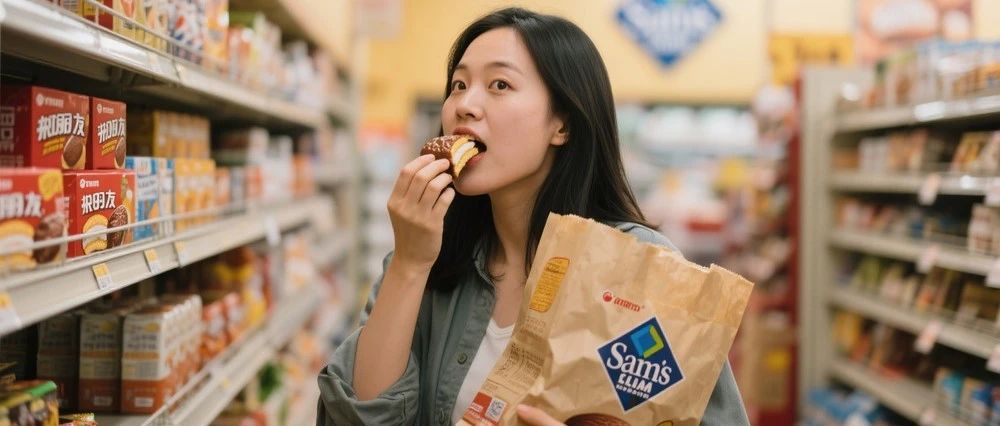
山姆讲不好中产故事了
Hu Xiu· 2025-07-16 13:00
Core Insights - The incident involving the brief appearance and subsequent removal of the "Haoliyou Pie" at Sam's Club highlights a significant trust issue with the middle-class consumer base in China [4][21][24] - The core of the controversy is not merely about the product itself but rather the deeper social narrative surrounding middle-class values and aesthetic standards [4][5][21] Group 1: Trust Dynamics - Sam's Club operates on a membership model that relies on long-term trust and a carefully curated selection of products [14][18] - The trust established by Sam's Club is built over time through strict product selection, scale procurement, and a robust supply chain [15][16][18] - Any deviation from the established aesthetic and quality standards can lead to significant backlash from the middle-class consumers, as seen in the "Haoliyou incident" [22][23][24] Group 2: Market Positioning - Sam's Club has been positioned in the second quadrant of a trust-efficiency matrix, aiming to expand into the first quadrant [12][30] - The company faces challenges in balancing efficiency-driven expansion with maintaining the curated experience that its members expect [31][32] - Competitors like Hema and other traditional supermarkets are not only competing on product selection but also on immediate service delivery, which poses a threat to Sam's Club's unique value proposition [34][35][38] Group 3: Social Media Impact - Social media has transformed consumer-brand relationships, amplifying any perceived missteps and turning them into collective narratives [25][27][28] - The rapid dissemination of information on platforms like Xiaohongshu can quickly escalate minor issues into significant trust crises for brands like Sam's Club [27][28] - The "Haoliyou incident" serves as a reminder of the fragility of brand trust in the current media landscape, where consumer sentiment can shift rapidly [28][42]
山姆上新好丽友引发退卡潮?“背叛感”来自中产的身份焦虑
Nan Fang Du Shi Bao· 2025-07-16 05:42
Core Viewpoint - The controversy surrounding Sam's Club's introduction of popular snack brands has led to significant backlash from its members, who feel that the exclusivity and premium nature of the membership have been compromised [2][3][5]. Group 1: Consumer Sentiment - Members expressed dissatisfaction with the introduction of common brands like Haoliyou and Weilong, leading to a surge in negative reviews and calls for membership cancellations [2] - The core issue is not the quality of the products, as they meet Sam's "strict selection" standards, but rather the perceived dilution of brand exclusivity and identity among middle-class consumers [2][3] - The introduction of these brands has triggered feelings of relative deprivation among members, who feel that their premium membership no longer offers unique products [2][3] Group 2: Market Strategy - Sam's Club's strategy to introduce local brands is part of a broader plan to reduce reliance on imports and cut logistics costs, rather than a personal decision by management [3][4] - The company's business model relies on a membership system that emphasizes strict selection, large packaging, low margins, and high turnover, differentiating it from traditional supermarkets [4] - The current crisis highlights the need for Sam's Club to balance large-scale procurement with maintaining a sense of exclusivity and to enhance transparency in its supply chain [5] Group 3: Brand Perception and Identity - The backlash against the introduction of common brands reflects a deeper concern about the erosion of social status and identity among consumers, as they associate product scarcity with their social standing [3] - The incident has sparked conspiracy theories regarding management changes and strategic shifts, indicating a strong emotional investment from members in the brand's identity [3] - The need for Sam's Club to communicate effectively with Chinese consumers about trust and quality is emphasized, as the market is sensitive to issues of food safety and brand integrity [5]
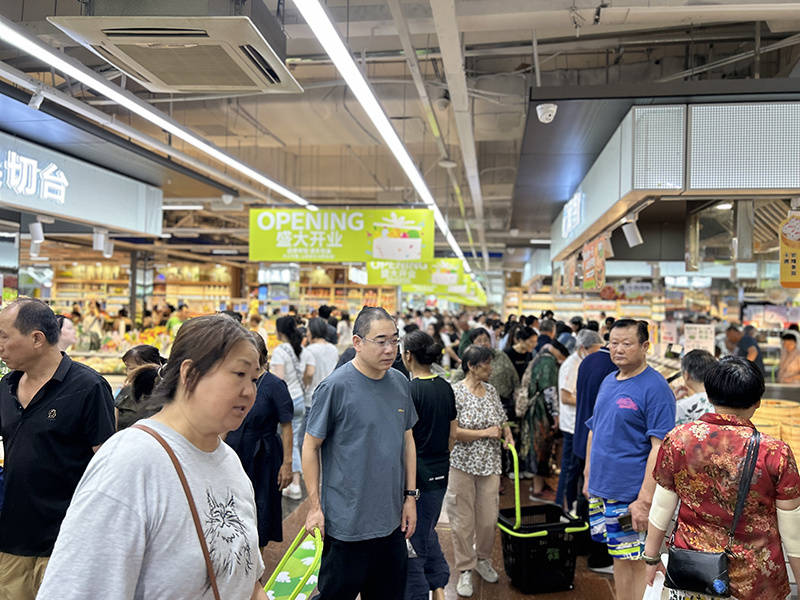
芜湖大江市集:有“性价比” 更有“心价比”
Sou Hu Cai Jing· 2025-07-16 04:39
Core Insights - The newly opened Green Land Center store represents an upgraded version (2.0) of the original Dajiang Market, focusing on enhanced service models and concepts [1] - On its opening day, the store attracted 15,000 visitors and generated nearly 600,000 yuan in sales, indicating strong consumer interest [2] - The store aims to provide a diverse selection of products and high-quality service, which has led to positive customer feedback and a strong reputation [4] Group 1 - The Green Land Center store is designed to be customer-centric, offering a wide range of products tailored to consumer needs, contrasting with traditional supermarkets [5] - The store features a 5,000 square meter space that integrates four core areas: affordable supply, employee pricing, rural revitalization, and global selection [5] - A new "Dajiang Ship Talk Cross-Border Purchase" section allows customers to order products online for home delivery from a bonded warehouse [5] Group 2 - The store offers competitive pricing, such as 9.9 yuan for 12 bottles of its own brand soda water and 79.8 yuan per pound for "Fat Donglai" style braised beef, achieved through supply chain optimization and innovative models [7] - Additional services include free drinking water, two hours of free parking, shared umbrellas, and a pet care station, enhancing the overall shopping experience [8] - The Dajiang Market has become a cultural landmark and a new consumption trend in Wuhu, emphasizing high-quality supply to drive high-quality consumption [9]
山姆已经搜不到好丽友派,消费者多大程度影响供应链?
Hu Xiu· 2025-07-16 03:40
Core Viewpoint - Sam's Club faced backlash from loyal customers after introducing products from brands like Orion and Wei Long, leading to complaints and threats of non-renewal of memberships. The company has since taken action in response to the controversy [1][3]. Group 1: Consumer Sentiment - The introduction of Orion's products, which contain unhealthy ingredients, has raised concerns among consumers, particularly parents who are cautious about their children's diets [2]. - The dissatisfaction is not limited to one product; customers have also expressed frustration over the removal of other favored items and changes in brand names [6]. - Consumers expect Sam's Club to provide high-quality products, and the presence of easily accessible items has led to disappointment [7]. Group 2: Corporate Communication - The management structure of foreign companies often limits the ability of regional leaders to communicate effectively with consumers, which can lead to a disconnect between internal decisions and external perceptions [9][10]. - Unlike local CEOs who frequently engage with consumers on social media, Sam's Club primarily relies on customer service for communication, which may not adequately address consumer concerns [10]. Group 3: Impact on Supply Chain - The incident highlights the influence of consumer feedback on supply chain decisions, indicating that consumer voices can affect supplier relationships, albeit to a limited extent [11][14]. - Suppliers must not only satisfy procurement managers but also appeal to consumers to succeed in retail environments [15]. - The traditional B2B purchasing model is evolving, with end-users increasingly impacting procurement decisions, particularly in sectors like productivity tools [18].