
天然气

Search documents
多措并举、协调联动,山东成功应对全网用电负荷“双破亿”挑战
Zhong Guo Fa Zhan Wang· 2025-11-06 09:29
Core Insights - Shandong Province has successfully managed record-high electricity loads during the summer, with the grid load exceeding 100 million kilowatts, demonstrating strong energy supply capabilities [1][2] Group 1: Energy Supply and Infrastructure - The province has focused on enhancing energy self-sufficiency by increasing coal and renewable energy generation, with over 12.37 million kilowatts of new coal power projects completed [1] - Renewable energy sources, particularly wind and solar, contributed significantly, with their output exceeding 60% during peak hours and accounting for over 60% of the increase in electricity generation [1] - Shandong has developed a robust external electricity supply framework, with a capacity to receive 38 million kilowatts from outside the province, contributing to nearly 20% of the total electricity consumption [2] Group 2: Emergency Preparedness and Resource Management - The province has established substantial coal reserves, exceeding 4 million tons before the summer peak, and maintained an average coal inventory of over 10 million tons during the peak period [2] - Natural gas supply has been bolstered through the construction of LNG receiving stations, with a current capacity of 16 million tons, expected to reach 28 million tons by year-end [2] - The Shandong Energy Bureau has implemented a comprehensive winter energy supply plan for 2025-2026, focusing on large-scale power projects and optimizing energy resource management [3]
阿布扎比国家石油公司(ADNOC)亮相第八届中国国际进口博览会
Zheng Quan Ri Bao Wang· 2025-11-06 09:29
阿布扎比国家石油公司(ADNOC)代表团由集团各业务单元的高层领导组成,同时包括Masdar和 TA'ZIZ的代表。Masdar是全球发展最快的可再生能源企业之一,也是绿色氢能领域的领导者;TA'ZIZ是 ADNOC集团旗下的重要平台,致力于推动阿联酋工业发展与经济多元化。TA'ZIZ近期将价值19.9亿美 元工程总承包(EPC)合同授予中国化学(601117)工程第七建设有限公司(CC7),用于建设全球三 大一体化单体聚氯乙烯(PVC)生产基地之一。 本报讯 (记者李静)11月6日,阿布扎比国家石油公司(ADNOC)正式亮相第八届中国国际进口博览 会。 阿布扎比国家石油公司(ADNOC)是一家先进的、具有前瞻性的国际能源企业,正采取转型举措,以 负责任的方式提供人类及经济发展所需的能源,助力社会繁荣。 据了解,阿布扎比国家石油公司(ADNOC)与中国企业的合作涵盖多个能源领域,包括与新奥天然气 和振华石油签署的大规模液化天然气(LNG)供应协议,以及与中国海油(600938)(CNOOC)达成 的上游与下游战略框架协议。此外,阿布扎比国家石油公司(ADNOC)还与中国石油(CNPC)在上 游项目中开展合作, ...
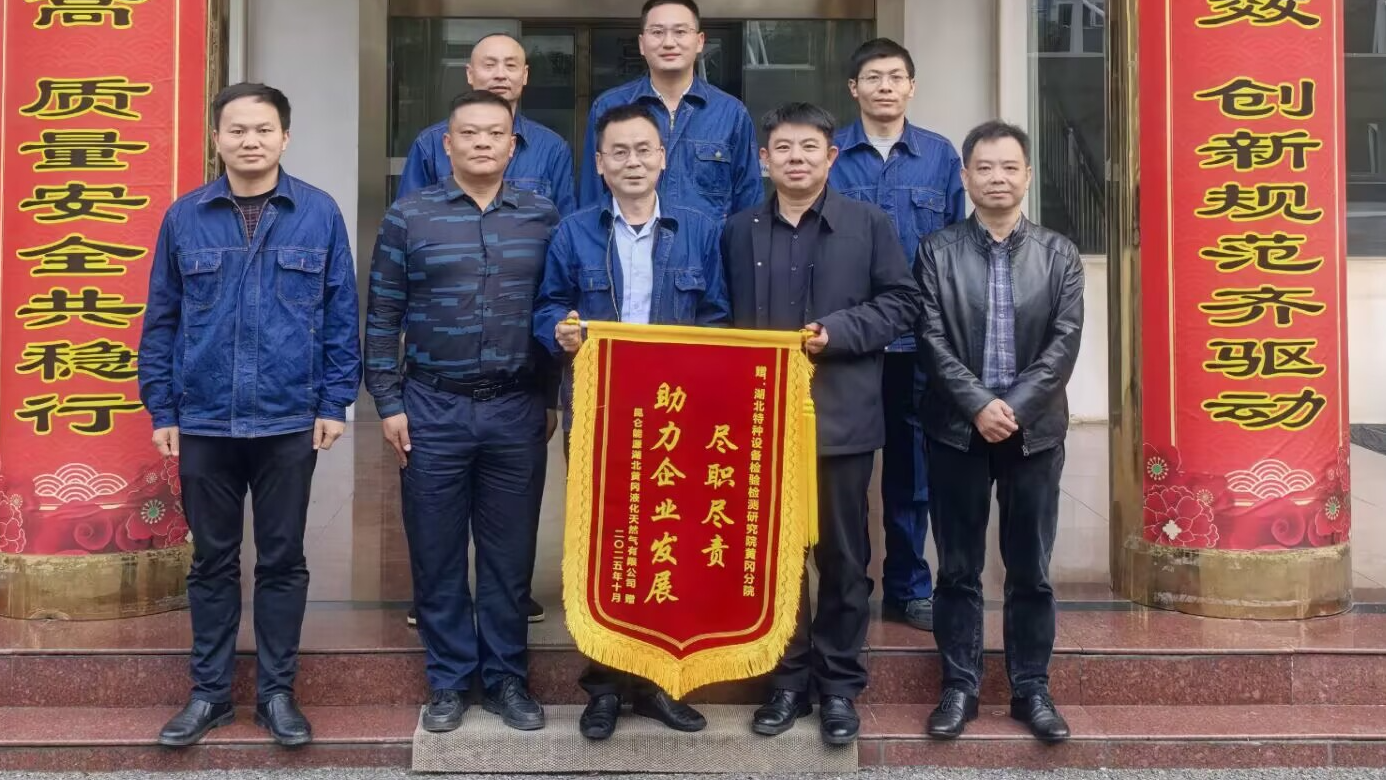
“尽职尽责,助力企业发展” 湖北特检院黄冈分院优质服务获赠锦旗
Zhong Guo Zhi Liang Xin Wen Wang· 2025-11-06 09:14
Core Points - Kunlun Energy Hubei Huanggang LNG Company expressed gratitude to Hubei Special Inspection Institute Huanggang Branch for their efficient and professional technical support during a critical maintenance period [1][3] - The company undertook a planned full plant shutdown for maintenance in August, with the inspection of 152 pressure vessels being a key aspect for ensuring safe production and timely resumption [3] - The inspection team from Hubei Special Inspection Institute worked diligently to complete the inspection tasks on time, ensuring a safe and timely restart of production for Kunlun Energy Huanggang Company [3] - To enhance safety management and risk prevention, the institute provided tailored training courses and technical guidance to address specific needs in special equipment management [3] Group 1 - Kunlun Energy Huanggang Company presented a banner to express appreciation for the support received during maintenance [1] - The maintenance involved a significant inspection of 152 pressure vessels, crucial for safe operations [3] - The inspection team managed to complete their tasks under tight deadlines and challenging conditions [3] Group 2 - The Hubei Special Inspection Institute organized specialized training to improve safety management and emergency response capabilities for Kunlun Energy Huanggang Company [3] - The training included topics such as safety regulations, management norms, and risk identification [3] - This initiative aimed to enhance the company's internal safety management and operational efficiency [3]


阿布扎比国家石油公司首次亮相进博 与多家中企展开能源领域合作
Xin Lang Cai Jing· 2025-11-06 08:03
第八届中国国际进口博览会11月5日至10日在上海举办,阿布扎比国家石油公司(ADNOC)首次亮 相。据了解,ADNOC与中国企业合作涵盖多个能源领域,包括与新奥天然气和振华石油签署的大规模 液化天然气(LNG)供应协议,以及与中国海油达成的上游与下游战略框架协议。此外,ADNOC还与 中国石油在上游项目中开展合作,并和中国石化与振华石油推进制造出口设施建设。 ...
全球矿业研究 | 前瞻2026,大豆价格成农业与能源市场“生死线”?
彭博Bloomberg· 2025-11-06 06:05
Core Insights - The global energy market is experiencing volatility due to rapid industry development, geopolitical tensions, and supply-demand imbalances [1] - The Bloomberg Commodity Spot Index has risen nearly 15% for 2025, but the underlying fundamentals appear unstable [3][8] - There is a significant divergence between the soaring gold prices and the declining oil prices, reminiscent of the 2008 market conditions [3][8] Commodity Price Trends - Gold is trading around $4,000 per ounce, while oil is at approximately $40 per barrel, indicating a stark contrast in performance [3] - The WTI crude oil is entering a "low-price recovery" phase, which will impact natural gas and gasoline prices, currently around $2 per million BTU and $2 per gallon, respectively [3][8] - The agricultural sector, particularly soybeans, is becoming a focal point, with $11 per bushel for soybeans seen as a critical resistance level for 2026 [4][8] Agricultural Market Outlook - If soybeans can maintain above $11 per bushel, it may signal bullish trends for the grain and energy markets [4] - However, the likelihood of sustained prices above 2025 averages for soybeans, corn, wheat, oil, and natural gas is low due to oversupply concerns [4][8] - Historical patterns suggest that after significant price increases, commodities tend to correct, indicating potential downward pressure on prices [4][7] Market Dynamics and Risks - The overall commodity price increase is primarily driven by the metal sector, with gold's surge diverging from fundamental values [7][8] - The performance of the Bloomberg Commodity Index relative to the S&P 500 and the Bloomberg Dollar Spot Index indicates potential systemic risks if the U.S. stock market experiences a downturn [11]

广州成为华南地区首个“锚地+码头”LNG加注中心
Zhong Guo Neng Yuan Wang· 2025-11-06 03:57
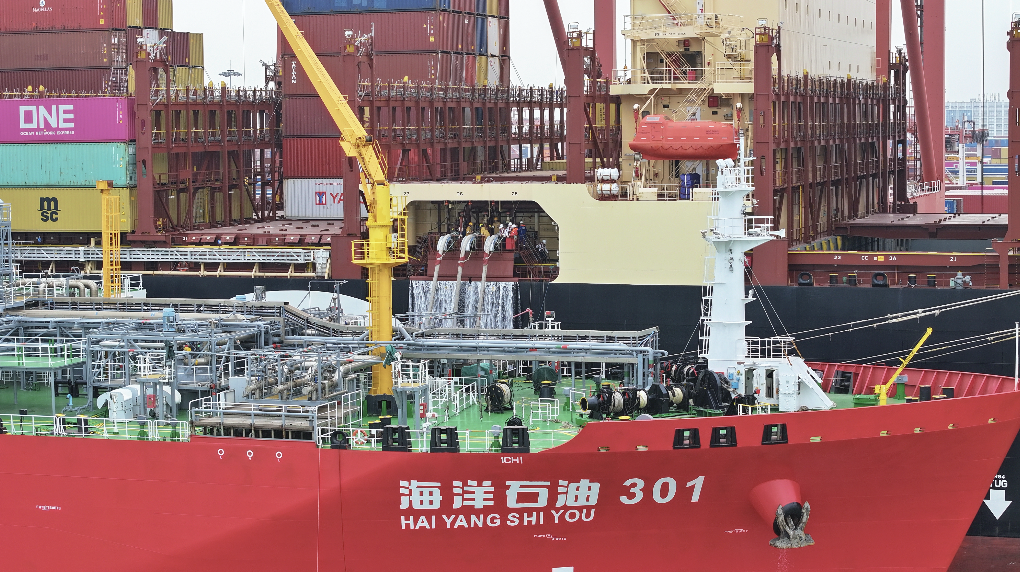
Core Insights - The world's largest LNG bunkering vessel, "Haiyang Shiyou 301," has successfully bunkered approximately 1,400 tons of bonded LNG for the international vessel "MSC THAIS" at the Nansha Port in Guangzhou, marking Guangzhou as the first city in South China to have both "anchorage + terminal" bonded LNG bunkering capabilities [1][5] - The demand for LNG-fueled vessels is expected to exceed 16 million tons globally by 2030, driven by the need to reduce ship emissions and the importance of safe and convenient fuel supply for long-haul international shipping [3][5] - China National Offshore Oil Corporation (CNOOC), as China's largest and the world's second-largest LNG importer, has supplied nearly 70,000 tons of bonded LNG for international vessels in the Guangdong-Hong Kong-Macao Greater Bay Area this year, marking a significant milestone in Guangzhou's LNG bunkering capabilities [5][7] Industry Developments - The Nansha Port in Guangzhou is projected to surpass a container throughput of 20 million TEUs in 2024, indicating a growing demand for LNG bunkering services for international vessels [7] - The upgrade of CNOOC's bunkering capabilities complements existing services at Lantau Island and Sanmen Island, enhancing Guangzhou Port's comprehensive service system to meet the increasing demand for LNG-powered vessels in South China [7] - CNOOC aims to support the green and low-carbon transformation of the shipping industry while leveraging its full industry chain advantages to contribute to the enhancement of China's port service capabilities and the construction of a maritime power [7]

天风证券晨会集萃-20251106
Tianfeng Securities· 2025-11-05 23:46
Group 1 - The report highlights that the pricing of 30Y bonds may be overvalued, with liquidity premiums already fully priced in, suggesting a potential adjustment in yield spreads between different bond types [1][21][23] - The report indicates that the demand for long-term bonds may not be sustainable due to insufficient buying power from institutional investors and ongoing duration risks in the market [1][24] - The report notes that the overall performance of the bond market has been influenced by recent positive sentiment, but warns against impulsive buying in the current environment [1][24] Group 2 - The chemical industry report emphasizes that over 75% of global spandex production capacity is concentrated in China, with significant growth in Asian production since 2000 [2] - The report states that China's spandex consumption is expected to grow from 121,000 tons in 2005 to 1,012,000 tons by 2024, reflecting a CAGR of 11.8% [2] - The report highlights that differentiated spandex production in China is around 23%, compared to 60% in developed countries, indicating potential for market expansion [2] Group 3 - The telecommunications company reported a revenue of 3.763 billion yuan for the first three quarters of 2025, a decrease of 9% year-on-year, but a reduction in losses compared to the previous year [4][36] - The company has increased its market share in system equipment, benefiting from the largest 5G network globally, with over 66% of the world's 5G base stations located in China [4][37] - The report anticipates future growth opportunities in satellite internet and 5G technologies, despite short-term performance pressures [4][38] Group 4 - The home appliance company reported a revenue of 71.53 billion yuan for the first three quarters of 2025, with a slight increase of 1.4% year-on-year, while net profit rose by 0.7% [9] - The report indicates that the company's air conditioning business is under pressure due to weak real estate trends, but its white goods segment remains resilient [9] - Future profitability improvements are expected through cost reduction and product optimization strategies [9] Group 5 - The gas company reported a revenue of 930 million yuan for Q3 2025, a decline of 8% year-on-year, with net profit down 30.1% [16] - The report highlights that increased costs from upstream resource acquisition are impacting short-term performance, but long-term growth is anticipated due to resource reserves [16] - The company is expected to achieve net profits of 1.2 billion yuan, 1.43 billion yuan, and 1.69 billion yuan from 2025 to 2027 [16] Group 6 - The mining company has undergone significant changes with the entry of a new controlling shareholder, which is expected to drive growth in lithium and potassium production [17] - The report notes that the lithium market is improving, with demand expected to rise due to energy storage and electric vehicle trends [17] - The company is projected to achieve net profits of 6.482 billion yuan, 7.062 billion yuan, and 7.825 billion yuan from 2025 to 2027, reflecting strong growth potential [17]
乌克兰或许熬不过冬天,泽连斯基四处求援碰壁,特朗普专注对我们博弈
Sou Hu Cai Jing· 2025-11-05 18:06
Group 1 - Ukraine's energy crisis is worsening, with a natural gas shortfall of 30% and electricity supply capacity down over 60% compared to pre-war levels [2] - The EU has promised emergency energy aid, but specific plans remain unclear, and significant portions of financial assistance are contingent on Ukraine meeting reform conditions [3] - The European Bank for Reconstruction and Development has approved a €500 million loan for Ukraine to purchase gas, but 60% of the funds must be spent on products from European energy companies, which are priced over 10% higher than international market rates [3] Group 2 - The Trump administration's withdrawal of support has exacerbated Ukraine's situation, with a significant reduction in U.S. personnel and a freeze on economic aid [5] - Ukraine's President Zelensky is seeking new diplomatic avenues, including appealing to Trump to influence Hungary regarding EU membership, while also softening his stance towards China [7] - There is a stark contrast between the EU's promised aid and actual support, with only €140 billion of the €500 billion pledged for military assistance, and the EU's purchases of Russian energy significantly outpacing aid to Ukraine [7][9] Group 3 - The humanitarian situation in Ukraine is dire, with gas prices tripling and shortages of heating equipment, leading to increased reliance on wood for heating [9] - EU conditions for aid require Ukraine to accelerate energy market reforms, which could result in a loss of energy pricing autonomy [9] - The geopolitical landscape complicates Ukraine's position, as U.S. and EU support comes with political strings attached, leaving Ukraine in a vulnerable state amid global power dynamics [9]

欧洲10月液化天然气进口量创历史新高
Shang Wu Bu Wang Zhan· 2025-11-05 16:54
Core Insights - Europe's liquefied natural gas (LNG) imports reached a record high in October, with a total of 12.6 billion cubic meters imported, marking an 11% increase from September and a 43% increase compared to October 2022 [1][1][1] Group 1: Import Data - From April to October, the EU purchased a total of 82.5 billion cubic meters of LNG, setting a new record for this period [1] - The total amount of LNG delivered to the gas transmission network in Europe from January to October exceeded 116.5 billion cubic meters, reflecting a year-on-year increase of 28% [1]
Eversource(ES) - 2025 Q3 - Earnings Call Transcript
2025-11-05 15:02
Financial Data and Key Metrics Changes - The company recognized a net after-tax non-recurring charge of $75 million, or $0.20 per share, related to offshore wind liability, which increased the estimated liability for future payments to GIP by approximately $285 million, offset by $210 million of tax benefits [16][17] - GAAP earnings for Q3 were $0.99 per share, compared to a loss of $0.33 per share in the same quarter last year, while non-GAAP recurring earnings were $1.19 per share, up from $1.13 per share year-over-year [17][18] Business Line Data and Key Metrics Changes - Electric transmission earnings increased by $0.01 per share due to higher revenues from continued investment in the transmission system [18] - Electric distribution earnings rose by $0.03 per share, reflecting distribution rate increases in New Hampshire and Massachusetts [18] - Natural gas segment earnings improved by $0.04 per share, primarily due to base distribution rate increases [18] - Water distribution earnings decreased by $0.02 per share due to higher O&M and depreciation expenses [19] Market Data and Key Metrics Changes - Year-to-date weather-normalized load growth was 2%, with a peak of over 12 gigawatts recorded this summer, the highest since 2013 [11] - The evolving electric demand landscape necessitates numerous transmission projects to improve regional reliability and address congestion [11] Company Strategy and Development Direction - The company is focused on executing key strategic initiatives to drive sustainable growth and strengthen its balance sheet [4] - There is a strong emphasis on infrastructure investments, with nearly $5 billion planned for the year [9] - The company is pursuing various transmission projects to support future growth, including the Cambridge Underground Substation [12] Management's Comments on Operating Environment and Future Outlook - Management expressed optimism about the regulatory environment in Connecticut, highlighting opportunities for collaboration with the new PURA commissioners [5][7] - The company aims to deliver reliable, sustainable energy while maintaining affordability for customers through cost-effective investments and efficient operations [14] - The company reaffirmed its 2025 recurring earnings per share guidance to a range of $4.72-$4.80, with a long-term EPS growth rate of 5%-7% [25] Other Important Information - The company is on track to close the sale of Aquarion Water by the end of the year, with a final decision from PURA expected on November 19 [7][21] - The company has installed over 40,000 AMI meters in Massachusetts and completed the communication network deployment in the western portion of its service territory [10] Q&A Session Summary Question: Update on Yankee Gas and alternative resolution - Management indicated that the decision from PURA was better than the draft decision, and they will provide more information later [32] Question: NSTAR Gas PBR proposal denial - Management explained that the denial was due to a roll-in of GSEP and indicated plans to file a general rate case if necessary [35][36] Question: Regulatory updates and credit agency views - Management noted that credit agencies are in a wait-and-see mode regarding regulatory outcomes [42] Question: Land acquisition strategy - Management clarified that land acquisitions are for their own regulated business and strategic energy injection [60][61] Question: Timing for storm cost securitization resolution - Management expects a decision on storm cost securitization in the second or third quarter of the following year [72] Question: Completion of Revolution Wind project - Management reported significant progress, with 52 of 65 turbines installed and an improved project schedule [68] Question: Tax rate expectations - Management anticipates the tax rate to be in the low 20% for the current year, moving towards a more normal level in 2026 [92]
