
医药

Search documents
华金证券:十月慢牛趋势不变,风格难改 | 投研报告
Zhong Guo Neng Yuan Wang· 2025-10-12 02:48
Core Viewpoint - The main factors influencing the A-share market in October are policies and external events, liquidity, and fundamentals, with historical data indicating a tendency for the market to be volatile during this month [2][3]. Policy and External Events - Positive policies and external events are crucial for potential A-share market gains, as seen in years like 2010, 2015, and 2020 when the Shanghai Composite Index rose in October following the implementation of the "Five-Year Plans" [2][3]. - Conversely, tightening policies or negative external shocks could lead to a weaker A-share market [2]. Liquidity - Liquidity is a significant factor affecting the A-share market in October; a loose liquidity environment may boost the market, as evidenced by events like the anticipated QE2 in 2010 and interest rate cuts by the central bank in 2015 [2][3]. - A tightening liquidity scenario could result in weaker market performance [2]. Earnings Reports - The third-quarter earnings reports are expected to have a substantial impact on the A-share market in October, with a potential structural recovery in profitability anticipated [3][5]. Current Market Outlook - The A-share market is likely to continue a slow bullish trend in October, supported by positive policy expectations and a potentially loose liquidity environment [3]. - Historical trends suggest that sectors related to technology and cyclical industries may outperform in October, particularly those aligned with the "14th Five-Year Plan" [4][5]. Sector Allocation - The technology and cyclical sectors are expected to remain favored in October, with recommendations to accumulate positions in technology, core assets, and cyclical industries [4][5]. - Specific industries such as computing, media, military, and new energy are projected to show strong earnings growth, while sectors with high economic activity are likely to be concentrated in technology and cyclical industries [5].
A股震荡出现,如何应对?头部私募:结构性机会将持续涌现!
证券时报· 2025-10-12 00:07
Core Viewpoint - Despite increased market volatility, several subjective private equity institutions, including Freshwater Spring, remain optimistic about structural opportunities in the market [1] Market Dynamics - The recent market fluctuations are viewed as a healthy correction following rapid price increases in certain assets [3] - Current A-share market liquidity is primarily driven by institutional investors, with individual investors' demand for stock assets still accumulating but not fully released [3] - There has been a notable increase in interest from long-term active funds in Europe and the U.S. towards Chinese assets, although significant inflows have yet to materialize [3] - The liquidity environment is expected to remain abundant in the short term, providing a foundation for stable market operations [3] Seasonal Trends - The fourth quarter typically exhibits a defensive market trend, with undervalued sectors likely to outperform [4] - The market faces a reporting gap after the third-quarter results, making low-valuation and stable-earning sectors more attractive to investors [4] - The fourth quarter is also characterized by numerous economic work meetings, influencing market expectations for the upcoming year [4] Investment Strategies - Private equity firms are focusing on increasing allocations to high-growth and cyclical assets [5][6] - Freshwater Spring has adjusted its portfolio to include high-certainty growth companies in the electronics sector and strong fundamental pharmaceutical firms, while also maintaining positions in cyclical assets [6] - Qinghe Spring has shifted its focus towards upstream resource industries, citing the sustainability of weak dollar and supply constraints as key factors [7] - The firm is also exploring investment opportunities in cyclical companies currently at low price levels, anticipating potential profit increases as demand improves [7] Structural Opportunities - The market is expected to continue evolving in a "slow bull" manner, with ongoing structural opportunities [8] - Investment frameworks are centered around "technology + consumption," with a focus on industry and policy factors [8] - The emphasis is on technological breakthroughs and policy expectations related to the "14th Five-Year Plan," aiming to identify potential investment opportunities in resonant sectors [8]


A股震荡出现,如何应对?头部私募:结构性机会将持续涌现
Zheng Quan Shi Bao· 2025-10-11 23:25
Core Viewpoint - Despite increased market volatility, several subjective private equity firms, including Waterfall, remain optimistic about structural opportunities in the market [1] Market Correction - Waterfall believes that the current market fluctuations are a healthy correction following rapid price increases in certain assets [2] - The A-share market's incremental funds are primarily driven by institutions, with individual investors' demand for stock assets still accumulating but not fully released [2] - There has been a notable increase in interest from long-term active funds in Europe and the U.S. towards Chinese assets, although significant inflows have yet to materialize [2] - The liquidity environment is expected to remain abundant in the short term, supporting stable market operations [2] Investment Strategy - High-growth and cyclical assets are becoming key focus areas for investment [4] - Waterfall has adjusted its portfolio to include high-certainty growth companies in the electronics sector and strong fundamental pharmaceutical firms, while also maintaining positions in cyclical assets with clear safety margins [4] - Qinghequan has increased its allocation to upstream resource sectors while reducing its exposure to innovative pharmaceuticals, citing the sustainability of the weak dollar and supply constraints [4][5] Structural Opportunities - Qinghequan is exploring investment opportunities under the theme of "anti-involution," focusing on cyclical companies currently at the bottom of their cycles, which have significant potential for profit upgrades as demand improves [5] - Zhishun Investment emphasizes a "slow bull" market evolution, with ongoing structural opportunities, focusing on a dual investment framework of "technology + consumption" [5]
A股震荡出现,如何应对?头部私募:结构性机会将持续涌现!
券商中国· 2025-10-11 15:02
Core Viewpoint - Despite increased market volatility, several subjective private equity firms, including Freshwater Spring, remain optimistic about structural opportunities in the market [1][2]. Market Dynamics - The recent reports from private equity firms emphasize that the index's rise is moderate, and the current market fluctuations are seen as a healthy correction following rapid price increases in certain assets [2][4]. - Freshwater Spring notes that the current A-share market is primarily driven by institutional funds, with individual investors' demand for stock assets still accumulating but not fully released [4]. - There has been a notable increase in interest from long-term active funds in Europe and the U.S. towards Chinese assets, although significant inflows have yet to materialize [4]. Seasonal Trends - Qinghe Spring highlights a historical trend where the fourth quarter tends to be defensive, favoring low-valuation sectors due to the earnings report gap and year-end valuation adjustments [4]. - The fourth quarter is also characterized by numerous economic work meetings, which shape market expectations for the following year [4]. Investment Strategies - Private equity firms are focusing on increasing allocations to high-prosperity and cyclical assets [6]. - Freshwater Spring has adjusted its portfolio to include leading companies in the electronic sector and strong pharmaceutical firms, while also maintaining positions in sectors with potential for recovery [6]. - Qinghe Spring has shifted its focus towards upstream resource industries, citing the sustainability of weak dollar and supply constraints as key factors [6][7]. Structural Opportunities - The investment landscape is expected to continue revealing structural opportunities, with a focus on "technology + consumption" as a dual investment framework [7]. - The ongoing technological iterations and orderly rotation of prosperity cycles are seen as critical factors for investment decisions [7].

从“卖产品”到“卖方案”!七部门政策力推服务型制造业价值跃升
Zheng Quan Shi Bao Wang· 2025-10-11 13:42
Core Viewpoint - The transition of the manufacturing industry from "selling products" to "selling solutions" is being strongly supported by national policies, with a clear roadmap and timeline set until 2028 to enhance service-oriented manufacturing [1][2]. Summary by Sections Policy Framework - The Ministry of Industry and Information Technology and six other departments have issued the "Implementation Plan for Promoting Service-Oriented Manufacturing Innovation Development (2025-2028)", which outlines three core goals: establishing 20 service-oriented manufacturing standards, creating 50 leading brands, and building 100 innovation development hubs by 2028 [1]. Current Development Status - Service-oriented manufacturing has shown initial advantages in China, with the "China Service-Oriented Manufacturing Regional Development Index (2024)" indicating continuous growth from 2018 to 2023. Provinces like Zhejiang and Guangdong have taken the lead, with Zhejiang alone establishing 73 national-level service-oriented manufacturing demonstration enterprises [1]. Challenges - Key challenges include weak supply capabilities for critical technologies, an incomplete standard system, uneven application of typical models across industries, and difficulties in statistical monitoring, which hinder the large-scale advancement of service-oriented manufacturing [2]. Strategic Tasks - The plan includes seven core tasks aimed at systematically promoting service-oriented manufacturing, focusing on strengthening common technology breakthroughs and model innovations. It encourages enterprises to increase innovation investments and upgrade typical models such as shared manufacturing and personalized customization [3]. Industry Focus - The plan emphasizes "classified policies" to promote typical models in various sectors, including raw materials, equipment manufacturing, and consumer goods. It aims to enhance the competitive position of industries like new energy vehicles and machinery while improving quality and efficiency in sectors like steel and pharmaceuticals [4]. Implementation Actions - Three major special actions are proposed to facilitate the practical implementation of policies. The first action focuses on building a shared manufacturing platform that allows for collaborative production across multiple factories, which has already shown cost-saving benefits in practice [5]. Brand Development - The second action aims to cultivate 100 leading service-oriented manufacturing enterprises and 50 brands, establishing a brand evaluation system to promote exemplary cases and encourage leading enterprises to drive industry transformation [6]. Innovation in Application Scenarios - The third action is centered on demand-driven innovation, creating three categories of application scenarios that address production needs, consumer demands, and national strategic requirements, thereby enhancing collaboration between supply and demand sides [6].
利好来了,七部门重磅部署
21世纪经济报道· 2025-10-11 12:25
Core Viewpoint - The article discusses the implementation plan for promoting service-oriented manufacturing innovation development from 2025 to 2028, emphasizing the integration of services into the manufacturing sector to enhance quality and efficiency [1]. Group 1: Implementation Goals - By 2028, the role of service-oriented manufacturing in high-quality development of the manufacturing industry is expected to be significantly enhanced, with the completion of 20 standards, the creation of 50 leading brands, and the establishment of 100 innovation development hubs [1]. - The plan aims to optimize the industrial ecosystem, promote the rapid development of productive service industries, and establish a service-oriented manufacturing system with Chinese characteristics and world-class standards [1]. Group 2: Key Tasks - The plan outlines seven main tasks, including strengthening key common technology research and model innovation, cultivating key productive service industries, and promoting the application of service-oriented manufacturing models [2]. - It emphasizes the need for a technology list for service-oriented manufacturing, encouraging enterprises to increase innovation investment and upgrade typical models such as shared manufacturing and personalized customization [2]. Group 3: Development of Productive Service Industries - Productive service industries are crucial for supporting service-oriented manufacturing by providing technical research, design, information, and financial services [3]. - The plan calls for increased policy support and the development of various productive service sectors, including technology services, industrial design, software services, and logistics [3]. Group 4: Promotion of Service-oriented Manufacturing Models - The plan highlights the importance of promoting service-oriented manufacturing models across various industries, including raw materials, equipment manufacturing, and consumer goods [5]. - It aims to enhance the service-oriented manufacturing capabilities in key industries such as new energy vehicles, engineering machinery, and pharmaceuticals [5]. Group 5: Infrastructure and Innovation - The plan stresses the need to strengthen new information infrastructure, enhance the integration of 5G and industrial internet, and improve data resource management [5]. - It also proposes actions to promote shared manufacturing, enhance service-oriented manufacturing brands, and encourage innovative application scenarios [5][6]. Group 6: Brand Development and Application Scenarios - The initiative includes actions to cultivate leading service-oriented manufacturing enterprises and brands, fostering a positive environment for development [6]. - It encourages the creation of application scenarios that meet production and consumer demands, as well as those aligned with national strategic needs [6].
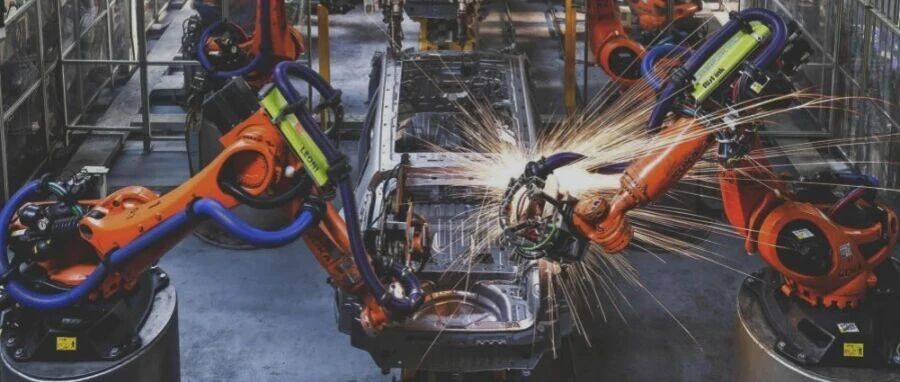
七部门发文推动服务深度嵌入制造业,涉及装备制造、消费品等行业
2 1 Shi Ji Jing Ji Bao Dao· 2025-10-11 12:14
Core Viewpoint - The joint implementation plan by seven government departments aims to promote service-oriented manufacturing, integrating services deeply into the manufacturing sector to enhance the industry's quality and efficiency by 2028 [2][3]. Group 1: Implementation Goals - By 2028, the role of service-oriented manufacturing in high-quality development will be significantly enhanced, with the establishment of 20 standards, creation of 50 leading brands, and development of 100 innovation hubs [2]. - The plan emphasizes the widespread adoption of typical service-oriented manufacturing models and the emergence of new models, optimizing the industrial ecosystem [2]. Group 2: Key Tasks - The plan outlines seven main tasks, including strengthening key common technology research, fostering key productive service industries, and promoting the application of service-oriented manufacturing models [3][4]. - It encourages enterprises to increase innovation investment and focuses on upgrading typical models such as shared manufacturing and personalized customization [3]. Group 3: Development of Productive Services - Productive service industries are crucial for supporting service-oriented manufacturing through technology research, design, and financial services [4]. - The plan aims to enhance policy support and optimize the industrial development ecosystem for various productive service sectors, including technology services and logistics [4]. Group 4: Infrastructure and Innovation - The plan emphasizes the need for new information infrastructure, promoting the integration of 5G and industrial internet, and enhancing data resource management [5]. - It includes actions to cultivate shared manufacturing, enhance service-oriented manufacturing brands, and innovate application scenarios [5][6]. Group 5: Application Scenarios - The plan encourages the creation of integrated application scenarios that cater to production needs, consumer demands, and national strategic requirements [6]. - It aims to establish a platform for promoting new models and scenarios, facilitating cooperation between supply and demand sides [6].
工信部等七部门联合发布!
中国能源报· 2025-10-11 11:27
Core Viewpoint - The article emphasizes the importance of promoting service-oriented manufacturing innovation from 2025 to 2028, focusing on enhancing green and low-carbon services, optimizing production processes, and integrating advanced manufacturing with modern services to improve competitiveness and resilience in the industry [3][4]. Summary by Sections Overall Requirements - The initiative is guided by Xi Jinping's thoughts and aims to implement the spirit of the 20th National Congress of the Communist Party, focusing on building a modern industrial system centered on advanced manufacturing and deepening the integration of information technology and industrialization [3][4]. Main Tasks - **Strengthening Key Technologies and Model Innovation**: The plan includes a list of key common technologies for service-oriented manufacturing, encouraging enterprises to increase innovation investments and promote the application of integrated research and development [4][5]. - **Cultivating Key Productive Service Industries**: The strategy aims to enhance the supply capacity of productive services, including technology services, industrial design, software and information services, financial services, and intellectual property services [7][9]. - **Promoting Service-Oriented Manufacturing Models**: The focus is on advancing service-oriented manufacturing models across various industries, including raw materials, equipment manufacturing, and consumer goods, to enhance service integration [9]. Specific Actions - **Building Shared Manufacturing Platforms**: The initiative encourages the establishment of shared manufacturing platforms that consolidate production resources and enhance service functionalities [10]. - **Standard System Construction**: The plan emphasizes the development of a unified and comprehensive standard system for service-oriented manufacturing, promoting industry-specific standards and encouraging enterprises to adopt these standards [11]. - **Enhancing Business Vitality**: The strategy aims to foster collaboration among leading enterprises and support small and medium-sized enterprises in their digital transformation [12]. Brand Development - The initiative supports the creation of service-oriented manufacturing brands, aiming to cultivate 100 leading enterprises and 50 flagship brands by enhancing brand management and market promotion [13]. Innovation Development High Grounds - The plan encourages local governments to focus on characteristic industries and establish 100 innovation development high grounds for service-oriented manufacturing, promoting policy coordination and innovation applications [14]. Application Scenario Innovation - The strategy promotes the creation of integrated application scenarios that cater to production and consumer needs, enhancing the digital integration of the consumer goods industry [15]. Foundation for Development - The initiative highlights the importance of strengthening new information infrastructure and promoting the integration of 5G and industrial internet technologies to enhance data resource utilization [17].

七部门:推动巩固提升新能源汽车、通信设备等产业优势地位
Bei Ke Cai Jing· 2025-10-11 10:49
围绕原材料、装备制造、电子制造、消费品等行业和安全生产领域,加强政策统筹、分类指导,推进服 务型制造典型模式广泛普及,及时总结提炼推广服务型制造新模式,促进服务要素更大范围更宽领域更 深层次融入制造业,充分发挥服务对制造的赋能作用。加大重点行业服务型制造发展力度,推动巩固提 升新能源汽车、工程机械、通信设备等产业优势地位,促进钢铁、石化、医药、船舶等产业提质增效。 新京报贝壳财经讯 工业和信息化部等七部门近日联合印发《深入推动服务型制造创新发展实施方案 (2025—2028年)》,提出分类推进服务型制造模式推广应用。 编辑 王进雨 ...
港股投资周报:多只有色股创一年新高,港股精选组合年内上涨 76.55%-20251011
Guoxin Securities· 2025-10-11 09:33
- The "Hong Kong Stock Selection Portfolio" strategy aims to construct a portfolio by dual-layer screening based on fundamental and technical aspects of analyst-recommended stocks. The analyst recommendation pool is built using events such as upward revisions of earnings forecasts, initial analyst coverage, and exceeding expectations in research report titles. The backtesting period for this portfolio spans from January 1, 2010, to June 30, 2025, with an annualized return of 19.11% and an excess return of 18.48% relative to the Hang Seng Index after considering transaction costs in a fully invested state [13][14][19] - The "Stable New High Stock Screening Method" identifies stocks that have reached a 250-day high in the past 20 trading days. The screening criteria include analyst attention (at least five buy or overweight ratings in the past six months), relative stock strength (top 20% in 250-day returns), price stability (evaluated using metrics like price path smoothness and average 250-day high distance over the past 120 days), and trend continuation (average 250-day high distance over the past five days). The formula for calculating the 250-day high distance is: $ 250\text{-day high distance} = 1 - \frac{\text{Close}_{t}}{\text{ts\_max}(\text{Close}, 250)} $ where $\text{Close}_{t}$ represents the latest closing price, and $\text{ts\_max}(\text{Close}, 250)$ is the maximum closing price over the past 250 trading days. A value of 0 indicates a new high, while positive values represent the degree of fallback from the high [20][22][23] - The backtesting results for the "Hong Kong Stock Selection Portfolio" show annualized returns of 19.11%, excess returns of 18.48%, and various performance metrics such as IR of 1.22, tracking error of 14.55%, and maximum drawdown of 23.73% over the entire sample period. Specific annual performance metrics include IR values ranging from 0.00 to 2.60, tracking errors between 10.28% and 22.31%, and maximum drawdowns from 4.05% to 17.74% [19] - The "Stable New High Stock Screening Method" identified stocks across multiple sectors, with the highest number in the cyclical sector (15 stocks), followed by technology (10 stocks), healthcare (7 stocks), consumer (4 stocks), financials (3 stocks), and manufacturing (2 stocks). Examples include stocks like 中广核矿业 (China General Nuclear Mining) and 紫金矿业 (Zijin Mining) in the cyclical sector [22][23][27]