
文旅

Search documents
国际消费中心城市“扩容”?这15座城市被委以重任
3 6 Ke· 2025-11-25 02:33
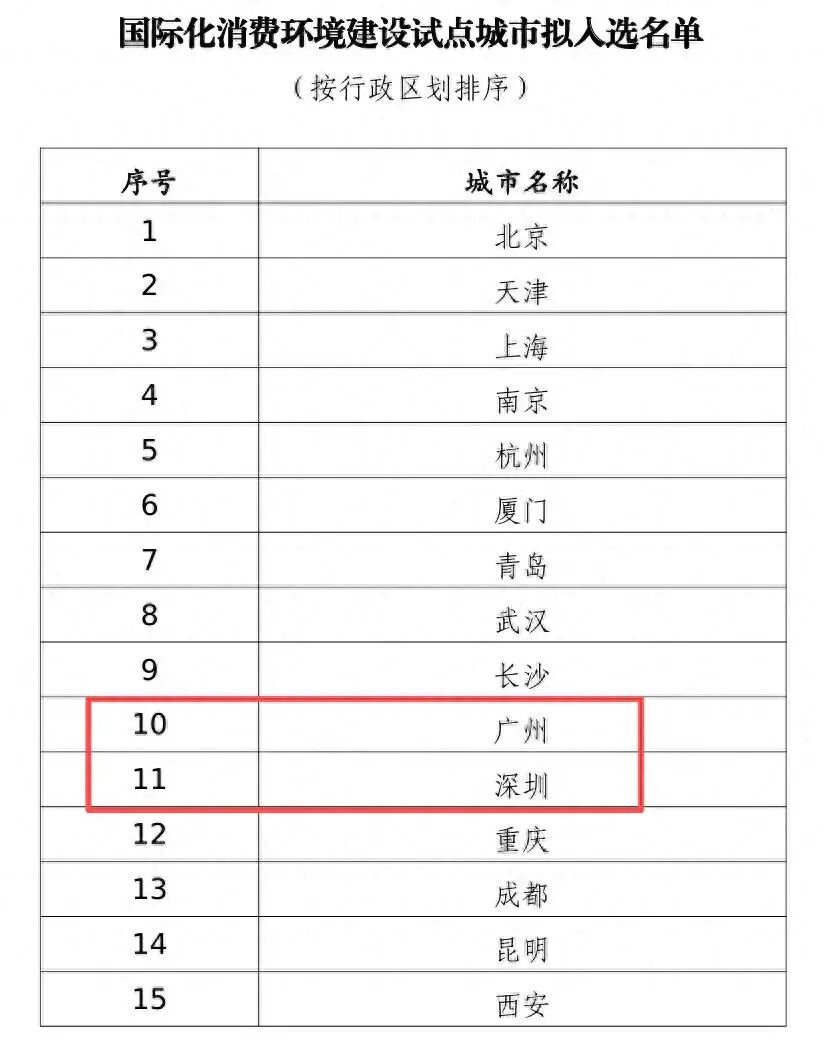
Core Viewpoint - The expansion of international consumption center cities in China is underway, with the addition of 10 new cities to the initial five recognized by the Ministry of Commerce, indicating a strategic move to enhance the country's consumption environment and attract international visitors [1][3]. Group 1: International Consumption Center Cities - The five initial international consumption center cities are Shanghai, Beijing, Guangzhou, Tianjin, and Chongqing, which were approved for development in July 2021 [1]. - A new list of 15 cities has been announced, including the original five and ten additional cities: Nanjing, Hangzhou, Xiamen, Qingdao, Wuhan, Changsha, Shenzhen, Chengdu, Kunming, and Xi'an [1][2]. - The Ministry of Finance and the Ministry of Commerce issued a notice in September 2023 to support the development of an international consumption environment in these cities, with a funding period of two years [2]. Group 2: Funding and Support - Each international consumption center city will receive a total subsidy of 200 million yuan, while the other selected cities will receive 100 million yuan each [2][5]. - The support will focus on enhancing high-quality consumption supply, optimizing foreign payment services, and improving international service levels [2]. Group 3: Assessment and Progress - The initial five cities have completed a mid-term assessment, leading to their designation as "international consumption center cities" without the "cultivation" label [4][5]. - This change suggests that these cities have successfully met the preliminary assessment criteria [5]. Group 4: Selection Criteria for New Cities - The selection of the ten new cities reflects a multifaceted consideration by the Ministry of Commerce, moving beyond a simple GDP ranking approach [6]. - Notably, cities like Suzhou, Ningbo, and Wuxi were not selected despite their strong economic performance, while cities like Xi'an and Kunming were included due to their unique consumption characteristics and potential [6]. Group 5: Guangzhou's Achievements - Since being approved as an international consumption center city, Guangzhou has seen significant progress, with its retail sales exceeding 1 trillion yuan for four consecutive years and an average growth rate of 4.5% [7][8]. - In 2024, Guangzhou's international appeal has increased, ranking 22nd in the GaWC world city rankings, with 501.1 million overnight visitors and cultural tourism consumption reaching 3.57 billion USD [8].

以全会精神领航 在新征程上培育壮大新质生产力
Guang Xi Ri Bao· 2025-11-24 03:01
Group 1 - The core message of the news is the dissemination of the spirit of the 20th Central Committee's Fourth Plenary Session, focusing on the "14th Five-Year Plan" for economic and social development in Guangxi [1][2][3] - The Guangxi government emphasizes the importance of integrating the spirit of the plenary session into the planning and promotion of high-quality economic and social development [1] - The reports highlight the significance of strengthening new emerging industries and the necessity of advancing artificial intelligence and digital technology innovation as part of the industrial structure upgrade [2] Group 2 - The reports stress the importance of the "14th Five-Year Plan" in achieving socialist modernization and the need for strong party leadership to drive modernization efforts [2][3] - Local resources and industries, such as sugar and cultural tourism, are identified as key areas for development in Laibin, with a focus on leveraging advantages in hydropower and fostering new productive forces like artificial intelligence [3] - The engagement of over 350 party members and officials in the discussions indicates a strong commitment to understanding and implementing the directives from the plenary session [1]
调研|在新疆产业链上游,保险如何成为风险治理的“前置力量”
Xin Lang Cai Jing· 2025-11-24 00:23
Core Viewpoint - The article highlights the shift in risk management practices in Xinjiang, where insurance is increasingly integrated into the entire industrial chain, moving from post-disaster compensation to proactive risk prevention and management [1][15]. Risk Management Shift - Risk management is transitioning from post-disaster compensation to pre-disaster prevention, with insurance now embedded in various stages of the industrial chain [1]. - In Akesu, a pilot project for hail prevention nets was initiated, with a total investment of 16.6 million yuan, where 60% is funded by insurance and 40% by farmers [2][5]. Agricultural Risk Mitigation - The Akesu region has established a "meteorology + insurance" mechanism to enhance disaster prevention, with a total investment of 140 million yuan from 2021 to 2024 for agricultural disaster reduction [5][6]. - The average annual occurrence of hail disasters in Akesu is 28.5 times, causing over 300 million yuan in economic losses each year [5][6]. Comprehensive Risk Control in Industries - Insurance is extending beyond agriculture to processing and manufacturing, creating a comprehensive risk control system across the entire industrial chain [6][9]. - In the cotton industry, policy-based agricultural insurance covers 80% of premiums, while commercial income insurance protects against price and yield fluctuations [6][9]. Technological Integration in Risk Management - A textile company in Kuqa has implemented infrared temperature monitoring systems to prevent fire risks associated with cotton storage [7]. - The insurance company conducts pre-insurance assessments and ongoing inspections to identify risks and assist in emergency planning [7]. Public Service and Tourism Safety - In the tourism sector, a unified insurance product called "Anxin Tour" has been introduced to cover all tourists in Kashgar, funded by the government [10][14]. - Safety islands equipped with emergency facilities have been established in popular tourist areas to enhance visitor safety [13][14]. Conclusion on Insurance Evolution - The integration of insurance with risk management, monitoring, and emergency systems is making risk management more proactive and precise [15]. - The evolving role of insurance is becoming a critical component in building resilience within industrial chains, indicating a broader trend in risk governance [15].

从“工业锈带”转向“生活秀带”
Ren Min Wang· 2025-11-23 10:04
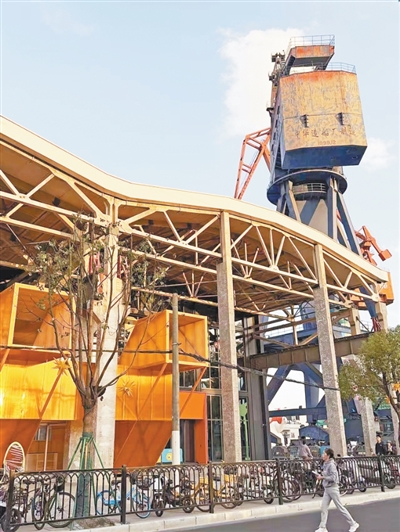
Core Perspective - The article discusses the recognition and preservation of industrial heritage in China, highlighting its cultural significance and the ongoing efforts to revitalize these sites for modern use [4][8]. Group 1: Industrial Heritage Significance - Industrial heritage serves as a testament to industrial civilization and collective memory of workers, becoming an important part of national cultural heritage [4]. - The history of the alum stone mine in Cangnan, Wenzhou, dates back over 600 years, showcasing the long-standing industrial practices in the region [4]. Group 2: Preservation and Revitalization Efforts - Cangnan has invested 7.3 million yuan in the protection and renovation of the Fude Bay miner's village, which has received accolades for its cultural heritage preservation [5]. - The transformation of industrial sites into cultural and tourism spaces, such as the underground mine scenic area and a mining-themed hotel, reflects a successful integration of heritage protection and tourism development [5]. Group 3: Urban Development and Sustainability - The Yangpu Riverside area in Shanghai, with a total length of 15.5 kilometers, has undergone comprehensive surveys and protection efforts for its industrial heritage, including over 200 old buildings [6]. - The revitalization of the Hangzhou Steel Plant site into an ecological park and cultural space demonstrates a commitment to sustainable urban development and the reuse of industrial heritage [7]. Group 4: Future Directions and Community Engagement - There is a growing societal interest in the active utilization of industrial heritage, exploring new models for education, tourism, and industrial restructuring [8].
舌尖带动脚尖!“美食+”跨界出圈催生新消费 撬动文旅新增长点
Yang Shi Wang· 2025-11-23 06:53
Core Insights - The article highlights the unique culinary culture of Kashgar, Xinjiang, particularly focusing on the traditional breakfast dish of lamb and naan [2][10]. Group 1: Local Cuisine - The popular dish "Ganzi Meat" is a clear broth of lamb cooked in an enamel jar, known for its rich flavor and tenderness, attracting both locals and tourists [3][8]. - The preparation of Ganzi Meat involves simmering lamb with carrots, onions, and tomatoes for about 40 minutes, emphasizing the importance of original flavors and a balanced diet [3][6]. - The naan served with Ganzi Meat, referred to as "Wowo Naan," is known for its elasticity and is traditionally soaked in the lamb broth for enhanced flavor [6][10]. Group 2: Tourism and Cultural Integration - The small restaurant not only serves locals but also draws many tourists eager to experience the unique breakfast flavors of Kashgar [8][10]. - The breakfast scene in Kashgar is becoming a symbol of the city, contributing to cultural tourism and economic vitality [10][20]. - Local breakfast offerings include a variety of traditional dishes such as milk tea and "Tang Huhua," which is a dense, less sweet dessert that pairs well with naan [11][16]. Group 3: Economic Development - The local government is promoting Kashgar as a tourist destination by integrating dining and cultural experiences, aiming to enhance the city's appeal and stimulate economic growth [20]. - Initiatives include the distribution of store coupons through a smart tourism platform to boost consumer activity in the region [20].

人气旺、消费热!“文学IP”创新表达尽显“年轻”姿态 燃动经济“新”热力
Yang Shi Wang· 2025-11-23 06:52
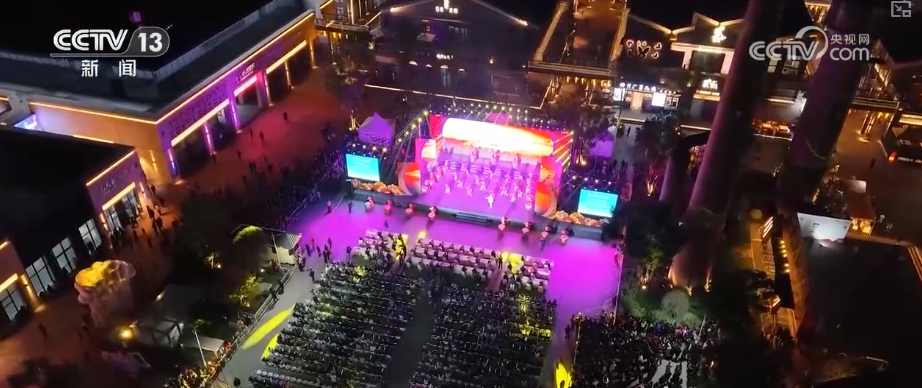
Group 1 - The winter cultural tourism market is experiencing a surge, with diverse artistic forms such as quyi, dance, and live performances deeply integrating with the cultural tourism industry, providing audiences with immersive experiences that combine cultural depth and interactive fun [1] - The sixth China Western Excellent Quyi Program Exhibition held in Sichuan gathered over 300 quyi artists, showcasing classic forms like crosstalk and skits, as well as over 20 local quyi styles, reflecting the diverse charm and vitality of quyi art in the western region [5] - Innovative practices in arts empowering cultural tourism are emerging, such as the "2025 China Dance Association Environmental Dance Season" in Hunan, where dance artists create performances in natural settings, expanding the expressive space of dance art [8] Group 2 - In Shandong's Tianmeng Scenic Area, the large-scale immersive performance "Yimeng Mountain Melody" allows visitors to engage with recreated revolutionary scenes, fostering a deep understanding of the Yimeng spirit through interactive participation [12] - The integration of urban renewal and cultural heritage is revitalizing the cultural tourism market, exemplified by the centenary event of Zhu Ziqing's essay "Back Shadow" in Nanjing, where an old train station has been transformed into an immersive consumption hotspot [12][14] - The updated urban area around the Pu Kou train station has become a new cultural consumption ecosystem, hosting various cultural activities and integrating dining, creative industries, and accommodation, leading to a more than 40% increase in foot traffic since October [17]
聚焦“十五五”规划建议|从“中国游”到“中国购”,我国将发力拓展入境消费
Xin Hua She· 2025-11-23 05:10
Core Insights - The Chinese government aims to cultivate international consumption center cities and expand inbound consumption as part of the 15th Five-Year Plan [1][2] - In 2024, inbound tourists to China are projected to reach 131.9 million, a year-on-year increase of 60.8%, with total spending expected to be $94.2 billion, up 77.8% [1] - The potential for inbound consumption in China is significant, with its contribution to GDP at approximately 0.5%, compared to 1% to 3% in major countries [1] Group 1 - The Chinese government is focusing on enhancing international consumption centers to boost domestic commercial and cultural tourism sectors, thereby increasing cities' international visibility and influence [1] - Liu Xiangdong from the China International Economic Exchange Center suggests integrating duty-free shops with cultural tourism resources to create attractive "shopping + tourism" experiences for inbound tourists [1] - The establishment of city-based duty-free shops and the development of multilingual shopping apps are recommended to improve the shopping experience for foreign visitors [1] Group 2 - The Ministry of Commerce plans to expand the list of countries eligible for unilateral visa exemptions and optimize tax refund services to enhance the inbound consumption environment [2] - The ministry aims to create a series of international consumption clusters and friendly shopping districts to provide diverse consumption scenarios [2] - The goal is to make it easier for global consumers to visit, enjoy, and shop in China, promoting a more open and innovative environment [2]
云台青年企业家昆明面对面 分享创业故事探寻合作商机
Zhong Guo Xin Wen Wang· 2025-11-22 02:47
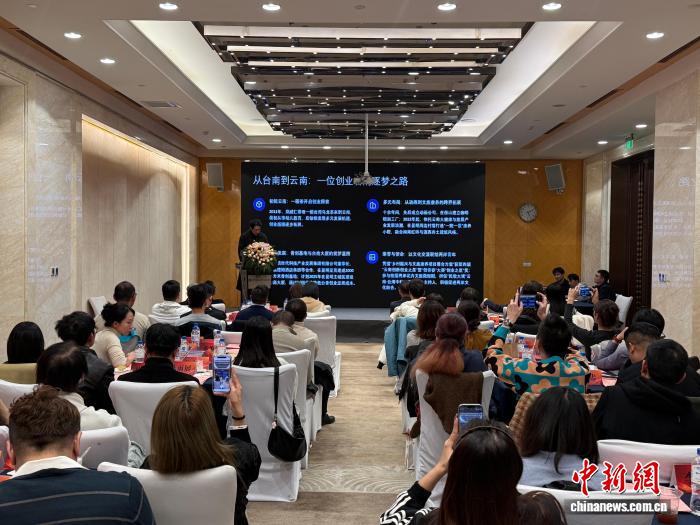
中新网昆明11月21日电 (陆希成)云台青年企业家春城沙龙21日在昆明举行,来自云台两地的60余名青年 企业家分享创业故事,并围绕文旅康养、生物医药等领域,探寻合作商机。 近年来,云南凭借独特的区位优势和资源禀赋,成为台商投资兴业的热土。截至2024年底,云南累计批 准台资企业1247户,实际使用台资21.76亿美元。从康师傅、统一等知名台企扎根发展,到新生代台湾 创业者在文创、农业、康养领域破土生根,云台经贸合作正从传统制造向新兴业态延伸。 "当彩云之南的包容厚重遇见宝岛台湾的灵动创新,必将碰撞出合作共赢的火花。"云南省青年企业家协 会会长欧毕华表示,云南拥有面向南亚东南亚的区位优势,台湾青年企业家带来先进理念和前沿技术, 双方优势互补,合作空间广阔。 康养与生物医药领域同样蕴含巨大潜力。奥达传媒股份有限公司董事长汪海峰提出"医在台湾,养在云 南"的产业构想。"低纬高原的地理环境造就了云南康养产业的天然优势。"他表示,台湾医疗技术成 熟,云南康养资源丰富,双方可实现优势叠加,共拓市场。 上述领域合作的美好愿景,离不开持续优化的营商环境作支撑。扎根云南十余年的质世代(云南)科技产 业发展集团有限公司董事长郑威 ...

“Hainan Travel”圈粉35位国际文旅博主
Hai Nan Ri Bao· 2025-11-22 01:05
"Hainan Travel"圈粉35位国际文旅博主 发布近300条文旅短视频,收获超200万海外浏览量 海南旅游国际推荐官在呀诺达热带雨林体验溯溪。海报集团全媒体中心记者 李昊 摄 海报集团全媒体中心记者 韩星 美食是跨文化沟通的最佳载体,也是传播爆款的高频密码。顾凯文第一次品尝了黄灯笼辣椒特饮,入口 甜、回味辣给了他深刻的印象,他制作发布的《美国人在海南第一次喝辣椒饮料》短视频,得到许多网友关 注。 文化共鸣则让传播更具穿透力。"不少马来西亚华人是海南籍,家乡非常美丽,有很多值得发掘的风光、 美食和游玩项目。"来自马来西亚的特雷森说。 个体的优质创作,需要强大的传播矩阵放大声量。海南旅游国际推荐官项目自2024年启动以来,构建起 一套"精准覆盖+多语传播+长效运营"的传播体系,让海南故事能够直达全球目标受众。 当前海南已构建起一支覆盖37个国家和地区的122人国际推荐官队伍,其海外社交媒体累计粉丝量近千 万,形成了辐射五大洲的立体化传播网络。这一队伍的搭建精准对接海南文旅国际推广需求,既覆盖21个直 航国家和地区,也兼顾16个非直航市场,实现了重点客源地的全面渗透。 数据见证传播效能:2025年3月至11 ...

决胜“十四五” 打好收官战|从“网红流量”到“长红留量”——国际消费中心城市建设的“重庆实践”
Xin Hua She· 2025-11-22 00:42
Core Insights - Chongqing has transformed into a popular destination, attracting tourists with its unique architecture and culinary offerings, moving beyond traditional attractions like Hongya Cave and hotpot [1] - The city has been approved to develop as an international consumption center, with a projected retail sales total of 1.6 trillion yuan by 2024, marking a 35.4% increase from the end of the 13th Five-Year Plan [1] Group 1: Economic Development - Chongqing's international consumption center initiative aims to enhance market vitality and potential during the 14th Five-Year Plan [1] - The city has leveraged international trade routes to make global products more accessible, attracting both domestic and international tourists [1] Group 2: Consumer Experience - The city has improved the international consumer environment and services, implementing measures like "one-stop" entry for foreigners and immediate tax refunds for purchases [2] - Over 200 stores offer tax refund services, and the city has introduced more than 2,200 international and domestic brands [2] - The reopening of historical sites like the British Consulate has created multi-functional spaces that blend culture, consumption, and experience, attracting an average of 3,000 visitors daily [2] Group 3: Night Economy - Chongqing has developed diverse nighttime consumption areas, hosting events like the Night Economy Festival for five consecutive years, leading to over 60% of consumption occurring at night [3] - The city has been recognized as one of China's top ten cities for night economy influence for four years [3] - The integration of unique nighttime activities, such as drone light shows and local markets, has extended consumer engagement into late hours [3]