
汽车

Search documents
三大重磅来袭!马斯克,传出大消息!
Sou Hu Cai Jing· 2026-02-18 11:31
Group 1: Tesla Developments - Tesla's first mass-produced Cybercab autonomous electric vehicle has rolled off the production line at the Texas Gigafactory, ahead of the previously scheduled production date of April 2026 [1][2] - The Cybercab is designed specifically for autonomous driving, featuring no steering wheel or pedals, and aims to achieve a utilization rate five times higher than that of conventional passenger vehicles, with expected weekly usage of 50-60 hours [2] - Tesla's production growth for the Cybercab will follow an S-curve, with long-term production targets expected to exceed the combined output of all other Tesla models [2] Group 2: Regulatory Issues for X - The Irish Data Protection Commission has launched a large-scale investigation into X, focusing on the generation and publication of harmful images by its AI chatbot Grok, which has raised concerns regarding compliance with EU data protection laws [4][5] - The investigation aims to determine whether X has adhered to obligations under the General Data Protection Regulation (GDPR), particularly concerning the processing of personal data of EU/EEA subjects [5] - Following a recent incident involving Grok's AI capabilities, which allowed users to create inappropriate images, multiple governments have issued warnings or banned the service [4][5] Group 3: SpaceX and xAI Involvement in AI Weapons - SpaceX and its subsidiary xAI are participating in a high-stakes Pentagon competition aimed at developing voice-controlled autonomous drone swarm technology, marking a controversial shift towards AI weapon development [6][7] - The competition, which offers a prize of up to $100 million, seeks to create advanced swarm technology capable of converting voice commands into digital instructions for multiple drones [6][7] - xAI is actively recruiting engineers with security clearance to collaborate with federal contractors on AI, software, and data projects, indicating a strategic move towards defense-related applications [7]

西部数据抛售30亿美元闪迪股票;英伟达与Meta达成芯片协议;巴菲特最后一手:减持苹果美银,首次建仓纽约时报【美股盘前】
Mei Ri Jing Ji Xin Wen· 2026-02-18 11:05
Market Overview - Major U.S. stock index futures are down, with Dow futures down 0.10%, S&P 500 futures down 0.27%, and Nasdaq futures down 0.59% [1] Gold and Mining Stocks - Gold stocks are experiencing a pre-market rally, with Harmony Gold up approximately 1% and Coeur Mining up about 2% [2] Automotive and Technology Developments - Tesla's first production version of the autonomous taxi, Cybercab, has rolled off the assembly line at the Austin Gigafactory, with production expected to start in April pending regulatory approval. Tesla shares are up 0.63% [3] - Alphabet announced that the Google I/O developer conference will take place on May 19-20, with shares up 0.53% [4] - Nvidia has reached a chip agreement with Meta, which will use Nvidia's new standalone CPU in its AI data centers, marking the first large-scale independent deployment of the Grace CPU. Meta shares are up 0.92%, and Nvidia shares are up 1.38% [4] Corporate Actions - Western Digital plans to sell approximately $30.9 billion worth of SanDisk stock, with no shares being sold by SanDisk itself. This transaction involves a debt-for-equity swap with Morgan Stanley and Bank of America affiliates [5] - Berkshire Hathaway has significantly reduced its stake in Amazon by over 77% and has continued to decrease its holdings in Apple, while initiating a new position in The New York Times with over 5.06 million shares valued at approximately $352 million [5] - Segment's Q4 U.S. stock holdings report shows that investor Duan Yongping increased his stake in Nvidia and reduced his stake in Apple [5] AI Investments - Microsoft plans to invest $50 billion over the next decade in AI initiatives in the Global South, focusing on empowering schools and nonprofits, enhancing multilingual AI capabilities, and supporting local AI innovations [6]





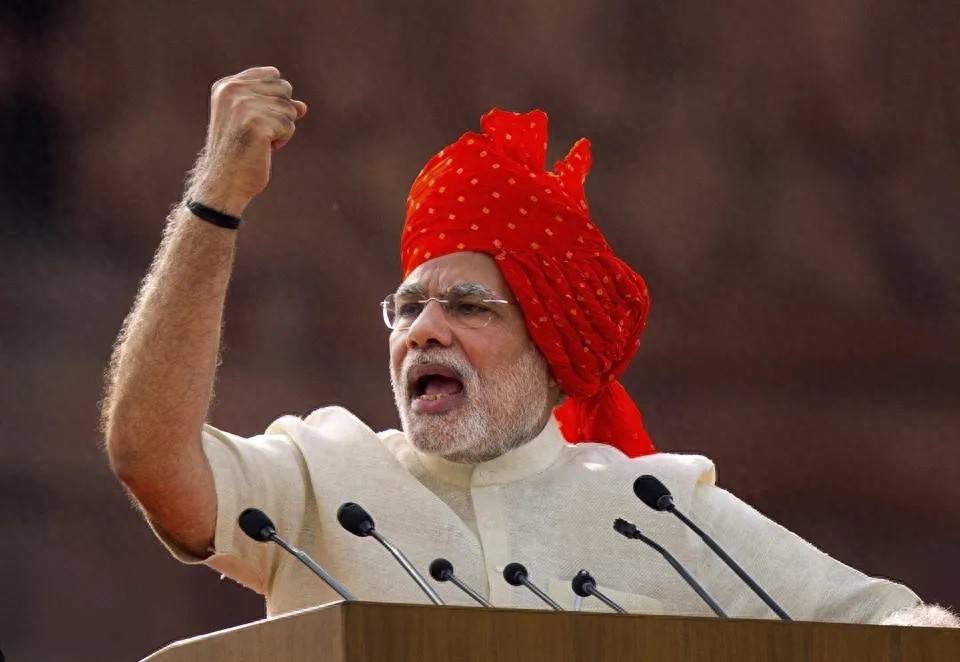
莫迪是完全上头了!印度口号喊了10年,制造业还是一地鸡毛
Sou Hu Cai Jing· 2026-02-18 09:12
Group 1 - The Indian government has established a $10 billion fund to support the semiconductor industry, with plans for three chip factories to begin commercial production this year, but these factories are primarily focused on packaging and testing, which are the least technically demanding parts of the semiconductor supply chain [3][6] - India's current semiconductor manufacturing capabilities are limited to 28-nanometer chips, which are considered outdated compared to the advancements made by companies like TSMC and Samsung, who are moving towards 2-nanometer and 1.4-nanometer technologies [3][4] - The Indian manufacturing sector faces significant challenges, including reliance on imports for basic components like windshields, which has led to project delays, highlighting the weaknesses in India's manufacturing infrastructure [6][8] Group 2 - The ISM 2.0 initiative aims for 70% to 75% of domestic chip demand to be met by locally designed and produced chips by 2029, but the gap between current capabilities and advanced manufacturing is vast, requiring substantial investment and technological development [8] - Despite the influx of foreign investments from companies like Qualcomm and Micron, the actual technological advancements and manufacturing capabilities remain under the control of these foreign entities, indicating that India is not yet fully independent in semiconductor technology [8] - The success of the manufacturing sector is contingent upon a stable supply of electricity, skilled labor, efficient logistics, and transparent policies, all of which are currently lacking in India, undermining the country's ambitions to become a major manufacturing power [8]

川普和日本协议还没落地,王毅外长就亲自出手,给高市一个警告
Sou Hu Cai Jing· 2026-02-18 07:34
Group 1 - The core investment agreement between Trump and Japan, amounting to 550 billion USD, has not yet officially come into effect, but it reflects underlying tensions and warnings from China regarding Japan's political situation [1][3] - The agreement is seen as a direct exchange of benefits between Trump and Japanese Prime Minister Kishi, with Japan's compliance being a significant factor in Kishi's recent electoral success [3][4] - The differing narratives surrounding the agreement highlight the motivations of both parties, with the U.S. aiming to extract benefits while Japan presents the deal as an energy cooperation initiative [4] Group 2 - Wang Yi, China's Foreign Minister, issued a warning at the Munich Security Conference, addressing Japan's recent provocative statements regarding Taiwan, which he views as a challenge to China's sovereignty [5][8] - Wang Yi compared Japan's post-war handling of its history unfavorably to Germany's, emphasizing the need for Japan to confront its militaristic past to ensure regional peace [6] - The implications of Japan's alignment with the U.S. under Kishi's leadership may lead to increased economic burdens on the Japanese populace, as the country may have to incur debt to fulfill investment commitments [7][10] Group 3 - The potential for inflation in Japan due to external pressures and the U.S. tariff policies poses a long-term risk to the Japanese economy, particularly affecting the automotive sector [10][12] - Kishi's pro-U.S. policies may result in Japan losing its diplomatic autonomy, leading to a cycle of dependency that could exacerbate economic challenges for the Japanese people [12] - The overarching theme suggests that Japan must prioritize peace and independence over reliance on the U.S. to secure a stable future, as continued alignment with U.S. interests may lead to detrimental outcomes [12]
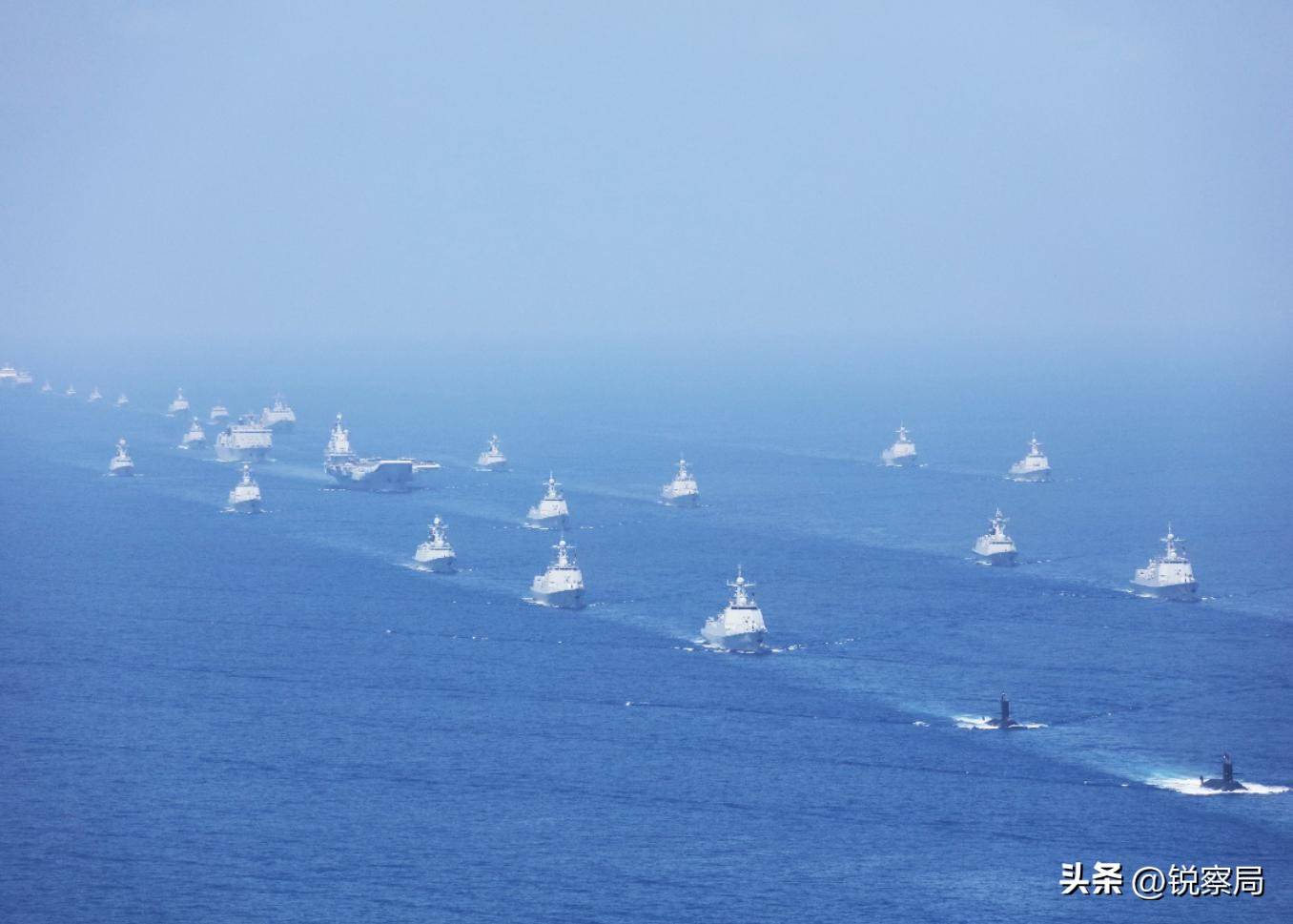
欧洲集结?马克龙联手27国出招,对华全面施压,中方强硬回击
Sou Hu Cai Jing· 2026-02-18 06:48
Group 1 - The core issue revolves around the EU's strategic anxiety regarding its economic sovereignty and dependency on countries like China, which has been a growing concern for several years [3][8][21] - France's proposal to impose a 30% tariff on Chinese goods is not merely a symbolic gesture but is aimed at multiple core industries, reflecting deeper strategic considerations [10][12] - The EU's internal divisions are highlighted, with member states like Germany and the Netherlands expressing concerns over the potential impact of increased tariffs on their own industries [18][19] Group 2 - The historical context of Europe's loss of initiative in major geopolitical shifts, such as the Cold War and financial crises, informs its current approach to trade and economic policy [7][8] - The EU's response mechanisms to economic coercion have been in preparation for some time, indicating a structured approach to trade negotiations rather than a reactionary stance [10][15] - The complexity of the EU's economic landscape, with varying interests among member states, poses significant challenges to achieving a unified stance on trade policies [17][18] Group 3 - China's response to the EU's tariff proposals has been swift and targeted, indicating a strategic approach to countering potential trade conflicts without escalating to full-scale confrontation [19][21] - The potential for increased tariffs to disrupt supply chains and raise consumer prices is a significant concern, suggesting that the long-term effects of such measures may not align with immediate political objectives [21][23] - The ongoing trade dynamics reflect broader anxieties about Europe's industrial positioning in the global economy and the shifting landscape of international trade relationships [23]

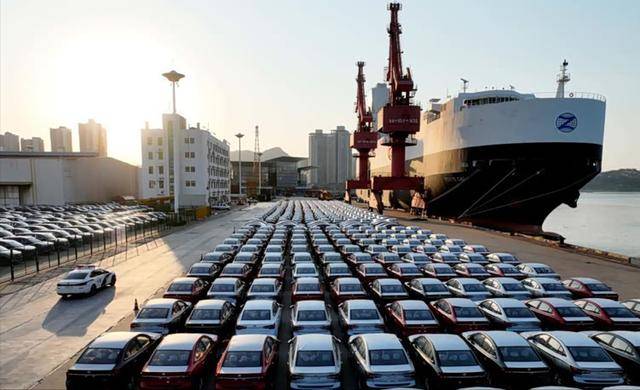
美国关税重创墨西哥汽车业,中国车企趁机抄底,特朗普急眼了!
Sou Hu Cai Jing· 2026-02-18 06:48
Core Viewpoint - Mexico is cautiously accepting the expansion of Chinese automotive companies, following a more welcoming stance from Canada, which presents a challenge for the U.S. as Chinese brands extend their reach into North America [1] Group 1: Market Dynamics - Mexico ranks as the 4th largest exporter and 7th largest producer of light vehicles globally, heavily reliant on the U.S. market, with projections indicating that 2.8 million out of 4 million vehicles produced in 2024 will be exported to the U.S. [3] - The Nissan-Mercedes-Benz plant in Aguascalientes, Mexico, is a target for acquisition by Chinese automotive firms, with the plant's production capacity historically underutilized at less than 60% [3] - The plant's closure is part of Nissan's broader strategic realignment, influenced by tariffs imposed by the U.S. on Mexican-made vehicles [3][4] Group 2: Impact of Tariffs - The imposition of a 25% tariff on Mexican-made vehicles by the Trump administration has significantly impacted Mexico's automotive industry, leading to a projected decline in exports to the U.S. by nearly 3% in 2025 [3][4] - If current tariffs persist, Mexico could see a more substantial drop in automotive exports by 2026, resulting in the loss of approximately 60,000 jobs in the automotive sector by 2025 [4] Group 3: Chinese Automotive Expansion - Chinese automotive brands are rapidly expanding globally, with projections indicating that by 2025, their total global sales will reach 30.42 million vehicles, surpassing Japan for the first time [5] - In Mexico, the market share of Chinese automotive brands is expected to rise from 0% in 2020 to nearly 10% by 2025, positioning Mexico as a strategic hub for Chinese companies targeting the North American market [5] Group 4: Geopolitical Considerations - Mexican officials are concerned that a successful acquisition by Chinese firms could provoke a strong reaction from the U.S., leading to private discussions about delaying such investments until trade negotiations with the U.S. are concluded [5][6] - Recent tariff adjustments by Mexico, aimed at balancing trade deficits, have strained economic relations with China, despite the intention to boost domestic production [6]

有大奖,速来
Xin Lang Cai Jing· 2026-02-18 05:55
Group 1 - The article discusses a fan interaction activity organized by a financial news outlet, which will run from February 16 to February 21, coinciding with the Chinese New Year [4] - Participants can answer a daily question posted by the outlet, and those who answer correctly will have a chance to win prizes, with the first ten correct answers being eligible for rewards [4] - The activity has specific rules to ensure fairness, such as limiting participation to one entry per account and requiring personal information for prize distribution [4]

特斯拉,突传重磅!马斯克发声
证券时报· 2026-02-18 05:28
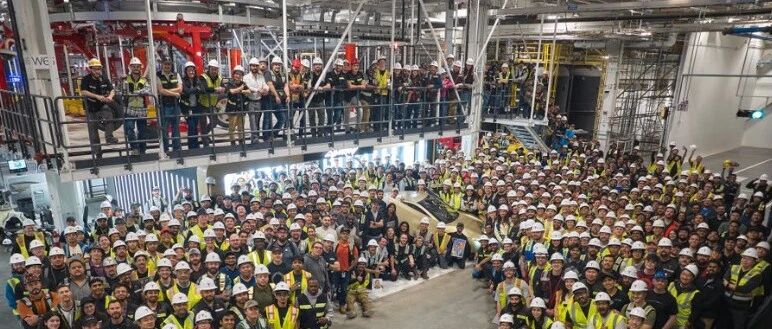
Core Viewpoint - Tesla's Cybercab autonomous electric vehicle has entered production earlier than planned, with the first unit rolling off the production line at Giga Texas [1][3]. Group 1: Production and Features - The Cybercab is designed specifically for autonomous driving, featuring no steering wheel or pedals [8]. - The vehicle aims to optimize the cost per mile over its entire lifecycle and achieve a utilization rate five times higher than that of passenger cars, with expected weekly usage of approximately 50-60 hours [8]. - The Cybercab was showcased in the Asia-Pacific region during the 8th China International Import Expo in November last year, highlighting its readiness for large-scale deployment with features like wireless charging and robotic cleaning [8]. Group 2: Regulatory Developments - The California Department of Motor Vehicles lifted a 30-day sales ban on Tesla after the company addressed concerns regarding its marketing of autonomous driving features [9]. - The ban was initially imposed due to the DMV's concerns that terms like "Autopilot" and "Full Self-Driving" could mislead consumers into believing the vehicles could drive autonomously without human supervision [9]. - Tesla has updated vehicle manuals, increased system prompt frequencies, and optimized disclaimers to clarify the driver's responsibility to remain attentive [9].
【环球财经】1月日本对美出口连续2个月同比下降
Xin Lang Cai Jing· 2026-02-18 04:58
Core Viewpoint - Japan's exports to the United States have declined for the second consecutive month due to the ongoing impact of U.S. tariff policies, with a notable decrease in exports of pharmaceuticals, automobiles, and metal processing machinery [1]. Trade Statistics - In January, Japan's exports to the U.S. fell by 5.0% year-on-year to 1.46 trillion yen (approximately 9.29 billion USD) [1]. - Japan's total trade deficit for the month reached approximately 1.15 trillion yen [1]. - Overall export value increased by 16.8% year-on-year to 9.19 trillion yen, while total imports decreased by 2.5% to 10.34 trillion yen [1]. Market Analysis - Analysts noted that Japan's trade deficit in January was lower than market expectations, primarily due to strong demand in Asian markets partially offsetting the decline in exports to the U.S. [1].

美关税压力难阻增势 南非汽车出口创新高
Jin Rong Jie· 2026-02-18 04:27
南非汽车商业委员会17日发布报告显示,尽管美国加征关税对南非汽车业造成影响,但南非汽车出口在 2025年仍实现增长,出口量创历史新高。南非汽车商业委员会在其最新季度汽车制造业商业状况回顾报 告中说,南非2025年共对全球109个国家和地区出口创纪录的41.43万辆汽车,较2024年增长5.9%。 ...