
家具

Search documents
早报 | 贵金属大跳水;乌91架无人机袭击普京官邸?特朗普很生气;解放军无人机俯瞰台北101大厦;王忠磊、王忠军被限高
虎嗅APP· 2025-12-29 23:59
Group 1 - Precious metals, led by silver, experienced significant price corrections after a recent surge, with silver dropping over 8% and gold falling nearly $200 in a single day [2] - The Chicago Mercantile Exchange raised margin requirements for several popular futures contracts, including silver and gold, to mitigate market volatility [2] - The price of platinum and palladium also saw substantial declines, with platinum down nearly 13% and palladium over 15% [2] Group 2 - Labubu blind box prices have drastically decreased from previous highs, with the second-hand market seeing prices drop from over 4,600 yuan to around 260 yuan [5][7] - Morgan Stanley reported that Pop Mart is transitioning from explosive growth to sustainable growth, predicting a slowdown in revenue growth for Labubu by 2026 [7] Group 3 - Huayi Brothers and its founders are facing legal and financial issues, with a court restricting high consumption due to a 74.73 million yuan enforcement case [8] - The company has been involved in multiple legal disputes, indicating potential financial instability [8] Group 4 - SoftBank is in talks to acquire DigitalBridge Group, which manages over $100 billion in data center assets, as part of its strategy to enhance its data infrastructure [9] - DigitalBridge's stock surged by 45% in pre-market trading following news of the potential acquisition [9] Group 5 - The People's Bank of China announced a new action plan for digital yuan management, set to be implemented on January 1, 2026, with significant transaction volumes already recorded [10][11] - By November 2025, digital yuan transactions reached 34.8 billion, totaling 16.7 trillion yuan, indicating strong adoption [11][12] Group 6 - Zero Run Auto announced a 3.744 billion yuan investment from FAW Group, which will help enhance the company's stability and risk management capabilities [32] - The investment agreement ensures that the founding team retains control, reflecting a strategic partnership for future growth [32]


美企破产“日常化”
Guo Ji Jin Rong Bao· 2025-12-29 12:08
Group 1 - The number of bankruptcy filings in the U.S. has risen to its highest level in nearly 15 years, affecting both businesses and individuals under increasing financial pressure [1][3] - Small businesses are particularly hard-hit, facing rising costs, a tight financing environment, and weakened consumer demand, leading to systemic issues across multiple industries [2][4] - The industrial sector, including manufacturing, construction, and transportation, has experienced the most significant impact, with over 70,000 jobs lost in manufacturing alone within a year [4][5] Group 2 - The non-essential consumer goods sector, such as clothing and furniture, has seen a higher number of bankruptcies compared to other industries, reflecting changes in consumer spending patterns [5] - Over 4,100 retail and dining establishments have closed in 2025, indicating a decline in industry capacity and consumer confidence [5] - The current wave of bankruptcies is becoming a normalized economic adjustment mechanism rather than a crisis event, subtly undermining the resilience of the U.S. economy through impacts on employment stability and community business vitality [5]
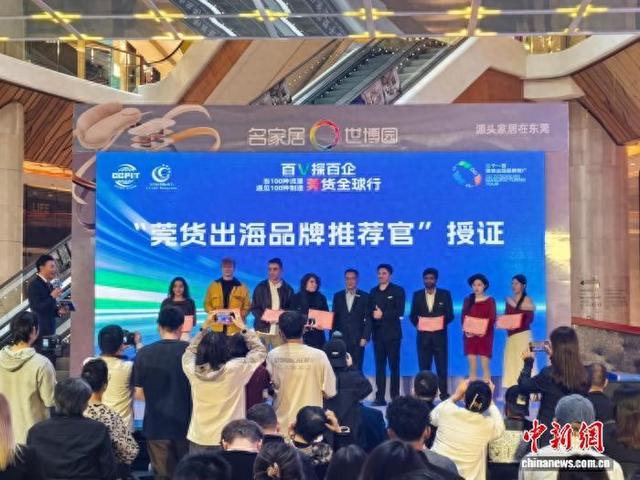
莞货出海启动“新打法”:“制造+流量”输出全球品牌
Xin Lang Cai Jing· 2025-12-29 09:57
Core Viewpoint - The "Three Hundreds" brand promotion event for Dongguan products aims to enhance the internationalization and cluster development of local brands through a model that integrates "manufacturing + traffic" [1][4]. Group 1: Event Overview - The event is organized by the Dongguan Council for the Promotion of International Trade and involves collaboration with "hundred chambers of commerce, hundred influencers, and hundred well-known enterprises" [1]. - Nearly a hundred influencers from both domestic and international backgrounds participated in the launch ceremony [1]. Group 2: Industry Transformation - The president of the Dongguan Leather Shoe Industry Association highlighted the transition of "Dongguan manufacturing" from "OEM" to "independent brands," emphasizing the importance of quality, brand, and cultural strength in overseas markets [3]. - The company has utilized live streaming, collaborations with cross-border influencers, and overseas social media accounts to enhance brand recognition in international markets [3]. Group 3: Influencer Engagement - Influencer Zein from Syria, with over three million followers, noted that Dongguan possesses top-notch industrial chains and craftsmanship, expressing a willingness to connect Dongguan with global consumers through media [3]. Group 4: Future Plans - The event will focus on key industries in Dongguan, including 3C electronics, apparel, furniture, toys, and smart equipment, organizing influencers to visit and create content in various enterprises [3]. - The Dongguan Council for the Promotion of International Trade aims to facilitate the integration of manufacturing with new media resources, helping Dongguan products enter more global markets [4].
中金:分行业看贸易盈余
中金点睛· 2025-12-28 23:55
Core Viewpoint - China's merchandise trade surplus continues to rise, while the service trade remains in deficit, with the current account to GDP ratio below 3.5% as of September this year, indicating that external imbalances are not very significant [2] Trade Surplus and Economic Structure - The trade surplus is driven by a downward financial cycle that reallocates resources towards high-efficiency high-end manufacturing, accelerated technological advancements, and a decline in non-trade goods prices due to real estate adjustments, which lowers the intermediate input costs for trade goods and boosts exports [2] - Private sector deleveraging has suppressed demand, leading to a slowdown in imports, while manufacturing upgrades have increased domestic production capabilities, further reducing imports [2] Trade Data Overview - For the period of January to November 2025, China's customs-based merchandise trade surplus reached a record high of $1,075.8 billion, with a year-on-year growth rate of 21% [3] - Exports during this period amounted to $3,414.7 billion, an increase of $174.6 billion year-on-year, with a growth rate of 5.4%, while imports decreased to $2,338.8 billion, a decline of $13 billion year-on-year, with a growth rate of -0.6% [3] - The trade surplus as a percentage of GDP for the rolling 12 months ending September 2025 was 6.0%, up 1.3 percentage points year-on-year, with exports contributing 0.6 percentage points and imports contributing 0.7 percentage points to this increase [3] Regional Trade Surplus - The main regions contributing to China's merchandise trade surplus from January to November 2025 include Hong Kong ($273.2 billion), the EU ($266.9 billion), the US ($257.0 billion), and ASEAN ($246.1 billion) [4] - Conversely, trade deficits were recorded with Taiwan (-$133.4 billion), Australia (-$47.7 billion), South Korea (-$37.3 billion), Russia (-$19.5 billion), and Japan (-$4.3 billion) [4] Product-Specific Trade Surplus - The primary products contributing to China's merchandise trade surplus from January to November 2025 include electrical equipment (HS85) at $352.7 billion, machinery (HS84) at $320.7 billion, vehicles and parts (HS87) at $182.9 billion, furniture (HS94) at $104.4 billion, and uncategorized goods (HS98) at $97.4 billion [5] - In contrast, significant trade deficits were observed in mineral fuels (HS27) at -$354.4 billion, minerals (HS26) at -$239.5 billion, jewelry (HS71) at -$64.0 billion, copper and its products (HS74) at -$50.5 billion, and nuts (HS12) at -$49.4 billion [5] Economic Indicators and Trends - The real estate sector shows signs of recovery, with the China Real Estate Prosperity Index rising to 95.4, driven by improvements in sales and financing indices [6] - The demand for new and second-hand homes has seen a narrowing decline compared to 2019, indicating a potential stabilization in the housing market [6][7] - The wholesale price index for essential products has shown a slight decrease, while the retail sales of major appliances and passenger vehicles have experienced significant year-on-year declines [8]

“两新”标准实施成效显著 前11月家电以旧换新超1.28亿台
Chang Jiang Shang Bao· 2025-12-28 23:09
长江商报消息●长江商报记者 徐靓丽 国家市场监管总局近日通过"两新"标准提升行动工作成效专题新闻发布会发布消息,2025年1至11月, 中国家电以旧换新超1.28亿台,带动相关商品销售额超2.5万亿元。家具智能等级评定等标准,助推行业 智能升级,龙头企业加速推出中高端智能家具产品,市场规模达100亿元以上,成为家具消费升级的新 增长点。 2024年市场监管总局等七部门印发《以标准提升牵引设备更新和消费品以旧换新行动方案》,聚焦加快 能耗排放技术标准升级、强化产品质量安全标准提升、加大回收循环利用标准供给3方面重点任务,部 署制修订13个重点领域294项国家标准。 中国轻工业联合会相关负责人表示,"两新"重要标准的实施不仅为消费品以旧换新政策落地见效提供了 坚实支撑,更有效驱动轻工行业实现转型升级。统计数据显示,2025年1至10月,轻工业累计实现营业 收入19万亿元,同比增长1.9%;实现利润1.14万亿元,同比增长1.6%。轻工业以占全国工业13%的资 产,实现全国工业16.7%的营业收入和19.2%的利润,为国民经济平稳增长作出了积极贡献。 在以旧换新方面,截至2024年底,中国冰箱、洗衣机、空调等家电保 ...
回顾2025:特朗普关税风暴席卷全球的一年
Sou Hu Cai Jing· 2025-12-28 05:04
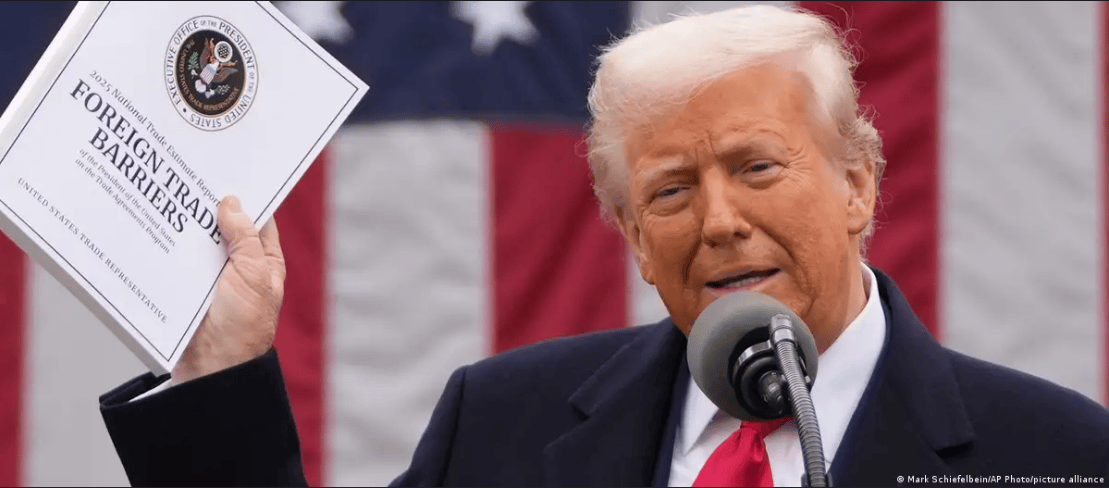
Core Viewpoint - The year 2025 marked the beginning of a tumultuous trade war initiated by President Trump, characterized by a series of new tariffs that plunged the U.S. into conflicts with nearly all countries globally [1]. Group 1: Key Actions and Developments - In the first quarter, tariffs were primarily targeted at key trade partners: Canada, Mexico, and China, with the U.S. increasing import tariffs on steel and aluminum to 25% [3]. - By April, the trade war escalated significantly, with Trump announcing comprehensive tariffs affecting almost all countries, leading to a stock market crash and a dramatic increase in tariffs between the U.S. and China, reaching 145% and 125% respectively [4]. - From May to July, the Trump administration boasted about trade "framework" agreements while simultaneously threatening further tariffs and increasing steel and aluminum tariffs to punitive levels of 50% [5]. Group 2: Legal and Regulatory Challenges - In August, tariffs on over 60 countries and the EU were implemented, with Canada facing a 35% increase in import taxes, and the "de minimis rule" was abolished, removing tax exemptions for low-cost imports [6]. - By September to December, the tariff disputes were escalated to the Supreme Court, where doubts were raised about the president's authority to impose such extensive tariffs, while some tariffs on food items were reduced or eliminated due to rising price pressures [7].
二手房跌不断,老百姓持币观望,稳住楼市成中国经济突围关键一步
Sou Hu Cai Jing· 2025-12-27 07:06
Group 1 - The core issue is that stabilizing the real estate market has become crucial for both individual wealth and the overall economy of the country [1][12] - The cooling of the second-hand housing market has led to declining prices, causing anxiety among families looking to sell and potential buyers to hesitate [1][3] - The sentiment of wealth depreciation has resulted in reduced consumer spending and investment decisions, impacting various industries connected to real estate [3][5] Group 2 - Many families in China have invested a significant portion of their savings in real estate, and the downturn has led to a consensus of asset depreciation [5][10] - The external economic environment has become challenging, with reduced foreign demand, making the domestic market increasingly important [7][8] - The government has initiated actions to support the real estate sector, including debt restructuring for large developers and ensuring timely delivery of properties to restore buyer confidence [10][12] Group 3 - The instability in the real estate market affects consumer confidence and corporate investment willingness, which are critical for economic growth [12] - The need for new policies and measures to stimulate the market is evident, including support for first-tier cities and the integration of technology in housing [10][12] - Addressing the real estate issue is essential for the broader economic recovery and development of new industries like high-end manufacturing and artificial intelligence [12]


“追新弃旧”要不得,莫把“压舱石”当作“绊脚石”
Xin Hua Ri Bao· 2025-12-27 03:29
Core Viewpoint - The article emphasizes the importance of balancing new and traditional industries, highlighting the risks of blindly pursuing trendy sectors without considering local resources and capabilities [1][4]. Group 1: Industry Dynamics - Some regions are blindly following trends in industries like chips and "new three types" without regard for their own resource limitations and existing industrial foundations [1] - The manufacturing sector, particularly traditional industries like clothing, furniture, and home appliances, plays a crucial role in the economy, providing millions of jobs and meeting essential consumer needs [2] - The "old three types" of manufacturing are not obstacles to industrial upgrading but rather foundational elements that support the real economy [2] Group 2: Challenges and Solutions - While traditional manufacturing faces challenges such as low added value and environmental pressures, a one-size-fits-all shutdown approach is not the solution [3] - Transitioning traditional industries towards high-end, intelligent, and green practices can foster the development of supporting industries, such as eco-friendly materials and energy-efficient technologies [3] - A strong manufacturing ecosystem requires both innovative sectors like chips and "new three types" and solid traditional industries, emphasizing the need for a collaborative and phased development approach [3][4] Group 3: Strategic Recommendations - The article advocates for a pragmatic approach to industrial development, suggesting that regions should leverage their unique resources and industrial bases to integrate new and old industries effectively [3][4] - Areas with strong industrial foundations should focus on core technology advancements in chips and "new three types," while labor-rich regions should enhance the upgrading of traditional industries [3]
标准提升激发更大消费活力
Xin Lang Cai Jing· 2025-12-26 23:08
Core Viewpoint - The article discusses the implementation of national standards to support high-quality development in various sectors, particularly focusing on equipment updates and the replacement of consumer goods, aiming to enhance safety, efficiency, and sustainability in the market [1][2][4]. Group 1: National Standards Implementation - The State Administration for Market Regulation, in collaboration with several departments, has issued a plan to revise 294 national standards across 13 key areas, which has been fully approved and published [1]. - The "Two New" initiative focuses on revising 115 national standards in sectors such as automobiles, home appliances, and emerging consumer goods to enhance the quality of durable consumer products and stimulate domestic demand [2]. Group 2: Energy Efficiency and Emission Standards - Over 140 energy consumption and efficiency standards and 170 pollutant emission standards have been published, but further upgrades are needed to meet technological advancements and stricter pollution requirements [2]. - The new mandatory national standard for coal-fired power generation aims to reduce average coal consumption to below 302 grams per kilowatt-hour by 2030, potentially decreasing carbon dioxide emissions by approximately 160 million tons [3]. Group 3: Circular Economy and Resource Utilization - The "Two New" initiative also emphasizes the development of a circular economy, focusing on product design for recyclability and the establishment of standards for the recycling and reuse of waste products [3]. - The introduction of 12 national standards for the recycling of power batteries aims to create a comprehensive standard system covering disassembly, residual energy detection, and recycling, facilitating the efficient recovery of strategic resources like nickel, cobalt, and lithium [3]. Group 4: Industrial and Light Industry Development - The initiative has accelerated large-scale equipment updates in the industrial sector, driving investment growth and promoting industrial development, with the Ministry of Industry and Information Technology completing 44 important national standards [4]. - In the light industry, 52 key recommended national standards have been deployed to address transformation and upgrade needs, with standards like smart furniture grading driving the market for high-end smart furniture products, which has exceeded 10 billion yuan [4]. Group 5: Future Focus Areas - In the coming year, the market regulation authority will focus on optimizing traditional industries and enhancing service quality, planning to revise over 1,800 standards to support industrial transformation [5]. - The authority will also develop a new consumer goods standard system that aligns with high-quality development, addressing consumer demands for safety, quality, and sustainability [5].
为了贴上“美国制造”,敏华宁愿接手一家亏损公司
Ge Long Hui· 2025-12-26 13:53
Core Viewpoint - The acquisition of GRIC by Minhua Holdings for 587 million RMB (approximately 84 million USD) is a strategic move aimed at enhancing its presence in the U.S. market, despite GRIC's financial struggles, reflecting a broader trend of Chinese furniture companies transitioning from OEM to brand acquisition in response to trade barriers and market challenges [1][2][5]. Group 1: Acquisition Details - Minhua Holdings announced the acquisition of GRIC, a U.S. furniture company, for 587 million RMB, with 32 million USD for 100% equity and 26.99 million USD as an interest-free loan to cover GRIC's bank debts [1]. - GRIC reported a revenue of 188 million USD for the fiscal year 2025, a decline of 21.3%, and a net loss of 9.6867 million USD, which is a 148% increase in losses compared to the previous year [1][3]. - The acquisition is seen as a long-term strategic investment rather than a short-term profit opportunity, as it provides Minhua with essential market access and production capabilities in the U.S. [6][8]. Group 2: Industry Context - The Chinese furniture industry has evolved from relying on OEM production to seeking global market presence through brand acquisitions, driven by increased tariffs and the need for brand recognition [2][3]. - The U.S. market has seen a significant decline in furniture exports from China, with a 23.7% drop in 2024, highlighting the challenges faced by Chinese manufacturers [3]. - The shift towards brand acquisition is seen as a necessary evolution for Chinese companies to overcome the limitations of being perceived as low-cost manufacturers [4][16]. Group 3: Strategic Implications - The acquisition of GRIC allows Minhua to leverage existing production facilities and a network of over 1,000 retail partners in the U.S., facilitating a quicker market entry [6][7]. - Minhua's strategy includes integrating GRIC's operations to enhance procurement efficiency and reduce costs, potentially improving GRIC's profitability [12][13]. - The company plans to implement a three-brand strategy to cater to different market segments, which will require careful management to avoid internal competition [14]. Group 4: Comparative Analysis - The case of Minhua contrasts with other Chinese companies like Kuka Home, which faced significant challenges due to aggressive acquisition strategies that did not align with their core business [9][10]. - Dream Lily's gradual approach to acquisitions has proven successful, emphasizing the importance of strategic alignment and integration capabilities [11]. - Minhua's acquisition strategy appears to be more focused and calculated, learning from the pitfalls of previous industry players [11][16]. Group 5: Future Outlook - The success of Minhua's acquisition will depend on effective integration and the ability to establish a strong brand presence in the U.S. market [15][17]. - The broader trend in the industry indicates a shift towards brand ownership and local market adaptation, which will be crucial for long-term success [16][17]. - The outcome of this acquisition could serve as a model for other Chinese companies looking to expand internationally, emphasizing the importance of brand recognition and local market understanding [17].