空调

Search documents
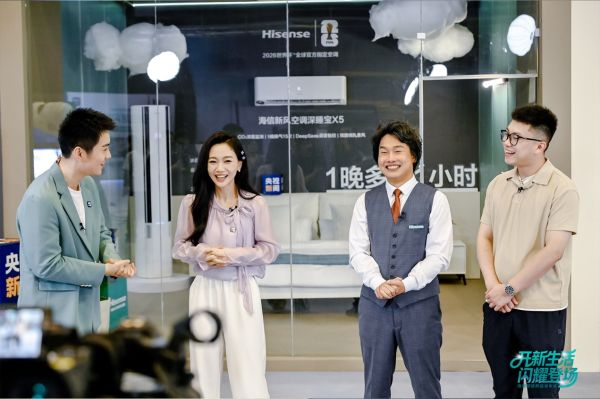
2026美加墨世界杯官方空调来了!海信璀璨U6和深睡宝X5央视直播间首秀
Cai Fu Zai Xian· 2025-09-30 01:21
Core Insights - Hisense has launched the world's first air conditioner equipped with the Star Flash Human Sensing 2.0 technology, which allows for intelligent wind control based on human movement, enhancing user comfort and energy efficiency [3][5] - The new Hisense air conditioners, including the Brilliant U6 and Deep Sleep X5, feature advanced technologies such as CO₂ sensors for real-time air quality monitoring and AI-driven voice control capabilities [6][9] Group 1: Product Features - The Brilliant U6 air conditioner can adjust wind direction and intensity based on user presence, providing a customized experience [3][5] - The Deep Sleep X5 model includes a CO₂ sensor that actively monitors indoor carbon dioxide levels and adjusts air quality accordingly, maintaining a stable CO₂ concentration below 800 ppm for optimal sleep [6][8] - Both models utilize a three-stage purification system to effectively remove pollutants and allergens, ensuring a healthy breathing environment [8] Group 2: Technological Innovations - The Star Flash SLP human sensing technology operates like a precise "bat echolocation" system, allowing for accurate detection of human presence without the use of cameras [5] - The Deepseek voice control model can understand multiple commands simultaneously and recognizes six dialects, enhancing user interaction [9][12] Group 3: Market Positioning - Hisense has a long history of innovation in air conditioning, having introduced the first fresh air conditioner in China in 2008, and continues to evolve its product offerings to meet diverse consumer needs [13] - The new air conditioners are set to be available for purchase through various channels, including online platforms and physical stores, starting from the National Day holiday [13]


【光大研究每日速递】20250930
光大证券研究· 2025-09-29 23:06
Group 1 - The "15th Five-Year Plan" will focus on three core themes: technology leadership, boosting domestic demand, and security development. Key policy measures include stabilizing economic growth, enhancing total factor productivity, accelerating AI application, stabilizing manufacturing share, and investing more resources in human capital [4] - The pure bond fund analysis will examine approximately 1,000 pure bond funds, focusing on investor structure, bond types, duration, and leverage to accurately characterize each fund's duration style [4] - In the equity market, the new energy and TMT-themed funds showed superior net value growth, while the pharmaceutical sector continued to decline. There was significant net inflow into domestic stock ETFs, particularly in TMT and large-cap broad-based ETFs [4][5] Group 2 - Freeport has reduced its production guidance for 2025 and 2026 by 20,000 and 27,000 tons respectively, which accounts for 0.9% and 1.2% of global copper production in 2024. There is an expectation for copper prices to rise due to improved air conditioning production in the last quarter of the year [6] - The asphalt operating rate is at its highest level in five years, and the prices of ductile iron pipes and processing fees are at their annual peaks. The steel sector's profitability is expected to recover to historical average levels, with potential PB recovery for steel stocks [6] - The construction materials industry has released a growth stabilization plan that emphasizes quality and efficiency, prohibiting new capacity additions. This plan aims to enhance profitability through coordinated efforts on both supply and demand sides [6] Group 3 - Pfizer's acquisition of Metsera and its next-generation weight loss product portfolio highlights the significant potential and long-term viability of the weight loss drug market. This move underscores the industry's urgent need for next-generation therapies and the competitive landscape in the GLP-1 sector [7]

鸿蒙空调、小米空调来袭 空调业变化几何?
Di Yi Cai Jing· 2025-09-27 05:13
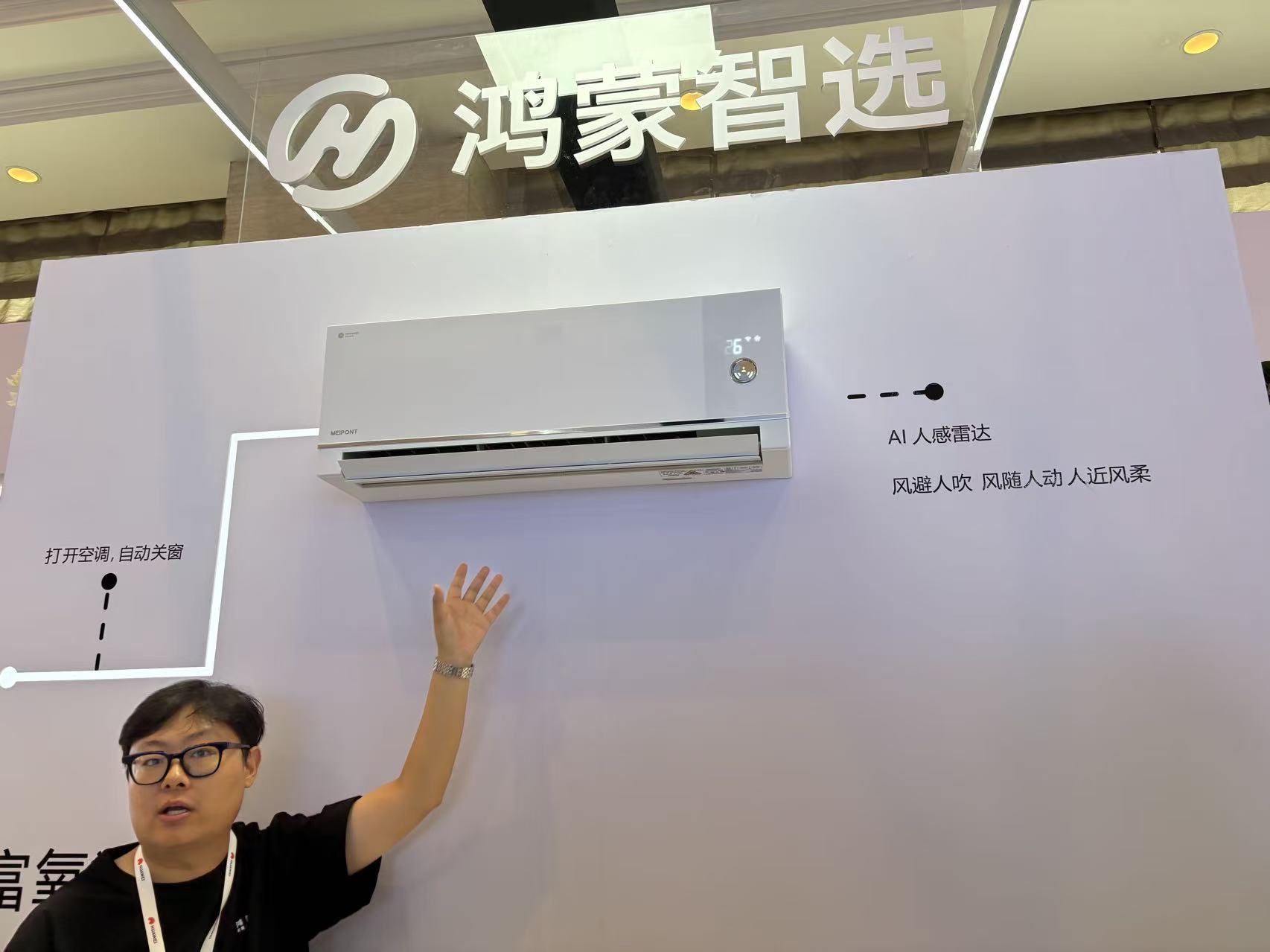
Core Insights - The air conditioning industry is witnessing the rise of new players leveraging smart ecosystems, posing challenges to traditional leaders like Gree Electric, which has faced declining performance and stock prices [2][3] New Forces Rising - At the Hongmeng Smart Selection 2025 Autumn New Product Launch, health air was highlighted as a key focus area, with MEIPONT air conditioners selling out shortly after their launch [3] - MEIPONT's first batch of products sold over 4,000 units and generated over 10 million yuan in sales on the first day [3] - The MEIPONT air conditioners utilize advanced technologies recommended by Huawei, aiming to create a smart air conditioning experience [3][4] Industry Dynamics - The competition is intensifying with Midea Group signing a strategic cooperation agreement with Huawei to develop integrated smart home solutions [5] - Gree Electric is expanding its offline experience stores while also offering a ten-year free repair service, similar to Xiaomi's recent announcement [5][6] - The market is experiencing a price war, with Xiaomi introducing budget-friendly models, leading to pressure on mid-to-high-end air conditioning sales [5][6] Market Outlook - The emergence of new players is expected to accelerate market competition and drive technological upgrades within the air conditioning industry [6] - Analysts suggest that while Xiaomi focuses on cost-effectiveness, the Hongmeng Smart Selection air conditioners target the mid-to-high-end market, indicating a potential shift in market dynamics over time [6]

鸿蒙空调、小米空调来袭,空调业变化几何?
Di Yi Cai Jing· 2025-09-27 04:59
Core Insights - The air conditioning industry is experiencing intensified competition driven by new players leveraging smart ecosystems, leading to a shift in market dynamics [1][3][7] Industry Dynamics - Traditional leaders like Gree Electric (000651.SZ) are facing pressure from emerging competitors, with Gree's stock hitting a year-low of 39.3 yuan per share on September 26 [3] - The competition landscape is characterized by price wars, technological advancements, and service enhancements [3][6] Emergence of New Players - The new player MEIPONT, in collaboration with Huawei's HarmonyOS ecosystem, has launched smart air conditioning products that emphasize technology integration and user experience [4][5] - MEIPONT's initial product launch saw sales exceeding 4,000 units and revenue surpassing 10 million yuan on the first day [4] Competitive Strategies - Xiaomi has also made significant strides in the air conditioning market, achieving a 14.73% share in the online segment, a 3.78 percentage point increase year-on-year, ranking third behind Midea and Gree [5] - Midea has signed a strategic partnership with Huawei to develop integrated smart home solutions, while Gree is expanding its offline experience stores [6] Service and Pricing Competition - The competition is not only about technology but also service, with Gree and Xiaomi both offering ten-year free repair services for their air conditioners [6] - Xiaomi's introduction of budget-friendly models has intensified price competition, impacting mid-to-high-end sales, while Gree has opted not to engage in price wars [6] Market Outlook - Analysts suggest that the influx of new players will accelerate market competition and technological upgrades, similar to past trends in the television industry [7] - However, some experts caution that while Xiaomi's air conditioning business has matured over ten years, MEIPONT's entry is still in its early stages and may take time to establish a market presence [7]
格力还没到“坐不住”的时候
Bei Jing Shang Bao· 2025-09-23 15:23
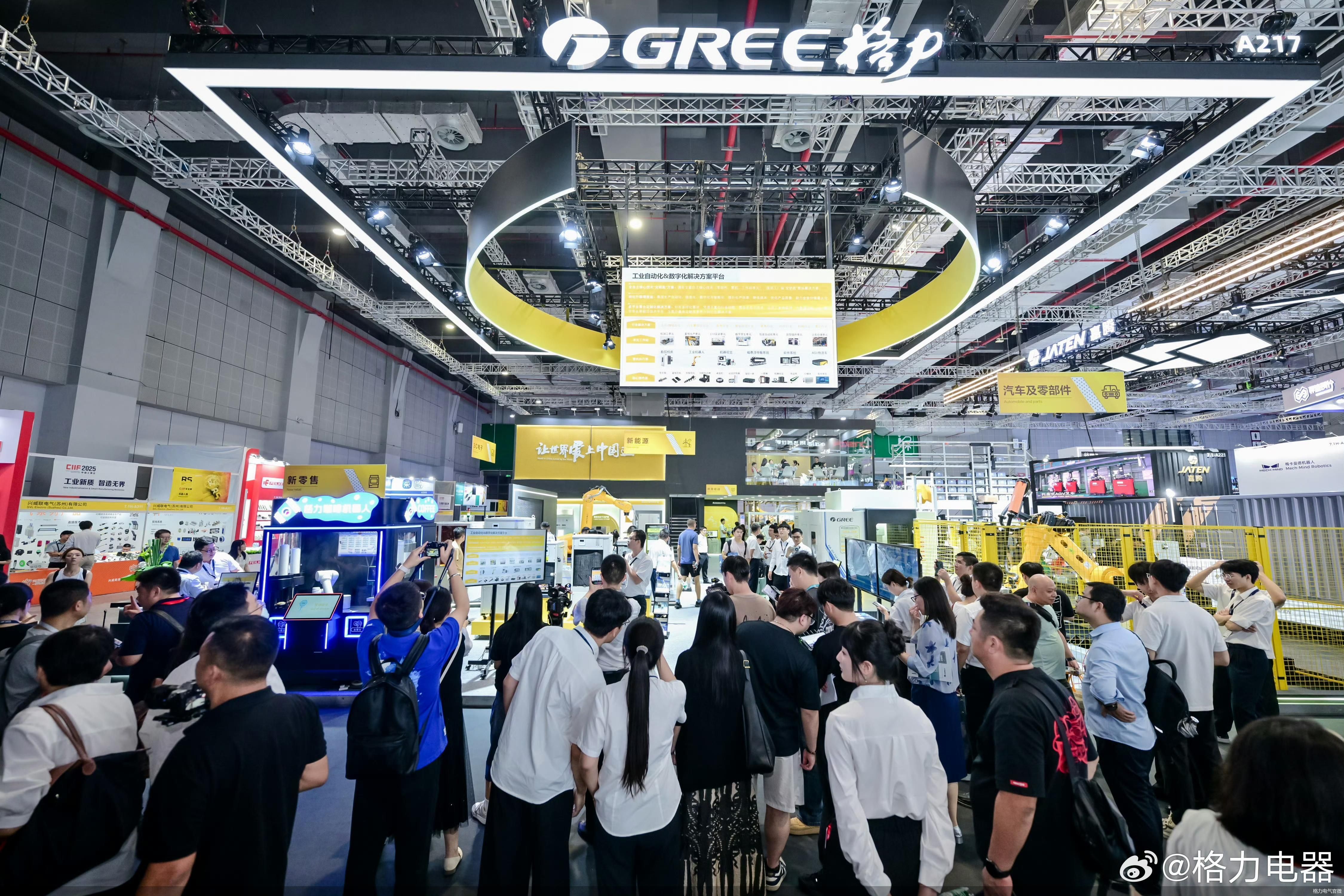
Core Viewpoint - The air conditioning industry is facing challenges due to product homogenization and increased competition, particularly from Xiaomi, which is impacting Gree's market position and growth potential [4][10][20]. Group 1: Market Position and Competition - Gree's market share in online air conditioning sales is 23.44%, ranking second behind Midea's 24.06%, but it has shown a strong performance in August 2025 with a market share of 24.4%, surpassing Midea [5][13]. - Xiaomi has introduced a "10-year free repair" service, prompting Gree to respond by highlighting its own similar service and emphasizing its product quality [5][10]. - The competition between Gree and Xiaomi has escalated, with both companies engaging in public disputes over sales data and product quality, reflecting a broader struggle between traditional manufacturing and internet-driven business models [10][11][20]. Group 2: Financial Performance - Gree's air conditioning segment reported revenue of 762.8 billion yuan in the first half of 2025, a decline of 5.1% year-on-year, indicating pressure on its core business [13][14]. - In contrast, Midea and Haier reported significant revenue growth of 15.7% and 10.2%, respectively, highlighting Gree's underperformance relative to its competitors [13][14]. - Gree's overall revenue for the first half of 2025 was 973.25 billion yuan, down 2.46%, with a net profit of 144.12 billion yuan, up 1.95% [13][14]. Group 3: Product Innovation and Consumer Perception - Gree is focusing on product differentiation to combat market homogenization, with innovative products like the "wind does not blow people" series seeing a 131% increase in sales [15][16]. - The company is also exploring new retail channels, such as the "Dong Mingzhu Healthy Home" stores, which aim to enhance consumer experience and drive sales [16][17]. - Despite facing pressure from low-cost competitors, Gree maintains a strong brand reputation for quality and reliability, which continues to attract consumer trust [19][20].

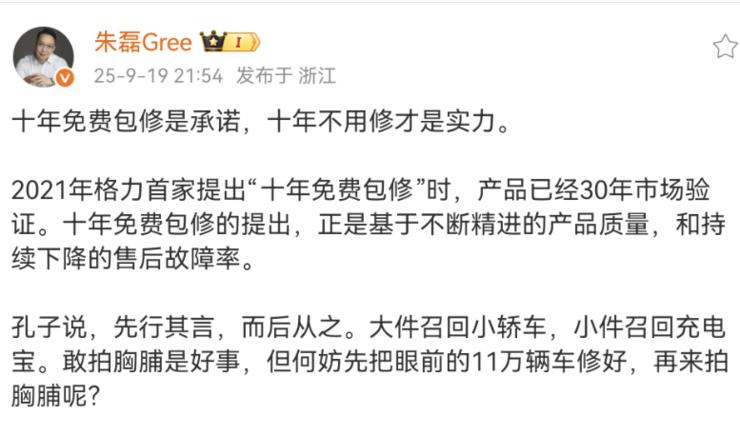
小米空调“10年包修”,格力第一个不服
3 6 Ke· 2025-09-23 11:32
Core Viewpoint - The competition between Xiaomi and Gree in the air conditioning sector has intensified, with Xiaomi announcing a "10-year free warranty" service for its air conditioners, directly challenging Gree's established reputation for long warranty periods [1][2]. Group 1: Xiaomi's New Warranty Policy - Xiaomi's "10-year free warranty" covers approximately 7.5 million units of its air conditioners installed since January 1 of this year [1]. - The announcement generated significant online discussion, particularly regarding the actual scope of the warranty, as Xiaomi's wording suggested it might only apply to "Mijia air conditioners" sold through its own platform [2][4]. - Customer service confirmed that all air conditioning products from Xiaomi would support the 10-year warranty, alleviating concerns about the policy's coverage [4][5]. Group 2: Industry Context and Challenges - The industry standard typically requires a one-year warranty for the entire unit and three years for major components, with many brands extending this to six years for the entire unit and ten years for key parts [6]. - Achieving a 10-year warranty poses significant challenges, including the need for a robust supply chain to provide replacement parts for older models and the financial implications of accurately predicting failure rates over a decade [7][8]. - Xiaomi's move to offer a 10-year warranty is seen as a strategic challenge to Gree, which has built its brand around long warranties and high quality over many years [8]. Group 3: Market Position and Performance - As of July 2025, Xiaomi's air conditioner market share reached 13.7%, with a year-on-year growth of 53.9%, positioning it as the third-largest player in the industry [15]. - Xiaomi's online market share is even more impressive at 15.8%, closely trailing Gree's 16.4% [13]. - Despite these gains, Xiaomi still faces challenges in penetrating the high-end market, where established brands like Daikin and Mitsubishi dominate [9][16]. Group 4: Consumer Perception and Brand Trust - The air conditioning market is characterized by significant information asymmetry, with consumers often relying on brand reputation and recommendations rather than technical specifications [16]. - Xiaomi's relatively short history in the air conditioning sector may hinder its ability to build the same level of consumer trust as established brands, which have decades of experience and brand loyalty [16][18]. - The effectiveness of Xiaomi's "10-year warranty" will ultimately depend on its ability to deliver on this promise over the long term, especially in light of recent product recalls in other categories [18].
丹佛斯:在中国迎来前所未有的发展机遇|2025华夏ESG实践绿色机遇案例
Hua Xia Shi Bao· 2025-09-23 09:37
Company Overview - Danfoss, founded in 1933, is one of Denmark's largest global industrial groups, employing approximately 40,000 people and operating 100 factories worldwide, serving customers in over 100 countries [2] - The company provides solutions in various fields including refrigeration, air conditioning, heating, power conversion, motor control, industrial machinery, automotive, shipping, and both on-road and off-road vehicles [2] - In China, Danfoss has nearly 5,000 employees and ranks second in various regional markets, with 12 production bases established over nearly 30 years, and four factories recognized as national "green factories" [2] - Danfoss aims to achieve carbon neutrality for all its Chinese factories by 2027 [2] Strategic Developments - With the advancement of China's "dual carbon" strategy, Danfoss has experienced unprecedented growth, becoming the second-largest regional sales market and the largest procurement market for the company globally [3] - The company is expanding its investments in China, including the establishment of two electrification production lines in Nanjing to support energy efficiency in new energy, high-end manufacturing, and green infrastructure [3] - In 2023, Danfoss opened a research and testing center for scroll compressors in Tianjin, enhancing its innovation and service capabilities in environmentally friendly refrigerants and energy-saving cooling technologies [3] - The second phase of Danfoss's Haiyan facility is set to commence operations in September 2024, becoming the largest production base globally, focusing on key products such as variable frequency drives, heat exchangers, and magnetic levitation compressors [3] Business Growth and Projects - Since the introduction of China's "dual carbon" goals, Danfoss's business in China has nearly doubled, collaborating with clients on numerous projects [4] - For instance, Danfoss provided high-efficiency solutions for the HVAC system of the T3B terminal at Chongqing Jiangbei International Airport, including 365 sets of specialized variable frequency drives and harmonic filters [4] - In the energy-efficient building sector, Danfoss contributed core direct current distribution solutions for the "green" zero-carbon building in Zhuhai, Guangdong, which is one of the first carbon-neutral pilot projects in the province [4] - The solutions provided by Danfoss support the construction of a 750V direct current grid, ensuring quick isolation and continuous power supply during faults, thus aiding in digital energy management and efficient photovoltaic utilization [4] Expert Commentary - Danfoss exemplifies how to transform the "dual carbon" goals into a new growth engine through green innovation, from factory carbon neutrality to win-win scenarios across the industrial chain [4]
中国银河证券:国补退坡零售下滑 空调出口继续调整
Zhi Tong Cai Jing· 2025-09-23 08:16
Core Viewpoint - The air conditioning retail market in China is experiencing a significant slowdown due to the impact of reduced national subsidies and high year-on-year comparison bases starting from September 2023 [1][2]. Group 1: Domestic Sales and Production - From September to November, the domestic air conditioning production is expected to decline compared to the same period last year, with decreases of -6.3%, -23.4%, and -17.6% respectively, indicating a cautious industry outlook [1][2]. - In August, domestic air conditioning shipments reached 7.737 million units, showing a year-on-year increase of 1.2%, driven by sustained high temperatures across the country [2]. - The reduction in national subsidy funding has led to various measures across provinces to control subsidy spending, including daily limits on subsidies and the suspension of certain categories [2]. Group 2: Export Trends - In August, air conditioning exports totaled 5.287 million units, reflecting a year-on-year decrease of 4.2%, although this was an improvement compared to previous production forecasts [3]. - For September to November, the expected production for household air conditioning exports shows declines of -16.6%, -7.8%, and -9.1% respectively, attributed to the transfer of U.S. orders overseas and high year-on-year comparison bases [3]. Group 3: Pricing Dynamics - The retail average price of air conditioners in the offline market has shown a recovery, rising to 4,301 yuan per unit in September after a decline from April to July [4]. - Online retail prices have also improved, with the average price reaching 2,859 yuan per unit in September, following a downward trend earlier in the year [4]. Group 4: Industry Competition and Service Upgrades - Xiaomi has announced an upgrade to a 10-year free warranty for its air conditioners, reflecting a shift in the industry from price competition to a focus on quality and service [5]. - The extension of service periods is expected to enhance consumer confidence in product quality and increase competitive pressure on manufacturers [5]. Group 5: Investment Recommendations - The current market is active, with traditional home appliance leaders lacking growth potential, while technology-related companies are performing better [6][7]. - Recommendations include companies with low valuations and high dividend yields, such as Midea Group and Haier Smart Home, as well as innovative firms like Ousheng Electric and Rongtai Health [6][7].

破局与重构:2025空调行业趋势与消费需求白皮书
Ai Rui Zi Xun· 2025-09-23 06:39
Investment Rating - The report does not explicitly state an investment rating for the air conditioning industry. Core Insights - The air conditioning market is undergoing a transformation driven by dual forces of policy guidance and technological innovation, focusing on energy efficiency and carbon reduction, which is reshaping the industry landscape and creating new growth models [5][8]. - The market is expected to experience explosive growth in energy-efficient renovations, driven by government policies and increasing market demand [8]. - The report highlights a significant increase in air conditioning sales due to high temperatures and government subsidy policies, with some regions reporting over 200% year-on-year growth in sales [11][13]. - The air conditioning market is entering a mature phase with a stable scale, where online sales account for 60% of the market, and price differentiation is evident across various product segments [17]. - Consumer preferences are shifting towards comfort, health, and aesthetics, with a growing demand for features such as energy efficiency, smart technology, and design integration [36][40]. Summary by Sections 1. Development Trends in the Air Conditioning Industry - The air conditioning market is being reshaped by energy-saving policies and technological advancements aimed at achieving carbon neutrality [5][7]. - The government has introduced various policies to support energy-efficient renovations, providing strategic guidance and market opportunities [7][8]. - The market is poised for significant growth, particularly in the building energy-efficient renovation sector, driven by policy support and rising consumer demand [8]. 2. New Landscape of Air-conditioning Consumption - The main consumer groups for air conditioning are shifting towards younger generations, particularly those born after 2000 and 1990, with a focus on comfort and health [43]. - The report identifies eight typical consumer segments, each with distinct characteristics and demands, such as health-conscious families and budget-sensitive consumers [79]. - The demand for air conditioning is increasingly influenced by social media discussions, with topics like energy efficiency and comfort becoming top concerns [27][30]. 3. New Map of Users and Air-conditioning Demands - The report outlines a detailed segmentation of air conditioning consumers, highlighting the importance of comfort and health in purchasing decisions [79][80]. - There is a notable trend towards high-end air conditioning products, with consumers willing to pay a premium for features that enhance comfort and health [40][72]. - The report emphasizes the growing importance of smart technology and design aesthetics in consumer preferences, indicating a shift from basic functionality to a more integrated lifestyle approach [36][40].

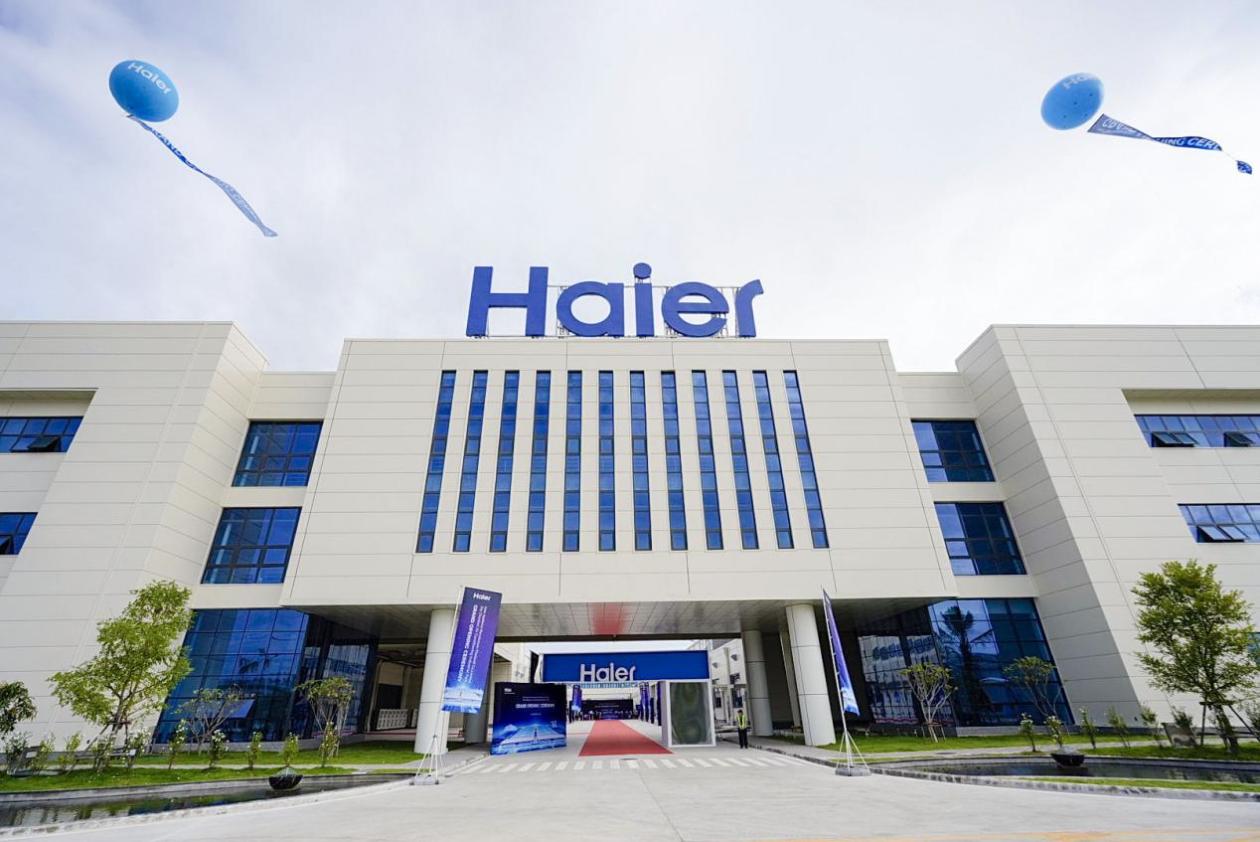
年产能600万套!中国品牌在东南亚最大的空调生产基地投产
Huan Qiu Wang· 2025-09-23 06:31
Core Viewpoint - Haier's new air conditioning production base in Thailand marks a significant expansion in Southeast Asia, positioning the company as a leader in the region's air conditioning market, with a planned annual capacity of 6 million units, making it the largest manufacturing base for Chinese brands in Southeast Asia [1][3][5]. Group 1: Production Capacity and Market Position - The Thailand air conditioning base has a planned annual capacity of 6 million units, making it the highest capacity manufacturing base for Chinese air conditioning companies in Thailand [5]. - The base covers 14 product categories and over a thousand models, catering to various air conditioning needs, including residential, commercial, and specialized applications [5]. - Haier has maintained the number one sales position in the Thai market for four consecutive years, supported by the new base's digital transformation that enhances production efficiency by 20% and reduces operational costs by 15% [5][8]. Group 2: Technological and Environmental Advancements - The production facility incorporates advanced technologies such as AI visual inspection and noise recognition systems to ensure high product quality [3]. - The factory utilizes a photovoltaic power system for zero-carbon operations and has received Thailand's highest BOI A2+ certification, reflecting a commitment to sustainable manufacturing practices [3][5]. Group 3: Strategic Global Positioning - The establishment of the Thailand base fills a regional production gap and supports Haier's global growth strategy, enabling local production for Southeast Asian demand and proximity supply for North America and Europe [6][8]. - Haier has built a global network with 35 industrial parks and 163 manufacturing centers, with the Thailand base serving as a key node in its global supply chain [8].