超市

Search documents
网红超市来了
Xin Lang Cai Jing· 2026-01-06 16:24
(来源:南京晨报) 转自:南京晨报 1月6日,南京市建邺巧刻广场奥乐齐门店进入开业前收尾阶段。门店外立面LOGO、门头均已安装就 位,1000平方米空间内工作人员正开展商品陈列与设备调试,同时在户外广场推广会员绑定活动。该店 1月24日将与江宁景枫中心、仙林金鹰、江北印象汇三店同步开业。 新华报业视觉中心记者 范俊彦 摄 ...
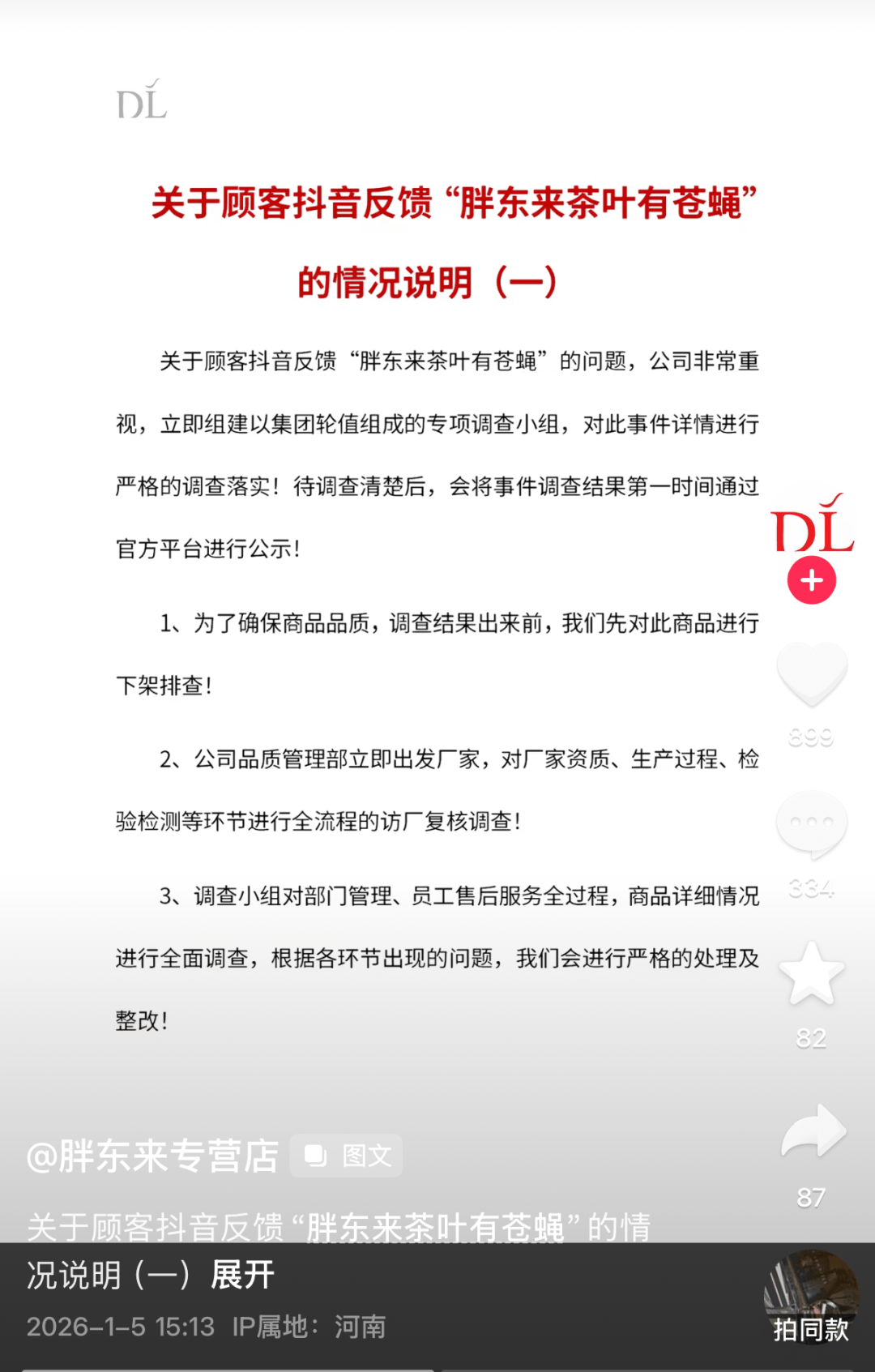
茶叶有苍蝇?胖东来致歉:下架排查
Sou Hu Cai Jing· 2026-01-06 07:27
Core Viewpoint - The company is taking the issue of customer feedback regarding "flies in tea" very seriously and has initiated a thorough investigation to address the concerns raised by consumers [1][3]. Group 1: Incident Response - The company has formed a special investigation team to conduct a detailed inquiry into the incident and will publicly disclose the findings once the investigation is complete [1]. - Initial findings indicate that the customer service team failed to follow company standards and procedures when handling customer feedback, leading to a negative experience for the customer [3][5]. - The company has apologized to customers for the poor experience and is urging the public to approach the situation with objectivity and kindness, avoiding harmful comments online [3][5]. Group 2: Quality Assurance Measures - To ensure product quality, the company has initiated a product recall and is conducting a comprehensive review of the manufacturer's qualifications, production processes, and inspection protocols [5]. - The investigation will cover all aspects of department management and customer service, with strict measures to address any identified issues [5]. Group 3: Recent Developments - The company has also taken action against counterfeit products, specifically the "Little Sugar" series of jewelry, which is not an official product of the company [5][6]. - As of December 31, 2025, the company reported a total sales revenue of over 23.531 billion yuan for the year, with supermarket sales reaching 12.643 billion yuan and jewelry sales at 2.451 billion yuan [6].

红旗连锁涨2.02%,成交额3.96亿元,主力资金净流入390.40万元
Xin Lang Cai Jing· 2026-01-06 06:26
Core Viewpoint - Hongqi Chain's stock price has shown fluctuations with a recent increase of 2.02%, while the company faces a decline in revenue and profit for the year 2025 [1][2]. Group 1: Stock Performance - As of January 6, Hongqi Chain's stock price reached 6.05 yuan per share, with a trading volume of 396 million yuan and a turnover rate of 5.80%, resulting in a total market capitalization of 8.228 billion yuan [1]. - Year-to-date, the stock price has increased by 1.85%, with a decline of 2.26% over the last five trading days, an increase of 4.13% over the last 20 days, and a rise of 7.84% over the last 60 days [1]. Group 2: Financial Performance - For the period from January to September 2025, Hongqi Chain reported an operating income of 7.108 billion yuan, representing a year-on-year decrease of 8.48%, and a net profit attributable to shareholders of 383 million yuan, down by 1.89% year-on-year [2]. - Since its A-share listing, the company has distributed a total of 1.562 billion yuan in dividends, with 926 million yuan distributed over the past three years [3]. Group 3: Shareholder Information - As of December 10, the number of shareholders for Hongqi Chain reached 68,600, an increase of 5.19% from the previous period, while the average number of circulating shares per person decreased by 4.93% to 16,699 shares [2]. - As of September 30, 2025, Hongqi Chain's fourth-largest circulating shareholder is Hong Kong Central Clearing Limited, holding 35.2285 million shares, a decrease of 19.9774 million shares from the previous period [3].

步步高涨2.06%,成交额2.45亿元,主力资金净流入171.61万元
Xin Lang Cai Jing· 2026-01-06 02:25
Core Viewpoint - The stock price of Bubugao has shown fluctuations, with a recent increase of 2.06% on January 6, 2025, and a total market capitalization of 14.68 billion yuan. The company has experienced mixed performance in its stock price over various time frames, indicating potential volatility in investor sentiment [1][2]. Company Performance - Bubugao's stock price has increased by 2.82% since the beginning of the year, but has seen a decline of 0.73% over the last five trading days. In the last 20 days, the stock rose by 8.12%, while it decreased by 2.15% over the past 60 days [2]. - For the period from January to September 2025, Bubugao reported a revenue of 3.194 billion yuan, reflecting a year-on-year growth of 26.48%. However, the net profit attributable to shareholders was 226 million yuan, which represents a significant decline of 88.83% compared to the previous year [2]. Business Structure - The main business of Bubugao includes retail operations, with revenue contributions as follows: supermarkets at 64.34%, other segments at 27.44%, department stores at 6.01%, and logistics and advertising at 2.21% [2]. - The company is categorized under the Shenwan industry classification of retail trade, specifically general retail and supermarkets. It is also associated with concepts such as community group buying, prepared dishes, new retail, cold chain logistics, and unified large markets [2]. Shareholder Information - As of September 30, 2025, Bubugao had 172,500 shareholders, an increase of 95% from the previous period. The average number of circulating shares per shareholder decreased by 27.06% to 12,476 shares [2]. - The company has cumulatively distributed 1.677 billion yuan in dividends since its A-share listing, but has not issued any dividends in the last three years [3].

胖东来回应“茶叶有苍蝇”:下架排查!新店开业一周入账近亿元…
Bei Jing Shang Bao· 2026-01-05 11:21
Group 1 - The company has initiated a product recall and investigation in response to customer feedback regarding the presence of flies in its tea products, prioritizing product quality assurance before the investigation results are released [2][3] - A special investigation team has been formed to conduct a thorough investigation into the incident, including a review of supplier qualifications, production processes, and inspection procedures [3] - The company has acknowledged shortcomings in customer service during the handling of complaints, leading to a negative customer experience, and has issued an apology while urging the public to refrain from making unfounded accusations online [2][3] Group 2 - The company's sales data for 2025 shows a total revenue exceeding 23.531 billion yuan, with supermarket sales at 12.643 billion yuan, jewelry sales at 2.451 billion yuan, and department store sales at 2.379 billion yuan, ranking them as the top three categories [2] - In 2024, the company reported annual sales of 17 billion yuan, which increased by over 6.5 billion yuan in 2025, representing a year-on-year growth of approximately 38% [4] - The company has experienced consistent sales growth, with revenues rising from approximately 7 billion yuan in 2022 to about 10.7 billion yuan in 2023, and further increasing to around 17 billion yuan in 2024 [5]

新疆乌苏市市场监管局开展冬季学校周边市场秩序专项检查
Zhong Guo Shi Pin Wang· 2026-01-05 08:30
Group 1 - The core viewpoint of the article emphasizes the proactive measures taken by the Urumqi Market Supervision Bureau in Xinjiang to enhance market regulation around schools, focusing on winter consumption characteristics [1] - The enforcement personnel conducted inspections targeting supermarkets, stationery stores, and restaurants near schools, ensuring compliance with food safety and product quality standards [1] - The inspections included verifying the validity of business licenses, adherence to procurement verification, and preventing the sale of expired, spoiled, or counterfeit products [1] Group 2 - Special attention was given to hot-selling winter food items, with checks on storage conditions and processing operations to mitigate food safety risks [1] - The bureau also monitored pricing practices to prevent price gouging and false advertising that could harm student consumers [1] - Future plans include strengthening market regulation around schools, establishing a regular inspection mechanism, and addressing various risk factors to ensure safety and consumer rights [1]
山姆超市有望落地烟台,已有选址意向,今年或实现突破
Qi Lu Wan Bao· 2026-01-05 00:03
近年来,烟台市在优化营商环境、促进商业繁荣、推动消费升级方面出台了一系列政策措施,为国内外 知名商业品牌入驻提供了良好的发展土壤。有分析指出,山姆会员商店选择此时布局烟台,正是看中了 烟台广阔的市场前景和潜力。 据悉,截至2025年11月,山姆在全国已布局61家门店,且正加速推进北方市场扩张,计划2026年在青 岛、济南等北方城市落地十多家门店,逐步扭转"南强北弱"的格局,这也为烟台引入山姆创造了有利的 契机。山姆会员商店若落地烟台,有望为消费者带来全新的购物体验,引发本地零售企业的差异化竞 争,进一步优化烟台商业布局,提升城市商业能级。 山姆超市的选址向来被视为城市消费力的"试金石",其核心指标涵盖城市能级、消费人群、交通配套等 多个维度。 烟台是北方首个经济总量过万亿的地级市,今年前三季度,烟台全市社会消费品零售总额2931.50亿 元,同比增长6.1%。近年来,烟台持续发力首店经济,出台多项扶持政策吸引知名品牌入驻,2023年 以来,已有20余家首店获得政策认定,形成了良好的品牌集聚效应,已具备了承接山姆落地的坚实基 础。 齐鲁晚报.齐鲁壹点闫丽君 近日,一则关于"山姆会员商店有望落地烟台"的消息在市民 ...
“人、货、场”迭代升级,关注情绪消费赛道机会
KAIYUAN SECURITIES· 2026-01-04 08:46
Investment Rating - The industry investment rating is "Positive" (maintained) [1] Core Viewpoints - The retail industry is undergoing an evolution in the "people, goods, and scene" framework, driven by emotional consumption, which presents new opportunities for growth [3][25] - High-end gold and fashion jewelry are gaining traction among consumers, with a focus on product differentiation and cultural significance [3][32] - The cosmetics industry is innovating through the IP of technical ingredients and cultural confidence, enhancing product appeal and market competitiveness [3][37] - Offline retail is shifting from selling "goods" to offering "services and experiences," with companies like Yonghui Supermarket leading the transformation [3][41] Summary by Sections Retail Market Overview - In 2025, the retail sector index closed at 2422.59 points, with an annual increase of 8.21%, underperforming the Shanghai Composite Index, which rose by 18.41% [5][14] - The retail industry ranked 23rd among 31 sectors in terms of performance [15] Industry Dynamics - The emotional value is driving consumer intentions, with a focus on "research-based consumption," "self-satisfaction," and "long-termism" as key decision-making trends [25][28] - High-end gold is becoming a preferred asset for wealth preservation, while fashion gold is appealing to younger consumers through innovative designs and social media engagement [32] - The cosmetics sector is witnessing a shift towards self-developed core ingredients and cultural narratives, enhancing brand value [37] Investment Recommendations - Focus on high-quality companies in the emotional consumption theme, particularly in the gold jewelry sector, with recommendations for brands like Chao Hong Ji and Lao Pu Gold [6][50] - Emphasize offline retail companies adapting to market changes, such as Yonghui Supermarket and Ai Ying Shi [6][48] - Highlight cosmetics brands that innovate in emotional value and safety, including Mao Ge Ping and Po Lai Ya [6][48] - Consider differentiated medical beauty product manufacturers and leading medical beauty institutions, recommending companies like Ai Mei Ke and Ke Di-B [6][48]
日均同比增16.3% 元旦假期北京市重点监测商业企业实现累计销售额40.4亿元
Bei Jing Shang Bao· 2026-01-03 09:17
Core Insights - The Beijing Municipal Bureau of Commerce reported that from January 1 to 3, 2025, key monitored retail sectors achieved a total sales revenue of 4.04 billion yuan, with an average daily year-on-year growth of 16.3% compared to the same period in 2025 [1] Retail Sector Performance - Specialty stores experienced a significant average daily year-on-year growth of 85% [1] - Department stores reported an average daily year-on-year growth of 41.3% [1] - Supermarkets saw an average daily year-on-year growth of 4.8% [1] - The restaurant sector had an average daily year-on-year growth of 4.6% [1] - E-commerce recorded a modest average daily year-on-year growth of 1.1% [1]
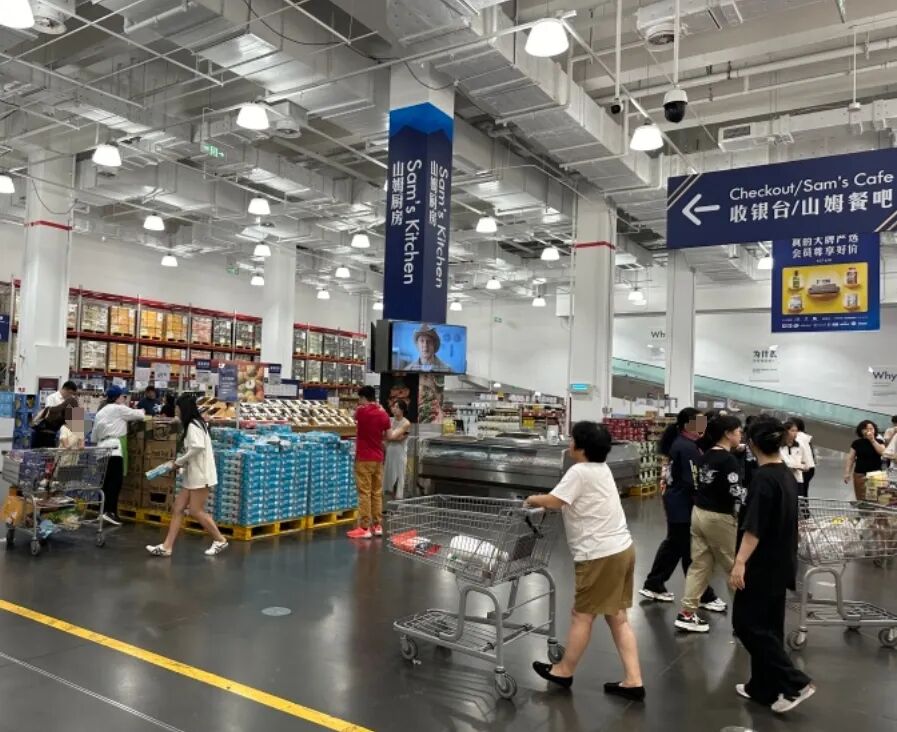
山姆被指多款商品货源与小象趋同,多方回应!
Bei Jing Shang Bao· 2026-01-03 06:05
Core Viewpoint - Recent consumer concerns have emerged regarding the shared supply chain between Sam's Club and Xiaoxiang Supermarket, leading to questions about the necessity of Sam's membership cards [2][5]. Group 1: Consumer Concerns - Customers have reported that products purchased from both Sam's Club and Xiaoxiang Supermarket appear to have the same suppliers, raising doubts about the uniqueness of Sam's offerings [2][5]. - A specific example includes a "fresh chicken wing" product from both stores that shares the same manufacturer, Charoen Pokphand Foods Co., Ltd., and identical ingredient lists [2]. Group 2: Company Responses - Xiaoxiang Supermarket stated that their collaboration with brands includes both exclusive and multi-channel supply models, suggesting consumers choose based on their needs [5]. - Sam's Club has acknowledged the consumer feedback regarding shared suppliers and will investigate the matter further [2][5]. Group 3: Market Performance - Walmart reported a net sales figure of $6.1 billion for its China operations in the third quarter, reflecting a year-on-year growth of 21.8%, with comparable sales increasing by 13.8% [8]. - Sam's Club contributed nearly 70% of Walmart's revenue in China, with e-commerce sales growing by 32% and accounting for over 50% of total sales, marking a significant increase from the previous year [8]. Group 4: Product Selection Controversy - Sam's Club faces criticism for its product selection, with traditional brands increasingly appearing on its shelves, leading to claims of declining selection standards [10]. - The introduction of certain products has sparked debate, particularly regarding unclear branding on packaging, which has led to consumer dissatisfaction [10]. - Sam's Club has responded by stating that some products are "exclusive custom" or "special supply" items and has committed to considering consumer feedback in future product selection strategies [10].