
跨境电商

Search documents
跨境电商新思路:巧用海外仓,应对仓储成本与库存压力
Sou Hu Cai Jing· 2025-10-13 14:16
Core Insights - The article discusses the emerging trend of combining "FBA (Fulfillment by Amazon) and overseas warehouses" as a strategy for cross-border e-commerce sellers to manage costs and maintain operational flexibility in light of tightening platform policies [1][3]. Group 1: Cost Management - Many sellers previously relied solely on FBA, but rising storage fees and changing inventory management rules have increased costs and risks associated with this model [3]. - Overseas warehouses offer a cost advantage, being 30% to 50% cheaper than FBA, without seasonal surcharges [4]. Group 2: Operational Flexibility - The combination of FBA for driving traffic and overseas warehouses for flexible inventory management enhances sellers' ability to respond to sales fluctuations [3]. - The dual-track model allows sellers to improve inventory flexibility and risk resilience while controlling costs [3]. Group 3: Inventory Management - Overseas warehouses provide more lenient storage policies, accommodating large items and slow-moving products [4]. - Automated replenishment suggestions based on sales data and real-time inventory classification during returns help streamline operations [4]. Group 4: Seller Considerations - Sellers with diverse product structures, multiple sales channels (e.g., Amazon, TikTok, independent sites), and frequent return handling issues may benefit from the "FBA + overseas warehouse" model [4].


技术驱动下的跨境电商新范式:Mera Mart以智能系统重构全球分销生态
Sou Hu Cai Jing· 2025-10-13 14:01
(来源:衡水日报) 此外,Mera Mart在风险控制与用户体验优化方面也展现出强大的技术实力。平台部署了智能风控模型,对交易行为进行实时监测,有效防范欺诈 与异常操作,保障资金安全。同时,区块链技术被应用于关键交易环节的数据存证与商品溯源,增强了终端消费者的信任感。对于分销商而言, 平台提供的数据看板可清晰展示销售趋势、用户画像与收益明细,帮助其科学决策,提升运营效率。 业内观察人士指出,Mera Mart的技术架构不仅提升了平台自身的运营效率,更重要的是,它为全球范围内的小微创业者提供了可复制、可持续的 创业工具。相比依赖资本投入和团队规模的传统电商路径,Mera Mart通过技术平权,让更多普通人得以低成本参与全球化分工。 随着平台业务规模的扩大,Mera Mart正进一步加大在技术研发上的投入,探索生成式AI在多语言内容生成、智能客服响应等场景的应用,持续降 低跨文化运营的门槛。其背后来自亚马逊、谷歌、阿里巴巴等科技巨头的核心团队,也为技术创新提供了坚实支撑。 编辑:牟玉珍 在全球电子商务持续增长的背景下,传统跨境分销模式正面临效率瓶颈与运营复杂度上升的双重挑战。越来越多的创业者渴望参与全球贸易,却 ...

出口增长6.6%,跨境电商2.06万亿
3 6 Ke· 2025-10-13 12:55
Core Insights - Cross-border e-commerce has emerged as a trillion-dollar market, with China's import and export scale reaching 2.06 trillion yuan in the first three quarters of this year, marking a year-on-year growth of 6.4% [1][2] - The export performance is particularly strong, with a growth rate of 6.6%, amounting to approximately 1.63 trillion yuan [1][2] - The resilience and vitality of this emerging sector are evident, especially in the context of global economic uncertainties [1] Trade Dynamics - In the first three quarters, cross-border e-commerce exports reached 1.63 trillion yuan, growing by 6.6%, while imports totaled 425.54 billion yuan, increasing by 5.9% [2] - In the first half of the year, the total import and export value was 1.37 trillion yuan, with a year-on-year growth of 10.3%, accounting for 6.3% of China's total import and export value [2] - Major export categories include apparel, jewelry, digital products, and home appliances, while imports mainly consist of beauty products, food, and healthcare items [2] Industry Development - The "cross-border e-commerce + industrial belt" model has shown significant results, with key export regions including Guangdong, Zhejiang, Fujian, Jiangsu, and Henan [3] - Zhengzhou Airport has signed multiple cross-border e-commerce projects, indicating strong growth in the sector, with a 55.6% year-on-year increase in business volume [3] Policy Support - Customs has implemented reforms to support high-quality development in cross-border e-commerce, including pilot programs for "inspection before shipment" and simplified export declaration procedures [4][5] - The introduction of electronic tax payment systems has streamlined the tax process for cross-border e-commerce companies [4] Industry Clusters - The growth of cross-border e-commerce is fostering the development of related industry clusters, with significant events like the 2025 Cross-Border Industry Cluster Development Conference highlighting this trend [6] - The focus is on integrating design and service stations to enhance the entire cross-border e-commerce supply chain [6] Logistics and Competition - Logistics companies play a crucial role in the cross-border e-commerce supply chain, with firms like Tuowei Tianhai leading in large-item logistics [7] - The company plans to enhance its logistics services by integrating domestic and international warehousing with localized delivery systems [7] Future Outlook - The customs authority aims to continue improving regulatory frameworks and facilitating smoother customs processes for cross-border e-commerce [8] - Local governments are also introducing supportive policies, with incentives for businesses that could reach up to 5 million yuan [9] - The integration of domestic industrial advantages with digital trade is reshaping China's foreign trade competitive landscape [9]
社会服务行业2025年四季度策略报告:出海和线下零售有望超预期,底部反转可期-20251013
ZHESHANG SECURITIES· 2025-10-13 09:35
Group 1: Local Life and E-commerce - The competition in local life services is expected to continue in Q4 2025, with major platforms like Meituan, JD, and Alibaba intensifying their investments in delivery services and instant retail [2][3] - In Q2 2025, Meituan, JD, and Alibaba reported significant losses in local life services, but these losses are anticipated to peak in Q3 due to increased summer demand and promotional activities [2][3] - The e-commerce sector is experiencing reduced competitive pressure, with online retail sales reaching 1.02 trillion yuan in August 2025, reflecting a year-on-year growth of 7.1% [4] Group 2: Tourism and Hospitality - The tourism sector is witnessing a recovery, with a 7% year-on-year increase in cross-regional travel during the National Day holiday, indicating a shift in traveler preferences towards experiential travel [7][8] - Online Travel Agencies (OTAs) are benefiting from the overall growth in tourism, with major players maintaining stable performance despite increased competition from new entrants [7] - The hotel industry is expected to reach a bottoming out phase, with leading companies like Jinjiang and Huazhu showing resilience and potential for profit recovery in Q4 2025 [10][11] Group 3: Retail and Consumer Goods - The offline retail sector is undergoing significant transformations, with supermarkets like Yonghui Supermarket expected to complete major store renovations, leading to improved profitability [9] - The retail landscape is shifting towards quality retail, with community stores like convenience stores maintaining high growth rates, while traditional department stores face slower growth [9] - The mother and baby retail sector is benefiting from supportive government policies and adjustments in store formats, leading to a notable recovery in same-store sales [14] Group 4: Cross-border E-commerce - Cross-border e-commerce is experiencing profit differentiation due to external factors like tariffs, with platform-based companies showing stable performance while product-based companies seek innovative advantages [12][13] - The sales peak for cross-border e-commerce is anticipated in the second half of 2025, driven by promotional events like Amazon's Prime Day, which saw a 30.3% increase in online spending [12][13] Group 5: Recommendations - Key investment targets include Yonghui Supermarket, Alibaba, Meituan, and various hotel chains such as Jinjiang and Huazhu, reflecting a diversified approach across sectors [5]
商贸零售行业 10 月投资策略暨三季报前瞻:消费整体平稳增长,把握细分板块配置机遇
Guoxin Securities· 2025-10-13 09:33
Investment Rating - The report maintains an "Outperform" rating for the retail sector, indicating expected performance above the market index [3][41]. Core Views - The overall consumption growth remains stable, with retail sales in August 2025 reaching CNY 3.97 trillion, a year-on-year increase of 3.4%. The growth in commodity retail sales was 3.6%, while catering revenue grew by 2.1% [1][14]. - The report highlights that individual stock performance will be more significant than overall industry trends in the current market environment, emphasizing the importance of stock selection [1][11]. Summary by Sections Beauty and Personal Care - The third quarter is typically a slow season for the cosmetics industry, but marketing efforts have been advanced in preparation for Q4 promotions. Despite a supportive year-on-year growth forecast, rising online channel costs and a lack of product innovation are expected to increase expense ratios, leading to continued stock differentiation within the sector [1][12]. Gold and Jewelry - In August 2025, the gold and jewelry sector saw a retail sales increase of 16.8% year-on-year. The sector is expected to perform well due to low base effects and rising gold prices. Products that appeal to younger consumers, such as fixed-price gold items, are anticipated to see growth above the industry average [1][12]. Supermarkets and Department Stores - From January to August 2025, department store retail sales slightly increased by 1.2%, while supermarket sales grew by 4.9%. The sector is undergoing a transformation, and companies are expected to stabilize their performance in the second half of the year, setting the stage for a potential rebound in 2026 [2][12]. Cross-Border E-commerce - Major companies in the cross-border e-commerce sector are expected to benefit from steady overseas demand and domestic product innovation. However, profit margins may vary due to external environmental disruptions. Leading domestic platforms are seen as resilient against risks due to their strong product capabilities and flexible tariff strategies [2][12]. Investment Recommendations - The report recommends several companies across different segments, including: - Beauty and Personal Care: Upgrading products and refining channel operations are expected to enhance market share for domestic leaders like Shiseido, Aokang Technology, and others [3][41]. - Gold and Jewelry: Companies focusing on differentiated designs and fixed-price products, such as Chow Tai Fook and Man Ka Long, are expected to benefit from current market conditions [3][41]. - Offline Retail: Companies like Miniso and Yonghui Supermarket are highlighted for their potential to improve performance amid a stable domestic demand environment [3][41]. - Cross-Border E-commerce: Companies with strong risk resilience, such as Small Commodity City and Focus Technology, are recommended for investment during market dips [3][41].
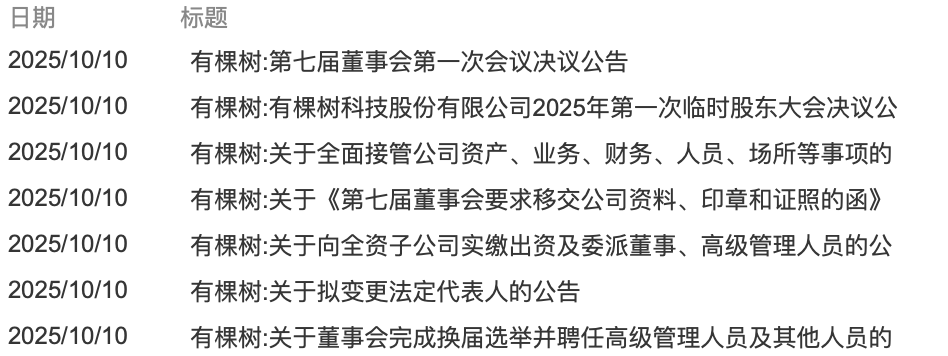
有棵树之争落幕,跨境电商“铺货模式”或终结
2 1 Shi Ji Jing Ji Bao Dao· 2025-10-13 09:05
Core Viewpoint - The company Youkeshu is facing a significant operational crisis following a drastic revenue decline and internal shareholder disputes, leading to a change in its management team and a struggle for control over the company [1][3]. Company Overview - Founded in 2010 and headquartered in Longgang, Shenzhen, Youkeshu was once a leading player in the cross-border e-commerce sector, achieving sales exceeding 5 billion yuan and operating in over 200 countries [2]. - The company initially thrived by leveraging a comprehensive supply chain in Shenzhen and adopting a multi-platform, multi-account, and multi-category distribution model [2]. Financial Performance - In the first half of the year, Youkeshu's revenue plummeted to 42.57 million yuan, a year-on-year decrease of 81.33% [2]. - Although the company reported a net profit, it heavily relied on non-recurring income, with a net profit excluding non-recurring items showing a loss of nearly 9 million yuan, indicating a weak recovery foundation [2]. Internal Management Issues - The company has been embroiled in internal management disputes, highlighted by a regulatory notice from the Shenzhen Stock Exchange that revealed a paralyzed governance structure [3]. - Shareholder Wang Wei, holding 18% of the shares, faced resistance from the board when attempting to convene a shareholder meeting to discuss board restructuring [3]. - Legal actions escalated between shareholders, with Wang Wei suing for 16.57 million yuan and the company counter-suing for approximately 10 million yuan [3]. Management Changes - Following the internal conflicts, a new management team has taken over, with a recent board meeting resulting in unanimous approval of new leadership positions, including the general manager and financial director [3]. - The company has announced the establishment of two wholly-owned subsidiaries aimed at resource acquisition and market expansion, marking a strategic shift in response to current challenges [4]. Strategic Direction - Youkeshu is attempting to pivot towards new business models, although it still appears to cling to its traditional distribution logic rather than fully embracing industry trends towards brand building and refined operations [4]. - The newly established subsidiaries will engage in a wide range of trade activities, including food, cosmetics, and electronic products, reflecting an effort to diversify its offerings [4].

前三季度进出口何以逆势增长?海关总署答每经:出口产品结构不断优化创新,有进出口实绩的外贸经营主体已超去年全年总量
Mei Ri Jing Ji Xin Wen· 2025-10-13 07:43
Core Insights - China's goods trade import and export reached 33.61 trillion yuan in the first three quarters of this year, showing a year-on-year growth of 4% [1] - Exports amounted to 19.95 trillion yuan, increasing by 7.1%, while imports were 13.66 trillion yuan, slightly decreasing by 0.2% [1] - In September alone, the total trade value was 4.04 trillion yuan, reflecting an 8% growth [1] Group 1: Trade Resilience - Despite a challenging external environment, China's foreign trade demonstrated strong resilience, with exports of industrial robots increasing by 54.9% and wind power equipment exports rising by 23.9% [2][3] - The number of foreign trade entities with import and export performance reached 700,000 for the first time, surpassing last year's total [3] - China's share of global goods trade remained at 11.8% in the first seven months, maintaining its position as the world's largest goods trader [2] Group 2: Cross-Border E-commerce Growth - Cross-border e-commerce has emerged as a new growth driver, with imports and exports totaling 1.37 trillion yuan in the first half of the year, a 10.3% increase [6] - The export value in cross-border e-commerce reached approximately 1.63 trillion yuan in the first three quarters, growing by 6.6% [6] - The main exported goods include apparel, jewelry, and digital products, while imports focus on beauty products, food, and healthcare items [6] Group 3: Policy and Regulatory Support - The customs authority has implemented reforms to support the high-quality development of cross-border e-commerce, including simplifying export declaration procedures and enhancing logistics efficiency [7] - New electronic payment systems for tax payments have been introduced, allowing cross-border e-commerce companies to complete tax payments online [7] - Future plans include strengthening policy communication and training for businesses to further enhance the convenience and compliance of cross-border e-commerce operations [7]

共探全球数贸规则制定 跨境电商平台“杭州倡议”发布
Mei Ri Shang Bao· 2025-10-13 07:24
Core Viewpoint - The "Hangzhou Initiative" provides key guidelines for the formulation of global cross-border e-commerce platform rules, addressing governance issues and establishing eight guiding principles for fair practices in the industry [1][2]. Group 1: Guiding Principles - The "Hangzhou Initiative" outlines eight guiding principles: honesty and credit, fair treatment, consistency of rights and responsibilities, adherence to proportionality, transparency, collaborative governance, convenient remedies, and public interest maintenance [1]. - The principle of "fair treatment" emphasizes that platform operators should maintain a neutral stance, ensuring equitable distribution of trading opportunities and resources, and prohibiting algorithmic discrimination or preferential treatment [2]. Group 2: Industry Context - Zhejiang province is recognized as a significant origin of e-commerce in China, with Hangzhou being the first comprehensive pilot zone for cross-border e-commerce, highlighting its importance in the global e-commerce landscape [2]. - The "Hangzhou Initiative" not only provides a normative basis for cross-border e-commerce platform governance but also supports the coordination of global digital trade rules, contributing to Zhejiang's goal of becoming a model for rule of law in China and a global digital trade center [2].
我国“跨境电商+产业带”发展成效明显,进口目的地主要集中在山东等五省市
Qi Lu Wan Bao Wang· 2025-10-13 07:22
Core Insights - The cross-border e-commerce sector in China has shown significant growth, with imports and exports reaching 1.37 trillion yuan in the first half of the year, marking a 10.3% year-on-year increase [1][3] - For the first three quarters, the total cross-border e-commerce trade is approximately 2.06 trillion yuan, reflecting a 6.4% growth compared to the previous year [3] Group 1: Import and Export Data - In the first half of the year, exports amounted to 1.09 trillion yuan, growing by 11.6%, while imports were 281.18 billion yuan, increasing by 5.5% [1] - For the first three quarters, exports are estimated at 1.63 trillion yuan, up by 6.6%, and imports at 425.54 billion yuan, with a growth of 5.9% [3] Group 2: Key Products and Markets - Major export products include clothing, shoes, bags, jewelry, digital products, and home office appliances, while imports mainly consist of beauty and personal care products, fresh food, health supplements, and medical devices [3] - Key export regions are Guangdong, Zhejiang, Fujian, Jiangsu, and Henan, with major import destinations being Guangdong, Jiangsu, Zhejiang, Shanghai, and Shandong [3] Group 3: Policy and Regulatory Developments - The customs authority has implemented reforms and innovative measures to support the high-quality development of cross-border e-commerce, including pilot programs for "inspection before shipment" and simplified export declaration procedures [4] - Future plans include enhancing policy communication and business training, optimizing regulatory models, and improving the convenience and standardization of customs clearance for cross-border e-commerce enterprises [4]

星徽股份跌0.97%,成交额3.71亿元,近3日主力净流入-901.70万
Xin Lang Cai Jing· 2025-10-13 07:21
Core Viewpoint - The company, Guangdong Xinghui Precision Manufacturing Co., Ltd., is experiencing fluctuations in stock performance and is heavily involved in the cross-border e-commerce sector, particularly benefiting from the depreciation of the RMB. Group 1: Company Overview - Guangdong Xinghui Precision Manufacturing Co., Ltd. specializes in the research, production, and sales of precision metal connectors and smart home appliances, with a significant focus on products like slides, hinges, and small household appliances [4][8]. - The company's main revenue sources include slides (71.62%), smart home appliances (16.77%), and power supply products (8.01%) [8]. - As of June 30, the company had 27,100 shareholders, an increase of 8.00% from the previous period, with an average of 13,104 circulating shares per shareholder, a decrease of 7.40% [8]. Group 2: Financial Performance - For the first half of 2025, the company reported a revenue of 726 million yuan, a year-on-year decrease of 9.38%, and a net profit attributable to shareholders of -10.14 million yuan, a decline of 208.43% [8]. - The company has distributed a total of 71.16 million yuan in dividends since its A-share listing, with no dividends paid in the last three years [9]. Group 3: Market Activity - On October 13, the company's stock price fell by 0.97%, with a trading volume of 371 million yuan and a turnover rate of 12.74%, resulting in a total market capitalization of 3.75 billion yuan [1]. - The stock has seen a net inflow of 2.03 million yuan from major investors today, with the industry ranking at 3 out of 18, indicating a lack of clear trends in major investor activity [5][6]. Group 4: Product and Market Segments - The company’s audio products, primarily under the brand TaoTronics, have annual sales reaching tens of millions of USD, with TWS technology widely applied in Bluetooth earphones [2]. - The cross-border e-commerce segment includes small household appliances such as aroma machines, coffee machines, air fryers, and milk frothers, primarily sold overseas [2][3].
