电子

Search documents
迪拜商会“锚定”深圳,数字经济成中迪合作新爆点
2 1 Shi Ji Jing Ji Bao Dao· 2026-01-08 11:06
Group 1 - The fifth Dubai Business Forum will be held on May 14 in Shenzhen, focusing on investment opportunities brought by the "D33" agenda and promoting deep cooperation [1] - Shenzhen is the second Chinese city to host the Dubai Business Forum, following Beijing, indicating a growing interest in Sino-Dubai collaboration [1] - The cooperation between China and Dubai is shifting from traditional trade to high-end sectors such as technology, digital infrastructure, and green energy [1] Group 2 - Dubai has maintained its position as China's largest trading partner for several consecutive years, with a non-oil trade volume of approximately $523 billion (about 1.9 trillion dirhams) from 2015 to 2024 [2] - In 2024, the non-oil trade volume between Dubai and China is expected to grow by 19% year-on-year, exceeding $80 billion, accounting for 89% of the UAE's non-oil trade with China [2] - The structure of products imported by Dubai from China in 2024 shows that electronics account for the highest share at 45.9%, followed by machinery, vehicles, steel, and plastic products [2] Group 3 - The sectors attracting the most Chinese investment in Dubai include real estate, chemicals, automotive, telecommunications, and software and IT services [3] - By project count, the most active sectors are automotive, telecommunications, software and IT services, consumer electronics, and consumer goods [3] - As of November 2025, the number of active Chinese member companies registered with the Dubai Chamber reached 6,355, a 209% increase from 2,056 in 2015 [3] Group 4 - The UAE Prime Minister announced the Dubai Economic Agenda (D33) in 2023, aiming to double the size of Dubai's economy in the next decade [4] - Key targets include reaching an economic total of 32 trillion dirhams (approximately $8.64 trillion) and doubling foreign trade to 25.6 trillion dirhams [4] - The Dubai Chamber has held five Dubai Business Forums globally to connect industries, companies, and capital [4] Group 5 - Shenzhen has been a pioneer in technology, proposing "technology as the primary productive force" in 1992 and launching the "Smart Shenzhen" initiative in 2009 [5] - The core value added of Shenzhen's digital economy is expected to exceed 1 trillion yuan in 2024, with the AI industry scale surpassing 360 billion yuan [5] - The forum aims to enhance cooperation in digital economy and technological innovation between China and Dubai, facilitating the entry of Middle Eastern companies into Shenzhen [5]
TCL李东生:中韩两国在人工智能等新兴领域合作潜力巨大
Nan Fang Du Shi Bao· 2026-01-08 09:57
Group 1 - The core viewpoint of the article emphasizes the significant potential for cooperation between China and South Korea in emerging fields such as artificial intelligence, semiconductor displays, new energy vehicles, and biotechnology, as highlighted by TCL's founder and chairman, Li Dongsheng [2] - Li Dongsheng proposed three suggestions for deepening cooperation: 1) fully utilize the China-South Korea Free Trade Agreement to enhance bilateral economic cooperation; 2) leverage each country's industrial advantages to promote collaboration in technological innovation; 3) build industrial resilience and optimize regional supply chain layouts [2] - TCL Huaxing has become a core supply chain partner for major companies like Samsung, LG, and Hyundai, with plans to increase its share in Samsung's mobile supply chain to 15% and expand its role as a core supplier for Hyundai's in-vehicle displays [2] Group 2 - The China-South Korea Business Forum was co-hosted by the China Council for the Promotion of International Trade and the Korea Chamber of Commerce and Industry, with over 400 attendees from both countries, including key economic representatives from South Korea such as President Yoon Suk-yeol and leaders from major corporations [3]



2026 年牛市展望系列1:入市增量资金有望超两万亿
Guoxin Securities· 2026-01-08 09:55
Group 1 - The core conclusion indicates that in 2025, the A-share market will see significant inflows from active funds such as leveraged and private equity funds, while insurance capital will also play a substantial role, contrasting with the overall net redemption of actively managed public funds [1][2][4] - The primary source of incoming funds is expected to shift towards high-net-worth individuals, with ordinary residents likely becoming the main contributors by 2026 as their risk appetite recovers from low levels [1][3] - The macroeconomic and microeconomic context of 2025 shows similarities to 2020, but the structure of incremental funds differs, leading to an estimated total inflow of 2 trillion yuan for 2026 [1][4] Group 2 - In 2025, the A-share market's performance is supported by a robust funding environment, with inflows categorized into two phases: the first half of the year saw a recovery in the market, while the third quarter experienced significant inflows from private equity and leveraged trading [2][19] - The first half of 2025 saw a total inflow of approximately 4.2 billion yuan from insurance funds, 2.4 billion yuan from retail investors, and 1 billion yuan from foreign capital, with a notable focus on technology and dividend sectors [2][14] - The third quarter marked a substantial increase in leveraged funds, with around 7 billion yuan entering the market, and private equity funds also significantly increased their market presence, contributing approximately 4 billion yuan [19][20] Group 3 - The process of resident funds entering the market is still in its early stages, primarily driven by high-net-worth individuals, as evidenced by a survey indicating an increase in investment willingness among 18.5% of urban depositors [3][32] - Despite signs of recovery in risk appetite among residents, the majority of funds entering the market are still from high-risk tolerant individuals, with broader participation from the general public remaining limited [3][36] - The overall risk appetite of residents remains low, with many still favoring low-risk investment products, which may hinder a more significant influx of resident funds into the market [36][41] Group 4 - The expected net inflow of funds for 2026 is projected to reach 2 trillion yuan, with contributions anticipated from retail investors, insurance capital, and improved public and foreign fund participation [4][55] - The inflow sources for 2026 include an estimated 10 billion yuan from retail active funds, 7 billion yuan from insurance capital, and 9.5 billion yuan from corporate dividends, indicating a diverse funding landscape [57][58] - The outflow of funds is expected to increase alongside market sentiment recovery, with projections for IPOs and refinancing activities to rise significantly, reflecting a more active capital market environment [58][59]
两市主力资金净流出453.04亿元,电子行业净流出居首
Zheng Quan Shi Bao Wang· 2026-01-08 09:54
Market Overview - On January 8, the Shanghai Composite Index fell by 0.07%, the Shenzhen Component Index decreased by 0.51%, the ChiNext Index dropped by 0.82%, and the CSI 300 Index declined by 0.82% [1] - Among the tradable A-shares, 3,731 stocks rose, accounting for 68.35%, while 1,595 stocks fell [1] Capital Flow - The main capital experienced a net outflow of 45.304 billion yuan, marking three consecutive trading days of net outflows [1] - The ChiNext saw a net outflow of 13.253 billion yuan, the STAR Market had a net outflow of 1.5 billion yuan, and the CSI 300 constituents faced a net outflow of 32.136 billion yuan [1] Industry Performance - In the Shenwan first-level industry classification, 20 industries rose, with the defense and military industry leading with a gain of 4.18%, followed by the media sector with a 2.00% increase [1] - The industries with the largest declines were non-bank financials and non-ferrous metals, which fell by 2.81% and 1.56%, respectively [1] Industry Capital Inflows - Nine industries saw net inflows of main capital, with the defense and military industry leading at a net inflow of 6.773 billion yuan and a daily increase of 4.18% [1] - The computer industry followed with a daily increase of 1.27% and a net inflow of 3.917 billion yuan [1] Individual Stock Performance - A total of 2,223 stocks experienced net inflows, with 919 stocks having inflows exceeding 10 million yuan, and 167 stocks seeing inflows over 100 million yuan [3] - The stock with the highest net inflow was Aerospace Electronics, which rose by 10.00% with a net inflow of 1.850 billion yuan [3] - Other notable inflows were from Yanshan Technology and Aerospace Science and Technology, with net inflows of 974 million yuan and 941 million yuan, respectively [3] - Conversely, 228 stocks had net outflows exceeding 100 million yuan, with the largest outflows from Zhongji Xuchuang, Luxshare Precision, and CITIC Securities, amounting to 3.156 billion yuan, 2.286 billion yuan, and 1.852 billion yuan, respectively [3]




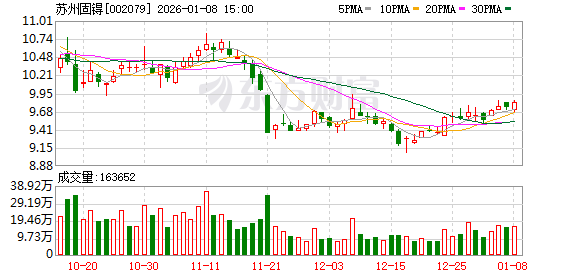
苏州固锝:公司是韩国三星电子在国内为数不多的直供供应商,产品主要用于三星消费电子如电视机等领域
Mei Ri Jing Ji Xin Wen· 2026-01-08 09:51
Core Viewpoint - The company has established significant partnerships with South Korean firms, indicating a strong presence in the South Korean market and plans for future collaborations [2]. Group 1: Company Partnerships - The company has been a key supplier for Hyundai and Kia since 2019, providing certain automotive products as a TIER 1 supplier [2]. - The company is one of the few direct suppliers to Samsung Electronics in China, with products primarily used in Samsung's consumer electronics, such as televisions [2]. - Starting in 2025, the company will become a qualified supplier for LG Electronics and will begin mass production [2]. Group 2: Market Strategy - The company aims to enhance cooperation with high-quality South Korean enterprises, reflecting its commitment to expanding its business in the region [2].

主力动向:1月8日特大单净流出195.83亿元
Zheng Quan Shi Bao Wang· 2026-01-08 09:31
Market Overview - The two markets experienced a significant net outflow of 19.583 billion yuan, with 2,265 stocks seeing net inflows and 2,633 stocks experiencing net outflows [1] - The Shanghai Composite Index closed down by 0.07% [1] Industry Analysis - Among the 11 industries with net inflows, the defense and military industry led with a net inflow of 7.361 billion yuan, and its index rose by 4.18% [1] - The computer industry followed with a net inflow of 4.548 billion yuan and an increase of 1.27% [1] - The electronic industry had the highest net outflow, totaling 10.689 billion yuan, followed by the non-bank financial sector with an outflow of 8.010 billion yuan [1] Individual Stock Performance - A total of 75 stocks had net inflows exceeding 200 million yuan, with Aerospace Electronics leading at 2.092 billion yuan [2] - Other notable stocks with significant net inflows include Hailanxin (1.136 billion yuan) and Yanshan Technology (1.055 billion yuan) [2] - Stocks with the highest net outflows included Zhongji Xuchuang (3.199 billion yuan), CITIC Securities (1.892 billion yuan), and Dongfang Fortune (1.694 billion yuan) [2][4] Stock Price Movements - Stocks with net inflows over 200 million yuan saw an average increase of 9.43%, outperforming the Shanghai Composite Index [2] - Specific stocks that closed at their daily limit include Qian Zhao Guangdian and Shaoyang Hydraulic [2] Sector Concentration - The stocks with the highest net inflows were concentrated in the mechanical equipment, defense and military, and electronic industries, with 14, 11, and 10 stocks respectively [2]


1月8日科创板高换手率股票(附股)
Zheng Quan Shi Bao Wang· 2026-01-08 09:29
Market Performance - The Sci-Tech Innovation Board (STAR Market) index rose by 0.82%, closing at 1455.17 points, with a total trading volume of 5.875 billion shares and a turnover of 318.122 billion yuan, resulting in an average turnover rate of 3.00% [1] - Among the tradable stocks on the STAR Market, 406 stocks closed higher, with 13 stocks hitting the daily limit up, while 186 stocks closed lower, with 1 stock experiencing a decline of over 10% [1][2] - The highest turnover rate was recorded by Hengkun New Materials at 52.85%, with a closing price increase of 3.13% and a trading volume of 1.634 billion yuan [1][3] Stock Turnover Rates - Stocks with a turnover rate exceeding 20% included 14 stocks, while 34 stocks had a turnover rate between 10% and 20% [1] - The distribution of turnover rates showed that 113 stocks had a turnover rate between 5% and 10%, and 108 stocks had a turnover rate between 3% and 5% [1] Sector Analysis - In terms of sector performance, the electronics sector had the highest number of stocks with a turnover rate exceeding 5%, totaling 51 stocks, followed by the computer and pharmaceutical sectors with 22 and 19 stocks, respectively [2] - Notable stocks with significant net inflows included Moer Thread, Aerospace Hongtu, and Muxi Co., with net inflows of 312 million yuan, 293 million yuan, and 268 million yuan, respectively [2] Leverage Fund Movements - A total of 113 stocks with high turnover rates received net purchases from leveraged funds, with notable increases in financing balances for Huahong Company, Chip Original Company, and Qiangyi Company, which saw increases of 531 million yuan, 523 million yuan, and 518 million yuan, respectively [2]
2股今日首次突破百元 最新百元股数量达207只
Zheng Quan Shi Bao Wang· 2026-01-08 08:56
Core Viewpoint - The average stock price of A-shares is 14.45 yuan, with 207 stocks priced over 100 yuan, indicating a slight increase in market activity and investor interest in high-priced stocks [1][2]. Group 1: Market Performance - As of January 8, the Shanghai Composite Index closed at 4082.98 points, down 0.07%, while the average stock price in A-shares was 14.45 yuan [1]. - Among stocks priced over 100 yuan, the average increase was 0.17%, outperforming the Shanghai Composite Index by 0.24 percentage points [1]. - In the past month, stocks priced over 100 yuan have seen an average increase of 21.00%, compared to a 4.62% increase in the Shanghai Composite Index [1]. Group 2: High-Value Stocks - The highest closing price among stocks over 100 yuan is 1444.00 yuan for Cambrian, which increased by 3.52% [2]. - Other notable high-priced stocks include Kweichow Moutai at 1412.30 yuan and Yuanjie Technology at 715.00 yuan [2]. - The stocks that saw the most significant increases in the past month include Tianli Composite (265.41%), Chaojie Co., Ltd. (148.21%), and Feiwo Technology (141.65%) [1]. Group 3: Sector Distribution - The electronic industry has the highest concentration of high-priced stocks, with 76 stocks, accounting for 36.71% of the total [2]. - Other sectors with notable representation include machinery equipment and computer industries, each contributing 22 stocks, representing 10.63% of the total [2]. - Among the stocks priced over 100 yuan, 42 are from the main board, 70 from the ChiNext board, 5 from the Beijing Stock Exchange, and 90 from the Sci-Tech Innovation Board, with the latter making up 43.48% of the total [2].


科创板平均股价46.40元 12股股价超300元
Zheng Quan Shi Bao Wang· 2026-01-08 08:53
Group 1 - The average stock price of the Sci-Tech Innovation Board is 46.40 yuan, with 90 stocks priced over 100 yuan and the highest being Cambrian-U at 1444.00 yuan, which increased by 3.52% [1][2] - Among the stocks priced over 100 yuan, 43 stocks rose today with an average increase of 0.43%, while 47 stocks fell, with notable declines in stocks like Kaipu Cloud and Dekoli [1][2] - The average premium of the stocks priced over 100 yuan relative to their issue price is 501.68%, with the highest premiums seen in companies like Shunwei New Materials and Cambrian-U, at 5344.45% and 2142.58% respectively [1] Group 2 - The net outflow of main funds from the stocks priced over 100 yuan today was 7.63 billion yuan, with Cambrian-U, Haiguang Information, and Moer Thread-U seeing the highest net inflows [2] - The total margin financing balance for stocks priced over 100 yuan is 1159.10 billion yuan, with Cambrian-U and SMIC having the highest financing balances of 152.34 billion yuan and 135.19 billion yuan respectively [2] Group 3 - The stocks with the highest trading volumes today include Cambrian-U, Moer Thread-U, and Haiguang Information, with trading rates of 3.57%, 24.36%, and 2.23% respectively [3][5] - The electronic industry has the highest concentration of stocks priced over 100 yuan, with 44 stocks, followed by the computer and mechanical equipment industries with 12 and 10 stocks respectively [1]


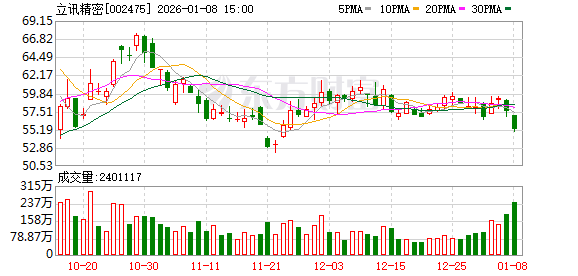
电子行业资金流出榜:立讯精密等51股净流出资金超亿元
Zheng Quan Shi Bao Wang· 2026-01-08 08:51
Market Overview - The Shanghai Composite Index fell by 0.07% on January 8, with 20 industries experiencing gains, led by defense and military industry with a rise of 4.18% and media with a rise of 2.00% [2] - The electronic industry saw a slight increase of 0.04% [2] - The non-bank financial and non-ferrous metals industries faced the largest declines, with drops of 2.81% and 1.56% respectively [2] Capital Flow Analysis - The main capital outflow from the two markets totaled 45.304 billion yuan, with 9 industries seeing net inflows [2] - The defense and military industry had the highest net inflow of 6.773 billion yuan, followed by the computer industry with a net inflow of 3.917 billion yuan [2] - The electronic industry experienced the largest net outflow of 17.107 billion yuan, followed by non-ferrous metals with a net outflow of 10.678 billion yuan [2] Electronic Industry Performance - Within the electronic industry, 476 stocks were tracked, with 279 stocks rising and 188 stocks falling [3] - The top three stocks with the highest net inflow were Qianzhao Optoelectronics (7.28 billion yuan), Cambrian (6.99 billion yuan), and Haiguang Information (5.61 billion yuan) [3] - The stocks with the largest net outflows included Luxshare Precision (-2.286 billion yuan), Industrial Fulian (-1.721 billion yuan), and Nanda Optoelectronics (-1.363 billion yuan) [5] Electronic Industry Capital Inflow - The top stocks in terms of capital inflow included: - Qianzhao Optoelectronics: +20.01%, turnover rate 24.83%, capital flow 727.62 million yuan [4] - Cambrian: +3.52%, turnover rate 3.57%, capital flow 699.49 million yuan [4] - Haiguang Information: +8.50%, turnover rate 2.23%, capital flow 561.42 million yuan [4] Electronic Industry Capital Outflow - The stocks with the largest capital outflow included: - Luxshare Precision: -4.15%, turnover rate 3.30%, capital flow -2.285 billion yuan [5] - Industrial Fulian: -2.88%, turnover rate 0.94%, capital flow -1.721 billion yuan [5] - Nanda Optoelectronics: +2.03%, turnover rate 30.00%, capital flow -1.363 billion yuan [5]